
The Difference One Page Can Make: Your Safety Plan's Impact


Welcome to Mind Care Guide, where your journey towards mental well-being begins. In a world that often feels overwhelming, it’s essential to equip yourself with the right tools to navigate life's challenges. Our featured article, “The Difference One Page Can Make: Your Safety Plan's Impact,” delves into the profound benefits of creating a personal safety plan.
This simple yet transformative step can be a beacon of hope during dark times. Are you ready to discover how a single page can change your life? Let’s explore the vital resources and support that await you on your path to healing and resilience.
The Difference One Page Can Make: Your Safety Plan's Impact
- Understanding the Power of a Personal Safety Plan for Suicidal Thoughts
-
Creating Your Own Personal Safety Plan: A Step-by-Step Guide
- Step 1: Recognizing Your Personal Warning Signs of Suicidal Thoughts
- Step 2: Utilizing Internal Coping Strategies for Emotional Distress
- Step 3: Reaching Out to Supportive People and Social Settings
- Step 4: Contacting Professional Resources and Crisis Support
- Step 5: Making Your Environment Safe: Reducing Access to Lethal Means
- The Impact of a Well-Defined Safety Plan: Real-Life Benefits
- Implementing and Maintaining Your Personal Safety Plan
- Safety Plans vs. Other Suicide Prevention Strategies
- Resources for Developing and Utilizing a Safety Plan
- The Importance of Safety Planning: A Message of Hope
-
Frequently Asked Questions
- What exactly is a personal safety plan and why is it important?
- How does creating a personal safety plan relate to improving my overall mental well-being?
- What are some key components that should be included in a comprehensive personal safety plan?
- Where can I find resources or support to help me create my own personal safety plan?
- How often should I review and update my personal safety plan to ensure its effectiveness?
- Final Reflection: The Enduring Power of Preparedness
- Unlock Your Inner Resilience: Take Control of Your Safety
Understanding the Power of a Personal Safety Plan for Suicidal Thoughts
What is a Safety Plan for Managing Suicidal Ideation?
A personal safety plan is a prioritized written list of coping strategies and social supports that individuals can use when they are experiencing suicidal thoughts or emotional distress. It's not a contract or a promise to not attempt suicide, but rather a practical, actionable tool developed by the individual for the individual. The process of creating a personal safety plan involves identifying internal coping mechanisms, social contacts, and professional resources to reach out to when thoughts of suicide escalate.
It's designed to be readily accessible and easy to follow during a crisis, serving as a step-by-step guide to navigate intense emotional pain and suicidal urges. This plan is highly personalized, reflecting the individual's own strengths, supports, and preferred coping methods, making it a truly unique roadmap for navigating difficult times.
Developed initially by psychologists Barbara Stanley and Gregory Brown, the safety plan model has become a widely recognized and evidence-informed intervention in suicide prevention. It typically involves a structured process, often completed with a mental health professional, though individuals can also begin creating a personal safety plan on their own. The core idea is to provide immediate, tangible steps that interrupt the progression from suicidal thoughts to suicidal behavior. By outlining specific actions and resources before a crisis occurs, the plan helps individuals bypass impulsive reactions during moments of intense distress, offering a clear path towards safety and support.
Why is a Safety Plan an Effective Tool for Suicide Prevention?
The effectiveness of a safety plan lies in its ability to provide concrete, pre-determined actions during a state of crisis when rational thinking and problem-solving abilities are often impaired. When someone is overwhelmed by suicidal thoughts, their ability to think clearly or remember coping strategies is significantly reduced. A safety plan acts as an external guide, presenting a clear sequence of steps to follow, much like an emergency protocol.
This structured approach helps to reduce reliance on spontaneous decision-making during moments of intense emotional pain, making it easier to access support and utilize coping skills. Research, including studies published in journals like the Journal of Consulting and Clinical Psychology, has indicated that having a safety plan can be associated with a reduced risk of future suicide attempts among individuals who have previously experienced suicidal ideation or behavior.
Furthermore, the very act of creating a personal safety plan is empowering. It shifts the focus from feeling helpless in the face of suicidal thoughts to actively identifying resources and strategies for managing them. This collaborative process, often involving a therapist, helps individuals recognize their own strengths and support systems, fostering a sense of agency.
By documenting triggers, coping skills, and support contacts, the individual builds a personalized toolkit for resilience. This proactive approach not only provides immediate steps for crisis intervention but also reinforces the individual's capacity to cope, potentially strengthening their ability to manage distress in the long term.
Creating Your Own Personal Safety Plan: A Step-by-Step Guide
Step 1: Recognizing Your Personal Warning Signs of Suicidal Thoughts
Identifying Triggers and Early Warning Signs
The first crucial step in creating a personal safety plan is becoming acutely aware of your own unique warning signs and triggers. Triggers are specific situations, events, thoughts, feelings, or anniversaries that tend to increase your suicidal thoughts or emotional distress. These can be external, such as conflict with a loved one or losing a job, or internal, like feelings of hopelessness or intense loneliness.
Identifying these helps you anticipate periods of higher risk. For instance, someone might notice that feelings of worthlessness consistently emerge after receiving negative feedback, or that isolation on weekends intensifies their despair. Pinpointing these patterns is vital because it allows you to implement your safety plan before thoughts become overwhelming.
Warning signs, on the other hand, are the specific thoughts, feelings, moods, or behaviors that indicate your suicidal thoughts are beginning to escalate. These are personal indicators that signal a need to use your safety plan. Examples might include increased irritability, withdrawing from friends, changes in sleep or appetite, feeling numb, or having specific thoughts like "everyone would be better off without me."
For one person, a warning sign might be listening to certain sad music constantly, while for another, it could be giving away possessions. Documenting these personal signals in your safety plan provides an early alert system, prompting you to move to the next steps in your plan and access resources before reaching a critical point.
Step 2: Utilizing Internal Coping Strategies for Emotional Distress
Self-Soothing Techniques and Mindfulness Exercises
Once you recognize your warning signs, the next step in creating a personal safety plan involves listing internal coping strategies you can use on your own to help manage distress and suicidal thoughts. These are activities or techniques that you find calming, distracting, or grounding. They should be things you can do immediately, wherever you are, without needing anyone else's help.
Examples include listening to a specific playlist that lifts your mood, taking a warm shower or bath, going for a walk, reading a book, practicing deep breathing exercises, or engaging in a hobby like drawing or playing an instrument. The key is to identify several different strategies that you genuinely find helpful and list them clearly in your plan.
Incorporating mindfulness and self-soothing techniques is particularly valuable in this section of your safety plan. Mindfulness practices, like focusing on your five senses or doing a short body scan, can help ground you in the present moment and create distance from overwhelming thoughts and feelings.
Self-soothing techniques, such as wrapping yourself in a soft blanket, holding a comforting object, or using aromatherapy, engage your senses in a way that promotes calm and reduces physiological arousal associated with distress. By listing these specific techniques, you create a personalized menu of options to try when warning signs appear, giving you tools to manage intense emotions internally before needing to reach out for external support.
Identifying Trusted Individuals and Safe Environments
When internal coping strategies aren't sufficient to manage suicidal thoughts, the third step in creating a personal safety plan involves connecting with others. This section requires identifying specific individuals you can reach out to for support. Think about friends, family members, mentors, or colleagues who you trust, who are supportive, and who you feel comfortable talking to about difficult emotions (even if you don't explicitly mention suicidal thoughts initially).
List their names and contact information clearly in your plan. It's helpful to rank them in order of who you would contact first, perhaps starting with someone who is usually readily available and a good listener. It's also a good idea to let these people know in advance (if you feel comfortable) that they are part of your safety network.
This step also includes identifying social settings that you find calming or distracting, where you could go to feel safer or less alone. These are places where you are likely to feel comfortable and less distressed. Examples might include a favorite coffee shop, a park bench, a library, a community center, or even a specific friend's home.
The goal is to list places where you feel a sense of connection or peace, or simply a place where you won't be alone with your thoughts. Including these locations in your safety plan provides tangible options for seeking comfort and reducing isolation when suicidal thoughts are present.
Step 4: Contacting Professional Resources and Crisis Support
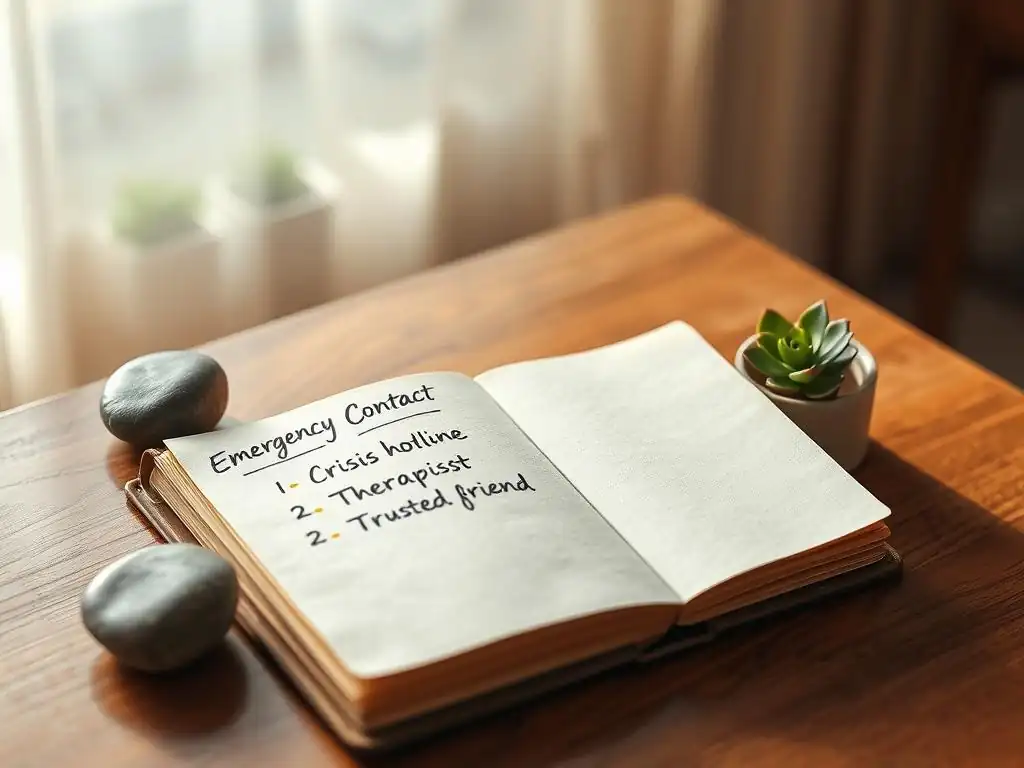
Knowing Who to Call and Where to Go for Immediate Help
If reaching out to personal contacts or going to supportive social settings doesn't alleviate suicidal thoughts, the fourth step in creating a personal safety plan is to contact professional help. This is a critical step for accessing immediate support from trained individuals. This section of your plan should include a list of mental health professionals you can contact, such as your therapist, psychiatrist, or counselor, along with their phone numbers.
It's also crucial to include the contact information for local or national crisis hotlines and text lines. These services are available 24/7 and are staffed by trained crisis counselors who can provide immediate support and guidance.
Furthermore, your safety plan should list local emergency resources. This includes the address and phone number of the nearest hospital emergency room and potentially a local walk-in mental health clinic if one is available and appropriate for crisis situations. Knowing exactly where to go and who to call eliminates the need to search for information during a crisis, when every moment counts. Including these specific contact details and locations ensures that you have a clear path to professional intervention when it is most needed, providing a vital layer of support in your plan for managing suicidal thoughts.
Step 5: Making Your Environment Safe: Reducing Access to Lethal Means
Securing Medications and Firearms
The final, and often most critical, step in creating a personal safety plan involves making your immediate environment safe by reducing access to lethal means. This step is based on robust research indicating that limiting access to highly lethal methods during a suicidal crisis significantly reduces the likelihood of a completed suicide. Methods such as firearms and certain medications have a high lethality rate, and putting time and distance between a suicidal urge and the means to act on it can be life-saving.
This step requires honest assessment and proactive measures. For example, if firearms are present in the home, this step would involve listing specific actions like storing them unloaded in a locked safe, storing ammunition separately in another locked location, or having a trusted friend or family member hold onto them temporarily.
Similarly, if prescription or over-the-counter medications could be used in a suicide attempt, this step involves outlining how to secure them. This might include using a locked medication box, giving medications to a trusted person to dispense daily doses, or keeping only a minimal amount of medication on hand.
The goal is not necessarily to eliminate all means, which may be impossible, but to create barriers and increase the time and effort required to access them during an impulse. This delay can be enough to allow the intensity of the suicidal urge to decrease or to enable the individual to reach out for help using the other steps in their safety plan.
The Impact of a Well-Defined Safety Plan: Real-Life Benefits
Reducing Suicidal Impulsivity and Increasing Coping Skills
A well-defined personal safety plan directly addresses the impulsive nature of many suicide attempts. During a moment of intense emotional pain, the urge to end one's life can feel overwhelming and immediate. Having a pre-established set of steps, written down and readily available, interrupts this impulsive pathway.
Instead of acting spontaneously on distress, the individual is guided through a series of deliberate actions: identify warning signs, try internal coping, contact support, seek professional help, and ensure environmental safety. This structured process introduces a crucial delay, providing time for the intense suicidal feelings to subside and for rational thinking to regain some ground. Studies and clinical experience suggest that this interruption can be the difference between a crisis passing safely and a tragic outcome.
Beyond just crisis intervention, the process of creating a personal safety plan and utilizing it helps individuals build and reinforce their coping skills. By listing specific internal strategies, the plan encourages the individual to practice and rely on healthy ways to manage distress.
Each time the plan is used successfully, it strengthens the individual's confidence in their ability to navigate difficult emotions. This repeated engagement with coping mechanisms, rather than avoidance or harmful behaviors, gradually builds resilience and increases the repertoire of skills available to the individual, making them better equipped to handle future challenges and reduce the frequency or intensity of suicidal thoughts over time.
Empowering Individuals to Take Control of Their Mental Health
Creating a personal safety plan is fundamentally an act of empowerment. Suicidal thoughts often come with feelings of helplessness, hopelessness, and a lack of control over one's own mind and emotions. The process of developing a safety plan flips this narrative. It requires the individual to actively participate in identifying their triggers, strengths (coping skills), resources (supportive people, professionals), and strategies for staying safe.
This active involvement fosters a sense of agency and control over the crisis. It transforms the individual from a passive recipient of overwhelming feelings into an active agent in their own safety and well-being. Holding a physical or digital copy of the plan serves as a tangible reminder that they have options and resources, even when their mind tells them they don't.
This sense of empowerment extends beyond the immediate crisis. By systematically working through the steps of creating a personal safety plan, individuals gain a deeper understanding of their own patterns of distress and the resources available to them. They learn what helps them feel better, who they can rely on, and how to access professional care. This knowledge is invaluable for long-term mental health management. It shifts the focus from simply surviving a crisis to proactively building a life worth living, equipped with the tools and confidence to navigate future challenges effectively.
Fostering Hope and Resilience During Crisis Situations
Hope is often one of the first casualties of severe suicidal ideation. A safety plan, while practical, also serves as a powerful symbol of hope. Its very existence signifies that there are steps that can be taken, people who care, and resources available to help navigate through the darkness.
By listing supportive contacts and professional resources, the plan reminds the individual that they are not alone and that help is accessible. Each name listed is a connection, each phone number a lifeline. This tangible reminder of external support can counteract the intense feelings of isolation that often accompany suicidal thoughts.
Furthermore, the inclusion of internal coping strategies and past successes in overcoming difficult periods reinforces the individual's own capacity for resilience. Reviewing the plan can remind someone of times they felt similarly distressed but managed to get through it, using some of the very skills listed. The structure and steps provide a pathway forward when the future feels nonexistent.
While a safety plan doesn't magically eliminate suicidal thoughts, it provides a structured approach to managing them, offering a concrete plan of action that embodies the possibility of moving through the crisis and finding moments of safety and connection. This focus on actionable steps and available support is crucial for fostering resilience during the most challenging times.
Implementing and Maintaining Your Personal Safety Plan
Regularly Reviewing and Updating Your Safety Plan
Creating a personal safety plan isn't a one-time task; it's an ongoing process. Just as life changes, so too might your triggers, coping strategies, and support network. It's essential to regularly review your safety plan, perhaps every few months or during periods of stability, to ensure it remains relevant and effective. Have your warning signs changed?
Are the listed coping strategies still genuinely helpful, or have you discovered new ones? Are the phone numbers and contact information for supportive people and professionals still current? For example, a friend might have moved or changed their number, or your therapist's practice location might have changed. Checking these details ensures that your plan is a reliable tool when you need it most.
Updating your safety plan might involve revising sections based on new insights gained in therapy, changing life circumstances, or simply discovering more effective coping methods. You might add new triggers you've identified, remove coping strategies that no longer work, or add new supportive people to your list.
This process of review and update is not just about maintaining accuracy; it also serves as a proactive engagement with your mental health, reinforcing your commitment to using the plan and keeping it top of mind. Making this a routine practice ensures that your safety plan remains a dynamic, useful, and accurate resource tailored to your current needs.
Practicing Your Safety Plan During Calm Periods
While a safety plan is designed for crisis situations, it's highly beneficial to practice using it during periods when you are feeling calm and stable. This might seem counterintuitive, but practicing the steps when you are not in distress helps to solidify the plan in your mind and makes it easier to recall and implement when you are struggling.
Think of it like practicing a fire drill – you practice when there's no fire so you know exactly what to do if one occurs. You could mentally walk through the steps, visualize using your coping strategies, or even role-play reaching out to a supportive person with a trusted friend or therapist.
Practicing also allows you to troubleshoot potential obstacles. For instance, you might realize during a practice run that you don't have a key piece of contact information readily available, or that a particular coping strategy is harder to implement than you thought.
Identifying these issues beforehand allows you to refine your plan and make it more robust. Regularly engaging with your safety plan outside of a crisis context helps to build muscle memory for safety-seeking behaviors, making it a more automatic response when suicidal thoughts arise and increasing the likelihood that you will successfully use the plan when you need it most.
Integrating Your Safety Plan into Your Overall Mental Wellness Strategy
A personal safety plan should not be viewed in isolation but rather as an integral component of your broader mental wellness strategy. It works best when used in conjunction with other forms of support, such as regular therapy, medication (if prescribed), healthy lifestyle choices, and ongoing self-care practices. Think of your safety plan as the emergency protocol within your overall health and wellness system.
It's there for acute crises, but its effectiveness is enhanced by the foundation of regular care and healthy habits you maintain. For example, consistently attending therapy can help you identify triggers and develop new coping skills to add to your plan, while maintaining a consistent sleep schedule might reduce the frequency of intense distress.
Integrating your safety plan means seeing it as a tool that supports your overall journey towards recovery and well-being. It's a reminder that even on difficult days, you have resources and strategies at your disposal. Discussing your safety plan with your therapist is crucial, as they can help you refine it, practice it, and understand how it fits into your treatment goals. By viewing your safety plan as a living document that connects to your therapy, medication management, and daily self-care, you create a more comprehensive and resilient approach to managing your mental health and navigating challenges.
Safety Plans vs. Other Suicide Prevention Strategies

How Safety Plans Complement Therapy and Medication
While a safety plan is a powerful tool, it is most effective when used as part of a comprehensive mental health treatment plan, often alongside therapy and medication. Therapy, particularly modalities like Cognitive Behavioral Therapy (CBT) or Dialectical Behavior Therapy (DBT), addresses the underlying thoughts, feelings, and behaviors that contribute to suicidal ideation. A therapist can help an individual identify the root causes of their distress, develop advanced coping skills, and challenge distorted thinking patterns.
The safety plan then serves as a practical, immediate resource to manage acute suicidal urges while the individual is engaged in the longer-term work of therapy. For example, skills learned in DBT, such as distress tolerance techniques, can be listed as internal coping strategies in the safety plan.
Medication, when prescribed by a psychiatrist, can help manage symptoms of underlying conditions like depression, bipolar disorder, or anxiety that may contribute to suicidal thoughts. While medication can reduce the intensity or frequency of these thoughts for many people, it doesn't eliminate the possibility of acute distress or impulsive urges.
The safety plan provides the individual with concrete steps to take during those moments, offering a layer of protection that medication alone cannot provide. A safety plan complements both therapy and medication by providing a structured, actionable response specifically designed for crisis situations, bridging the gap between ongoing treatment and immediate safety needs.
Understanding the Limitations of a Safety Plan
It is important to understand that a safety plan is not a guaranteed cure for suicidal thoughts, nor is it a substitute for professional mental health treatment. Its effectiveness relies on several factors, including the individual's willingness and ability to use it during a crisis, its relevance and accuracy, and the availability of the listed resources (e.g., if a supportive person doesn't answer their phone).
In moments of extreme distress, even a well-developed plan can be difficult to access or follow. For example, someone experiencing intense panic or dissociation might struggle to locate the physical plan or recall its steps, highlighting the importance of practice and memorization.
Furthermore, while the step about reducing access to lethal means is crucial, it might not be fully achievable for everyone, depending on their living situation or the specific means involved. A safety plan is a tool to increase safety and provide support, but it cannot eliminate all risk.
It works best when the individual is actively engaged in their own care, has support from others in their life, and has access to professional help. Recognizing these limitations is important; it underscores the need for safety planning to be part of a multi-faceted approach to suicide prevention and mental health care, rather than being relied upon as the sole solution.
Resources for Developing and Utilizing a Safety Plan
Online Templates and Worksheets for Creating a Safety Plan
Numerous reputable mental health organizations and websites offer free online templates and worksheets specifically designed to guide individuals through creating a personal safety plan. These resources often follow the evidence-informed structure developed by Stanley and Brown, breaking down the process into manageable steps.
Websites like the Suicide Prevention Resource Center (SPRC) or the Jed Foundation provide downloadable PDF worksheets that prompt users to fill in their personal warning signs, coping strategies, social supports, professional contacts, and methods for making their environment safe. Some platforms even offer interactive digital versions that can be saved on a phone or computer for easy access.
Using a template can be a helpful starting point for individuals who are creating a personal safety plan on their own or before discussing it with a therapist. These structured worksheets ensure that all key components of an effective safety plan are considered. While online templates offer accessibility and guidance, it's often recommended to review and finalize the plan with a mental health professional to ensure it is comprehensive, realistic, and tailored effectively to the individual's specific needs and circumstances.
Mental Health Professionals Trained in Safety Planning Techniques
Working with a mental health professional is one of the most effective ways to develop a robust and personalized safety plan. Therapists, counselors, psychologists, and social workers are often trained in specific safety planning protocols and can guide you through each step of the process. They can help you identify triggers and warning signs you might not recognize yourself, brainstorm a wider range of coping strategies, assist in identifying supportive individuals, and provide contact information for local professional resources. They can also help troubleshoot potential barriers to using the plan and practice implementing the steps during therapy sessions.
A therapist can provide a safe and confidential space to discuss sensitive topics like suicidal thoughts and lethal means, which is crucial for creating the "Making Your Environment Safe" section of the plan. They can also help you integrate your safety plan with your overall treatment goals, ensuring it supports your progress in therapy and enhances your long-term well-being. Collaborating with a trained professional ensures that your personal safety plan is not only comprehensive but also developed within a supportive therapeutic relationship, increasing its potential effectiveness during a crisis.
Crisis Hotlines and Mental Health Services
Crisis hotlines and mental health services are vital resources both for developing a safety plan and for utilizing it during a crisis. National and local crisis hotlines provide immediate, confidential support 24/7 via phone or text. Trained crisis counselors can help individuals who are experiencing suicidal thoughts talk through their feelings, develop immediate coping strategies, and even assist in creating a basic safety plan over the phone if the individual doesn't have one. They can also provide referrals to local mental health services and resources, which can be included in the "Professional Resources" section of your plan.
Beyond crisis hotlines, various mental health services are available, including community mental health centers, hospital emergency departments, and university counseling centers. These services can provide immediate assessment and support during a mental health crisis. Knowing the contact information and location of these services is a key component of step four in creating a personal safety plan. Having these resources listed ensures that if personal contacts and internal strategies are insufficient, professional help is clearly accessible, providing a critical safety net during moments of severe distress.
The Importance of Safety Planning: A Message of Hope
You Are Not Alone: Finding Support and Building Resilience
Creating a personal safety plan is a powerful statement that acknowledges the reality of suicidal thoughts while simultaneously asserting a commitment to life and well-being. It is a tangible reminder that even in the darkest moments, there are steps you can take and people who care. The process of developing the plan itself, especially when done with a supportive professional or loved one, reinforces that you are not alone in this struggle.
Millions of people experience suicidal thoughts at some point in their lives, and seeking help and utilizing tools like a safety plan is a sign of strength, not weakness. There are communities, resources, and individuals ready to offer support and understanding.
Your safety plan is more than just a list; it's a personalized blueprint for navigating distress and building resilience. It embodies the hope that even the most intense pain is temporary and that there are ways to move through it. By identifying your strengths, your supports, and your path to safety, you are actively investing in your future.
Creating a personal safety plan is a courageous act of self-care, providing a structured path back to safety and connection when suicidal thoughts threaten to overwhelm. Remember, help is available, recovery is possible, and your life has value and potential, even when it's hard to see.
Frequently Asked Questions
What exactly is a personal safety plan and why is it important?
A personal safety plan is a written, proactive strategy you create to help you cope during a mental health crisis. It's important because it provides pre-determined steps to take when you're struggling.
How does creating a personal safety plan relate to improving my overall mental well-being?
Creating a safety plan empowers you with coping mechanisms and self-awareness. This process helps you take control of your mental health and reduces feelings of helplessness during difficult times, boosting well-being.
What are some key components that should be included in a comprehensive personal safety plan?
A comprehensive plan should include identifying triggers, coping strategies, support contacts, and safe places. It should also list professional resources and steps to take if the plan isn't enough.
Where can I find resources or support to help me create my own personal safety plan?
Mind Care Guide offers resources, information, and support on creating a personal safety plan. You can also consult with a mental health professional for personalized guidance and support.
How often should I review and update my personal safety plan to ensure its effectiveness?
It's recommended to review and update your safety plan regularly, ideally every 3-6 months. Also, update it after any significant life changes or triggering events to ensure it remains relevant and helpful.
Final Reflection: The Enduring Power of Preparedness
The creation of a personal safety plan isn't just a one-time task; it's an ongoing commitment to self-preservation and empowerment. A single page, meticulously crafted, can be the difference between feeling vulnerable and feeling secure, between reacting in fear and responding with agency. In a world increasingly characterized by uncertainty, the proactive step of planning for potential threats is not just prudent, it's essential.
The impact of having a tangible safety plan extends far beyond the immediate sense of security it provides. It fosters a deeper understanding of personal vulnerabilities and empowers individuals to take control of their safety. This isn't merely about avoiding danger; it's about cultivating a sense of self-reliance and resilience. As Eleanor Roosevelt wisely stated, The future belongs to those who believe in the beauty of their dreams.
Creating a safety plan is believing in the beauty of your own safety and well-being, actively shaping your future rather than passively accepting whatever comes.
Consider the power you hold in your hands. This article has provided you with the tools to build your own safety net, a personalized roadmap to navigate challenging situations. Now, take the next step. Don't let this knowledge remain dormant. Dedicate some time today to crafting your personal safety plan. Review it regularly, update it as needed, and share it with trusted individuals. Your safety, your peace of mind, and your future are worth the effort.
Unlock Your Inner Resilience: Take Control of Your Safety
Thanks for taking the time to learn about the power of a comprehensive safety plan! We hope you now feel more equipped to navigate challenging situations. Ready to put your newfound knowledge into action?
- Create your personalized safety plan today! Use the insights from this article as a guide to build a plan that's tailored to your specific needs and circumstances.
- Share this crucial information with a trusted friend or family member. Their support can make all the difference in a time of need.
- Explore our website for additional resources on building resilience and personal safety. We have articles and guides to help you on your journey.
What's one small step you can take right now to enhance your safety and well-being?