
Proven Strategies in Print: Top Books for Anxiety Management Recommended by Professionals


Welcome to Mind Care Guide, your trusted companion on the path to mental well-being. Feeling overwhelmed by anxiety? You're not alone. Discover a world of proven strategies within the pages of our recommended resources. Dive into "Proven Strategies in Print: Top Books for Anxiety Management Recommended by Professionals" and unlock practical tools for a calmer, more centered you. Ready to find the perfect anxiety management book recommendations to empower your journey? Let's begin.
Proven Strategies in Print: Top Books for Anxiety Management Recommended by Professionals
- Mind Care Guide: Your Resource for Anxiety Relief Through Expert-Recommended Books
- Understanding Anxiety and the Power of Bibliotherapy
-
Top Anxiety Management Book Recommendations from Experts
- "Dare: The New Way to End Anxiety and Stop Panic Attacks" by Barry McDonagh
- "Feeling Good: The New Mood Therapy" by David Burns, M.D.
- "Declutter Your Mind: How To Stop Worrying, Relieve Anxiety, and Eliminate Negative Thinking" by S.J. Scott and Barrie Davenport
- "The Anxiety and Phobia Workbook" by Edmund J. Bourne, PhD
- "Wherever You Go, There You Are: Mindfulness Meditation in Everyday Life" by Jon Kabat-Zinn
- Comparing the Top Anxiety Relief Books: Finding the Right Fit for You
- Implementing Strategies from Anxiety Management Books: A Step-by-Step Guide
- Beyond Books: Additional Resources for Anxiety Management
- Investing in Your Mental Well-being: Choosing the Right Anxiety Book
-
Frequently Asked Questions
- What are some proven strategies often highlighted in anxiety management book recommendations?
- How can anxiety management book recommendations from professionals help me?
- What kind of resources and support might I find in anxiety management book recommendations?
- Are anxiety management book recommendations a substitute for professional therapy?
- What should I consider when choosing an anxiety management book recommendation?
- Final Reflection: Finding Calm in the Pages: A Journey Through Anxiety Management
- Unleash Your Inner Calm: Take Control of Your Anxiety Today!
Mind Care Guide: Your Resource for Anxiety Relief Through Expert-Recommended Books
Welcome to Mind Care Guide, your trusted source for navigating the path to mental well-being. In a world where anxiety affects millions, finding effective strategies for relief is paramount. While professional therapy and medical guidance are cornerstones of treatment, accessible resources like books can play a significant role in empowering individuals with knowledge and practical tools. This article delves into some of the top anxiety management book recommendations, curated and often utilized by mental health professionals themselves, offering proven strategies you can explore from the comfort of your home.
Our aim is to provide a comprehensive overview of highly-regarded books that offer actionable techniques and insights for managing anxiety. We understand that navigating the vast landscape of self-help literature can be overwhelming. By highlighting books frequently recommended by therapists, psychologists, and counselors, we hope to simplify your search and point you towards resources grounded in evidence-based practices. Whether you're dealing with generalized anxiety, panic attacks, social anxiety, or specific phobias, finding the right book can be a powerful step towards reclaiming control and fostering a calmer life.
Understanding Anxiety and the Power of Bibliotherapy
What is Anxiety and How Can Books Help?
Anxiety is a natural human response to stress, characterized by feelings of worry, nervousness, or unease. While occasional anxiety is a normal part of life, persistent or excessive anxiety can develop into an anxiety disorder, significantly impacting daily functioning, relationships, and overall quality of life. According to the World Health Organization, anxiety disorders are among the most common mental health conditions globally, affecting hundreds of millions of people. Symptoms can range from restless thoughts and difficulty concentrating to physical manifestations like a racing heart, shortness of breath, and muscle tension.
Books can offer a unique form of support for individuals experiencing anxiety. They provide structured information about the nature of anxiety, helping readers understand its root causes, triggers, and mechanisms. By learning about conditions like Generalized Anxiety Disorder (GAD), Panic Disorder, Social Anxiety Disorder, or Obsessive-Compulsive Disorder (OCD), individuals can gain a sense of validation and feel less alone in their struggles.
Furthermore, many books for managing anxiety offer practical, step-by-step techniques derived from therapeutic approaches such as Cognitive Behavioral Therapy (CBT), Acceptance and Commitment Therapy (ACT), or mindfulness, allowing readers to begin implementing coping strategies at their own pace. This self-guided learning can complement professional treatment or serve as a valuable starting point for those seeking initial relief.
The Role of Bibliotherapy in Mental Health Treatment
Bibliotherapy, literally meaning "therapy through books," is an established therapeutic approach that uses reading materials to help people cope with emotional and mental health challenges. It can be used independently or, more commonly, as an adjunct to traditional therapy. A therapist might recommend specific anxiety management book recommendations to reinforce concepts discussed in sessions, provide homework assignments, or offer additional perspectives and techniques for managing symptoms. Studies have shown that bibliotherapy can be effective in treating mild to moderate anxiety and depression, often by providing psychoeducation, promoting insight, and teaching specific coping skills.
The process of bibliotherapy involves selecting relevant reading material tailored to an individual's specific condition and needs. For someone struggling with panic attacks, a book focusing on exposure techniques and understanding the physiological response to fear might be recommended. For someone with excessive worry, a book on challenging negative thought patterns might be more appropriate.
The act of reading itself can be calming for some, and engaging with the material can help individuals process their experiences and identify new ways of thinking and behaving. While not a substitute for professional help in severe cases, bibliotherapy offers an accessible and often cost-effective way to engage with therapeutic principles and enhance personal growth in the context of managing anxiety.
Why Choose Books for Anxiety Management?
Choosing books for anxiety management offers several distinct advantages. Firstly, they provide accessibility and convenience. Unlike scheduled therapy appointments, a book is available whenever and wherever you need it, allowing you to engage with helpful content during moments of distress or quiet reflection. This self-paced learning allows individuals to absorb information and practice techniques at a speed that feels comfortable, revisiting challenging sections as needed. This on-demand nature makes books a highly flexible resource for incorporating anxiety relief strategies into a busy life.
Secondly, books often provide a structured, comprehensive overview of specific therapeutic approaches or coping mechanisms. A well-written book can break down complex psychological concepts into understandable terms and offer concrete exercises. For instance, a book based on CBT might provide detailed worksheets for identifying and challenging cognitive distortions, while a mindfulness book might guide readers through various meditation techniques.
This structured learning empowers individuals with practical tools they can actively implement. Furthermore, books endorsed by professionals provide a layer of credibility, assuring readers that the strategies presented are based on sound psychological principles and have proven helpful for others navigating similar challenges. Exploring these recommended anxiety management book recommendations can be a proactive step in building a personal toolkit for resilience.
Top Anxiety Management Book Recommendations from Experts

"Dare: The New Way to End Anxiety and Stop Panic Attacks" by Barry McDonagh
Key Features and Benefits of "Dare"
"Dare" presents a counter-intuitive, yet highly effective, approach to managing anxiety and panic attacks. Instead of fighting against anxious feelings, the method encourages individuals to accept and even welcome them. The core principle is encapsulated in the acronym DARE: Danger, Accept, Run Towards, Engage. The book details how to disarm anxious thoughts by recognizing they are not dangerous ( D), then accepting the physical sensations of anxiety without resistance ( A). The crucial step involves actively moving towards the feeling rather than away from it ( R), and finally, engaging fully in present activities ( E), shifting focus away from internal distress.
The benefits of the "Dare" approach lie in its simplicity and directness. It provides a clear, actionable framework for responding to anxiety in the moment it arises. Readers learn specific phrases and techniques to use during panic attacks or periods of intense worry, such as repeating "I accept these feelings" or intentionally bringing on the physical sensations. The book emphasizes breaking the fear of fear cycle, which often perpetuates anxiety disorders. Many readers report significant reduction in panic attack frequency and intensity, as well as a greater sense of freedom from the constant fear of anxiety returning.
Expert Review and Why It's Recommended
Mental health professionals often recommend "Dare" for its pragmatic, evidence-informed approach, particularly for individuals struggling with panic disorder and agoraphobia. While not strictly traditional CBT, it incorporates elements of exposure therapy and acceptance-based strategies, which are well-supported in clinical research. Therapists appreciate that the book empowers individuals to take an active role in confronting their anxiety rather than relying solely on avoidance or suppression techniques, which can often worsen symptoms in the long run.
One common reason for its recommendation is its focus on the physiological sensations of anxiety. Many people fear the physical symptoms (heart palpitations, dizziness) as signs of danger, triggering further panic. "Dare" teaches readers to reinterpret these sensations as harmless energy, helping to defuse the immediate fear response. This focus aligns with interoceptive exposure techniques used in therapy. Professionals find that the book's clear language and step-by-step instructions make it an accessible resource for clients to implement outside of therapy sessions, reinforcing the skills learned and accelerating progress in managing challenging symptoms like panic attacks.
Who is "Dare" Best For?
"Dare" is particularly well-suited for individuals who experience panic attacks and intense physical symptoms of anxiety. Its direct, in-the-moment techniques are designed to interrupt the panic cycle and reduce the fear associated with bodily sensations. It's also beneficial for those with agoraphobia, as the "Run Towards" principle encourages gradual exposure to feared situations.
This book may be less suitable for individuals whose primary struggle is with chronic, low-grade worry or complex trauma-related anxiety without significant panic components, as its focus is heavily on breaking the panic habit. However, even for generalized anxiety, the principles of acceptance and engaging with life despite anxiety can be valuable. Overall, if you are looking for practical, immediate techniques to confront and move through panic and intense anxiety, "Dare" is frequently cited as a highly effective resource.
"Feeling Good: The New Mood Therapy" by David Burns, M.D.
Exploring Cognitive Behavioral Therapy (CBT) Techniques in "Feeling Good"
"Feeling Good" is a seminal work in the field of self-help based on Cognitive Behavioral Therapy (CBT). Dr. Burns meticulously breaks down how negative thoughts, or "cognitive distortions," contribute to feelings of anxiety and depression. The book identifies common distortions such as "all-or-nothing thinking," "overgeneralization," "mental filter," and "jumping to conclusions," explaining how these irrational thought patterns fuel emotional distress. It provides readers with detailed exercises and worksheets to identify their own distorted thoughts and challenge their validity.
The book's strength lies in its systematic approach to thought restructuring. Readers learn techniques like the "Daily Mood Log" to track negative thoughts and associated feelings, and the "Triple Column Technique" to dispute those thoughts by finding evidence against them and generating more balanced perspectives. Dr. Burns uses numerous case examples to illustrate how people have successfully applied these techniques to overcome various emotional problems, including anxiety. The emphasis is on teaching readers to become their own therapists by actively changing how they think about themselves, others, and the world.
Real-World Application of CBT for Anxiety Reduction
The techniques presented in "Feeling Good" are highly applicable to managing anxiety in real-world situations. For example, someone experiencing social anxiety might learn to identify the thought "Everyone is judging me" as a cognitive distortion (mind reading, fortune telling). Using the book's methods, they would gather evidence against this thought (e.g., positive past interactions, lack of concrete negative feedback) and develop a more balanced thought like "Some people might not like me, but many others are neutral or friendly, and I can handle discomfort."
Similarly, for someone with generalized anxiety and excessive worry about future events, the book teaches how to examine the probability and potential impact of feared outcomes, often revealing that worries are based on improbable or catastrophic thinking. By systematically challenging thoughts like "If I don't do this perfectly, something terrible will happen," individuals can reduce the intensity and frequency of their worries. The practical exercises, like listing advantages and disadvantages of a particular thought or belief, provide concrete steps for applying CBT principles to everyday anxious situations.
Why Mental Health Professionals Endorse "Feeling Good"
"Feeling Good" is perhaps one of the most widely recommended self-help books by therapists across different disciplines. Its endorsement stems from its strong foundation in CBT, which is one of the most empirically supported therapeutic approaches for anxiety disorders. Professionals trust the book because it accurately reflects core CBT principles and provides tools that clients can use effectively between sessions to reinforce therapeutic gains.
Therapists often assign chapters or specific exercises from "Feeling Good" as homework, as it helps clients develop essential skills like thought identification and challenging. The book's clear structure and relatable examples make complex psychological concepts accessible to a broad audience. While it covers depression extensively, its sections on anxiety, panic, and phobias are highly relevant and provide solid strategies. Professionals view it as an excellent resource for psychoeducation and skill-building, empowering individuals to become active participants in their own recovery process from various forms of anxiety.
"Declutter Your Mind: How To Stop Worrying, Relieve Anxiety, and Eliminate Negative Thinking" by S.J. Scott and Barrie Davenport
Practical Strategies for Managing Negative Thoughts
"Declutter Your Mind" offers a collection of practical techniques aimed at quieting the incessant stream of negative thoughts and worries that often accompany anxiety. The book focuses on actionable strategies that can be implemented immediately. It introduces concepts like identifying your "worry triggers" and understanding the difference between productive and unproductive worry. Instead of just analyzing thoughts, it provides specific methods for dealing with them, such as setting aside designated "worry time," practicing thought-stopping techniques (like saying "Stop!" to yourself), or using journaling to externalize worries.
A key aspect of the book is its emphasis on taking control of your mental space. It provides exercises for recognizing when your mind is spiraling into negative patterns and offers simple yet effective ways to redirect your focus.
For instance, it suggests using techniques like writing down repetitive thoughts to get them out of your head or applying a problem-solving approach to worries that are actionable, while learning to let go of those that are not. The strategies are designed to be easy to understand and integrate into daily life, providing readers with a toolkit to actively manage their internal dialogue and reduce mental clutter contributing to anxiety.
Mindfulness Techniques for Anxiety Relief
Mindfulness is a central theme woven throughout "Declutter Your Mind" as a powerful tool for anxiety relief. The book explains how mindfulness involves paying attention to the present moment without judgment, which can help interrupt the cycle of worrying about the past or future. It introduces basic mindfulness practices such as mindful breathing, body scans, and mindful observation of thoughts and feelings. These techniques help individuals develop a greater awareness of their internal state without getting caught up in or reacting intensely to anxious thoughts or physical sensations.
The book emphasizes that mindfulness isn't about emptying the mind but about changing your relationship with your thoughts. By practicing mindfulness, readers learn to observe their anxious thoughts as transient mental events rather than absolute truths. This detachment can significantly reduce the power that worries hold.
For example, instead of being consumed by the thought "I'm going to fail," a mindful approach teaches you to notice, "Ah, there is the thought 'I'm going to fail,'" and let it pass without engaging with it or believing it implicitly. The integration of these simple mindfulness practices provides readers with tools to anchor themselves in the present and reduce the pull of anxious rumination.
The Benefits of Decluttering Your Mind for Reduced Anxiety
The primary benefit of applying the principles in "Declutter Your Mind" is a noticeable reduction in the volume and intensity of anxious thoughts and worries. By actively implementing the strategies for identifying, challenging, and redirecting negative thinking, individuals can regain a sense of control over their internal landscape. This isn't about eliminating all negative thoughts, but about learning to manage them effectively so they don't dominate your mental space and trigger significant anxiety.
Readers often report feeling less overwhelmed and more mentally clear after practicing the techniques described. Reducing mental clutter frees up cognitive resources, allowing for better focus, decision-making, and overall emotional regulation. Furthermore, the introduction to mindfulness provides a sustainable practice for building long-term resilience against anxiety. By consistently applying the methods from this book, individuals can develop a quieter mind, experience less anticipatory anxiety, and cultivate a greater sense of peace and presence in their daily lives, making it a valuable resource among anxiety management book recommendations.
"The Anxiety and Phobia Workbook" by Edmund J. Bourne, PhD
A Comprehensive Guide to Understanding and Overcoming Anxiety Disorders
"The Anxiety and Phobia Workbook" is a widely respected and comprehensive resource that provides a deep dive into various anxiety disorders and offers practical, evidence-based strategies for overcoming them. Now in its seventh edition, it has been updated to reflect current understanding and treatment approaches. The workbook covers a wide range of conditions, including Generalized Anxiety Disorder, Panic Disorder, Agoraphobia, Social Anxiety Disorder, Obsessive-Compulsive Disorder (OCD), and specific phobias. It explains the biological, psychological, and environmental factors that contribute to anxiety, helping readers gain a thorough understanding of their condition.
The book functions as a structured program, guiding readers through assessment questionnaires to identify their specific anxiety patterns and triggers. It provides detailed explanations of the physiological response to anxiety and the role of avoidance behaviors in perpetuating the cycle. Unlike books that focus on a single technique, this workbook integrates multiple therapeutic approaches, offering a holistic toolkit. Its comprehensive nature makes it suitable for individuals dealing with complex or multiple anxiety issues, providing a roadmap for understanding the nuances of their specific challenges.
Evidence-Based Techniques for Managing Anxiety
Dr. Bourne's workbook is heavily grounded in evidence-based therapeutic techniques. It includes extensive sections on:
- Relaxation training (e.g., progressive muscle relaxation, deep breathing)
- Mindfulness and acceptance strategies
- Cognitive restructuring (challenging anxious thoughts, similar to CBT)
- Exposure therapy (gradually confronting feared situations or objects)
- Assertiveness training
- Self-compassion practices
Each technique is explained clearly, often with accompanying exercises and worksheets. For instance, the section on exposure therapy provides detailed guidance on creating a fear hierarchy and systematically working through feared situations in a controlled manner. The cognitive restructuring section includes tools for identifying cognitive errors and developing more realistic thinking patterns. The integration of these diverse, clinically proven methods provides readers with a robust suite of tools to tackle anxiety from multiple angles, solidifying its place as a top anxiety management book recommendation.
How to Use the Workbook for Maximum Benefit
To gain maximum benefit from "The Anxiety and Phobia Workbook," it is recommended to approach it systematically and actively engage with the exercises. Reading through the book passively will provide information, but the true power lies in completing the written exercises and practicing the techniques regularly. Dedicate specific time each week to work through chapters and implement the suggested practices, such as daily relaxation exercises or gradual exposure tasks.
Using the workbook alongside therapy can be particularly effective, as a therapist can help tailor the exercises to your specific needs, provide guidance, and troubleshoot challenges. However, it is also designed for independent use. Be patient with yourself, as overcoming anxiety is a process that takes time and consistent effort. Tracking your progress through journaling or using the provided worksheets can help you see how far you've come and identify which techniques are most helpful for you. Committing to the process outlined in this comprehensive resource can lead to significant reductions in anxiety symptoms and improved coping skills.
"Wherever You Go, There You Are: Mindfulness Meditation in Everyday Life" by Jon Kabat-Zinn
Introduction to Mindfulness Meditation for Anxiety Reduction
Jon Kabat-Zinn, the founder of Mindfulness-Based Stress Reduction (MBSR), introduces the principles and practice of mindfulness meditation in this accessible and insightful book. While not solely focused on anxiety, it provides a foundational understanding of how cultivating present-moment awareness can profoundly impact stress, worry, and emotional reactivity. The book explains that mindfulness is about paying attention, on purpose, in the present moment, non-judgmentally. This practice helps individuals observe their thoughts, feelings, and bodily sensations without getting swept away by them, which is particularly useful when dealing with the intrusive nature of anxious thoughts.
The book guides readers through various simple meditation practices, such as focusing on the breath, body scanning, and walking meditation. Kabat-Zinn emphasizes that mindfulness is not about achieving a state of blankness or perfect calm, but about learning to be fully present with whatever is arising, whether pleasant or unpleasant. This non-judgmental awareness allows individuals to observe anxiety without automatically reacting with fear or avoidance. By practicing these techniques, readers can develop the capacity to notice anxious thoughts or feelings without getting trapped in rumination or panic, creating a sense of space and choice in their response.
Integrating Mindfulness into Daily Routines
"Wherever You Go, There You Are" stresses that mindfulness is not just a formal meditation practice but a way of being that can be integrated into every aspect of daily life. The book offers practical suggestions for bringing mindful awareness to routine activities such as eating, walking, listening to others, and even experiencing difficult emotions. The idea is to cultivate a habit of paying attention to the present moment throughout the day, not just during dedicated meditation sessions.
For someone with anxiety, this means learning to notice the physical sensations of worry while doing chores, or observing anxious thoughts during a commute, without getting lost in them. Kabat-Zinn provides short, digestible chapters and reflections that encourage readers to experiment with mindfulness in various contexts. Integrating mindfulness into daily routines helps build a continuous practice of awareness, making it easier to tap into a calmer state when anxiety arises unexpectedly. This consistent application helps strengthen the "muscle" of mindfulness, making it a more readily available tool for managing stress and worry.
The Long-Term Benefits of Mindfulness for Anxiety Management
Consistent mindfulness practice, as taught in "Wherever You Go, There You Are," offers significant long-term benefits for anxiety management. Research on MBSR programs, based on Kabat-Zinn's work, has shown reductions in anxiety symptoms and improvements in emotional regulation. By regularly practicing mindfulness, individuals develop a greater capacity to tolerate discomfort, including the physical and emotional sensations of anxiety, without feeling overwhelmed.
Over time, mindfulness can help reduce the tendency to automatically react to anxious thoughts and feelings with fear or avoidance. It cultivates a sense of perspective, allowing individuals to see thoughts as just thoughts, rather than facts. This shift can decrease the frequency and intensity of worry and panic.
Furthermore, mindfulness enhances self-awareness, helping individuals recognize early signs of anxiety and implement coping strategies proactively. It fosters a greater sense of presence and appreciation for life, which can counteract the future-oriented worry characteristic of anxiety. Embracing mindfulness through this book can be a transformative step towards cultivating inner peace and resilience.
Comparing the Top Anxiety Relief Books: Finding the Right Fit for You
Feature Comparison: "Dare" vs. "Feeling Good" vs. "Declutter Your Mind"
These highly recommended anxiety management book recommendations offer distinct approaches, though some overlap exists in their core principles. "Dare" is highly focused on breaking the panic cycle and confronting physical sensations, offering immediate, in-the-moment techniques. It's very action-oriented regarding exposure and acceptance of uncomfortable feelings. "Feeling Good," grounded in classic CBT, provides a systematic framework for identifying and challenging negative thought patterns through detailed analysis and structured exercises like worksheets. Its strength lies in teaching cognitive restructuring.
"Declutter Your Mind" offers a broader collection of practical strategies for managing intrusive thoughts and worries, incorporating elements of both cognitive techniques (like structured worry time) and mindfulness. It's perhaps less tied to one specific therapeutic modality than "Feeling Good" (CBT) or "Dare" (acceptance/exposure focus). While "Feeling Good" provides deep analytical tools for thoughts, "Declutter Your Mind" offers more quick, actionable tips for quieting mental noise. "Dare" is specifically tailored to panic and intense anxiety, whereas the others address a wider spectrum of anxious thinking and worry.
Addressing Specific Anxiety Types: Which Book is Best?
Choosing the best anxiety management book recommendation often depends on the specific type of anxiety you experience.
- If you primarily struggle with panic attacks, intense physical anxiety symptoms, and agoraphobia (fear of places/situations that might cause panic), "Dare" is often the top recommendation due to its direct, in-the-moment techniques for confronting these specific issues.
- If your anxiety is characterized by excessive worry, catastrophic thinking, social anxiety driven by fear of judgment, or health anxiety fueled by misinterpreting physical sensations, "Feeling Good" and its systematic CBT approach to challenging negative thoughts can be incredibly effective.
- If you feel overwhelmed by constant mental chatter, intrusive worries, and difficulty quieting your mind, "Declutter Your Mind" offers a practical toolkit of techniques, including mindfulness and thought management strategies, that can help bring clarity and calm.
- For a comprehensive resource covering a wide range of anxiety disorders (GAD, panic, phobias, OCD) and integrating multiple evidence-based techniques, "The Anxiety and Phobia Workbook" is an excellent choice, especially if you prefer a structured, step-by-step program with exercises.
- If you are interested in cultivating present-moment awareness, reducing reactivity to anxious thoughts and feelings, and building resilience through meditation, "Wherever You Go, There You Are" provides a foundational introduction to mindfulness that benefits all forms of anxiety.
Consider your main challenges and preferences when making your selection among these expert-recommended books for anxiety management.
Cost and Accessibility: Choosing a Budget-Friendly Option
One significant advantage of using books for anxiety management is their relative affordability and accessibility compared to ongoing therapy sessions. Most of these recommended books are available in various formats, including paperback, ebook, and audiobook, often priced between $10 and $20. This makes them a budget-friendly option for gaining access to evidence-based strategies.
Furthermore, these books are widely available through major online retailers, local bookstores, and public libraries. Checking your local library is an excellent way to access these resources for free, allowing you to explore different titles before potentially purchasing one you find most helpful. While the initial investment in a book is minimal, the potential return on investment in terms of improved mental well-being can be substantial. Many people find that even a single helpful book can provide tools that significantly reduce their anxiety symptoms, making these anxiety management book recommendations a cost-effective component of a mental health plan.
Implementing Strategies from Anxiety Management Books: A Step-by-Step Guide
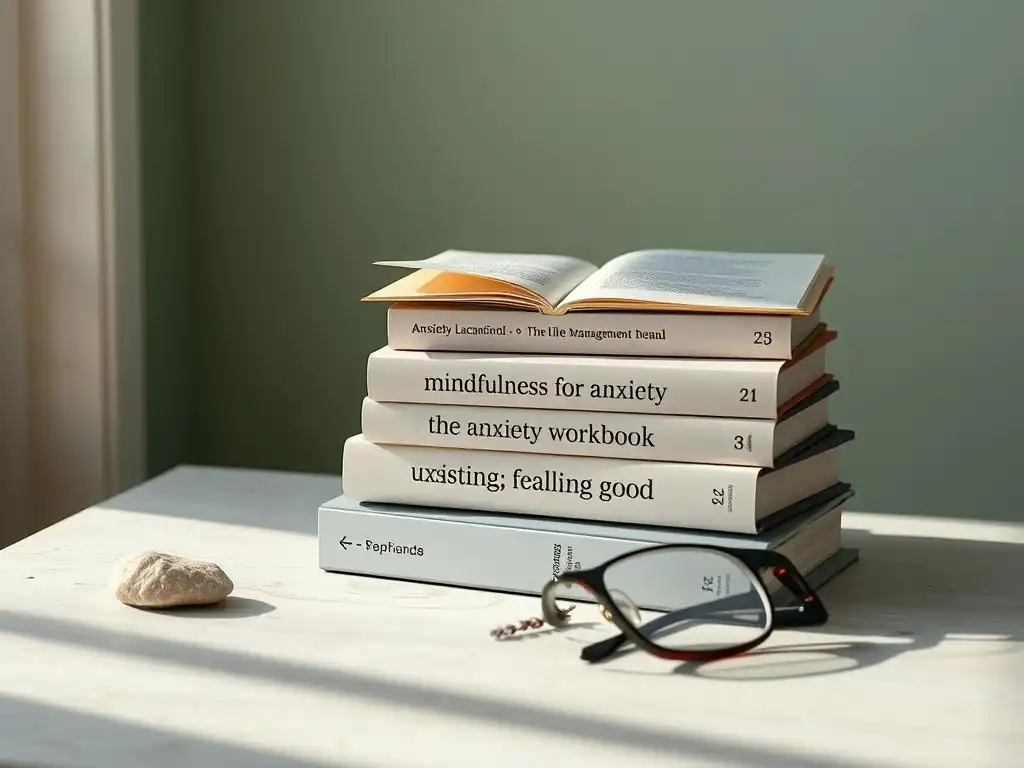
Creating a Personalized Anxiety Management Plan
Simply reading a book is often not enough to significantly reduce anxiety; active implementation of the strategies is key. The first step after choosing an anxiety management book recommendation is to create a personalized plan. Start by identifying the specific techniques or exercises within the book that resonate most with your particular anxiety symptoms and challenges. For example, if you struggle with social anxiety, you might focus on the cognitive restructuring exercises from "Feeling Good" related to fears of judgment and the exposure principles from "The Anxiety and Phobia Workbook" for gradually facing social situations.
Your plan should outline which techniques you will practice, how often, and in what situations. Use a journal or a simple digital note to record your plan. Be specific: "Practice deep breathing for 5 minutes every morning," "Identify and challenge one negative thought using the Triple Column Technique from 'Feeling Good' each day," or "Use the DARE technique during any moment of panic." Tailor the plan to fit your current lifestyle and capacity, starting with small, manageable steps to build momentum and avoid feeling overwhelmed. This structured approach helps turn abstract knowledge into concrete action for managing anxiety effectively.
Integrating Book Recommendations into Your Daily Routine
Consistency is crucial when implementing techniques from anxiety management books. Integrate the chosen strategies into your daily routine as naturally as possible. If the book recommends mindfulness, schedule short mindfulness breaks throughout your day, perhaps during your commute or while eating lunch. If it suggests challenging negative thoughts, make it a habit to pause and examine your thoughts when you notice yourself feeling anxious or worried.
Consider using triggers or cues to remind you to practice. For instance, if you feel your heart race (a common anxiety symptom), let that be a signal to use a breathing exercise from "The Anxiety and Phobia Workbook" or the DARE technique. If you find yourself worrying excessively about a future event, that's the cue to apply the worry management strategies from "Declutter Your Mind."
By linking techniques to specific times, places, or feelings, you increase the likelihood of consistent practice. Remember that progress often comes from small, regular efforts rather than sporadic, intense attempts. Making these anxiety management book recommendations a part of your daily life builds lasting coping skills.
Tracking Your Progress and Seeking Professional Support When Needed
Tracking your progress is an essential part of implementing strategies from anxiety management books. Use a journal, a mood tracking app, or a simple notebook to record when you use a technique and how you felt before and after. Note any changes in the frequency or intensity of your anxiety symptoms over time. This data can provide valuable insights into which strategies are most effective for you and offer encouragement by showing how far you've come. Don't expect immediate dramatic results; progress in managing anxiety is often gradual, with ups and downs.
While books are powerful resources, they are not a substitute for professional help, especially for moderate to severe anxiety disorders. If you find that your anxiety is significantly impacting your life, if the techniques from the books are not providing sufficient relief, or if you are experiencing suicidal thoughts, it is crucial to seek support from a qualified mental health professional.
A therapist can provide personalized guidance, diagnose underlying conditions, and offer more intensive treatments like individual therapy or medication if necessary. View these anxiety management book recommendations as valuable tools within a broader approach to mental well-being that may include professional support.
Beyond Books: Additional Resources for Anxiety Management
Online Therapy Options for Personalized Support
While books offer valuable self-guided strategies, personalized support from a therapist can be incredibly beneficial for managing anxiety. Online therapy platforms have made accessing professional help more convenient and accessible than ever before. These platforms connect you with licensed therapists, psychologists, or counselors through video calls, phone calls, or text-based communication, allowing you to receive support from the comfort of your home.
Online therapy can provide tailored treatment plans based on your specific anxiety symptoms, history, and goals. Therapists can help you delve deeper into the root causes of your anxiety, teach you advanced coping mechanisms, and provide accountability as you work through challenging situations. Many online therapists utilize evidence-based approaches like CBT, ACT, or exposure therapy, which can complement the techniques learned from anxiety management book recommendations. For individuals who face barriers to in-person therapy, such as geographical distance, scheduling conflicts, or difficulty leaving the house due to anxiety, online options offer a vital pathway to professional support.
Anxiety-Reducing Apps and Tools
In addition to books and therapy, a variety of digital tools and apps can support your anxiety management journey. Many apps offer guided meditations, breathing exercises, and mindfulness practices, providing convenient ways to integrate these techniques throughout the day. Some apps are based on CBT principles, offering interactive journals or thought-challenging exercises similar to those found in books like "Feeling Good."
Other tools include biofeedback devices that help you monitor physiological responses like heart rate or skin temperature, allowing you to see how relaxation techniques affect your body. There are also apps designed specifically for tracking anxiety levels, identifying triggers, and monitoring progress over time. While not a replacement for professional treatment, these digital resources can serve as helpful complements to the strategies learned from anxiety management book recommendations, offering quick access to coping tools and tracking capabilities on your smartphone or computer. Explore different apps to find those that align with the techniques you find most helpful.
The Importance of a Holistic Approach to Anxiety Management
Effectively managing anxiety often requires a holistic approach that addresses various aspects of your well-being. While books and therapeutic techniques are crucial, lifestyle factors play a significant role. This includes ensuring adequate sleep (aiming for 7-9 hours per night), maintaining a balanced diet, and engaging in regular physical activity (even moderate exercise like walking can significantly reduce anxiety symptoms).
Additionally, cultivating strong social connections and engaging in enjoyable hobbies or activities can provide emotional support and stress relief. Limiting caffeine and alcohol intake, which can exacerbate anxiety symptoms, is also important. A holistic approach recognizes that mind and body are interconnected. By combining the strategies learned from anxiety management book recommendations with healthy lifestyle habits, seeking professional support when needed, and utilizing helpful digital tools, you create a comprehensive plan that addresses anxiety from multiple angles, fostering greater resilience and overall well-being.
Investing in Your Mental Well-being: Choosing the Right Anxiety Book
Making an Informed Decision Based on Your Needs and Preferences
Choosing the right anxiety management book recommendation is an investment in your mental well-being. To make an informed decision, consider your specific needs and preferences. Reflect on the primary ways anxiety affects you: Are panic attacks your main challenge? Do you struggle most with relentless worry? Are intrusive negative thoughts overwhelming? Matching the book's focus to your core symptoms will increase its relevance and potential effectiveness.
Also, consider your learning style. Do you prefer a highly structured workbook with lots of exercises, or a more narrative-driven approach that explains concepts and offers reflections? Do you want a deep dive into one technique like CBT, or a broader overview of multiple strategies?
Reading reviews and summaries of each book can provide insight into its style and content. Many mental health websites and forums also offer recommendations and comparisons from people who have used these resources. Taking the time to choose a book that feels like a good fit increases the likelihood that you will engage with the material and apply the strategies consistently, making the most of your investment in self-help for managing anxiety.
Long-Term Benefits of Addressing Anxiety with Expert Guidance
Addressing anxiety using expert-recommended resources like these books offers significant long-term benefits. By learning evidence-based techniques such as cognitive restructuring, exposure, acceptance, and mindfulness, you gain a toolkit of skills that you can use throughout your life, not just during periods of high anxiety. These skills empower you to better understand your anxious patterns, challenge unhelpful thoughts, tolerate uncomfortable feelings, and respond to stress in healthier ways.
Over time, consistent practice of these strategies can lead to a reduction in the frequency and intensity of anxiety symptoms, improved emotional regulation, and greater confidence in your ability to cope. Many individuals report feeling more in control of their lives and less limited by fear and worry. The knowledge gained from these anxiety management book recommendations can also enhance the effectiveness of professional therapy by providing a common language and framework for discussion. Ultimately, investing in learning these proven strategies lays the groundwork for sustained mental well-being and a more peaceful life.
Taking the First Step Towards a Calmer and More Peaceful Life
Taking the first step towards managing your anxiety can feel daunting, but it is a powerful act of self-care. Choosing to explore expert-recommended anxiety management book recommendations is a tangible way to begin this journey. These books offer accessible, evidence-based strategies that have helped countless individuals find relief from the grip of anxiety.
Remember that recovery is a process, and it's okay to start small. Pick one book that seems most relevant to you, commit to reading a chapter or two each week, and try just one new technique. Be patient and compassionate with yourself. Celebrate small victories and acknowledge your effort. By engaging with these valuable resources and actively applying the strategies they offer, you are taking meaningful steps towards understanding your anxiety, building effective coping skills, and cultivating a calmer, more peaceful, and fulfilling life. The path to well-being is within reach, and these books can light the way.
Frequently Asked Questions
What are some proven strategies often highlighted in anxiety management book recommendations?
Anxiety management books often focus on techniques like Cognitive Behavioral Therapy (CBT), mindfulness, and relaxation exercises. They aim to help readers identify and challenge negative thought patterns that contribute to anxiety.
How can anxiety management book recommendations from professionals help me?
Professional recommendations offer expert-backed guidance and strategies. They can provide a structured approach to understanding and managing your anxiety effectively.
What kind of resources and support might I find in anxiety management book recommendations?
Beyond techniques, books often include worksheets, exercises, and real-life examples. They may also direct you to additional online resources and support groups for anxiety.
Are anxiety management book recommendations a substitute for professional therapy?
No, books are a complementary resource, not a replacement. If your anxiety is severe or debilitating, seeking professional therapy from a qualified mental health professional is crucial.
What should I consider when choosing an anxiety management book recommendation?
Think about your specific type of anxiety (e.g., social anxiety, panic disorder) and look for books addressing that. Also, consider the author's credentials and the book's overall approach to ensure it aligns with your needs.
Final Reflection: Finding Calm in the Pages: A Journey Through Anxiety Management
The search for effective anxiety management strategies is more critical than ever in our fast-paced, hyper-connected world. The overwhelming pressures of modern life leave many feeling overwhelmed and searching for solace. This article highlighted proven strategies found within the pages of carefully selected books, offering a roadmap towards a calmer, more resilient self.
The impact of anxiety on our collective well-being is undeniable, shaping not only individual lives but also the broader cultural landscape. We see it reflected in increased rates of mental health challenges, a growing awareness surrounding mental wellness, and a greater openness to discussing previously stigmatized topics. The cure for boredom is curiosity. There is no cure for curiosity.
– Dorothy Parker. This quote, while not directly about anxiety, speaks to the proactive nature of seeking solutions, a crucial element in managing anxiety effectively. The books discussed in this article represent a testament to this proactive spirit, offering tools and techniques to cultivate curiosity about one's inner world and foster self-understanding.
Now, consider your own journey. What resonates most with you from the books discussed? Which strategies feel most accessible and applicable to your life? Take a moment to reflect on your own relationship with anxiety and identify one small step you can take today to cultivate a more peaceful and balanced life.
Perhaps it's dedicating just fifteen minutes to mindful breathing, exploring a recommended book, or reaching out to a support system. The path to managing anxiety is a personal one, and these books offer a valuable starting point. Embrace the journey, and remember that even small steps can lead to significant progress.
Unleash Your Inner Calm: Take Control of Your Anxiety Today!
Thanks for taking the time to explore proven strategies for managing anxiety! We hope you found the book recommendations helpful and insightful. Ready to take the next step towards a calmer, more centered you?
- Dive into one of the recommended books: Start reading and applying the techniques that resonate most with you. This is the most impactful step you can take today.
- Share your favorite anxiety-management tip from the article or a book you’ve already read on social media using #MindCareGuide. Let's build a supportive community!
- Explore other resources on MindCareGuide.org to further enhance your self-care journey. You might be surprised by what you discover!
Which book from the list are you most excited to start reading, and why?