
Track Your Mood, Change Your Life: The Power of AppBased Emotional Insight

Welcome to Mind Care Guide, your compassionate companion on the journey to mental well-being.
Ever wonder if there's a way to understand the subtle shifts in your emotions, to decode the patterns behind your ups and downs? You're not alone. In this guide, we delve into the empowering world of mood tracking, specifically exploring the profound mood tracking app benefits that can unlock a deeper understanding of your emotional landscape. Could a simple app be the key to a more balanced and fulfilling life? Let's find out.
- Track Your Mood, Change Your Life: The Power of App-Based Emotional Insight
- The Science Behind Mood Tracking and Its Benefits
- Exploring the Benefits of Using a Mood Tracking App
- Choosing the Right Mood Tracking App: Key Features to Consider
- Maximizing the Benefits of Your Mood Tracking App
- Potential Limitations of Mood Tracking Apps
- Mood Tracking Apps vs. Traditional Mood Tracking Methods
- Real-Life Examples: Success Stories with Mood Tracking Apps
- The Future of Mood Tracking and Mental Health Technology
- Conclusion: Embracing Mood Tracking for a Healthier, More Emotionally Aware Life
-
Frequently Asked Questions
- What are the main benefits of using a mood tracking app for mental well-being?
- How can a mood tracking app help me identify patterns in my mental health?
- Can a mood tracking app replace professional mental health treatment?
- How do I choose the right mood tracking app for my needs?
- What kind of data should I track in a mood tracking app to maximize its effectiveness?
- Final Reflection: Harvesting the Seeds of Emotional Well-being
- Unlock Your Emotional Potential: Start Tracking Today!
Track Your Mood, Change Your Life: The Power of App-Based Emotional Insight
The Growing Popularity of Mood Tracking Apps for Mental Health
In recent years, there has been a notable surge in the adoption of digital tools for personal well-being, and mood tracking apps stand out as a prominent example. Millions of people worldwide are turning to their smartphones and tablets to log their daily emotional states, seeking to gain a clearer picture of their inner lives.
This trend reflects a broader societal shift towards prioritizing mental health and leveraging accessible technology to support it. The convenience, discretion, and data-driven insights offered by these applications make them an increasingly attractive option for individuals navigating various emotional challenges, from everyday stress to more complex mental health conditions.
The market for mental wellness apps, including those focused on mood tracking, has expanded dramatically. Reports suggest that the global mental wellness app market size is valued in the billions and is projected to grow significantly, indicating strong user engagement and perceived value. This growth is fueled by diverse user needs, ranging from those simply curious about their emotional patterns to individuals actively managing conditions like anxiety or depression.
The accessibility of these apps, often available for free or at a low cost, removes traditional barriers to entry, making emotional insight tools available to a wider demographic than ever before. The benefits of using a mood tracking app are becoming widely recognized, contributing to this rapid adoption.
Why Track Your Mood? Unveiling the Benefits of Emotional Self-Awareness
Tracking your mood is fundamentally about cultivating emotional self-awareness. It involves paying conscious attention to how you feel at different points throughout the day and noting down these observations. This practice moves beyond simply acknowledging a feeling in the moment; it encourages reflection on the intensity, nuances, and potential causes of your emotions. Over time, this consistent observation helps you become more attuned to your internal landscape, making it easier to identify subtle shifts in mood and understand the range of emotions you experience regularly. This foundational self-awareness is a critical first step towards proactive mental health management.
The act of documenting your mood provides a tangible record of your emotional journey. Instead of feelings being fleeting and easily forgotten, they are captured and stored, creating a personal database of your emotional history. This allows for a more objective review of your emotional state over days, weeks, or months.
Without tracking, it's easy to fall into generalized statements like "I've been feeling down lately," but a mood tracker can reveal specific patterns, such as feeling particularly low on certain days of the week or after particular interactions. This detailed insight into your emotional patterns is one of the core mood tracking app benefits, empowering you to understand when and why you feel the way you do.
The Science Behind Mood Tracking and Its Benefits
How Mood Tracking Apps Can Improve Emotional Regulation
Emotional regulation is the ability to manage and respond to an emotional experience. It involves influencing which emotions you have, when you have them, and how you experience and express them. Mood tracking apps facilitate this by first enhancing identification.
By prompting users to label their feelings and often providing a spectrum of emotions to choose from, the apps help individuals develop a richer emotional vocabulary and become more precise in identifying their current state. This accurate labeling is a crucial first step in regulation, as it moves from a vague sense of discomfort to recognizing specific emotions like frustration, sadness, or anxiety.
Beyond identification, consistent mood tracking provides the data needed to understand the context surrounding different emotions. When users log activities, sleep patterns, social interactions, or other factors alongside their mood, the app can reveal correlations. For example, a user might notice a pattern where anxiety levels spike after consuming caffeine or feeling consistently irritable on days with less than six hours of sleep.
Recognizing these connections through the app's data visualization allows individuals to anticipate challenging emotional states and implement coping strategies proactively, rather than reactively. This predictive insight is a key benefit of using a mood tracking app for improving emotional regulation.
The Link Between Mood Tracking and Reduced Symptoms of Anxiety and Depression
Research and anecdotal evidence strongly suggest a positive correlation between consistent mood tracking and a reduction in the severity of anxiety and depression symptoms. For individuals experiencing these conditions, symptoms can feel overwhelming and unpredictable. Tracking provides a sense of agency and control by allowing users to observe their symptoms over time and identify potential triggers or mitigating factors.
This process demystifies the experience to some extent, making symptoms feel less random and more manageable. For instance, someone with anxiety might notice their anxiety levels are consistently lower on days they practice mindfulness, a pattern clearly visible in their tracking data.
Furthermore, mood tracking can help challenge negative thought patterns often associated with depression and anxiety. A person experiencing depression might feel constantly sad, but their mood log might reveal periods of neutral or even slightly positive mood throughout the week that they otherwise wouldn't have acknowledged. This objective data can counteract the cognitive distortion of feeling perpetually low.
Similarly, tracking can help identify specific situations that trigger anxiety, allowing individuals to prepare for or avoid them, thus reducing overall symptom frequency or intensity. The objective record provided by a mood tracking app offers concrete evidence that can support therapeutic interventions and empower users in their recovery journey.
Exploring the Benefits of Using a Mood Tracking App

Benefit 1: Increased Self-Awareness and Emotional Understanding
Identifying Mood Patterns and Triggers with a Mood Tracker App
One of the most significant mood tracking app benefits is the ability to identify recurring patterns and triggers in your emotional life. By consistently logging your mood, along with contextual information like activities, location, or who you were with, the app compiles a rich dataset. Over time, this data can reveal correlations that you might not have noticed through casual observation. For example, you might discover that your energy levels consistently dip mid-afternoon, or that feelings of stress are reliably higher on Mondays. This insight into your personal rhythms is invaluable for anticipating emotional states.
Beyond simple patterns, a mood tracker app helps pinpoint specific triggers – events, situations, or interactions that reliably precede a change in mood. Perhaps interactions with a certain person consistently leave you feeling drained, or visiting a particular place reliably elevates your anxiety. The app's ability to cross-reference your mood with logged activities or notes makes these connections visible. Identifying these triggers is a powerful form of self-knowledge, providing the information needed to either manage your exposure to negative triggers or consciously seek out positive ones, thereby taking active steps to influence your emotional well-being.
Gaining Insights into Your Emotional Responses
Using a mood tracking app also provides deeper insight into how you respond to different situations. It's not just about identifying what triggers a mood, but understanding the nature of your emotional reaction and how it unfolds. For instance, logging your mood before, during, and after a stressful event can reveal the trajectory of your emotional response – perhaps anxiety builds gradually, peaks during the event, and then dissipates slowly over several hours. This detailed observation helps you understand your personal emotional "signature."
This level of insight allows you to move beyond simply labeling a feeling and explore its intensity, duration, and accompanying physical sensations. Many apps allow users to rate the intensity of a mood or add notes about physical symptoms like a racing heart or fatigue. Correlating these notes with your emotional state provides a holistic view of your experience. Understanding the nuances of your emotional responses is a key component of emotional intelligence and self-mastery, offering profound benefits of using a mood tracking app for personal growth.
Benefit 2: Improved Mental Health Management
Using Mood Data to Communicate with Therapists and Mental Health Professionals
Mood data collected via an app can be an incredibly valuable tool when communicating with therapists, counselors, or psychiatrists. Instead of relying on potentially vague or retrospective summaries of how you felt over the past week or month, you can present concrete data. This might include charts showing mood fluctuations, logs of specific incidents and the resulting emotions, or correlations between mood and factors like sleep or medication adherence. This objective information provides your mental health professional with a clearer, more accurate picture of your daily experiences and challenges.
This data-driven approach can significantly improve the effectiveness of therapy sessions. It allows the therapist to identify specific issues or patterns that might not emerge in conversation alone. For example, seeing a consistent dip in mood every Thursday afternoon might prompt a discussion about what happens on Thursdays.
Sharing mood data can also help track the effectiveness of interventions, such as therapy techniques or medication. If the data shows a gradual improvement in overall mood or a reduction in the frequency of low points after starting a new treatment, it provides quantifiable evidence of progress, which can be encouraging for both patient and clinician. This is a significant among the benefits of using a mood tracking app in a clinical context.
Proactive Mental Health Care Through Data Analysis
Consistent mood tracking enables a more proactive approach to mental health care. By analyzing trends in your mood data, you can identify potential periods of vulnerability before a crisis point is reached. For example, noticing a gradual decline in mood over several days or an increase in irritability might signal the need to implement coping strategies, reach out for support, or adjust your schedule to reduce stress. This allows you to intervene early, potentially preventing a more severe downturn.
Moreover, tracking helps you identify what supports your well-being. If your data shows that days you spend time in nature or connect with supportive friends consistently correlate with higher mood scores, you can consciously schedule more of these activities. Conversely, if certain activities or social situations reliably lead to negative emotional states, the data empowers you to set boundaries or seek alternatives. This data-informed decision-making allows you to actively shape your lifestyle to better support your mental health, moving from a reactive stance to a proactive one, highlighting the substantial mood tracking app benefits for self-management.
Benefit 3: Personalized Strategies for Emotional Well-being
Tailoring Coping Mechanisms to Specific Moods
One of the powerful benefits of using a mood tracking app is the ability to personalize your coping strategies based on your specific emotional patterns. Different moods often require different approaches. For instance, feeling overwhelmed by anxiety might call for grounding techniques or deep breathing exercises, while feeling low and lethargic due to depression might benefit from gentle physical activity or engaging in a distracting hobby. Your mood data can help you identify which strategies are most effective for you in response to particular feelings.
By logging not just your mood but also the coping strategies you employ, you can use the app's data to see which interventions correlate with an improvement in your emotional state. Did listening to music help lift your mood when you were feeling sad? Did talking to a friend reduce your stress levels? Over time, this creates a personalized library of effective coping tools matched to specific emotional challenges. This empirical approach, guided by your own data, moves beyond generic advice to highly tailored, effective strategies, which is a key benefit of mood tracking apps.
Creating a Personalized Emotional Wellness Plan
The insights gained from consistently tracking your mood and analyzing the data form the foundation for creating a truly personalized emotional wellness plan. This plan is dynamic and based on your unique patterns, triggers, and effective coping mechanisms identified through tracking. It might involve scheduling specific activities that boost your mood, planning for challenging times you've identified as recurring low points, or consciously avoiding situations that reliably trigger negative emotions.
A personalized plan might include:
- Scheduled activities linked to positive moods (e.g., "Walk in the park every sunny day").
- Pre-planned coping strategies for identified triggers (e.g., "If feeling anxious before a meeting, do 5 minutes of deep breathing").
- Reminders to check in with supportive friends during periods of predicted low mood.
- Notes on activities that worsen mood, to be minimized or avoided.
This plan is not a rigid set of rules but a flexible guide, informed by your own emotional data, helping you navigate your emotional landscape more effectively. The benefits of using a mood tracking app extend far beyond simple logging; they empower you to build a proactive, personalized roadmap for emotional well-being.
Choosing the Right Mood Tracking App: Key Features to Consider
Feature 1: User Interface and Ease of Use
The user interface (UI) and overall ease of use are paramount when selecting a mood tracking app. If an app is clunky, confusing, or takes too long to log an entry, you are less likely to use it consistently. A good UI should be intuitive, allowing you to quickly and easily select your mood, add relevant details, and save the entry within seconds. Look for clean designs, clear navigation, and minimal steps required to complete a logging session.
Consider whether the app's design resonates with you aesthetically and functionally. Some apps use simple color scales or emojis, while others offer more complex interfaces with detailed questionnaires. Task lists or quick-select options for activities, triggers, and notes can also significantly improve the logging process. Before committing to a paid subscription, try out free versions or trials to ensure the app's interface fits seamlessly into your daily routine and doesn't become a chore, which could negate the potential mood tracking app benefits.
Feature 2: Customization Options for Mood Logging
Effective mood tracking goes beyond just selecting a single emotion. The ability to customize what and how you track is crucial for gaining meaningful insights. Look for apps that allow you to:
- Select multiple emotions or a mood spectrum.
- Add notes about why you feel a certain way.
- Log accompanying factors like activities, sleep duration, social interactions, location, energy levels, or physical symptoms.
- Create custom tags or categories for unique triggers or activities relevant to your life (e.g.,
#workinglate,#therapy,#familydinner).
The more granular and personalized your tracking can be, the richer the data you collect. This customization allows you to tailor the app to your specific needs and areas of focus, whether you're trying to understand the impact of sleep on your mood or identify specific social triggers. Without adequate customization, the data may remain too generic to unlock the full benefits of using a mood tracking app.
Feature 3: Data Visualization and Reporting Capabilities
Logging data is only half the battle; being able to understand and interpret it is where the real benefits of using a mood tracking app emerge. Strong data visualization features are essential. Look for apps that offer:
- Charts showing mood trends over time (daily, weekly, monthly, yearly).
- Graphs correlating mood with specific activities, sleep, or other logged factors.
- Reports summarizing your most frequent moods, triggers, or positive influences.
- Export options (e.g., PDF, CSV) to share data with a therapist.
The ability to see your emotional data presented visually makes patterns and correlations much easier to spot than scrolling through a list of entries. Clear charts can quickly highlight periods of low mood, identify days where you felt particularly good, or show how consistently engaging in a certain activity impacts your emotional state. Effective data visualization is key to translating raw data into actionable insights, maximizing the mood tracking app benefits.
Feature 4: Privacy and Security Considerations for Your Emotional Data
Your mood data is highly personal and sensitive. Therefore, privacy and security should be top priorities when choosing an app. Investigate the app developer's privacy policy carefully. Consider:
- How is your data stored (locally on your device, encrypted on a server)?
- Is the data anonymized if stored remotely?
- Does the company share data with third parties (especially advertisers or researchers)?
- What security measures are in place to protect against data breaches?
- Does the app offer features like passcode or biometric lock?
While many apps offer great features, their data handling practices can vary significantly. For some, particularly those dealing with severe mental health conditions, the highest level of data security and privacy is non-negotiable. Ensure you are comfortable with how your emotional information is collected, stored, and used before committing to an app, as protecting this sensitive data is crucial for maintaining trust and security while reaping the mood tracking app benefits.
Maximizing the Benefits of Your Mood Tracking App
Establishing a Consistent Mood Tracking Routine
Consistency is perhaps the single most important factor in maximizing the benefits of using a mood tracking app. Sporadic entries yield fragmented data, making it difficult to identify reliable patterns or correlations. Aim to log your mood at least once or twice a day, perhaps in the morning to capture your baseline and in the evening to reflect on the day's experiences. Setting reminders within the app or on your phone can be incredibly helpful in building this habit.
Think of mood tracking not as a chore, but as a brief, mindful check-in with yourself. It can be integrated into existing routines, such as during your morning coffee, on your commute, or before going to bed. Committing to even just 60 seconds a day can build a rich dataset over time. The power of a mood tracking app lies in the cumulative data, and consistency is the key to unlocking its full potential for self-discovery and improved well-being.
Linking Mood Data to Activities, Sleep, and Other Lifestyle Factors
To move beyond simply recording how you feel and understand why, it's essential to link your mood entries to relevant lifestyle factors. Most mood tracking apps allow you to log activities, sleep duration, medication taken, social interactions, exercise, food, or environmental factors like weather. The more context you provide, the more insightful the data analysis will be.
For example, logging your mood alongside sleep duration can reveal if lack of sleep consistently correlates with irritability or low energy. Tracking your mood before and after exercise can show its positive impact. Noting social interactions can highlight which relationships uplift you and which might be draining. This contextual data is where the deepest insights often lie, allowing the app's analysis features to show you concrete correlations and helping you understand the complex interplay between your daily life and your emotional state.
Reflecting on Your Mood Data and Identifying Actionable Insights
Simply logging data is not enough; the true benefits of using a mood tracking app come from reflecting on the information it provides. Regularly review your mood charts and reports – weekly or monthly is a good starting point. Look for patterns: are there specific days or times when your mood is consistently low or high? Are certain activities reliably linked to positive or negative feelings?
Once you identify patterns or correlations, the next step is to translate these insights into action. If you notice that spending time outdoors consistently improves your mood, make an effort to incorporate more nature walks into your week. If you see that late-night scrolling on social media leads to increased anxiety the next day, decide to limit screen time before bed. This process of analysis and conscious adjustment is where mood tracking transforms from a passive logging activity into an active tool for self-improvement and proactive mental health management.
Potential Limitations of Mood Tracking Apps
Over-Reliance on Technology for Emotional Validation
While mood tracking apps offer significant benefits, there is a potential risk of over-reliance on technology for emotional validation. Some individuals might start using the app's data as the sole indicator of their well-being, perhaps feeling discouraged on days with low scores even if they otherwise felt okay, or constantly checking the app for reassurance. This can sometimes lead to a disconnect from your actual felt experience, prioritizing the data point over your internal sensation.
It's important to remember that an app is a tool, not a replacement for your own intuition and self-awareness. The data should complement, not dictate, your understanding of your emotions. If you find yourself obsessively checking the app or feeling overly anxious about your "score," it might be a sign to step back and reassess your relationship with the technology. The goal is enhanced self-awareness, not external validation from a digital platform.
The Risk of Obsessive Tracking and Anxiety
For some individuals, particularly those prone to anxiety or perfectionism, mood tracking can potentially become an obsessive behavior. The desire to capture every single mood fluctuation or meticulously log every detail might lead to increased anxiety rather than reduced symptoms. The pressure to track perfectly or to see consistently "good" moods can add another layer of stress.
If mood tracking starts to feel like a compulsion, or if analyzing the data increases your worry about your mental state, it's crucial to recognize this. In such cases, it might be helpful to reduce the frequency of tracking, simplify what you log, or take a break from the app altogether. It's important that the tool serves you, not the other way around. If mood tracking is negatively impacting your mental state, its benefits are outweighed by the harm.
Ensuring Data Privacy and Security
As highlighted earlier, data privacy and security are significant considerations. While reputable apps employ encryption and follow privacy protocols, the risk of data breaches or misuse is never zero in the digital world. Sensitive emotional data, if accessed by unauthorized parties, could potentially be used in ways that compromise privacy or security.
Users must be vigilant about the permissions they grant to apps and understand the developer's privacy policy. Using strong, unique passwords and enabling any available security features (like biometric locks) are essential steps. For individuals dealing with highly sensitive mental health issues or living in contexts where mental health stigma is high, the potential privacy risks associated with storing personal emotional data digitally may outweigh some of the benefits, requiring careful consideration.
Mood Tracking Apps vs. Traditional Mood Tracking Methods
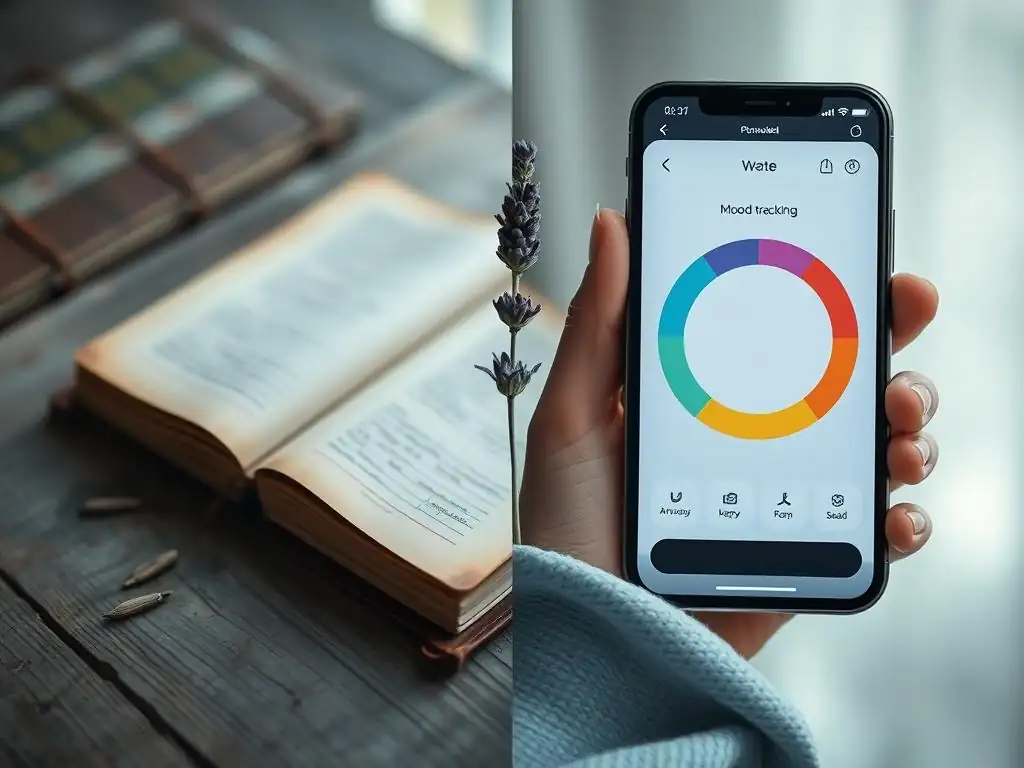
Benefits of Apps over Journals: Accessibility and Data Analysis
Traditional mood tracking often involves using a pen and paper journal. While journaling offers valuable reflective benefits, apps provide distinct advantages, particularly in terms of accessibility and data analysis. An app is always on your phone, making it easy to log a mood entry anytime, anywhere, without needing a physical notebook. This convenience increases the likelihood of consistent tracking throughout the day.
More significantly, apps automate the data analysis process. Manually reviewing pages of journal entries to find patterns or correlate moods with activities is time-consuming and often less precise. Apps can instantly generate charts, graphs, and reports, revealing trends and correlations that would be difficult or impossible to spot manually. This data visualization capability is a major benefit of using a mood tracking app, transforming raw notes into actionable insights much more efficiently than traditional methods.
The Importance of Combining App-Based Tracking with Other Mental Wellness Practices
While mood tracking apps are powerful tools, they are most effective when used as part of a broader mental wellness strategy, not in isolation. An app can provide data and insights, but it doesn't replace therapy, self-care practices, healthy lifestyle choices, or social support. Think of the app as a diagnostic and monitoring tool that informs other aspects of your well-being plan.
For example, data from your mood tracker might indicate that stress is a major trigger for you. The app helps you identify this, but managing stress requires implementing practices like mindfulness, exercise, or setting boundaries, which happen outside the app. Similarly, while the app can show patterns related to depression, professional therapy and potentially medication are often necessary for effective treatment. Combining the data-driven insights from a mood tracking app with traditional coping mechanisms and professional support offers a holistic and robust approach to mental health.
Real-Life Examples: Success Stories with Mood Tracking Apps
Consider a hypothetical individual, Alex, who struggled with severe social anxiety. Alex began using a mood tracking app, logging anxiety levels before, during, and after social interactions, even brief ones like ordering coffee or talking to a coworker. They also noted details about the interaction itself and any coping strategies used (e.g., deep breathing). Initially, the data showed consistently high anxiety ratings in social situations.
Over several months, as Alex engaged in exposure therapy guided by a therapist, they continued to log their mood and experiences. The app data provided objective evidence of gradual improvement. While still feeling anxious, the intensity ratings slowly decreased over time for similar situations. Alex also used the app to identify specific types of interactions that were less anxiety-provoking (e.g., one-on-one versus group settings) and those that were particularly challenging. This data helped inform therapy goals and track progress, demonstrating tangible benefits of using a mood tracking app in conjunction with clinical treatment.
Case Study 2: Identifying Seasonal Affective Disorder Triggers with Mood Data
Imagine Sarah, who noticed her mood consistently dropped during the winter months but hadn't fully understood the pattern. She started using a mood tracking app and, alongside her mood, logged factors like hours of sunlight exposure, outdoor activity, and sleep. After tracking for a full year, the app's reports clearly showed a significant correlation between reduced sunlight/outdoor time and lower mood scores during the autumn and winter.
This clear pattern, visible in her mood data, helped Sarah and her doctor identify Seasonal Affective Disorder (SAD) as a likely factor. Armed with this insight from her mood tracker, Sarah implemented proactive strategies for the following winter, including using a light therapy lamp, scheduling more outdoor walks during daylight hours when possible, and ensuring consistent social connections.
The app data not only helped diagnose the pattern but also allowed her to monitor the effectiveness of these interventions, showing a less severe mood decline the following year – a clear example of the benefits of using a mood tracking app for identifying and managing cyclical mood issues.
The Future of Mood Tracking and Mental Health Technology
Integration with Wearable Technology and AI
The future of mood tracking apps likely involves deeper integration with other technologies, particularly wearable devices and artificial intelligence (AI). Wearables like smartwatches and fitness trackers already collect data on sleep patterns, heart rate variability, activity levels, and even potentially stress indicators. Integrating this passive physiological data with actively logged mood entries could provide a more comprehensive picture of well-being, uncovering correlations that users might not even think to track manually.
AI has the potential to enhance mood tracking by providing more sophisticated data analysis. AI algorithms could identify complex, non-obvious patterns in a user's data, offer personalized insights based on millions of data points from other users (while maintaining individual privacy), and even predict potential mood shifts based on collected data, prompting proactive interventions. This integration promises to make mood tracking even more insightful and predictive, further amplifying the benefits of using a mood tracking app.
Personalized Mental Healthcare Through Advanced Data Analysis
Advanced data analysis, powered by AI and machine learning, can pave the way for truly personalized mental healthcare. By analyzing a user's extensive mood and lifestyle data, apps could potentially offer highly tailored recommendations for coping strategies, suggest specific times for self-care activities based on predicted mood patterns, or even provide personalized nudges and support messages.
Furthermore, aggregated and anonymized data from large user bases (with consent and strict privacy controls) could provide valuable insights for researchers and mental health professionals, helping to understand population-level trends in mental well-being and the effectiveness of different interventions. While ethical considerations around data privacy and algorithmic bias are crucial, the potential for using advanced analytics to personalize mental health support and improve outcomes represents an exciting frontier in the evolution of mood tracking app benefits and digital mental health.
Conclusion: Embracing Mood Tracking for a Healthier, More Emotionally Aware Life
Taking the First Step Towards Emotional Well-being with a Mood Tracker
Embarking on the journey of mood tracking is a proactive step towards greater emotional well-being and self-understanding. It's a commitment to paying attention to your inner world, recognizing that your feelings are valid indicators of your state, and seeking to understand the factors that influence them. Choosing to use a mood tracking app makes this journey accessible, convenient, and insightful, leveraging technology to support personal growth.
The benefits of using a mood tracking app are manifold, ranging from enhanced self-awareness and the identification of personal triggers to improved communication with mental health professionals and the ability to build a truly personalized wellness plan. While not a cure-all, a mood tracker provides a powerful tool for gathering the data needed to make informed decisions about your lifestyle and mental health care. Taking the first step, which simply involves downloading an app and making your first entry, can set you on a path towards a more emotionally aware and healthier life.
It's important to approach mood tracking with curiosity and self-compassion, viewing it as a tool for learning rather than judgment. Consistent effort, combined with reflection on the data, will unlock the full potential of this simple yet profound practice.
Frequently Asked Questions
What are the main benefits of using a mood tracking app for mental well-being?
Mood tracking apps offer several advantages, including increased self-awareness of emotional patterns, improved identification of triggers for mood changes, and enhanced communication with mental health professionals.
How can a mood tracking app help me identify patterns in my mental health?
By consistently logging your mood, activities, and other relevant factors, you can uncover correlations between your emotions and external events. This data allows you to identify predictable patterns and anticipate potential mood shifts.
Can a mood tracking app replace professional mental health treatment?
No, a mood tracking app is a supplement to professional treatment, not a replacement. It provides valuable insights for self-monitoring and can enhance communication with therapists, but it doesn't substitute their expertise.
How do I choose the right mood tracking app for my needs?
Consider features like ease of use, data privacy, customization options, and integration with other health apps. Look for apps that offer visualizations of your data and allow you to export it for sharing with your therapist.
What kind of data should I track in a mood tracking app to maximize its effectiveness?
Track not only your mood but also related factors like sleep patterns, activity levels, diet, social interactions, and stress levels. The more comprehensive your data, the more meaningful insights you'll gain.
Final Reflection: Harvesting the Seeds of Emotional Well-being
The ability to understand and manage our emotions is no longer a luxury, but a necessity in our fast-paced, digitally-driven world. Ignoring our emotional landscape can lead to burnout, strained relationships, and diminished overall well-being. This article explored the transformative power of mood tracking apps, demonstrating how seemingly simple daily entries can unlock profound self-awareness and pave the way for positive change.
The impact of readily available emotional tracking tools is undeniable. We are witnessing a cultural shift, a move away from the stigma surrounding mental health and towards proactive self-care. This increased openness is vital, allowing individuals to take ownership of their emotional well-being. The unexamined life is not worth living,
Socrates famously stated, and in today's context, this rings truer than ever. By actively tracking our moods, we begin the crucial process of self-examination, identifying patterns, triggers, and ultimately, strategies for navigating life's emotional currents with greater ease and resilience.
Now, consider your own emotional landscape. What patterns do you notice? What triggers your highs and lows? This article isn't just about using an app; it's about embarking on a journey of self-discovery. Download an app, start tracking, and begin to cultivate a deeper understanding of yourself. Embrace the power of emotional insight – it's a gift you give yourself, one that will continue to yield rewards long after you've closed this article. The journey to a more emotionally fulfilling life begins with a single entry. Start today.
Unlock Your Emotional Potential: Start Tracking Today!
Thanks for taking the time to explore the power of app-based mood tracking! You've learned how valuable understanding your emotional patterns can be for creating a happier, healthier life. Now, let's put that knowledge into action.
- Download a mood tracking app and start logging your emotions today. This is your first step towards gaining valuable self-awareness.
- Share this article with a friend who might benefit from learning about the power of emotional tracking. Support each other on your journey!
- Consider exploring different mindfulness techniques to complement your mood tracking – you might be surprised by the results!
What small step will you take today to gain a deeper understanding of your emotions and improve your wellbeing?