
Your Personal Guide to Calm: Customizing Coping for Adult Anxiety


Welcome to Mind Care Guide, your trusted companion on the path to mental well-being. Feeling overwhelmed by anxiety? You're not alone. In this article, we delve into adult anxiety coping strategies, offering personalized tools and techniques to help you navigate the challenges and reclaim your inner peace. Curious about finding what works best for you? Let's explore together.
Your Personal Guide to Calm: Customizing Coping for Adult Anxiety
- Understanding Adult Anxiety and Its Impact
- Developing Personalized Adult Anxiety Coping Strategies
- Practical Coping Techniques for Managing Adult Anxiety
- Advanced Adult Anxiety Coping Methods
- Creating Your Personalized Anxiety Coping Plan
- Maintaining Calm: Long-Term Strategies for Managing Adult Anxiety
-
Frequently Asked Questions
- What are some immediate coping strategies I can use when feeling overwhelmed by anxiety?
- How can I identify the specific triggers for my adult anxiety?
- What are the benefits of seeking professional help for anxiety, and what kind of therapy is most effective?
- Can lifestyle changes, like diet and exercise, really make a difference in managing adult anxiety?
- How can I build a long-term plan for managing my anxiety, rather than just relying on short-term coping mechanisms?
- Final Reflection: Cultivating Your Inner Oasis
- Unlock Your Inner Calm: Take Control of Anxiety Today!
Understanding Adult Anxiety and Its Impact
Recognizing the Signs and Symptoms of Generalized Anxiety Disorder
Generalized Anxiety Disorder (GAD) is characterized by excessive, uncontrollable worry about everyday things, often lasting for at least six months. Unlike occasional stress, this worry is pervasive and difficult to manage, frequently focusing on potential problems related to health, family, money, or work. Physical symptoms are common and can include restlessness, feeling on edge, being easily fatigued, difficulty concentrating, irritability, muscle tension, and sleep disturbances. These signs can significantly interfere with daily functioning and quality of life.
Beyond the core worry, individuals with GAD might experience a constant feeling of dread or apprehension. They may spend excessive time preparing for potential negative outcomes or seeking reassurance from others. While the content of the worry might shift, the underlying feeling of anxiety and difficulty controlling it persists. For example, someone with GAD might worry intensely about a minor health symptom, then shift their worry to their job security, and then to a family member's well-being, all within a short period.
The Different Types of Anxiety Disorders Affecting Adults
Anxiety manifests in several distinct forms in adults. Besides GAD, common types include Panic Disorder, characterized by sudden, intense panic attacks; Social Anxiety Disorder, involving intense fear of social situations; Specific Phobias, which are intense fears of particular objects or situations (like heights or flying); and Agoraphobia, the fear of situations where escape might be difficult or help unavailable, often leading to avoidance of public places. Obsessive-Compulsive Disorder (OCD) and Post-Traumatic Stress Disorder (PTSD), while related to anxiety, are classified separately but share overlapping symptoms and coping strategies.
Each type of anxiety disorder has unique characteristics and triggers, although there is often comorbidity, meaning individuals may experience more than one type simultaneously. For instance, someone with Social Anxiety Disorder might also experience panic attacks in social situations, blurring the lines between Panic Disorder and Social Anxiety. Understanding these different types is crucial because effective adult anxiety coping strategies often need to be tailored to the specific nature of the anxiety experienced.
How Anxiety Impacts Relationships, Work, and Health: A Comprehensive Overview
Chronic anxiety can cast a long shadow over various aspects of an adult's life. In relationships, it can lead to increased conflict due to irritability, difficulty trusting others, excessive need for reassurance, or withdrawal due to social avoidance. A partner or family member may feel frustrated or misunderstood by the constant worry or avoidance behaviors. Social Anxiety, specifically, can make simple interactions challenging, leading to isolation and strained connections.
Professionally, anxiety can hinder performance and career progression. Symptoms like difficulty concentrating, fatigue, or fear of public speaking (common in social anxiety) can impact productivity and confidence. An individual with GAD might spend excessive time worrying about deadlines or potential errors, reducing efficiency. Furthermore, the physical toll of chronic stress and anxiety can manifest as headaches, digestive issues, and weakened immune function, potentially leading to increased sick days and long-term health problems like cardiovascular issues, according to some studies linking chronic stress to physical health decline. Effective adult anxiety coping strategies are vital for mitigating these widespread impacts.
Developing Personalized Adult Anxiety Coping Strategies
The Importance of Tailoring Coping Mechanisms to Your Needs
Just as no two individuals are exactly alike, their experiences with anxiety and what helps them manage it will vary. A coping strategy that works wonders for one person might be ineffective or even counterproductive for another. Factors like the specific type of anxiety disorder, personality traits, lifestyle, support system, and personal preferences all play a role in determining which adult anxiety coping strategies will be most beneficial. Attempting a generic approach without considering these individual factors can lead to frustration and a feeling that coping is impossible.
Tailoring your approach means experimenting with different techniques and discovering what resonates with you. It involves understanding your unique triggers, your typical responses to anxiety, and what makes you feel safe and calm. For instance, someone who thrives in group settings might find group therapy or support groups highly effective, while an introvert might prefer individual therapy or solitary practices like journaling or meditation. Effective adult anxiety coping strategies are not one-size-fits-all; they are custom-built.
Identifying Your Anxiety Triggers and Patterns
Identifying triggers is a foundational step in developing effective adult anxiety coping strategies. Triggers can be external events (like public speaking, social gatherings, work deadlines, or specific places) or internal states (like certain thoughts, feelings, or physical sensations). Keeping a journal can be immensely helpful in spotting patterns. Note when anxiety spikes, what was happening immediately before, where you were, who you were with, and what thoughts were running through your mind. Over time, this reveals recurring situations, thoughts, or physical cues that precede anxious feelings.
Understanding your patterns of response is equally important. Do you tend to avoid triggers? Do you try to control anxious thoughts aggressively? Do you experience specific physical symptoms like a racing heart or muscle tension? Recognizing these patterns allows you to predict when anxiety might arise and choose appropriate coping strategies before you become overwhelmed. For example, if you notice that thinking about future uncertainties consistently triggers your anxiety, cognitive strategies focused on challenging predictive thoughts might be particularly useful among your adult anxiety coping strategies.
Self-Assessment: Understanding Your Anxiety Profile [Using the GAD-7 Anxiety Scale]
Self-assessment tools can provide valuable insights into the severity and nature of your anxiety, helping to inform your choice of adult anxiety coping strategies. The Generalized Anxiety Disorder 7-item scale (GAD-7) is a widely used, brief questionnaire that screens for GAD. It asks how often over the last two weeks you have been bothered by certain problems, such as feeling nervous, anxious, or on edge, or worrying too much about different things. Responses are scored from 0 (not at all) to 3 (nearly every day).
The total score on the GAD-7 can give an indication of anxiety severity: 0-4 suggests minimal anxiety, 5-9 mild anxiety, 10-14 moderate anxiety, and 15-21 severe anxiety. While not a substitute for professional diagnosis, understanding where your score falls can help you gauge the level of support you might need – perhaps self-help strategies are sufficient for mild anxiety, while moderate to severe anxiety might strongly indicate the need for professional guidance. Using such tools helps quantify subjective feelings and provides a baseline against which to measure the effectiveness of different adult anxiety coping strategies over time.
Practical Coping Techniques for Managing Adult Anxiety

Mindfulness and Meditation for Anxiety Relief
Mindfulness involves paying attention to the present moment without judgment. For individuals with anxiety, whose minds often dwell on past worries or future fears, mindfulness can help ground them in the here and now, interrupting the cycle of anxious thought. Regular practice has been shown in numerous studies to reduce symptoms of anxiety and stress. It teaches you to observe your thoughts and feelings from a distance rather than getting swept away by them.
Meditation is a formal practice of mindfulness, often involving focusing on the breath, bodily sensations, or a mantra. Even short periods of meditation, like 5-10 minutes daily, can build resilience to anxiety over time. Techniques range from simple seated meditation to walking meditation or body scans. The goal isn't to eliminate thoughts but to notice them without engaging with them, thus reducing their power over your emotional state. Incorporating these practices is a key element of effective adult anxiety coping strategies.
Simple Mindfulness Exercises for Daily Practice
Simple mindfulness exercises can be integrated into daily life without needing dedicated meditation time. One easy technique is mindful breathing: simply paying attention to the sensation of air entering and leaving your nostrils or the rise and fall of your abdomen for a few breaths. Another is mindful walking: focusing on the physical sensations of walking, the movement of your legs, and the contact of your feet with the ground.
Mindful eating is another practical exercise: paying full attention to the smell, taste, texture, and temperature of your food, chewing slowly, and noticing the sensations of eating and fullness. These small practices help build the muscle of present-moment awareness, making it easier to apply mindfulness when anxiety arises. Regularly practicing these simple techniques strengthens your overall adult anxiety coping strategies.
Guided Meditation Resources for Anxiety Management
For those new to meditation or who find it difficult to focus on their own, guided meditations can be incredibly helpful. These are audio recordings led by an instructor who guides you through the process, often focusing on relaxation, body scans, or gentle awareness. Many free and subscription-based apps, websites, and podcasts offer guided meditations specifically designed for anxiety relief.
Guided meditations can range in length from a few minutes to half an hour or more. Some focus on specific challenges like sleep anxiety or panic attacks. Using guided resources removes the pressure of "doing it right" and allows you to simply follow instructions, making it easier to access the calming benefits of meditation. Exploring different resources to find a guide whose voice and style resonate with you can significantly enhance your adult anxiety coping strategies.
Relaxation Techniques: Reducing Physical Tension and Anxiety
Anxiety often manifests physically as muscle tension, rapid heartbeat, and shallow breathing. Relaxation techniques aim to counteract these physical symptoms, which in turn can signal to the brain that there is no immediate threat, helping to calm the nervous system. Regularly practicing these techniques can lower overall stress levels and provide immediate relief during moments of heightened anxiety.
Different techniques work for different people, and it's worth experimenting to find what feels most effective for you. Combining physical relaxation with mental calming practices like deep breathing or visualization can amplify the benefits. Incorporating relaxation into your daily routine, not just when you feel anxious, helps build your capacity to relax when you need it most, making these essential adult anxiety coping strategies.
Progressive Muscle Relaxation for Anxiety
Progressive Muscle Relaxation (PMR) is a technique that involves tensing specific muscle groups and then releasing the tension. You typically start with one part of the body, like the hands, clenching them tightly for a few seconds, then releasing and noticing the sensation of relaxation. You then move systematically through other muscle groups, including the arms, shoulders, neck, face, chest, abdomen, back, legs, and feet.
The process helps you become more aware of what tension feels like in your body and the contrast with relaxation. By intentionally releasing tension, you can reduce the overall physical tightness associated with anxiety. Practicing PMR regularly can help you recognize and release tension in specific areas as soon as you notice it, making it a powerful tool among adult anxiety coping strategies.
Deep Breathing Exercises to Calm Anxiety
When anxious, breathing often becomes rapid and shallow, which can exacerbate feelings of panic or stress. Deep breathing exercises, also known as diaphragmatic or belly breathing, involve taking slow, deep breaths that fully engage the diaphragm. This type of breathing promotes relaxation and helps regulate the body's stress response.
A simple technique is 4-7-8 breathing: inhale deeply through your nose for a count of four, hold your breath for a count of seven, and exhale slowly through your mouth for a count of eight. Repeating this cycle a few times can quickly lower heart rate and induce a sense of calm. Practicing deep breathing regularly, even when not anxious, makes it an automatic response you can deploy effectively when needed, strengthening your adult anxiety coping strategies.
Cognitive Behavioral Therapy (CBT) Techniques for Anxiety
Cognitive Behavioral Therapy (CBT) is a highly effective form of therapy for anxiety disorders. A core principle is that our thoughts, feelings, and behaviors are interconnected, and by changing our thoughts or behaviors, we can influence our feelings. CBT techniques focus on identifying and challenging negative or irrational thought patterns that contribute to anxiety and developing more realistic and helpful ways of thinking and behaving.
Many CBT techniques can be learned and practiced independently, making them valuable self-help tools as part of your adult anxiety coping strategies. These techniques help you gain perspective on your anxious thoughts and develop practical ways to approach situations you might otherwise avoid. While working with a therapist is often recommended for learning CBT, many resources are available to introduce the core concepts and exercises.
Identifying and Challenging Negative Thoughts
Anxiety is often fueled by negative and distorted thinking patterns, such as catastrophizing (assuming the worst-case scenario), overgeneralization (seeing a single negative event as a never-ending pattern), or mind reading (assuming you know what others are thinking negatively about you). The first step in challenging these thoughts is to become aware of them. When you feel anxious, ask yourself: What am I thinking right now? Write down the automatic negative thoughts that come to mind.
Once identified, you can challenge these thoughts by evaluating the evidence for and against them. For example, if your thought is "I'm going to fail this presentation and everyone will laugh," ask yourself: What is the actual evidence that I will fail? What is the evidence that I won't? What's a more balanced perspective? This process helps expose the irrationality of anxious thoughts. Integrating this practice is a powerful addition to your adult anxiety coping strategies.
Cognitive Restructuring: Reframing Anxious Thoughts
Cognitive restructuring is the process of actively changing negative thought patterns into more realistic and positive ones. After identifying and challenging a negative thought, the next step is to reframe it. Instead of accepting the catastrophic thought "I'm going to fail," a reframed thought might be "I'm feeling nervous about this presentation, but I've prepared, and even if it's not perfect, I will get through it."
This doesn't mean replacing negative thoughts with unrealistic positive ones, but rather developing more balanced, accurate, and helpful perspectives. By practicing cognitive restructuring, you train your brain to default to less anxious interpretations of situations. This skill is fundamental to many adult anxiety coping strategies and, with practice, can significantly reduce the intensity and frequency of anxious feelings.
Lifestyle Changes to Support Anxiety Management
While specific techniques are crucial, broader lifestyle choices form the foundation of effective adult anxiety coping strategies. How you treat your body significantly impacts your mental state. Poor diet, lack of exercise, and insufficient sleep can all exacerbate anxiety symptoms, creating a vicious cycle. Conversely, making conscious choices to improve these areas can build resilience and reduce overall anxiety levels.
These lifestyle changes require consistency and patience. They are not quick fixes but rather long-term investments in your well-being. Integrating healthy habits into your daily routine provides a stable base from which to manage anxiety more effectively. Considering these factors is just as important as practicing meditation or challenging thoughts when developing your personalized plan for coping with adult anxiety.
The Role of Diet and Nutrition in Anxiety
What you eat can influence your mood and energy levels, which in turn affect anxiety. While no specific diet cures anxiety, certain nutritional habits can support mental well-being. Maintaining stable blood sugar levels by eating regular, balanced meals containing complex carbohydrates, lean proteins, and healthy fats can prevent energy crashes and mood swings that can trigger anxiety. Limiting caffeine and alcohol intake is also often recommended, as they can mimic or worsen anxiety symptoms like jitters and rapid heart rate.
Some research suggests potential links between gut health and mental health, highlighting the importance of a diet rich in fiber and fermented foods. Ensuring adequate intake of vitamins and minerals, such as B vitamins, magnesium, and omega-3 fatty acids, which are important for brain function, is also beneficial. Focusing on a whole-foods-based diet supports overall health and strengthens your adult anxiety coping strategies.
The Importance of Exercise for Reducing Anxiety
Regular physical activity is a powerful tool for managing anxiety. Exercise releases endorphins, natural mood boosters, and can help reduce stress hormones like cortisol. It also provides a healthy outlet for pent-up energy and tension, common symptoms of anxiety. Engaging in physical activity can also distract you from anxious thoughts and improve sleep quality.
Studies have shown that even moderate exercise, like a brisk 30-minute walk several times a week, can significantly reduce anxiety symptoms. The type of exercise is less important than consistency; find activities you enjoy, whether it's running, yoga, swimming, or dancing. Making exercise a regular part of your routine is one of the most effective adult anxiety coping strategies available.
Sleep Hygiene for Better Anxiety Control
Sleep disturbances are common in anxiety disorders, and poor sleep can, in turn, worsen anxiety. Establishing good sleep hygiene is therefore crucial. This involves creating a consistent sleep schedule, going to bed and waking up around the same time each day, even on weekends, to regulate your body's internal clock.
Creating a relaxing bedtime routine can also help signal to your body that it's time to wind down. This might include taking a warm bath, reading a book, or practicing gentle stretching or meditation. Avoiding screens (phones, tablets, TVs) for at least an hour before bed, limiting caffeine and alcohol in the evening, and ensuring your bedroom is dark, quiet, and cool are all important components of good sleep hygiene. Prioritizing sleep is a fundamental part of effective adult anxiety coping strategies.
Advanced Adult Anxiety Coping Methods
Exposure Therapy: Facing Your Fears Gradually
Exposure therapy is a behavioral technique often used for phobias, social anxiety, and panic disorder. It involves gradually and systematically exposing yourself to the situations or objects that trigger your anxiety in a safe and controlled environment. The principle is that by facing your fears repeatedly without experiencing the feared outcome, you learn that the situation is not actually dangerous and the anxiety response diminishes over time through a process called habituation.
This therapy is typically guided by a trained therapist, as it requires careful planning and pacing to avoid overwhelming the individual. Exposure can be in vivo (real-life), imaginal (visualizing the feared situation), or interoceptive (triggering physical sensations associated with panic, like rapid breathing). It's a powerful method for dismantling avoidance behaviors, which often maintain anxiety.
Understanding the Principles of Exposure Therapy
The core principle of exposure therapy is that avoidance reinforces anxiety. Every time you avoid a feared situation, you get temporary relief, which strengthens the belief that the situation was genuinely dangerous and that you couldn't cope. Exposure therapy breaks this cycle. It operates on the understanding that anxiety naturally decreases if you remain in the feared situation long enough without escaping.
A key element is creating a "fear hierarchy" or "exposure hierarchy," ranking feared situations from least to most anxiety-provoking. Treatment begins with the least feared item and progresses gradually up the hierarchy as anxiety reduces at each step. This systematic approach ensures the process is manageable and builds confidence over time, making it a structured and effective adult anxiety coping strategy for specific fears.
[Creating an Exposure Hierarchy for Social Anxiety]
For someone with social anxiety, an exposure hierarchy might involve ranking social situations from mildly uncomfortable to severely anxiety-provoking. The least feared item might be making eye contact with a stranger or asking a store clerk a simple question. Mid-range items could include eating in a public place or participating in a meeting at work. The most feared items might be giving a presentation or attending a large party where you know few people.
The hierarchy should be specific and measurable. For example, instead of "talking to people," a step might be "starting a 2-minute conversation with a colleague about a neutral topic." The individual then gradually exposes themselves to these situations, starting with the easiest, until their anxiety significantly decreases before moving to the next step. This systematic desensitization is a core component of many effective adult anxiety coping strategies for phobic or social fears.
Acceptance and Commitment Therapy (ACT) for Anxiety
Acceptance and Commitment Therapy (ACT) is a newer form of behavioral therapy that differs from traditional CBT by emphasizing acceptance rather than challenging anxious thoughts. ACT encourages individuals to notice and accept their anxious thoughts and feelings without judgment, rather than trying to control or eliminate them. The focus shifts from reducing anxiety symptoms to living a rich and meaningful life alongside anxiety.
ACT utilizes mindfulness techniques to help individuals observe their thoughts and feelings without getting entangled in them. It also focuses on identifying personal values – what truly matters to you – and committing to taking action consistent with those values, even when anxiety is present. This approach helps individuals regain flexibility and pursue goals that are important to them, rather than having their lives dictated by anxiety.
Focusing on Values and Acceptance
A central component of ACT is clarifying your core values – what kind of person you want to be and what you want your life to be about, independent of your anxiety. Values might include things like connection, growth, kindness, or creativity. ACT helps you identify areas where anxiety is preventing you from living in accordance with these values.
Acceptance in ACT means acknowledging the presence of anxious thoughts and feelings without trying to fight them or push them away. It's about making space for discomfort. This isn't resignation, but a willingness to experience difficult internal states in service of living a life aligned with your values. Embracing acceptance and focusing on values are key aspects of ACT-based adult anxiety coping strategies.
Defusion Techniques: Separating from Anxious Thoughts
ACT uses "defusion" techniques to help individuals unhook from their thoughts. Anxious thoughts often present themselves as absolute truths ("I am a failure," "Something terrible is going to happen"). Defusion helps you see thoughts for what they are – just words or mental events – rather than fusing with them and treating them as reality.
Examples of defusion techniques include repeating a worrisome word until it loses its meaning, saying the thought in a funny voice, or picturing the thought written on a leaf floating down a stream. These exercises create psychological distance from thoughts, reducing their impact and allowing you to choose your actions based on your values rather than being controlled by anxiety. Learning defusion is a valuable skill within adult anxiety coping strategies informed by ACT.
Seeking Professional Help: When to Consult a Therapist
While self-help techniques and lifestyle changes are powerful adult anxiety coping strategies, there are times when professional help is necessary and highly beneficial. If your anxiety symptoms are severe, significantly interfering with your daily life (work, relationships, self-care), or if you are experiencing panic attacks or having difficulty managing your symptoms despite trying various techniques, consulting a mental health professional is recommended.
A therapist or counselor can provide a diagnosis, help you understand the root causes of your anxiety, and guide you through evidence-based treatments like CBT or ACT. They can offer personalized strategies and support that are difficult to achieve through self-help alone. Reaching out is a sign of strength and a crucial step towards finding effective long-term adult anxiety coping strategies.
Finding the Right Therapist for Your Needs
Finding a therapist who is a good fit is important for successful treatment. Consider factors like their specialization (do they have experience treating anxiety disorders? ), their therapeutic approach (are they trained in CBT, ACT, or other methods that interest you? ), and practical considerations like location, availability, and cost or insurance coverage.
You can search for therapists through professional organizations, insurance provider directories, or online therapy platforms. Don't hesitate to schedule initial consultations (sometimes called a "goodness of fit" call) to ask questions and get a sense of their style and whether you feel comfortable talking to them. Finding the right therapeutic relationship is foundational to developing effective adult anxiety coping strategies with professional guidance.
Understanding Different Therapy Options for Adult Anxiety
Several types of therapy have proven effective for adult anxiety. As mentioned, Cognitive Behavioral Therapy (CBT) is a frontline treatment, focusing on changing thought and behavior patterns. Acceptance and Commitment Therapy (ACT) helps individuals accept anxiety and commit to value-driven actions. Other options include Psychodynamic Therapy, which explores how past experiences influence current anxiety, and Interpersonal Therapy (IPT), which focuses on how relationship issues contribute to anxiety.
Sometimes, a combination of therapy and medication may be recommended, particularly for moderate to severe anxiety. Psychiatrists can prescribe anti-anxiety medications or antidepressants, which can help manage symptoms while you work on coping skills in therapy. Discussing the pros and cons of different therapy modalities and potential medication with a qualified professional will help you choose the best path for your specific adult anxiety coping strategies.
Creating Your Personalized Anxiety Coping Plan
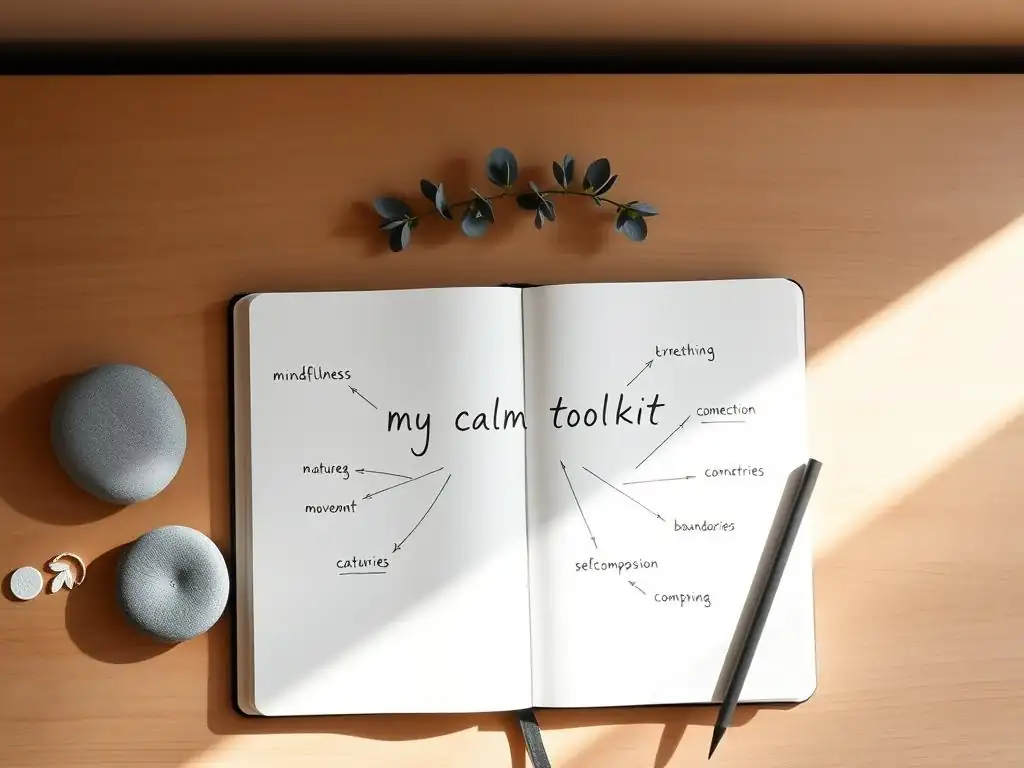
Combining Different Techniques for Maximum Effectiveness
The most effective adult anxiety coping strategies typically involve a combination of different techniques rather than relying on a single method. Just as a healthy lifestyle includes various elements (diet, exercise, sleep), a comprehensive anxiety plan draws from multiple approaches. For example, you might combine daily mindfulness meditation (for general calm), deep breathing exercises (for immediate relief during anxiety spikes), CBT techniques (for challenging anxious thoughts), and regular exercise (for stress reduction).
Your personalized plan should be flexible and include strategies for different situations and levels of anxiety. Have go-to techniques for mild anxiety, more intensive ones for moderate anxiety, and know when to use crisis-management strategies or reach out for support during severe episodes. Experimenting with various tools from the practical and advanced sections will help you build a robust toolkit of adult anxiety coping strategies.
Monitoring Your Progress and Adjusting Your Plan
Creating a plan is just the first step; monitoring its effectiveness is crucial. Keep a journal to track your anxiety levels, triggers, and which coping strategies you used and how helpful they were. You could rate your anxiety on a scale of 1-10 before and after using a technique. Note any patterns – do certain techniques work better at certain times or for specific types of anxiety?
Regularly review your journal entries (perhaps weekly or monthly) to assess what's working and what isn't. Be prepared to adjust your plan. If a technique isn't helping after consistent effort, try a different one. If your triggers or the nature of your anxiety changes, adapt your strategies accordingly. Monitoring and adjusting are essential for maintaining effective adult anxiety coping strategies over the long term.
Building a Support System for Long-Term Anxiety Management
You don't have to navigate anxiety alone. Building a strong support system is a vital component of long-term adult anxiety coping strategies. This can include understanding family members, supportive friends, a therapist or counselor, or joining a support group for individuals with anxiety. Sharing your experiences with others who understand can reduce feelings of isolation and provide valuable encouragement and perspective.
Letting trusted individuals know about your anxiety and your coping plan can be helpful. They can offer support, gentle reminders to use your strategies, or simply be there to listen. Support groups, whether online or in-person, offer a space to learn from others' experiences and coping strategies. Nurturing these connections provides emotional resilience and practical help in managing anxiety over time.
Maintaining Calm: Long-Term Strategies for Managing Adult Anxiety
Preventing Anxiety Relapse: Identifying Warning Signs
Managing anxiety is often an ongoing process, and it's important to be prepared for potential setbacks or periods where anxiety symptoms might return or intensify. Identifying your personal warning signs of increasing anxiety is key to preventing a full relapse. These signs are often subtle changes in thoughts, feelings, physical sensations, or behaviors that indicate anxiety is building.
Common warning signs might include increased irritability, difficulty sleeping for several nights, returning negative thought patterns, increased physical tension, avoidance behaviors creeping back in, or excessive worry about minor issues. Pay attention to these early signals. Recognizing them allows you to proactively deploy your adult anxiety coping strategies before anxiety becomes overwhelming, making it easier to manage.
Staying Consistent with Your Coping Strategies
Consistency is paramount in maintaining the benefits of your adult anxiety coping strategies. It's easy to practice techniques like mindfulness or exercise regularly when you're feeling anxious, but it's just as important – if not more so – to continue these practices when you're feeling calm. Think of coping strategies as preventative maintenance for your mental well-being.
Regular practice builds resilience and strengthens the neural pathways associated with calm and relaxation. Even on days when you feel fine, dedicate time to your chosen strategies, whether it's a short meditation, a walk, or journaling. Making these practices habitual ensures they are readily available and effective when you face stressful situations or periods of heightened anxiety.
Celebrating Your Successes and Building Resilience
Managing anxiety is challenging work, and it's important to acknowledge and celebrate your progress, no matter how small it seems. Did you use a deep breathing technique instead of avoiding a slightly uncomfortable situation? Did you challenge a negative thought effectively? Did you stick to your exercise routine even when you didn't feel like it? These are successes worth recognizing.
Celebrating these wins reinforces positive behaviors and builds confidence in your ability to cope. Over time, consistently applying your adult anxiety coping strategies and acknowledging your progress builds psychological resilience – the ability to bounce back from challenges. Focus on the skills you are building and the control you are gaining over your anxiety, rather than focusing solely on the presence or absence of anxious feelings.
Frequently Asked Questions
What are some immediate coping strategies I can use when feeling overwhelmed by anxiety?
Immediate coping strategies often involve grounding techniques, such as focusing on your senses, or breathing exercises to help regulate your nervous system. You can also try progressive muscle relaxation.
How can I identify the specific triggers for my adult anxiety?
Keeping a mood journal can be helpful in tracking when anxiety arises and what circumstances preceded it. Look for patterns in your thoughts, feelings, and situations that consistently lead to anxiety. Identifying triggers allows for proactive avoidance or preparation.
What are the benefits of seeking professional help for anxiety, and what kind of therapy is most effective?
Professional help offers access to evidence-based therapies and a supportive environment. Cognitive Behavioral Therapy (CBT) is often effective for restructuring negative thoughts, while Exposure Therapy can help with facing fears.
Can lifestyle changes, like diet and exercise, really make a difference in managing adult anxiety?
Yes, lifestyle changes can significantly impact anxiety levels. A balanced diet provides essential nutrients for brain function, while regular exercise releases endorphins and reduces stress hormones. Sufficient sleep is also crucial.
How can I build a long-term plan for managing my anxiety, rather than just relying on short-term coping mechanisms?
A long-term plan involves identifying core beliefs that fuel anxiety, developing healthy coping mechanisms, and building a strong support system. It also includes consistent self-care practices and potentially long-term therapy.
Final Reflection: Cultivating Your Inner Oasis
The relentless pace of modern life, coupled with pervasive societal pressures, has made anxiety a near-universal experience. This isn't simply a matter of stress; it's a widespread crisis demanding personalized solutions. The strategies outlined in this guide—from mindfulness practices to identifying personal triggers—are not mere suggestions, but essential tools for navigating the complexities of adult anxiety. They represent a proactive approach to well-being, empowering individuals to reclaim their mental health.
The journey to calm is deeply personal, a continuous process of self-discovery and adaptation. This article has aimed to provide a framework, but the true power lies in your own commitment to understanding and addressing your unique anxieties. The mind is everything. What you think you become.
– Buddha. This quote highlights the profound impact of our internal landscape on our overall well-being. By actively shaping our thoughts and responses, we can cultivate a more peaceful and resilient inner world, even amidst external chaos.
Now, consider the tools presented within these pages. Which resonate most deeply with your experience? Which strategies feel immediately actionable, and which require further exploration? This is not a destination, but a journey. Commit to consistent self-care, experiment with different techniques, and remember that seeking professional support is a sign of strength, not weakness. Your path to calm awaits – begin your journey today.
Unlock Your Inner Calm: Take Control of Anxiety Today!
Thanks for taking the time to explore practical strategies for managing anxiety. We hope you found valuable insights to help you navigate challenging moments. Now, let's put this knowledge into action!
- Develop your personalized anxiety toolkit: Take 15 minutes today to list 3 specific coping mechanisms from the article that resonate with you most. Try them out this week, and see which work best for your unique needs.
- Share your journey: Connect with others by sharing one thing you learned about managing anxiety that surprised you. It could spark a helpful conversation and inspire others.
- Explore additional resources: Consider diving deeper into specific anxiety management techniques mentioned, such as mindfulness practices or cognitive restructuring.
Ready to begin your journey towards a calmer, more confident you? What's one small step you'll take today to prioritize your mental well-being?