
Reading Your Way to Calm: Top Anxiety Books from Expert Lists


Welcome to Mind Care Guide, a sanctuary for your mental well-being.
Feeling overwhelmed? You're not alone. Dive into our latest article, "Reading Your Way to Calm: Top Anxiety Books from Expert Lists," and discover how the simple act of reading can unlock powerful stress reduction. But which books actually work? Let's explore which anxiety books reduce stress and find the perfect literary companion for your journey to inner peace. What if the answer to a calmer you is just a page turn away?
Reading Your Way to Calm: Top Anxiety Books from Expert Lists
- Finding Peace: Top Anxiety Books to Reduce Stress and Overwhelm
-
The Best Books for Anxiety Relief: Expert-Recommended Reads
- 1. "Dare: The New Way to End Anxiety and Stop Panic Attacks" by Barry McDonagh - A Game Changer for Panic
- 2. "Declutter Your Mind: How to Stop Worrying, Relieve Anxiety, and Eliminate Negative Thinking" by S.J. Scott and Barrie Davenport - Conquer Negative Thoughts
- 3. "Feeling Good: The New Mood Therapy" by David Burns - CBT for Anxiety Reduction
- 4. "The Anxiety and Phobia Workbook" by Edmund J. Bourne - A Comprehensive Guide to Anxiety Management
- 5. "Wherever You Go, There You Are" by Jon Kabat-Zinn - Mindfulness for Stress Reduction
- How These Books Reduce Anxiety and Promote Mental Well-being
- Choosing the Right Anxiety Book for Your Needs
- Beyond Books: Complementary Resources for Anxiety Management
- Conclusion: Empowering Yourself with Knowledge and Resources for Anxiety Reduction
-
Frequently Asked Questions
- How can reading anxiety books actually help reduce stress?
- What are some key features to look for in an anxiety book?
- Is it better to read a general anxiety book or one focused on a specific type of anxiety?
- How long does it typically take to see a reduction in stress levels after reading an anxiety book?
- Can anxiety books replace professional therapy or medication?
- Final Reflection: Finding Solace in the Pages
- Unleash Your Inner Calm: Start Reading Today!
Finding Peace: Top Anxiety Books to Reduce Stress and Overwhelm
In a world that often feels overwhelming, finding effective strategies to manage anxiety is crucial for mental well-being. While professional help and lifestyle changes are cornerstones of anxiety management, many people discover significant relief and insight through reading. Anxiety books reduce stress by offering practical tools, shifting perspectives, and providing a sense of understanding and validation. Experts across the mental health field frequently recommend specific titles that stand out for their evidence-based approaches and ability to empower readers. These books serve as accessible guides, helping individuals navigate challenging emotions and build resilience.
Choosing the right book, however, can be a daunting task given the sheer volume of options available. This is where expert recommendations become invaluable. Mental health professionals, researchers, and therapists often compile lists of books they believe offer the most effective strategies for managing anxiety symptoms. These curated lists typically highlight resources grounded in therapeutic modalities like Cognitive Behavioral Therapy (CBT), Mindfulness, and Acceptance and Commitment Therapy (ACT). By delving into these recommended anxiety relief books, readers can gain actionable insights and techniques to help alleviate their stress and improve their overall quality of life.
The Best Books for Anxiety Relief: Expert-Recommended Reads
1. "Dare: The New Way to End Anxiety and Stop Panic Attacks" by Barry McDonagh - A Game Changer for Panic
"Dare" presents a counter-intuitive yet highly effective method for confronting and overcoming anxiety, particularly panic attacks. Instead of fighting or trying to suppress anxious feelings, the book encourages readers to dare to lean into them, observe them without judgment, and eventually let them dissipate naturally. This approach is based on the principle that resisting anxiety often amplifies it, while acceptance can diminish its power. The book breaks down complex psychological concepts into simple, actionable steps that can be applied in real-time during moments of heightened anxiety or panic.
The core of the DARE method involves four steps: Defuse, Accept, Run Toward, and Engage. Defusing techniques help detach from anxious thoughts; Accepting involves allowing the physical sensations of anxiety to be present without struggle; Running Toward encourages actively facing the fear; and Engaging means returning to normal life activities despite the anxiety. This practical, step-by-step guide has been praised by many for its directness and efficacy, particularly for individuals struggling with panic disorder. Anecdotal evidence from readers suggests significant reductions in panic attack frequency and intensity within weeks of applying the techniques.
- Key Features:
- Focus on accepting and confronting anxiety rather than fighting it.
- The four-step DARE method (Defuse, Accept, Run Toward, Engage).
- Specific guidance for panic attacks, intrusive thoughts, and general anxiety.
- Emphasis on reducing mental struggle associated with anxiety.
- Benefits:
- Empowers individuals to face anxiety head-on.
- Provides immediate, on-the-spot techniques.
- Can significantly reduce the frequency and severity of panic attacks.
- Helps change the relationship with anxious thoughts and feelings.
- Why Experts Recommend It:
- Offers a fresh, non-avoidance approach that aligns with modern therapeutic understanding.
- Highly practical and easy for readers to implement independently.
- Addresses a common and debilitating form of anxiety (panic).
- Monetization: This book provides immense value by equipping readers with a complete system to manage panic and anxiety independently, potentially reducing the need for extensive therapy focused solely on these issues.
2. "Declutter Your Mind: How to Stop Worrying, Relieve Anxiety, and Eliminate Negative Thinking" by S.J. Scott and Barrie Davenport - Conquer Negative Thoughts
This book tackles the pervasive issue of an overactive mind filled with worry and negative thought loops. It offers a collection of actionable strategies drawn from mindfulness and positive psychology to help readers gain control over their thoughts. The premise is that reducing mental clutter is essential for reducing anxiety and improving focus and overall well-being. The authors provide practical exercises and techniques designed to identify, challenge, and ultimately lessen the impact of negative thinking patterns that fuel anxiety and stress.
"Declutter Your Mind" guides readers through understanding the nature of their thoughts and provides tools like journaling, meditation, and reframing techniques. It emphasizes building habits that support mental clarity and emotional resilience. For example, one technique involves setting aside specific "worry time" to contain anxious thoughts, while another focuses on using mindfulness to observe thoughts without getting swept away by them. The book's strength lies in its compilation of various accessible methods, allowing readers to experiment and find what works best for their individual needs in reducing mental clutter and associated anxiety.
- Key Features:
- Focus on managing worry, negative thinking, and mental clutter.
- Compilation of techniques from mindfulness and positive psychology.
- Actionable exercises and habit-building strategies.
- Emphasis on identifying and challenging unhelpful thought patterns.
- Benefits:
- Helps readers gain control over racing thoughts.
- Provides tools for reducing chronic worry.
- Promotes mental clarity and focus.
- Offers a variety of techniques to suit different preferences.
- Why Experts Recommend It:
- Provides practical, easy-to-implement strategies for common anxiety triggers (worry, negative thoughts).
- Combines principles from respected approaches like mindfulness.
- Offers a comprehensive toolbox rather than a single method.
- Monetization: The value lies in providing readers with a practical, self-guided system for managing the mental aspects of anxiety and worry, offering skills that can be used daily.
3. "Feeling Good: The New Mood Therapy" by David Burns - CBT for Anxiety Reduction
A cornerstone in the field of self-help for mental health, "Feeling Good" introduces readers to the principles and techniques of Cognitive Behavioral Therapy (CBT). While often associated with depression, CBT is highly effective for anxiety disorders as well, as it targets the distorted thinking patterns and unhelpful behaviors that maintain anxiety. Dr. Burns explains how negative thoughts, or "cognitive distortions," directly impact emotions and provides a systematic way to identify and challenge these distortions. The book includes numerous exercises and examples to help readers apply CBT concepts to their own lives.
The book details specific techniques such as the "Daily Mood Log" to track thoughts and feelings, and methods for identifying common cognitive distortions like "all-or-nothing thinking" or "catastrophizing," which are rampant in anxiety. By learning to recognize these patterns and replace them with more realistic and balanced perspectives, readers can significantly reduce the intensity of their anxious feelings.
"Feeling Good" is often recommended by therapists as a supplementary resource for clients undergoing CBT, but its clear explanations and practical exercises also make it a powerful standalone tool for many seeking to use anxiety books reduce stress through a structured approach.
- Key Features:
- Comprehensive introduction to Cognitive Behavioral Therapy (CBT).
- Detailed explanations of cognitive distortions and their impact.
- Practical exercises like the Daily Mood Log.
- Focus on challenging and restructuring negative thought patterns.
- Benefits:
- Provides a structured framework for understanding and changing anxious thoughts.
- Offers evidence-based techniques proven effective for anxiety.
- Empowers readers to become their own cognitive therapists.
- Can lead to significant reductions in anxiety symptoms over time.
- Why Experts Recommend It:
- Considered a classic and highly effective introduction to CBT.
- Based on solid psychological research.
- Provides foundational skills applicable to a wide range of anxiety issues.
- Monetization: This book offers substantial value by teaching fundamental CBT skills that are typically learned in therapy, empowering readers with a powerful, evidence-based method for self-managing anxiety and improving mood.
4. "The Anxiety and Phobia Workbook" by Edmund J. Bourne - A Comprehensive Guide to Anxiety Management
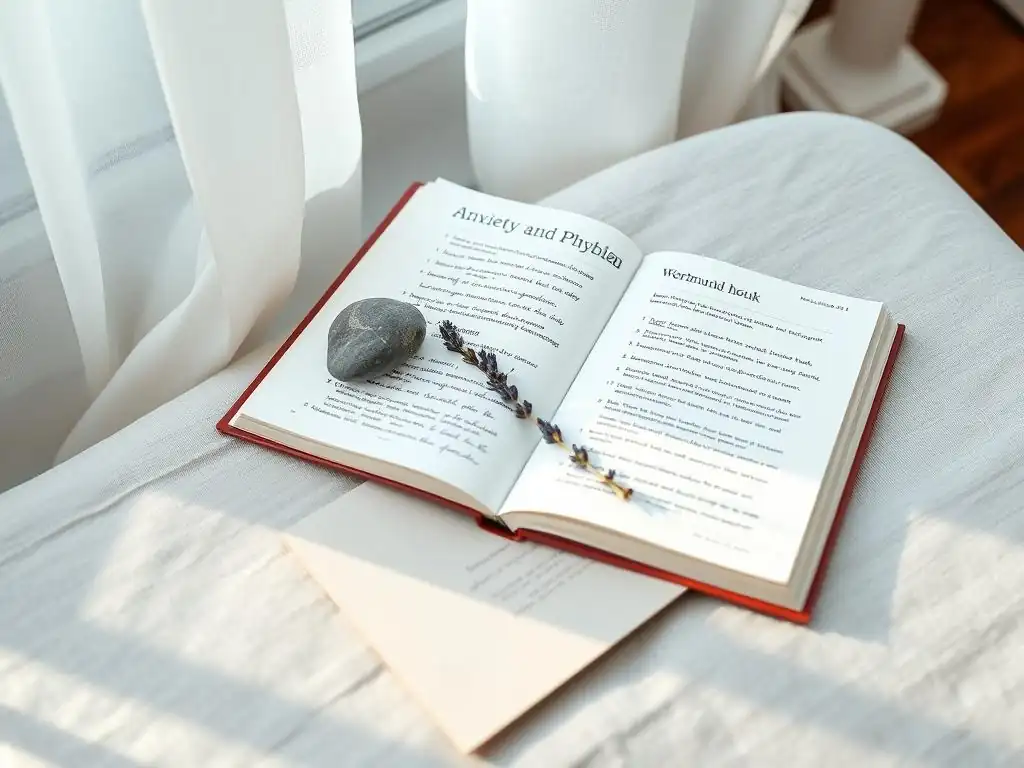
Now in its seventh edition, "The Anxiety and Phobia Workbook" is a widely recommended resource for its comprehensive and practical approach to managing a variety of anxiety disorders. It's designed as an interactive guide, featuring exercises, questionnaires, and tools based on proven therapeutic techniques, including CBT, exposure therapy, relaxation training, and mindfulness. The workbook structure encourages active participation, making it a hands-on tool for recovery.
The book covers a broad spectrum of anxiety-related issues, including panic attacks, phobias (such as social phobia, agoraphobia, specific phobias), generalized anxiety disorder (GAD), and obsessive-compulsive disorder (OCD). It provides detailed explanations of what anxiety is, its physical and psychological components, and various strategies for coping. For instance, it walks readers through creating fear hierarchies for exposure therapy or practicing specific breathing exercises to calm the nervous system. Its depth and breadth make it a valuable reference that readers can return to repeatedly as they work through different aspects of their anxiety.
- Key Features:
- Comprehensive coverage of various anxiety disorders and phobias.
- Workbook format with exercises, questionnaires, and logs.
- Integrates techniques from CBT, exposure therapy, relaxation, and mindfulness.
- Provides detailed explanations of anxiety mechanisms.
- Benefits:
- Offers a structured, step-by-step path to managing anxiety.
- Provides a wide range of tools applicable to different symptoms.
- Empowers readers through active engagement with the material.
- Useful for understanding the root causes and triggers of anxiety.
- Why Experts Recommend It:
- Highly practical, evidence-based, and comprehensive.
- Suitable for a wide range of anxiety presentations.
- Its workbook format encourages consistent practice and application.
- Monetization: The significant value of this workbook lies in providing a comprehensive, therapist-approved curriculum for managing anxiety and phobias independently, offering a structured path to recovery through practical exercises.
5. "Wherever You Go, There You Are" by Jon Kabat-Zinn - Mindfulness for Stress Reduction
While not exclusively an anxiety relief book, Jon Kabat-Zinn's classic work is a foundational text on mindfulness meditation and its application in daily life, which is highly effective for reducing stress and anxiety. The book introduces mindfulness not just as a technique, but as a way of being – cultivating present-moment awareness without judgment. Kabat-Zinn's accessible writing style makes the potentially abstract concept of mindfulness understandable and inviting to a wide audience.
The book consists of short, insightful chapters that can be read in any order, offering meditations, reflections, and practices to help readers integrate mindfulness into everyday activities. It teaches how to pay attention to breath, bodily sensations, thoughts, and emotions without getting carried away by them. For someone experiencing anxiety, learning to observe anxious thoughts and physical symptoms with a sense of curiosity rather than fear can be transformative. This book provides the philosophical grounding and practical guidance needed to develop a consistent mindfulness practice that can significantly reduce reactivity to stress and lessen the grip of anxious rumination.
- Key Features:
- Introduces the principles and practice of mindfulness meditation.
- Accessible, non-technical language.
- Short, insightful chapters suitable for daily reading.
- Focus on cultivating present moment awareness.
- Benefits:
- Helps reduce reactivity to stressful thoughts and situations.
- Promotes a sense of calm and presence.
- Provides a foundation for a sustainable mindfulness practice.
- Can help detach from anxious rumination.
- Why Experts Recommend It:
- Considered a seminal and highly respected work on mindfulness.
- Offers a gentle yet profound approach to stress and anxiety.
- Provides practical guidance for integrating mindfulness into daily life.
- Monetization: The value provided is in teaching a fundamental life skill – mindfulness – which is a powerful, research-backed method for reducing stress, increasing self-awareness, and improving overall mental and emotional regulation.
How These Books Reduce Anxiety and Promote Mental Well-being
Reading these expert-recommended anxiety books reduce stress through several interconnected mechanisms. They don't just provide information; they offer tools that empower individuals to actively participate in their own healing process. By explaining the underlying psychology of anxiety, teaching practical skills, and encouraging a shift in perspective, these resources equip readers with the knowledge and techniques needed to challenge anxious patterns and build resilience. The process of engaging with these books is itself an act of self-care and empowerment.
These books collectively utilize principles from evidence-based therapies, making their strategies effective. For example, books based on CBT help readers identify and modify distorted thinking, while mindfulness-based books teach techniques for staying grounded in the present moment. Workbooks provide structured exercises for gradual exposure and skill-building. Together, these approaches address the cognitive, emotional, and behavioral components of anxiety, offering a holistic path towards reduced stress and improved mental well-being.
Practical Techniques: Actionable Steps for Anxiety Relief
One of the primary ways these books help is by providing concrete, step-by-step techniques that readers can implement immediately. These aren't just theoretical concepts; they are practical tools designed to interrupt the anxiety cycle and promote relaxation. For instance, many books teach specific breathing exercises, like diaphragmatic breathing or the 4-7-8 technique, which can activate the body's relaxation response and calm a racing heart. Others introduce progressive muscle relaxation, a technique where you tense and then release different muscle groups to reduce physical tension associated with anxiety.
Beyond relaxation, these books offer behavioral strategies such as graded exposure, where individuals gradually confront feared situations in a controlled manner, starting with less challenging steps. A workbook might guide you through creating a fear hierarchy, ranking situations from least to most anxiety-provoking, and then provide steps for approaching them one by one. These actionable methods provide readers with a sense of agency, demonstrating that they have the capacity to influence their anxious responses and build confidence in managing challenging situations.
Cognitive Restructuring: Changing Negative Thought Patterns
A core element in many of the best anxiety books is teaching readers how to identify and challenge negative or irrational thought patterns. Anxiety is often fueled by cognitive distortions – habitual ways of thinking that are inaccurate or unhelpful, such as assuming the worst (catastrophizing) or focusing only on the negative (mental filter). Books like "Feeling Good" provide clear frameworks for recognizing these patterns. They might list common distortions and offer exercises to help readers spot them in their own thinking.
Once identified, the books guide readers through techniques for challenging these thoughts. This involves questioning the evidence for and against a thought, considering alternative explanations, and developing more balanced and realistic perspectives. For example, if someone thinks, "I'm going to fail this presentation and everyone will laugh," cognitive restructuring involves examining past successes, considering the likelihood of that specific outcome, and replacing the thought with something more balanced like, "I feel nervous, but I've prepared, and even if it's not perfect, I can handle it." This process helps weaken the power of anxious thoughts and reduce their emotional impact.
Mindfulness Meditation: Cultivating Present Moment Awareness
Mindfulness, as explored in books like "Wherever You Go, There You Are," is a powerful tool for reducing anxiety by shifting focus from worry about the future or regrets about the past to the present moment. Anxiety often involves getting caught up in hypothetical scenarios and worst-case thinking. Mindfulness teaches you to observe your thoughts and feelings without judgment, recognizing that they are temporary mental events rather than absolute truths.
Practicing mindfulness involves techniques such as focusing on the breath, body sensations, or sounds. By gently bringing your attention back to the present whenever your mind wanders (which it will), you train your brain to be less reactive to anxious thoughts. This doesn't mean eliminating anxious thoughts entirely, but rather learning to observe them with a sense of distance, preventing them from spiraling into overwhelming anxiety. Regular mindfulness practice, guided by these books, can significantly reduce the tendency to ruminate and increase a sense of calm and groundedness.
Choosing the Right Anxiety Book for Your Needs

Selecting the most helpful anxiety book to reduce stress depends heavily on your specific experiences and what you hope to gain. Just as different individuals have unique journeys with anxiety, different books offer varying approaches and focus areas. Taking a moment to understand your primary challenges and preferred learning style can make the process much more effective. Consider whether you prefer a step-by-step workbook, a deep dive into cognitive processes, or a philosophical approach to acceptance and presence.
Think about the specific manifestations of your anxiety. Are you primarily dealing with panic attacks, chronic worry, social fears, or intrusive thoughts? Some books are tailored to specific issues, while others offer a more general toolkit. Reading reviews, looking at the table of contents, and even reading a few pages online can provide clues about whether a book's tone and content resonate with you. The goal is to find a resource that feels accessible, relatable, and empowering, rather than overwhelming.
Understanding Different Types of Anxiety: Tailoring Your Reading
Anxiety isn't a single monolithic experience; it manifests in different ways for different people. Generalized Anxiety Disorder (GAD) often involves persistent, excessive worry about various everyday things, while panic disorder is characterized by sudden, intense episodes of fear. Social anxiety disorder involves significant fear of social situations, and specific phobias are intense fears of particular objects or situations. Obsessive-Compulsive Disorder (OCD), while distinct, also involves anxiety-driven patterns.
Books like "The Anxiety and Phobia Workbook" are excellent if you experience multiple forms of anxiety or specific phobias, as they cover a wide range of symptoms and techniques. If panic attacks are your main struggle, "Dare" might be particularly relevant due to its specific focus. For those whose anxiety is heavily driven by relentless worry and negative self-talk, books like "Declutter Your Mind" or "Feeling Good" (with its CBT focus) can be highly beneficial. Tailoring your reading to the specific type of anxiety you experience maximizes the chances of finding the most relevant and effective strategies.
Personalized Recommendations: Finding the Perfect Fit
Finding the perfect anxiety book to reduce stress often involves a bit of exploration. While expert lists provide a great starting point, what works wonders for one person might not fully click for another. Consider your learning style: do you prefer lots of exercises and worksheets (like a workbook), or do you learn best through understanding concepts and philosophies (like a mindfulness book)? Some people prefer a highly structured approach, while others benefit from more flexible guidance.
It can be helpful to read summaries or sample chapters of a few different recommended books. Pay attention to the author's tone – does it feel supportive, authoritative, or overly technical? Many people find it beneficial to start with a book that addresses their most pressing symptom or feels most aligned with their intuition about what might help. Remember that you don't have to stick with a book if it doesn't feel right; there are many valuable resources available, and finding the best fit is part of the journey towards better managing your anxiety.
Beyond Books: Complementary Resources for Anxiety Management
While anxiety books reduce stress significantly for many people, they are often most powerful when used as part of a broader mental wellness strategy. Books provide valuable knowledge and tools, but they are not a substitute for professional support when needed. Integrating reading with other resources can create a more robust and comprehensive approach to managing anxiety and fostering long-term mental well-being. Think of books as one essential tool in your anxiety management toolkit, alongside other supportive resources.
Exploring complementary resources can provide different types of support and opportunities for practice. For example, while a book might teach you about mindfulness, a meditation app can provide guided practices to help you build consistency. Similarly, understanding CBT principles from a book can be greatly enhanced by working with a therapist who can provide personalized guidance and support. Combining different resources allows for a multi-faceted approach that addresses various aspects of anxiety.
Online Therapy Options: Connecting with Professionals
For many individuals, professional guidance from a therapist or counselor is a crucial component of managing anxiety. Therapy provides a safe space to explore the root causes of anxiety, develop personalized coping strategies, and process difficult emotions. With the rise of technology, online therapy platforms have made connecting with licensed mental health professionals more accessible than ever. These platforms allow you to have therapy sessions via video call, phone, or text, from the comfort of your own home.
Online therapy can be particularly beneficial for individuals whose anxiety makes it difficult to leave the house or attend in-person appointments. Therapists can help you apply the techniques learned in anxiety books reduce stress more effectively, offering tailored advice and support for your specific situation. They can also provide diagnoses, help manage medication (if necessary), and offer more intensive support for severe anxiety or co-occurring conditions. While books offer valuable self-help, professional therapy provides personalized expertise and accountability.
Meditation Apps for Stress Reduction: Guided Mindfulness Practices
Many of the recommended anxiety books reduce stress by incorporating principles of mindfulness and meditation. While books explain how and why mindfulness works, meditation apps provide the guided practice that is essential for developing this skill. Apps like Calm, Headspace, and Insight Timer offer a wide variety of guided meditations, breathing exercises, and relaxation techniques, ranging in length from a few minutes to longer sessions.
Using a meditation app can make it easier to establish a regular mindfulness practice, even for just a few minutes each day. They offer structure and guidance, which can be particularly helpful when starting out. Many apps also include features like sleep stories, calming music, and mood tracking, providing additional support for overall well-being. Combining the conceptual understanding gained from books with the practical, guided experience offered by apps can significantly enhance your ability to use mindfulness to manage anxiety and promote calm.
Conclusion: Empowering Yourself with Knowledge and Resources for Anxiety Reduction
Taking proactive steps to manage anxiety is a powerful act of self-care. Anxiety books reduce stress by offering accessible, evidence-based strategies drawn from years of psychological research and clinical practice. The expert-recommended titles discussed here represent some of the best resources available for understanding anxiety, challenging unhelpful thought patterns, building practical coping skills, and cultivating a greater sense of presence and calm. Whether you are dealing with panic, worry, or general stress, there is likely a book on this list that can offer valuable insights and tools.
Embarking on a journey through these books is not merely about reading; it's about engaging with the material, practicing the techniques, and applying the wisdom to your daily life. By doing so, you empower yourself to navigate challenging emotions more effectively and build resilience. Remember that these books are excellent resources for self-help, but they can also be powerful complements to professional support. By combining the knowledge gained from these pages with practices like mindfulness and, if needed, professional therapy, you create a comprehensive strategy for significantly reducing anxiety and enhancing your overall mental well-being.
Frequently Asked Questions
How can reading anxiety books actually help reduce stress?
Reading about anxiety can provide validation and understanding of your experiences. This can empower you to develop coping mechanisms and feel less alone. The books often offer practical techniques for stress reduction.
What are some key features to look for in an anxiety book?
Look for books written by qualified professionals like therapists or psychologists. The book should offer evidence-based strategies and resonate with your personal experiences. It's important that the book provides actionable steps you can take.
Is it better to read a general anxiety book or one focused on a specific type of anxiety?
It depends on your needs! A general book can provide a broad overview and foundational understanding. However, a specialized book targeting social anxiety, panic disorder, or specific phobias may offer more tailored advice.
How long does it typically take to see a reduction in stress levels after reading an anxiety book?
There's no set timeline; it varies greatly. Some people may experience immediate relief from understanding their anxiety better. Others may need weeks or months of consistent practice of the techniques recommended in the book.
Can anxiety books replace professional therapy or medication?
Anxiety books can be a valuable supplement to professional care, but they are not a replacement. If you're struggling with severe anxiety, it's crucial to seek help from a qualified mental health professional for diagnosis and treatment.
Final Reflection: Finding Solace in the Pages
The overwhelming anxieties of modern life demand effective coping mechanisms, and the power of bibliotherapy—reading your way to calm—offers a surprisingly potent solution. This exploration of top-rated anxiety books, curated from expert lists, reveals a wealth of resources readily available to help navigate the complexities of stress and unease. The sheer number of books dedicated to this topic underscores the widespread need for accessible and effective strategies for managing anxiety.
The impact of these books extends beyond individual relief; they contribute to a growing cultural conversation around mental health. By normalizing the experience of anxiety and offering practical tools for self-help, these literary companions foster a sense of community and shared understanding. The greatest weapon against stress is our ability to choose one thought over another.
– William James. This quote highlights the active role readers play in their own well-being, a role empowered by the insights and techniques found within these carefully selected books.
You, the reader, now hold the key to unlocking a calmer, more centered self. Don't just passively consume information; actively engage with the strategies and exercises presented in these books. Choose a title that resonates with you, dedicate time to reading and reflection, and allow the wisdom within its pages to guide you on your journey towards a more peaceful and fulfilling life. The path to tranquility begins with a single book, a single chapter, a single insightful sentence. Start your journey today.
Unleash Your Inner Calm: Start Reading Today!
Thanks for taking the time to explore our curated list of anxiety-reducing books! We hope you found some titles that resonate with your journey towards a calmer you. Ready to dive deeper into peace and tranquility?
- Begin your reading journey: Select a book from the list that sparks your interest and order it now. It’s the first step towards a more peaceful mind.
- Share your discoveries: Let your friends and family know which book caught your eye. Spreading the word about helpful resources can have a ripple effect of calm.
- Join the conversation: Leave a comment below and share which book you’ve chosen (or plan to choose) and why. What are you hoping to gain from this reading experience?
What calming technique, aside from reading, are you excited to try in conjunction with your chosen book?