
Resolving Conflict Constructively: Skills Learned in Couples Therapy


Welcome to Mind Care Guide.
Are you navigating turbulent waters in your relationship? It's often said that conflict is inevitable, but how you navigate those disagreements can make all the difference. This article delves into constructive conflict resolution couples therapy, offering insights and practical skills to help you and your partner build a stronger, more understanding connection. Ready to transform friction into fuel for growth? Let's explore how.
Navigating Disagreements: Conflict Resolution Skills for Couples
- Understanding Conflict in Relationships and the Need for Constructive Resolution
- Key Conflict Resolution Skills
- Applying Constructive Conflict Resolution Techniques in Real-Life Scenarios
- Benefits of Constructive Conflict Resolution
- Seeking Support for Conflict Resolution
-
Frequently Asked Questions
- How does couples therapy teach constructive conflict resolution?
- What are some common communication pitfalls that couples therapy helps address?
- Can couples therapy really improve my relationship, even if we have a long history of conflict?
- What are the benefits of learning constructive conflict resolution skills for overall mental well-being?
- What resources does Mind Care Guide offer to support couples seeking constructive conflict resolution skills?
- Final Reflection: The Enduring Power of Constructive Conflict
- Unlock Your Relationship's Potential: Take the Next Step
Understanding Conflict in Relationships and the Need for Constructive Resolution
The Inevitability of Conflict in Romantic Partnerships
Conflict is a natural and unavoidable part of any intimate relationship. It arises from the unique perspectives, needs, and desires that two individuals bring together. While some couples may fear conflict, believing it signals incompatibility or doom, research actually suggests that the absence of conflict can sometimes indicate avoidance or lack of engagement rather than perfect harmony. The presence of disagreements simply means two people are actively navigating life together.
Studies, including extensive work by researchers like Dr. John Gottman, indicate that even in the happiest relationships, couples experience disagreements. The key differentiator isn't whether conflict occurs, but how it is handled. Learning constructive conflict resolution couples therapy techniques provides couples with the tools to move through these inevitable clashes in a way that strengthens their bond rather than eroding it. Without these skills, minor disagreements can escalate into major rifts, causing significant emotional pain and distance.
Negative Conflict Patterns: Identifying Destructive Behaviors
Destructive conflict patterns can severely damage a relationship's foundation. Gottman's research identified four particularly harmful behaviors he termed "The Four Horsemen of the Apocalypse": criticism, contempt, defensiveness, and stonewalling. Criticism attacks a partner's character, while contempt expresses disrespect and disdain, often through sarcasm, eye-rolling, or mockery. Defensiveness is a reaction to perceived attack, often involving excuses or counter-blame, and stonewalling is withdrawing from the interaction entirely, shutting down communication.
These behaviors create a toxic cycle. For instance, one partner might criticize ("You always forget to take out the trash! "), leading the other to become defensive ("That's not true! What about the time I did it last week? You never notice! "), which can escalate into contemptuous remarks or one partner shutting down. Recognizing these negative patterns is the first step in breaking them and learning how to replace them with more productive approaches taught in constructive conflict resolution couples therapy.
Why Constructive Conflict Resolution is Crucial for Relationship Health
Mastering constructive conflict resolution is vital for maintaining a healthy and thriving relationship. It transforms disagreements from destructive battles into opportunities for growth, deeper understanding, and strengthened connection. When couples can navigate conflict effectively, they build trust and resilience, knowing they can face challenges together.
Couples who practice constructive conflict resolution report higher levels of relationship satisfaction and are significantly less likely to separate or divorce. For example, a study published in the Journal of Family Psychology found that couples with effective conflict resolution skills experienced greater long-term relationship stability. These skills learned in constructive conflict resolution couples therapy equip partners to hear each other, validate feelings, find common ground, and work collaboratively towards solutions, fostering a sense of teamwork rather than opposition.
Key Conflict Resolution Skills
Active Listening: A Cornerstone of Effective Communication
Active listening is perhaps the most fundamental skill in constructive conflict resolution. It involves fully concentrating, understanding, responding, and remembering what is being said. It's not just about hearing the words, but also the underlying emotions and needs being expressed. In the heat of a disagreement, truly listening can de-escalate tension and make your partner feel heard and valued.
Techniques for Active Listening in Conflict Situations
Implementing active listening requires conscious effort, especially when emotions are high.
- Maintain eye contact as much as possible.
- Nod or use small verbal affirmations like "I see" or "Go on."
- Paraphrase what your partner has said to confirm your understanding. For example, "So, if I understand correctly, you're feeling frustrated because..."
- Summarize their main points after they finish speaking.
- Ask clarifying questions without judgment.
Example of Paraphrasing:
Partner A: "I'm so angry that you made plans tonight without checking with me first! I had a really tough day and needed quiet time."
Partner B (using active listening): "Okay, I hear you. You're feeling angry because I made plans without talking to you, and you needed a quiet evening after a tough day. Is that right?"
Avoiding Interruptions and Judgment: Building Empathy
A critical part of active listening is refraining from interrupting your partner while they are speaking. Interrupting sends the message that what you have to say is more important than their perspective, shutting down communication. Similarly, avoid formulating your response while they are still talking; instead, focus all your energy on understanding their message.
Equally important is suspending judgment. Even if you disagree vehemently with what your partner is saying, try to listen with an open mind and empathy. Remember, their feelings are real to them, regardless of whether you perceive the situation the same way. This non-judgmental approach, often emphasized in constructive conflict resolution couples therapy, creates a safe space for vulnerable expression and fosters deeper understanding and empathy, paving the way for resolution.
Expressing Needs and Feelings Assertively
Beyond listening, being able to clearly and assertively express your own needs and feelings is crucial. Assertiveness is about stating your position clearly and respectfully, without being aggressive (attacking or demanding) or passive (suppressing your needs). It's about owning your experience and communicating it directly to your partner.
"I" Statements: Taking Ownership of Your Emotions
A powerful tool for assertive expression is using "I" statements. This structure helps you communicate your feelings and the impact of your partner's actions without placing blame. Instead of starting with "You..." which often triggers defensiveness, you start with your own experience.
The basic structure is often: I feel [emotion] when [specific behavior or situation] because [impact on you or underlying need].
Compare these:
Aggressive/Blaming: "You make me so mad when you leave your clothes everywhere!"
Passive: (Saying nothing about the clothes, but feeling resentful)
Assertive ("I" Statement): "I feel frustrated when I see clothes left on the floor because it makes me feel like our shared space is cluttered and hard to keep tidy."
Using "I" statements keeps the focus on your internal experience and the observable behavior, making it easier for your partner to hear and respond constructively. This technique is a staple of constructive conflict resolution couples therapy.
Differentiating Between Needs and Demands
When expressing yourself, it's essential to differentiate between stating a need and making a demand. A need is something you require for your well-being or to feel secure in the relationship (e.g., feeling heard, needing support, needing alone time). A demand is a rigid requirement placed on your partner, often with an implied threat or consequence if not met.
Needs can be discussed and potentially met through collaboration and compromise. Demands, however, often create resistance and resentment. For instance, stating "I need to feel more connected to you; could we schedule some quality time?" is expressing a need. Demanding "You must spend every Friday night with me!" is a demand. Focusing on expressing underlying needs allows for flexibility and partnership in finding solutions.
Empathy and Perspective-Taking: Understanding Your Partner's Viewpoint
Empathy is the ability to understand and share the feelings of another. In conflict, it means trying to see the situation from your partner's perspective, even if you don't agree with it. Perspective-taking is the cognitive act of understanding how they might see or interpret the situation based on their experiences, beliefs, and current emotional state. Together, empathy and perspective-taking build bridges across disagreements.
Cultivating Empathy During Heated Arguments
Cultivating empathy during a heated argument is challenging but vital. It requires pausing your own reactive thoughts and truly attempting to step into your partner's shoes. Ask yourself:
- What might they be feeling right now?
- What might this situation mean to them based on their past experiences?
- What underlying need might they be trying to express, even if poorly?
Using phrases that show you are trying to understand, such as "It sounds like you're feeling really overwhelmed by this," or "I can see why that would be upsetting," can validate your partner's experience and lower the emotional temperature, creating space for constructive conflict resolution couples therapy techniques to be applied.
Seeing the Situation from Your Partner's Perspective
Actively trying to see the situation from your partner's viewpoint involves more than just acknowledging their feelings; it's about understanding their narrative. For example, if a couple is arguing about finances, one partner might view saving aggressively as essential security due to past financial hardship, while the other might see spending on experiences as vital for happiness, stemming from a belief that life is short. Neither perspective is inherently "wrong," but understanding the why behind each allows for greater empathy and facilitates finding a middle ground. This cognitive shift is a powerful tool in resolving conflicts constructively.
Compromise and Negotiation: Finding Mutually Acceptable Solutions
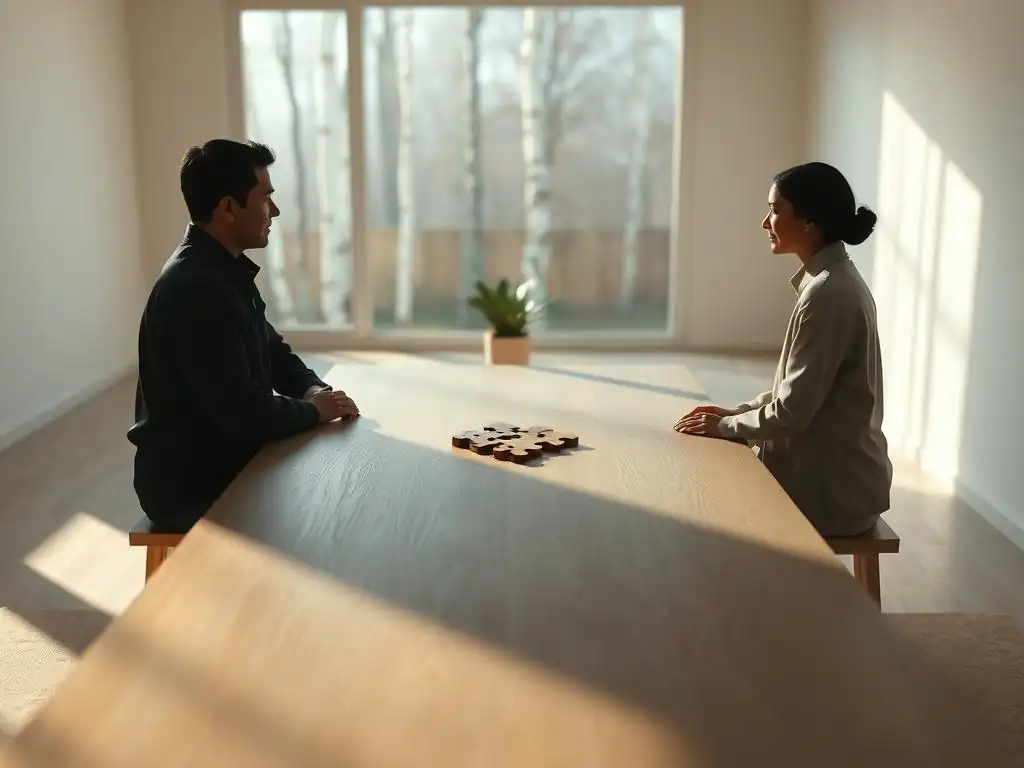
Conflict resolution often requires finding solutions that work for both partners. This involves compromise, where each person gives a little, and negotiation, the process of discussing and reaching a mutually acceptable agreement. The goal isn't for one person to "win," but for the couple to win by finding a solution that addresses at least some of each person's needs.
Identifying Areas of Agreement and Disagreement
Before diving into solutions, it's helpful to clearly identify what you agree on and where your perspectives or desires diverge. This can clarify the core issue and prevent the conversation from spiraling into unrelated complaints. For instance, you might agree that the house needs to be cleaned, but disagree on who does what and when. Listing these points explicitly can structure the negotiation.
A simple list can help:
- Agreed: The dog needs walking daily.
- Agreed: We both work long hours.
- Disagreement: Who walks the dog on weekday mornings?
- Disagreement: How to handle late nights at work impacting dog duties?
This clarity, often fostered in constructive conflict resolution couples therapy, makes the problem-solving phase much more focused and effective.
Strategies for Effective Negotiation
Effective negotiation in a relationship is collaborative, not adversarial.
- Start by brainstorming multiple solutions together, without immediately evaluating them. Get creative!
- Discuss the pros and cons of each potential solution from both perspectives.
- Focus on finding a solution that meets the most important needs for each person, even if not every desire is fulfilled.
- Be willing to compromise on less critical points to achieve agreement on major ones.
- Frame the negotiation as "us against the problem," not "me against you."
- Agree on a trial period for the solution and schedule a time to check back in and adjust if needed.
For example, negotiating chores might involve one partner agreeing to handle all kitchen cleanup if the other takes responsibility for all laundry and bathroom cleaning, or splitting tasks by day or type.
Emotional Regulation: Managing Your Reactions During Conflict
Managing your own emotions is perhaps the most challenging, yet crucial, skill during conflict. When flooded with intense emotions like anger, frustration, or fear, it's difficult to think clearly, listen effectively, or communicate constructively. Learning to regulate your emotional responses prevents escalation and allows for productive conversation.
Recognizing and Responding to Emotional Triggers
Emotional triggers are specific topics, behaviors, or situations that reliably provoke an intense emotional reaction in you. These triggers are often linked to past experiences or core vulnerabilities. Recognizing your personal triggers and understanding why they affect you is a key step in managing them. For example, being criticized might be a trigger if you grew up in a highly critical environment.
When you feel triggered, your body often sends signals: heart pounding, muscles tensing, feeling hot, mind racing. Learning to recognize these physical and mental cues early allows you to intervene before you become emotionally flooded and lose control of your reactions. This self-awareness is a core component of constructive conflict resolution couples therapy.
Techniques for Calming Down and De-escalating Conflict
If you or your partner feels emotionally flooded, taking a break is a vital de-escalation technique. Agree beforehand on a signal or phrase (e.g., "Let's pause" or "I need a break") and agree to reconvene at a specific time (e.g., in 30 minutes or an hour) to continue the discussion. During the break, focus on calming activities: deep breathing, a short walk, listening to music, or mindful meditation.
Task List for a Conflict Break:
- [ ] Announce need for a break calmly.
- [ ] Agree on a time to resume the conversation.
- [ ] Separate physically.
- [ ] Engage in a calming activity (e.g., deep breathing, walk).
- [ ] Avoid ruminating on the conflict during the break.
- [ ] Reconvene at the agreed-upon time, ready to listen.
Other techniques include mindful breathing during the conversation (breathing deeply from your diaphragm), using stress balls, or mentally reciting calming phrases. The goal is to return to the conversation in a state where you can think rationally and engage constructively.
Applying Constructive Conflict Resolution Techniques in Real-Life Scenarios
Learning skills in theory is one thing; applying them in the messy reality of a relationship is another. Here are a few common scenarios and how constructive techniques can be used.
Scenario 1: Dividing Household Chores Fairly
- The Conflict: A couple argues about the unequal distribution of chores. One partner feels they do significantly more housework.
- Destructive Approach: Blaming ("You're lazy! I do everything! "), defensiveness ("That's not true, I did the dishes once last week! "), stonewalling (Refusing to discuss chores).
- Constructive Approach:
- Active Listening: Partner A expresses their feeling of being overwhelmed by the chore load using "I" statements: "I feel exhausted and resentful when I feel like I'm responsible for most of the housework because it leaves me with no time for myself." Partner B actively listens, paraphrasing to ensure understanding: "So, you feel overwhelmed and resentful because you believe you're doing most of the chores?"
- Perspective-Taking: Partner B shares their perspective, perhaps explaining they prioritize different tasks or genuinely don't see the mess in the same way. They might say, "I understand you feel that way. From my perspective, I try to help, but I might not notice things you do, or I prioritize yard work over dusting."
- Negotiation: The couple sits down and makes a list of all necessary household tasks. They discuss who is willing and able to do which tasks, considering schedules and preferences. They might agree to try a specific division for a month and then check in to see how it's working. They use "I" statements to express needs regarding cleanliness standards or time constraints ("I need the kitchen clean before bed" or "I need Sundays free for errands").
This process, often guided in constructive conflict resolution couples therapy, turns a source of tension into a collaborative problem-solving session, leading to a fairer and more sustainable division of labor.
- The Conflict: One partner loves socializing every weekend, while the other prefers quiet nights at home, leading to arguments about how to spend free time.
- Destructive Approach: Criticism ("You're such a homebody, you never want to do anything fun! "), passive-aggression (Agreeing to go out but being visibly unhappy), demanding (Insisting the other partner attend every event).
- Constructive Approach:
- Expressing Needs: Partner A expresses their need for social connection using an "I" statement: "I feel energized and connected to friends when we go out on weekends, and I need some social time to feel balanced." Partner B expresses their need for downtime: "I feel drained after a busy week, and I need quiet evenings at home to recharge and feel relaxed."
- Empathy: Each partner validates the other's need, even if they don't share it. "I understand you really need that social time," and "I get that you need downtime to recharge."
- Compromise/Negotiation: They negotiate a social schedule that balances both needs. Perhaps they agree to go out one weekend night and stay in the other, or they compromise on the type of social event (e.g., a smaller dinner party vs. a large, loud gathering). They might agree that one partner attends some events solo while the other stays home, without guilt or resentment. This requires open communication about expectations and boundaries.
Using constructive conflict resolution couples therapy skills helps them see this not as a battle of wills, but a negotiation of differing, yet valid, needs for rest and connection.
Scenario 3: Discussing Differing Opinions on Political Issues
- The Conflict: A couple holds strongly opposing views on a significant political issue, leading to heated arguments whenever the topic arises.
- Destructive Approach: Contempt ("You're so naive/ignorant to think that! "), stonewalling (Refusing to discuss it at all, even when it impacts shared life), harsh criticism of beliefs.
- Constructive Approach:
- Setting Boundaries: Recognize that not all conflicts need to be "solved" by changing the other's mind. The goal here might be peaceful coexistence and understanding, not agreement. They might agree on boundaries, such as not discussing the topic during meals or in front of children.
- Active Listening & Empathy: When the topic must be discussed (e.g., related to voting or shared decisions), they commit to active listening, focusing on understanding the values and reasons behind their partner's beliefs rather than trying to debate facts or change their mind. "I hear that your stance on this issue is deeply connected to your belief in [value], and I understand why that's important to you."
- Focus on Shared Values (if possible): Sometimes, even with differing political views, there are shared underlying values (e.g., desire for safety, community well-being). Identifying these shared values can provide common ground.
- Emotional Regulation: Recognize when the conversation is becoming too heated and use de-escalation techniques like taking a break before contempt or harsh criticism sets in.
While constructive conflict resolution doesn't guarantee agreement on deeply held beliefs, skills learned in constructive conflict resolution couples therapy can help couples navigate these sensitive topics with respect, empathy, and minimal damage to the relationship, agreeing to disagree constructively when necessary.
Benefits of Constructive Conflict Resolution

Investing time and effort in learning and practicing constructive conflict resolution yields significant rewards for a relationship.
Improved Communication and Understanding
When couples learn to listen actively, express needs clearly, and see each other's perspective, the overall quality of their communication improves dramatically. They become better at understanding not just the words spoken, but the underlying feelings, needs, and intentions. This enhanced understanding reduces misunderstandings and fosters a sense of being truly known and heard by one's partner. It's like upgrading from a faulty connection to a crystal-clear line.
This improved communication extends beyond conflict situations, positively impacting everyday interactions. Couples feel more comfortable discussing difficult topics and are better equipped to handle life's inevitable challenges as a team. Statistics show that strong communication is a leading indicator of relationship satisfaction, and constructive conflict resolution is a direct path to building that strength.
Stronger Emotional Intimacy and Connection
Paradoxically, navigating conflict constructively can actually deepen emotional intimacy. When partners feel safe enough to be vulnerable during disagreements – expressing their true feelings and needs without fear of harsh judgment or retaliation – it builds trust. Successfully resolving a conflict together creates a shared history of overcoming challenges, reinforcing the bond.
Sharing your authentic self, including your frustrations and vulnerabilities, and having your partner meet that with understanding and empathy, strengthens the emotional connection. It shows that the relationship is a safe harbor where difficult emotions can be processed together, leading to greater closeness and a more profound sense of partnership. This level of intimacy is a direct result of effective constructive conflict resolution couples therapy techniques put into practice.
Reduced Stress and Anxiety in the Relationship
High-conflict relationships are a significant source of chronic stress and anxiety for both partners. The constant tension, frequent arguments, and unresolved issues can take a heavy toll on mental and physical health. Learning constructive ways to address disagreements reduces the frequency and intensity of negative interactions.
When conflicts are resolved efficiently and respectfully, they don't linger as sources of tension. This reduces the background stress in the relationship, creating a calmer and more peaceful home environment. Both partners experience less anxiety about potential blow-ups and feel more secure in the stability of their relationship.
Increased Relationship Satisfaction and Stability
Ultimately, the most significant benefit of constructive conflict resolution is increased relationship satisfaction and long-term stability. Couples who handle disagreements well report being happier together and are more likely to stay together. Research consistently links effective conflict resolution skills to lower divorce rates.
By turning potential conflicts into opportunities for growth and connection, couples build a resilient partnership capable of weathering life's storms. They develop a shared confidence in their ability to tackle problems as a unit. This foundation of trust, understanding, and effective problem-solving, often solidified through constructive conflict resolution couples therapy, leads to a more fulfilling, joyful, and lasting relationship.
Seeking Support for Conflict Resolution
While the skills of constructive conflict resolution can be learned and practiced independently, sometimes couples face patterns that are too deeply ingrained or conflicts that are too intense to resolve on their own.
When to Seek Professional Help for Relationship Conflicts
It's a sign of strength, not weakness, to seek professional help when relationship conflicts become overwhelming or damaging. Consider reaching out to a therapist or counselor if:
- Arguments are frequent, intense, or involve yelling, insults, or aggression.
- You or your partner withdraw or stonewall consistently, shutting down communication.
- You are having the same arguments repeatedly without resolution.
- You feel a growing distance or resentment towards your partner.
- You are considering separation or divorce.
- Conflict is negatively impacting your or your children's well-being.
- You struggle to communicate effectively or understand each other's perspectives.
A trained therapist can provide a safe, neutral space to practice new communication patterns and guide you through difficult conversations. Constructive conflict resolution couples therapy is specifically designed to help partners identify negative cycles and build healthier ways of interacting.
Resources for Improving Communication Skills
Beyond therapy, numerous resources are available to help couples improve their communication and conflict resolution skills. Books by relationship experts like John Gottman, Sue Johnson (Emotionally Focused Therapy), or Gary Chapman (The 5 Love Languages) offer valuable insights and practical techniques. Workshops and online courses focusing on communication, assertiveness, and emotional regulation can also be beneficial.
Podcasts and articles from reputable mental health websites (like Mind Care Guide) provide accessible information and tips. Practicing mindfulness and individual therapy can also help manage personal emotional triggers and improve self-regulation, which are crucial for engaging constructively in relationship conflicts.
Exploring Different Therapeutic Approaches
When seeking professional help, couples can explore various therapeutic approaches specializing in relationship dynamics. Emotionally Focused Therapy (EFT) helps couples understand the underlying emotional needs driving their conflict patterns and create more secure attachment bonds. The Gottman Method uses research-based interventions to help couples disarm critical communication, increase intimacy, and learn skills for managing conflict constructively.
Other approaches like Solution-Focused Brief Therapy or Narrative Therapy can also be adapted to address relationship challenges. Discussing these options with a potential therapist can help you find the best fit for your specific needs and goals in learning constructive conflict resolution couples therapy.
Frequently Asked Questions
How does couples therapy teach constructive conflict resolution?
Couples therapy teaches skills for healthy communication, such as active listening and expressing needs effectively. These techniques help couples to navigate disagreements without resorting to destructive behaviors.
What are some common communication pitfalls that couples therapy helps address?
Therapy identifies and addresses common issues like blaming, defensiveness, and passive-aggressiveness. It provides tools to replace these with more positive and productive communication patterns.
Can couples therapy really improve my relationship, even if we have a long history of conflict?
Yes, with commitment and effort, couples therapy can offer effective strategies to understand underlying issues and build stronger coping mechanisms. It focuses on creating healthier patterns for future interactions.
What are the benefits of learning constructive conflict resolution skills for overall mental well-being?
Learning to resolve conflict constructively reduces stress and anxiety, promoting emotional regulation and a sense of security within the relationship. This, in turn, positively impacts individual mental health.
What resources does Mind Care Guide offer to support couples seeking constructive conflict resolution skills?
Mind Care Guide offers articles, support groups, and directories of qualified therapists specializing in couples therapy and constructive conflict resolution. It's a comprehensive resource for mental well-being.
Final Reflection: The Enduring Power of Constructive Conflict
The ability to navigate disagreements effectively is not merely a skill for couples; it's the cornerstone of healthy relationships of all kinds, and its importance in today's complex world cannot be overstated. In a society often characterized by polarization and immediate reactions, mastering constructive conflict resolution is more crucial than ever before. The skills learned in couples therapy, as explored in this article, offer a roadmap to navigate disagreements with empathy, understanding, and ultimately, growth.
The impact of learning to resolve conflict constructively extends far beyond the confines of a romantic relationship. It ripples outwards, influencing how we interact with family, friends, colleagues, and even strangers. The ability to listen actively, to validate another's perspective, and to find common ground are invaluable assets in every facet of life. As the renowned conflict resolution expert, Marshall Rosenberg, wisely stated: The most basic of all human needs is the need to understand and be understood.
This simple yet profound truth underscores the importance of the skills discussed throughout this piece, highlighting their power to foster connection and understanding.
Consider the lessons learned here – active listening, empathy, identifying underlying needs, and collaborative problem-solving – and how you can integrate them into your own relationships. You have the power to transform your interactions, fostering stronger bonds and creating a more peaceful and fulfilling life. Take the time to reflect on your own communication styles, identify areas for improvement, and consciously choose to approach conflict with intention and compassion. The journey towards mastering constructive conflict resolution is ongoing, but the rewards are immeasurable.
Unlock Your Relationship's Potential: Take the Next Step
Thanks for investing your time in learning about constructive conflict resolution! We hope you gained valuable insights into strengthening your relationship. Now, let's put that knowledge into action.
Here's what you can do next:
- Implement one new communication technique from the article this week. Even a small change can make a big difference. Try focusing on "I" statements during your next disagreement.
- Share this article with a friend or family member who might benefit from these skills. Building stronger relationships is a journey we can all take together.
- Consider exploring additional resources on communication and conflict resolution. Many online workshops and books can provide further support.
What small step will you take today to improve communication in your relationships?