
Herbal Teas & Sleep Supplements: Edible Gifts for a Peaceful Night


Welcome to Mind Care Guide, a space dedicated to nurturing your mental well-being.
Ever struggled to find that perfect, thoughtful gift for someone facing sleepless nights? Perhaps the solution lies in nature's gentle embrace. Delve into our guide exploring the power of Herbal teas for better sleep, and discover how these edible gifts can offer a pathway to tranquility and restful slumber. Let's uncover the secrets to a more peaceful night, together.
- Herbal Teas & Sleep Supplements: Edible Gifts for a Peaceful Night (Mind Care Guide)
- Top Herbal Teas for Better Sleep: Natural Remedies for Restful Nights
- The Best Sleep Supplements for Restful Nights: Natural Sleep Aids
- Combining Herbal Teas & Sleep Supplements: A Holistic Approach to Sleep
- Conclusion: Give the Gift of Peaceful Sleep and Enhanced Mental Well-being
-
Frequently Asked Questions
- What are the best herbal teas to drink before bed to promote better sleep?
- How do herbal teas compare to sleep supplements for improving sleep?
- Are there any potential side effects of drinking herbal teas for sleep?
- How long before bedtime should I drink herbal tea to experience its sleep-promoting benefits?
- Can herbal teas completely replace prescription sleep medications?
- Final Reflection: Soothing Sips and Sweet Dreams: A Path to Restful Nights
- Unlock Your Best Night's Sleep: Gift Yourself (and Others!) Restful Nights
Herbal Teas & Sleep Supplements: Edible Gifts for a Peaceful Night (Mind Care Guide)
Introduction: Gifting Serenity - Herbal Remedies and Sleep Aids for Mental Well-being
In our fast-paced world, a peaceful night's sleep can feel like a luxury rather than a necessity, yet its impact on mental well-being is profound. Gifting items that promote restful sleep is a thoughtful way to show care for someone's health and serenity. Edible gifts like herbal teas and sleep supplements offer a gentle, natural approach to winding down and preparing the body and mind for rest. These aren't just commodities; they are invitations to pause, relax, and nurture the body's natural sleep cycles, directly contributing to reduced stress and improved mood.
Choosing the right herbal tea or sleep supplement requires understanding individual needs and potential sensitivities. However, for many, incorporating natural aids into a bedtime routine can significantly enhance sleep quality. Herbal teas for better sleep, for instance, have been used for centuries across various cultures as a traditional remedy for insomnia and restlessness. Similarly, targeted supplements can help address specific deficiencies or imbalances that interfere with sleep. These gifts offer a practical, comforting way to support a loved one's journey towards better sleep and, consequently, enhanced mental resilience.
Top Herbal Teas for Better Sleep: Natural Remedies for Restful Nights

Chamomile Tea: The Classic Sleep Soother
Chamomile tea is perhaps the most widely recognized herbal remedy for promoting relaxation and sleep. Derived from the dried flowers of the chamomile plant ( Matricaria chamomilla or Chamaemelum nobile), it contains an antioxidant called apigenin, which is believed to bind to certain receptors in the brain, potentially reducing anxiety and initiating sleep. Studies suggest that drinking chamomile tea can have mild sedative effects, making it a gentle option for those experiencing mild insomnia or stress-related sleep disturbances. For example, some research indicates that participants who consumed chamomile extract reported improved sleep quality compared to a placebo group.
Beyond its potential sedative properties, a warm cup of chamomile tea serves as a comforting ritual before bed. The simple act of preparing and slowly sipping the tea signals to the body that it's time to transition from the day's activities to rest. Many individuals find the delicate, slightly sweet flavor and soothing aroma inherently calming. This combination of potential physiological effects and psychological comfort makes chamomile tea a popular and effective choice among herbal teas for better sleep, often recommended for people seeking a natural, non-habit-forming aid to unwind in the evening.
Lavender Tea: Aromatic Relaxation for Improved Sleep Quality
Lavender is renowned for its calming aroma, often used in aromatherapy to reduce stress and promote relaxation. When brewed into a tea using dried lavender buds ( Lavandula angustifolia), these soothing properties can be ingested, potentially offering internal benefits for sleep. Compounds found in lavender, such as linalool, are thought to interact with neurotransmitters in the brain, helping to decrease activity in the nervous system. This calming effect can help quiet a restless mind and make it easier to fall asleep and stay asleep.
Drinking lavender tea can be particularly beneficial for individuals whose sleep is disrupted by anxiety or nervous tension. While large-scale clinical trials on lavender tea specifically for sleep are less common than for other forms like essential oil or supplements, anecdotal evidence and smaller studies support its use for relaxation.
For instance, some hospital studies involving postpartum women have shown that drinking lavender tea once a day for a couple of weeks led to a significant improvement in fatigue and depression scores, both of which can impact sleep. The ritual of sipping fragrant lavender tea before bed provides a sensory experience that promotes tranquility, making it a delightful and effective addition to the list of herbal teas for better sleep.
Valerian Root Tea: A Potent Herbal Sleep Aid
Valerian root ( Valeriana officinalis) is a well-known herbal remedy with a long history of use for treating insomnia and anxiety. Unlike the milder effects of chamomile or lavender, valerian root is often considered one of the more potent herbal teas for better sleep. Its effects are believed to be mediated by increasing levels of gamma-aminobutyric acid (GABA), a neurotransmitter that helps regulate nerve impulses in the brain. Higher GABA levels can lead to a reduction in brain activity, promoting relaxation and sleep.
Research on valerian's effectiveness is somewhat mixed, but many studies suggest it can help reduce the time it takes to fall asleep and improve overall sleep quality, particularly in individuals with insomnia. For example, a review of multiple studies indicated that valerian could improve self-reported sleep quality. It's important to note that valerian root has a distinct, sometimes strong, earthy aroma and taste that some people find unpleasant.
Its effects may also take a couple of weeks of consistent use to become noticeable for some individuals. Despite its potent nature, valerian root tea is generally considered safe for short-term use and offers a powerful natural option for those seeking significant improvement in their sleep patterns.
Lemon Balm Tea: Calming Anxiety and Promoting Sleep
Lemon balm ( Melissa officinalis) is a herb in the mint family that has been traditionally used to improve mood and cognitive function, but it is also valued for its calming properties and ability to promote sleep. Like valerian, lemon balm is thought to influence GABA levels in the brain, helping to reduce stress and anxiety. This makes lemon balm tea particularly useful for individuals whose sleeplessness is linked to nervousness, restlessness, or an inability to switch off their thoughts at night.
Studies have shown that lemon balm can help reduce symptoms of anxiety and improve sleep in people with mild-to-moderate sleep disturbances. For instance, one study involving children experiencing restlessness and difficulty sleeping found that a combination of lemon balm and valerian was more effective than a placebo.
Lemon balm tea has a pleasant, slightly lemony flavor, making it a palatable option for a bedtime beverage. Its gentle yet effective action on the nervous system positions it as a valuable herb among herbal teas for better sleep, offering a soothing way to calm the mind and prepare for a restful night.
The Best Sleep Supplements for Restful Nights: Natural Sleep Aids
Melatonin Supplements: Regulating Your Sleep-Wake Cycle
Melatonin is a hormone naturally produced by the pineal gland in the brain, primarily in response to darkness. It plays a crucial role in regulating the body's circadian rhythm, the internal clock that governs sleep and wake cycles. Melatonin supplements are widely used to help adjust the sleep-wake cycle, particularly in cases of jet lag, shift work, or delayed sleep-phase disorder. Taking melatonin can signal to the body that it's time to sleep, potentially helping individuals fall asleep faster.
Research on melatonin supplements shows they can be effective in reducing sleep onset latency (the time it takes to fall asleep) by an average of 7 minutes in people with primary insomnia. They are also frequently used by travelers to minimize jet lag symptoms. While generally considered safe for short-term use, finding the right dose is important, as too much can sometimes lead to grogginess. Offering melatonin as a gift requires considering the recipient's specific sleep challenges, but for those whose internal clock is out of sync, it can be a helpful aid for achieving more restful nights.
Magnesium Supplements: Promoting Muscle Relaxation and Sleep
Magnesium is an essential mineral involved in over 300 biochemical reactions in the body, including nerve and muscle function. It plays a role in activating the parasympathetic nervous system, which is responsible for helping you feel calm and relaxed. Magnesium can also bind to GABA receptors, similar to some sleep medications, helping to quiet nervous activity. Many people in developed countries do not consume adequate amounts of magnesium through their diet, which can potentially impact sleep quality.
Supplementing with magnesium, particularly forms like magnesium glycinate or citrate, may help improve sleep by promoting relaxation and reducing muscle tension. Some studies suggest that magnesium supplementation can improve insomnia symptoms, especially in older adults.
For example, one randomized controlled trial found that 500 mg of magnesium daily improved insomnia severity index scores, sleep time, and sleep efficiency in elderly participants. While it's not a direct sleep inducer in the way melatonin is, ensuring adequate magnesium levels supports the body's natural ability to relax and prepare for sleep, making it a valuable supplement for those seeking overall sleep health improvement.
L-Theanine: Calm Focus for Restful Sleep
L-Theanine is an amino acid found primarily in green and black tea leaves. It is known for its ability to promote relaxation without causing drowsiness. L-Theanine works by increasing levels of GABA, serotonin, and dopamine in the brain. These neurotransmitters are involved in regulating mood, sleep, and emotion, as well as stress and anxiety responses. By boosting these calming brain chemicals, L-Theanine can help reduce feelings of stress and anxiety, making it easier to unwind before bed.
Studies have shown that L-Theanine can improve sleep quality by allowing the mind to relax. For example, research indicates that L-Theanine can increase alpha brain wave activity, which is associated with a state of relaxed alertness. While it might not directly induce sleep, its effect on reducing anxiety and promoting relaxation can significantly contribute to a smoother transition into sleep and potentially a more restful night. For individuals whose sleep is disrupted by racing thoughts or stress, L-Theanine supplements offer a gentle way to achieve a state of calm focus conducive to sleep.
GABA Supplements: Reducing Anxiety and Promoting Sleep
Gamma-aminobutyric acid (GABA) is the primary inhibitory neurotransmitter in the central nervous system. Its main role is to reduce the activity of neurons, essentially calming the brain down. This inhibitory effect is crucial for promoting relaxation, reducing anxiety, and facilitating sleep. When GABA binds to its receptors, it decreases nerve excitability, counteracting the effects of excitatory neurotransmitters that can lead to stress and restlessness.
While the effectiveness of oral GABA supplements is debated due to questions about whether it can efficiently cross the blood-brain barrier, some individuals report benefits for anxiety reduction and sleep improvement. The theory is that even if only a small amount crosses the barrier, or if it acts peripherally, it might still exert calming effects.
Some smaller studies have suggested that GABA supplementation can help reduce the time it takes to fall asleep and increase the amount of time spent in deep sleep. For someone struggling with an overly active mind at night, a GABA supplement might offer a direct way to support the brain's natural calming processes.
Combining Herbal Teas & Sleep Supplements: A Holistic Approach to Sleep
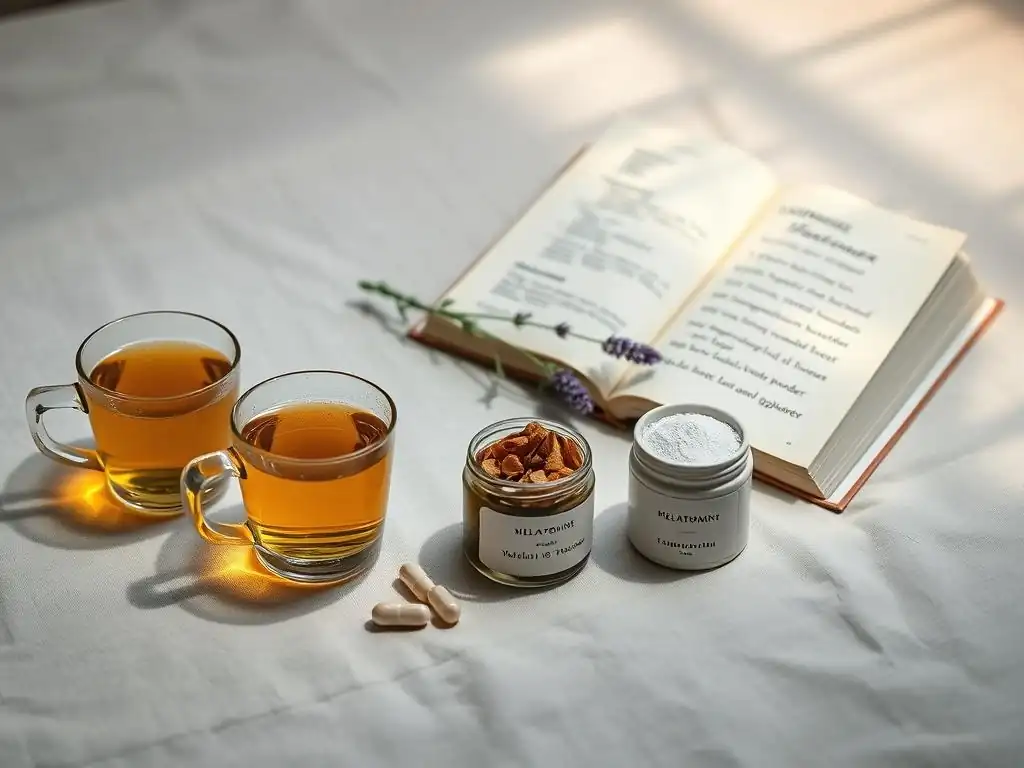
Creating a Bedtime Routine: Maximizing the Benefits
Combining the use of herbal teas for better sleep and targeted sleep supplements can form a powerful, holistic approach to improving sleep quality. The key is integrating these aids into a consistent and calming bedtime routine. A routine signals to the body that it's time to wind down and prepare for rest.
For example, an hour before bed, one might dim the lights, turn off electronic screens, and then prepare a cup of chamomile or lemon balm tea. While sipping the tea over 20-30 minutes, they could engage in a relaxing activity like reading a book, gentle stretching, or listening to quiet music.
Supplements like magnesium or L-Theanine could be taken earlier in the evening with dinner or a snack, while melatonin is often recommended closer to bedtime, perhaps 30 minutes before planning to sleep. The ritual itself is just as important as the specific tea or supplement. This structured period of relaxation helps lower cortisol levels and shift the nervous system into a state conducive to sleep. By consistently following this routine, the body learns to associate these actions with sleep, making the transition to rest smoother and enhancing the effectiveness of the chosen herbal teas and supplements.
Tailoring Your Gift: Considering Individual Needs and Preferences
When gifting herbal teas for better sleep and sleep supplements, personalization is key. What works well for one person might not be suitable for another, depending on their specific sleep challenges, health conditions, and personal preferences. For someone whose primary issue is anxiety, a calming tea like lemon balm or a supplement like L-Theanine might be ideal. If the problem is difficulty falling asleep due to a disrupted circadian rhythm, melatonin could be more appropriate. For muscle tension and restlessness, magnesium might be the best fit.
It's also important to consider potential interactions with medications or existing health conditions. While most herbal teas are generally safe, potent herbs like valerian root or certain supplements should be used with caution or after consulting a healthcare professional. Offering a variety pack of different herbal teas for better sleep allows the recipient to experiment and find what works best for them.
Including a small guide explaining the potential benefits of each item adds an informative touch. Tailoring the gift demonstrates thoughtful consideration and increases the likelihood that these edible aids will genuinely contribute to the recipient's peaceful nights and improved mental well-being.
Conclusion: Give the Gift of Peaceful Sleep and Enhanced Mental Well-being
Giving the gift of herbal teas for better sleep and natural supplements is more than just offering a physical item; it's offering an opportunity for peace, relaxation, and improved health. These edible aids provide gentle, natural support for the body's sleep mechanisms, addressing common barriers like anxiety, restlessness, and disrupted sleep cycles. By incorporating them into a mindful bedtime routine, individuals can cultivate habits that promote consistent, restful sleep.
A good night's sleep is fundamental to mental well-being, impacting mood, cognitive function, and resilience to stress. By carefully selecting and gifting these natural remedies, you are directly contributing to a loved one's journey towards better rest and enhanced mental health. Whether it's the soothing comfort of a chamomile tea or the targeted support of a magnesium supplement, these gifts are thoughtful reminders that their well-being is valued. Choose the right combination, perhaps guided by their specific needs, and offer the profound gift of peaceful nights and brighter days.
Frequently Asked Questions
What are the best herbal teas to drink before bed to promote better sleep?
Several herbal teas are known for their calming properties, including chamomile, lavender, and valerian root tea. These teas contain compounds that may help reduce anxiety and promote relaxation, leading to improved sleep quality.
How do herbal teas compare to sleep supplements for improving sleep?
Herbal teas offer a gentler approach to sleep enhancement compared to many supplements. They provide a calming ritual and contain natural compounds, while sleep supplements might offer stronger effects but could also come with potential side effects.
Are there any potential side effects of drinking herbal teas for sleep?
While generally safe, some herbal teas can cause side effects in certain individuals. Chamomile, for example, may trigger allergic reactions in people with allergies to ragweed or other plants in the daisy family. It's always best to start with small amounts and monitor for any adverse reactions.
How long before bedtime should I drink herbal tea to experience its sleep-promoting benefits?
For optimal results, drink your herbal tea about 30-60 minutes before you plan to go to bed. This allows enough time for the tea's calming effects to take hold and help you relax before sleep.
Can herbal teas completely replace prescription sleep medications?
Herbal teas are generally considered a complementary approach to improving sleep, not a replacement for prescription medications. If you have a diagnosed sleep disorder or are taking medication, consult your doctor before making any changes to your treatment plan.
Final Reflection: Soothing Sips and Sweet Dreams: A Path to Restful Nights
The pursuit of a good night's sleep is a universal human experience, and the search for natural remedies continues to resonate deeply in our modern, often overstimulated world. The increasing awareness of the potential side effects of pharmaceutical sleep aids has fueled a renewed interest in herbal solutions, making the exploration of herbal teas and sleep supplements more relevant than ever before.
The gentle ritual of preparing and enjoying a calming herbal tea before bed transcends mere practicality; it becomes a mindful act of self-care, a small rebellion against the relentless demands of daily life. This simple act connects us to ancient traditions and the natural world, offering a sense of peace and tranquility often lost in the hustle and bustle. Sleep is the best meditation.
This simple truth underscores the profound impact of prioritizing rest, and herbal teas can be a powerful ally in achieving it.
Now, consider your own sleep habits. Are you prioritizing rest and relaxation? What small changes could you incorporate into your evening routine to cultivate a more peaceful and restorative sleep experience? Perhaps it's the gentle warmth of a chamomile tea, the earthy aroma of valerian root, or simply the quiet time dedicated to unwinding before bed. Embrace the opportunity to nurture your well-being, one soothing sip at a time. Your body and mind will thank you for it.
Unlock Your Best Night's Sleep: Gift Yourself (and Others!) Restful Nights
Thanks for exploring the world of herbal teas and sleep supplements with us! We hope you've discovered some new ways to prioritize peaceful sleep and enhance your well-being. Ready to take the next step?
- Brew a calming cup: Try one of the herbal tea blends we discussed – chamomile, lavender, or even a custom blend – and savor the moment of relaxation before bed. This is your primary action; making it the first enhances its importance.
- Share the sleep wisdom: Recommend this article or your favorite sleep aid to a friend or family member who could benefit. Spread the word about natural ways to improve sleep!
- Explore more sleep solutions: Delve deeper into our website for more articles on sleep hygiene, meditation techniques, and other natural remedies for restful sleep.
What small change will you make tonight to improve your sleep quality?