
The Decline of Moral Treatment: Why 19th Century Asylums Deteriorated


Welcome to Mind Care Guide.
Are you curious about the historical asylum treatment decline? We delve into the fascinating and often heartbreaking story of how 19th-century asylums, initially founded on principles of moral treatment, ultimately succumbed to overcrowding and neglect. This pivotal shift profoundly impacted mental healthcare. Join us as we explore the factors that led to this deterioration and its lasting legacy. What went wrong, and what can we learn from the past to build a better future for mental well-being? Let's unravel the complexities together...
The Decline of Moral Treatment: Why 19th Century Asylums Deteriorated
- Introduction: The Promise and Peril of 19th Century Asylums
- What Was Moral Treatment? A Historical Overview
- Factors Contributing to the Historical Asylum Treatment Decline
- The Rise of Custodial Care: A Departure from Moral Principles
- Scientific Explanations and the Medicalization of Mental Illness
- The Role of Public Perception and Funding
- Case Studies: Examples of Asylum Deterioration
- The Legacy of the Decline: Lasting Impacts on Mental Healthcare
- Conclusion: Re-evaluating the Historical Asylum Treatment Decline
-
Frequently Asked Questions
- What were the main principles of Moral Treatment in 19th-century asylums?
- Why did Moral Treatment decline in asylums despite its initial success?
- How did the decline of Moral Treatment impact patients in asylums?
- What role did overcrowding play in the deterioration of asylum conditions?
- What are the historical lessons we can learn from the decline of Moral Treatment in asylums?
- Final Reflection: The Lingering Shadow of Forgotten Compassion
- Rediscover the Forgotten History of Mental Healthcare
Introduction: The Promise and Peril of 19th Century Asylums
The Initial Hope: Moral Treatment in Early Asylums
The early 19th century saw a revolutionary shift in the care of individuals with mental illness, moving away from punitive, prison-like conditions towards what became known as "moral treatment." Inspired by reformers like Philippe Pinel in France and William Tuke in England, this approach emphasized humane care, dignity, and therapeutic environments.
Early American asylums, often built on the "Kirkbride Plan" with airy rooms and ample grounds, aimed to provide a sanctuary where patients could recover through routine, manual labor, recreation, and kind interaction. The promise was that mental illness, previously seen as incurable or demonic, could be treated effectively through these compassionate methods.
These early institutions, like the Friends Asylum near Philadelphia (founded 1813) or the Hartford Retreat (founded 1824), were typically small, housing perhaps a few dozen to a couple of hundred patients. This manageable size allowed for a higher staff-to-patient ratio, facilitating personalized attention and adherence to the principles of moral treatment.
Reports from these early years often boasted impressive recovery rates, sometimes claiming cure for up to 90% of recent cases, though these figures were likely optimistic and based on subjective criteria. Nevertheless, the initial success stories fueled optimism and led to calls for more such institutions across the burgeoning United States.
A Shift in Perspective: Understanding the Deterioration
Despite the promising start, the bright vision of moral treatment began to dim significantly by the mid-19th century, leading to a widespread historical asylum treatment decline. The very institutions built on principles of kindness and rehabilitation gradually transformed into overcrowded, underfunded warehouses of the mentally ill. This complex deterioration wasn't due to a single cause but resulted from a confluence of societal, economic, and scientific factors. Understanding this shift requires examining how external pressures and internal changes eroded the foundational tenets of moral care.
The transition from therapeutic havens to custodial institutions marked a tragic turning point in the history of mental healthcare. As the century progressed, the focus drifted away from individual treatment and recovery towards managing large populations, often with little regard for patient well-being or dignity. This widespread historical asylum treatment decline left a lasting negative legacy, shaping public perception of mental illness and institutional care for decades to come.
What Was Moral Treatment? A Historical Overview
Principles of Moral Treatment: Respect, Dignity, and Rehabilitation
Moral treatment was fundamentally a philosophy of care that viewed mental illness not as a moral failing or demonic possession, but as a disorder influenced by social and psychological factors that could be addressed through a therapeutic environment. Its core principles centered on treating patients with respect and dignity, providing a structured yet humane daily routine, and encouraging activities aimed at rehabilitation and recovery. Instead of chains and isolation rooms prevalent in earlier eras, asylums practicing moral treatment offered comfortable living spaces, opportunities for work (such as farming or crafts), educational activities, and social interaction.
The emphasis was on persuasion and positive reinforcement rather than coercion or punishment. Staff were encouraged to build therapeutic relationships with patients, using kindness and understanding to guide their behavior. The belief was that removing individuals from stressful or chaotic home environments and placing them in a calm, orderly, and supportive setting would facilitate healing. This approach represented a radical departure from the brutal methods previously used, highlighting the potential for recovery through humane interaction and a therapeutic milieu.
Key Figures in the Moral Treatment Movement: Philippe Pinel, William Tuke
Two figures stand out as pioneers of the moral treatment movement: Philippe Pinel (1745-1826) in France and William Tuke (1732-1822) in England. Pinel, appointed physician at the Bicêtre Hospital in Paris in 1793, famously ordered the unchaining of patients, advocating for a more humane approach based on observation and interaction rather than restraint and punishment. He believed that mental illness was often curable and that providing a supportive environment was crucial for recovery. His work at Bicêtre and later at Salpêtrière significantly influenced psychiatric practice in France and beyond.
Simultaneously, William Tuke, a Quaker philanthropist, established the York Retreat in England in 1796. Disturbed by the inhumane conditions he witnessed in other institutions, Tuke created a small, family-like environment where patients lived and worked alongside staff, treated with kindness and respect. The Retreat became a model for humane care, demonstrating that a non-coercive approach could yield positive results. These two figures, though working independently, laid the groundwork for the principles of moral treatment that would spread across Europe and North America in the early 19th century.
Early Successes: Documented Improvements in Patient Outcomes
In its initial phases, moral treatment was associated with significant improvements in patient outcomes, contributing to its early popularity and the establishment of new asylums. Early reports from institutions like the Hartford Retreat or the McLean Asylum in Massachusetts often cited high recovery rates, particularly for patients whose illness was of recent onset. For example, the first annual report of the Worcester State Hospital in 1833 claimed a cure rate of over 80% for patients admitted within three months of symptom onset, and around 50% for those ill for up to a year.
These figures, while potentially inflated due to diagnostic ambiguity and reporting bias, nonetheless reflected a real improvement compared to the negligible recovery rates seen in earlier, purely custodial or punitive settings. Patients who had been previously confined and neglected were often described as becoming calmer, more engaged, and capable of participating in daily life and work.
The documented ability of these early asylums to facilitate recovery, or at least significantly improve the quality of life for many patients, solidified the reputation of moral treatment as a progressive and effective approach, before the historical asylum treatment decline began to take hold.
Factors Contributing to the Historical Asylum Treatment Decline
Overcrowding and Understaffing: The Strain on Resources
One of the most significant factors contributing to the historical asylum treatment decline was overwhelming overcrowding coupled with inadequate staffing. As states and cities established large public asylums based on the early successes, the demand for admission quickly outstripped capacity. Institutions designed to house a few hundred patients soon found themselves housing thousands.
For instance, the Worcester State Hospital, built for 350 patients, housed over 1,000 by the late 1850s and nearly 2,500 by the turn of the century. This explosion in patient numbers meant that available resources – space, food, clothing, and crucially, staff – were stretched impossibly thin.
The moral treatment approach relied heavily on personal interaction and a therapeutic environment facilitated by a high staff-to-patient ratio. However, with severe overcrowding, this ratio plummeted. Attendants, who were often poorly paid and untrained, were responsible for dozens, sometimes scores, of patients. This made it impossible to provide the individualized attention, therapeutic activities, and moral guidance that were central to the treatment philosophy. The sheer logistical challenge of managing such large numbers forced a shift from active treatment to mere custody, a critical point in the historical asylum treatment decline.
The Impact of Rapid Population Growth on Asylum Care
The rapid population growth experienced by the United States throughout the 19th century, fueled by both internal migration and massive immigration, placed immense pressure on social institutions, including asylums. Cities expanded, and with this growth came increased social stress, poverty, and mental health challenges. Asylums, initially intended for a select group of treatable patients, became the default destination for a much broader population, including the chronically ill, the elderly, the poor, and recent immigrants, regardless of the nature or severity of their condition.
This influx meant that asylums were no longer primarily therapeutic centers but became holding facilities for a diverse population, many of whom were not considered amenable to the original moral treatment methods. The sheer volume of admissions overwhelmed the capacity of staff to even assess, let alone treat, individuals according to moral principles. The focus necessarily shifted towards maintaining order and control within increasingly chaotic environments, accelerating the historical asylum treatment decline from therapeutic intent to custodial reality.
Changing Demographics: The "Problem" of Immigration and Poverty
The changing demographic profile of asylum populations also played a role in the historical asylum treatment decline. As the 19th century wore on, public asylums increasingly housed large numbers of immigrants and poor individuals. These groups were often viewed differently by society and institutional authorities than the mostly middle-class, native-born patients who populated the earlier private asylums. Prejudice and nativism sometimes led to discriminatory practices and a reduced commitment to providing high-quality care.
Furthermore, poverty often meant patients arrived at asylums in poor physical health, sometimes with co-occurring issues like malnutrition or infectious diseases, complicating their care. Staff, overwhelmed by numbers and potentially influenced by societal biases, may have been less inclined or able to apply the labor-intensive principles of moral treatment to these populations. The perception of these patients as less 'curable' or less 'deserving' contributed to a shift towards basic custodial care, where the goal was containment rather than rehabilitation, marking a stark facet of the historical asylum treatment decline.
The Rise of Custodial Care: A Departure from Moral Principles

The Shift from Treatment to Confinement
As overcrowding and understaffing became chronic issues, the fundamental purpose of the asylum shifted from active treatment and rehabilitation to mere confinement and containment. The ideal of a therapeutic community where patients engaged in purposeful activities and received individual attention became unsustainable. Instead, institutions focused on the basic management of large populations: providing minimal food and shelter, maintaining order, and preventing escape. This marked a significant departure from the core tenets of moral treatment and accelerated the historical asylum treatment decline.
Daily life in many asylums devolved into monotonous routines with little stimulation or therapeutic value. Patients spent hours idle on wards, with limited access to the grounds, workshops, or social activities that were central to the original model. The focus was on control rather than cure, reflecting a pragmatic response to overwhelming numbers but fundamentally abandoning the aspirational goals of the moral treatment era. This transformation solidified the asylum's role as a place of segregation rather than a place of healing.
The Influence of Institutionalization on Patient Well-being
The prolonged confinement within increasingly non-therapeutic environments had profound negative effects on patient well-being, a direct consequence of the historical asylum treatment decline. The lack of stimulation, social isolation, loss of autonomy, and enforced idleness often led to a phenomenon sometimes referred to as "institutionalization" or "hospitalism." Patients could become withdrawn, apathetic, lose practical skills, and develop behaviors characteristic of long-term confinement rather than their original mental health condition.
This environment often exacerbated existing symptoms or created new ones, hindering any possibility of recovery. The very setting designed to heal became detrimental to mental health. The loss of individual identity within the anonymous mass of patients, coupled with the lack of meaningful activity or personal attention, stripped away dignity and reinforced helplessness. The impact of this pervasive institutionalization was a tragic outcome of the failure to maintain the principles of moral treatment.
The Emergence of Mechanical Restraints and Punitive Measures
With the decline of moral treatment and the rise of custodial care, there was a corresponding increase in the use of mechanical restraints and punitive measures to manage patient behavior. While early moral treatment advocated for minimizing or eliminating restraints, overcrowded and understaffed asylums found it easier to control large numbers of patients through physical means. Straitjackets, padded cells, restraint chairs, and even chains saw a resurgence in use, often employed for convenience rather than therapeutic necessity.
Punishments, such as solitary confinement or deprivation of privileges, also became more common as staff struggled to maintain order. This reliance on coercion and control directly contradicted the core principles of respect and non-coercion that defined moral treatment. The increased use of restraints and punitive practices is a clear indicator of the extent of the historical asylum treatment decline, signaling a return to methods that moral reformers had fought to abolish just decades earlier.
Scientific Explanations and the Medicalization of Mental Illness
Concurrent with the growth and subsequent deterioration of asylums was the rise of scientific medicine and a growing emphasis on finding biological causes for mental illness. While the moral treatment model acknowledged physical factors, it placed significant weight on psychological and social influences. However, by the latter half of the 19th century, the dominant scientific paradigm favored explaining illness through pathology in the brain or nervous system. This led to an intense search for specific biological lesions or physical defects causing various forms of "insanity."
This shift in focus meant less attention was paid to the environmental and social factors that were central to moral treatment. If mental illness was primarily a biological disease, then social therapies and therapeutic environments seemed less relevant than finding a physical cure. This scientific perspective, while advancing neurological understanding, inadvertently de-emphasized the importance of the therapeutic milieu and interpersonal relationships, contributing intellectually to the historical asylum treatment decline from a holistic to a purely medical model.
The Influence of Psychiatry on Asylum Management
As psychiatry emerged as a distinct medical specialty, medical doctors (psychiatrists) increasingly took control of asylum management. While many were dedicated professionals, their training and perspective often differed from the earlier superintendents who were sometimes more aligned with the social and moral aspects of care. Medical superintendents focused on diagnosis, classification, and the search for biological treatments. This medical leadership, while bringing scientific rigor, sometimes prioritized administrative efficiency and medical procedures over the complex, labor-intensive application of moral treatment principles.
The authority of the medical doctor became paramount, potentially marginalizing the role of attendants and other staff who were crucial for implementing daily moral care. Decisions about patient management were increasingly framed in medical terms, sometimes leading to a more detached, clinical approach compared to the personal engagement advocated by moral treatment proponents. This medicalization of asylum management influenced the direction of care, further contributing to the historical asylum treatment decline.
The Rise of Somatic Treatments: Hydrotherapy, Lobotomy and Their Consequences
The search for biological cures led to the exploration and implementation of various somatic treatments within asylums. While some practices like prolonged baths or cold packs (hydrotherapy) were initially seen as part of the therapeutic regimen, they sometimes evolved into harsh or punitive measures. Later in the century and into the early 20th century, more invasive or aggressive somatic treatments were developed, driven by the belief that physical intervention could cure mental illness.
While lobotomy is primarily a 20th-century procedure, the 19th century saw the precursors in experimental surgeries and harsh physical treatments. These approaches, often lacking rigorous scientific evidence of efficacy and sometimes causing significant harm, represented a stark contrast to the gentle, non-invasive methods of moral treatment. Their emergence and increasing use in some institutions highlighted how far asylum practice had drifted from its original humane ideals, marking a significant point in the historical asylum treatment decline towards physically oriented interventions.
The Role of Public Perception and Funding
Stigma and the Devaluation of Mental Health
Societal stigma surrounding mental illness played a crucial role in the historical asylum treatment decline. As asylums became larger and more custodial, they also became places of shame and concealment. Families often sent relatives away to the asylum to avoid social embarrassment, and the public increasingly viewed these institutions as places to hide away the 'insane' rather than centers of healing. This pervasive stigma contributed to the devaluation of mental health care.
When mental illness is stigmatized, it is less likely to receive adequate public attention, advocacy, and resources. The perceived residents of asylums – often poor, immigrant, or chronically ill – further marginalized the institutions in the public eye. This societal apathy and negative perception meant there was little public outcry as conditions within asylums deteriorated, allowing the historical asylum treatment decline to occur with limited external challenge.
The Impact of Economic Downturns on Asylum Resources
Economic conditions significantly impacted the quality of care provided in public asylums. State funding for these institutions, which housed the majority of patients, was often subject to political priorities and economic fluctuations. During periods of economic depression or recession, asylum budgets were frequently cut. These cuts directly affected staffing levels, food quality, maintenance of facilities, and the availability of therapeutic supplies.
Reduced funding exacerbated the problems of overcrowding and understaffing, making it even harder to adhere to moral treatment principles. Dilapidated buildings, insufficient heating, poor sanitation, and inadequate nourishment became common in many institutions, further deteriorating the living conditions and undermining any possibility of therapeutic benefit. The vulnerability of asylum funding to economic downturns was a practical, yet devastating, factor in the historical asylum treatment decline.
Public Apathy and the Lack of Oversight
The isolation of asylums, both geographically and socially, fostered public apathy and a significant lack of oversight. Many large state asylums were built in rural areas, far from urban centers where families and reformers might visit regularly. This physical distance contributed to a lack of public awareness about the actual conditions inside. Unlike prisons or hospitals which might receive more public scrutiny, asylums often operated behind closed doors.
Without consistent external oversight from concerned citizens, independent boards, or investigative journalists, abuses, neglect, and the steady decline of care could occur unchecked. The lack of accountability allowed custodial practices to become entrenched and conditions to deteriorate without consequence. This public apathy and absence of effective oversight were critical factors that enabled the widespread historical asylum treatment decline to persist for decades.
Case Studies: Examples of Asylum Deterioration
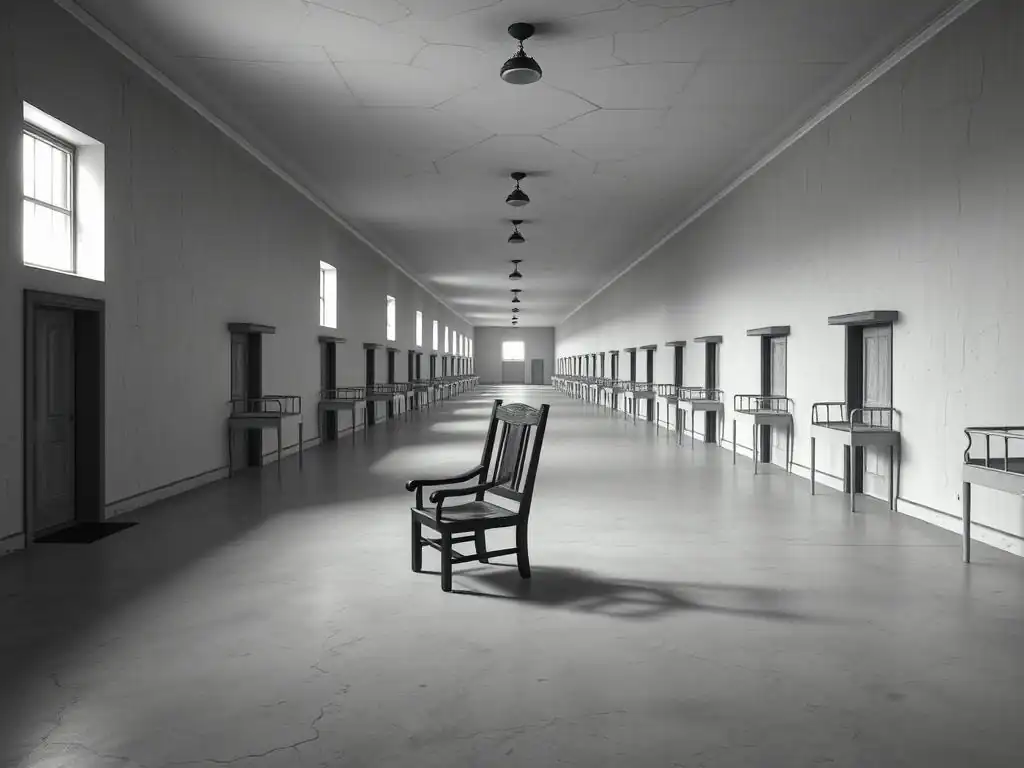
Worcester State Hospital: A Case of Overcrowding and Neglect
Worcester State Hospital in Massachusetts serves as a poignant example of the historical asylum treatment decline driven largely by overcrowding. Opened in 1833 under the progressive leadership of Dr. Samuel Woodward, it was initially hailed as a model institution practicing moral treatment. Woodward emphasized therapeutic work, education, and humane care, reporting impressive recovery rates in its early years.
However, within a few decades, the hospital's population exploded, far exceeding its design capacity. By the 1850s, it was severely overcrowded, making individualized care impossible. Reports from later in the century describe deteriorating conditions, inadequate staffing, and a shift towards custodial management.
The sheer numbers overwhelmed the staff, leading to neglect, reliance on restraints, and a loss of the therapeutic environment that defined its early success. Worcester's trajectory from a beacon of moral treatment to an overcrowded, neglected institution illustrates the devastating impact of unchecked growth on the quality of care, marking a clear instance of historical asylum treatment decline.
Trans-Allegheny Lunatic Asylum: The Introduction of Questionable Medical Practices
The Trans-Allegheny Lunatic Asylum (later Weston State Hospital) in West Virginia, a massive Kirkbride-plan institution completed in 1864, also exemplifies the historical asylum treatment decline, particularly in the later introduction of questionable medical practices. Designed to house 250 patients following moral treatment principles, its population soared into the thousands by the early 20th century, reaching over 2,400 patients by the 1950s in a space intended for a fraction of that number.
While overcrowding was a major issue, Trans-Allegheny also became known for implementing increasingly harsh or experimental treatments as the 19th century waned and medical ideas evolved. Though specific dates for certain procedures like full lobotomies fall into the 20th century, the shift towards physical interventions and sometimes inhumane practices had roots in the late 19th-century move away from purely moral treatment.
The vast, impersonal nature of such a large institution, combined with the prevailing medical theories of the time, facilitated practices that were far removed from the founding ideals of therapeutic care, highlighting another aspect of the historical asylum treatment decline.
Lessons Learned from These Historical Examples
The case studies of institutions like Worcester and Trans-Allegheny offer critical lessons about the factors driving the historical asylum treatment decline. They underscore how even well-intentioned institutions, founded on progressive principles, were vulnerable to external pressures. The primary lesson is the devastating impact of chronic overcrowding and underfunding, which directly undermined the ability to provide individualized, humane care.
These examples also illustrate how a shift in philosophy – from a holistic, environmental approach to a purely medical or custodial one – fundamentally altered the nature of asylum care. The loss of the therapeutic milieu, the reliance on control rather than connection, and the subsequent negative impact on patient well-being are stark reminders of what happens when human dignity and therapeutic goals are sacrificed in the name of expediency or cost-saving. Understanding these historical failures is essential for preventing similar issues in modern mental healthcare systems.
The Legacy of the Decline: Lasting Impacts on Mental Healthcare
The Perpetuation of Stigma and Misunderstanding
The historical asylum treatment decline left a deep and lasting scar on public perception of mental illness and its treatment. The image of the asylum transformed from a place of hope and healing to a symbol of despair, confinement, and abuse – the infamous "snake pit." This powerful negative imagery reinforced existing societal stigma, contributing to a culture of fear, shame, and misunderstanding surrounding mental health conditions.
This perpetuated stigma made it harder for individuals to seek help, for families to be open about mental illness, and for society to invest adequately in mental healthcare. The association of mental illness with institutionalization in these deteriorated asylums fueled the idea that those affected were beyond help or dangerous, hindering progress towards compassionate, community-based care for decades. The legacy of the historical asylum treatment decline continues to influence how mental health is perceived and discussed today.
The Long-Term Consequences of Institutionalization
For the thousands who spent years or even decades in these deteriorating institutions, the consequences of prolonged institutionalization were profound and often irreversible. Stripped of their autonomy, social connections, and opportunities for meaningful activity, many lost the skills needed to function outside the asylum walls. Deinstitutionalization in the latter half of the 20th century, while necessary, faced immense challenges partly because many long-term residents were ill-prepared for community living after years of confinement and lack of therapeutic care during the period of historical asylum treatment decline.
The experience of living in overcrowded, understaffed, and often neglectful environments left deep emotional and psychological scars. The historical asylum treatment decline didn't just affect the institutions; it deeply impacted the lives and well-being of generations of individuals living with mental illness, contributing to cycles of poverty, homelessness, and marginalization for those who were later released without adequate support.
The Need for Continued Reform and Advocacy
The historical asylum treatment decline serves as a powerful cautionary tale, highlighting the critical need for ongoing reform and advocacy in mental healthcare. The failures of the 19th-century asylum system underscore the dangers of underfunding, overcrowding, lack of oversight, and the erosion of humane, patient-centered care. Learning from this history is essential to build and maintain effective, compassionate mental health systems today.
Advocacy is necessary to ensure adequate funding for community-based services, supportive housing, and accessible therapy. Reform efforts must focus on upholding the rights and dignity of individuals with mental illness, combating stigma, and ensuring transparency and accountability in all forms of mental healthcare. The lessons of the historical asylum treatment decline emphasize that vigilance is required to prevent the return of custodial practices and ensure that care remains focused on recovery, dignity, and well-being.
Conclusion: Re-evaluating the Historical Asylum Treatment Decline
Lessons for Modern Mental Health Systems
The historical asylum treatment decline offers critical lessons that remain highly relevant for modern mental health systems. Firstly, it demonstrates the vulnerability of even well-intentioned care models to external pressures like funding cuts and population growth; adequate resources and capacity planning are paramount. Secondly, it highlights the danger of losing sight of the individual within a system, underscoring the need for personalized, patient-centered care rather than purely administrative management.
Furthermore, the history shows the importance of integrating social and environmental factors into treatment approaches, rather than relying solely on biological or pharmacological interventions. The failure of the custodial asylum model emphasizes that confinement without therapeutic purpose is detrimental. Modern systems must prioritize community integration, supportive environments, and the preservation of patient dignity to avoid repeating the mistakes that led to the historical asylum treatment decline.
Emphasizing Compassionate and Evidence-Based Care
Moving forward, mental healthcare must emphasize both compassion and evidence-based practices, blending the humanistic ideals of early moral treatment with modern scientific understanding. Compassionate care, rooted in respect, empathy, and a focus on the individual's well-being, is the ethical foundation. This echoes the core principles that were lost during the historical asylum treatment decline.
Simultaneously, care must be guided by rigorous evidence, utilizing treatments and interventions proven to be effective. This includes a range of therapies, medications when appropriate, and social support systems. The challenge is to combine scientific knowledge with the fundamental understanding that healing occurs best in environments where individuals feel safe, respected, and supported – a lesson clearly illuminated by the rise and fall of moral treatment and the subsequent historical asylum treatment decline.
Moving Forward: Building a Better Future for Mental Well-being
Building a better future for mental well-being requires a conscious effort to learn from the past, particularly the historical asylum treatment decline. It means investing in accessible, high-quality mental healthcare that is integrated into communities, not hidden away. It involves actively fighting stigma and promoting understanding to ensure that individuals feel empowered to seek help and receive support.
Ultimately, the legacy of the historical asylum treatment decline compels us to advocate for systems that prioritize human dignity, provide comprehensive and individualized care, and are resilient to the pressures that caused past failures. By remembering the promise of moral treatment and understanding the reasons for its decline, we can work towards creating mental healthcare systems that truly promote recovery, respect, and well-being for all.
Frequently Asked Questions
What were the main principles of Moral Treatment in 19th-century asylums?
The Moral Treatment approach emphasized humane and respectful care, focusing on rehabilitation through structured routines, work, and social interaction. It was a stark contrast to previous methods of confinement.
Why did Moral Treatment decline in asylums despite its initial success?
Several factors contributed, including overcrowding, lack of funding, and a shift towards medical models of care that favored pharmacological interventions over therapeutic environments.
How did the decline of Moral Treatment impact patients in asylums?
The decline led to a return to more restrictive and custodial care, often involving physical restraints and isolation, negatively impacting patient well-being and recovery.
What role did overcrowding play in the deterioration of asylum conditions?
Overcrowding strained resources, making it impossible to maintain the individualized care central to Moral Treatment. This led to staff burnout and a decline in the quality of care.
What are the historical lessons we can learn from the decline of Moral Treatment in asylums?
We can learn that adequate funding and staffing are crucial for effective mental health care. Also, that humane and holistic approaches can be more effective than solely relying on medical or custodial methods.
Final Reflection: The Lingering Shadow of Forgotten Compassion
The humane ideals of the 19th-century moral treatment movement, once a beacon of hope for the mentally ill, ultimately succumbed to societal pressures and resource constraints, leaving a legacy of neglect that continues to resonate in our modern approaches to mental healthcare. The stark contrast between the initial promise of these asylums and their eventual decline serves as a potent reminder of the fragility of even the most well-intentioned reforms. We must learn from this history to avoid repeating past mistakes.
The deterioration of moral treatment wasn't simply a matter of dwindling resources; it reflected a deeper societal shift in attitudes towards mental illness. The stigma surrounding mental health, already prevalent in the 19th century, intensified, leading to a dehumanizing approach that prioritized containment over care. This echoes in our own time, where access to quality mental healthcare remains a significant challenge for many. The history of asylums is a history of our own attitudes towards suffering.
– (This needs a source, adapt to your own source). This quote highlights the enduring connection between societal values and the quality of care provided to those struggling with mental illness.
Consider the lessons learned from this historical trajectory. You have the power to challenge the stigma surrounding mental health, to advocate for improved access to care, and to ensure that the mistakes of the past are not repeated. Let the decline of moral treatment serve not as a monument to failure, but as a catalyst for positive change. By understanding this history, we can build a future where compassion and effective treatment are the cornerstones of mental healthcare for all.
Rediscover the Forgotten History of Mental Healthcare
Thanks for exploring the complex history of moral treatment in 19th-century asylums with us! We hope you gained a deeper understanding of this pivotal period in mental healthcare's evolution. Now, let's turn that newfound knowledge into action:
- Dive deeper: Research a specific asylum or individual from the era. Their stories are rich with untold detail. Consider looking into local historical archives!
- Share your insights: Discuss this article with friends, family, or on social media – let's start a conversation about the lessons we can learn from the past.
- Explore further: Consider researching the evolution of mental health treatments from then to the current day. How have ethical practices improved (or not)?
What other historical factors do you think significantly contributed to the decline of moral treatment in 19th-century asylums? Let's discuss in the comments below!