
How Enlightenment Ideas Dismantled Demonology in Mental Healthcare


Welcome to Mind Care Guide, your sanctuary for understanding and nurturing mental well-being. Have you ever wondered how we arrived at our modern understanding of mental health? Delve into the fascinating, and often unsettling, history of how enlightenment ideas dismantled demonology in mental healthcare, a journey that reveals the long road to compassionate treatment. We'll explore the shifts in perspective that challenged centuries of belief and paved the way for a more humane approach. Ready to uncover the roots of change?
- How Enlightenment Ideas Dismantled Demonology in Mental Healthcare: A Mind Care Guide Perspective
- The Dawn of Reason: Enlightenment Ideas Challenging Demonology
- The Gradual Shift: From Demonization to Medicalization of Mental Illness
- The Legacy of the Enlightenment: Modern Mental Healthcare and the Fight Against Stigma
-
Frequently Asked Questions
- How did Enlightenment ideas specifically challenge the demonological view of mental illness?
- What were some of the earliest alternative treatments to exorcism and other demon-based interventions?
- In what ways did the Enlightenment influence the development of asylums and their treatment approaches?
- How did the Enlightenment's focus on individual rights impact the treatment of the mentally ill?
- What is the significance of understanding the historical shift away from demonology for modern mental healthcare?
- Final Reflection: The Enduring Legacy of Enlightenment on Mental Health
- Unleash Your Mind's Potential: A New Understanding of Mental Wellbeing
How Enlightenment Ideas Dismantled Demonology in Mental Healthcare: A Mind Care Guide Perspective
Introduction: The Dark Ages of Mental Health Demonization Treatment
For centuries, across many cultures, mental illness was frequently attributed to supernatural forces – demons, evil spirits, or divine punishment. This era represents a dark chapter in the history of mental health, where understanding was replaced by fear and compassion by cruelty. Individuals experiencing symptoms of mental health conditions were often ostracized, persecuted, or subjected to brutal interventions aimed at expelling the perceived malevolent entity. This period, characterized by the demonization of mental health, saw treatments rooted in superstition rather than science, leaving a significant mark on the mental health demonization treatment history.
The pervasive belief in demonic possession as the root cause of mental suffering led to immense suffering for those affected. Instead of receiving care and support, they faced suspicion, fear, and isolation. This deeply entrenched perspective shaped societal attitudes, legal frameworks, and the limited, often harmful, interventions available. Understanding this historical context is crucial for appreciating the transformative shift brought about by later intellectual movements, particularly the Enlightenment, in challenging these archaic and harmful beliefs and paving the way for a more humane approach to mental well-being.
The Prevalence of Demonological Explanations for Mental Illness Before the Enlightenment
Understanding Demonology: Mental Illness as Supernatural Affliction
Before the widespread influence of Enlightenment thought, the prevailing explanation for mental illness in Europe and many other parts of the world was firmly rooted in demonology and religious belief. Symptoms like hallucinations, delusions, erratic behavior, or profound sadness were not seen as medical conditions affecting the brain or mind, but rather as manifestations of external, malevolent forces.
It was commonly believed that individuals were possessed by demons or spirits, or that their suffering was a result of witchcraft or divine retribution for sins committed by themselves or their ancestors. This supernatural interpretation dominated the understanding of mental health challenges.
This perspective wasn't confined to the uneducated; it was often supported by religious authorities and even some early medical thinkers who lacked a scientific framework for understanding complex brain functions. Texts from the medieval period and early Renaissance are replete with accounts describing mental distress through the lens of spiritual battles or demonic influence. For example, historical records detail cases where individuals exhibiting signs of severe depression or psychosis were believed to be engaged in spiritual warfare within their own bodies, highlighting the deep integration of demonological explanations into the fabric of society's understanding of mental health struggles.
Societal Perceptions: Fear, Stigma, and Isolation of the Mentally Ill
The belief that mental illness was caused by demonic possession or witchcraft led to intense fear and profound stigma within communities. Individuals displaying symptoms were often seen as dangerous, unpredictable, or even aligned with evil. This fear frequently resulted in social exclusion, with people being driven out of their homes, confined in isolated spaces, or abandoned by their families. The pervasive stigma associated with these conditions made it incredibly difficult for sufferers to find acceptance, understanding, or any form of compassionate assistance.
Historical accounts from the 16th and 17th centuries, for instance, document instances where individuals exhibiting signs of mental distress were accused of witchcraft, leading to trials and even execution. While not every person with mental illness faced such extreme persecution, the underlying fear and suspicion meant that they were consistently marginalized. They lived in the shadows, their suffering compounded by loneliness and the constant threat of mistreatment. This isolation was a direct consequence of the societal perception that their condition was supernatural and sinister, a stark reality in the mental health demonization treatment history.
Common "Treatments" Based on Demonological Beliefs: Bloodletting, Trepanation, and Restraint
Based on the belief that mental illness was caused by demons or imbalances influenced by supernatural forces, the "treatments" employed were often brutal and designed to expel the offending entity or correct perceived spiritual disequilibrium. Bloodletting, the practice of drawing blood from a vein, was common, based on the ancient humoral theory but often intertwined with the idea that it could release 'bad' humors or influences associated with the illness. Trepanation, drilling a hole into the skull, was another drastic procedure, sometimes performed with the explicit aim of providing an exit for demons trapped inside the head.
Beyond these invasive physical interventions, restraint was widely used, often in cruel and inhumane ways. Individuals might be chained, caged, or confined in dark, unsanitary conditions for extended periods. Exorcisms, rituals performed by religious figures, were also a primary form of intervention, involving prayers, incantations, and sometimes physical coercion or starvation to drive out the possessing spirit. These methods, while varied, shared a common foundation in the demonological understanding of mental illness and highlight the desperate and often harmful approaches taken before the dawn of more rational, humane perspectives on mental health demonization treatment history.
The Dawn of Reason: Enlightenment Ideas Challenging Demonology

The Core Principles of the Enlightenment and Their Impact on Mental Health
Reason, Logic, and Empiricism: A New Framework for Understanding the Mind
The Enlightenment, an intellectual and philosophical movement that dominated the world of ideas in Europe during the 18th century, championed reason, logic, and empiricism as the primary means of acquiring knowledge. This emphasis on observable evidence and rational thought directly challenged the supernatural explanations that had long held sway over understanding mental illness. Instead of accepting demonic possession on faith, Enlightenment thinkers encouraged observation, study, and the application of logical principles to understand human behavior and the workings of the mind. This shift provided a crucial new framework for moving beyond the demonological view.
This new intellectual climate fostered the beginnings of scientific inquiry into the human body and mind. While neuroscience as we know it was centuries away, the Enlightenment laid the groundwork by promoting systematic observation and the search for natural, rather than supernatural, causes for phenomena. Thinkers began to consider the brain as an organ and the mind as a subject worthy of empirical study, even if their methods were nascent. This intellectual foundation was essential for beginning to dismantle the deeply ingrained beliefs that formed the basis of mental health demonization treatment history.
Human Rights and Dignity: Challenging the Justification for Cruel Treatments
A central tenet of the Enlightenment was the concept of inherent human rights and dignity. Philosophers like John Locke and later thinkers emphasized the natural rights of individuals, including the right to humane treatment. This principle stood in direct opposition to the brutal and dehumanizing practices inflicted upon individuals with mental illness under the demonological model. If all humans possessed intrinsic worth and rights, then the chaining, beating, and isolation of those suffering from mental distress could not be justified simply because their condition was misunderstood.
This emerging respect for the individual spurred calls for reform in institutions and practices. Advocates influenced by Enlightenment ideals began to argue that people with mental illness, regardless of the cause of their condition, deserved compassionate care and a degree of liberty commensurate with their state. This philosophical shift was instrumental in questioning the moral basis of historical mental health demonization treatment practices and advocating for a more ethical approach to care. It provided the moral impetus needed to challenge the status quo and push for significant changes in how society treated its most vulnerable members.
The Rise of Scientific Observation: Shifting Away from Supernatural Explanations
The Enlightenment's emphasis on empiricism and scientific observation provided a critical alternative to supernatural explanations for mental illness. As scientists and physicians began to apply systematic observation and classification to the natural world, some also turned their attention, however tentatively, to human behavior and mental states. While early understanding was limited, the method was revolutionary: observe, describe, and seek natural causes, rather than accepting divine or demonic intervention as the default explanation.
This nascent scientific approach encouraged a move away from exorcisms and spiritual remedies towards treatments based on physical or environmental interventions, even if those interventions were still rudimentary and sometimes misguided by later standards. The very act of attempting to observe and classify different forms of mental disturbance, rather than lumping them all under 'possession,' marked a crucial step towards a medical model.
This focus on observable phenomena, however imperfectly applied at first, provided the intellectual tools necessary to begin unraveling the complex factors contributing to mental health challenges, thereby challenging the core assumptions of mental health demonization treatment history.
Key Enlightenment Thinkers Who Influenced Mental Health Reform
John Locke: Championing Reason and Observation in Understanding Human Behavior
John Locke, a foundational figure of the Enlightenment, significantly influenced the shift towards understanding the mind through reason and observation. His work, particularly An Essay Concerning Human Understanding (1689), proposed that the mind at birth is a tabula rasa, or blank slate, and that all knowledge and ideas are derived from sensory experience and reflection. This empirical approach suggested that human behavior, including what was then considered 'madness,' could potentially be understood through studying an individual's experiences and their interaction with the world, rather than attributing it to inherent evil or external spiritual forces.
Locke's emphasis on experience and reason encouraged a more analytical approach to understanding deviations in thought and behavior. While he did not specifically write extensively on mental illness as a medical condition, his philosophical framework provided the intellectual scaffolding for later thinkers to begin studying the mind and its disorders as natural phenomena, subject to natural laws, rather than supernatural whims. This laid crucial groundwork for moving away from the deeply entrenched beliefs underpinning the mental health demonization treatment history.
Philippe Pinel: Advocating for Humane Treatment and Individual Rights in Mental Healthcare
Philippe Pinel (1745-1826), a French physician considered a pioneer of modern psychiatry, is perhaps one of the most direct examples of Enlightenment principles applied to mental healthcare. Inspired by the ideals of the French Revolution, which itself was heavily influenced by Enlightenment thought, Pinel famously unchained patients at the Bicêtre and Salpêtrière asylums in Paris in the 1790s. He argued that individuals with mental illness were not criminals or possessed beings, but sick individuals deserving of compassion and medical care.
Pinel advocated for "moral treatment," which emphasized a humane environment, purposeful activity, kind interaction with staff, and the classification and observation of symptoms. He meticulously documented his observations, attempting to classify different forms of mental disorder based on empirical evidence rather than theological explanations. His work represented a radical departure from the punitive and custodial approach prevalent at the time and stands as a landmark moment in challenging the cruel legacy of mental health demonization treatment history.
William Tuke: Applying Empirical Methods to the Study of Mental Disorders
Across the English Channel, William Tuke (1732-1822), an English Quaker merchant, also championed humane treatment for individuals with mental illness, establishing The Retreat in York in 1796. Like Pinel, Tuke was influenced by the values of compassion and dignity inherent in his religious beliefs, which resonated with the Enlightenment's emphasis on human rights. The Retreat was founded on the principles of "moral treatment," providing a therapeutic environment where patients were treated with respect, encouraged in meaningful activities, and lived in comfortable surroundings.
Tuke's approach was also empirical in practice. The staff at The Retreat carefully observed and recorded patient behavior and progress, seeking to understand the factors that contributed to recovery or deterioration. While not a physician, Tuke's work demonstrated that a humane and observational approach could yield positive outcomes, directly contrasting with the prevailing methods rooted in fear and demonology. His success provided concrete evidence that mental illness could be managed and potentially treated through environmental and psychological means, further eroding the foundations of mental health demonization treatment history.
The Gradual Shift: From Demonization to Medicalization of Mental Illness
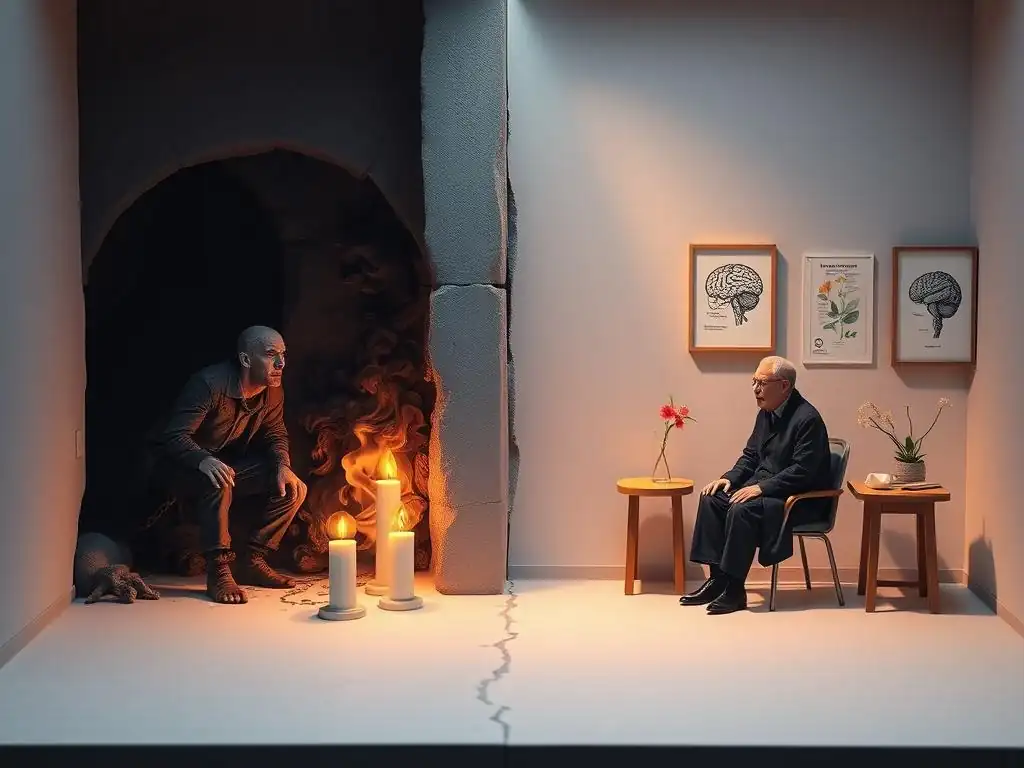
The Decline of Exorcism and Religious Interventions in Mental Healthcare
As Enlightenment ideas gained traction and scientific inquiry began to offer alternative explanations for natural phenomena, the reliance on exorcism and purely religious interventions for mental illness began a slow decline, particularly among educated elites and in urban centers. While these practices did not disappear entirely and persisted in some communities for much longer, their status as the primary or sole form of "treatment" diminished. The growing skepticism towards supernatural causes, fueled by rationalist philosophy, made the idea of a medical or physiological basis for mental disturbance more plausible.
This shift was also influenced by the observable failures of exorcism to consistently "cure" mental illness, coupled with the emerging, albeit limited, successes of more humane and structured approaches like moral treatment. As physicians began to classify and describe symptoms in medical terms, the language of demons and possession gradually retreated from formal discourse surrounding these conditions. This marked a significant turning point in the mental health demonization treatment history, signaling the beginning of a move towards secular and eventually medical models of care.
The Emergence of Early Psychiatric Asylums and Medical Models of Mental Disorder
Early Asylums: Overcrowded conditions with limited therapeutic interventions.
The decline of demonological explanations coincided with the rise of institutions specifically designed to house individuals with mental illness – the early asylums. While a step away from simply casting people out or imprisoning them indiscriminately, these early institutions were often far from therapeutic. Many were overcrowded, underfunded, and served primarily as custodial facilities to remove individuals from public sight. Conditions could be poor, with inadequate sanitation, nutrition, and heating.
Despite the intention to provide care, the understanding of mental illness was still rudimentary. Treatments offered might include harsh purges, induced vomiting, or continued use of restraints, albeit sometimes justified under a nascent medical framework rather than purely demonological terms.
While figures like Pinel and Tuke established models of humane care, these were the exception rather than the rule in the late 18th and early 19th centuries. The transition from demonization to medicalization was a complex process, and early medical institutions often struggled with the sheer number of patients and a profound lack of effective interventions, reflecting the ongoing challenges in transforming mental health demonization treatment history.
The "Moral Treatment" Movement: A More Humane Approach to Mental Health
Emerging from the Enlightenment's emphasis on reason, human dignity, and empirical observation, the "Moral Treatment" movement represented a significant reform within the asylum system. Pioneered by figures like Pinel in France and Tuke in England, and later adopted in the United States by physicians such as Benjamin Rush (though his methods were sometimes harsh) and institutions like the Hartford Retreat, this approach advocated for treating patients with kindness, providing a structured and therapeutic environment, encouraging work or purposeful activity, and engaging in compassionate interaction.
Moral Treatment rejected the idea that mental illness was a sign of moral failing or demonic influence. Instead, it viewed it as a disorder that could potentially be ameliorated through a supportive environment and humane care. While not a cure in the modern sense, it led to improved conditions for many patients and, in some cases, significant recovery rates compared to previous custodial models.
For example, early reports from institutions practicing Moral Treatment sometimes claimed recovery rates upwards of 40-60% for recent onset cases, though these figures must be viewed with caution due to varying definitions of recovery and lack of rigorous methodology. Nevertheless, the movement solidified the idea that environment and interpersonal treatment played a crucial role, a direct challenge to the old ways of mental health demonization treatment history.
The Challenges and Limitations of Early Medical Approaches
Persisting Stigma and Misunderstandings Surrounding Mental Illness
Despite the move away from overtly demonological explanations, the stigma surrounding mental illness persisted throughout the 19th and much of the 20th centuries. While the language shifted from 'possessed' to 'insane' or 'lunatic,' the underlying fear, prejudice, and social exclusion remained significant barriers. Mental hospitals, though medically oriented, often became places of last resort, feared by the public and sometimes warehousing patients rather than effectively treating them. The public's understanding of mental disorders lagged far behind the nascent medical theories, often still colored by fear and ignorance.
Misunderstandings were also prevalent within the medical community itself. Lacking effective biological treatments or a deep understanding of brain function, early psychiatric approaches were often limited and sometimes harmful. Theories about the causes of mental illness varied wildly, from environmental factors and lifestyle choices to vague notions of nervous system breakdown. This lack of clear scientific understanding meant that even well-intentioned medical care could be ineffective or misguided, highlighting that the transition from mental health demonization treatment history to effective medical care was a long and difficult journey.
The Lack of Effective Treatments and Scientific Understanding
A major limitation of early medical approaches was the profound lack of truly effective treatments grounded in scientific evidence. While moral treatment offered a better environment, it was not a cure for severe mental disorders like schizophrenia or bipolar disorder. Medical interventions were often experimental and based on limited knowledge. Practices such as hydrotherapy (using water), insulin shock therapy (popular in the mid-20th century), or lobotomy (introduced in the 1930s) were implemented with little understanding of their mechanisms or long-term consequences, and some caused significant harm.
The scientific understanding of the brain and its connection to mental illness was still in its infancy. Neurochemistry, genetics, and neuroimaging were technologies and fields of study that lay far in the future. Without this foundational knowledge, medical professionals were largely limited to observation, classification, and empirical trial-and-error. This period, while a necessary step away from demonology, underscores the significant gap between identifying mental illness as a medical issue and developing genuinely effective, evidence-based interventions, a gap that would take many more decades of scientific research to begin to bridge, further shaping the complex mental health demonization treatment history.
The Legacy of the Enlightenment: Modern Mental Healthcare and the Fight Against Stigma
The Influence of Enlightenment Ideas on Contemporary Mental Health Practices
Evidence-Based Treatments: Rooted in Scientific Observation and Empirical Research
The Enlightenment's emphasis on reason, logic, and empiricism forms the bedrock of modern mental healthcare's commitment to evidence-based treatments. Today, therapeutic approaches and pharmacological interventions are developed, tested, and refined through rigorous scientific methods, including randomized controlled trials and systematic reviews. This stands in stark contrast to the speculative and often harmful practices rooted in supernatural beliefs or untested theories of the past. Clinicians and researchers rely on observable data and measurable outcomes to determine the efficacy of treatments for conditions ranging from depression and anxiety to schizophrenia and bipolar disorder.
For example, cognitive behavioral therapy (CBT), a widely used psychotherapy, is based on the empirical observation that thoughts, feelings, and behaviors are interconnected and that changing one can influence the others. Its effectiveness for various conditions is supported by extensive research data.
Similarly, the development and prescription of psychotropic medications are based on scientific understanding of neurochemical imbalances and their impact on mental health, a field that would have been unimaginable in the era of demonology. This reliance on evidence is a direct intellectual descendant of the Enlightenment's call for understanding the world through reason and observation, fundamentally reshaping the landscape inherited from the mental health demonization treatment history.
Patient Rights and Advocacy: Protecting the Dignity and Autonomy of Individuals with Mental Illness
The Enlightenment's powerful assertion of inherent human rights and dignity has profoundly influenced contemporary mental health law and practice, leading to strong patient rights and advocacy movements. Modern ethical guidelines and legal frameworks, such as the right to informed consent, confidentiality, and the least restrictive environment, are rooted in the principle that individuals with mental illness retain their fundamental rights and autonomy. This represents a radical departure from historical practices where individuals could be confined indefinitely and subjected to treatments without their consent, often seen as lacking the capacity for rational thought.
Advocacy groups, often formed by individuals with lived experience of mental illness and their families, work tirelessly to protect these rights, challenge discrimination, and promote policies that support recovery and integration into the community. Laws governing involuntary commitment are now typically subject to stringent legal review, requiring clear criteria and due process, a far cry from the arbitrary detentions of the past. This focus on protecting the individual's rights and promoting their well-being is a direct legacy of Enlightenment ideals, actively counteracting the historical patterns of abuse and dehumanization found in the mental health demonization treatment history.
Combating Stigma: Promoting Understanding and Acceptance of Mental Health Challenges
While stigma persists, modern mental healthcare and public health initiatives actively work to combat it, drawing on the Enlightenment's emphasis on education and reason as tools for social progress. Efforts focus on increasing public understanding of mental health conditions as treatable illnesses, similar to physical health conditions, rather than character flaws or supernatural afflictions. Education campaigns, public figures sharing their experiences, and increased media representation aim to demystify mental illness and foster empathy and acceptance.
Organizations dedicated to mental health advocacy provide resources and support, working to create environments where individuals feel safe to seek help without fear of judgment or discrimination. The shift in language from terms like 'insane asylum' to 'mental health hospital' or 'treatment center' reflects a conscious effort to reduce the negative connotations of the past.
While the fight against stigma is ongoing and challenging, the fundamental belief that ignorance can be overcome through knowledge and open discussion, a core Enlightenment principle, drives contemporary efforts to create a more inclusive and supportive society for those affected by mental health challenges, directly confronting the lingering effects of mental health demonization treatment history.
Understanding Mental health demonization treatment history: A Continuous Effort
The Ongoing Need for Education and Awareness
Understanding the mental health demonization treatment history is not merely an academic exercise; it is crucial for informing contemporary practice and preventing a return to past injustices. Education about this history, from the era of demonological explanations to the limitations of early medical models, helps healthcare professionals, policymakers, and the public appreciate the progress that has been made and recognize the potential pitfalls of misunderstanding and prejudice. Awareness campaigns often touch upon this history to highlight how far we've come and underscore the importance of continued vigilance against stigma and discrimination.
Educational efforts extend beyond historical facts to promote current, evidence-based understanding of mental illness. By explaining the complex biological, psychological, and social factors that contribute to mental health conditions, education directly counters simplistic or superstitious explanations. This empowers individuals to seek help, encourages empathetic responses from communities, and supports the development of effective policies. Acknowledging the dark periods of mental health demonization treatment history serves as a powerful reminder of why accurate information and compassionate approaches are essential today.
The Importance of Compassionate and Empathetic Care
The lessons from the history of mental health demonization treatment underscore the paramount importance of compassionate and empathetic care. When individuals were viewed as possessed or morally corrupt, compassion was absent, leading to isolation and cruelty. The shift initiated by Enlightenment thinkers like Pinel and Tuke highlighted that treating individuals with kindness and respect is not just a moral imperative but also a crucial component of effective care. Modern mental health services strive to embody this principle, recognizing that the therapeutic relationship and the environment of care significantly impact outcomes.
Empathy allows practitioners to connect with patients on a human level, understanding their suffering and supporting their journey towards recovery. It counters the dehumanizing tendencies that have historically plagued mental healthcare. Training for mental health professionals increasingly emphasizes cultural competence, trauma-informed care, and patient-centered approaches, all of which are rooted in the fundamental respect for the individual that gained prominence during the Enlightenment. Upholding compassionate and empathetic care is a continuous effort, building upon the reforms that began centuries ago to ensure that the dark chapters of mental health demonization treatment history remain firmly in the past.
Conclusion: The Enduring Relevance of Enlightenment Principles in Mental Healthcare
The journey from viewing mental illness through the lens of demonology to understanding it as a complex health issue has been long and arduous. The Enlightenment, with its unwavering commitment to reason, human dignity, and empirical observation, served as a critical turning point, fundamentally challenging the superstitions and cruelties that defined the early mental health demonization treatment history. While the path forward was not linear and new challenges arose with the medicalization of mental illness, the core principles championed by Enlightenment thinkers provided the intellectual and moral foundation for reform.
Today, the legacy of the Enlightenment is evident in the reliance on evidence-based practices, the protection of patient rights, and the ongoing efforts to combat stigma. As we continue to advance our understanding of the brain and develop more effective treatments, the enduring relevance of valuing human dignity, seeking knowledge through reason and observation, and applying these insights with compassion remains paramount.
By remembering the difficult lessons of the past, particularly the history of mental health demonization treatment, we are better equipped to build a future where mental well-being is understood, supported, and cared for with the empathy and scientific rigor inspired by the dawn of reason.
Frequently Asked Questions
How did Enlightenment ideas specifically challenge the demonological view of mental illness?
Enlightenment thinkers emphasized reason and observation, leading to a shift away from attributing mental illness to demonic possession and towards biological and environmental factors. This fundamentally challenged the existing belief system.
What were some of the earliest alternative treatments to exorcism and other demon-based interventions?
Early alternative treatments, driven by Enlightenment principles, included moral treatment focused on compassion and structured environments, and early forms of psychological therapy aimed at understanding the mind.
In what ways did the Enlightenment influence the development of asylums and their treatment approaches?
The Enlightenment led to the establishment of asylums intended as places of refuge and healing, moving away from purely custodial settings. However, the implementation of moral treatment wasn't always consistent or humane.
How did the Enlightenment's focus on individual rights impact the treatment of the mentally ill?
The emphasis on individual rights during the Enlightenment eventually led to calls for better protection of the mentally ill, including legal reforms to ensure fair treatment and prevent abuse within asylums.
What is the significance of understanding the historical shift away from demonology for modern mental healthcare?
Understanding this historical shift highlights the importance of evidence-based treatments and combating stigma associated with mental illness. It also underscores the need for continuous improvement and ethical considerations in mental healthcare practices.
Final Reflection: The Enduring Legacy of Enlightenment on Mental Health
The fight against the demonization of mental illness is far from over, yet the Enlightenment's contribution to this ongoing battle remains profoundly impactful. We've seen how the shift from supernatural explanations to a more scientific understanding of mental health, however imperfect, paved the way for more humane, albeit still flawed, treatments. This historical shift fundamentally altered the landscape of mental healthcare, laying the groundwork for the advancements we see today.
The legacy of the Enlightenment's influence on mental health continues to resonate in our modern approaches to treatment and understanding. While we've moved beyond attributing mental illness solely to demonic possession, the stigma surrounding mental health persists. This enduring challenge reminds us of the fragility of progress and the ongoing need for empathy and understanding. The greatest obstacle to discovery is not ignorance, but the illusion of knowledge.
– Daniel J. Boorstin. This quote highlights the importance of continuous critical examination of our assumptions about mental illness, even as we build upon the advancements born from the Enlightenment.
Consider the impact of this historical shift on your own understanding of mental health. How can you actively challenge the lingering stigma surrounding mental illness in your own life and community? By understanding the historical context of demonization and the subsequent efforts towards a more compassionate approach, we can better equip ourselves to advocate for improved mental healthcare access and dismantle the pervasive societal biases that still exist. Let us continue the work begun centuries ago, building a future where mental illness is met with understanding, support, and effective treatment, not fear and judgment.
Unleash Your Mind's Potential: A New Understanding of Mental Wellbeing
Thanks for exploring the fascinating shift from demonology to enlightenment in mental healthcare with us! You've gained valuable insights into a pivotal moment in history, and now it's time to take that knowledge further.
- Share your thoughts: What surprised you most about the transition from demonological to enlightened approaches to mental illness? Start a conversation in the comments below—let's discuss this important shift together!
- Dive deeper into the history of mental health: Explore related resources at your local library or online to learn more about specific figures or movements that shaped this change.
- Reimagine mental health support in your community: Consider volunteering at a local mental health organization, or simply be more mindful and supportive of those around you who may be struggling.
What innovative approaches to mental wellbeing can we inspire together?