
Prayer, Penance, and Pilgrimage: The Role of Religion in Medieval Mental Healing


Welcome to Mind Care Guide, your compassionate companion on the journey to mental well-being.
Feeling lost in the complexities of mental health? We understand. Have you ever wondered how our ancestors navigated these challenges before modern medicine? Delve into the fascinating world of religious healing practices in medieval mental health, where prayer, penance, and pilgrimage offered solace and support. Discover the surprising role religion played in shaping mental well-being centuries ago, and perhaps, find new perspectives for your own journey. Read on to uncover the hidden history and enduring lessons within.
- Prayer, Penance, and Pilgrimage: Religious Healing Practices for Mental Well-being in the Middle Ages
- The Power of Prayer in Medieval Mental Healing
- Penance as a Path to Mental Restoration in the Middle Ages
- Pilgrimage: Journeys of Faith for Mental and Spiritual Renewal
- The Role of Religious Rituals in Mental Health During the Medieval Period
- Criticisms and Limitations of Religious Healing Practices in the Middle Ages
- Legacy and Influence: The Enduring Impact of Religious Healing on Modern Mental Healthcare
- Conclusion: Reflecting on the Role of Religion in Medieval Mental Health
-
Frequently Asked Questions
- How did religious practices like prayer factor into mental healing during the medieval period?
- What role did penance play in addressing mental health concerns in medieval times?
- Why were pilgrimages considered beneficial for mental well-being in the medieval era?
- Were there any specific religious figures or saints associated with mental healing in the Middle Ages?
- How does the medieval understanding of mental illness, influenced by religion, differ from modern perspectives?
- Final Reflection: The Enduring Legacy of Faith in Medieval Mental Health
- Unveil Your Inner Strength: Exploring Medieval Mental Wellness
Prayer, Penance, and Pilgrimage: Religious Healing Practices for Mental Well-being in the Middle Ages
Understanding Medieval Attitudes Towards Mental Health and Religion
In the medieval period, roughly spanning from the 5th to the 15th century, understanding of the human mind and its ailments was profoundly intertwined with religious belief. Mental distress, often referred to by terms like 'melancholia,' 'mania,' or simply 'frenzy,' was frequently interpreted through a spiritual lens.
While some understanding of physical causes existed, particularly influenced by Galenic humoral theory, the prevailing view often attributed mental suffering to spiritual factors such as sin, demonic influence, or divine punishment. This perspective meant that religious institutions, primarily the Christian Church in Western Europe, became central pillars in the search for mental healing.
This deeply spiritual framework shaped the entire approach to treating mental afflictions. Unlike modern secular approaches, medieval religious healing practices medieval mental health issues were not seen as purely medical problems but as conditions requiring spiritual intervention and reconciliation. The Church offered a structured path to address these perceived spiritual imbalances, providing a range of rituals, practices, and community support. For individuals experiencing profound sadness, anxiety, or disordered thoughts, turning to faith was often the primary, and sometimes only, avenue for seeking relief and restoration.
The Intersection of Faith and Healing in Medieval Europe
The medieval world was saturated with faith; religion was not a separate sphere but the fundamental organizing principle of society, governance, and daily life. Consequently, healing, whether physical or mental, was inherently linked to the divine. Churches, monasteries, and pilgrimage sites served not only as places of worship but also as centers of care and solace for the sick and troubled. Monastic infirmaries, for instance, provided care that combined rudimentary medical treatments with intense spiritual support, including prayer, confession, and participation in religious services.
This intersection meant that seeking healing for mental distress was often a public, communal act, deeply embedded within the rituals and social fabric of the Church. Individuals did not simply consult a solitary practitioner but engaged with the entire religious community, participating in masses, processions, and sacraments. This collective approach provided a sense of belonging and shared experience that could be profoundly therapeutic. The religious healing practices medieval mental well-being offered were thus holistic within their own framework, addressing the spiritual, social, and occasionally physical dimensions of suffering through the lens of faith.
The Power of Prayer in Medieval Mental Healing
Petitionary Prayer: Seeking Divine Intervention for Mental Distress
Petitionary prayer, the act of asking God for help, was a cornerstone of medieval religious healing practices medieval mental suffering. When faced with overwhelming sadness, intrusive thoughts, or inexplicable fears, individuals would earnestly pray for divine intervention, hoping for God's mercy and healing power. This was not merely a passive act but often involved fervent, sometimes desperate, appeals made individually or within the communal setting of the church. People would pray for relief from specific symptoms, for clarity of mind, or for the removal of perceived demonic influences causing their distress.
Historical accounts and religious texts from the period are replete with examples of individuals praying for healing. For instance, devotional manuals and prayer books contained specific prayers for various ailments, including those affecting the mind. While precise statistics on the frequency or perceived effectiveness of such prayers are unavailable from the period, the sheer volume of prayer requests documented in wills, church records, and personal writings attests to its central role. Many believed that persistent and sincere prayer could move God to intervene directly, altering their mental state or removing the spiritual cause of their suffering.
Contemplative Prayer: Finding Inner Peace and Mental Clarity
Beyond petitioning for specific outcomes, contemplative prayer offered a path towards inner peace and mental clarity in the medieval period. This form of prayer focused on meditation, reflection, and seeking a deeper connection with the divine, rather than asking for specific favors. Practices like lectio divina (divine reading) involved slow, meditative reading of scripture, allowing the text to resonate deeply and guide reflection. Monastic traditions, in particular, cultivated contemplative practices as a central part of spiritual discipline, aiming to quiet the mind and focus on God.
For someone struggling with a turbulent mind, anxiety, or despair, contemplative prayer could provide a structured way to withdraw from worldly worries and find solace in spiritual focus. Mystical traditions, which flourished in the later Middle Ages with figures like Meister Eckhart or Julian of Norwich, explored profound states of contemplative union, which followers believed could transcend earthly suffering, including mental anguish. While not a direct "cure" for conditions like severe depression, these practices offered a framework for managing distress, finding spiritual comfort, and achieving a degree of mental stillness amidst internal turmoil.
The Role of Saints and Intercessory Prayer in Medieval Religious Healing Practices
Saints held immense significance in medieval religious healing practices medieval mental ailments. Believed to be in heaven and able to intercede with God on behalf of the living, saints became powerful intermediaries for those seeking healing. Individuals would pray to saints, asking them to carry their petitions for mental wellness to God. Each saint often had specific patronages, associated with particular illnesses or challenges based on their life stories, martyrdom, or miracles attributed to them.
Churches and shrines dedicated to specific saints became focal points for healing pilgrimages and prayer. For example, St. Dymphna became widely revered as the patron saint of those suffering from mental illness, epilepsy, and nervous disorders. People would travel to her shrine in Gheel, Flanders, seeking her intercession.
The practice of praying to saints provided a more accessible, human-like figure to appeal to, making the vastness of the divine more approachable for the average person seeking relief from their mental burdens. Votive offerings, such as wax models of heads or limbs, were commonly left at shrines as thanks for perceived healing or as a plea for help.
Prayers to St. Dymphna for Relief from Mental Anguish
St. Dymphna, a 7th-century Irish princess, became one of the most prominent saints invoked for relief from mental anguish during the medieval period. Her story, involving flight from an incestuous father and eventual martyrdom, resonated with themes of vulnerability and divine protection. By the 13th century, a cult around her had developed at Gheel, where miracles of healing for the mentally afflicted were reported. Pilgrims flocked to her shrine, bringing individuals suffering from various forms of mental distress.
Specific prayers and novenas (nine-day prayer cycles) were developed to invoke St. Dymphna's intercession. These prayers often described the torments of the mind and pleaded for her help in calming disturbances, restoring reason, and freeing individuals from the grip of despair or madness. The shrine at Gheel became famous for its unique system of care, where pilgrims, if not immediately healed, were often housed and integrated into the local community, a practice that continued for centuries and is sometimes cited as an early example of community-based care, albeit rooted entirely in religious healing practices medieval mental framework.
Penance as a Path to Mental Restoration in the Middle Ages
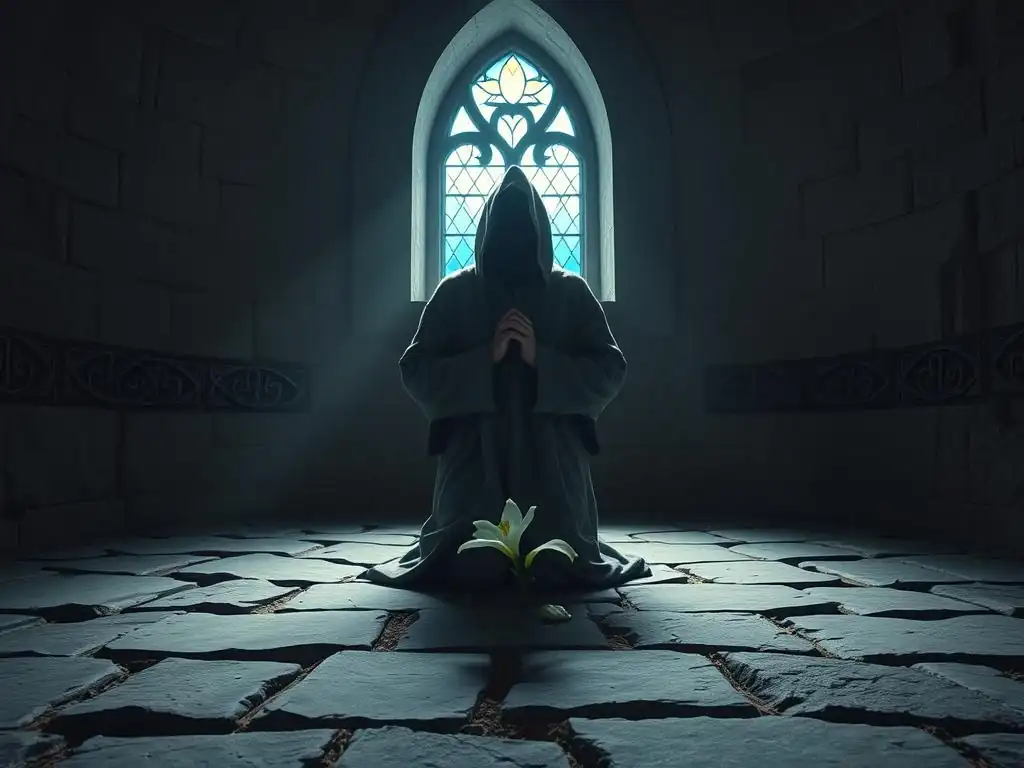
Understanding Sin and Guilt in the Medieval Psyche
The concept of sin was central to the medieval worldview and played a significant role in understanding and addressing mental distress. Many mental afflictions were believed to be a consequence of sin, either the individual's own sins or those of their ancestors. Guilt stemming from perceived sin could weigh heavily on the medieval psyche, potentially manifesting as anxiety, depression, or even hallucinations interpreted as demonic temptations or punishments. The rigorous moral code and the constant awareness of divine judgment created a fertile ground for such spiritual anxiety.
The Church taught that unconfessed or unforgiven sin could damage the soul and lead to both spiritual and physical (including mental) ailments. This belief placed a heavy burden of responsibility on the individual to examine their conscience, identify their transgressions, and seek reconciliation. The fear of eternal damnation or temporal punishment for sin was a powerful motivator for engaging in penitential practices. Addressing sin was therefore considered a necessary step towards restoring not just spiritual health but also mental equilibrium within the medieval understanding.
Confession and Absolution: Relieving Mental Burdens Through Penance
Confession to a priest and receiving absolution was a primary method for relieving the mental burdens associated with sin and guilt. The Fourth Lateran Council in 1215 mandated annual confession for all adult Christians, making it a universal and essential practice. During confession, individuals would verbally acknowledge their sins, express remorse, and receive a penance (a task or prayer to perform as a sign of atonement). The priest, acting as God's representative, would then pronounce absolution, declaring the sins forgiven.
This sacrament offered a structured psychological release. Articulating one's deepest fears and transgressions to another person, albeit a priest bound by secrecy, could alleviate the isolation and shame associated with hidden guilt. The act of confession itself, followed by the ritual of absolution, provided a clear, performative moment of forgiveness and spiritual cleansing. This process was seen as essential for restoring the soul's health, which in turn was believed to positively impact mental well-being, making confession a vital part of religious healing practices medieval mental distress.
Self-Flagellation and Other Forms of Penance: Their Psychological Impact
Penance in the Middle Ages could take many forms, ranging from reciting prayers and fasting to more extreme practices like self-flagellation. While prayer and fasting were common, self-flagellation saw periodic surges in popularity, particularly during times of crisis like the Black Death in the mid-14th century. Groups known as Flagellants would publicly whip themselves to atone for the sins of humanity, believing this extreme penance would appease God and avert further disaster.
From a modern perspective, practices like self-flagellation appear harmful, but within the medieval context, they were understood as acts of profound piety and self-mortification aimed at purifying the soul and identifying with Christ's suffering. While potentially causing physical harm, such acts could, for some individuals, provide a temporary sense of psychological relief through the intensity of the physical sensation diverting from mental pain, or through the conviction that they were actively earning divine favor and forgiveness.
This extreme form of penance highlights the intense spiritual anxiety and the lengths to which people would go to address perceived sin as a root cause of suffering, including mental anguish, within the framework of religious healing practices medieval mental issues.
The Role of the Church in Administering Penance for Mental Purification
The Church played a crucial, authoritative role in administering penance and guiding individuals through the process of mental and spiritual purification. Priests and confessors were trained to hear confessions, assign appropriate penances, and provide spiritual counsel. Penitential manuals, like the Summa confessorum by Thomas of Chobham from the early 13th century, provided detailed guidance on how to assess the severity of sins and assign suitable penances, taking into account factors like the sinner's status, intention, and frequency of the sin.
The Church's involvement ensured a degree of structure and consistency in penitential practices. It also provided a framework for addressing mental distress linked to sin within a recognized and respected institution. For someone tormented by guilt or fear of damnation, the Church offered a clear, albeit sometimes demanding, path to reconciliation. The authority of the priest to grant absolution was paramount, providing the assurance of forgiveness that could alleviate profound spiritual and psychological suffering. This structured approach to penance was integral to the religious healing practices medieval mental health concerns.
Pilgrimage: Journeys of Faith for Mental and Spiritual Renewal
The Psychology of Pilgrimage: Hope, Transformation, and Healing
Pilgrimage was a significant spiritual and social phenomenon in the Middle Ages, undertaken for a multitude of reasons, including seeking healing for physical and mental ailments. The act of pilgrimage itself was psychologically potent. It involved leaving behind one's ordinary life, embarking on a challenging journey, and arriving at a sacred destination imbued with spiritual power, often associated with saints or relics known for miraculous cures. This journey symbolized a break from the past and offered the hope of transformation – a chance to return renewed, forgiven, and healed.
The physical hardship of travel, often on foot over long distances, could serve as a form of penance, adding spiritual merit to the endeavor. The anticipation of reaching the holy site, the communal experience of traveling with fellow pilgrims, and the intense spiritual atmosphere upon arrival all contributed to a profound psychological experience.
For someone suffering from mental distress, the hope offered by pilgrimage, combined with the rituals performed at the shrine (such as touching relics, drinking holy water, or praying intensely), could induce powerful emotional and psychological shifts, sometimes leading to perceived healing within the context of religious healing practices medieval mental well-being.
Popular Pilgrimage Sites for Mental and Emotional Distress
Numerous pilgrimage sites across Europe became popular destinations for those seeking relief from mental and emotional distress. Shrines associated with saints known for healing miracles were particularly favored.
Beyond the already mentioned shrine of St. Dymphna in Gheel, other significant sites included the tomb of St. Thomas Becket in Canterbury, England, which attracted pilgrims seeking healing for various afflictions after his martyrdom in 1170. The shrine of St. James the Great in Santiago de Compostela, Spain, became one of the most popular destinations overall, drawing hundreds of thousands of pilgrims over the centuries, many of whom sought spiritual and physical renewal.
These sites became centers not just for prayer but for community and hope. The shared purpose of the pilgrims created a supportive environment. Stories of miraculous cures, often displayed through votive offerings like crutches or plaques depicting healings, reinforced belief and inspired hope in new arrivals. While difficult to quantify which percentage of pilgrims sought help specifically for mental issues versus physical ones, historical records and miracle accounts frequently mention afflictions that could be interpreted as mental or neurological disorders within the medieval understanding, highlighting the role of these sites in religious healing practices medieval mental health.
Pilgrimages to Santiago de Compostela for Spiritual and Mental Cleansing
The pilgrimage to Santiago de Compostela, known as the Camino de Santiago, was one of the most arduous and spiritually significant journeys of the Middle Ages. Believed to be the burial site of the Apostle James, the shrine attracted pilgrims from across Europe. While undertaken for diverse reasons – penance, devotion, adventure – seeking spiritual and mental cleansing was a major motivation. The long, challenging walk itself was seen as a form of purification, shedding worldly concerns and focusing the mind on the spiritual goal.
Upon arrival in Santiago, pilgrims would engage in specific rituals, such as entering the cathedral through the Pórtico da Gloria (Portal of Glory), attending mass, and touching the statue of St. James. These acts, culminating the long journey, were intended to bring about spiritual renewal and, by extension, mental peace.
The collective experience of arriving with a multitude of others who had undergone similar trials reinforced the sense of shared purpose and divine connection. For many, the pilgrimage was a transformative experience, offering a profound sense of relief from spiritual burdens and a renewed sense of purpose that could alleviate symptoms of mental distress within the framework of religious healing practices medieval mental well-being.
One often overlooked but crucial aspect of pilgrimage for mental well-being was the community it fostered. Pilgrims rarely traveled alone; they formed groups for safety, companionship, and mutual support along the often dangerous routes. These groups provided a sense of belonging and shared purpose. Travelers would share stories, fears, and hopes, creating bonds forged by shared hardship and spiritual aspiration.
This social support network was invaluable, especially for individuals struggling with isolating conditions like depression or anxiety. The journey provided a temporary escape from the stresses of home life and immersed them in a supportive community focused on spiritual goals. Upon reaching the shrine, they joined an even larger community of fellow seekers. This collective experience, including shared prayers, meals, and lodging in hospices, offered a powerful antidote to feelings of isolation and provided comfort and validation, demonstrating that even within the framework of religious healing practices medieval mental health, social factors played a role.
The Role of Religious Rituals in Mental Health During the Medieval Period
Healing Rituals and Ceremonies within the Church
Beyond prayer, penance, and pilgrimage, a variety of specific healing rituals and ceremonies were performed within the medieval Church to address physical and mental ailments. These rituals often combined prayer, the laying on of hands, anointing with holy oil, and the use of sacred objects. The structure and predictability of these ceremonies could provide comfort and a sense of control in an unpredictable world, especially for those suffering from distressing mental states.
One common practice was the anointing of the sick, which, while primarily associated with physical illness, was also applied to those suffering from mental or spiritual afflictions believed to have a physical manifestation. Special masses and blessings were also performed for the sick and troubled. These rituals were public events, emphasizing the community's role in supporting the afflicted and appealing to God for their recovery. The sensory experience of the rituals – the chanting, the incense, the visual symbols – contributed to their psychological impact, reinforcing faith and hope as central components of religious healing practices medieval mental well-being.
Exorcism and its Place in Medieval Mental Healthcare
In the medieval understanding, certain severe mental disturbances, particularly those involving erratic behavior, violence, or apparent changes in personality, were often attributed to demonic possession. In such cases, exorcism was considered a necessary religious healing practice medieval mental illness. Performed by authorized clergy, the ritual of exorcism involved prayers, commands to the demon to depart, and the use of holy water and relics.
While modern medicine views such symptoms through a neurological or psychological lens, in the medieval context, exorcism was a legitimate form of intervention aimed at restoring the individual to their right mind by expelling the perceived demonic entity. Records from the period describe instances where exorcism was performed on individuals exhibiting symptoms consistent with epilepsy, psychosis, or severe behavioral disorders. While potentially traumatic, successful exorcisms, as documented in medieval accounts, were believed to result in the complete restoration of the individual's mental faculties and behavior, reinforcing the belief in demonic causation and the efficacy of this religious ritual.
The Significance of Relics and Sacred Objects in Religious Healing
Relics – objects associated with saints or Christ, such as bones, clothing fragments, or items touched by them – held immense spiritual power in the medieval imagination and were central to religious healing practices medieval mental and physical ailments. Shrines housed collections of relics, which pilgrims would venerate, touch, or even drink water that had been poured over them, believing the relic transferred the saint's healing power.
The psychological impact of relics was profound. Believers approached them with deep reverence and faith, convinced that these tangible links to the divine or saintly could effect miraculous cures. Touching a relic believed to be from a saint known for healing could inspire intense hope and conviction, potentially leading to psychosomatic effects or simply providing immense comfort and peace of mind. The display and veneration of relics were powerful public affirmations of faith and the possibility of miraculous intervention in human suffering.
The Use of Holy Water and Blessings for Calming Anxious Spirits
Holy water and blessings were commonly used in medieval religious healing practices medieval mental and emotional distress. Holy water, blessed by a priest, was believed to have purifying and protective properties. It was sprinkled on individuals, objects, and places to ward off evil, cleanse from sin, and bring peace. For someone suffering from anxiety, fear, or a sense of spiritual contamination, being sprinkled with holy water or drinking it could offer a tangible sense of cleansing and protection.
Blessings, performed by clergy, involved invoking divine favor and protection upon an individual. These could range from simple, spontaneous prayers to formal liturgical rites. Receiving a blessing could provide a sense of being cared for by both the divine and the Church community. These simple, accessible rituals offered readily available means for individuals to seek comfort and spiritual support in their daily lives, serving as immediate interventions for moments of heightened anxiety or distress within the broader system of medieval religious healing practices.
Criticisms and Limitations of Religious Healing Practices in the Middle Ages

The Potential for Misinterpretation and Abuse of Power
While offering comfort and community, medieval religious healing practices medieval mental health were not without their limitations and potential for harm. The emphasis on spiritual causation could lead to misinterpretations of genuine medical conditions. Symptoms of physical illnesses affecting the brain might be wrongly attributed solely to sin or demonic influence, delaying or preventing any potentially effective physical treatments available at the time. For instance, epilepsy, often associated with foaming at the mouth and convulsions, was frequently seen as demonic possession.
Furthermore, the authority vested in clergy within these healing practices could be abused. Vulnerable individuals seeking help might be exploited financially or otherwise. The power dynamics inherent in confession and exorcism also presented risks, particularly if the confessor or exorcist lacked empathy or understanding. While the Church provided guidelines, enforcement varied, and individual cases of exploitation or harmful practices undoubtedly occurred, representing a dark side to medieval religious approaches.
The Risk of Neglecting Physical Causes of Mental Illness
A significant limitation of medieval religious healing practices medieval mental issues was the inherent risk of neglecting potential physical causes. While medieval medical texts did acknowledge physical factors like humoral imbalances, the strong cultural and religious emphasis on spiritual causes often overshadowed these understandings in practice, especially for conditions that didn't fit neatly into known physical ailments. Conditions that might today be recognized as severe depression, bipolar disorder, or schizophrenia were primarily viewed through a spiritual or moral lens.
This meant that treatments focused overwhelmingly on spiritual interventions – prayer, penance, exorcism – rather than on diet, rest, herbal remedies, or other physical treatments that medieval medicine did offer. A person suffering from a debilitating mental illness might spend years seeking spiritual cures through pilgrimages or rigorous penance, without ever receiving care that addressed potential underlying physical factors, even if limited by medieval medical knowledge.
Access to and the experience of medieval religious healing practices medieval mental issues were also shaped by social factors like gender and class. While religious practices were theoretically open to all, practical access to resources like pilgrimage or private confession with a respected confessor could vary. Wealthier individuals might have greater access to monastic care or the means to undertake distant pilgrimages, while the poor relied more heavily on local parish churches and communal rituals.
Gender also played a role. Women were often seen as more susceptible to demonic influence or spiritual weakness, potentially leading to different interpretations or treatments of their mental distress compared to men. Mystical experiences, which could sometimes blur the lines with mental illness, were interpreted differently based on the individual's perceived piety and conformity to gender roles. The intersection of religious belief, social hierarchy, and gender roles created a complex landscape for individuals seeking mental healing in the Middle Ages.
Legacy and Influence: The Enduring Impact of Religious Healing on Modern Mental Healthcare
Lessons from the Past: Integrating Faith and Mental Well-being Today
While medieval religious healing practices medieval mental health were rooted in a vastly different worldview, they offer valuable lessons for contemporary approaches to mental well-being, particularly regarding the integration of faith and spirituality. The medieval emphasis on community support, the therapeutic potential of ritual, and the search for meaning and purpose remain relevant. Modern mental healthcare is increasingly recognizing the importance of addressing a person's spiritual dimension as part of holistic care.
Many individuals today find strength, comfort, and coping mechanisms within their religious or spiritual beliefs. Therapists and mental health professionals are often encouraged to be culturally and spiritually sensitive, acknowledging the role faith plays in a client's life. Pastoral counseling and faith-based support groups continue to provide vital support for many. The medieval recognition that mental distress affects the whole person – body, mind, and spirit – resonates with modern calls for integrated care that respects the individual's values and beliefs, including their faith.
The Continued Relevance of Prayer, Penance, and Pilgrimage in Modern Spiritual Practices
Although their form and interpretation have evolved, the core concepts of prayer, penance (as repentance or self-reflection), and pilgrimage continue to be relevant spiritual practices today that can impact mental well-being. Millions of people worldwide still use prayer as a coping mechanism for anxiety, grief, and stress, finding solace and connection in communicating with the divine. Practices of reflection, confession (within various faith traditions or even secularly), and making amends remain central to psychological and spiritual growth, helping individuals process guilt and move forward.
Pilgrimage, too, persists, from traditional religious journeys like the modern Camino de Santiago to secular forms of travel undertaken for self-discovery and transformation. The psychological benefits of setting a goal, undertaking a challenging journey, and experiencing new environments and communities are well-documented. These enduring practices highlight the fundamental human need for meaning, connection, and a path towards internal peace, demonstrating a lineage from medieval religious healing practices medieval mental well-being to contemporary spiritual life.
The Connection Between Medieval Religious Healing and Contemporary Mind-Body Approaches to Mental Wellness
There is a discernible, albeit indirect, connection between medieval religious healing practices medieval mental health and contemporary mind-body approaches to mental wellness. Medieval practices like contemplative prayer, focused on quieting the mind and achieving inner stillness, share similarities with modern mindfulness and meditation techniques, which are widely used to reduce stress, anxiety, and improve emotional regulation. The emphasis on ritual and structured practice in medieval religion also aligns with the therapeutic use of routine and ritual in modern mental health interventions.
Furthermore, the communal aspect of medieval religious life and pilgrimage mirrors the recognition in modern therapy of the importance of social support and group therapy. The belief that spiritual and emotional states are interconnected with physical well-being, while understood differently, is a core tenet of both medieval religious healing and modern holistic and mind-body medicine. Examining medieval approaches, despite their historical context, can offer insights into the long human history of seeking integrated solutions for mental and spiritual suffering.
Conclusion: Reflecting on the Role of Religion in Medieval Mental Health
Key Takeaways: Prayer, Penance, and Pilgrimage as Mental Health Coping Mechanisms
In reflecting on medieval religious healing practices medieval mental health, it becomes clear that prayer, penance, and pilgrimage were not merely isolated acts but integral components of a comprehensive faith-based system for addressing mental distress. Prayer offered direct communication with the divine and a path to inner peace; penance provided a structured means of confronting guilt and seeking purification; and pilgrimage offered a transformative journey of hope, community, and spiritual renewal.
These practices, deeply embedded in the social and cultural fabric of the time, provided individuals with frameworks for understanding their suffering, seeking solace, and striving for mental and spiritual restoration.
While limited by the scientific understanding of the era and susceptible to misinterpretation, these religious approaches provided the primary avenues for seeking help for mental afflictions for the vast majority of the population. They offered hope, community, and a sense of meaning in the face of bewildering and terrifying internal experiences. Understanding these historical practices is crucial to appreciating the complex history of mental health care and the enduring human quest for well-being across different cultural and historical contexts.
Future Research: Exploring the Complex Relationship Between Religion and Mental Health in the Middle Ages
Despite historical records, understanding the true efficacy and experience of medieval religious healing practices medieval mental health remains a complex area for future research. Scholars continue to delve into primary sources – miracle accounts, penitential manuals, saints' lives, and personal letters – to gain deeper insights into how individuals perceived and experienced mental distress and the impact of religious interventions. Quantifying the prevalence of specific mental conditions or the success rates of different religious practices is challenging due to the nature of the sources and the lack of standardized terminology.
Future research could focus on comparative studies across different regions or religious orders, analyzing variations in practices and beliefs. Further psychological analysis of the potential effects of rituals, community, and belief systems within the medieval context, interpreted through a modern lens while respecting historical differences, could also yield valuable insights. Exploring the experiences of specific groups, such as women, the poor, or those labeled as heretics, within the context of religious healing could reveal further nuances in the complex relationship between religion and mental health in the Middle Ages.
Frequently Asked Questions
How did religious practices like prayer factor into mental healing during the medieval period?
Prayer was considered a direct line to divine intervention, offering solace and hope. People believed fervent prayer could alleviate mental distress and even cure illness. It was a central coping mechanism.
What role did penance play in addressing mental health concerns in medieval times?
Penance, involving acts of atonement for sins, was thought to purify the soul and mind. This was believed to remove spiritual obstacles contributing to mental suffering. It was often prescribed by religious figures.
Why were pilgrimages considered beneficial for mental well-being in the medieval era?
Pilgrimages provided a change of environment and a sense of purpose. The journey itself offered reflection and spiritual growth, potentially reducing anxiety and depression. It was a form of spiritual therapy.
Were there any specific religious figures or saints associated with mental healing in the Middle Ages?
Yes, certain saints, like Saint Dymphna, were patron saints of mental illness. People sought their intercession through prayer and offerings for relief from mental suffering. Relics were also important.
How does the medieval understanding of mental illness, influenced by religion, differ from modern perspectives?
Medieval views often attributed mental illness to spiritual causes like demonic possession or divine punishment. This contrasts sharply with modern perspectives that emphasize biological and psychological factors. Scientific understanding has evolved.
Final Reflection: The Enduring Legacy of Faith in Medieval Mental Health
The interwoven tapestry of prayer, penance, and pilgrimage, central to medieval religious practices, offers a compelling lens through which to understand not only the past but also the present. The enduring power of faith in coping with mental distress, though expressed differently today, remains a potent force in shaping individual well-being and community support. Understanding these historical approaches provides crucial context for contemporary discussions surrounding mental health and the role of spirituality in healing.
The impact of religious frameworks on mental health in the medieval period continues to resonate today, shaping our understanding of the mind-body connection and the importance of community in healing. The very act of pilgrimage, for example, speaks to the human need for ritual, solace, and a sense of belonging – needs that remain deeply relevant in our increasingly secular world. The soul is healed by being occupied with something greater than itself.
– Thomas Aquinas. This quote, while reflecting a specific theological perspective, highlights the enduring human desire to find meaning and purpose in the face of suffering, a desire that transcends time and cultural context.
Consider the ways in which faith and spiritual practices still inform your own approach to well-being. Perhaps you find solace in meditation, community service, or connection with nature. Reflect on the parallels between these modern practices and the medieval approaches discussed in this article. Embrace the opportunity to explore the diverse ways in which individuals find meaning and healing, recognizing the enduring power of faith, community, and ritual in navigating the complexities of the human experience. Let the legacy of medieval religious healing inspire you to seek your own path toward wholeness and well-being.
Unveil Your Inner Strength: Exploring Medieval Mental Wellness
Thanks for taking the time to explore the fascinating intersection of religion and mental health in the Middle Ages! You've gained valuable insights into practices that fostered resilience and inner peace. Now, let's put that knowledge into action:
- Embrace a Modern-Day Ritual: Identify one simple daily practice – whether it's mindful meditation, journaling, or a short walk in nature – that brings you a sense of calm and focus. This is your personal pilgrimage towards well-being.
- Share Your Reflections: Discuss what resonated most with you from this article. What practices from the past could be adapted to modern life? Let's create a supportive community and share our discoveries.
- Explore Further: Delve deeper into the history of mental wellness by researching other historical approaches to mental health. You might be surprised by what you uncover!
What small step will you take today to cultivate greater inner strength and peace?