
Sound Healing: Using Vibrations for Mental Calm and Relaxation

Welcome to Mind Care Guide.
Feeling overwhelmed? Perhaps a little lost in the noise of everyday life? You're not alone. At Mind Care Guide, we understand the challenges to mental well-being, and we're here to offer support and resources. Dive into our latest article exploring how sound healing can reduce anxiety and stress, offering a unique pathway to inner calm. Curious how vibrations can unlock relaxation? Keep reading to discover more about this holistic approach.
Sound Healing: Using Vibrations for Mental Calm and Relaxation
- Mind Care Guide: Exploring Sound Healing for Anxiety and Stress Relief
- What is Sound Healing and How Does it Reduce Anxiety?
- Benefits of Sound Healing for Mental Well-being
- Different Types of Sound Healing Modalities
- How to Experience Sound Healing for Stress and Anxiety
- Sound Healing vs. Traditional Anxiety Treatments
- Creating Your Own Sound Healing Environment at Home
- Potential Risks and Considerations of Sound Healing
- Sound Healing: A Natural Approach to Anxiety and Stress Management
-
Frequently Asked Questions
- What is sound healing, and how does it relate to mental well-being?
- How can sound healing specifically help reduce anxiety and stress?
- What are some common instruments or techniques used in sound healing sessions?
- Is sound healing a scientifically proven method for anxiety and stress reduction?
- Where can I find sound healing resources or qualified practitioners for anxiety and stress relief?
- Final Reflection: The Resonant Power of Sound for a Quieter Mind
- Unlock Your Inner Peace: Start Your Sound Healing Journey Today!
Mind Care Guide: Exploring Sound Healing for Anxiety and Stress Relief
Welcome to Mind Care Guide, where we explore various paths to mental well-being. In our journey towards holistic health, we encounter practices that have been used for centuries across different cultures. One such practice gaining significant attention today is sound healing. This ancient method harnesses the power of vibrations and frequencies to influence our physical and mental states, offering a unique approach to managing the challenges of modern life. Many people are discovering how sound healing reduce anxiety stress and promote a deeper sense of calm.
The concept behind sound healing is that everything in the universe, including our bodies and minds, is in a state of vibration. When we experience stress, anxiety, or illness, these vibrations can become disharmonized. Sound therapy aims to use specific frequencies to restore balance and harmony within the body and mind.
As a complementary practice, sound healing for anxiety and stress relief is being explored not just for its historical roots but also for its potential therapeutic benefits in contemporary mental health care. This article delves into how this vibrational approach can be a powerful tool in your mental wellness toolkit.
What is Sound Healing and How Does it Reduce Anxiety?
Understanding the Principles of Sound Therapy
Sound therapy, also known as sound healing or vibrational healing, is a practice that uses specific sounds, frequencies, and vibrations to promote relaxation, reduce stress, and improve overall well-being. The core principle is based on the idea that sound waves can impact brainwave states, heart rate, and respiratory rate, leading to physiological and psychological changes. Different instruments like singing bowls, gongs, tuning forks, and even the human voice are used to create immersive sonic environments or targeted vibrations.
Practitioners believe that the resonant frequencies produced by these instruments can help shift the body from a stressed state (often associated with sympathetic nervous system activation) to a more relaxed state (parasympathetic nervous system activation). This shift is crucial for alleviating the physical symptoms of anxiety and stress, such as muscle tension, rapid heartbeat, and shallow breathing. By encouraging the body to return to a state of equilibrium, sound healing aims to create fertile ground for mental calm and emotional release.
How Sound Frequencies Impact the Brain and Body
The human brain is highly responsive to auditory stimuli. Sound frequencies can influence our brainwave patterns, which are associated with different states of consciousness. For example, beta waves are dominant during wakefulness and alertness, while alpha waves are linked to relaxation, theta waves to deep relaxation and meditation, and delta waves to deep sleep. Sound therapy often utilizes frequencies designed to encourage a shift from beta waves towards alpha or theta states, facilitating relaxation and reducing mental chatter.
Beyond brainwaves, sound vibrations can also affect the body at a cellular level. The concept of sympathetic resonance suggests that when one object vibrates, it can cause another object with the same natural frequency to vibrate. In sound healing, it's proposed that the body's cells and organs resonate with specific frequencies, and exposure to these sounds can help restore optimal vibrational patterns, releasing blockages and promoting healing. While research in this area is still evolving, anecdotal evidence and preliminary studies suggest a positive impact on physiological markers related to stress.
The Science Behind Sound Healing and Stress Reduction
While ancient in origin, the mechanisms by which sound healing might reduce stress and anxiety are increasingly being explored through a scientific lens. Research has investigated the impact of sound on the nervous system, particularly the vagus nerve, which plays a key role in the body's relaxation response. Certain frequencies and rhythmic sounds are thought to stimulate the vagus nerve, helping to lower heart rate, blood pressure, and cortisol levels – key indicators of stress.
Studies, though often preliminary, have shown promising results. For example, a small study published in the Journal of Evidence-Based Complementary & Alternative Medicine in 2016 reported that participants experienced a significant decrease in tension, anger, fatigue, and depressed mood after a sound bath session, particularly those with prior experience with meditation. While more rigorous clinical trials are needed, the existing evidence suggests that the immersive, meditative nature of sound healing environments can effectively calm the nervous system and contribute to stress reduction and a decrease in anxiety symptoms.
Benefits of Sound Healing for Mental Well-being
Sound Healing for Anxiety Reduction: A Detailed Look
Anxiety manifests differently in individuals, often involving persistent worry, nervousness, and physical symptoms like restlessness or muscle tension. Sound healing reduce anxiety stress by providing a non-invasive, passive way to enter a deeply relaxed state, which can interrupt the anxiety cycle. The sustained, resonant vibrations and harmonic frequencies used in sound therapy can quiet the overactive mind, shifting focus from anxious thoughts to the present moment and the sensory experience of sound.
Many individuals report feeling a profound sense of calm and release during and after a sound healing session. The therapeutic sounds are thought to downregulate the sympathetic nervous system, which is responsible for the "fight or flight" response often triggered by anxiety. By activating the parasympathetic nervous system, sound therapy helps the body rest and digest, counteracting the physiological effects of chronic stress and reducing the intensity of anxiety symptoms. For someone struggling with generalized anxiety, regular exposure to these calming vibrations can potentially help reset their baseline stress levels over time.
Alleviating Stress and Tension Through Sound Therapy
Stress is a pervasive issue in modern life, contributing to numerous physical and mental health problems. Sound therapy offers a unique pathway to alleviate both mental and physical tension. The deep vibrations from instruments like gongs or singing bowls can be felt throughout the body, potentially helping to release muscular tension that often accumulates in areas like the shoulders, neck, and jaw when stressed.
Beyond physical release, the immersive soundscapes created during a session provide a powerful distraction from daily worries and stressors. This forced pause allows the mind to rest and detach from the constant stream of thoughts that fuel stress.
A study involving healthcare workers during the COVID-19 pandemic, published in a 2021 issue of Global Advances in Health and Medicine, found that participants reported reduced stress and improved mood after engaging in virtual sound bowl meditations, indicating its potential even in high-stress environments. This suggests that sound healing for stress relief can be a valuable tool in managing burnout and chronic stress.
Promoting Relaxation and Mindfulness with Vibrational Healing
One of the primary benefits of sound healing is its ability to induce deep states of relaxation. The sustained tones and vibrations create an environment conducive to letting go of tension and settling into a state of ease. This deep relaxation naturally fosters mindfulness, bringing awareness to the present moment and bodily sensations rather than getting lost in thoughts about the past or future.
During a sound bath, for instance, participants are encouraged to simply lie down and receive the sounds. This passive engagement encourages a state of mindful listening, where one observes the sounds and their impact without judgment. This practice strengthens the ability to be present and can carry over into daily life, making it easier to manage stressful situations with greater awareness and less reactivity. The vibrational healing aspect is thought to further anchor this presence by drawing attention to the physical sensations of the sound resonating within the body.
Improving Sleep Quality with Sound Baths and Meditation
Sleep disturbances are common symptoms of both anxiety and stress. The deep relaxation and calming effect of sound healing can significantly improve sleep quality. By reducing mental chatter and promoting a relaxed physiological state, sound therapy makes it easier to fall asleep and stay asleep.
Many individuals find that listening to calming soundscapes, binaural beats designed for sleep, or even guided sound meditations before bed helps quiet the mind and prepare the body for rest. The transition into alpha and theta brainwave states facilitated by certain frequencies is similar to the brain activity experienced during the initial stages of sleep. Incorporating sound healing practices into a nightly routine can therefore serve as a powerful natural aid for insomnia related to stress and anxiety, helping individuals achieve more restorative sleep cycles.
Different Types of Sound Healing Modalities
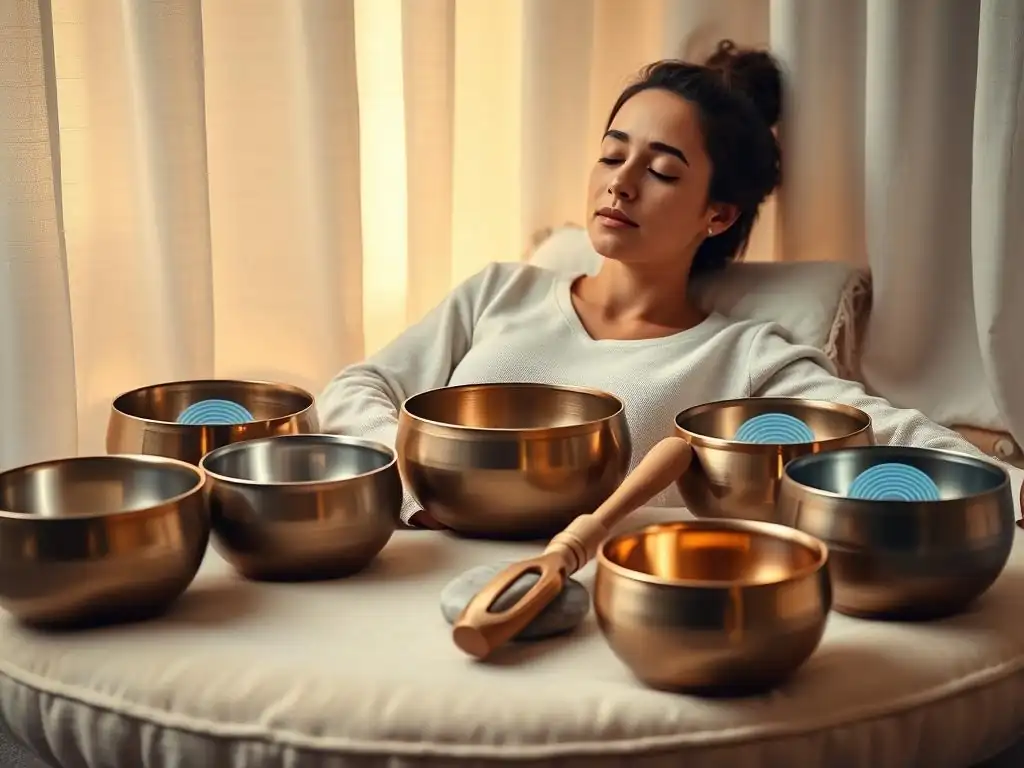
Crystal Singing Bowls: Harnessing Vibrational Energy
Crystal singing bowls are made from 99.9% pure crushed quartz crystal and are tuned to specific musical notes or frequencies. When played by rubbing or striking with a mallet, they produce resonant, sustained tones with powerful vibrations. These bowls are often associated with the body's chakra system, with different notes corresponding to different energy centers, although their use is not limited to this framework.
The clear, pure tones and palpable vibrations of crystal bowls are highly effective at creating an immersive sound bath experience. Participants often report feeling the vibrations resonating through their bodies, which is thought to help release tension and promote energetic balance. A growing number of practitioners use crystal singing bowls for anxiety and stress reduction in group sound baths or individual sessions, leveraging their unique sonic qualities to induce states of deep relaxation and meditation.
Tibetan Singing Bowls: Ancient Sounds for Inner Peace
Tibetan singing bowls, also known as Himalayan bowls, are traditionally made from a blend of several metals, often including copper, tin, zinc, iron, lead, gold, and silver. These bowls produce a rich, complex harmonic overtone structure when played. Used for centuries in meditation and spiritual practices, their earthy, grounding sounds are deeply calming.
Tibetan bowls are frequently used directly on the body in therapeutic settings, placed on specific areas while being played. The direct vibration is thought to penetrate deeply into tissues, helping to release physical blockages and tension. The resonant tones are excellent for centering the mind, facilitating meditation, and promoting inner peace, making them a popular tool in sound healing for stress and anxiety relief. Their ancient lineage adds a layer of historical depth to their modern application in wellness.
Tuning Forks: Precision Healing Through Specific Frequencies
Tuning forks are calibrated metal instruments that vibrate at precise frequencies when struck. Unlike the broad soundscapes of bowls or gongs, tuning forks offer a more targeted approach to sound therapy. Different forks are tuned to specific frequencies, some of which are associated with different parts of the body, organs, or even specific brainwave states.
Tuning forks can be used held near the ears to influence brainwaves and the nervous system, or placed directly on the body on acupressure points, joints, or areas of tension. The focused vibration is thought to stimulate circulation, reduce inflammation, and promote healing on a cellular level. Practitioners using tuning forks for anxiety relief might focus on frequencies associated with relaxation or those applied to points known to calm the nervous system, offering a precise method within the broader field of vibrational healing.
Gongs: Immersive Soundscapes for Transformation
Gongs are large, resonant percussion instruments that produce powerful, sustained waves of sound. A gong bath is an immersive experience where participants are enveloped in the complex, shifting tones and vibrations of one or more gongs being played. The sound from a gong can be incredibly dynamic, ranging from soft whispers to powerful crescendos.
The deep, resonant vibrations of gongs are known for their ability to induce altered states of consciousness, facilitate emotional release, and promote deep relaxation. The sheer volume and complexity of the sound can bypass the analytical mind, allowing listeners to drop into a meditative state more easily. Gong baths are widely used in sound healing sessions specifically designed to reduce stress and anxiety, offering a powerful, transformative experience through sound.
Binaural Beats: Altering Brainwave States Through Auditory Stimulation
Binaural beats are an auditory illusion perceived when two slightly different pure-tone frequencies are presented to each ear simultaneously. The brain perceives a third "beat" frequency, which is the difference between the two tones. For example, if a 400 Hz tone is played in the left ear and a 410 Hz tone in the right ear, the brain perceives a 10 Hz binaural beat (in the alpha range).
Listening to binaural beats through headphones is believed to encourage the brain to synchronize its brainwaves to the perceived beat frequency through a process called brainwave entrainment. Listening to binaural beats in the alpha (8-13 Hz) or theta (4-7 Hz) ranges is often used to promote relaxation, meditation, and reduce anxiety. This is a more technologically focused approach to sound healing and can be easily accessed through digital recordings, offering a convenient way to incorporate sound therapy into a daily routine.
How to Experience Sound Healing for Stress and Anxiety
Finding a Qualified Sound Healing Practitioner
Experiencing sound healing, especially for therapeutic purposes like reducing anxiety and stress, is often best done initially under the guidance of a qualified practitioner. Look for practitioners who have received training from reputable sound healing schools or organizations. Websites of professional sound healing associations or directories can be good places to start your search.
Don't hesitate to ask about their training, experience, and what their sessions typically involve. A good practitioner will create a safe and comfortable environment and explain the process. Reading reviews or getting recommendations from others who have experienced sound therapy can also be helpful in finding someone whose approach resonates with you and makes you feel at ease.
Preparing for Your First Sound Healing Session
Preparation for a sound healing session is usually minimal, but a few steps can enhance the experience. Wear comfortable clothing that allows you to lie down easily. Sessions are typically done lying on a mat or blanket on the floor, so comfort is key. It's generally recommended to arrive a few minutes early to settle in and quiet your mind before the session begins.
Hydrating before and after the session is also often suggested. Many practitioners recommend setting an intention for the session, whether it's to release stress, calm anxiety, or simply relax deeply. Approaching the session with an open mind and a willingness to receive the sounds and vibrations is the best preparation for a potentially profound experience.
What to Expect During a Sound Bath or Sound Therapy Session
During a sound bath or therapy session, you will typically lie down comfortably, perhaps covered with a blanket. The practitioner will then begin to play their instruments – bowls, gongs, tuning forks, or other tools. The sounds will wash over you, sometimes building in intensity, sometimes soft and subtle. There is no right or wrong way to feel; simply allow yourself to relax and observe any sensations, emotions, or thoughts that arise without judgment.
Sessions can last anywhere from 30 minutes to over an hour. Some people fall asleep, while others enter a deep meditative state. You might feel vibrations in your body, see colors, or experience emotional releases. It's a very personal experience. At the end of the session, the sounds will gently fade, and the practitioner will allow time for quiet integration before bringing the session to a close. Many people report feeling deeply relaxed, peaceful, and sometimes a bit "spacey" afterwards.
Incorporating Sound Healing into Your Daily Routine
While attending sessions with a practitioner offers a powerful experience, incorporating sound healing into your daily life is also beneficial for managing anxiety and stress. This can be as simple as listening to sound healing recordings (like those featuring singing bowls, gongs, or binaural beats) during meditation, before sleep, or whenever you feel stressed.
- Listen to binaural beat recordings for focused work or relaxation.
- Use guided sound meditations to start or end your day calmly.
- Play soothing soundscapes (nature sounds, ambient music) while working or relaxing.
- Consider acquiring a small singing bowl or tuning fork for personal use.
Even just 10-15 minutes of focused listening can help shift your state and provide a moment of calm amidst a busy day, reinforcing the benefits of sound healing reduce anxiety stress over time.
Sound Healing vs. Traditional Anxiety Treatments
Comparing Sound Therapy to Cognitive Behavioral Therapy (CBT)
Sound healing and Cognitive Behavioral Therapy (CBT) are fundamentally different approaches to managing anxiety, though they can be complementary. CBT is a talk therapy that focuses on identifying and changing negative thought patterns and behaviors that contribute to anxiety. It's an active, cognitive process requiring conscious engagement and homework. Studies, like a meta-analysis published in the Journal of Consulting and Clinical Psychology in 2013, consistently demonstrate CBT's effectiveness for various anxiety disorders, showing significant reduction in symptoms for a large percentage of patients.
Sound healing, on the other hand, is a passive, experiential therapy that works primarily on the physiological and energetic levels to induce relaxation and calm the nervous system. It doesn't directly address thought patterns. While CBT provides coping mechanisms and strategies for managing anxious thoughts, sound healing offers a way to bypass the thinking mind and directly access a state of deep relaxation, which can alleviate the physical symptoms of anxiety and provide a sense of peace that makes cognitive work easier. They address different facets of the anxiety experience.
Combining Sound Healing with Medication for Optimal Mental Health
For individuals experiencing significant anxiety or anxiety disorders, medication is often prescribed to help manage symptoms by affecting brain chemistry. While medication can be highly effective for many, it doesn't teach coping skills or address the root causes of stress. Combining medication with complementary practices like sound healing can offer a more holistic approach to mental health.
Sound healing can help mitigate some side effects of anxiety medications (like restlessness or sleep disturbances) by promoting relaxation. More importantly, it provides a non-pharmacological tool for managing stress and cultivating inner calm, empowering individuals to take an active role in their well-being alongside their prescribed treatment. Always consult with your healthcare provider before incorporating any new therapy, including sound healing, into your treatment plan, especially when taking medication.
The Role of Sound Healing in Complementary and Alternative Medicine (CAM) for Anxiety
Sound healing is often categorized within the realm of Complementary and Alternative Medicine (CAM). CAM therapies are used alongside or instead of conventional medical treatment. For anxiety, CAM practices like meditation, yoga, acupuncture, and sound healing are increasingly being explored and utilized by individuals seeking additional or alternative ways to manage their symptoms.
Research into CAM therapies for anxiety is growing, though it often faces challenges in methodology compared to pharmaceutical trials. However, many people report significant benefits from incorporating practices like sound healing into their lives, finding that it helps them feel more centered, less reactive to stress, and better able to cope with anxiety. As interest in holistic wellness grows, sound healing's role as a valuable component within a broader CAM approach to mental health is likely to expand.
Creating Your Own Sound Healing Environment at Home
Simple Sound Healing Techniques You Can Practice Daily
You don't need expensive instruments or a practitioner to benefit from sound healing at home. Simple techniques can be incorporated into your daily routine to help manage stress and anxiety. One easy method is focused listening: choose a piece of calming music, a soundscape (like ocean waves or rain), or a sound healing recording and dedicate 10-15 minutes to simply listening without distraction. Notice the sounds, how they make you feel, and any physical sensations.
Another accessible technique is using your own voice. Humming is a powerful way to create vibrations within your body, particularly in the chest and head, which can have a calming effect on the nervous system. Try humming for a few minutes when you feel stressed, focusing on the vibration. These simple, daily practices can reinforce the benefits of sound healing reduce anxiety stress and build a habit of mindful listening and self-soothing.
Using Music and Soundscapes to Reduce Stress and Promote Relaxation
The power of music to influence mood is widely recognized. Creating a personal sound healing environment at home can involve curating playlists of music or soundscapes that you find particularly relaxing or uplifting. Classical music, ambient electronic music, nature sounds, or specific sound healing tracks featuring bowls or gongs can all be effective tools.
Experiment with different types of sounds to find what resonates with you. Use headphones for an immersive experience, or play sounds softly in the background while you work, meditate, or unwind. The key is to be intentional about using sound as a tool for relaxation and stress reduction, making your home environment a sanctuary for calm.
Humming and Vocal Toning Exercises for Anxiety Relief
Using your own voice for healing is perhaps the most accessible form of sound therapy. Humming, as mentioned earlier, creates calming vibrations. Vocal toning involves producing sustained vowel sounds or tones at a comfortable pitch and volume. This practice can be deeply grounding and help release tension held in the body.
Try toning different vowel sounds ("Ah," "Om," "Eee," "Ooo") for several breaths, noticing where you feel the vibration in your body. You can also hum or tone while focusing on an area of tension or discomfort. These vocal exercises not only produce beneficial vibrations but also encourage deep, rhythmic breathing, which is itself a powerful technique for reducing anxiety. Practicing these simple vocalizations for even a few minutes daily can offer immediate relief from stress.
Potential Risks and Considerations of Sound Healing
Contraindications and When to Avoid Sound Therapy
While generally considered safe, sound healing may not be suitable for everyone or require caution in certain circumstances. Individuals with conditions sensitive to vibration, such as those with pacemakers, defibrillators, or metal implants (like joint replacements), should consult their doctor before participating in sessions, especially those involving bowls placed directly on the body.
People with certain neurological conditions, such as epilepsy or severe migraines, should also exercise caution, particularly with modalities involving strong rhythmic pulses or binaural beats, as these could potentially trigger episodes. Pregnancy is often listed as a contraindication for direct vibration therapies, especially on the abdomen. Always inform your practitioner of any health conditions or concerns beforehand.
Ensuring a Safe and Positive Sound Healing Experience
To ensure a safe and positive experience, especially when exploring sound healing reduce anxiety stress, it's crucial to communicate openly with your practitioner. Discuss any health conditions, sensitivities to sound, or past traumas that might be triggered by intense sensory experiences. A good practitioner will be able to adjust the intensity, duration, or type of sounds used to suit your needs.
Pay attention to how your body and mind respond during the session. If any sound feels uncomfortable or overwhelming, let the practitioner know. It's also important to choose a comfortable environment and allow yourself plenty of time to relax and integrate the experience afterwards. Remember that sound healing is a complementary practice and should not replace conventional medical or psychological treatment for anxiety or other conditions.
Sound Healing: A Natural Approach to Anxiety and Stress Management
The Future of Sound Healing in Mental Health Care
The field of sound healing is evolving, with increasing interest from both the public and the scientific community. As more research emerges documenting its effects on the nervous system, brainwaves, and stress hormones, sound therapy is likely to become a more widely accepted and integrated practice within mental health care. It holds promise as a non-pharmacological intervention that can be used independently or alongside traditional therapies.
Future developments may include standardized training protocols for practitioners, more rigorous clinical trials on specific populations (e.g., veterans with PTSD, individuals with panic disorder), and the development of personalized sound therapy protocols based on individual needs and responses. As awareness grows about how sound healing reduce anxiety stress, its role in promoting resilience and emotional well-being is expected to expand significantly.
The Impact of Sound Healing on PTSD Symptoms
Post-Traumatic Stress Disorder (PTSD) involves significant anxiety, hyperarousal, and difficulty regulating emotions. While research is still in early stages, there is growing interest in how sound healing might help alleviate some PTSD symptoms. The deep relaxation induced by sound therapy can help calm the hyperactive nervous system often seen in PTSD.
The non-verbal, somatic nature of sound healing can be particularly beneficial for individuals who find traditional talk therapy challenging when processing trauma. The vibrations and sounds can help facilitate the release of tension and emotional blockages held in the body, providing a sense of safety and grounding. Anecdotal reports suggest that sound baths can help reduce anxiety, improve sleep, and decrease hypervigilance in some individuals with PTSD, offering a promising avenue for further exploration and research in this area.
Frequently Asked Questions
What is sound healing, and how does it relate to mental well-being?
Sound healing uses specific sound frequencies to promote relaxation and healing. It taps into the body's natural ability to self-regulate and reduce stress, positively impacting mental well-being.
How can sound healing specifically help reduce anxiety and stress?
Certain frequencies used in sound healing can slow brainwave activity, promoting a state of calm. This can help to reduce feelings of anxiety and alleviate the physical symptoms of stress.
What are some common instruments or techniques used in sound healing sessions?
Common instruments include singing bowls, gongs, tuning forks, and drums. Techniques involve creating vibrational soundscapes that resonate with the body's energy centers, promoting relaxation.
Is sound healing a scientifically proven method for anxiety and stress reduction?
While more research is needed, studies suggest that sound healing can positively impact anxiety levels. It's often used as a complementary therapy alongside traditional mental health treatments.
Where can I find sound healing resources or qualified practitioners for anxiety and stress relief?
"Mind Care Guide" offers information and resources. Search for certified sound healers or therapists in your area, ensuring they have relevant training and experience.
Final Reflection: The Resonant Power of Sound for a Quieter Mind
The pervasive anxieties and stresses of modern life demand effective coping mechanisms, and the ancient practice of sound healing offers a powerful, accessible, and increasingly relevant solution. The evidence presented throughout this article demonstrates the profound impact sound vibrations can have on our mental and emotional well-being, offering a path towards calmer, more centered lives. This isn't just a fleeting trend; it's a rediscovery of a fundamental connection between sound and our inner peace.
The exploration of sound healing has been a deeply personal journey for me, revealing the untapped potential within the seemingly simple act of listening. The subtle shifts in my own anxiety levels since incorporating sound healing techniques into my daily routine have been remarkable. Music washes away from the soul the dust of everyday life.
– Berthold Auerbach. This quote perfectly encapsulates the cleansing and restorative power of sound, not just as entertainment, but as a therapeutic tool for navigating the complexities of modern existence. The growing body of research supporting these benefits further underscores the importance of integrating sound healing into our approaches to mental wellness.
Consider, for a moment, the sounds that surround you right now. Are they contributing to your stress, or are they fostering a sense of calm? I encourage you to actively cultivate a more mindful relationship with sound, exploring the various techniques discussed in this article – from listening to nature sounds to utilizing specific sound healing instruments. Experiment, discover what resonates with you, and integrate these practices into your daily life. By harnessing the power of sound, you can unlock a deeper sense of peace and resilience, creating a more harmonious relationship with yourself and the world around you.
Unlock Your Inner Peace: Start Your Sound Healing Journey Today!
Thanks for taking the time to explore the world of sound healing with us! We hope you gained valuable insights into how vibrations can promote mental calm and relaxation. Now it's time to put this knowledge into action.
Here are a few ways to begin your sound healing journey:
- Create your personal sanctuary: Dedicate a quiet space in your home for daily sound healing practice. Even 10 minutes a day can make a difference. Try incorporating calming sounds like nature recordings or singing bowls.
- Explore different sound healing modalities: Research different types of sound healing techniques (like singing bowls, binaural beats, or guided meditations) and find one that resonates with you.
- Share your experience: Tell us about your sound healing journey! Share your favorite techniques and how they've impacted your well-being in the comments below.
What calming sounds will you incorporate into your daily routine to enhance your well-being?