
Beyond the Basics: Advanced Books for Anxiety Management Recommended by Pros


Welcome to Mind Care Guide, a safe space dedicated to nurturing your mental well-being. Feeling overwhelmed by anxiety? You're not alone. Discover a path to greater calm and control as we delve into Anxiety Management Book Recommendations specifically chosen by mental health professionals. These aren't your everyday self-help guides; they offer advanced strategies to help you understand and navigate your unique anxiety experience. Ready to take the next step on your journey to inner peace? Read on to find the book that resonates with you.
Beyond the Basics: Advanced Books for Anxiety Management Recommended by Pros
- Understanding Advanced Anxiety Management Techniques Through Books
-
Top Anxiety Management Book Recommendations for Deeper Understanding
- 1. "Mind Over Mood, Second Edition: Change How You Feel by Changing the Way You Think" - A Cognitive Behavioral Therapy (CBT) Approach
- 2. "The Anxiety and Phobia Workbook" by Edmund J. Bourne - Practical Tools for Overcoming Anxiety
- 3. "Dare: The New Way to End Anxiety and Stop Panic Attacks" by Barry McDonagh - A New Approach to Anxiety
- 4. "Wherever You Go, There You Are: Mindfulness Meditation in Everyday Life" by Jon Kabat-Zinn - Integrating Mindfulness into Daily Routines
- 5. "Feeling Good: The New Mood Therapy" by David D. Burns, M.D. - Cognitive Distortions and Anxiety
- Choosing the Right Advanced Anxiety Book for Your Needs
- Maximizing the Benefits of Anxiety Management Books
- Alternative Resources for Advanced Anxiety Management
- Conclusion: Empowering Yourself with Advanced Anxiety Management Strategies.
-
Frequently Asked Questions
- What types of anxiety disorders do these advanced books primarily address?
- Are these books suitable for individuals new to anxiety management techniques?
- Do these books offer practical exercises or actionable strategies for managing anxiety?
- Where can I find these "Anxiety management book recommendations" beyond Mind Care Guide?
- Will reading these books alone cure my anxiety?
- Final Reflection: Unlocking Inner Peace Through Advanced Anxiety Management
- Unlock Your Calm: Take Control of Anxiety Today!
Understanding Advanced Anxiety Management Techniques Through Books
Taking control of anxiety often begins with foundational strategies like deep breathing and basic stress reduction. However, for many individuals, anxiety persists or manifests in complex ways that require a deeper understanding and more sophisticated tools. Advanced anxiety management techniques delve into the root causes, cognitive patterns, and behavioral responses that maintain anxiety cycles. These methods often involve exploring thought processes, challenging core beliefs, and engaging with difficult emotions or situations in a structured way.
Moving beyond surface-level coping mechanisms allows individuals to build resilience and develop a more profound sense of control over their internal experiences. Advanced strategies might include detailed cognitive restructuring, systematic desensitization, acceptance-based approaches, or nuanced mindfulness practices. Books dedicated to these topics provide a structured, self-paced way to learn and apply these powerful techniques, often mirroring the content covered in therapeutic settings but making it accessible for independent study and practice. They serve as invaluable resources for those committed to a comprehensive approach to managing anxiety.
Why Level Up Your Anxiety Management Strategies?
While basic strategies offer initial relief, they may not address the underlying mechanisms driving persistent or severe anxiety. Leveling up your anxiety management strategies involves adopting more targeted and evidence-based techniques that can lead to more significant and lasting change. This deeper dive allows you to understand why certain thoughts or situations trigger anxiety and provides specific methods to modify your responses.
Implementing advanced techniques can help break cycles of avoidance, challenge distorted thinking patterns, and build tolerance for uncertainty or discomfort. For instance, understanding cognitive biases can help you identify catastrophic thinking, while learning exposure principles can help you gradually confront fears. This isn't about eliminating anxiety entirely, but about reducing its intensity, frequency, and impact on your life, fostering greater psychological flexibility and emotional well-being.
Who Benefits from Advanced Anxiety Books?
Individuals who have found basic coping strategies insufficient for managing their anxiety are prime candidates for exploring advanced anxiety management book recommendations. This includes people dealing with specific phobias, panic disorder, social anxiety, or generalized anxiety that significantly impacts daily functioning. Those who have some familiarity with therapeutic concepts, perhaps from prior therapy, can also use these books to reinforce and deepen their understanding and practice.
Moreover, people who are motivated to engage in self-help and are willing to put in consistent effort outside of therapy sessions can greatly benefit. These books often require active participation – completing exercises, tracking thoughts, or practicing techniques regularly. Mental health professionals themselves often recommend these advanced anxiety management books to their clients as supplementary resources, highlighting their value for anyone serious about making substantial progress in overcoming anxiety.
Top Anxiety Management Book Recommendations for Deeper Understanding
1. "Mind Over Mood, Second Edition: Change How You Feel by Changing the Way You Think" - A Cognitive Behavioral Therapy (CBT) Approach
"Mind Over Mood" is a highly respected workbook based on Cognitive Behavioral Therapy (CBT) principles, designed to help readers understand the connection between thoughts, feelings, and behaviors. The second edition, published in 2015, includes updated research and enhanced exercises, solidifying its place as a go-to resource for applying CBT to various emotional challenges, including anxiety. It systematically guides the reader through identifying and challenging unhelpful thinking patterns and developing more constructive responses.
The book is structured around practical exercises, often involving filling out worksheets similar to those used in clinical therapy. It emphasizes the importance of tracking moods and thoughts to gain insight into personal patterns. While it covers depression and anger, a significant portion is dedicated to applying CBT techniques specifically to anxiety, providing detailed steps for modifying anxious thoughts and behaviors.
Key Features of "Mind Over Mood" for Anxiety Relief
One of the core features is its emphasis on using structured worksheets, such as the thought record, to break down anxious experiences. This process helps readers identify specific automatic thoughts, the emotions they trigger, and the evidence supporting or contradicting those thoughts. By systematically examining thoughts, individuals can begin to see distortions, like catastrophizing or mind-reading, that fuel their anxiety.
Another key aspect is the detailed exploration of behavioral experiments. These are planned activities designed to test the validity of anxious predictions. For example, someone with social anxiety might predict they will be judged negatively if they speak up in a group. A behavioral experiment might involve deliberately speaking up and observing the actual outcome, which often disconfirms the anxious prediction. The book provides clear guidance on designing and evaluating these experiments.
How CBT Techniques Can Help with Managing Anxiety
CBT operates on the principle that our thoughts significantly influence our feelings and behaviors. When applied to anxiety, this means identifying and modifying the anxious thoughts that trigger and maintain the emotional and physical symptoms of worry and fear. Techniques like cognitive restructuring help challenge irrational or unhelpful beliefs, replacing them with more balanced and realistic perspectives. For instance, changing "I must be perfect, or something terrible will happen" to "I am capable and can handle challenges even if things aren't perfect."
Behavioral techniques within CBT, such as exposure therapy or systematic desensitization, help individuals gradually confront feared situations or objects in a controlled environment. This process helps to extinguish the fear response by demonstrating that the feared outcome is unlikely or manageable. Consistent practice of these techniques, as outlined in books like "Mind Over Mood," can significantly reduce the intensity and frequency of anxiety symptoms over time.
Who Should Read "Mind Over Mood"?
"Mind Over Mood" is particularly well-suited for individuals who are interested in a structured, evidence-based approach to understanding and changing their thought patterns. It's an excellent resource for those who are new to CBT or want a comprehensive guide to applying its principles independently. It requires a willingness to engage actively with the material, including writing and completing exercises.
It's also highly recommended for people who are currently in therapy or plan to start therapy, as it can serve as a valuable adjunct to professional guidance. Therapists often assign chapters or exercises from this book. While it can be used as a standalone resource, individuals dealing with severe or complex anxiety should consider using it in conjunction with professional support to ensure proper application of the techniques.
2. "The Anxiety and Phobia Workbook" by Edmund J. Bourne - Practical Tools for Overcoming Anxiety
"The Anxiety and Phobia Workbook," currently in its sixth edition (updated in 2020), is a comprehensive and practical guide offering a wide array of tools and techniques for managing anxiety and phobias. Authored by Edmund J. Bourne, a clinical psychologist, the book draws on decades of research and clinical experience, integrating various therapeutic modalities including CBT, mindfulness, and acceptance strategies. Its workbook format encourages active participation through exercises, questionnaires, and journaling prompts.
The book covers a broad spectrum of anxiety-related issues, from generalized anxiety and panic attacks to social anxiety and specific phobias. It breaks down complex concepts into understandable language and provides step-by-step instructions for implementing different techniques. Its strength lies in its extensive toolkit, allowing readers to explore various approaches and find those that resonate most with their specific needs and challenges.
Exploring Exposure Therapy Techniques in "The Anxiety and Phobia Workbook"
A significant portion of "The Anxiety and Phobia Workbook" is dedicated to explaining and guiding readers through exposure therapy, a highly effective technique for overcoming phobias and intense fears. The book details how to create a fear hierarchy, which is a ranked list of feared situations or objects from least to most anxiety-provoking. This systematic approach allows individuals to confront fears gradually, starting with the lowest-ranked item.
The workbook explains different types of exposure, including in vivo exposure (confronting the actual feared situation) and imaginal exposure (vividly imagining the feared situation). It provides detailed instructions on how to conduct exposure exercises safely and effectively, emphasizing the importance of staying in the situation until anxiety decreases. This process helps the brain learn that the feared outcome does not occur or is manageable, gradually reducing the intensity of the fear response.
Breathing Exercises and Relaxation Techniques for Anxiety Control
Beyond exposure, the book offers a rich collection of breathing exercises and relaxation techniques crucial for managing the physical symptoms of anxiety, such as rapid heartbeat, shortness of breath, and muscle tension. It introduces various methods, including diaphragmatic breathing (belly breathing), progressive muscle relaxation, and guided imagery. Each technique is explained clearly, often with scripts or step-by-step instructions for practice.
The importance of consistent practice is stressed throughout the book, highlighting that these techniques are skills that improve with repetition. Learning to activate the body's relaxation response helps counteract the physiological arousal associated with anxiety. By mastering these techniques, individuals gain a powerful tool to calm their nervous system in moments of distress, preventing anxiety from escalating into panic or overwhelming physical discomfort.
Real-World Applications and Case Studies
While the book primarily focuses on exercises, it often includes brief descriptions of how individuals have applied these techniques to real-world situations. These examples, though sometimes generalized, illustrate the practical utility of the methods discussed. For instance, a section on social anxiety might describe how someone used gradual exposure to attend social events, starting with brief interactions and slowly building up to longer ones.
Similarly, discussions on panic attacks might reference how someone used breathing exercises and cognitive techniques to manage symptoms during an episode in a public place. These examples help readers visualize how to integrate the workbook's tools into their own lives and provide a sense of hope and possibility. The focus remains on empowering the reader to become their own therapist, applying the principles to their unique circumstances.
3. "Dare: The New Way to End Anxiety and Stop Panic Attacks" by Barry McDonagh - A New Approach to Anxiety
"Dare: The New Way to End Anxiety and Stop Panic Attacks," first published in 2015, presents a refreshingly direct and counter-intuitive approach to managing anxiety, particularly panic attacks and high-level worry. Authored by Barry McDonagh, who draws from his personal experience overcoming chronic anxiety, the book challenges conventional wisdom that often suggests fighting or trying to eliminate anxious feelings. Instead, it proposes a method centered on acceptance and proactive engagement with anxiety.
The core of the "Dare" approach is a simple, memorable acronym that guides the reader through responding to anxiety-provoking thoughts and physical sensations. The book emphasizes practical application and provides scripts and specific instructions for navigating moments of intense anxiety or panic. It aims to empower individuals by reframing their relationship with fear and teaching them how to move through it rather than trying to suppress it.
Understanding the DARE Response
The central tenet of the book is the DARE response, an acronym standing for:
- Diffuse: Learning to step back from anxious thoughts, seeing them as harmless signals rather than threats. Techniques include saying "So what?" or "I notice I'm having the thought that..."
- Allow: Giving permission for anxious feelings and physical sensations to be present without resisting or fighting them. This involves dropping the struggle and accepting the discomfort.
- Run Towards: Actively leaning into the fear or sensation, perhaps even trying to intensify it slightly. This counter-intuitive step helps the brain learn that the sensation is not dangerous.
- Engage: Shifting focus back to the present moment and engaging fully in activities or surroundings, redirecting attention away from internal anxiety.
This structured response provides a clear roadmap for navigating moments of intense anxiety, replacing the typical fight-or-flight reaction with a more adaptive strategy. The book explains each step in detail, offering specific phrases and mental postures to adopt during moments of distress.
Facing Fears Head-On
A key component of the "Dare" philosophy is facing fears directly, which aligns with principles of exposure but is framed through the lens of acceptance and proactive engagement ("Run Towards"). Instead of avoiding feared situations, the book encourages readers to deliberately enter them while applying the DARE response. This isn't about reckless behavior but about gradually confronting situations that trigger anxiety or panic, such as public speaking, driving on highways, or being in crowded places.
By consistently applying the DARE method in these situations, individuals learn that they can tolerate the anxiety and that the feared outcomes typically do not materialize. This builds confidence and reduces the power that fear holds over their behavior. The book provides encouragement and emphasizes that discomfort is temporary and a necessary part of the process of overcoming anxiety.
Who Should Read "Dare"?
"Dare" is particularly beneficial for individuals who experience intense anxiety, frequent panic attacks, or significant fear of physical sensations associated with anxiety. People who feel stuck in a cycle of fighting their anxiety or constantly seeking reassurance may find this approach revolutionary. Its simple, direct language and actionable steps make it accessible even during moments of high distress.
It's also a great option for those who have tried traditional relaxation or distraction techniques without significant long-term success. The book's emphasis on acceptance and proactive engagement offers an alternative perspective that can be empowering. While it can be a powerful standalone resource, individuals with complex mental health histories should consider discussing this approach with a therapist to ensure it's appropriate for their specific situation.
4. "Wherever You Go, There You Are: Mindfulness Meditation in Everyday Life" by Jon Kabat-Zinn - Integrating Mindfulness into Daily Routines

"Wherever You Go, There You Are," first published in 1994 by mindfulness pioneer Jon Kabat-Zinn, is not specifically an anxiety workbook but a foundational text on integrating mindfulness meditation into daily life. While it doesn't focus solely on anxiety management book recommendations, its principles are profoundly relevant and widely applied in therapeutic contexts for anxiety. The book consists of short, insightful chapters and reflections, making it accessible for brief readings or deeper contemplation.
Kabat-Zinn, the founder of the Mindfulness-Based Stress Reduction (MBSR) program, presents mindfulness not as a technique to eliminate thoughts or feelings, but as a way of paying attention, on purpose, in the present moment, non-judgmentally. This shift in perspective is crucial for people struggling with anxiety, whose minds often dwell on future worries or past regrets. The book guides readers towards cultivating this present-moment awareness in various aspects of their lives.
The Power of Present Moment Awareness for Anxiety
Anxiety is often characterized by excessive worry about the future or rumination on past events. Present moment awareness, as taught in "Wherever You Go, There You Are," helps to anchor the mind in the here and now, interrupting the cycle of anxious thoughts. By practicing mindfulness, individuals learn to observe their thoughts and feelings without getting carried away by them. They can recognize anxious thoughts as just thoughts, not necessarily reflections of reality or predictions of doom.
This practice helps to create a psychological distance from anxiety. Instead of being consumed by anxiety, one learns to simply notice that anxiety is present. This non-judgmental observation reduces the secondary suffering often associated with anxiety, such as frustration, fear of the feeling itself, or self-criticism. Cultivating present moment awareness builds a capacity to tolerate discomfort and uncertainty, skills essential for effective anxiety management.
Guided Meditations and Mindfulness Practices
While the book primarily offers reflections and guidance, it implicitly encourages formal and informal mindfulness practices. Kabat-Zinn describes the intention and attitude behind meditation, making it less intimidating for beginners. The book serves as an excellent companion for those starting a meditation practice, providing context and motivation. It touches upon various practices, including sitting meditation, walking meditation, and bringing mindfulness to everyday activities like eating or washing dishes.
Though the book itself doesn't contain guided meditation scripts, it lays the groundwork for understanding the principles behind them. Readers are encouraged to simply be with their experience, including anxious sensations or thoughts, rather than trying to change or fix them immediately. This deliberate practice builds the 'muscle' of attention and non-reactivity, skills directly applicable to navigating anxious moments.
Applying Mindfulness to Specific Anxiety Triggers
"Wherever You Go, There You Are" teaches a general principle of mindfulness that can be applied to any experience, including specific anxiety triggers. If public speaking is an anxiety trigger, mindfulness can be used to notice the physical sensations (shaky hands, racing heart) and thoughts ("I'm going to fail") without judgment, allowing them to be present while still engaging with the task.
Similarly, for health anxiety, mindfulness helps observe bodily sensations without immediately interpreting them as catastrophic signs of illness. By applying present moment awareness, individuals can respond to triggers with greater calm and clarity, choosing how to act rather than automatically reacting from a place of fear. The book fosters a fundamental shift in relating to internal experiences, empowering readers to navigate triggers with greater ease.
5. "Feeling Good: The New Mood Therapy" by David D. Burns, M.D. - Cognitive Distortions and Anxiety
"Feeling Good: The New Mood Therapy," first published in 1980 by Dr. David D. Burns, is a landmark book on Cognitive Behavioral Therapy (CBT) that has sold millions of copies worldwide. While it broadly addresses depression and mood swings, it dedicates significant attention to anxiety, panic attacks, and phobias from a cognitive perspective. Dr. Burns, a student of Aaron Beck (the founder of CBT), presents the principles of cognitive therapy in an accessible and engaging manner, using relatable examples and humor.
The book's core message is that negative feelings, including anxiety, are often a result of distorted thinking patterns. It systematically identifies common cognitive distortions and provides practical techniques, particularly the use of thought records, to challenge and modify these unhelpful thoughts. The book emphasizes self-help and empowers readers to become their own cognitive therapists, providing tools to break free from negative thought cycles that fuel anxiety.
Identifying and Challenging Cognitive Distortions
A major contribution of "Feeling Good" is its clear explanation of common cognitive distortions, or systematic errors in thinking, that contribute to negative emotions like anxiety. Dr. Burns outlines distortions such as:
- All-or-Nothing Thinking: Seeing things in absolute terms ("If I'm not perfect, I'm a total failure").
- Overgeneralization: Drawing a sweeping negative conclusion based on a single event ("I messed up that presentation, I'm terrible at everything").
- Mental Filter: Dwelling on negatives while ignoring positives.
- Discounting the Positive: Insisting that positive achievements don't count.
- Jumping to Conclusions: Making negative interpretations without evidence (Mind Reading or Fortune Telling).
- Magnification (Catastrophizing) or Minimization: Blowing things out of proportion or shrinking their importance.
- Emotional Reasoning: Assuming feelings reflect reality ("I feel terrified, so I must be in danger").
- Should Statements: Using rigid rules about how oneself or others "should" behave.
- Labeling and Mislabeling: Applying negative, fixed labels to oneself or others.
- Personalization: Blaming oneself for external events.
The book provides detailed descriptions and examples of each distortion, helping readers identify their own patterns. It then offers techniques to challenge these distortions by examining the evidence for and against the thought and generating more balanced perspectives.
Using Thought Records to Combat Anxiety-Provoking Thoughts
The centerpiece of "Feeling Good" for practical application is the Daily Mood Log, also known as a thought record. This structured exercise guides the reader through several steps:
- Recording the distressing situation.
- Identifying the associated feelings (e.g., anxiety, panic, worry) and their intensity.
- Writing down the automatic thoughts that crossed their mind during the situation.
- Identifying the cognitive distortions present in those thoughts.
- Gathering evidence for and against the automatic thoughts.
- Writing down a more balanced or realistic thought based on the evidence.
- Re-evaluating the intensity of the feelings after challenging the thought.
By consistently using thought records, individuals gain insight into the specific thoughts driving their anxiety and learn a systematic method for disputing and replacing them with more helpful ones. This process weakens the link between distorted thinking and anxious feelings, leading to significant reductions in anxiety over time.
Addressing Underlying Beliefs Contributing to Anxiety
Beyond automatic thoughts, "Feeling Good" also touches upon the deeper, underlying beliefs or schemas that make individuals prone to certain cognitive distortions and anxieties. These core beliefs, often formed in childhood, might include ideas like "I'm not good enough," "The world is dangerous," or "I must be in control." While not as extensively covered as automatic thoughts, the book introduces the idea that challenging these fundamental beliefs can lead to more profound and lasting change.
By recognizing how these underlying beliefs influence automatic thoughts, individuals can work towards modifying them. For example, if someone believes "The world is dangerous," they might be prone to catastrophizing minor uncertainties. Challenging this belief involves accumulating evidence that the world is also safe and manageable, gradually shifting the core perspective and reducing vulnerability to anxiety. The book provides a foundation for this deeper work, often recommending it be explored further, perhaps with professional guidance.
Choosing the Right Advanced Anxiety Book for Your Needs
Selecting the most suitable book among the many advanced anxiety management book recommendations requires careful consideration of your individual needs, preferences, and current situation. What works well for one person might not be the best fit for another. Taking the time to assess where you are in your journey and what you hope to achieve will help you make an informed decision.
Consider the specific type of anxiety you experience (e.g., generalized worry, panic attacks, social fears) and the therapeutic approaches that resonate with you. Some books focus heavily on cognitive change, while others emphasize behavioral strategies or mindfulness. Reflecting on your learning style and willingness to engage with exercises or introspection is also key to finding a resource you will actually use consistently.
Assessing Your Current Anxiety Management Skills
Before diving into advanced resources, honestly evaluate the anxiety management skills you currently possess. Have you tried basic techniques like deep breathing or simple relaxation? How effective were they? Are you already familiar with concepts like cognitive distortions or exposure from prior reading or therapy? Understanding your baseline helps determine how "advanced" a book you should choose.
If you're new to structured self-help for anxiety, a book that starts with foundational concepts before building to more complex techniques might be appropriate. If you've already mastered the basics and are looking for more targeted strategies for specific issues or deeper psychological work, then a book focusing on a particular therapeutic modality or a specific type of anxiety might be a better fit.
Identifying Your Specific Anxiety Triggers and Patterns
Understanding what specifically triggers your anxiety and the patterns it follows is crucial for selecting a book that addresses your particular challenges. Do you primarily struggle with catastrophic thinking? Is your anxiety tied to specific situations like social interactions or public places? Do you experience panic attacks with intense physical symptoms?
Some advanced anxiety management book recommendations are tailored to specific issues. For example, a book heavy on exposure techniques would be excellent for phobias or social anxiety, while one focused on cognitive restructuring might be better for generalized worry or health anxiety driven by thought patterns. Reflecting on your most challenging anxiety experiences will guide you toward the most relevant resources.
Considering Different Therapeutic Approaches (CBT, Mindfulness, DARE, etc.)
Advanced anxiety management books are often rooted in specific therapeutic approaches. Cognitive Behavioral Therapy (CBT) focuses on changing thoughts and behaviors. Mindfulness emphasizes non-judgmental present moment awareness. The DARE approach focuses on acceptance and proactive engagement. Psychodynamic approaches (less common in self-help workbooks but present in some books) might explore past experiences and underlying issues.
Consider which approach aligns with your beliefs about how change happens or which feels most intuitively helpful. If you are someone who likes structured exercises and logical problem-solving, a CBT-focused book might be ideal. If you prefer a gentler approach focused on self-compassion and present awareness, mindfulness might be a better fit. If you feel stuck fighting your anxiety, the DARE method's acceptance-based approach could be transformative. Reading reviews or sample chapters can help you get a feel for the tone and approach of different books.
Maximizing the Benefits of Anxiety Management Books
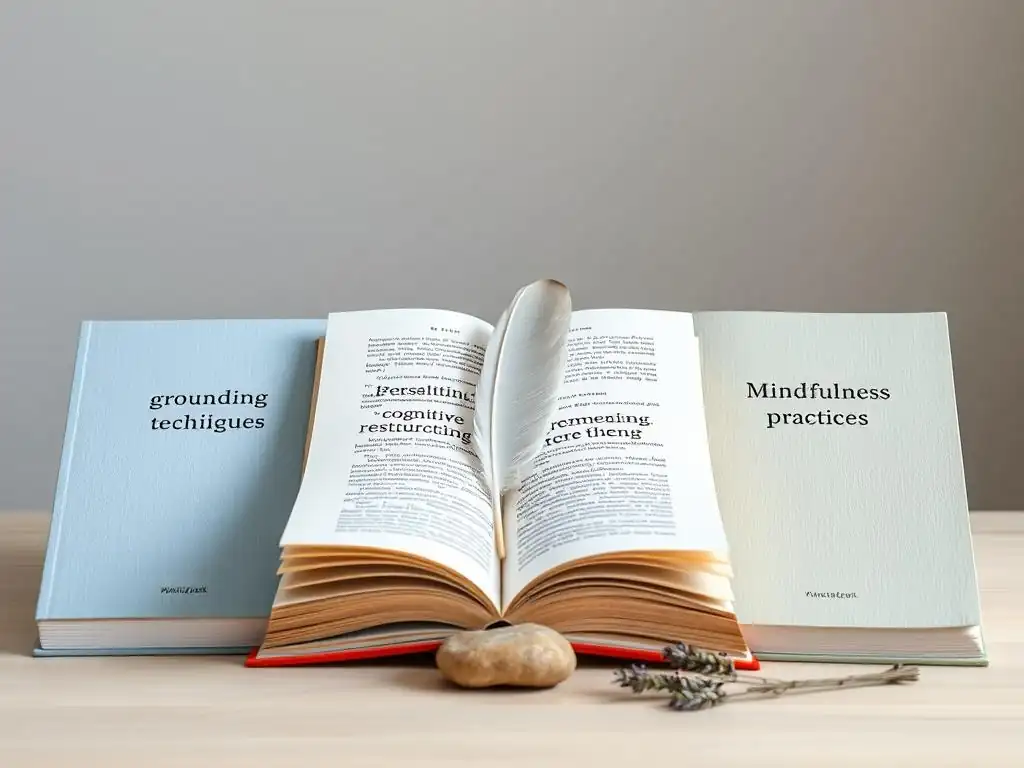
Simply buying an advanced anxiety management book is only the first step; the real work lies in engaging with the material and applying the techniques consistently. These books are designed to be interactive tools, not just passive reads. Maximizing their benefits requires commitment, practice, and a willingness to experiment with new ways of thinking and behaving.
Treating the book like a course or a guide from a therapist can help maintain motivation. Set aside dedicated time for reading and exercises, and be patient with the process. Progress in managing anxiety is often gradual, with ups and downs along the way. The key is persistence and a willingness to learn from both successes and setbacks.
Implementing the Techniques Consistently
Consistency is arguably the most critical factor in gaining substantial benefits from anxiety management books. Reading about a technique is different from actually doing it regularly. Whether it's daily thought records, regular breathing exercises, scheduled exposure practices, or daily mindfulness meditation, committing to consistent application is essential for rewiring anxious patterns.
For example, practicing progressive muscle relaxation daily for 15 minutes, even when not anxious, builds the skill so it's available during moments of distress. Similarly, consistently challenging cognitive distortions using thought records trains your brain to automatically question unhelpful thoughts over time. Aim for small, manageable steps initially, gradually building the habit of incorporating the techniques into your routine.
Combining Book Learning with Professional Therapy
For many individuals, combining self-help reading with professional therapy offers the most powerful path to recovery. An advanced anxiety management book can provide excellent structure and exercises, while a therapist can offer personalized guidance, clarify concepts, troubleshoot difficulties in applying techniques, and provide support. Therapists can help tailor the book's exercises to your specific situation and provide accountability.
Using a book in conjunction with therapy can also make sessions more productive, allowing you to work on practical application between appointments. It's common for therapists to recommend specific advanced anxiety management book recommendations as homework or supplementary material. This integrated approach leverages the strengths of both resources for comprehensive care.
Tracking Your Progress and Adjusting Your Strategies
Tracking your progress is vital for staying motivated and understanding what works best for you. This could involve journaling about your experiences, using mood tracking apps, or simply noting changes in the frequency or intensity of your anxiety symptoms. Many workbooks, like "Mind Over Mood" or "The Anxiety and Phobia Workbook," include built-in tracking tools.
Reviewing your progress helps you identify which techniques are most effective for your specific challenges. If a particular strategy isn't yielding results after consistent effort, it might be time to adjust your approach or focus on a different set of techniques presented in the book. This iterative process of learning, applying, tracking, and adjusting is key to long-term success in managing anxiety.
Alternative Resources for Advanced Anxiety Management
While books offer a structured and often cost-effective way to access advanced anxiety management techniques, they are not the only resources available. A variety of alternative tools and platforms can supplement or complement your reading, offering different formats for learning and practice. Exploring these options can help diversify your approach and find methods that best suit your learning style and needs.
These resources often provide interactive elements, community support, or guided experiences that differ from the solo nature of reading a book. Combining different types of resources can create a more robust and engaging system for managing anxiety, ensuring you have multiple avenues for support and practice.
Online Courses and Workshops
Many therapeutic approaches covered in advanced anxiety management book recommendations, such as CBT or MBSR, are also available in online course or workshop formats. These courses often break down the material into digestible modules, include video lectures, interactive exercises, and sometimes even live Q&A sessions or forums. They can provide a more dynamic learning experience than reading alone.
Online workshops might focus on specific skills, like managing panic attacks or improving social confidence, offering targeted training. While these often come with a cost, they can provide a structured learning environment and the feeling of being guided by an instructor, which can be motivating for some individuals. The flexibility of online learning allows you to access these resources from anywhere at any time.
Advanced Mindfulness Apps
Building on the principles found in books like "Wherever You Go, There You Are," numerous advanced mindfulness apps offer guided meditations, body scans, and exercises specifically tailored for anxiety reduction. Apps like Headspace, Calm, or Insight Timer provide extensive libraries of guided practices ranging from a few minutes to longer sessions. Some include specific programs for anxiety, panic, or worry.
These apps make consistent mindfulness practice more accessible, offering reminders and tracking features. Some also incorporate elements of CBT or acceptance-based strategies. While basic versions are often free, premium subscriptions unlock a wider range of content. Using an app can be a convenient way to integrate mindfulness into a busy schedule, providing support for techniques learned in books.
Support Groups and Communities
Connecting with others who understand the challenges of anxiety can be incredibly validating and supportive. Both in-person and online support groups offer a space to share experiences, learn from peers, and gain encouragement. While not a replacement for professional therapy or structured learning from books, support groups provide a sense of community and reduce feelings of isolation that often accompany anxiety.
Online forums and communities dedicated to specific books or therapeutic approaches can also be valuable resources. For instance, finding a group discussing "The Anxiety and Phobia Workbook" might offer insights into applying specific exercises or provide encouragement when facing challenges. These communities can offer practical tips, emotional support, and a reminder that you are not alone in your journey.
Conclusion: Empowering Yourself with Advanced Anxiety Management Strategies.
Embarking on the journey of advanced anxiety management using expert book recommendations is a powerful step towards taking control of your mental well-being. These resources offer more than just coping tips; they provide structured, evidence-based frameworks for understanding the roots of anxiety, challenging unhelpful patterns, and building lasting resilience. By delving into approaches like CBT, exposure therapy, mindfulness, and acceptance, you gain a deeper toolkit to navigate the complexities of anxiety.
Choosing the right book involves honest self-assessment and consideration of your specific needs and preferences. The real transformation, however, comes from consistent practice and active engagement with the material. Whether used independently or in conjunction with professional therapy, these advanced anxiety management books empower you to become an active participant in your own healing, fostering greater self-awareness, courage, and ultimately, a life lived with less fear and more freedom.
Frequently Asked Questions
What types of anxiety disorders do these advanced books primarily address?
These books often delve into the complexities of generalized anxiety disorder, panic disorder, and social anxiety, going beyond introductory material. They may also touch on OCD and PTSD.
Are these books suitable for individuals new to anxiety management techniques?
While beneficial, these books are advanced. They're best suited for those already familiar with basic coping mechanisms and seeking deeper understanding and strategies. A foundational understanding is highly recommended.
Do these books offer practical exercises or actionable strategies for managing anxiety?
Yes, many include practical exercises, mindfulness techniques, and cognitive restructuring strategies. They often provide real-world examples and guided practices to implement.
Where can I find these "Anxiety management book recommendations" beyond Mind Care Guide?
While Mind Care Guide offers curated lists, you can also find reviews and recommendations on major book retailers' websites, mental health organization sites, and expert blogs.
Will reading these books alone cure my anxiety?
No, these books are supplemental resources. They are not a replacement for professional therapy or medical advice. They should be used in conjunction with expert care.
Final Reflection: Unlocking Inner Peace Through Advanced Anxiety Management
The strategies discussed in this article—from mindfulness-based cognitive therapy to somatic experiencing—are not just theoretical exercises; they are vital tools for navigating the increasingly stressful realities of modern life. The pervasive anxiety affecting so many underscores the urgent need for accessible, effective, and advanced approaches beyond the typical self-help guides. We must move beyond simplistic solutions and embrace the depth and nuance required to truly address the complexities of anxiety.
This exploration of advanced anxiety management techniques has profoundly impacted my understanding of mental well-being, highlighting the interconnectedness of mind, body, and spirit. The journey towards managing anxiety is deeply personal, and the books reviewed here offer diverse pathways to healing. As the author, I've been struck by the recurring theme of self-compassion emphasized across many of these resources. Self-compassion is not self-indulgence; it is self-care.
This simple yet powerful statement encapsulates the essence of effective anxiety management: treating oneself with the same kindness and understanding one would offer a close friend.
Now, consider your own journey. Which of these advanced techniques resonated most with you? Perhaps mindfulness practices spoke to your inner peace, or somatic techniques offered a pathway to release trapped emotions. Regardless, I encourage you to take a step forward. Choose one book that calls to you, delve into its pages, and begin your own personalized journey towards a calmer, more fulfilling life. Remember, the path to managing anxiety is a continuous process of self-discovery and growth, and you are not alone in this journey.
Unlock Your Calm: Take Control of Anxiety Today!
Thanks for diving deep into advanced anxiety management techniques! We hope you found the expert recommendations insightful and empowering. Ready to take the next step on your journey to inner peace?
- Prioritize one new self-care technique from the book list – even a small change can make a big difference. Start with the one that resonates most with you!
- Share this article with a friend or family member who might benefit from these resources. Helping others is a powerful act of self-care too.
- Leave a comment below and share your favorite anxiety-reducing strategy from the article or your own experience. Let's build a supportive community!
What small step will you take today to cultivate more calm in your life?