
Beyond the Basics: Advanced Features for Deeper Practice

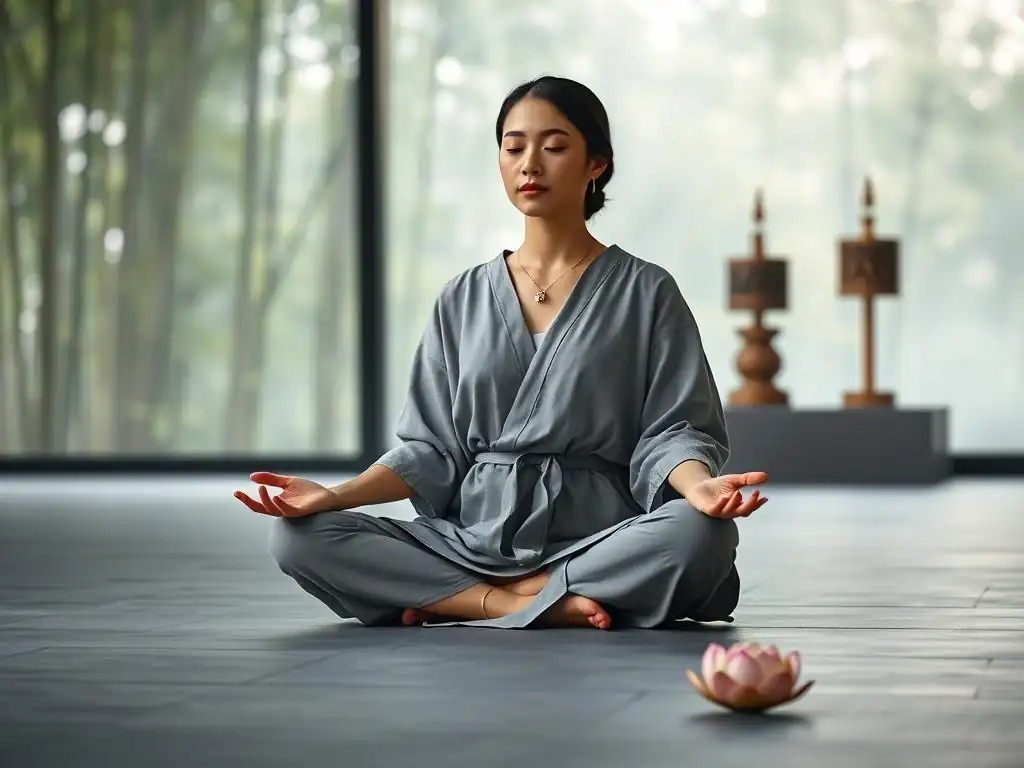
Welcome to Mind Care Guide, your sanctuary for mental well-being.
Feeling like you're only scratching the surface of mindfulness? You're not alone. Many find themselves yearning for a richer, more profound meditative experience. This exploration of deeper mindfulness meditation techniques offers a pathway beyond the basics, unlocking advanced features to help you cultivate lasting peace and presence. Ready to elevate your practice and discover the transformative power within? Let's begin...
Beyond the Basics: Advanced Features for Deeper Mindfulness Meditation Techniques
- Level Up Your Mindfulness: Exploring Deeper Meditation Techniques
- Mastering Deeper Mindfulness Meditation Techniques: A Step-by-Step Guide
- Advanced Features in Mindfulness Journals to Support Deeper Practice
- Integrating Deeper Mindfulness Techniques into Daily Life
- Choosing the Right Tools for Your Deeper Mindfulness Journey
- Integrating Deeper Mindfulness Techniques into Daily Life
- Choosing the Right Tools for Your Deeper Mindfulness Journey
- Conclusion: Embracing Deeper Mindfulness for a More Fulfilling Life
-
Frequently Asked Questions
- What are some deeper mindfulness meditation techniques beyond basic breath awareness?
- How can I deal with distractions more effectively during deeper mindfulness meditation?
- What is the role of vipassana meditation in deeper mindfulness meditation techniques?
- How does loving-kindness meditation contribute to deeper mindfulness meditation practice?
- What are some resources offered by Mind Care Guide for learning deeper mindfulness meditation techniques?
- Final Reflection: Cultivating a Profound Mindfulness Practice
- Unlock Your Potential: Dive Deeper into Advanced Practice!
Level Up Your Mindfulness: Exploring Deeper Meditation Techniques
Understanding the Limitations of Basic Mindfulness Practices
Basic mindfulness practices, often introduced through simple breath awareness or body scans, serve as a vital entry point for many individuals seeking to cultivate greater presence and reduce stress. While incredibly beneficial, these foundational techniques typically focus on building initial awareness and stability of attention. A common limitation is that they may not fully address the deeper psychological patterns, emotional reactivity, or existential questions that arise as practice matures. For example, while noticing breath can calm immediate anxiety, it might not provide the insight needed to understand the root causes of chronic worry or help process complex grief.
Furthermore, many beginners report hitting a plateau after several months of consistent basic practice. They might feel calmer but find it challenging to move beyond surface-level awareness or integrate mindfulness more profoundly into challenging life situations.
Data from meditation apps suggests that user engagement often drops significantly after the first few weeks or months, potentially indicating a need for more engaging or advanced techniques to sustain interest and progress. A study published in the Journal of Consulting and Clinical Psychology in 2014, while focusing on MBSR, highlighted that while initial stress reduction is significant, maintaining long-term gains often requires continued practice and integration, hinting at the need for techniques that foster deeper engagement.
Transitioning to Advanced Mindfulness: Why Go Deeper?
Transitioning to advanced mindfulness practices allows individuals to explore the mind with greater subtlety, depth, and insight. Moving beyond basic techniques enables practitioners to investigate the nature of thoughts, emotions, and sensory experiences with more precision, leading to profound shifts in perspective and a reduction in suffering.
Deeper mindfulness meditation techniques can help uncover habitual patterns of reactivity, foster self-compassion, and cultivate a sense of interconnectedness, leading to more authentic engagement with life's challenges and joys. This deeper exploration is not about achieving a specific state, but rather about cultivating a more intimate and non-judgmental relationship with one's inner landscape.
The benefits of engaging in deeper mindfulness meditation techniques extend beyond stress reduction. Advanced practices, such as insight meditation (Vipassana) or loving-kindness (Metta), have been associated with significant increases in emotional regulation skills and empathy.
Research from the Center for Healthy Minds at the University of Wisconsin-Madison, for instance, has explored the neural correlates of loving-kindness meditation, suggesting it can enhance prosocial behavior and alter brain regions associated with empathy and emotional processing. This indicates that moving beyond the basics isn't just about getting better at being present; it's about fostering qualities that enrich one's emotional life and relationships, supporting a truly holistic approach to mental well-being.
Mastering Deeper Mindfulness Meditation Techniques: A Step-by-Step Guide
Step 1: Cultivating Focused Attention with Advanced Journal Prompts
Cultivating robust, focused attention is a prerequisite for many deeper mindfulness meditation techniques. While basic practices establish a foundation, advanced techniques demand a finer-tuned ability to direct and sustain attention on specific objects, whether it's the breath, bodily sensations, or mental phenomena.
This isn't about rigidly controlling the mind, but rather developing the capacity to notice distractions gently and return to the chosen focus with intention and patience. Advanced journal prompts can be incredibly helpful in this stage, guiding practitioners to reflect on their experiences with attention, noticing patterns of mind-wandering and moments of sustained focus outside formal meditation sessions.
Using a tool like a structured journal designed for this purpose, such as a hypothetical "Clarity & Focus Journal," can provide specific prompts like "Describe a moment today when your attention felt scattered. What were the circumstances?" or "Recall a task where you felt fully absorbed.
What contributed to that focus?" These prompts encourage meta-awareness – awareness of awareness itself – which is crucial for strengthening the attentional muscle needed for deeper mindfulness meditation techniques. By regularly reflecting on attentional habits, practitioners gain valuable insights into their mind's tendencies, making it easier to recognize and redirect mind-wandering during formal meditation practice.
Using the Clarity & Focus Journal for Focused Attention Exercises
A dedicated journal, let's imagine it's called the Clarity & Focus Journal, might offer daily or weekly prompts specifically tailored to enhance attentional skills. For example, a prompt might ask, "During your 10-minute meditation today, how often did your mind wander? What were the primary themes of the thoughts that pulled you away?"
or "Choose one activity today, like washing dishes or walking, and dedicate five minutes to doing it with your full, undivided attention. Journal about what you noticed – both internally (thoughts, feelings) and externally (sensations, sights, sounds)." This type of structured reflection turns everyday activities into opportunities for practice and helps solidify the lessons learned on the cushion.
Beyond simple reflection, the Clarity & Focus Journal could incorporate exercises designed to train attention directly. One exercise might involve selecting a simple object, like a piece of fruit or a stone, and spending five minutes observing it without judgment, then journaling about the details noticed and the experience of maintaining focus.
Another might be a guided writing exercise where the practitioner focuses solely on the physical sensation of the pen on paper for a set time before writing about that experience. These exercises build concentration incrementally, making the transition to more demanding deeper mindfulness meditation techniques smoother and more accessible.
Leveraging Body Scan Meditations with the Sensory Awareness Journal
Body scan meditations are a foundational practice, but they can be leveraged for deeper attention training by approaching them with enhanced curiosity and precision, perhaps guided by a journal like the Sensory Awareness Journal. Instead of just noticing sensations, a deeper body scan involves investigating the qualities of sensations – their temperature, texture, vibration, pulsation, absence, or intensity – without labeling them as "good" or "bad." This level of detailed sensory awareness sharpens the mind's ability to discriminate and sustain focus on subtle phenomena, which is essential for insight practices.
The Sensory Awareness Journal could provide prompts encouraging this deeper exploration. For instance: "During your body scan today, focus specifically on your hands. Describe three distinct sensations you noticed that you usually overlook," or "Spend five minutes paying attention only to the soles of your feet.
What subtle changes did you observe in temperature or pressure?" By directing attention to specific areas or types of sensation and prompting detailed reflection, this journal helps practitioners move beyond a superficial scan to a rich, dynamic engagement with the body's ever-changing landscape, significantly strengthening their capacity for focused attention required for deeper mindfulness meditation techniques.
Step 2: Exploring Open Monitoring Meditation for Deeper Awareness
Open monitoring meditation, sometimes called "choiceless awareness," is a deeper mindfulness meditation technique where the practitioner remains aware of whatever arises in the field of consciousness – thoughts, emotions, sensations, sounds – without focusing on any single object. The goal is to simply observe the flow of experience non-reactively, noticing phenomena as they come and go.
This practice cultivates a panoramic awareness and helps reveal the impermanent nature of all mental and physical events, fostering a sense of spaciousness and non-attachment. It's a significant step beyond focused attention, requiring a stable base from which to observe the entire spectrum of experience.
Engaging in open monitoring systematically can lead to profound insights into the mind's operations. By watching thoughts arise and dissolve without getting caught up in their content, practitioners begin to see that thoughts are not facts and do not define them. Similarly, observing emotions without judgment allows for a healthier relationship with feelings, reducing reactivity.
This practice helps de-center awareness from the ego's narratives and expands the sense of self beyond identification with transient mental states. While challenging initially, especially for minds prone to getting lost in thought, consistent open monitoring practice is key to unlocking deeper levels of awareness and emotional freedom.
The Role of Mindfulness Journals in Open Monitoring Practice
Mindfulness journals play a crucial role in supporting open monitoring practice by providing a space for reflection after the meditation session. During open monitoring, the emphasis is on non-interference, simply observing. Attempting to analyze or categorize during the practice itself can hinder the process.
However, journaling afterward allows the practitioner to process what was observed, identify patterns, and gain clarity without disrupting the flow of awareness during meditation. A journal can help track the types of phenomena that arose, the transitions between different objects of awareness (e.g., from thought to sound to sensation), and the quality of the observation (e.g., reactive vs. non-reactive).
Using a journal specifically designed for this purpose, like a hypothetical "The Present Moment Awareness Journal," can provide prompts that guide this post-meditation reflection. For instance: "During your open monitoring session, what were the most prominent types of phenomena that arose (thoughts, sounds, body sensations, emotions)? ", "Did you notice any recurring themes in your thoughts or feelings?
", or "Describe a moment where you felt pulled into a thought or emotion, and how you responded." These prompts encourage mindful processing of the meditation experience, helping to solidify learning and integrate the insights gained during open monitoring, thereby deepening the practice of deeper mindfulness meditation techniques.
Recommended: The Present Moment Awareness Journal for Open Monitoring
The Present Moment Awareness Journal, if it were a real product, would ideally feature unstructured space for free writing alongside targeted prompts. The free writing allows practitioners to simply download their observations without constraint, capturing the raw experience of the meditation. The structured prompts then help refine this reflection, directing attention to key aspects of the open monitoring experience that might otherwise be overlooked. For example, a prompt might ask, "Reflect on the feeling of spaciousness or containment you experienced during the session. Where did you notice it in the body or mind?"
Another useful feature in The Present Moment Awareness Journal could be a section for noting "Aha!" moments or insights that arose during the practice or during the journaling itself. Open monitoring often reveals surprising truths about the mind, and having a dedicated space to capture these insights ensures they aren't lost. Prompts like "What did you notice about the nature of thoughts today?"
or "How did your relationship to a difficult emotion feel during the session?" can facilitate this process. This combination of structured reflection and free exploration makes such a journal an invaluable tool for anyone seriously engaging in open monitoring as part of their journey into deeper mindfulness meditation techniques.
Step 3: Developing Insight Meditation (Vipassana) for Self-Discovery
Insight meditation, or Vipassana, is a classical Buddhist practice focused on developing profound insight into the true nature of reality, particularly the characteristics of impermanence (anicca), suffering (dukkha), and non-self (anatta). Building upon both focused attention and open monitoring, Vipassana involves observing the arising and passing away of physical and mental phenomena with penetrating awareness, seeking to understand their fundamental characteristics directly through experience. This practice aims to dismantle illusions and deeply understand how suffering arises from attachment to impermanent phenomena and the mistaken belief in a permanent, independent self.
Engaging in Vipassana can be challenging but profoundly transformative. It requires patience, persistence, and a willingness to confront uncomfortable truths about the self and the world. Through systematic observation, practitioners begin to see that all experiences – thoughts, emotions, sensations – are constantly changing, unsatisfactory when clung to, and ultimately impersonal processes rather than attributes of a fixed self.
This experiential understanding weakens the grip of craving and aversion, leading to liberation from suffering. While often taught in intensive retreat settings, the principles of Vipassana can be integrated into daily practice, especially with the support of tools that aid reflection and inquiry.
Utilizing the Self-Reflection & Inquiry Journal for Vipassana Insights
A journal designed for introspection and inquiry, such as a hypothetical Self-Reflection & Inquiry Journal, is an excellent companion for Vipassana practice. Vipassana is not just about observing; it's about investigating the nature of phenomena. While the direct observation happens during meditation, the process of integrating insights and formulating questions for further investigation can be greatly aided by journaling. Prompts in such a journal could guide practitioners to explore the three characteristics of existence in relation to their own experience.
For example, the Self-Reflection & Inquiry Journal might ask: "During your meditation today, where did you most clearly observe impermanence – in a sensation, a thought, or an emotion? Describe its arising, duration, and passing away," or "Reflect on a recent experience of suffering. How did attachment or aversion play a role? What did you notice about the nature of that suffering during your practice?"
Other prompts could focus on the non-self aspect: "During your meditation, did you notice the feeling of 'I' or 'me' arise? What did you observe about that feeling – was it solid and permanent, or constantly changing?" These questions encourage deeper contemplation and help solidify the experiential understanding gained through Vipassana, making it a powerful tool for self-discovery and advancing deeper mindfulness meditation techniques.
Case Study: How Sarah Used Vipassana & the Self-Reflection & Inquiry Journal to Overcome Anxiety
Sarah, a 38-year-old marketing manager, struggled with chronic anxiety, often feeling overwhelmed by future worries and past regrets. She had practiced basic mindfulness for a year, which helped manage acute stress but didn't address the underlying patterns of rumination. Seeking deeper healing, she began practicing Vipassana, initially for 20 minutes daily, supported by a Self-Reflection & Inquiry Journal.
Using the journal's prompts, Sarah started observing her anxious thoughts not as facts but as fleeting mental events. A prompt asking, "When anxiety arises, what physical sensations accompany it? What is the lifespan of these sensations?" helped her notice that the tightness in her chest and racing heartbeats were impermanent, arising and passing like clouds. Another prompt, "Identify a thought related to future worry.
During meditation, observe its energy and texture. Is it solid or airy? Does it stay, or does it dissolve?" allowed her to see the non-self nature of these thoughts – they weren't her, but rather impersonal mental formations. Over six months of consistent practice and journaling, Sarah reported a significant reduction in the grip of anxiety.
While anxious thoughts still arose, she no longer identified with them as strongly and could observe them with greater equanimity. She noted in her journal after a particularly challenging week, "The thoughts are still loud sometimes, but they don't stick like they used to. It's like watching a storm from a window instead of being caught in the rain." This shift in perspective, cultivated through Vipassana and processed through journaling, allowed her to navigate challenges with less fear and more presence, illustrating the transformative power of deeper mindfulness meditation techniques.
Step 4: Integrating Metta Meditation (Loving-Kindness) for Enhanced Compassion
Metta meditation, or loving-kindness meditation, is a practice aimed at cultivating unconditional friendliness, compassion, appreciative joy, and equanimity towards oneself and all beings. While many mindfulness practices focus on awareness and insight, Metta directly cultivates positive emotional states. It typically involves silently repeating phrases expressing good wishes, first towards oneself ("May I be happy, may I be healthy, may I be safe, may I be free from suffering"), then gradually extending these wishes outwards to loved ones, neutral persons, difficult persons, and finally, all beings. This practice is a powerful antidote to negativity, ill-will, and self-criticism.
Integrating Metta into one's practice balances the introspective work of insight meditation. While Vipassana helps us see the truth of suffering and non-self, Metta helps us respond to that truth and the suffering of others with warmth and care. Consistent Metta practice can significantly enhance emotional well-being, improve relationships, and reduce feelings of isolation.
Studies have shown that even short periods of Metta meditation can increase positive emotions and decrease negative emotions, and longer-term practice can lead to lasting changes in social behavior and empathy. For example, a study published in Psychological Science in 2008 demonstrated that just 8 weeks of Metta meditation training increased daily experiences of positive emotions and improved interpersonal relationships.
Guiding Your Metta Meditation with the Loving-Kindness Practice Journal
A journal specifically designed for Metta practice, let's call it the Loving-Kindness Practice Journal, can be invaluable for deepening this compassionate practice. Metta involves systematically directing intentions, and journaling can help clarify these intentions and reflect on the experience of extending kindness. It provides a space to explore any resistance that arises when directing Metta towards certain individuals or groups, which is a common experience and an opportunity for growth.
The Loving-Kindness Practice Journal could include sections for:
- Noting the specific phrases used during a session.
- Reflecting on the feeling tone associated with directing Metta towards different categories of beings (self, loved ones, neutral, difficult, all beings).
- Exploring any difficulties encountered, such as resistance or distraction, and brainstorming ways to work with them.
- Recording moments outside of formal practice where Metta naturally arose or where there was an opportunity to apply it.
For instance, a prompt might ask, "Today, as you directed Metta towards a difficult person, what sensations or emotions arose? How did you work with them?" or "Reflect on a time today when you felt self-critical. How might you have applied Metta to yourself in that moment?" These prompts encourage conscious engagement with the practice, helping practitioners navigate challenges and deepen their capacity for compassion, making Metta a powerful component of deeper mindfulness meditation techniques.
Real-World Application: Using Metta Meditation & the Loving-Kindness Practice Journal to Improve Relationships
Mark, a 55-year-old engineer, found himself increasingly frustrated and critical of his colleagues, particularly one named David, which strained their working relationship. He began incorporating Metta meditation into his routine, using a Loving-Kindness Practice Journal to guide his practice. Initially, directing loving-kindness towards David felt forced and brought up feelings of resentment.
In his journal, Mark noted this resistance. A prompt asked, "When sending Metta to someone difficult, what specific thoughts or feelings arise? Can you offer kindness to these feelings themselves?" This led Mark to acknowledge his frustration without judgment. He then focused on finding a single neutral or positive quality in David, recalling a time David helped him with a technical problem.
He wrote in his journal, "It's hard, but I focused on that one time David was helpful. Sending 'May you be free from suffering' felt slightly less artificial when I pictured that specific moment." Over several weeks, Mark consistently used his journal to track his Metta sessions, noting moments of genuine connection and areas of persistent difficulty. He focused on sending wishes for well-being to David, even when his feelings didn't align. This practice subtly shifted his internal state.
He became less reactive to David's actions and started noticing positive interactions more readily. After two months, he journaled, "Had a productive conversation with David today. Didn't feel the usual tension. Maybe this Metta thing is actually shifting something, not just for him, but for how I feel." While their relationship wasn't perfect, the Metta practice, supported by the reflective process of the journal, significantly reduced Mark's internal friction and improved the dynamic between them, demonstrating the tangible impact of deeper mindfulness meditation techniques focused on compassion.
Advanced Features in Mindfulness Journals to Support Deeper Practice

Guided Meditations within Journals: The Guided Path Journal and Its Benefits
Some advanced mindfulness journals integrate written guided meditations directly into their pages. A hypothetical example is The Guided Path Journal. Unlike relying solely on audio guides, having the script or prompts written out allows practitioners to engage with the guidance at their own pace, revisit specific instructions, and internalize the steps more deeply. This feature is particularly beneficial for those exploring deeper mindfulness meditation techniques that involve complex sequences or specific visualizations, such as certain forms of insight practice or elaborate Metta meditations extending to different groups.
The primary benefit of guided meditations within a journal format is the enhanced focus and clarity they offer. When instructions are written, there's less chance of missing a step or getting distracted by the audio quality or the guide's voice. Practitioners can pause, reread, and truly absorb each instruction before moving on.
This deliberate pace supports a more focused and intentional practice, which is crucial when navigating the subtleties of deeper mindfulness meditation techniques. It also provides a tangible record of the guided practice, allowing practitioners to track which specific meditations they are engaging with and make notes directly alongside the script about their experience.
How Guided Meditations in Journals Enhance Focus and Clarity
Guided meditations presented in a journal format, like those potentially found in The Guided Path Journal, enhance focus by eliminating auditory distractions and allowing for self-paced progression. When reading instructions, the mind can absorb and process them more thoroughly than when simply listening. This reduces the mental effort required to follow along, freeing up attentional capacity to focus on the meditation itself. For deeper mindfulness meditation techniques that require precise attention to subtle shifts in awareness or complex visualizations, this clarity is paramount.
Moreover, having the guidance written down allows practitioners to mentally rehearse the steps beforehand or review them afterward, reinforcing learning. If a specific instruction was confusing or particularly insightful, it can be easily revisited.
This level of interaction with the guidance fosters a deeper understanding of the practice's mechanics and intentions. Imagine a guided Vipassana meditation focusing on observing the elements (earth, water, fire, air) in the body; having the detailed instructions written out ensures the practitioner doesn't miss subtle cues on how to identify and differentiate these sensations, leading to a more precise and focused exploration during the meditation session itself.
Comparing Guided Meditation Features in The Guided Path Journal vs. The Daily Calm Journal
Comparing hypothetical journals like The Guided Path Journal and The Daily Calm Journal highlights different approaches to guided meditation within a journal context. The Guided Path Journal might specialize in longer, more complex guided scripts specifically designed for deeper mindfulness meditation techniques, perhaps including detailed instructions for stages of Vipassana or extended Metta sequences. It might offer variations on practices, encouraging exploration of different facets of awareness or compassion.
In contrast, The Daily Calm Journal might offer shorter, more accessible guided meditations, perhaps focusing on basic breath awareness, body scans, or simple visualizations suitable for daily stress reduction. While beneficial, these guides might not delve into the intricate instructions required for advanced insight or concentration practices.
The difference lies in the depth and complexity of the guidance provided; The Guided Path Journal would cater to practitioners ready to explore the nuances of deeper mindfulness meditation techniques, offering guidance that challenges and expands their practice beyond foundational levels, whereas The Daily Calm Journal would serve those seeking consistent, basic calm.
Tracking Progress and Identifying Patterns: The Power of Data-Driven Mindfulness
For those committed to progressing in deeper mindfulness meditation techniques, tracking progress can provide valuable insights and motivation. While mindfulness is not about 'getting somewhere,' observing patterns in one's practice can reveal areas of growth, persistent challenges, and the impact of meditation on daily life. Data-driven mindfulness involves noting specific aspects of each session and one's state of mind, allowing for a more objective view over time. This isn't about judgment, but about informed observation, much like tracking sleep or exercise helps understand their effects on physical health.
Tracking can involve simple metrics like duration and consistency (e.g., meditating 20 minutes daily, 5 days a week) but also more qualitative data points. For instance, noting the dominant distractions, the perceived depth of focus, the emotional state before and after, or specific insights that arose.
Over weeks and months, reviewing this data can reveal correlations, such as noticing that stress levels are higher on days without morning meditation, or that practicing Metta consistently reduces interpersonal friction. This meta-awareness derived from tracking empowers practitioners to tailor their practice to their current needs and challenges, fostering a more effective approach to deeper mindfulness meditation techniques.
Using the Mindful Habit Tracker to Monitor Meditation Consistency
A tool like a hypothetical Mindful Habit Tracker, integrated into a journal or as a standalone component, simplifies the process of monitoring meditation consistency. This could be a simple calendar format where practitioners mark off each day they meditate, perhaps noting the duration. Consistency is arguably the most critical factor in developing any skill, especially complex ones like deeper mindfulness meditation techniques. Tracking it visually provides immediate feedback and can serve as a powerful motivator. Seeing a chain of consecutive meditation days can reinforce the habit and encourage continued practice, even on challenging days.
Beyond just marking days, a more advanced Mindful Habit Tracker might include checkboxes for different types of practice (e.g., Focused Attention, Open Monitoring, Metta, Vipassana) or allow brief notes on duration and time of day. This level of detail helps practitioners understand how they are practicing, not just if. For example, someone might notice they consistently skip their Metta practice but maintain their Vipassana. This observation, prompted by the tracker, could lead to exploring the reasons behind this pattern and adjusting their approach to ensure a more balanced development across different deeper mindfulness meditation techniques.
Analyzing Meditation Sessions with the Mood & Meditation Log
Analyzing the content and impact of individual meditation sessions is key to refining one's practice and understanding its real-world effects. A Mood & Meditation Log journal, hypothetically, would facilitate this analysis. For each session, practitioners could record:
- Date and Time
- Duration
- Type of practice (e.g., 20 min Vipassana, 15 min Metta)
- Pre-meditation mood/state (e.g., stressed, tired, agitated, calm)
- Post-meditation mood/state (e.g., calmer, more aware, restless, peaceful)
- Key observations during the session (e.g., "lots of planning thoughts," "felt warmth during Metta," "noticed subtle vibration in feet")
- Any insights gained
Reviewing entries in the Mood & Meditation Log over time allows practitioners to identify patterns and correlations. They might notice that longer sessions correlate with a greater reduction in anxiety, or that practicing Metta before a difficult conversation leads to a more positive outcome.
They might also see that certain types of distractions (e.g., worries about work) are more prevalent at specific times of day or during particular practices. This data-driven approach helps practitioners make informed decisions about their practice, tailoring the timing, duration, and type of meditation to better support their mental well-being and advancement in deeper mindfulness meditation techniques.
Incorporating Affirmations and Intentions: Amplifying the Effects of Mindfulness
While core mindfulness practices like Vipassana focus on non-doing and observation, incorporating affirmations and intentions can powerfully complement deeper mindfulness meditation techniques, particularly practices like Metta. Affirmations are positive statements repeated to challenge negative thought patterns and cultivate desirable qualities. Intentions are clear statements of purpose for a meditation session or the day, setting a direction for one's awareness and actions. These elements work by consciously directing the mind towards specific positive states or goals, reinforcing the insights and awareness gained through practice.
Using affirmations and setting intentions isn't about bypassing difficult emotions or forcing positive states. Instead, it's about consciously planting seeds in the mind, creating a fertile ground for positive change alongside the process of observing reality as it is. For example, after observing self-criticism during Vipassana, an affirmation like "I am worthy of kindness" can help counter that negative pattern.
Setting the intention before a Metta session to "cultivate genuine warmth towards myself" provides a clear focus for the practice. This conscious direction amplifies the effects of meditation, helping to integrate insights and cultivate positive qualities more effectively, enhancing the journey into deeper mindfulness meditation techniques.
Writing Powerful Affirmations in the Affirmation Journal
A dedicated Affirmation Journal provides a structured space for crafting, reflecting upon, and reinforcing positive affirmations. Effective affirmations are typically personal, positive, present tense, and specific. Instead of a generic "I am happy," a more powerful affirmation might be "I am cultivating a sense of calm presence with each breath" or "I respond to challenges with resilience and self-compassion." The act of writing affirmations helps to solidify them in the mind and provides a tangible reference.
An Affirmation Journal could include sections for:
- Identifying limiting beliefs or negative self-talk.
- Brainstorming corresponding positive affirmations.
- Writing out affirmations daily or weekly.
- Reflecting on how the affirmations felt during meditation or throughout the day.
- Tracking which affirmations seem most impactful.
For example, after a Vipassana session revealing a strong pattern of self-judgment, a practitioner might write the affirmation "I observe my thoughts without judgment, accepting myself completely." In the reflection section, they could note moments during the day where this affirmation came to mind and helped shift their perspective. This active engagement with affirmations, facilitated by the journal, helps reprogram the mind and supports the positive shifts fostered by deeper mindfulness meditation techniques.
Setting Intentions for Daily Practice with the Daily Intentions Workbook
Setting intentions provides clarity and purpose for both formal meditation sessions and daily life, and a Daily Intentions Workbook can make this a consistent practice. An intention for a meditation session could be simple, like "My intention is to practice with patience and gentleness," or specific to the technique, such as "My intention for this Metta practice is to genuinely feel warmth towards a difficult person." For the day, an intention might be "My intention is to bring mindful awareness to my conversations" or "My intention is to respond to stress today with three conscious breaths."
The Daily Intentions Workbook could offer space each morning to write down intentions for the day and for the upcoming meditation session. In the evening, there could be prompts for reflection: "How did my intention for the day influence my actions?" or "Did I remember my intention during my meditation practice?
What was the result?" This simple yet powerful practice of setting and reflecting on intentions helps bridge the gap between formal meditation and daily life, ensuring that the insights and skills cultivated through deeper mindfulness meditation techniques are actively applied, making mindfulness a living practice rather than just something done on the cushion.
Integrating Deeper Mindfulness Techniques into Daily Life
Integrating deeper mindfulness meditation techniques into daily life is the ultimate goal. It's about bringing the qualities of awareness, insight, and compassion cultivated in formal practice into every moment. This isn't about constantly meditating, but about approaching everyday activities with the same principles learned on the cushion – non-judgmental observation, patience, curiosity, and kindness. This integration transforms mundane tasks into opportunities for practice and helps navigate challenges with greater ease and wisdom.
Examples of integrating deeper mindfulness include mindful walking, mindful eating, mindful communication, and mindful movement. These aren't separate techniques as much as they are applications of the core skills developed through practices like Vipassana and Metta. By consciously bringing awareness to these activities, practitioners reinforce their practice and experience the benefits of mindfulness beyond the formal sitting session. This continuous application is what truly embeds deeper mindfulness meditation techniques into the fabric of one's life, leading to lasting change.
Mindful Walking: A Simple Yet Powerful Practice
Mindful walking is an accessible way to practice mindfulness while moving. It involves bringing attention to the physical sensations of walking – the lifting and placing of the feet, the swing of the arms, the feeling of the ground beneath you, the rhythm of your breath, and the sights and sounds around you.
It can be practiced anywhere, from a park trail to a city sidewalk or even just walking down a hallway. While seemingly simple, bringing non-judgmental awareness to the act of walking can reveal patterns of rushing, planning, or distraction that are present in other areas of life.
For practitioners of deeper mindfulness meditation techniques, mindful walking can be an extension of body scan or open monitoring practices. Instead of just noticing sensations, one might investigate the impermanence of each step, the subtle balance shifts, or the arising and passing of thoughts and sounds while maintaining connection to the physical act of walking.
It's an opportunity to observe the mind in motion and practice returning to the present moment amidst dynamic experience. Even dedicating just 5-10 minutes a day to mindful walking can significantly enhance presence and reduce the tendency to get lost in thought while moving through the world.
Using a Fitbit with Mindfulness Reminders
Technology can support the integration of mindfulness into daily life. While not a journal, a wearable device like a Fitbit with mindfulness features offers prompts throughout the day to pause and take a moment of conscious breathing or simply notice one's state. These reminders, often vibrating gently on the wrist, serve as mini-interruptions to automatic pilot, prompting a brief return to mindful awareness.
For someone practicing deeper mindfulness meditation techniques, these reminders can be used creatively. Instead of just a basic breath exercise, the reminder could prompt a brief moment of open monitoring ("What is arising in my awareness right now?") or a quick check-in using Metta ("Can I offer myself a moment of kindness?").
While not a substitute for formal practice, these technological nudges help build the habit of pausing and bringing awareness into the midst of busy schedules, reinforcing the skills learned during dedicated meditation time. A study cited by Fitbit in 2020 noted that users who engaged with their mindfulness features reported reduced stress levels, highlighting the potential of such tools to support mindful moments throughout the day.
Mindful Eating: Savoring Each Moment
Mindful eating is a practice that involves bringing full, non-judgmental awareness to the experience of eating and drinking. It's about paying attention to the sensory qualities of food – its appearance, aroma, texture, taste, and temperature – as well as the physical sensations of hunger and fullness, and the thoughts and emotions that arise around eating. In a world where meals are often rushed or eaten mindlessly in front of screens, mindful eating offers an opportunity to slow down, savor, and cultivate a healthier relationship with food and one's body.
For practitioners of deeper mindfulness meditation techniques, mindful eating is a rich field for applying principles of awareness and insight. It's an opportunity to observe cravings and aversions without judgment, notice the impermanence of taste sensations, and become aware of habitual patterns related to food (e.g., eating quickly, overeating when stressed). It also connects to the body scan practice, bringing heightened awareness to physical hunger cues and the feeling of satiety. Dedicating even one meal or snack a day to mindful eating can significantly enhance appreciation for food and foster a more intuitive approach to nourishment.
Recording Your Mindful Eating Experiences in the Mindful Eating Diary
A journal specifically for mindful eating, perhaps called the Mindful Eating Diary, can deepen this practice by providing a space for reflection. Simply paying attention during a meal is one step; reflecting afterward helps process the experience and identify patterns. The diary can help bridge the gap between the sensory experience and cognitive understanding, reinforcing mindful habits.
Prompts in a Mindful Eating Diary could include:
- Before eating: "What level of hunger am I feeling on a scale of 1-10? ", "What are my intentions for this meal?"
- During eating: (Noting here isn't recommended, focus is on the experience)
- After eating: "What sensations did I notice while eating (taste, texture, temperature)? ", "What thoughts or emotions arose during the meal? ", "How do I feel physically and emotionally after eating? ", "What did I notice about the feeling of fullness?"
By consistently using the Mindful Eating Diary, practitioners can gain insight into their eating habits, triggers for mindless eating, and the subtle ways food affects their mood and energy levels. This reflection supports conscious choice and a more compassionate relationship with eating, enhancing the integration of deeper mindfulness meditation techniques into a fundamental daily activity.
Mindful Communication: Fostering Deeper Connections
Mindful communication involves bringing awareness, presence, and intention to interactions with others. It's about listening deeply, speaking truthfully and kindly, and being aware of one's own internal state – thoughts, emotions, bodily sensations – as they arise during a conversation. In a world often characterized by reactivity, misunderstanding, and superficial connection, mindful communication offers a path towards more authentic, empathetic, and constructive relationships.
Applying deeper mindfulness meditation techniques to communication means bringing the skills of focused attention (listening intently), open monitoring (noticing thoughts and feelings without getting caught up in them), insight (seeing the impermanent nature of emotions or opinions), and Metta (approaching the other person with kindness and compassion) into interpersonal exchanges. It requires pausing before reacting, choosing words carefully, and truly hearing what the other person is saying, rather than just waiting to speak. This practice can transform conflicts into opportunities for understanding and deepen bonds with loved ones and colleagues alike.
Reflecting on Your Communication Patterns in the Relationship Awareness Journal
A journal focused on interpersonal dynamics, like a hypothetical Relationship Awareness Journal, can be a powerful tool for cultivating mindful communication. Reflecting on conversations after they happen allows practitioners to analyze their patterns, identify areas for growth, and process challenging interactions with mindfulness. It provides a safe space to explore reactive tendencies and celebrate moments of genuine connection.
Prompts in the Relationship Awareness Journal could include:
- "Describe a recent conversation where you felt fully present. What contributed to that presence?"
- "Recall a conversation that felt difficult. What emotions arose in you? How did you respond (verbally and non-verbally)? Looking back, how might you have responded more mindfully?"
- "During a conversation today, did you notice your mind planning your response while the other person was still speaking? What was that experience like?"
- "Choose one person you interacted with today. Silently offer them a Metta phrase. How did that feel?"
By regularly reflecting on communication experiences through these prompts, practitioners gain valuable insight into their relational habits. They can identify triggers for reactivity, recognize the impact of their words and presence on others, and consciously practice applying the principles of deeper mindfulness meditation techniques – awareness, patience, and kindness – to improve their interactions, fostering deeper and more fulfilling connections.
Choosing the Right Tools for Your Deeper Mindfulness Journey

Selecting the right tools can significantly support your journey into deeper mindfulness meditation techniques. While the most essential tools are patience and consistent practice, journals, apps, and even some gadgets can provide structure, guidance, and motivation. The choice of tool often depends on individual learning styles, preferences, and the specific techniques one wishes to explore. It's important to remember that these are aids to practice, not substitutes for the practice itself.
When considering journals, factors like the type of prompts, the structure (guided vs. freeform), and physical qualities like paper quality and binding can influence the experience. For apps, features like guided meditations, tracking capabilities, and supplementary content (talks, music) are key. Gadgets offer unique approaches, often incorporating biofeedback. Ultimately, the "right" tool is one that resonates with you and genuinely supports your commitment to exploring deeper mindfulness meditation techniques consistently.
Comparing Mindfulness Journal Features: Price, Prompts, and Paper Quality
When choosing a mindfulness journal to support deeper practice, several features warrant comparison beyond just the cover design. Price is often a factor, with journals ranging from under $10 for basic notebooks to $30-$40+ for structured, guided journals with high-quality production. However, focusing solely on price can be misleading; the value lies in the content and usability.
The nature and quality of the prompts are crucial for deeper mindfulness meditation techniques. Do they encourage superficial notes or genuine introspection and inquiry related to specific practices like Vipassana or Metta? Are there prompts that help track progress or integrate insights? The paper quality and binding also impact the user experience.
High-quality paper prevents ink bleed-through and feels pleasant to write on, encouraging regular use. A durable binding ensures the journal holds up to daily handling. For example, a journal designed for frequent reflection might need lay-flat binding. Comparing journals based on these features ensures the tool genuinely supports, rather than hinders, the practice of deeper mindfulness meditation techniques.
The Comprehensive Mindfulness Journal: A Detailed Review
Let's imagine a product called The Comprehensive Mindfulness Journal. A detailed review might highlight its strengths and weaknesses for deeper practice. Strengths could include a wide variety of prompts covering different techniques (focused attention, open monitoring, Metta, insight), dedicated sections for tracking progress, space for setting intentions and affirmations, and perhaps even short written guided meditations. It might feature high-quality, thick paper suitable for various pens and a sturdy cover.
Potential weaknesses could be its size or weight, making it less portable, or its complexity if the user prefers a more minimalist approach. The sheer number of prompts might feel overwhelming to some. A review might note specific examples of valuable prompts, like those encouraging detailed observation of impermanence during a body scan or reflecting on the experience of sending kindness to a difficult person.
It might also provide an estimate of its lifespan (e.g., designed for 3-6 months of daily use) and its price point relative to competitors (e.g., priced at $35, positioning it as a premium option). Such a review helps practitioners assess if its features align with their goals for exploring deeper mindfulness meditation techniques.
The Minimalist Mindfulness Journal: A Budget-Friendly Option
In contrast, consider The Minimalist Mindfulness Journal, positioned as a budget-friendly option, perhaps priced around $15. A review would likely emphasize its simplicity and affordability. It might feature basic daily check-ins (e.g., mood before/after, duration) and ample unstructured space for free writing, appealing to those who prefer to generate their own reflections rather than follow prompts. The paper quality might be standard, and the binding functional but not luxurious.
The strength of The Minimalist Mindfulness Journal lies in its accessibility and flexibility. It provides a consistent space to record practice without imposing a specific structure or set of questions. This can be ideal for experienced practitioners of deeper mindfulness meditation techniques who know what they want to track or reflect on, or for beginners who feel intimidated by complex guided journals.
However, its weakness is the lack of guidance; it doesn't introduce specific techniques or prompts related to insight or Metta, requiring the user to bring their own structure. The review would conclude that while budget-friendly, its suitability depends heavily on the practitioner's familiarity with deeper practices and their preference for guided vs. self-directed reflection.
Beyond Journals: Apps and Gadgets for Enhanced Meditation
While journals are valuable for reflection and tracking, digital tools like apps and gadgets offer different ways to support deeper mindfulness meditation techniques. Meditation apps provide access to vast libraries of guided meditations, talks, and ambient sounds, often catering to various lengths and specific goals (e.g., sleep, focus, compassion). Gadgets, particularly biofeedback devices, offer real-time data on physiological states, providing a unique layer of feedback on the impact of practice.
The benefit of apps is convenience and variety. Accessing a 30-minute guided Vipassana meditation is as easy as opening an app. They also often include progress tracking, reminders, and community features. Gadgets offer objective data that can sometimes reveal subtle shifts not immediately obvious to the practitioner, such as changes in heart rate variability or brainwave patterns during different stages of meditation. Used mindfully, these tools can enhance practice, providing new avenues for exploration and feedback in the pursuit of deeper mindfulness meditation techniques.
The Benefits of Using Headspace
Headspace is a popular meditation app offering a wide range of guided meditations and mindfulness exercises. While known for its beginner-friendly content, Headspace also includes packs and single meditations that delve into more advanced themes relevant to deeper mindfulness meditation techniques. Users can find guided sessions on topics like "Dealing with Regret," "Patience," "Generosity," or exploring specific sensations or emotions with greater depth.
A key benefit of Headspace is its structured learning paths. For someone wanting to explore deeper practices, they might offer sequential packs that gradually introduce concepts like working with difficult emotions or cultivating compassion. The app's consistency in instruction and calming interface can also be supportive.
While it doesn't replace the deep introspection of journal writing or the specific focus of some advanced techniques, Headspace provides accessible audio guidance for exploring a broader range of mindfulness applications and can introduce concepts that practitioners then explore more deeply through silent practice or journaling. As of early 2023, Headspace reported having over 70 million users, indicating its wide reach in bringing mindfulness, including pathways towards deeper practices, to a global audience.
Exploring the Muse 2 Brain-Sensing Headband for Real-Time Feedback
The Muse 2 is a brain-sensing headband designed to provide real-time audio feedback on your meditative state. During a meditation session, it translates your brainwave activity, heart rate, breathing, and body movements into guiding sounds (e.g., weather sounds). The goal is to help you recognize when your mind is active (represented by stormy weather) and when it's calm (represented by peaceful weather or birds chirping).
For those exploring deeper mindfulness meditation techniques, the Muse 2 offers a unique form of objective feedback. While mindfulness is non-judgmental, the biofeedback can help practitioners correlate their subjective experience (e.g., "I felt restless") with objective data (e.g., "My brain activity was high during that period"). This can be particularly useful when trying to cultivate specific states like deep focus or stillness.
For example, during a concentration practice, the Muse might indicate a decrease in mental activity as focus deepens. Post-session reports provide data summaries, allowing users to track their progress over time across different metrics. While not a core part of traditional practice, this real-time feedback can be a fascinating and sometimes illuminating tool for understanding the physiological correlates of one's meditative state, complementing the subjective experience of deeper mindfulness meditation techniques.
Integrating Deeper Mindfulness Techniques into Daily Life
Integrating deeper mindfulness meditation techniques into daily life is the ultimate goal. It's about bringing the qualities of awareness, insight, and compassion cultivated in formal practice into every moment. This isn't about constantly meditating, but about approaching everyday activities with the same principles learned on the cushion – non-judgmental observation, patience, curiosity, and kindness. This integration transforms mundane tasks into opportunities for practice and helps navigate challenges with greater ease and wisdom.
Examples of integrating deeper mindfulness include mindful walking, mindful eating, mindful communication, and mindful movement. These aren't separate techniques as much as they are applications of the core skills developed through practices like Vipassana and Metta. By consciously bringing awareness to these activities, practitioners reinforce their practice and experience the benefits of mindfulness beyond the formal sitting session. This continuous application is what truly embeds deeper mindfulness meditation techniques into the fabric of one's life, leading to lasting change.
Mindful Walking: A Simple Yet Powerful Practice
Mindful walking is an accessible way to practice mindfulness while moving. It involves bringing attention to the physical sensations of walking – the lifting and placing of the feet, the swing of the arms, the feeling of the ground beneath you, the rhythm of your breath, and the sights and sounds around you.
It can be practiced anywhere, from a park trail to a city sidewalk or even just walking down a hallway. While seemingly simple, bringing non-judgmental awareness to the act of walking can reveal patterns of rushing, planning, or distraction that are present in other areas of life.
For practitioners of deeper mindfulness meditation techniques, mindful walking can be an extension of body scan or open monitoring practices. Instead of just noticing sensations, one might investigate the impermanence of each step, the subtle balance shifts, or the arising and passing of thoughts and sounds while maintaining connection to the physical act of walking.
It's an opportunity to observe the mind in motion and practice returning to the present moment amidst dynamic experience. Even dedicating just 5-10 minutes a day to mindful walking can significantly enhance presence and reduce the tendency to get lost in thought while moving through the world.
Mindful Eating: Savoring Each Moment
Mindful eating is a practice that involves bringing full, non-judgmental awareness to the experience of eating and drinking. It's about paying attention to the sensory qualities of food – its appearance, aroma, texture, taste, and temperature – as well as the physical sensations of hunger and fullness, and the thoughts and emotions that arise around eating. In a world where meals are often rushed or eaten mindlessly in front of screens, mindful eating offers an opportunity to slow down, savor, and cultivate a healthier relationship with food and one's body.
For practitioners of deeper mindfulness meditation techniques, mindful eating is a rich field for applying principles of awareness and insight. It's an opportunity to observe cravings and aversions without judgment, notice the impermanence of taste sensations, and become aware of habitual patterns related to food (e.g., eating quickly, overeating when stressed). It also connects to the body scan practice, bringing heightened awareness to physical hunger cues and the feeling of satiety. Dedicating even one meal or snack a day to mindful eating can significantly enhance appreciation for food and foster a more intuitive approach to nourishment.
Mindful Communication: Fostering Deeper Connections
Mindful communication involves bringing awareness, presence, and intention to interactions with others. It's about listening deeply, speaking truthfully and kindly, and being aware of one's own internal state – thoughts, emotions, bodily sensations – as they arise during a conversation. In a world often characterized by reactivity, misunderstanding, and superficial connection, mindful communication offers a path towards more authentic, empathetic, and constructive relationships.
Applying deeper mindfulness meditation techniques to communication means bringing the skills of focused attention (listening intently), open monitoring (noticing thoughts and feelings without getting caught up in them), insight (seeing the impermanent nature of emotions or opinions), and Metta (approaching the other person with kindness and compassion) into interpersonal exchanges. It requires pausing before reacting, choosing words carefully, and truly hearing what the other person is saying, rather than just waiting to speak. This practice can transform conflicts into opportunities for understanding and deepen bonds with loved ones and colleagues alike.
Choosing the Right Tools for Your Deeper Mindfulness Journey
Selecting the right tools can significantly support your journey into deeper mindfulness meditation techniques. While the most essential tools are patience and consistent practice, journals, apps, and even some gadgets can provide structure, guidance, and motivation. The choice of tool often depends on individual learning styles, preferences, and the specific techniques one wishes to explore. It's important to remember that these are aids to practice, not substitutes for the practice itself.
When considering journals, factors like the type of prompts, the structure (guided vs. freeform), and physical qualities like paper quality and binding can influence the experience. For apps, features like guided meditations, tracking capabilities, and supplementary content (talks, music) are key. Gadgets offer unique approaches, often incorporating biofeedback. Ultimately, the "right" tool is one that resonates with you and genuinely supports your commitment to exploring deeper mindfulness meditation techniques consistently.
Conclusion: Embracing Deeper Mindfulness for a More Fulfilling Life
Embracing deeper mindfulness meditation techniques is a pathway to profound self-discovery and a more fulfilling life. Moving beyond the basics allows for a richer exploration of the mind, the cultivation of deeper insights into the nature of reality, and the fostering of essential qualities like compassion and equanimity. While the journey requires dedication and patience, the rewards – including enhanced emotional regulation, improved relationships, and a greater sense of presence and peace – are immeasurable. Tools like specialized journals, supportive apps, and even biofeedback gadgets can serve as valuable companions, providing structure, guidance, and feedback along the way.
The key to a successful journey into deeper mindfulness meditation techniques lies in consistent practice and a genuine curiosity to explore the landscape of your inner world. It's not about achieving perfection or eliminating challenges, but about developing a wise and compassionate relationship with whatever arises. By integrating these practices into daily life and utilizing tools that resonate with your needs, you can cultivate a deeper sense of awareness that permeates every moment, leading to a life lived with greater presence, clarity, and heartfelt connection.
Continuing Your Journey with Advanced Mindfulness Practices
Continuing your journey with advanced mindfulness practices involves a commitment to ongoing learning and exploration. This might include seeking guidance from experienced teachers, attending retreats focused on specific deeper mindfulness meditation techniques like Vipassana or Metta, or engaging with advanced texts and resources. It also involves consistently applying the principles learned in formal practice to the challenges and opportunities of daily life. The path of mindfulness is not a destination but a continuous process of unfolding awareness.
As you continue, be patient and compassionate with yourself. There will be periods of ease and periods of difficulty. The insights gained through deeper mindfulness meditation techniques may sometimes be challenging, but they are ultimately liberating. Maintain a sense of curiosity and an open heart. Whether through dedicated journaling, using supportive apps, or simply bringing mindful awareness to everyday activities, every moment is an opportunity to deepen your practice and live more fully. The commitment to exploring these deeper dimensions of mindfulness is an investment in your well-being that yields dividends throughout your life.
Frequently Asked Questions
What are some deeper mindfulness meditation techniques beyond basic breath awareness?
Beyond basic breath awareness, you can explore techniques like body scan meditations, vipassana (insight) meditation, and loving-kindness meditations. These practices cultivate greater self-awareness and compassion.
How can I deal with distractions more effectively during deeper mindfulness meditation?
Acknowledge the distraction without judgment. Gently redirect your focus back to your chosen object of attention, such as your breath or body sensations. Consistent practice is key to managing distractions.
What is the role of vipassana meditation in deeper mindfulness meditation techniques?
Vipassana meditation emphasizes observing thoughts and sensations without reaction, fostering insight into the nature of reality. It's a powerful tool for cultivating detachment and reducing suffering.
How does loving-kindness meditation contribute to deeper mindfulness meditation practice?
Loving-kindness meditation cultivates feelings of warmth, compassion, and kindness towards oneself and others. This practice promotes emotional well-being and reduces feelings of anger or resentment.
What are some resources offered by Mind Care Guide for learning deeper mindfulness meditation techniques?
Mind Care Guide offers articles, guided meditations, and a directory of qualified mindfulness instructors. These resources can provide structured support for your advanced mindfulness journey.
Final Reflection: Cultivating a Profound Mindfulness Practice
The pursuit of deeper mindfulness isn't merely a trend; it's a vital pathway to navigating the complexities of modern life. Our exploration of advanced meditation techniques reveals a powerful tool for cultivating inner peace and resilience in a world increasingly demanding our attention. These techniques, far from being esoteric practices, offer practical strategies for managing stress, enhancing focus, and fostering genuine self-awareness.
The journey into deeper mindfulness is a deeply personal one, constantly evolving and revealing new layers of understanding. It's a process that challenges our preconceived notions about ourselves and the world around us, demanding patience, persistence, and a willingness to embrace the unknown. As the renowned meditation teacher, Thich Nhat Hanh, wisely stated: Mindfulness means being fully present, aware of where we are and what we’re doing, and not overly reactive or overwhelmed by our thoughts and feelings.
This quote encapsulates the essence of our exploration – moving beyond the surface level to truly inhabit the present moment.
Now, consider your own practice. What resonates most deeply from the techniques discussed? Which aspects feel most accessible, and which require further exploration? I invite you to integrate these advanced methods into your daily life, not as a rigid regimen, but as a flexible tool for cultivating inner peace and well-being. Embrace the journey, celebrate your progress, and allow the profound stillness of deeper mindfulness to transform your experience of life.
Unlock Your Potential: Dive Deeper into Advanced Practice!
Thanks for taking the time to explore advanced techniques with us! You've now gained valuable insights into enhancing your practice, and we're excited to see you put these skills into action. Ready to take the next step?
- Implement one new technique: Choose the most appealing strategy from the article and dedicate the next week to mastering it. Notice the impact it has on your well-being.
- Share your progress: Let's connect! Share your experience – even a small win – on our social media channels. We'd love to hear how these techniques are enhancing your journey.
- Explore related resources: Delve deeper into the research mentioned in the article to broaden your understanding and discover even more impactful methods.
What small change will you make today to boost your practice and unlock a new level of well-being?