
Mind Care Guide: Choosing the Right Journal for Your Practice


Welcome to Mind Care Guide!
Feeling overwhelmed? You're not alone. We understand the challenges of navigating anxiety, and we're here to support you on your journey to well-being. This week, we're diving into a powerful tool for managing anxiety: journaling. But with so many options, how do you choose the right journal for your unique needs? Let's explore the best approaches to using journaling for anxiety relief and uncover the perfect journal to unlock your inner calm.
Mind Care Guide: Choosing the Right Journal for Your Practice
- Journaling for Anxiety Relief: Finding the Perfect Fit for Your Mind Care Practice
- Understanding the Benefits of Journaling for Anxiety and Stress Reduction
- Types of Journals for Anxiety Relief and Mental Wellness
- Key Features to Consider When Choosing a Journal for Anxiety
- Top Recommended Journals for Anxiety Relief in 2024: A Comparative Analysis
- Beyond the Journal: Complementary Tools for Anxiety Management
- Creating a Consistent Journaling Practice for Lasting Anxiety Relief
- Conclusion: Empowering Your Mind Care Journey Through Journaling
-
Frequently Asked Questions
- What are the key benefits of journaling for anxiety relief, as outlined in the Mind Care Guide?
- How does the Mind Care Guide suggest I choose the right journal for my needs?
- What types of journaling prompts does the Mind Care Guide recommend for those struggling with anxiety?
- Can digital journaling be as effective as traditional pen-and-paper journaling for anxiety, according to the Mind Care Guide?
- How often should I engage in journaling for anxiety relief to see noticeable improvements, according to the Mind Care Guide?
- Final Reflection: The Pen as a Pathway to Peace
- Unlock Your Inner Peace: Start Journaling Today!
Journaling for Anxiety Relief: Finding the Perfect Fit for Your Mind Care Practice
Embarking on a journey toward better mental well-being often involves incorporating practices that help quiet the noise and process emotions. Journaling for anxiety relief is one such powerful tool, offering a safe space to explore thoughts, feelings, and worries without judgment. It's more than just writing; it's an active form of self-care that can illuminate patterns, challenge negative thinking, and foster a deeper understanding of oneself. Choosing the right journal is a personal step, setting the stage for a consistent and beneficial practice tailored to your unique needs and preferences in managing anxiety.
Finding the perfect journal isn't about picking the most expensive or popular option, but rather one that feels inviting and accessible to you. The tactile experience of writing, the visual appeal of the journal itself, and the presence or absence of structure can all impact how readily you engage with the process. Whether you're looking for a dedicated space to unload daily stressors, a structured guide to reframe thoughts, or a creative outlet, understanding the different types and features available is key to establishing a fulfilling journaling for anxiety relief routine.
Understanding the Benefits of Journaling for Anxiety and Stress Reduction
Journaling serves as a tangible outlet for the often overwhelming internal experience of anxiety. Putting thoughts onto paper can create distance from them, making them feel less consuming and more manageable. This act of externalizing worries can reduce their perceived power and allow for a clearer perspective, which is crucial when dealing with the cyclical nature of anxious thoughts.
Beyond simply venting, the process of writing helps organize chaotic thinking. When anxiety is high, thoughts can jump erratically. Journaling encourages a more linear or thematic exploration, helping to identify triggers, understand emotional responses, and recognize cognitive distortions. This structured processing is a fundamental benefit of journaling for anxiety relief.
How Journaling Helps Manage Anxiety Symptoms
Journaling provides a non-reactive space to observe anxious thoughts and feelings. Instead of getting swept away by worry, you can describe it objectively, much like observing clouds passing in the sky. This simple act of witnessing, rather than identifying with, your anxiety can significantly reduce its intensity. Many individuals report a noticeable decrease in physical tension, racing thoughts, and even panic symptoms after a dedicated journaling session.
Furthermore, journaling can be used proactively to challenge catastrophic thinking. By writing down a specific worry, you can then explore its likelihood, potential outcomes (both realistic and unrealistic), and alternative perspectives. This cognitive restructuring, facilitated by the written word, is a direct method journaling for anxiety relief employs to dismantle the power of fear-based narratives that often fuel anxious states.
The Science Behind Journaling and Mental Health
Research suggests that expressive writing can have measurable physiological and psychological benefits. Studies indicate that regularly writing about stressful or traumatic experiences can lead to reductions in anxiety and depression symptoms. One theory is that the act of translating emotions into language helps the brain process the experience in a more adaptive way, moving it from the emotional centers to the more logical, language-processing areas.
Neuroimaging studies have also shown that writing about emotions can influence brain activity. While specific data points vary, the general consensus is that engaging in expressive writing can potentially reduce activity in the amygdala, the brain region associated with processing fear and threat. This neurological effect underscores why journaling for anxiety relief is more than just a subjective feeling of calm; it's a practice rooted in how our brains process and regulate emotions.
Daily Journaling Prompts for Anxiety: Kickstarting Your Practice
Starting a journaling practice can feel daunting, especially when anxiety makes it hard to focus or know where to begin. Using prompts can provide a gentle structure to help you dive in without feeling overwhelmed by a blank page. They act as catalysts, guiding your focus towards self-reflection and emotional processing.
Here are a few prompts to get you started with journaling for anxiety relief:
- What is one thing that is currently causing me anxiety? Describe it in detail.
- How did I feel in my body today? Where did I notice tension or ease?
- Write about a small moment of peace or calm you experienced today.
- What is one worry I am holding onto? What is the most realistic outcome?
- What is one small step I can take today or tomorrow to care for myself?
- List three things you are grateful for right now.
Using prompts like these can help you bypass the initial hurdle of "what to write?" and immediately engage with the aspects of your experience most relevant to managing anxiety. They encourage mindfulness, self-compassion, and a focus on the present moment or actionable steps.
Types of Journals for Anxiety Relief and Mental Wellness
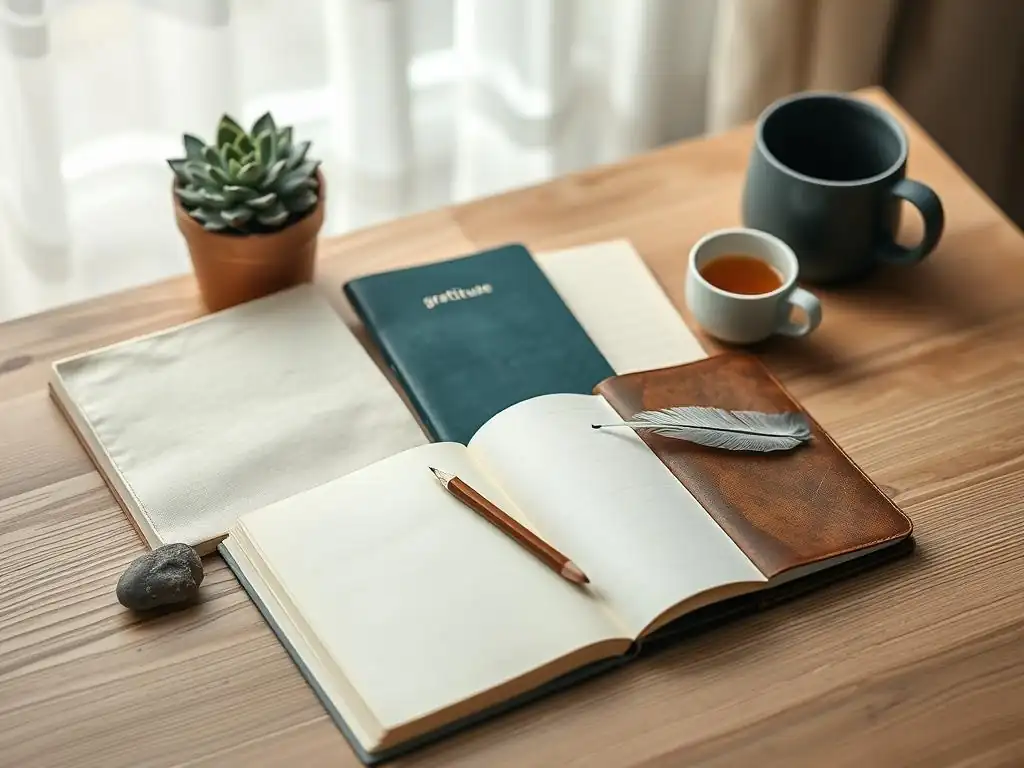
The world of journals is vast, offering different structures and focuses. Understanding these types can help you identify which approach best suits your current needs and how you prefer to engage with journaling for anxiety relief. Each type offers a unique pathway to introspection and emotional processing.
Choosing a type isn't a permanent decision; many people benefit from using different types of journals at different times or even concurrently. The key is finding a format that feels supportive and encourages consistency in your practice.
Gratitude Journals: Cultivating Positivity and Reducing Negative Thoughts
Gratitude journals focus specifically on identifying and listing things you are thankful for. This practice is particularly effective for anxiety because it actively shifts your focus away from worries and perceived lacks towards appreciation for the positive aspects of life, no matter how small. Consistently acknowledging good things can retrain the brain to notice positivity, counteracting the negative bias often amplified by anxiety.
Studies have shown that practicing gratitude can increase feelings of well-being and reduce symptoms of anxiety and depression. For instance, one common approach is listing three to five things you are grateful for each day. Over time, this simple practice can help build resilience and foster a more optimistic outlook, making it a powerful form of journaling for anxiety relief.
Guided Journals: Structured Prompts for Anxiety Management
Guided journals come with pre-written prompts, questions, or exercises designed to lead you through specific themes or therapeutic techniques. These can be incredibly helpful for individuals who feel overwhelmed by free-form writing or who are new to journaling. The structure provides a clear starting point and direction, reducing the pressure of a blank page.
Many guided journals for anxiety relief incorporate prompts based on cognitive behavioral therapy (CBT) or mindfulness principles. For example, they might ask you to identify negative thought patterns and challenge them, or guide you through body scan exercises written out on the page. This structured approach ensures that your journaling for anxiety relief is focused and intentional, directly targeting common anxiety-related challenges.
Free-Form Journals: Unleashing Creativity for Anxiety Relief
Free-form journaling involves writing whatever comes to mind without structure, rules, or judgment. This stream-of-consciousness approach allows for unfiltered emotional release and exploration. It's a space where you can dump all your worries, frustrations, and fears onto the page, providing a sense of catharsis.
This type of journaling is particularly useful for processing intense emotions or exploring complex situations where a specific prompt might feel limiting. The freedom to write about anything allows for unexpected insights to emerge. While it can feel intimidating initially, the lack of constraints in free-form writing is a powerful tool for authentic self-expression and emotional processing in journaling for anxiety relief.
Bullet Journals: A Customizable System for Anxiety and Productivity
Bullet journaling is a highly customizable system that combines elements of a planner, to-do list, notebook, and diary. While not exclusively for mental health, its flexible structure makes it adaptable for managing anxiety. Users create their own layouts, trackers, and logs, which can include mood trackers, anxiety triggers, coping strategies, or daily reflections alongside tasks and appointments.
The act of organizing thoughts and tasks in a bullet journal can reduce mental clutter, a common contributor to anxiety. Creating dedicated spreads for monitoring mental health patterns or practicing mindfulness exercises within the system provides a structured way to integrate journaling for anxiety relief into daily life. The blend of productivity and self-care makes it appealing for those who benefit from a highly organized approach.
Key Features to Consider When Choosing a Journal for Anxiety
Selecting the right journal involves considering several physical and structural features that can impact your writing experience and consistency. These elements contribute to how comfortable and inviting the journal feels, which is crucial for maintaining a regular journaling for anxiety relief practice.
Paying attention to these details during selection ensures that the journal becomes a tool you look forward to using, rather than another source of friction or frustration. The right fit can significantly enhance the benefits you gain from the process.
Size and Portability: Finding a Journal That Fits Your Lifestyle
The size of a journal affects where and when you can use it. A small, pocket-sized journal is highly portable, allowing you to jot down thoughts or process anxiety on the go, perhaps during a commute or a break at work. This accessibility can be vital for capturing fleeting thoughts or managing sudden moments of anxiety throughout the day.
Conversely, a larger journal might be better suited for dedicated sessions at home, offering more space for extensive writing, drawing, or incorporating other elements. Consider your daily routine and where you envision doing your journaling for anxiety relief. A journal that is easy to carry or fits comfortably in your preferred writing space is more likely to be used consistently.
Paper Quality: Ensuring a Smooth and Enjoyable Writing Experience
The quality of the paper might seem like a minor detail, but it significantly impacts the writing experience. Thin paper can lead to ink bleeding through or ghosting (where writing is visible from the other side), which can be distracting and frustrating. High-quality paper, typically thicker with a smooth finish, provides a more pleasant surface to write on, allowing pens to glide smoothly.
A positive tactile experience can make the act of journaling for anxiety relief more enjoyable and less of a chore. If you plan to use various types of pens or even markers, opting for paper designed to handle different inks without bleed-through is essential for maintaining a clean and inviting journal.
Binding Type: Durability and Ease of Use
The journal's binding affects its durability and how easily it lays flat. A spiral binding allows the journal to fold back on itself, taking up less space and making it easy to write on both sides of the page, which is convenient for many. However, spirals can sometimes get bent or snagged.
Perfect-bound or case-bound journals (like traditional books) offer a more sturdy and often aesthetically pleasing option. Look for bindings that allow the journal to lay relatively flat when open, as this makes writing near the spine much easier and more comfortable. A durable binding ensures your journal withstands regular use as you engage in journaling for anxiety relief.
Prompts and Structure: Balancing Guidance and Freedom
Some journals come with built-in prompts or a specific structure (like daily gratitude sections or mood trackers), while others are completely blank. Your preference for guidance versus freedom is a key consideration when choosing a journal for anxiety relief.
If you struggle with getting started or prefer a guided approach to specific mental health techniques, a journal with prompts or a clear structure can be highly beneficial. If you value unrestricted expression and want the flexibility to write about anything in any format, a blank notebook might be better. Many find a balance, perhaps using a guided journal for specific exercises and a separate free-form journal for general thoughts, maximizing the benefits of journaling for anxiety relief.
Top Recommended Journals for Anxiety Relief in 2024: A Comparative Analysis
Selecting a journal can be made easier by looking at popular options that have proven helpful for others managing anxiety. While the "best" journal is subjective, certain designs and formats are frequently recommended for their structure, prompts, or overall approach to well-being. Here's a look at a few often cited in the context of journaling for anxiety relief.
Keep in mind that availability and editions may vary, but the core concepts behind these journals remain relevant. Exploring their specific features can help you decide if their approach aligns with your needs.
"The 6-Minute Diary: For More Mindfulness, Productivity and Happiness" - A Detailed Review
"The 6-Minute Diary" is a structured journal designed for brief, daily entries. It dedicates space for morning and evening reflections, typically requiring only a few minutes each time. The morning section often includes prompts for gratitude, affirmations, and setting intentions for the day. The evening section focuses on positive experiences, challenges overcome, and self-improvement.
This journal's strength for journaling for anxiety relief lies in its brevity and focus on positivity. The gratitude practice helps counteract negative thought spirals, while affirmations can build self-compassion and confidence. The structured format makes it easy to maintain consistency, even on busy or anxious days, ensuring you integrate a moment of reflection without feeling overwhelmed. The limited writing space encourages concise, focused entries rather than extensive free-writing.
"Burn After Writing" - A Deep Dive
"Burn After Writing" takes a different approach, offering a series of provocative and deeply personal prompts designed to encourage raw, honest self-reflection. It asks questions about your past, present, and future, often pushing you to confront uncomfortable truths or explore aspects of yourself you might not have considered. The title itself suggests a focus on catharsis and letting go.
While not explicitly marketed for anxiety, its utility for journaling for anxiety relief comes from its ability to facilitate emotional processing and self-discovery. By prompting users to articulate deep-seated fears, regrets, or desires, it provides an outlet for emotions that might otherwise remain bottled up and contribute to anxiety. It's a journal best suited for those comfortable with intense introspection and who find relief in confronting difficult topics head-on.
"Good Days Start With Gratitude: A 52 Week Guide To Cultivate An Attitude Of Gratitude" - An Honest Opinion
"Good Days Start With Gratitude" is a straightforward gratitude journal designed for a year of practice. Each week typically includes space to list daily gratitudes and a weekly reflection. It is simple, repetitive (in a good way for habit building), and focuses solely on cultivating appreciation.
This journal is an excellent tool for journaling for anxiety relief specifically for those who want to focus on shifting their perspective towards positivity. Its simplicity is its strength; there are no complex prompts or extensive writing requirements, making it easy to stick with daily. By consistently focusing on what is good, even on difficult days, users can gradually reduce the emphasis on worries and fears that feed anxiety, building a more resilient mindset over 52 weeks.
Beyond the Journal: Complementary Tools for Anxiety Management

While the journal itself is the core tool for journaling for anxiety relief, incorporating complementary items and practices can enhance the experience and create a more holistic approach to managing anxiety. These additions can help set a calming environment, improve the physical act of writing, or integrate other helpful mindfulness techniques.
Creating a dedicated space and ritual around your journaling practice using these complementary tools can make the process more inviting and effective. They help signal to your mind and body that it's time to slow down and focus on self-care.
Pens and Pencils: Enhancing the Writing Experience
The choice of writing instrument can significantly impact the enjoyment of journaling. A pen that flows smoothly across the paper without skipping or scratching provides a more pleasant tactile experience. Finding a pen or pencil that feels comfortable in your hand and produces a line you like can make the act of writing less effortful and more enjoyable.
Experimenting with different types of pens (gel, rollerball, fountain) or pencils (mechanical, wood-cased) can help you discover what you prefer. Having a few reliable and pleasant writing tools dedicated solely to your journaling for anxiety relief can make each session feel like a small, comforting ritual.
Essential Oils for Anxiety: Creating a Calming Atmosphere
Incorporating aromatherapy into your journaling space can help create a calming environment conducive to introspection and relaxation. Certain essential oils are commonly associated with reducing stress and anxiety, such as lavender, chamomile, bergamot, or frankincense.
Using a diffuser or placing a drop of diluted oil on a tissue nearby can help set a peaceful mood before you begin writing. This sensory element can act as a cue, signaling your mind to transition into a state of calm focus, enhancing the benefits of journaling for anxiety relief by physically and mentally preparing you for the practice.
Meditation Apps: Integrating Mindfulness into Your Daily Routine
Meditation and journaling are highly complementary practices for managing anxiety. Meditation helps quiet the mind and cultivate present moment awareness, while journaling allows you to process the thoughts and feelings that arise. Using a meditation app before or after journaling can deepen the benefits of both.
Many apps offer guided meditations specifically for anxiety, stress reduction, or body scanning. A short meditation session can help you feel grounded and centered before you pick up your pen, making it easier to access your thoughts and emotions for journaling for anxiety relief. Alternatively, journaling after meditation can help you capture insights or feelings that arose during the practice.
Creating a Consistent Journaling Practice for Lasting Anxiety Relief
The true benefits of journaling for anxiety relief emerge from consistency. Like any skill or self-care practice, it requires dedication and patience. Establishing a regular routine can transform journaling from an occasional activity into a reliable tool for managing daily stress and long-term anxiety.
Building consistency involves setting realistic expectations, carving out dedicated time and space, and learning how to navigate the inevitable challenges that arise. It's okay if your practice isn't perfect every day; the goal is progress, not perfection.
Setting Realistic Goals and Expectations
When starting journaling for anxiety relief, avoid setting overly ambitious goals like writing for an hour daily. Begin with a manageable commitment, such as writing for five to ten minutes, or simply filling one page. This makes the practice feel less intimidating and more achievable, increasing the likelihood you'll stick with it.
Understand that not every journaling session will feel profound or immediately relieving. Some days you might just list tasks, and other days you might pour out deep emotions. Both are valid forms of journaling. Setting realistic expectations about what journaling is and isn't helps prevent discouragement and fosters a more sustainable practice.
Establishing a Dedicated Journaling Time and Space
Creating a consistent routine involves designating a specific time and place for your journaling for anxiety relief. Whether it's first thing in the morning with your coffee, during your lunch break, or before bed, choosing a regular time helps integrate the practice into your daily rhythm. Consistency in timing cues your brain that it's time to engage in this self-care activity.
Similarly, having a dedicated space – even if it's just a specific chair or corner of a table – can make the practice feel more intentional. Ensure this space is comfortable, relatively free from distractions, and has everything you need (journal, pen, maybe a calming element like a warm drink or essential oil diffuser). This ritualistic approach helps create a sense of calm and focus.
Overcoming Common Journaling Obstacles
It's common to encounter obstacles when trying to maintain a journaling practice. Writer's block, feeling like you have nothing to say, lack of time, or the belief that it's not "working" are frequent challenges. When faced with a blank page and anxiety, it can be tempting to give up.
To overcome these, try different approaches. If you have writer's block, use a prompt, draw, make a list, or simply write "I don't know what to write" repeatedly until something else emerges. If time is an issue, set a timer for just three minutes – often, once you start, you might continue longer. If you feel it's not helping, reread past entries to see if you can identify patterns or shifts you didn't notice in the moment. Remember that journaling for anxiety relief is a tool, and finding the best way to use it involves experimentation and perseverance.
Conclusion: Empowering Your Mind Care Journey Through Journaling
Choosing the right journal and committing to a consistent practice is a significant step in empowering your mind care journey, particularly when navigating anxiety. Journaling for anxiety relief offers a versatile and accessible method for processing emotions, gaining perspective, and cultivating self-awareness. Whether you opt for the structured guidance of a prompted journal, the freedom of a blank page, or the focused positivity of a gratitude log, the simple act of putting pen to paper can unlock profound benefits for your mental well-being.
By considering features like size, paper quality, and binding, and by exploring complementary tools, you can create a journaling experience that is not only effective but also enjoyable and sustainable. Remember to be patient and compassionate with yourself as you establish this new habit. Journaling for anxiety relief is a personal journey, and every entry, no matter how small, is a step towards greater peace and understanding. Embrace the process, listen to what your mind and heart need, and allow your journal to be a trusted companion on your path to healing and resilience.
Frequently Asked Questions
What are the key benefits of journaling for anxiety relief, as outlined in the Mind Care Guide?
Journaling helps you process your thoughts and feelings, providing a safe space to reduce stress and improve self-awareness. It's a practical tool for managing anxiety symptoms.
How does the Mind Care Guide suggest I choose the right journal for my needs?
The guide emphasizes considering your personal preferences regarding journal type (lined, blank, digital), size, and writing style. It also suggests focusing on what feels most comfortable and conducive to consistent journaling.
What types of journaling prompts does the Mind Care Guide recommend for those struggling with anxiety?
The guide suggests prompts focused on identifying triggers, challenging negative thoughts, and practicing gratitude. This helps reframe perspective and promotes emotional regulation.
Can digital journaling be as effective as traditional pen-and-paper journaling for anxiety, according to the Mind Care Guide?
Yes, the Mind Care Guide acknowledges that digital journaling can be just as effective, offering convenience and accessibility. The key is to find a format that suits your lifestyle and promotes consistent use.
How often should I engage in journaling for anxiety relief to see noticeable improvements, according to the Mind Care Guide?
The guide recommends consistent, even short, journaling sessions to cultivate a habit. While results vary, aiming for at least a few times a week can yield positive changes in managing anxiety over time.
Final Reflection: The Pen as a Pathway to Peace
The simple act of journaling is experiencing a powerful resurgence, and for good reason: in our increasingly frantic world, finding moments of calm and self-reflection is more crucial than ever. The right journal, as we've explored, can be the key to unlocking this inner peace, transforming a simple act of writing into a potent tool for anxiety relief. This isn't just a trend; it's a vital practice for navigating the complexities of modern life.
The journey through different journal types—from bullet journals to gratitude diaries to guided prompts—has highlighted the profound impact that mindful self-expression can have on our mental well-being. It's a journey I've personally experienced, finding solace and clarity in the quiet moments spent reflecting on my own thoughts and feelings. We write not what we know, but what we want to know.
- Flannery O'Connor. This quote resonates deeply, as the process of journaling isn't just about recording, but about uncovering hidden truths and understanding ourselves better.
Consider the journal you've chosen, or the one you're now considering. What will you write? What anxieties will you confront? What dreams will you nurture? Take the time to select a journal that truly speaks to you, one that feels comfortable and inviting. Let it become your sanctuary, your confidante, your pathway to a calmer, more centered you. Begin your journey today; the pen awaits.
Unlock Your Inner Peace: Start Journaling Today!
Thanks for taking the time to explore the world of journaling with us! We hope you gained valuable insights into choosing the perfect journal for your personal journey. Now it's time to put that knowledge into practice.
Here's how to get started:
- Find your perfect journal: Think about the style, size, and paper type that best suits your needs, and order one today! Remember, the perfect journal is the one you'll actually use.
- Share your experience: Tell us about your favorite journal discovery in the comments below! What makes it special?
- Join the Mind Care community: Find others on a similar journey and share tips in our online forum (link could be placed here if allowed).
What unique aspect of journaling are you most excited to explore?