
The Fear of Failure: Tackling Performance Anxiety in Competitive Sports

Welcome to Mind Care Guide, where your mental well-being takes center stage.
Feeling the crushing weight of pressure before a big game? You're not alone. Many athletes experience debilitating anxiety, but understanding it is the first step toward reclaiming your performance. Dive into our article on Competitive Sports Performance Anxiety Help and discover practical strategies to conquer your fears, boost your confidence, and unlock your full potential. Let's explore how to transform that anxiety into your competitive edge.
Overcoming Performance Anxiety in Competitive Swimming
- Understanding Performance Anxiety in Competitive Swimming
- Recognizing the Symptoms of Performance Anxiety in Swimmers
- The Detrimental Effects of Performance Anxiety on Swimming Performance
- Strategies for Overcoming Performance Anxiety
- Building Resilience and a Growth Mindset in Competitive Swimming
- Specific Tips for Managing Performance Anxiety Before, During, and After Competition
- The Role of Coaches and Parents in Supporting Swimmers with Performance Anxiety
- Resources for Swimmers Struggling with Performance Anxiety
- Conclusion: Empowering Swimmers to Thrive Under Pressure
-
Frequently Asked Questions
- What are the main symptoms of performance anxiety in competitive sports?
- How does the fear of failure contribute to performance anxiety in athletes?
- What are some practical strategies for managing competitive sports performance anxiety?
- Where can athletes find professional competitive sports performance anxiety help?
- How can coaches and parents support athletes struggling with performance anxiety?
- Final Reflection: Conquering the Inner Critic in Competitive Sports
- Unleash Your Peak Performance: Conquer Performance Anxiety
Understanding Performance Anxiety in Competitive Swimming
Defining Performance Anxiety in Swimmers
Performance anxiety, often referred to as stage fright or competitive stress, is a specific type of anxiety characterized by intense nervousness and fear related to performing a task or activity, especially in a competitive setting. For swimmers, this manifests as significant distress before, during, or even after a race or important training session. It's more than just pre-race jitters; it's a debilitating fear that can interfere with a swimmer's ability to execute skills and strategies they have mastered in practice.
This anxiety stems from a fear of failure, judgment, or not meeting expectations – whether those are their own, their coach's, or their parents'. It's a response to the perceived pressure of competition, where the stakes feel high and the outcome seems critical. While a certain level of arousal can be beneficial for performance, performance anxiety crosses the line into a detrimental state that hinders optimal functioning and can significantly impact a swimmer's experience and long-term engagement with the sport.
The Psychological Impact of Competition on Swimmers
Competitive swimming places unique psychological demands on athletes. Swimmers often train for months or years for events that last mere minutes or even seconds. This intense focus on brief, high-stakes moments, combined with the individual nature of racing (even in a team setting), can amplify feelings of vulnerability and pressure. The constant pursuit of personal best times (PBs) and qualifying standards creates an environment where performance is constantly measured, compared, and judged.
The psychological landscape includes managing expectations, handling setbacks, dealing with intense training loads, and maintaining motivation through monotonous practices. The pressure to perform can lead to significant stress, impacting a swimmer's self-esteem, sleep patterns, and overall mental well-being. For some, this pressure culminates in performance anxiety, making the very environment they once loved feel overwhelming and threatening.
Identifying the Root Causes of Swimming Performance Anxiety
The roots of performance anxiety in swimming are multifaceted. A primary cause is often a strong focus on outcome rather than process. Swimmers who tie their self-worth solely to winning, achieving a specific time, or qualifying for a higher level meet are more susceptible to anxiety when these outcomes feel uncertain or threatened. Past negative experiences, such as a poor performance in a crucial race or receiving harsh criticism, can also plant seeds of fear that grow into significant anxiety.
Another significant factor is the perception of high stakes. If a swimmer believes their future opportunities (like college scholarships or national team selection) hinge entirely on a single performance, the pressure becomes immense. Personality traits, such as perfectionism or a tendency towards worry, can also predispose some individuals to performance anxiety. Additionally, external pressures from coaches, parents, or peers, whether intended or not, can exacerbate a swimmer's internal fears about not being "good enough."
Distinguishing Between Healthy Pressure and Debilitating Anxiety
It's important to differentiate between the natural excitement and healthy pressure that can enhance performance and the debilitating grip of performance anxiety. Healthy pressure often manifests as increased energy, focus, and a sense of anticipation before a race. It can sharpen reflexes and improve concentration, operating within what's known as the optimal arousal zone – a state where physical and mental readiness peak. This feeling is often described as being "amped up" or having positive energy.
In contrast, debilitating anxiety is characterized by overwhelming fear, excessive worry, and physical symptoms that hinder rather than help. Instead of feeling energized, the swimmer feels paralyzed or out of control. Their focus narrows excessively on potential negative outcomes, and physical symptoms like nausea or muscle tension detract from their ability to perform. While healthy pressure is motivating and manageable, debilitating anxiety is distressing and interferes with the swimmer's ability to perform skills they are capable of.
Recognizing the Symptoms of Performance Anxiety in Swimmers
Physical Symptoms of Performance Anxiety
Performance anxiety can manifest through a range of physical symptoms as the body's fight-or-flight response is activated. Before a race, a swimmer might experience a rapid heart rate, shortness of breath, or a feeling of tightness in the chest. Shaking or trembling, particularly in the hands or legs, is common, making simple tasks like putting on goggles difficult.
Other physical signs include a dry mouth, excessive sweating, cold hands or feet, or gastrointestinal distress such as nausea, stomach cramps, or frequent urges to use the bathroom. During the race itself, adrenaline spikes might initially occur, but anxiety can lead to muscle tension that feels like stiffness or heaviness, hindering stroke efficiency and power. Swimmers might also find it difficult to regulate their breathing, leading to a feeling of being out of air sooner than expected.
Emotional and Behavioral Manifestations of Anxiety in Swimming
Emotionally, swimmers experiencing performance anxiety often report intense feelings of dread, fear, and worry leading up to competition. They might feel irritable, restless, or have difficulty sleeping in the nights before a big meet. During the competition, they may appear withdrawn, quiet, or unusually nervous. Some might become excessively self-critical after a race, regardless of the actual outcome.
Behaviorally, this anxiety can lead to avoidance. A swimmer might start missing practices, finding excuses not to compete, or expressing a sudden loss of interest in the sport. They might exhibit uncharacteristic behaviors like pacing excessively, fidgeting, or withdrawing from teammates. Some might develop pre-race rituals that become compulsions, feeling that their performance depends entirely on these actions, which is another sign of anxiety manifesting behaviorally.
Cognitive Signs of Fear of Failure in Swimmers
Cognitively, performance anxiety is characterized by a barrage of negative and intrusive thoughts. Swimmers might constantly predict negative outcomes ("I'm going to swim terribly," "I'm going to let everyone down"). They might ruminate on past mistakes or failures, replaying them endlessly in their minds. Self-doubt is rampant, leading to thoughts like "I'm not good enough" or "All my training wasn't enough."
Focus and concentration become significantly impaired. Instead of thinking about race strategy or technique cues, the swimmer's mind is consumed by worry and fear. They might struggle to concentrate during warm-up or listen to their coach's instructions. Decision-making can also be affected, leading to hesitation or poor choices during the race itself, such as misjudging turns or walls.
Self-Assessment Tools for Identifying Performance Anxiety
For swimmers seeking competitive sports performance anxiety help, recognizing the signs in themselves is the first step. Several self-assessment tools can provide insight, though they are not substitutes for professional diagnosis. Questionnaires like the Sport Anxiety Scale-2 (SAS-2) or the Competitive State Anxiety Inventory-2 (CSAI-2) are commonly used in sports psychology research and practice to measure cognitive anxiety, somatic anxiety, and self-confidence specifically related to competition.
While formal psychological inventories require interpretation by a professional, a swimmer can informally assess their feelings by keeping a journal before and after practices and meets. Noting physical sensations, thoughts, and emotional states can reveal patterns of anxiety. Reflecting honestly on questions like "Do I dread meets?" "Do I sleep poorly before competitions?" "Do negative thoughts consume me before I race?" can help a swimmer identify if they are struggling with performance anxiety.
The Detrimental Effects of Performance Anxiety on Swimming Performance
How Anxiety Impairs Focus and Concentration
Peak swimming performance demands acute focus and concentration. A swimmer needs to be present in the moment, paying attention to their body, their race plan, and external cues like the starting signal or the pace of competitors. Performance anxiety shatters this focus. The anxious mind is pulled away from the task at hand, instead fixating on catastrophic predictions or self-critical evaluations.
This cognitive distraction means the swimmer is not fully engaged in their race. They might miss crucial cues, forget parts of their strategy, or become overwhelmed by external stimuli. For example, instead of focusing on maintaining a strong kick off a turn, an anxious swimmer might be preoccupied with the fear of finishing last, causing them to execute the turn poorly or lose momentum. This inability to concentrate directly undermines the execution of well-practiced skills.
The Impact of Anxiety on Stroke Technique and Coordination
Swimming is a sport that requires precise technique and seamless coordination between limbs and breathing. Anxiety directly impacts the physiological systems that govern these movements. The increased muscle tension associated with the fight-or-flight response can make muscles feel stiff and heavy, disrupting the fluidity and power of the stroke.
For instance, tight shoulders can restrict range of motion, impacting the reach and pull of the freestyle or backstroke. Tense legs can hinder the effectiveness of the kick, reducing propulsion. Coordination suffers as the mind-body connection is disrupted by worry. A swimmer might rush their stroke, leading to inefficient movements, or struggle with timing their breath, resulting in oxygen deprivation and increased fatigue. This breakdown in technique can add crucial seconds to a race time and increase the risk of injury.
The Cycle of Negative Thinking and Self-Doubt
Performance anxiety often traps swimmers in a vicious cycle of negative thinking and self-doubt. A fearful thought ("What if I don't make my time?") leads to physical symptoms (increased heart rate, muscle tension). These physical sensations are then interpreted negatively ("My body feels heavy, I must not be ready"), which reinforces the initial fearful thought and generates more self-doubt ("I knew I couldn't do this").
This cycle is incredibly damaging. The swimmer's internal dialogue becomes overwhelmingly critical, eroding confidence and making it harder to access the mental resources needed for peak performance. This pattern can become a self-fulfilling prophecy: the fear of failure leads to anxiety, which impairs performance, which then confirms the swimmer's negative beliefs about their ability, further intensifying anxiety for the next competition.
Long-Term Consequences of Untreated Performance Anxiety
Leaving performance anxiety untreated can have significant long-term consequences for a swimmer's athletic career and overall well-being. Chronically high levels of stress and anxiety can lead to burnout, causing the swimmer to lose motivation, enthusiasm, and eventually drop out of the sport entirely. This represents a loss not only of athletic potential but also of the many positive benefits competitive swimming offers, such as physical fitness, discipline, and camaraderie.
Beyond the immediate impact on performance and participation, untreated anxiety can generalize to other areas of life. A swimmer who constantly struggles with performance anxiety in the pool might find themselves experiencing similar fears in academic settings, social situations, or future career challenges. Addressing competitive sports performance anxiety help early is crucial to prevent these wider impacts and support the athlete's holistic development.
Strategies for Overcoming Performance Anxiety

Cognitive Restructuring Techniques for Swimmers
Cognitive restructuring is a powerful set of techniques aimed at identifying and changing negative or irrational thought patterns that contribute to performance anxiety. The core idea is that by changing how you think about competition and your abilities, you can change how you feel and perform. This involves actively challenging distorted thoughts and replacing them with more realistic and helpful perspectives.
For swimmers, this could mean recognizing thoughts like "If I don't win, I'm a failure" as an example of all-or-nothing thinking and actively working to modify it. It's about gaining control over the internal dialogue that often runs unchecked and fuels anxiety. Consistent practice of these techniques helps build mental resilience and shifts the focus from uncontrollable outcomes to controllable processes.
Challenging Negative Thoughts and Beliefs
The first step in challenging negative thoughts is to become aware of them. Swimmers can learn to catch themselves when they are having anxious or self-defeating thoughts. Once identified, the next step is to question their validity. Is it really true that one race defines your entire worth? What evidence supports or refutes this thought?
For example, if a swimmer thinks, "I always choke under pressure," they can look for evidence to the contrary: times they performed well in practice, successful races in the past, or instances where they overcame challenges. They can also consider alternative explanations: maybe a past poor performance was due to illness, fatigue, or simply an off day, not an inherent inability to handle pressure. This process of questioning helps weaken the power of negative beliefs.
Developing Realistic and Positive Self-Talk
Replacing negative thoughts involves developing a repertoire of realistic and positive self-talk. This isn't about unrealistic affirmations, but rather about using encouraging, process-oriented statements. Instead of "Don't mess up," a swimmer can think, "Focus on strong walls" or "Trust your training." Instead of "I'm so slow," try "Maintain your tempo."
Positive self-talk can also be used to reinforce confidence gained in training: "I've practiced this thousands of times," or "I am prepared." Developing a few key phrases that resonate personally and practicing them regularly, especially during challenging moments in practice, makes them more accessible during competition. This is a fundamental part of finding competitive sports performance anxiety help.
Focusing on Process Goals vs. Outcome Goals
A crucial shift for managing performance anxiety is moving the primary focus from outcome goals (like winning or achieving a specific time) to process goals (like executing a perfect turn, maintaining stroke rate, or sticking to a race plan). While outcome goals are motivating, they are not entirely within a swimmer's control (factors like competitors' performance or pool conditions play a role). Process goals, however, are directly controllable.
By concentrating on executing the steps required for a good performance, swimmers stay present in the moment and feel more in control. For instance, instead of fixating on needing a 58-second 100-meter freestyle, the swimmer focuses on having a strong push-off, maintaining a high elbow catch, and hitting their target stroke count per length. Achieving these process goals often leads to achieving the desired outcome goals, but the focus remains on the controllable actions.
Relaxation and Mindfulness Techniques for Swimmers
Relaxation and mindfulness techniques are invaluable tools for managing the physical and mental symptoms of performance anxiety. They help to calm the nervous system, reduce muscle tension, and improve focus and presence in the moment. Regular practice makes these techniques more effective when needed in high-pressure situations.
Incorporating these practices into a daily routine, not just before competitions, builds a stronger foundation for managing stress. They provide swimmers with concrete skills they can deploy to regain composure when anxiety begins to surface. This is a key component of competitive sports performance anxiety help.
Deep Breathing Exercises for Calming Nerves
Simple, controlled breathing is one of the most immediate ways to activate the body's relaxation response. When anxious, breathing becomes shallow and rapid. Deep breathing reverses this. A common technique is diaphragmatic breathing: breathing deeply into the belly, allowing it to expand, holding for a moment, and exhaling slowly.
A specific technique like box breathing (inhale for a count of four, hold for four, exhale for four, hold for four) can be very effective in regulating the nervous system. Practicing deep breathing for a few minutes daily, and specifically before warm-up or behind the blocks, can significantly reduce physical symptoms like rapid heart rate and shaking, helping a swimmer feel more grounded and in control.
Progressive Muscle Relaxation for Reducing Tension
Performance anxiety often manifests as physical tension. Progressive muscle relaxation involves systematically tensing and then releasing different muscle groups in the body. This process helps swimmers become more aware of where they hold tension and provides a method for releasing it.
Starting with the feet and working up the body (calves, thighs, abdomen, back, hands, arms, shoulders, neck, face), the swimmer tenses each group for about 5-10 seconds, then completely releases, noticing the difference between tension and relaxation. Practicing this regularly, perhaps before sleep or after a tough practice, helps swimmers learn to consciously relax their muscles, which is vital for maintaining fluid technique in the water.
Mindfulness Meditation for Enhanced Focus and Presence
Mindfulness is about paying attention to the present moment without judgment. For a swimmer, this means being fully engaged in the warm-up, the feeling of the water, the instructions from the coach, or the sensations in their body during a race, rather than being lost in worried thoughts about the future or past.
Short mindfulness meditations, focusing on breath, body sensations, or sounds, can train the mind to stay present. Even practicing mindfulness during everyday activities, like eating or walking, strengthens this ability. In swimming, mindfulness can help a swimmer stay focused on their race plan lap by lap, turn by turn, rather than being overwhelmed by the entire distance or the presence of competitors. This improved presence is crucial for optimal execution under pressure.
Visualization and Mental Imagery for Improved Performance
Visualization, or mental imagery, is a technique where athletes create detailed mental pictures of themselves performing successfully. This technique engages the same neural pathways as physical practice and can significantly enhance confidence and prepare the mind for competition. It's a powerful tool in any competitive sports performance anxiety help toolkit.
Regular mental rehearsal helps make the desired performance feel more familiar and achievable, reducing the fear of the unknown or the fear of failure. By vividly imagining success, swimmers can build confidence and reinforce positive expectations.
Creating Positive Mental Rehearsals
Swimmers should find a quiet place to close their eyes and vividly imagine their race from start to finish. This includes seeing themselves perform each part of the race perfectly – a strong start, powerful strokes, efficient turns, and a solid finish. It's important to engage all senses: feel the water, hear the crowd or the sound of their own breathing, smell the chlorine, and feel the muscles working efficiently.
These mental rehearsals should be positive and detailed. Imagine the feeling of hitting the water cleanly, the rhythm of the stroke, the precision of the turn, and the exhilaration of touching the wall having executed the plan. Consistency in this practice helps solidify the desired performance in the mind.
Visualizing Success and Overcoming Challenges
Beyond just visualizing perfect execution, it's helpful to also visualize successfully navigating potential challenges. What if the start isn't perfect? Imagine recovering smoothly. What if you feel tired mid-race? Visualize pushing through, maintaining technique, and drawing strength from your training.
This type of visualization prepares the swimmer to handle adversity during the actual race, making unexpected difficulties feel less daunting and anxiety-provoking. By mentally practicing overcoming challenges, the swimmer builds confidence in their ability to adapt and persevere, reducing the fear associated with things going wrong.
Using Imagery to Enhance Confidence and Motivation
Mental imagery isn't just for race execution; it can also be used to build overall confidence and motivation. Swimmers can visualize themselves succeeding in past races, achieving PBs, or handling pressure effectively. This reinforces positive memories and feelings of competence.
Imagining future successes, like achieving a qualifying time or performing well at a championship meet, can also boost motivation and make goals feel more attainable. By consistently feeding the mind positive images of success and competence, swimmers can counteract the negative self-talk and doubt fueled by performance anxiety.
Seeking Professional Help for Sports Performance Anxiety
While self-help strategies are valuable, sometimes performance anxiety is severe enough to warrant professional intervention. Seeking help from a qualified mental health professional or a sports psychologist is a sign of strength and a crucial step for many athletes to truly overcome debilitating anxiety.
Professionals can provide personalized strategies, diagnose underlying issues, and offer therapeutic support that goes beyond general self-help advice. For competitive sports performance anxiety help that is persistent and significantly impacting performance and well-being, professional guidance is highly recommended.
When to Consider Therapy or Counseling
Swimmers should consider therapy or counseling if their performance anxiety is:
- Significantly impacting their ability to train or compete.
- Causing significant distress outside of swimming (e.g., affecting sleep, mood, relationships).
- Leading to avoidance behaviors (missing practices or meets).
- Accompanied by symptoms of depression or other mental health concerns.
- Not improving with self-help strategies.
- Causing physical symptoms that interfere with daily life or training.
A professional can help identify the specific triggers and root causes of the anxiety and develop a tailored treatment plan.
Finding a Sports Psychologist or Mental Performance Coach
A sports psychologist or mental performance coach specializes in the unique psychological challenges faced by athletes. They understand the demands of competitive environments and can provide targeted strategies for managing pressure, improving focus, building confidence, and overcoming performance blocks like anxiety.
Resources like national sports psychology organizations or university athletic departments can often provide referrals. It's important to find a professional with experience working with athletes, ideally swimmers, and to ensure they are properly credentialed. An initial consultation can help determine if the professional is a good fit.
Available Treatment Options for Anxiety in Swimmers
Treatment for performance anxiety in swimmers may involve several approaches. Cognitive Behavioral Therapy (CBT) is a common and effective therapy that helps individuals identify and change negative thought patterns and behaviors contributing to anxiety. Exposure therapy, which involves gradually exposing the swimmer to anxiety-provoking situations (like simulating race conditions) in a controlled environment, can also be helpful.
Other approaches may include Acceptance and Commitment Therapy (ACT), which focuses on accepting difficult thoughts and feelings while committing to behaviors aligned with one's values, and Eye Movement Desensitization and Reprocessing (EMDR), sometimes used for anxiety linked to specific traumatic past performances. In some cases, medication may be considered as a short-term aid under strict medical supervision, but this is less common for performance anxiety alone and is typically not the primary solution.
Building Resilience and a Growth Mindset in Competitive Swimming
Beyond specific techniques for managing anxiety symptoms, building overall psychological resilience and adopting a growth mindset are fundamental to long-term success and well-being in competitive swimming. These qualities help swimmers navigate the inevitable challenges, setbacks, and pressures of the sport more effectively.
A resilient swimmer bounces back from disappointment, and a swimmer with a growth mindset sees challenges as opportunities to learn and improve, rather than threats to their self-worth. These are crucial mindsets for any athlete seeking competitive sports performance anxiety help.
Embracing Failure as a Learning Opportunity
In competitive swimming, not every race will be a personal best, and losses are part of the journey. Viewing these moments not as failures that define you, but as valuable learning opportunities, is key to building resilience. What can be learned from a poor start? What does a slow turn indicate about technique that needs practice?
Coaches and swimmers can analyze races not just by the time on the clock, but by the execution of the race plan and the effort given. Shifting the focus from "I failed" to "What can I learn from this?" transforms setbacks into stepping stones. This perspective reduces the fear associated with not meeting expectations because the focus is on growth, not just the outcome.
Developing a Strong Sense of Self-Worth Beyond Athletic Achievements
For many competitive swimmers, their identity can become tightly intertwined with their performance in the pool. This makes them particularly vulnerable to performance anxiety when their athletic achievements feel threatened. Developing a strong sense of self-worth that is independent of swimming results is vital for psychological health.
Encouraging swimmers to cultivate other interests, relationships, and aspects of their identity outside of the sport helps build a more robust sense of self. Recognizing their value as a person, a friend, a student, or a family member, separate from their fastest race time, provides a stable foundation that isn't shaken by the inevitable ups and downs of athletic competition.
Cultivating a Supportive Team Environment
A positive and supportive team environment can act as a buffer against performance anxiety. Knowing that you are part of a team, that your teammates and coaches support you regardless of the outcome, reduces the feeling of isolation and the pressure to perform solely for external validation.
Teammates can offer encouragement, share coping strategies, and provide a sense of belonging. Coaches can foster this environment by emphasizing teamwork, effort, and mutual support over individual results, and by creating a culture where it's safe to discuss struggles like anxiety. A strong team dynamic reminds swimmers they are not alone in facing the pressures of competition.
Setting Realistic Expectations and Goals
Unrealistic expectations are a major driver of performance anxiety. Setting goals that are too high, too rigid, or based solely on achieving outcomes outside of one's control sets a swimmer up for disappointment and anxiety. Learning to set realistic, achievable goals is crucial.
This involves setting both long-term aspirations and shorter-term, process-oriented goals that align with training efforts. Working with a coach to set incremental goals based on current ability and training progress helps make the path forward feel manageable and reduces the pressure associated with feeling like you must make massive jumps in performance immediately. Celebrating small victories along the way reinforces progress and builds confidence.
Specific Tips for Managing Performance Anxiety Before, During, and After Competition
Managing performance anxiety is an ongoing process, but there are specific strategies swimmers can employ at different stages of competition to keep nerves in check and maintain focus.
Pre-Competition Strategies: Preparing for the Pressure
- Stick to your routine: Maintain consistent sleep patterns, nutrition, and pre-meet rituals. Predictability is calming.
- Pack early: Avoid last-minute rushing, which increases stress.
- Warm-up effectively: Use warm-up time to connect with the water and your body, not just go through the motions. Integrate deep breathing or mindfulness.
- Review process goals: Focus on 1-2 key technical or strategic points for your race, not the outcome.
- Listen to calming music: Create a pre-race playlist that helps you relax or feel focused, not over-amped.
- Connect with teammates: Share a laugh, offer encouragement. This reminds you of the supportive environment.
- Limit exposure to stressors: Avoid conversations focused intensely on rankings, times, or outcomes.
- Practice visualization: Run through your successful race mentally.
In-Competition Techniques: Staying Calm and Focused
- Use breathing techniques: Take slow, deep breaths behind the blocks or during longer events at turns.
- Focus on the present moment: Pay attention to the feel of the water, the rhythm of your stroke, or key technical cues.
- Use positive self-talk: Repeat your chosen power words or phrases (e.g., "Stay long," "Strong finish").
- Refocus after mistakes: If a turn or start isn't perfect, acknowledge it briefly and immediately shift focus back to the next part of the race plan. Don't dwell.
- Body scan: Briefly check in with your body to identify and release tension in shoulders, jaw, or hands.
- Block out distractions: Mentally filter out excessive crowd noise or the presence of competitors in other lanes.
- Break the race down: For longer races, focus on completing one length, one turn, or one segment at a time rather than thinking about the entire distance.
Post-Competition Strategies: Evaluating Performance and Learning from Experiences
- Focus on effort and process: Evaluate how well you executed your race plan and the effort you gave, not just the time or place.
- Identify positives: Even in a disappointing race, find things that went well or improvements from practice.
- Analyze constructively: With your coach, discuss what can be learned. What technique points need work? What part of the race strategy could be adjusted?
- Avoid excessive self-criticism: Be kind to yourself. One race does not define you.
- Connect with support system: Talk to coaches, parents, or teammates about how you feel.
- Journal: Write down your thoughts, feelings, and lessons learned.
- Shift focus: Engage in activities outside of swimming to decompress and maintain perspective.
- Plan for the future: Use the lessons learned to set goals for the next practice or competition.
The Role of Coaches and Parents in Supporting Swimmers with Performance Anxiety
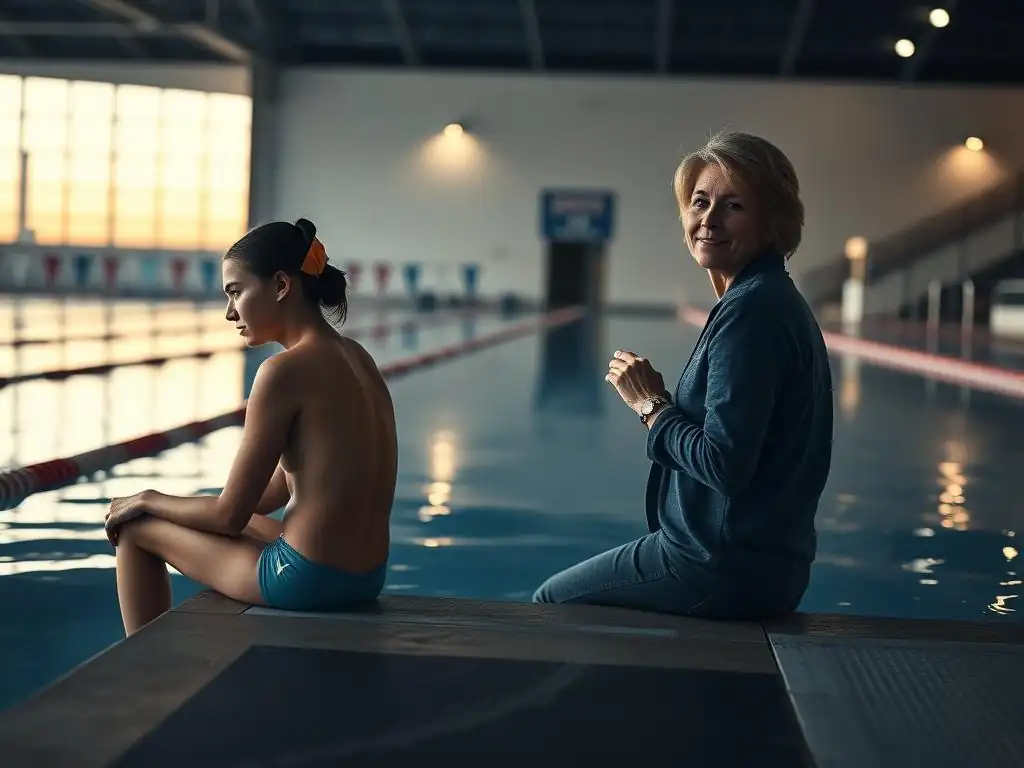
Coaches and parents play a critical role in shaping a swimmer's experience and their susceptibility to performance anxiety. Their attitudes, expectations, and communication styles can either exacerbate or alleviate the pressure felt by young athletes. Providing competitive sports performance anxiety help is a team effort.
Creating a Positive and Supportive Environment
Coaches and parents should prioritize creating an environment where swimmers feel safe, valued, and supported, regardless of their performance outcomes. This means emphasizing effort, improvement, and the joy of participation over winning or achieving specific times. Celebrating personal bests and strong efforts, even if they don't result in a medal, reinforces the value of the process.
Offering unconditional support and reassurance helps swimmers feel less pressure to constantly prove themselves. Simple phrases like "I'm proud of you for trying your best" or "I love watching you swim" can be incredibly powerful in building a swimmer's intrinsic motivation and reducing fear of judgment.
Avoiding Pressure and Unrealistic Expectations
While it's natural for coaches and parents to have hopes for their swimmers, imposing excessive pressure or setting unrealistic expectations can be detrimental. This can manifest in various ways: constantly talking about times or rankings, comparing the swimmer to others, expressing disappointment after a poor race, or making participation conditional on performance.
Coaches should focus on setting appropriate training goals and meet expectations based on the swimmer's development stage. Parents should avoid living vicariously through their child's sport and ensure their support feels empowering, not burdening. Open communication about the swimmer's feelings and fears is essential to avoid inadvertently increasing anxiety.
Encouraging Open Communication and Seeking Help When Needed
Coaches and parents should foster an environment where swimmers feel comfortable talking about their feelings, including their anxieties and fears. Creating space for these conversations without judgment helps normalize the experience of performance anxiety.
If a swimmer is showing signs of significant anxiety, coaches and parents should work together to encourage them to seek professional help. This might involve helping them find a sports psychologist, offering to attend initial appointments with them, or simply validating their feelings and supporting their decision to get help. Recognizing that performance anxiety is a real issue that requires attention is the first step in ensuring the swimmer receives the competitive sports performance anxiety help they need.
Resources for Swimmers Struggling with Performance Anxiety
Navigating performance anxiety can feel isolating, but there are many resources available to provide competitive sports performance anxiety help and guidance for swimmers and their support networks.
Books, Articles, and Websites on Sports Psychology and Mental Performance
Numerous books and articles offer valuable insights and practical strategies for athletes dealing with mental blocks and performance anxiety. Titles by renowned sports psychologists often cover topics like building confidence, managing pressure, using visualization, and developing mental toughness.
Websites dedicated to sports psychology or athlete mental health provide accessible information, tips, and exercises. These resources can be a great starting point for swimmers and their families to understand performance anxiety better and learn initial coping mechanisms.
Organizations Offering Support and Guidance to Swimmers
Several organizations are dedicated to athlete well-being and mental health. National governing bodies for swimming may offer resources or links to sports psychology professionals. Organizations focused on mental health in sports often provide educational materials, workshops, and support networks.
Exploring resources provided by reputable sports or mental health organizations can lead swimmers to credible information and potential avenues for support. These bodies often advocate for greater awareness and support for athlete mental health issues, including performance anxiety.
List of Mental Health Professionals Specializing in Sports Anxiety
Finding a mental health professional with experience in sports psychology is crucial for targeted competitive sports performance anxiety help. While a specific list is not possible here, swimmers can search for licensed psychologists, therapists, or counselors who list "sports psychology," "performance enhancement," or "athlete mental health" as their specialties.
Professional organizations for psychologists and counselors often have searchable directories where you can filter by specialization and location. University athletic departments or local sports clubs may also have established relationships with sports psychologists they can recommend. Don't hesitate to ask for recommendations and inquire about a professional's experience with athletes or performance-related issues during an initial contact.
Conclusion: Empowering Swimmers to Thrive Under Pressure
Performance anxiety is a common but significant challenge for competitive swimmers. It's a manifestation of the fear of failure and the intense pressure inherent in striving for excellence in a highly measured sport. Recognizing the physical, emotional, and cognitive symptoms is the first step towards managing it effectively.
Fortunately, competitive sports performance anxiety help is readily available through a combination of self-help techniques, a supportive environment, and professional guidance. By implementing strategies like cognitive restructuring, relaxation, visualization, and focusing on process goals, swimmers can learn to manage their anxiety and regain control.
Building resilience, fostering a growth mindset, and developing self-worth beyond athletic results provide a strong foundation for long-term well-being. With the right tools and support from coaches and parents, swimmers can not only overcome the fear of failure but learn to thrive under pressure, finding joy and fulfillment in their sport while achieving their full potential.
Frequently Asked Questions
What are the main symptoms of performance anxiety in competitive sports?
Symptoms vary, but often include excessive worrying, difficulty sleeping, and physical symptoms like sweating or a racing heart. It can significantly impact an athlete's ability to perform.
How does the fear of failure contribute to performance anxiety in athletes?
The fear of failure creates intense pressure and self-doubt. This leads to a cycle of anxiety that hinders focus and impacts athletic performance.
What are some practical strategies for managing competitive sports performance anxiety?
Employ relaxation techniques like deep breathing, practice positive self-talk, and focus on the process rather than solely on the outcome.
Where can athletes find professional competitive sports performance anxiety help?
Resources include sports psychologists, mental performance coaches, and therapists specializing in anxiety management. Mind Care Guide also offers helpful information.
How can coaches and parents support athletes struggling with performance anxiety?
By fostering a supportive environment, emphasizing effort and improvement over winning, and encouraging athletes to seek professional help when needed.
Final Reflection: Conquering the Inner Critic in Competitive Sports
The fear of failure isn't just a hurdle; it's a chasm many athletes must leap to reach their full potential. This article has explored the multifaceted nature of performance anxiety in competitive sports, from its physiological manifestations to the crucial role of mental strategies in overcoming it. Understanding these complexities is not merely academic; it's essential for athletes striving for peak performance and lasting well-being.
The impact of performance anxiety extends far beyond the playing field, influencing athletes' self-esteem, relationships, and even their long-term commitment to their sport. It's a pervasive issue, affecting athletes at all levels, from youth leagues to professional competitions. The pressure to succeed, the weight of expectations, and the fear of letting oneself and others down can be crippling. The greatest barrier to success is the fear of failure.
This simple statement encapsulates the core struggle many athletes face, a struggle that requires courage, self-compassion, and a willingness to confront deeply ingrained beliefs.
Now, it's your turn. Consider the ways in which performance anxiety might be affecting you, or someone you know. What strategies discussed in this article resonate most strongly with your experience? Perhaps it's time to implement a mindfulness practice, seek professional guidance, or simply reframe your perspective on failure. Remember, the journey to conquering performance anxiety is a personal one, but with self-awareness, consistent effort, and the right support, you can transform fear into fuel, and unlock your true athletic potential. Embrace the challenge, and let your inner strength shine.
Unleash Your Peak Performance: Conquer Performance Anxiety
Thanks for taking the time to explore the challenges of performance anxiety in competitive sports! We hope you gained valuable insights into understanding and overcoming this common hurdle. Now it's time to put that knowledge into action.
Here's how you can take the next step:
- Develop your personalized pre-game routine: Identify specific strategies mentioned in the article that resonate with you and create a consistent routine to build confidence and manage anxiety before competition. This is your primary focus for immediate improvement.
- Share your experiences: Connect with other athletes facing similar challenges. Discuss your strategies and insights in the comments below – your experiences could help others!
- Explore visualization techniques: Try incorporating visualization exercises into your training. This surprisingly effective technique can significantly reduce pre-performance anxiety.
Ready to transform your approach to competition and unleash your full potential? What's one small step you can take today to build your confidence and prepare for your next challenge?