
Sliding Scale Online Therapy: Accessing Care Based on Your Income


Welcome to Mind Care Guide, your compassionate companion on the path to mental well-being.
Feeling overwhelmed by the cost of therapy? You're not alone. Many believe effective mental health care is out of reach, but what if it wasn't? Dive into our guide on affordable online therapy income solutions and discover how sliding scale online therapy can provide access to the support you deserve, tailored to your financial circumstances. Let's explore the possibilities together and unlock a brighter, healthier you.
Sliding Scale Online Therapy: Accessing Care Based on Your Income - Mind Care Guide
- Understanding Affordable Online Therapy Options & Income-Based Pricing
-
Finding Affordable Online Therapy Based on Income: A Comprehensive Guide
- Step 1: Assessing Your Needs and Defining Your Budget for Online Therapy
- Step 2: Identifying Online Therapy Platforms Offering Sliding Scale Fees and Financial Aid
- Step 3: Understanding the Eligibility Requirements for Sliding Scale Rates
- Step 4: Comparing Therapists and Their Specializations Within Your Budget
- Step 5: Scheduling a Consultation and Discussing Your Financial Situation
- Evaluating Online Therapy Platforms Offering Affordable Mental Health Care
- Maximizing Your Access to Low-Cost Online Therapy: Tips and Strategies
- Making an Informed Decision: Choosing the Right Affordable Online Therapy Provider for You
- Beyond Sliding Scales: Other Avenues for Affordable Mental Healthcare
-
Frequently Asked Questions
- What is sliding scale online therapy, and how does it relate to affordable online therapy income?
- How can I find sliding scale online therapy options?
- What kind of proof of income might I need to provide to qualify for sliding scale online therapy?
- Is the quality of therapy different with sliding scale options compared to standard-fee online therapy?
- Does sliding scale online therapy affect the therapist's affordable online therapy income?
- Final Reflection: Bridging the Gap to Mental Wellness
- Unlock Affordable Mental Wellness: Take the Next Step
Understanding Affordable Online Therapy Options & Income-Based Pricing
What is Sliding Scale Therapy and How Does it Work?
Sliding scale therapy is a payment model designed to make mental healthcare more accessible by adjusting the cost of sessions based on a client's income and financial situation. Instead of a fixed fee per session, the therapist or platform determines a fee that is affordable for the individual, often using a sliding scale chart or formula that considers factors like gross annual income, household size, and sometimes even geographic location. This approach is rooted in the principle that everyone deserves access to quality mental health support, regardless of their economic status.
The process typically involves the client providing documentation to verify their income and household size, such as tax returns, pay stubs, or W-2 forms. Based on this verified information, a reduced session rate is calculated. For example, someone earning $30,000 per year might pay significantly less per session than someone earning $80,000, even if they are seeing the same therapist. This income-sensitive pricing model allows individuals with limited financial resources to receive consistent therapeutic care without the prohibitive cost often associated with traditional therapy rates, which can range from $100 to $250 or more per session in many areas.
The Growing Need for Accessible and Budget-Friendly Mental Healthcare
The demand for mental healthcare has surged in recent years, exacerbated by global events and increasing awareness of mental well-being's importance. However, the cost of therapy remains a significant barrier for many. A 2023 survey indicated that nearly half of Americans who needed mental health services did not receive them, with cost being a major factor cited by a substantial portion of respondents. Traditional therapy costs can quickly accumulate, potentially reaching several hundred dollars per month, making long-term care unattainable for individuals on tight budgets or those without comprehensive insurance coverage.
This growing need for affordable online therapy income solutions is particularly acute for marginalized communities, students, individuals facing unemployment, and families with modest incomes. These groups often face higher rates of mental health challenges but possess fewer financial resources to address them. Online therapy platforms offering sliding scale options or other forms of financial assistance are stepping in to bridge this gap, providing a more convenient and potentially lower-cost alternative to traditional in-person services, thereby expanding access to essential mental health support for those who need it most.
Key Benefits of Choosing Online Therapy with Income-Sensitive Pricing
Opting for online therapy that utilizes income-sensitive pricing offers several distinct advantages. Firstly, the most evident benefit is the significant reduction in cost, making therapy sessions financially feasible for individuals who would otherwise be unable to afford care. This opens the door to consistent support, which is crucial for addressing many mental health conditions effectively. For someone earning below the median income, accessing affordable online therapy income solutions can mean the difference between receiving help and going without.
Beyond affordability, online therapy provides unparalleled convenience and accessibility. Clients can attend sessions from the comfort and privacy of their own homes, eliminating barriers like travel time, transportation costs, and geographical limitations. This is particularly beneficial for individuals in rural areas or those with mobility issues. Combining the flexibility of online delivery with a sliding scale fee structure creates a powerful pathway to mental wellness for a broader population, ensuring that financial constraints do not prevent individuals from accessing the professional help they deserve.
Finding Affordable Online Therapy Based on Income: A Comprehensive Guide
Step 1: Assessing Your Needs and Defining Your Budget for Online Therapy
Before searching for affordable online therapy based on income, it's crucial to take a moment to assess your specific mental health needs and establish a realistic budget. Consider what type of support you are seeking – perhaps individual therapy for anxiety, couples counseling, or support for depression. Reflect on how frequently you anticipate needing sessions, as weekly or bi-weekly sessions will have different cost implications, even with a reduced rate. Having a clear understanding of your needs helps you narrow down platform and therapist options that are a good fit.
Simultaneously, determine how much you can realistically afford to spend on therapy each month. Review your income and essential expenses to identify a sustainable figure. Remember that consistency is key in therapy, so choose a budget that you can maintain long-term. Knowing your financial limits upfront will empower you during the search process and help you focus on platforms and providers that genuinely offer affordable online therapy income solutions that align with your financial capacity.
Step 2: Identifying Online Therapy Platforms Offering Sliding Scale Fees and Financial Aid
Once you have assessed your needs and budget, the next step is to actively seek out online therapy platforms or networks that explicitly offer sliding scale fees or various forms of financial assistance. Not all platforms operate on a sliding scale model, so research is essential. Look for language on their websites mentioning "affordable," "income-based pricing," "financial aid," or "sliding scale." Websites dedicated to mental health resources, like Mind Care Guide, often compile lists of such platforms.
During your search, be prepared to investigate the specifics of their programs. Some platforms have a direct sliding scale based on income brackets, while others might offer financial aid applications that provide discounts or grants. Exploring a few different options will give you a clearer picture of the landscape of affordable online therapy income options available and how their processes differ. Don't hesitate to look beyond the largest, most heavily advertised platforms, as smaller services or non-profits might offer more favorable income-based rates.
Examples of Platforms with Sliding Scale Options:
-
Open Path Collective: Connecting Clients with Affordable Therapists
Open Path Collective is a non-profit organization specifically designed to connect clients with licensed mental health professionals who offer in-person and online therapy sessions at significantly reduced rates, typically between $30 and $60 per session. This model is a direct form of affordable online therapy income support, targeting individuals who cannot afford standard market rates (often $100-$250+) but do not qualify for Medicaid or other low-income government assistance programs. The therapists listed on Open Path volunteer a portion of their practice to serve this specific population, making it a dedicated resource for budget-conscious individuals.
To access services through Open Path, clients pay a one-time lifetime membership fee (around $60-$65 as of early 2024, subject to change) which grants them access to the network of therapists offering these reduced rates. There are no income verification requirements beyond the initial statement that you cannot afford standard fees, relying on an honor system combined with the therapist's discretion. This structure makes accessing genuinely affordable online therapy income-based care relatively straightforward once the membership is secured.
-
Talkspace: A Deep Dive into Their Income-Based Program
Talkspace, a well-known online therapy platform, primarily operates on a subscription model with varying tiers of access (messaging, live chat, video sessions). While their standard rates can be comparable to traditional therapy, they have historically offered financial assistance programs or partnerships that can lower costs for eligible individuals. These programs are often temporary or based on specific criteria beyond just income, such as being a student, veteran, or facing specific hardship.
Accessing income-based support or financial aid through Talkspace usually requires contacting their support team or checking for specific program eligibility criteria on their website. The availability and specifics of these programs can vary, and they might not be a perpetual sliding scale based purely on income but rather a temporary discount or grant. It's important to inquire directly about current financial assistance options to see if their affordable online therapy income solutions align with your needs.
-
BetterHelp: Examining Their Financial Assistance Application Process
BetterHelp is another major online therapy platform offering subscription-based access to licensed therapists via messaging, phone, and video. Like Talkspace, their standard pricing can be a barrier for some. BetterHelp offers a financial aid application process directly through their platform, which allows users to potentially receive a reduced weekly or monthly rate based on their income, employment status, and other factors. This application is typically part of the sign-up process or accessible from the user dashboard.
The financial aid provided by BetterHelp is often a percentage discount off their standard subscription fees, and the awarded amount can vary significantly based on the applicant's financial information. Users are typically required to periodically reapply for financial assistance to ensure their current situation is still reflected in the pricing. This system provides a form of affordable online therapy income support, although the specific discount received and its duration are determined on a case-by-case basis through their application process.
Step 3: Understanding the Eligibility Requirements for Sliding Scale Rates
Eligibility for sliding scale rates or financial aid varies significantly between platforms and individual therapists. While the core principle is often based on income, the specifics can differ. Some platforms, like Open Path Collective, have minimal formal income verification, relying more on the client's statement that they cannot afford standard rates. Others, like BetterHelp's financial aid, require detailed income information (e.g., annual gross income, number of dependents) and may ask for documentation such as tax forms or pay stubs.
Understanding these requirements before applying is crucial to avoid frustration. Check the platform's FAQ or support sections for details on their eligibility criteria and the application process for affordable online therapy income adjustments. Be prepared to provide accurate financial information. Some programs may also have other criteria, such as residency requirements or specific circumstances like unemployment or student status. Clarifying these points upfront ensures you meet the necessary conditions to access the reduced fees.
Step 4: Comparing Therapists and Their Specializations Within Your Budget
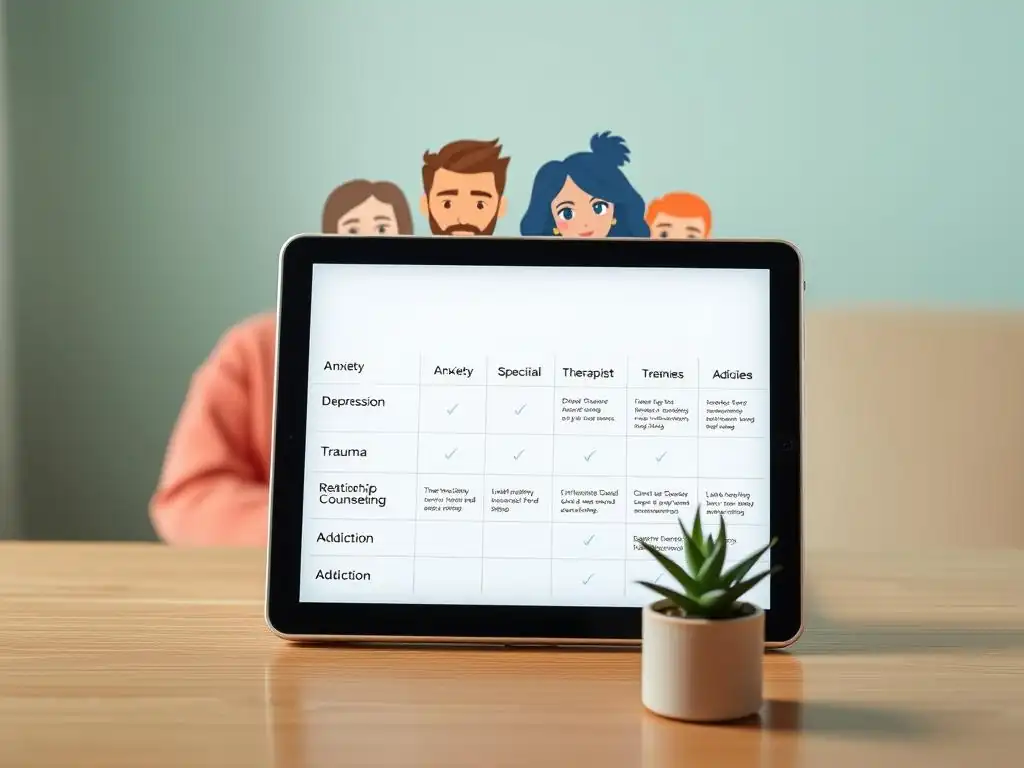
Once you've identified platforms offering affordable online therapy income options and understand their fee structures, the next step is to explore the therapists available within their network who meet your reduced rate. It's not just about finding a therapist you can afford; it's about finding one who is a good therapeutic match for your specific needs and preferences. Platforms usually allow you to view therapist profiles, including their specializations, therapeutic approaches (e.g., CBT, DBT, psychodynamic), years of experience, and sometimes even client reviews.
Within the pool of therapists available at the sliding scale rate you've been offered, take the time to compare their credentials and areas of expertise. If you are dealing with trauma, for example, look for therapists specializing in trauma-informed care. If you prefer a particular therapeutic modality, filter accordingly. The goal is to find a qualified professional whose expertise aligns with your reasons for seeking therapy, ensuring that the affordable care you receive is also effective care. Don't compromise on finding a good fit just because the price is right.
Step 5: Scheduling a Consultation and Discussing Your Financial Situation
After identifying potential therapists, the final step in the finding process is to schedule an initial consultation or introductory session. Many platforms offer a brief introductory call or allow you to send a message to the therapist before committing to regular sessions. This is your opportunity to gauge rapport, ask questions about their experience with your specific concerns, and, importantly, confirm the fee structure that applies to you.
During this discussion, openly and empathetically discuss your financial situation and the sliding scale rate or financial aid you've been approved for. Confirm the exact cost per session or the subscription rate that applies. Ask about their cancellation policy and any potential fees for missed sessions, even at the reduced rate. Clear communication about fees from the outset ensures there are no misunderstandings and allows you to move forward with confidence, knowing you have secured genuinely affordable online therapy income-based support that fits your budget.
Evaluating Online Therapy Platforms Offering Affordable Mental Health Care
Comparing Features and Costs: Open Path Collective vs. Talkspace vs. BetterHelp
When seeking affordable online therapy income solutions, comparing the features and costs of different platforms is essential. While Open Path Collective focuses on connecting clients to therapists offering a low flat fee ($30-$60 per session) after a one-time membership fee, platforms like Talkspace and BetterHelp use a subscription model with varying tiers and offer financial aid that reduces the standard subscription cost.
A standard subscription on Talkspace or BetterHelp without financial aid could range from $260 to $400+ per month, while Open Path's model results in a cost of $120 to $240 per month (plus the initial membership fee) for weekly sessions.
The service delivery also differs. Open Path primarily lists therapists who can offer video sessions, while Talkspace and BetterHelp offer a mix of asynchronous messaging, live chat, phone calls, and video sessions depending on the subscription tier. Your preferred method of communication and the frequency of contact you desire will influence which platform's model is a better fit, even when considering affordable online therapy income options.
Feature Breakdown:
-
Therapist Credentials and Experience
All reputable platforms require therapists to be licensed mental health professionals in their state or country. However, the level of experience can vary. Open Path Collective therapists are licensed professionals who have committed to offering lower rates; their experience levels can range from newly licensed to highly seasoned. Talkspace and BetterHelp also feature licensed therapists, and their profiles typically detail years of experience, specific licenses held (e.g., LCSW, LMFT, LPC, Psychologist), and areas of specialization. When evaluating affordable online therapy income options, check therapist profiles carefully to ensure their credentials and experience align with your needs.
-
Therapy Modalities Offered (e.g., CBT, DBT)
The therapeutic approaches used by therapists vary widely. Cognitive Behavioral Therapy (CBT) and Dialectical Behavior Therapy (DBT) are common, but many others exist, such as psychodynamic therapy, trauma-informed therapy, or acceptance and commitment therapy (ACT). When comparing platforms, see if you can filter or search for therapists who practice the modality you are interested in or that is recommended for your specific concerns. Platforms like BetterHelp and Talkspace often allow filtering by modality, while Open Path Collective requires reviewing individual therapist profiles. Ensuring access to the right modality is key to effective affordable online therapy income support.
-
Communication Options (Video, Chat, Phone)
Online therapy platforms offer different ways to connect with your therapist. Video sessions are the most similar to traditional in-person therapy. Chat or messaging allows for ongoing communication throughout the week, which can be helpful for some but may not suit others. Phone calls offer an audio-only option.
BetterHelp and Talkspace typically package these options into different subscription tiers, meaning the more communication methods you want, the higher the base price (before financial aid). Open Path sessions are primarily video-based, though some therapists may offer phone. Consider your communication preferences when evaluating which platform offers the best value for your affordable online therapy income budget.
-
Availability and Scheduling Flexibility
Availability of therapists and the flexibility in scheduling sessions are crucial factors. Online platforms generally offer more flexibility than traditional in-person therapy, with therapists often having evening or weekend availability. However, the number of therapists available at your specific reduced rate on a platform can impact how quickly you can get matched and the range of scheduling options.
Platforms with larger networks, even with financial aid applied, might offer more choices. Check if platforms allow you to schedule directly or if it requires coordination with the therapist, and consider time zone differences if the therapist is in another location. Good availability enhances the practicality of affordable online therapy income solutions.
Cost Analysis:
-
Standard Pricing vs. Sliding Scale Rates
Understanding the difference between a platform's standard pricing and the rate you would pay with a sliding scale or financial aid is fundamental. Standard rates on major platforms can range from $65 to $100+ per week (billed monthly). Sliding scale rates, like those on Open Path ($30-$60 per session), or financial aid discounts on platforms like BetterHelp or Talkspace, aim to bring this cost down significantly based on your income.
For example, a $400/month standard rate might be reduced to $250 or even $150/month with financial aid, depending on eligibility. Always clarify your actual cost after any discounts or sliding scale adjustments are applied.
-
Subscription Models and Session Fees
Most major online therapy platforms use a subscription model where you pay a recurring fee (usually weekly or monthly) for access to a therapist and specific communication methods. This differs from a per-session fee model where you only pay for the sessions you attend, which is common with Open Path Collective and many individual therapists offering sliding scales. Subscription models can offer value if you utilize the included communication features, but they mean you pay the same amount regardless of how many live sessions you have within a billing period (typically 1-4 per month depending on the plan).
Per-session fees offer more flexibility if your session frequency varies. Evaluate which payment structure better suits your needs and financial planning for affordable online therapy income.
-
Insurance Coverage and Reimbursement Options
Insurance coverage for online therapy varies greatly depending on your specific plan and state regulations. Some online platforms work directly with certain insurance providers, while others do not accept insurance but may provide documentation (like superbills) that you can submit to your insurer for potential out-of-network reimbursement.
Platforms offering sliding scales or financial aid often do not accept insurance for those specific reduced-rate services, as the fee is already significantly lowered. However, it's always worth checking with both the platform/therapist and your insurance provider to understand if any portion of the cost could be covered or reimbursed, further enhancing the affordability of online therapy income solutions.
User Reviews and Testimonials: Real Experiences with Affordable Online Therapy
Looking at user reviews and testimonials can provide valuable insights into the real-world experience of using a platform's affordable online therapy income options. While individual experiences vary, patterns in reviews can highlight common positives and negatives. For example, reviews might mention the ease or difficulty of the financial aid application process, the consistency of the reduced rate, the quality of the therapists available at that rate, or the overall value received for the cost.
Search for reviews specifically mentioning financial aid, sliding scales, or affordability. Look for feedback on the responsiveness of customer support regarding billing and financial questions. Websites like Trustpilot, the Better Business Bureau, and mental health forums often host such reviews. While testimonials on a platform's own website are curated, third-party reviews can offer a more balanced perspective on what to expect when accessing budget-friendly mental healthcare through a particular provider.
Maximizing Your Access to Low-Cost Online Therapy: Tips and Strategies

Leveraging Insurance Coverage for Online Mental Health Services
Even when seeking affordable online therapy income options, it's crucial to explore how your health insurance might play a role. Many insurance plans now cover online therapy (telehealth) services, often the same way they cover in-person visits. Contact your insurance provider directly by calling the number on your insurance card. Ask specific questions: Does my plan cover telemental health services? Are there specific platforms or providers I must use (in-network)? What is my co-pay or deductible for mental health visits, both in-network and out-of-network?
Understanding your benefits can potentially reduce or cover the cost of online therapy, even if you don't qualify for a platform's most drastic income-based discounts. Some platforms work directly with insurance, billing them first, and you only pay the remaining co-pay or co-insurance. If you use a platform or therapist that doesn't bill insurance directly but accepts out-of-network benefits, ask for a superbill (an itemized receipt with necessary codes) to submit for potential reimbursement. Combining insurance benefits with a platform's lower rates can significantly enhance the affordability of online therapy income-wise.
Exploring Employee Assistance Programs (EAPs) for Free or Discounted Therapy
Many employers offer Employee Assistance Programs (EAPs) as a benefit to their employees and sometimes their family members. EAPs are designed to provide confidential counseling and support for a variety of personal and work-related issues, including mental health concerns. A common EAP structure provides a limited number of free therapy sessions per issue per year, often between 3 and 8 sessions. These sessions can frequently be accessed online or via phone.
Check with your HR department or benefits administrator to see if your employer offers an EAP and how to access it. Utilizing your EAP can provide initial support or bridge the gap while you arrange longer-term, affordable online therapy income-based care. While the number of sessions is limited, they are typically free and can be a valuable starting point for addressing mental health challenges without immediate financial burden. Even if you plan to use a sliding scale platform, starting with EAP sessions can provide immediate relief and assessment.
Applying for Grants and Scholarships for Mental Healthcare
Beyond platform-specific financial aid, there are sometimes grants and scholarships available from non-profit organizations, foundations, or community groups aimed at helping individuals cover the cost of mental healthcare. These resources are less common than platform discounts but can provide significant financial support when available. Eligibility criteria vary widely and may be based on income, specific mental health conditions, demographic factors, or geographic location.
Searching for these opportunities requires dedicated research. Look for national or local mental health non-profits (like NAMI or Mental Health America chapters), community foundations, or condition-specific organizations (e.g., anxiety and depression associations). While finding and applying for grants can take time, securing one could cover a substantial portion of your therapy costs, making long-term affordable online therapy income goals much more achievable. Keep an eye out for application periods and eligibility details.
Negotiating Payment Plans with Therapists
Even if a therapist or platform doesn't advertise a formal sliding scale or financial aid program, it might still be possible to negotiate a slightly reduced rate or a flexible payment plan directly with an individual therapist, especially those in private practice who offer online sessions. Therapists understand that financial constraints are a major barrier to care and some are willing to work with clients on a case-by-case basis.
When discussing fees with a potential therapist, especially if you find one whose standard rate is just slightly outside your budget, you can empathetically explain your financial situation and ask if they have any flexibility or offer a payment plan (e.g., paying in installments rather than one lump sum monthly). Be prepared to share basic income information to support your request. While not guaranteed, a direct conversation can sometimes lead to a mutually agreeable financial arrangement that makes their services more like affordable online therapy income options for you.
Making an Informed Decision: Choosing the Right Affordable Online Therapy Provider for You
Questions to Ask Potential Therapists About Their Fees and Payment Options
When you've narrowed down your options and are speaking with potential therapists or platform representatives, asking specific questions about fees and payment is critical. Don't assume anything about the cost, even if you've been approved for a general discount. Key questions include:
- "What is the exact per-session cost or weekly/monthly subscription rate for me, based on my approved financial aid or sliding scale?"
- "Are there any additional fees (e.g., for intake sessions, missed appointments, late cancellations)?"
- "How often am I billed (weekly, monthly)? What payment methods are accepted?"
- "Does my rate change over time, or is it fixed for a certain period?"
- "What documentation do I need to provide for income verification, and how often do I need to re-verify?"
- "If I need to pause or stop therapy, what is the process and are there any fees?"
Getting clear, written answers to these questions helps ensure you understand the full financial commitment involved with your affordable online therapy income plan.
Red Flags to Watch Out For When Choosing an Affordable Online Therapy Platform
While many platforms genuinely aim to increase access, some warning signs indicate a provider might not be the best choice, even if they seem affordable. Be cautious of:
- Platforms that are not transparent about their pricing or require extensive personal information before revealing costs.
- Services that promise excessively low rates that seem too good to be true without explaining how they are sustainable (e.g., unqualified providers, lack of privacy).
- Difficulty verifying the credentials or licenses of the therapists on the platform.
- Poor or non-existent customer support, especially regarding billing or financial aid questions.
- Pressure to sign up for long-term contracts without a clear understanding of the ongoing cost, particularly for affordable online therapy income models which should be flexible.
- Lack of a clear privacy policy or insufficient measures to protect your health information.
Trust your gut; if something feels off, it's worth exploring other options to ensure you receive safe and effective care.
Building a Sustainable Mental Healthcare Plan Within Your Financial Means
Finding affordable online therapy income options is just the first step; building a sustainable plan means integrating the cost of therapy into your overall budget long-term. Once you have a clear understanding of your per-session or monthly cost, factor it into your regular financial planning. Consider setting aside funds specifically for therapy each pay period.
Sustainability also involves periodically reviewing your financial situation and your therapy needs. If your income changes, revisit the platform's financial aid or sliding scale policy to see if your rate needs adjustment. Discuss your financial concerns openly with your therapist; while they may not control the platform's billing, they can sometimes adjust session frequency or provide resources. A sustainable plan ensures you can continue receiving necessary support consistently, making affordable online therapy income solutions a true pathway to lasting well-being.
Beyond Sliding Scales: Other Avenues for Affordable Mental Healthcare
Community Mental Health Centers: Exploring Local Resources
Community Mental Health Centers (CMHCs) are local organizations, often government-funded or non-profit, that provide a range of mental health services, typically on a sliding scale based on income or for free to eligible residents. While they traditionally offer in-person services, many CMHCs have expanded to include telehealth options, making them a potential source for affordable online therapy income-based care within your local area.
Services at CMHCs can include individual therapy, group therapy, psychiatric evaluation, medication management, and crisis intervention. They are designed to serve individuals regardless of their ability to pay, often accepting Medicaid, Medicare, and offering significantly reduced fees for those who are uninsured or underinsured. Contacting your local county or state mental health department can provide information on CMHCs in your area and how to access their services, which can be a crucial part of a comprehensive search for affordable mental healthcare options.
Free or Low-Cost Support Groups and Peer Support Networks
While not a direct replacement for individual therapy with a licensed professional, support groups and peer support networks offer invaluable mental health support that is often free or available at a very low cost. These groups bring together individuals who share similar experiences (e.g., living with depression, anxiety, grief, addiction). They can be found through local community centers, hospitals, non-profit organizations, or online platforms.
Many organizations, such as the National Alliance on Mental Illness (NAMI) or the Depression and Bipolar Support Alliance (DBSA), offer free, peer-led support groups both in-person and online. These groups provide emotional support, shared coping strategies, and a sense of community, reducing feelings of isolation. Incorporating participation in a support group alongside affordable online therapy income sessions can enhance your overall mental wellness plan by providing different layers of support and connection.
Utilizing Mental Health Apps and Self-Help Resources
In the digital age, a wealth of mental health apps and self-help resources are available, many of which are free or significantly less expensive than therapy. These resources can complement professional treatment or provide valuable tools for managing symptoms and improving well-being independently. Apps offer features like mood tracking, meditation guides, cognitive behavioral therapy (CBT) exercises, and mindfulness practices.
Popular examples include Headspace or Calm for meditation (subscription fees apply, but often less than therapy), MoodTools for depression support, and various apps offering journaling or anxiety management techniques. Additionally, numerous reputable websites and books provide evidence-based self-help strategies. While these tools should not replace necessary professional care, they can be excellent supplementary resources for managing mental health on a budget, fitting into an overall strategy for accessing affordable online therapy income options and maximizing well-being within financial constraints.
Frequently Asked Questions
What is sliding scale online therapy, and how does it relate to affordable online therapy income?
Sliding scale online therapy is a fee structure where the cost of therapy is adjusted based on a client's income and ability to pay. This directly addresses the "affordable online therapy income" keyword by making mental health services more accessible.
How can I find sliding scale online therapy options?
Researching online therapy platforms that explicitly advertise a sliding scale. You can also contact therapists directly and inquire about their payment options and potential for reduced fees based on your income.
What kind of proof of income might I need to provide to qualify for sliding scale online therapy?
Typically, therapists or platforms offering sliding scale rates will request documentation like pay stubs, tax returns, or bank statements. These documents help them assess your financial situation and determine your eligibility.
Is the quality of therapy different with sliding scale options compared to standard-fee online therapy?
No, the quality of therapy should not be affected by the fee structure. Therapists offering sliding scale rates are still licensed professionals committed to providing the same standard of care to all clients.
Does sliding scale online therapy affect the therapist's affordable online therapy income?
Yes, offering sliding scale options can potentially impact a therapist's income. However, many therapists view it as a way to increase accessibility and contribute to mental health equity, making it a valuable service despite potential financial adjustments.
Final Reflection: Bridging the Gap to Mental Wellness
The accessibility of mental healthcare remains a critical issue, and sliding scale online therapy offers a powerful, yet often overlooked, solution to bridging the gap between need and affordability. The increasing demand for mental health services, coupled with persistent financial barriers, underscores the urgency of exploring and expanding models like sliding scale pricing. This innovative approach directly addresses the financial inequities that prevent many from seeking the crucial support they deserve.
The impact of sliding scale online therapy extends far beyond individual access; it's reshaping the very landscape of mental healthcare, fostering a more inclusive and equitable system. This shift towards affordability is not just a business model; it's a social movement, slowly but surely dismantling the stigma surrounding mental illness and empowering individuals to prioritize their well-being. The greatest barrier to mental health care is not the lack of resources, but the lack of access.
This quote highlights the core issue that sliding scale models directly confront, making professional help a tangible reality for those previously excluded.
Consider the implications of this model for your own life and community. Are you aware of similar initiatives in your area? Could you advocate for greater access to affordable mental healthcare? You have the power to be part of the solution. By supporting organizations that offer sliding scale services, spreading awareness about their availability, or even simply sharing this information with someone in need, you can contribute to a future where mental wellness is a right, not a privilege. Let's work together to ensure everyone has the opportunity to thrive.
Unlock Affordable Mental Wellness: Take the Next Step
Thanks for taking the time to learn about sliding scale therapy! We hope this article shed light on accessible mental health care options. Now, it's time to turn knowledge into action.
- Find a therapist offering a sliding scale: This is your primary step towards affordable mental wellness. Begin your search today—many resources exist to help!
- Share this article with someone who could benefit: Help spread the word about accessible mental healthcare options in your community.
- Explore additional resources on MindCareGuide.org: Discover even more helpful articles and guides to support your mental wellbeing journey.
What’s one small step you can take today to prioritize your mental health?