
Ancient Recognition of the Link Between Physical and Mental Health

Welcome to Mind Care Guide!
Are you curious about how deeply intertwined your body and mind truly are? For centuries, healers and philosophers have recognized a profound connection between physical and mental well-being. In this article, we delve into the ancient recognition of the physical mental health connection benefits. Prepare to be amazed as we explore historical insights and uncover the timeless wisdom that can empower you to cultivate a healthier, happier you. Intrigued to learn more?
Ancient Recognition of the Link Between Physical and Mental Health
- Introduction
- Early Civilizations and the Mind-Body Relationship
- Ancient Greece: A Foundation for Holistic Health
- Traditional Chinese Medicine (TCM): Balancing Qi for Physical and Mental Harmony
- Ancient Indian Traditions: Ayurveda and Yoga for Mental Clarity
- The Roman Empire: Building upon Greek Foundations
- Physical Activity and Cognitive Function in Ancient Times
- Diet, Nutrition, and Mental Well-being in Ancient Cultures
- Spiritual Practices and the Mind-Body Connection
- Lessons from the Past: Reclaiming Ancient Wisdom for Modern Mental Health Care
- Conclusion
-
Frequently Asked Questions
- How did ancient civilizations recognize the physical mental health connection benefits?
- What specific practices did ancient cultures use to leverage the physical mental health connection benefits?
- What are some modern interpretations of the physical mental health connection benefits based on ancient wisdom?
- How can understanding the ancient physical mental health connection benefits improve our modern lives?
- Why is it important to acknowledge the physical mental health connection benefits in addressing mental health challenges today?
- Final Reflection: The Enduring Wisdom of Mind-Body Unity
- Unlock Your Holistic Wellbeing: Body & Mind Connection
Introduction
Mind Care Guide's Exploration of Ancient Wisdom
At Mind Care Guide, we understand that the journey towards mental well-being is multifaceted and deeply rooted in human history. Exploring ancient perspectives provides a rich tapestry of insights into how our ancestors perceived the complex interplay between the physical body and the mental state. Across various civilizations, there was a profound, albeit sometimes mystical, recognition that what affects the body invariably impacts the mind, and vice versa. This foundational understanding, often integrated into daily life, healing practices, and philosophical thought, laid the groundwork for later scientific inquiry into the physical mental health connection benefits.
This exploration delves into the historical context of mental health, moving beyond purely biomedical models to appreciate the holistic views held by early societies. By examining how ancient cultures approached health and illness, we gain a broader appreciation for the enduring concept that true wellness encompasses both physical vitality and mental equilibrium. This historical lens helps us recognize the long-standing human effort to understand and nurture the intricate link between our physical form and our inner world, highlighting the timeless nature of seeking balance for overall health.
Why Understanding Historical Perspectives Matters for Modern Mental Well-being
Understanding historical perspectives on the physical mental health connection is not merely an academic exercise; it offers valuable context and validation for contemporary approaches to mental wellness. Many modern therapeutic strategies, such as the emphasis on exercise, nutrition, and mindfulness, echo principles recognized thousands of years ago. By appreciating this historical continuity, we can feel more connected to a long tradition of seeking well-being and gain confidence in integrating lifestyle factors into our personal mental health journeys. The physical mental health connection benefits were observed and documented, in their own ways, by civilizations far removed from modern neuroscience.
Moreover, examining ancient views can help us challenge some of the stigmas and fragmented approaches to mental health that persist today. Ancient cultures often viewed illness, both physical and mental, within a broader context of lifestyle, environment, and spiritual well-being.
This holistic perspective encourages us to consider the physical mental health connection benefits in a more integrated way, moving away from viewing mental health issues solely as isolated brain disorders and towards recognizing them as experiences influenced by the entire person and their environment. This historical insight underscores the importance of comprehensive care that addresses the individual as a whole.
Early Civilizations and the Mind-Body Relationship
Ancient Egypt: Holistic Healing Practices and Mental Equilibrium
Ancient Egyptians possessed a sophisticated understanding of the body and its interconnectedness, as evidenced by their medical papyri dating back as far as 1550 BCE, such as the Ebers Papyrus. While their understanding of mental illness was often intertwined with supernatural explanations, they also recognized the impact of physical health on mental state.
Egyptian physicians, known as swnw, treated ailments with a combination of herbal remedies, surgical procedures, and incantations, acknowledging both the physical and potentially psychological aspects of illness. The concept of balance, or maat, was central to their worldview and health practices, implying that disequilibrium in any part of life, including the physical body, could affect mental equilibrium.
Their healing practices often took place in temples or specialized houses of life ( Per-Ankh), where patients might undergo rituals, dream interpretation, and receive herbal treatments. This integrated approach suggests a recognition that healing involved more than just addressing physical symptoms; it encompassed rest, spiritual solace, and potentially psychological support.
For example, the Edwin Smith Papyrus details surgical treatments for head injuries, acknowledging their potential impact on cognitive function, a clear early understanding of the physical mental health connection. While they didn't have our modern terminology, their practices reflect an intuitive grasp of the benefits derived from treating the individual holistically.
Mesopotamian Beliefs: Physical Ailments as Manifestations of Mental Distress
In ancient Mesopotamia, particularly Sumer, Babylon, and Assyria, dating back to the 3rd millennium BCE, illness was often attributed to divine displeasure, demonic possession, or sorcery. However, their medical texts and incantations reveal an awareness of symptoms we would now associate with both physical and mental distress.
Physicians and exorcists worked together, suggesting an understanding that the root cause of suffering could be complex, involving both the body and the spirit or mind. Physical symptoms like tremors, paralysis, or digestive issues were sometimes interpreted as signs of inner turmoil or external negative influences affecting the person's mental or spiritual state.
Cuneiform tablets describe conditions that could be interpreted as anxiety, depression, or psychotic states, often treated with a combination of prayers, rituals, and herbal remedies aimed at appeasing deities or expelling malevolent forces. This approach, while steeped in religious belief, demonstrates a recognition that internal states could manifest physically and that external factors could influence inner well-being. The incantations used were not just prayers for physical healing but also aimed at calming the mind and restoring peace, highlighting the ancient Mesopotamian acknowledgment of a link, albeit interpreted through a different lens, between physical ailments and mental distress.
Ancient Greece: A Foundation for Holistic Health
The Philosophers' Perspective: Plato, Aristotle, and the Interconnectedness of Soul and Body
Ancient Greek philosophers extensively debated the nature of the soul ( psyche) and its relationship to the body ( soma), laying significant groundwork for understanding the physical mental health connection benefits. Plato, in works like Phaedo and The Republic, explored the soul's immortality and its potential struggle with the body's desires and limitations, suggesting that the body could influence the soul's health and vice versa. He emphasized the importance of education and harmonious living for cultivating a balanced soul, implying that a well-ordered life, which includes physical activity, contributes to mental well-being.
Aristotle, a student of Plato, took a more integrated view, arguing that the soul is not separate from the body but is its form and function. In De Anima (On the Soul), he posited that mental states and processes are intrinsically linked to physiological processes.
He believed that emotions like anger or fear have physical manifestations and that physical health affects one's capacity for rational thought and virtue. Both philosophers, despite their differences, contributed to the enduring idea that the state of the body is relevant to the state of the mind, a fundamental principle underlying the physical mental health connection benefits.
Hippocrates: Father of Medicine and the Importance of a Balanced Lifestyle for Mental Sanity
Hippocrates (c. 460 – c. 370 BCE), considered the father of Western medicine, revolutionized the understanding of illness by attributing diseases to natural causes rather than divine intervention. His humoral theory, which posited that health depended on the balance of four bodily fluids (blood, phlegm, yellow bile, and black bile), extended to mental states. Imbalances in these humors were believed to cause physical ailments as well as conditions like melancholy (depression) or mania. This was a crucial step in viewing mental conditions as having physiological roots, directly linking physical state to mental health.
The Hippocratic Corpus, a collection of medical texts associated with his school, emphasized the importance of lifestyle factors – diet, exercise, fresh air, and sleep – in maintaining health and preventing disease, including mental disturbances. Hippocrates and his followers recognized that physical activity, proper nutrition, and adequate rest were not just beneficial for the body but were essential for maintaining mental sanity and emotional stability. This early medical framework clearly articulated the physical mental health connection benefits derived from a balanced and healthy lifestyle, a principle that remains central to modern wellness advice.
The Asclepieion: Temples of Healing Integrating Diet, Exercise, and Dream Interpretation
Throughout ancient Greece, centers of healing known as Asclepieia, dedicated to the god of medicine Asclepius, offered a holistic approach to health that integrated physical, mental, and spiritual elements. Patients seeking cures would undertake rituals, purification baths, and often spend a night in a sacred dormitory ( abaton) hoping for a healing dream sent by the god. These temples were not just places for divine intervention but also provided practical care that included regulated diets, physical exercise, hydrotherapy (baths), and exposure to nature.
The therapeutic process in the Asclepieia recognized that healing involved addressing the whole person. The structured environment, emphasis on rest and healthy habits, and the psychological expectation of healing through divine or natural means all contributed to the patient's well-being. Dream interpretation played a role, suggesting an attempt to understand the patient's inner world and its connection to their physical symptoms. This integrated approach, combining physical care, psychological support, and spiritual practice, exemplifies the ancient Greek understanding of the interconnectedness of body and mind and the physical mental health connection benefits of holistic treatment.
Traditional Chinese Medicine (TCM): Balancing Qi for Physical and Mental Harmony

The Concept of Qi and its Influence on Emotional Well-being
Traditional Chinese Medicine (TCM), with a history spanning thousands of years, is fundamentally based on the concept of Qi (or Chi), often translated as vital energy or life force. Qi flows through meridians in the body, and its balanced and smooth circulation is considered essential for health. TCM theory posits that emotions are intimately connected to the flow of Qi and the function of specific organs. For instance, anger is associated with the liver, worry with the spleen, fear with the kidneys, sadness with the lungs, and joy with the heart.
When Qi is blocked, deficient, or excessive in certain pathways or organs, it can manifest as both physical symptoms and emotional imbalances. For example, stagnant liver Qi can lead to irritability, frustration, and even depression, alongside physical symptoms like digestive issues or headaches. This core principle of TCM highlights a direct and dynamic physical mental health connection, where the state of the body's energy and organs directly influences emotional and mental well-being. Maintaining harmonious Qi flow is thus seen as crucial for achieving both physical vitality and mental clarity.
Acupuncture and Herbal Remedies: Addressing Physical Imbalances to Improve Mental Health
TCM employs various modalities to restore the balance and flow of Qi, including acupuncture and herbal medicine. Acupuncture involves inserting thin needles into specific points along the meridians to stimulate or regulate the flow of Qi, thereby influencing organ function and alleviating blockages. While often used for physical pain, acupuncture is also traditionally applied to treat conditions like anxiety, insomnia, and depression by addressing the underlying energetic imbalances believed to cause these mental states. For example, points related to the heart or liver meridians might be targeted to calm the spirit or soothe frustration.
Herbal medicine in TCM uses complex formulas tailored to an individual's specific pattern of imbalance. These formulas aim to nourish deficient organs, clear excess heat, move stagnant Qi, or calm the spirit, thereby addressing both physical symptoms and accompanying emotional distress. For instance, a formula might be prescribed to strengthen spleen Qi to alleviate worry and fatigue, recognizing the physical mental health connection benefits of improving digestive function and energy levels. These practices demonstrate a practical application of the TCM principle that treating the body's energetic and organ imbalances is key to improving mental health.
Tai Chi and Qigong: Movement Practices for Cultivating Mental and Physical Harmony
Tai Chi and Qigong are ancient Chinese mind-body exercises that involve slow, gentle movements, deep breathing, and meditation. These practices are designed to cultivate and regulate the flow of Qi, promoting balance and harmony within the body and mind. The smooth, continuous movements are believed to unblock meridians, improve circulation, and strengthen internal organs. Simultaneously, the focus on breath and mindfulness inherent in these practices helps to calm the nervous system, reduce stress, and quiet the mind.
Regular practice of Tai Chi or Qigong is traditionally recommended not only for improving physical health – such as flexibility, balance, and cardiovascular function – but also specifically for enhancing mental and emotional well-being. They are used to alleviate symptoms of anxiety and depression, improve mood, and increase resilience to stress. The integration of gentle physical activity with focused mental presence provides a powerful example of how ancient Chinese wisdom recognized and leveraged the physical mental health connection benefits through embodied practices.
Ancient Indian Traditions: Ayurveda and Yoga for Mental Clarity
Ayurveda: The Science of Life and the Three Doshas' Impact on Mental State
Ayurveda, meaning "the science of life," is an ancient Indian system of medicine with roots dating back over 3,000 years. It views health as a dynamic balance between the body, mind, spirit, and environment. A central concept is that of the three doshas (Vata, Pitta, Kapha), which represent unique combinations of the five elements (ether, air, fire, water, earth) and govern physiological and psychological functions. Each individual has a unique prakriti (constitution) based on the balance of these doshas at birth, and imbalances ( vikriti) are believed to cause illness.
Ayurveda explicitly links the state of the doshas to mental and emotional well-being. For example, an excess of Vata (associated with air and ether) can lead to anxiety, fear, and restlessness. An excess of Pitta (fire and water) can manifest as anger, irritability, and criticalness. An excess of Kapha (water and earth) can result in lethargy, depression, and attachment. Thus, diagnosing and treating mental imbalances in Ayurveda involves understanding and correcting the underlying doshic imbalance through diet, lifestyle, herbs, and therapies, highlighting a sophisticated ancient understanding of the physical mental health connection.
Yoga: Physical Postures (Asanas) and Breathing Exercises (Pranayama) for Stress Reduction
Yoga, originating in ancient India, is a holistic practice encompassing physical postures ( asanas), breathing techniques ( pranayama), meditation, and ethical principles. While modern yoga is often focused on physical fitness, its ancient purpose was primarily spiritual and mental, aiming to unite the individual consciousness with the universal consciousness. However, the physical and breath-control aspects were recognized as powerful tools for preparing the body and mind for deeper meditative states and achieving mental clarity.
The practice of asanas helps to release physical tension, improve circulation, and calm the nervous system, directly impacting stress levels. Pranayama techniques, such as alternate nostril breathing (Nadi Shodhana), are specifically designed to regulate the flow of prana (life force, similar to Qi) and balance the subtle energies of the body and mind, leading to reduced anxiety and improved focus. Ancient yogis understood that controlling the breath and mastering the body were essential steps towards controlling the mind, demonstrating a clear recognition of the physical mental health connection benefits derived from these practices.
Meditation and Mindfulness Practices in Ancient India
Meditation and mindfulness practices have been integral components of ancient Indian traditions, particularly within Hinduism, Buddhism, and Jainism, for thousands of years. Techniques ranging from focused attention on the breath or a mantra to open awareness have been employed to cultivate mental discipline, reduce distracting thoughts, and achieve states of calm and insight. The goal was often liberation from suffering and the attainment of inner peace.
These contemplative practices, while seemingly purely mental, were understood to have profound effects on the physical body. Reducing mental chatter and emotional reactivity through meditation lowers physiological stress responses, such as heart rate and cortisol levels. Ancient practitioners observed that a calm mind contributed to a healthier body and vice versa. The emphasis on present moment awareness cultivated through mindfulness directly addresses mental rumination and worry, providing a powerful ancient method for leveraging the physical mental health connection benefits through focused mental training.
The Roman Empire: Building upon Greek Foundations
Galen's Contributions: Expanding on Hippocrates' Ideas about Body-Mind Unity
Galen (c. 129 – c. 210 CE), a Greek physician who practiced in the Roman Empire, was a prolific writer and physician whose work dominated Western medicine for over a thousand years. He built extensively upon the humoral theory of Hippocrates, conducting anatomical studies and physiological experiments (often on animals). Galen refined the understanding of the humors and their influence on temperament and mental states, categorizing personalities based on humoral dominance (e.g., sanguine, choleric, melancholic, phlegmatic).
Galen believed that imbalances in humors were responsible for both physical diseases and psychological disorders. He treated conditions like melancholy with dietary changes, exercise, baths, and even bloodletting or purging, aiming to restore humoral balance. His detailed descriptions of the nervous system, while sometimes inaccurate by modern standards, further reinforced the idea that physical structures within the body were responsible for mental functions and emotional responses. Galen's extensive writings solidified the Hippocratic notion of body-mind unity within Roman medical practice, emphasizing the physical mental health connection.
Roman Bathhouses and Exercise as Therapeutic Interventions for Mental Wellness
Roman culture placed a high value on public health and hygiene, exemplified by their elaborate bathhouses ( thermae). These complexes were not just places for bathing but served as social centers and recreational facilities, often including gyms, swimming pools, libraries, and gardens. Visiting the baths involved a sequence of activities: undressing, exercise, various temperature baths (cold, warm, hot), scraping the skin clean, massages, and relaxation. This routine provided both physical cleansing and significant opportunities for physical activity and social interaction.
Beyond hygiene, Romans recognized the therapeutic benefits of physical activity and relaxation for overall well-being, including mental health. Physicians like Galen prescribed exercise and bathing for various ailments. The combination of physical exertion, thermal treatments, and social engagement offered in the bathhouses provided a powerful, albeit informal, intervention for reducing stress, improving mood, and fostering a sense of community – all contributing to mental wellness. This highlights the Roman appreciation for the physical mental health connection benefits derived from public health infrastructure and lifestyle practices.
Gladiatorial Combat: Spectacle, Physical Exertion, and its Potential Psychological Impact
While not a direct "therapeutic intervention" in the modern sense, gladiatorial combat in the Roman Empire offers a complex example of the intense physical exertion and psychological impact recognized in ancient society. Gladiators underwent rigorous physical training, emphasizing strength, endurance, and discipline. Their lives were defined by extreme physical demand and the constant psychological pressure of life-or-death performance in front of vast crowds, sometimes numbering tens of thousands, such as in the Colosseum which held perhaps 50,000-80,000 spectators.
This practice highlights the ancient understanding that extreme physical states are intertwined with intense psychological experiences. While the combat itself was brutal, the discipline, training, and the bond formed within gladiatorial schools ( ludi) could also have complex psychological dimensions, including camaraderie and a sense of purpose, albeit in a harsh context. The spectacle also profoundly impacted the spectators, evoking strong emotions ranging from excitement to fear and pity, demonstrating how even observing intense physical activity could have significant psychological effects on a population.
Physical Activity and Cognitive Function in Ancient Times
The Value of Physical Labor in Promoting Mental Acuity
Throughout much of ancient history, physical labor was a fundamental aspect of daily life for the vast majority of the population, from farming and construction to craftsmanship and military service. While not framed in terms of "cognitive function" as we understand it today, there was an implicit recognition that engaging in regular, demanding physical activity was necessary for survival and contributed to a robust constitution, which included mental resilience and practical problem-solving skills. A strong body was seen as supporting a capable mind, particularly in tasks requiring focus, endurance, and coordination.
Ancient Greek education, for instance, often included gymnastike (physical training) alongside intellectual pursuits, reflecting a belief that developing the body was essential for developing the mind. Plato, in The Republic, advocates for a balanced education that cultivates both physical and intellectual virtues in future guardians. While not explicitly detailing neurobiological links, ancient societies observed that individuals engaged in active lifestyles, whether through labor or training, often demonstrated mental alertness and practical intelligence, suggesting a perceived physical mental health connection benefits from being physically active.
The Role of Recreation and Leisure in Mental Restoration
Beyond necessary labor and formal training, ancient cultures also engaged in various forms of recreation and leisure that involved physical activity, recognizing their value for rejuvenation and mental restoration. Activities like wrestling, running, discus throwing, swimming, hunting, and various ball games were popular in different societies. These activities provided not only entertainment but also opportunities for physical exertion and social interaction, offering a respite from daily toil and mental strain.
Philosophers and physicians in ancient Greece and Rome noted the importance of moderate exercise and relaxation for maintaining health and balancing the mind. Aristotle, for example, discussed the role of leisure in intellectual and moral development. The Roman bathhouses, as mentioned earlier, combined physical activity with relaxation and socialization. These practices suggest an intuitive understanding that stepping away from work, engaging the body in enjoyable ways, and fostering social connections through shared physical activities contributed to mental well-being and the restoration of mental faculties.
Diet, Nutrition, and Mental Well-being in Ancient Cultures
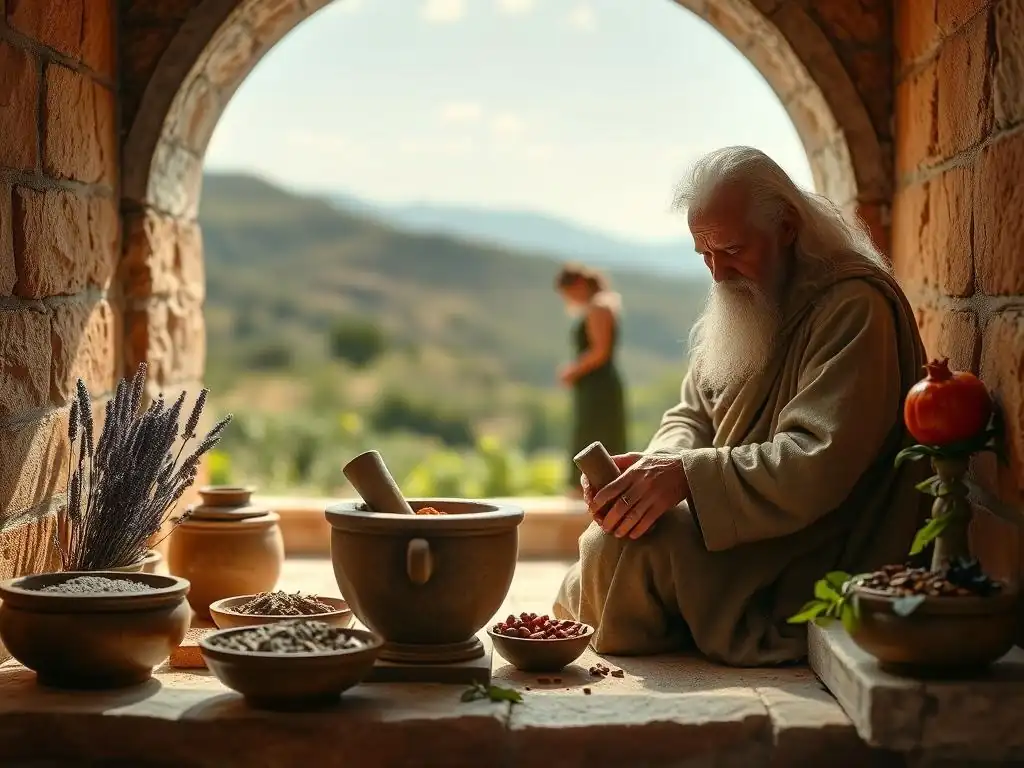
Food as Medicine: Ancient Dietary Practices for Mental Health
Many ancient cultures recognized a powerful link between the food consumed and overall health, including mental and emotional states. Food was often seen not just as sustenance but as possessing medicinal properties. In ancient China, dietary therapy is a core component of TCM, where specific foods are recommended or avoided based on their energetic properties and their effect on organ systems and Qi, directly influencing emotional balance. For example, cooling foods might be suggested for someone experiencing excess "heat" leading to irritability.
Similarly, in Ayurveda, diet is paramount in maintaining doshic balance. Specific foods are recommended for each dosha, and dietary changes are a primary intervention for correcting imbalances that manifest physically or mentally. Eating according to one's doshic constitution was believed to promote not only physical health but also mental clarity and emotional stability. These systems highlight a deep ancient understanding that dietary choices have tangible physical mental health connection benefits.
The Importance of Balanced Nutrition for Cognitive Function
While the concept of "vitamins" or "minerals" was unknown, ancient physicians and thinkers observed that severe malnutrition or diets lacking essential components could lead to physical weakness, lethargy, and impaired mental function. For instance, Hippocratic texts discuss the importance of a balanced diet for maintaining health, noting that different foods have different effects on the body and humors. A diet that supported physical vitality was implicitly understood to support mental capabilities.
Roman writers like Celsus, in his medical treatise De Medicina, provided dietary advice for various conditions, recognizing that what a person ate influenced their recovery and overall state. Although their understanding was based on observation and humoral theory rather than modern nutritional science, they grasped the fundamental idea that adequate and appropriate nourishment was necessary for the body to function correctly, including the brain and nervous system, thereby impacting cognitive function and mental well-being.
Mediterranean Diet: Emphasizing Olive Oil, Fruits, Vegetables, and its Cognitive Benefits
The traditional diet of the Mediterranean region, including ancient Greece and Rome, provides a historically significant example of a dietary pattern recognized for its health benefits. This diet was characterized by high consumption of olive oil, fruits, vegetables, legumes, nuts, and grains; moderate consumption of fish and wine; and low consumption of meat and dairy. While ancient texts didn't use the term "Mediterranean Diet," they praised the bounty of these foods for promoting health.
Ancient physicians and philosophers associated the consumption of fresh, natural foods with vitality and well-being. While specific cognitive benefits weren't analyzed in modern terms, the general understanding was that a diet rich in these elements supported a healthy body, which in turn supported a clear mind. Modern research now validates this ancient wisdom, showing that adherence to a Mediterranean-style diet is associated with a lower risk of cognitive decline and depression, demonstrating tangible physical mental health connection benefits supported by a historical dietary pattern.
Spiritual Practices and the Mind-Body Connection
The Role of Religion and Spirituality in Addressing Mental Distress
Throughout ancient history, religion and spirituality played a central role in people's lives and were often the primary framework for understanding and addressing mental distress. Conditions we might now diagnose as mental illness were frequently interpreted as spiritual afflictions, divine punishment, demonic possession, or a lack of harmony with the cosmic order. Consequently, treatment often involved religious rituals, prayers, sacrifices, and seeking guidance from priests or spiritual leaders.
These practices, while based on different belief systems than modern therapy, provided a form of psychological support, social connection, and a narrative for understanding suffering. Confession, communal rituals, seeking forgiveness, or performing acts of devotion could offer comfort, reduce guilt, and provide a sense of hope and agency in the face of overwhelming internal experiences. This highlights how ancient societies intuitively used spiritual and religious frameworks to cope with mental distress, recognizing a connection between one's spiritual state and mental well-being.
Rituals and Ceremonies as Coping Mechanisms for Stress and Anxiety
Ancient cultures utilized various rituals and ceremonies for many purposes, including marking life transitions, seeking divine favor, and coping with adversity. These structured activities often involved communal participation, repetitive actions, chanting, music, and symbolic gestures. While their overt purpose might have been religious or social, they also served as powerful coping mechanisms for managing stress and anxiety within individuals and communities.
Engaging in predictable, meaningful rituals can provide a sense of control and predictability in uncertain times. The shared experience of a ceremony fosters social cohesion and provides emotional support. The physical actions and focused attention required by some rituals can have a calming effect, similar to meditative practices. These ancient practices demonstrate an implicit understanding that engaging the body and mind in structured, symbolic activities, often within a communal setting, could help regulate emotions and alleviate mental burdens, illustrating the physical mental health connection benefits of structured group activities.
Lessons from the Past: Reclaiming Ancient Wisdom for Modern Mental Health Care
Integrating Holistic Approaches into Contemporary Mental Health Treatment
The ancient recognition of the physical mental health connection offers valuable lessons for contemporary mental health care. While modern psychiatry has made significant strides in understanding neurobiology and developing pharmacological treatments, there is a growing movement towards more integrated, holistic approaches that echo ancient wisdom. Integrating physical health interventions – such as exercise prescriptions, nutritional counseling, and sleep hygiene – alongside traditional therapies like psychotherapy and medication acknowledges the profound physical mental health connection benefits that ancient cultures intuitively understood.
Many modern clinics and practitioners are adopting models that treat the whole person, considering not just brain chemistry but also lifestyle, social support, environment, and physical health status. For example, programs for depression and anxiety increasingly incorporate elements like yoga, meditation, and dietary guidelines. This shift reflects a reclaiming of the ancient understanding that optimal mental health is not solely a matter of the mind but is deeply intertwined with the state of the physical body and one's overall way of life, recognizing the cumulative physical mental health connection benefits of comprehensive care.
The Importance of Lifestyle Factors in Promoting Mental Well-being
Ancient traditions across the globe consistently emphasized the importance of lifestyle factors – diet, physical activity, sleep, and social connection – for maintaining health, including mental health. Modern scientific research now provides robust evidence supporting these ancient observations. Studies show that regular exercise can be as effective as antidepressants for mild to moderate depression, that a nutrient-rich diet supports cognitive function and mood, and that adequate sleep is crucial for emotional regulation and resilience.
Reclaiming this ancient wisdom means prioritizing these fundamental lifestyle factors in both preventing mental health challenges and supporting recovery. It underscores that simple, accessible interventions related to how we live our daily lives can have profound physical mental health connection benefits. Encouraging individuals to move their bodies, eat nourishing food, prioritize rest, and nurture social bonds is not just modern wellness advice; it is a continuation of principles recognized and practiced by our ancestors for millennia.
Mindfulness-Based Stress Reduction: Echoing Ancient Contemplative Practices
Mindfulness-Based Stress Reduction (MBSR) and other mindfulness and meditation techniques are increasingly integrated into modern mental health treatment for conditions like anxiety, depression, and chronic pain. These practices, which involve training attention and awareness to the present moment without judgment, have roots in ancient contemplative traditions, particularly from India and East Asia, dating back thousands of years.
The scientific validation of mindfulness's effectiveness in reducing stress, improving emotional regulation, and even altering brain structure and function provides strong modern evidence for the physical mental health connection benefits that ancient practitioners discovered experientially. The ability of mindful awareness to reduce physiological stress responses (like cortisol release) and calm the nervous system demonstrates how a seemingly "mental" practice has tangible physical effects that contribute to mental well-being. This is a direct echo of ancient understandings that cultivating inner stillness and awareness impacts the entire being.
Conclusion
Emphasizing the Interdependence of Physical and Mental Health for Overall Wellness
Our journey through ancient civilizations reveals a consistent, albeit varied, understanding of the deep interdependence between physical and mental health. From the holistic healing centers of ancient Egypt and Greece to the energetic balance sought in Traditional Chinese Medicine and Ayurveda, our ancestors recognized that the state of the body inevitably impacts the state of the mind, and vice versa. They saw physical ailments manifesting as mental distress and mental states influencing physical well-being. The physical mental health connection benefits were intuitively grasped and integrated into their healing practices, philosophies, and daily life.
Whether through diet, exercise, spiritual practices, or social engagement, ancient cultures developed systems aimed at fostering harmony within the individual and between the individual and their environment. This historical perspective underscores a fundamental truth: true wellness is holistic. It is not enough to treat the body in isolation from the mind, or the mind in isolation from the body. Acknowledging and nurturing the intricate physical mental health connection is essential for achieving comprehensive well-being, a lesson that resonates powerfully from ancient times to the present day.
Looking Ahead: Further Research and Integration of Ancient Wisdom in Modern Mental Health Care
The historical evidence of the ancient recognition of the physical mental health connection provides a compelling impetus for further research and greater integration of holistic approaches in modern mental health care. While scientific methods offer powerful tools for understanding the mechanisms behind this connection, ancient wisdom offers valuable insights into practical, accessible strategies that have stood the test of time – simple yet profound practices like mindful movement, balanced nutrition, adequate rest, and fostering social bonds.
Looking ahead, the field of mental health can benefit from continuing to explore and validate ancient practices through rigorous scientific inquiry. Integrating these time-tested approaches into conventional treatment plans can offer more comprehensive, person-centered care. By honoring the wisdom of the past and combining it with the advancements of the present, we can develop more effective and empathetic strategies for promoting mental well-being, fully leveraging the physical mental health connection benefits for individuals and communities alike.
Frequently Asked Questions
How did ancient civilizations recognize the physical mental health connection benefits?
Ancient cultures, such as those in Greece and China, often viewed the mind and body as interconnected entities, emphasizing practices like exercise and balanced diets for overall well-being. They understood that physical health directly impacted mental clarity and stability.
What specific practices did ancient cultures use to leverage the physical mental health connection benefits?
Practices like yoga, meditation, and traditional Chinese medicine frequently incorporated physical activity and mindfulness to balance the body's energy and promote mental calmness. These methods were seen as crucial for preventing mental and physical ailments.
What are some modern interpretations of the physical mental health connection benefits based on ancient wisdom?
Modern approaches, such as integrative medicine and mind-body therapies, draw inspiration from ancient practices by recognizing the powerful influence of physical activity, nutrition, and stress management on mental health. They emphasize a holistic approach to well-being.
How can understanding the ancient physical mental health connection benefits improve our modern lives?
By adopting a holistic lifestyle that incorporates regular exercise, healthy eating, and mindfulness, we can enhance our resilience to stress, improve our mood, and boost our overall mental well-being. It encourages a proactive approach to health.
Why is it important to acknowledge the physical mental health connection benefits in addressing mental health challenges today?
Ignoring the link between physical and mental health can lead to incomplete treatment and less effective outcomes. Addressing both aspects allows for a more comprehensive and sustainable approach to managing and improving mental well-being.
Final Reflection: The Enduring Wisdom of Mind-Body Unity
The ancient understanding of the inextricable link between physical and mental health remains profoundly relevant today, a truth increasingly validated by modern science. We've explored how civilizations across millennia recognized the interconnectedness of the body and mind, highlighting practices that fostered holistic well-being. This isn't just historical curiosity; it's a vital framework for navigating the complexities of modern life and building a healthier future.
The impact of this holistic perspective continues to ripple through our cultural and social landscape, shaping everything from modern medicine's growing emphasis on preventative care to the rise of mindfulness practices. The recognition that our physical and mental states are not separate entities, but rather deeply intertwined aspects of a single being, is slowly but surely shifting our understanding of health and well-being. The body achieves what the mind believes.
This simple yet powerful statement encapsulates the core message of this exploration, reminding us of the potent influence of our thoughts and beliefs on our physical reality.
Consider the implications of this ancient wisdom in your own life. How can you integrate practices that nurture both your physical and mental health? Perhaps it's incorporating regular movement into your routine, prioritizing mindful moments throughout your day, or seeking support from a therapist or counselor.
The journey towards holistic well-being is a personal one, but by embracing the enduring wisdom of mind-body unity, you can embark on a path towards a richer, healthier, and more fulfilling life. Let the ancient voices guide you towards a future where physical and mental health are not just separate goals, but interwoven threads of a vibrant and harmonious existence.
Unlock Your Holistic Wellbeing: Body & Mind Connection
Thanks for taking the time to explore the fascinating link between physical and mental health! You've now gained valuable insights into how these two aspects are intrinsically connected. Ready to take the next step towards a more balanced and vibrant you?
- Prioritize one small, mindful movement today: Even a 5-minute walk or a few stretches can make a huge difference. This is your first step towards integrating physical wellbeing into your daily routine.
- Share your thoughts and experiences: Let's build a supportive community! Share your reflections on how you've previously experienced the mind-body connection in the comments below.
- Consider adding a mindful practice to your day: This could be meditation, yoga, or simply taking a few moments to appreciate your surroundings.
What small change will you implement today to nurture both your body and mind?