
Using Affirmations with Relaxation Techniques


Welcome to Mind Care Guide, your sanctuary for navigating the complexities of mental well-being. Feeling overwhelmed by anxiety and stress? You're not alone. Discover how positive affirmations, especially when combined with relaxation techniques, can be a powerful tool to reclaim your inner peace. Intrigued? Let's explore the transformative potential of mindful affirmations together and unlock a calmer, more resilient you.
Integrating Affirmations with Relaxation Techniques: A Guide to Enhanced Well-being
- Understanding the Role of Positive Affirmations in Stress Reduction
- Relaxation Techniques to Complement Positive Affirmations
- Maximizing Stress Management by Combining Affirmations and Relaxation
- Practical Strategies for Effective Affirmation and Relaxation
- Addressing Challenges in Affirmation and Relaxation Practices
- Long-Term Benefits of Integrated Affirmation and Relaxation
- Resources for Further Learning on Affirmations and Relaxation
-
Frequently Asked Questions
- How can positive affirmations help reduce anxiety and stress?
- What are some examples of positive affirmations that can be used for anxiety?
- What relaxation techniques work well with positive affirmations?
- How often should I practice affirmations and relaxation techniques to see results?
- Are there any potential drawbacks to using positive affirmations for anxiety?
- Final Reflection: Unlocking Inner Peace Through Affirmations and Relaxation
- Unlock Your Inner Calm: Start Your Journey Today!
Understanding the Role of Positive Affirmations in Stress Reduction
Defining Affirmations and Their Impact on Mental Health
Affirmations are positive statements used to challenge and overcome self-sabotaging and negative thoughts. They are typically short, powerful phrases repeated regularly to encourage a positive mindset. The core idea is that by consciously choosing positive thoughts, individuals can influence their beliefs, feelings, and behaviors.
This practice is rooted in the understanding that our internal dialogue significantly shapes our perception of ourselves and the world around us. For instance, someone struggling with performance anxiety might repeat, "I am capable and confident," aiming to replace self-doubt with assurance. This deliberate shift in focus can begin to alter the mental landscape, making it more conducive to calm and resilience.
The impact of affirmations on mental health is linked to their ability to reprogram habitual negative thinking patterns. When faced with stressful situations, many people default to critical or fearful internal statements. Consistently using positive affirmations can disrupt these cycles, fostering a sense of hope and self-efficacy.
Research, including studies on cognitive restructuring, suggests that actively replacing negative thoughts with positive ones can lead to measurable improvements in mood and reduced symptoms of anxiety and depression. While individual results vary, some studies indicate that consistent positive self-talk can potentially lower self-reported stress levels by 10-20% over several weeks compared to individuals who do not engage in such practices.
The Neurological Basis for Positive Affirmations and Anxiety Management
The brain is a highly adaptable organ, capable of changing its structure and function throughout life – a phenomenon known as neuroplasticity. When we repeatedly think certain thoughts, positive or negative, we strengthen the neural pathways associated with those thoughts. Positive affirmations leverage this principle; by consistently focusing on positive statements, we build and reinforce neural connections linked to feelings of confidence, calm, and positivity. Conversely, this process can help weaken the pathways associated with negative thoughts and fear responses, which are often overactive in individuals experiencing high levels of anxiety and stress.
Furthermore, positive affirmations can influence the activity of brain regions involved in emotional processing and stress response, such as the prefrontal cortex and the amygdala. The prefrontal cortex, responsible for higher-level thinking and decision-making, can be engaged to consciously focus on the affirmation, helping to regulate the more primitive fear responses originating in the amygdala.
While direct measurements are complex, neuroimaging studies have shown that practices involving positive self-referential thought can alter activity in these areas, suggesting a biological basis for how positive affirmations reduce anxiety stress. Over time, this can lead to a reduced physiological stress response, including lower heart rate and cortisol levels, contributing to overall emotional regulation.
Relaxation Techniques to Complement Positive Affirmations
Diaphragmatic Breathing and Affirmations for Anxiety Relief
Diaphragmatic breathing, or deep belly breathing, is a powerful relaxation technique that calms the nervous system by stimulating the vagus nerve. This type of breathing slows the heart rate and lowers blood pressure, counteracting the body's fight-or-flight response. When combined with positive affirmations, its effectiveness in reducing anxiety is amplified.
The rhythmic, slow pace of deep breathing provides a perfect anchor for repeating calming and reassuring statements, integrating the mental and physical aspects of relaxation. For instance, as you inhale deeply, you might think or silently repeat an affirmation like "I breathe in peace," and as you exhale slowly, "I release tension."
Integrating affirmations into diaphragmatic breathing sessions creates a focused practice that engages both the body and mind in stress reduction. A typical session might involve sitting or lying comfortably, placing a hand on the abdomen to feel the breath, and then spending 5-10 minutes breathing deeply while repeating chosen affirmations. This combination not only encourages physiological relaxation but also actively replaces anxious thoughts with positive, calming ones. Many individuals report feeling a significant reduction in immediate anxiety symptoms, sometimes within minutes, when using this combined approach compared to using either technique in isolation.
Progressive Muscle Relaxation Combined with Positive Self-Statements
Progressive Muscle Relaxation (PMR) is a technique where you systematically tense and then release different muscle groups in the body. This process helps you become more aware of physical tension and learn how to release it, promoting overall physical and mental relaxation. Pairing PMR with positive self-statements enhances its psychological benefits. As you release tension from each muscle group, you can simultaneously release associated negative thoughts or worries by affirming a positive state. For example, as you relax your shoulders and neck, you might repeat, "I release my burdens," or "My body is calm and relaxed."
The synergy between PMR and affirmations lies in addressing both the physical manifestations of stress (muscle tension) and the mental contributors (negative thoughts). By actively relaxing the body while affirming positive states of being, you reinforce the connection between physical ease and mental peace. During a PMR session, which typically takes 15-20 minutes to cover the entire body, you can integrate relevant affirmations for each section.
For instance, relaxing your jaw might be paired with "I speak my truth calmly," or relaxing your stomach with "I am safe and secure." This dual approach can be particularly effective for individuals whose anxiety manifests strongly in physical symptoms.
Mindfulness Meditation and Affirming Present Moment Awareness
Mindfulness meditation involves focusing on the present moment without judgment, observing thoughts, feelings, and sensations as they arise. It cultivates acceptance and detachment from anxious rumination. Integrating positive affirmations into mindfulness meditation can deepen the practice by gently guiding the mind towards positive acceptance and presence. Instead of trying to force specific thoughts, affirmations are used here as gentle anchors or intentions that support a mindful state, such as affirming self-compassion or acceptance of the present moment. For example, during a mindfulness session, you might gently repeat affirmations like "I am here, now," or "I accept myself fully."
Combining mindfulness with affirmations helps to ground positive statements in present reality rather than treating them as future goals or forced beliefs. As you notice thoughts drifting during meditation, you can gently return your focus to the breath and the chosen affirmation, using it as a reminder of your intention to cultivate peace or acceptance.
This approach can help make positive affirmations feel more authentic and less like empty phrases, as they are tied to the felt experience of the present moment. Regular practice, even just 10-15 minutes daily, can significantly enhance the ability to remain calm under pressure and use positive affirmations reduce anxiety stress effectively by fostering non-judgmental self-awareness.
Maximizing Stress Management by Combining Affirmations and Relaxation
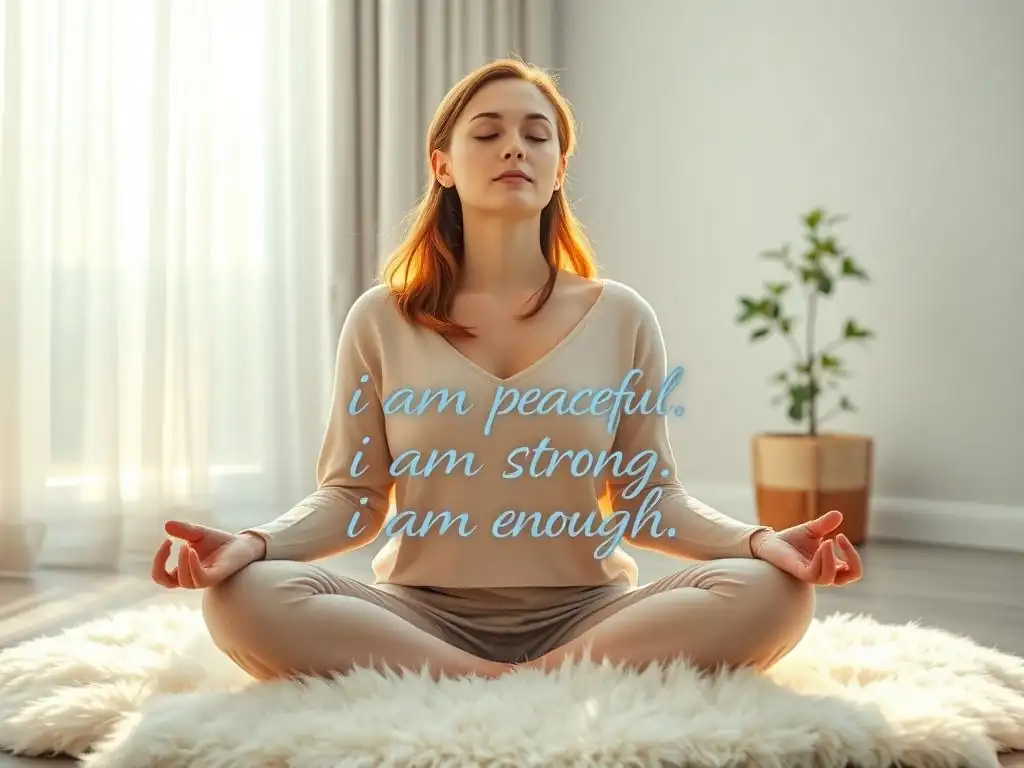
Integrating Affirmations into Your Relaxation Practice: A Step-by-Step Approach
Combining affirmations with relaxation techniques can feel more natural and effective than using them separately. Here is a simple approach to get started:
- Choose Your Relaxation Technique: Select a method you find comfortable and accessible, such as diaphragmatic breathing, PMR, or a simple body scan meditation.
- Identify Your Stressors and Negative Thoughts: Reflect on what triggers your anxiety and the specific negative thoughts that arise (e.g., "I can't handle this," "I'm not good enough").
- Formulate Relevant Affirmations: Create positive statements that directly counteract those negative thoughts (e.g., "I am capable and strong," "I am enough"). Keep them concise and in the present tense.
- Set the Environment: Find a quiet, comfortable space where you won't be disturbed for the duration of your practice.
- Begin Your Relaxation Technique: Start with your chosen method, focusing on the physical sensations or the breath.
- Introduce Affirmations: Once you feel a degree of physical relaxation, gently introduce your chosen affirmations. Repeat them silently or softly aloud, coordinating them with your breath (e.g., on the inhale or exhale) or with the release of tension in PMR.
- Maintain Focus: If your mind wanders (which it will), gently guide it back to the relaxation technique and the affirmation without judgment.
- Conclude and Reflect: After your session (perhaps 5-20 minutes), take a moment to notice how you feel physically and mentally.
This structured approach helps create a ritual that reinforces the positive connection between calming the body and empowering the mind. Regular practice, even for just a few minutes each day, can build momentum towards greater stress resilience.
Developing Personalized Affirmations for Stress and Anxiety Reduction
Effective affirmations are personal and directly address your specific challenges. Generic positive statements might not resonate as deeply as those tailored to your unique experiences and negative thought patterns. The goal is to create affirmations that feel authentic and counter the specific anxieties you face. This process involves self-reflection and honesty about your internal dialogue.
Identifying Stress-Inducing Negative Thought Patterns
The first step is to become aware of the negative self-talk that contributes to your stress and anxiety. This might involve journaling, mindfulness, or simply paying closer attention to your thoughts in stressful situations. Common patterns include:
- Catastrophizing: Assuming the worst possible outcome.
- All-or-Nothing Thinking: Seeing things as purely good or bad, with no middle ground.
- Mind Reading: Assuming you know what others are thinking, usually negatively.
- Fortune Telling: Predicting negative outcomes.
- Should Statements: Criticizing yourself or others with "shoulds" and "shouldn'ts."
- Labeling: Assigning negative labels to yourself or others.
By identifying these specific patterns, you can pinpoint the core beliefs that need to be challenged. For example, if you constantly think, "I'm going to fail this presentation," the underlying pattern might be fortune-telling or catastrophizing, fueled by a fear of not being good enough. Becoming aware of these specific internal narratives is crucial for crafting affirmations that are truly impactful.
Formulating Affirmations to Challenge Negative Thoughts
Once negative patterns are identified, formulate affirmations that directly contradict them in a positive, present-tense manner. Ensure affirmations are believable and feel right to you; they shouldn't feel like outright lies. For instance, if "I am perfectly confident" feels too far from your current reality, try "I am growing in confidence each day" or "I am capable of handling challenges."
Key principles for formulating effective affirmations include:
- Positive Language: State what you want to be true, not what you don't want. (e.g., "I am calm" instead of "I am not anxious").
- Present Tense: Frame statements as if they are already true. (e.g., "I am relaxed" instead of "I will be relaxed").
- Personal: Use "I" or "My."
- Specific (but not overly rigid): Relate to the specific issue but allow for flexibility.
- Realistic and Believable: They should feel aspirational but not impossible.
If you struggle with the thought "I never have enough time," a counter-affirmation could be "I manage my time effectively and prioritize what matters" or "I have exactly enough time for what I need to do." Crafting these personalized statements makes the practice of using positive affirmations reduce anxiety stress much more potent.
Examples of Affirmations for Stress and Anxiety
Here are some examples of affirmations tailored to common stress and anxiety themes. Remember to adapt these to fit your personal situation and make them feel authentic to you.
- For General Anxiety:
I am calm and at peace.This moment is safe.I breathe in peace, I breathe out worry.I am grounded and centered.
- For Stress Related to Work/Tasks:
I am capable of handling my tasks.I approach challenges with confidence.I prioritize effectively and manage my workload.I trust in my ability to succeed.
- For Social Anxiety:
I am worthy of connection.I am comfortable being myself.I communicate clearly and confidently.I am accepted and valued.
- For Health Anxiety:
My body is strong and resilient.I trust my body's wisdom.I am calm and healthy.I listen to my body with kindness.
- For Overwhelm:
I handle things one step at a time.I am capable of managing what is on my plate.I can pause and breathe.I release the need to control everything.
Using these examples as a starting point, you can refine them to perfectly match the specific anxieties you aim to address, making your practice of using positive affirmations reduce anxiety stress highly effective.
Practical Strategies for Effective Affirmation and Relaxation
Setting Achievable Goals for Stress Management
Approaching stress management with realistic expectations is crucial for long-term success and avoiding frustration. Instead of aiming to eliminate all stress immediately, set small, achievable goals. For example, a goal might be to practice 5 minutes of diaphragmatic breathing with affirmations daily for a week, or to use PMR with affirmations whenever you feel physical tension rising. These smaller steps build consistency and confidence.
Measure your progress not just by how much stress you feel, but by your consistency in practice and your ability to notice and challenge negative thoughts when they arise. Perhaps your goal is simply to remember to pause and take three deep breaths with an affirmation during a stressful meeting. Celebrating these small victories reinforces the positive habit and motivates continued effort. Setting a specific, measurable, achievable, relevant, and time-bound (SMART) goal, such as "Practice breathing and affirmations for 10 minutes before work three times this week," can provide a clear path forward.
Consistency in Affirmation and Relaxation Practices
Consistency is arguably the most important factor in harnessing the power of affirmations and relaxation techniques. Just as physical exercise builds muscle over time, regular mental practice strengthens positive neural pathways and improves your ability to relax on command. Sporadic practice yields limited results, but integrating these techniques into your daily routine, even for short periods, can create significant cumulative benefits.
Consider scheduling your practice at the same time each day, perhaps upon waking, before bed, or during a lunch break. Link it to an existing habit, like your morning coffee or evening routine. Even 5-10 minutes of focused practice daily is more effective than an hour once a week. Over time, this consistency will help your brain and body become more responsive to the calming effects of the techniques, making it easier to use positive affirmations reduce anxiety stress effectively when needed.
Cultivating a Supportive Environment for Mental Wellness
Your environment plays a significant role in your ability to practice relaxation and affirmations consistently and effectively. This includes both your physical surroundings and your social network. Create a dedicated space for your practice, even if it's just a quiet corner where you won't be interrupted. Ensure it is comfortable and free from distractions like phones or clutter.
Beyond the physical space, cultivating a supportive social environment is also beneficial. While affirmations are a personal practice, discussing your journey towards mental wellness with trusted friends, family, or a therapist can provide encouragement and accountability. Sharing your experiences can also normalize the challenges of managing stress and anxiety, reducing feelings of isolation. Surrounding yourself with positive influences reinforces your commitment to self-care and makes it easier to maintain consistent practice, ultimately enhancing the impact of using positive affirmations reduce anxiety stress.
Addressing Challenges in Affirmation and Relaxation Practices
Overcoming Skepticism and Negative Self-Perceptions
One of the most common hurdles when starting with affirmations is skepticism, often stemming from a lifetime of negative self-talk or past experiences. It can feel awkward or even false to repeat positive statements that seem to contradict your current feelings or beliefs. This resistance is normal and often indicates that the affirmations are targeting deep-seated negative core beliefs.
To overcome skepticism, start small and choose affirmations that feel gently aspirational rather than drastically different from your reality. As mentioned earlier, "I am growing in confidence" might be more believable than "I am perfectly confident." Combine affirmations with physical relaxation techniques, as the tangible experience of calming the body can make the mental shift feel more accessible.
Be patient and compassionate with yourself; changing ingrained thought patterns takes time and consistent effort. Recognize that the goal isn't necessarily to believe the affirmation implicitly from day one, but to introduce a new, positive possibility into your internal dialogue and weaken the dominance of the negative one.
Managing Distractions During Relaxation and Affirmation
Distractions, both external and internal, are inevitable during relaxation and affirmation practices. External distractions might include noise, interruptions, or an uncomfortable environment. Internal distractions are often thoughts, worries, or physical sensations that pull your attention away from your chosen technique and affirmations.
Managing distractions is a core skill developed through mindfulness. When you notice your mind wandering, acknowledge the thought or sensation without judgment and gently guide your attention back to your breath, body scan, or the affirmation you were repeating. Think of it like training a puppy – the mind will wander, and your job is to patiently and repeatedly bring it back.
If external distractions are a major issue, try practicing at different times of day, using earplugs, or communicating your need for quiet time to others in your household. Remember that the practice isn't about achieving a perfectly empty mind, but about building the capacity to notice distractions and return to your point of focus, which is a vital skill for using positive affirmations reduce anxiety stress in daily life.
Long-Term Benefits of Integrated Affirmation and Relaxation
Enhanced Mental Resilience and Emotional Regulation
Consistent practice of combining positive affirmations with relaxation techniques significantly contributes to enhanced mental resilience. Resilience is the ability to bounce back from adversity, stress, and challenges. By regularly engaging in practices that calm the nervous system and promote positive self-talk, individuals build a stronger internal foundation. They become better equipped to navigate stressful situations without being completely overwhelmed by anxiety or negative thoughts.
This integrated approach also improves emotional regulation – the ability to understand and manage one's emotional responses. Relaxation techniques provide tools to calm intense emotions in the moment, while affirmations help reshape the underlying beliefs and thought patterns that contribute to emotional reactivity.
Over time, individuals may find they react less intensely to stressors, recover more quickly from emotional upsets, and experience a more stable mood overall. Studies exploring the effects of mindfulness-based stress reduction (MBSR), which incorporates elements of both mindfulness and relaxation, often report participants experiencing sustained reductions in perceived stress levels and improved emotional processing capabilities months after completing a program.
Reduced Anxiety and Improved Overall Well-being
The most direct long-term benefit of consistently using positive affirmations reduce anxiety stress through integrated practice is a tangible reduction in anxiety levels and a significant improvement in overall well-being. As the brain's pathways for positive thinking are strengthened and the body's stress response is better regulated, the frequency and intensity of anxious feelings tend to decrease. This doesn't mean anxiety disappears entirely, but it becomes more manageable and less debilitating.
Improved well-being extends beyond just the absence of anxiety. Regular practice can lead to increased self-compassion, greater self-awareness, and a more optimistic outlook on life. Individuals often report feeling more in control of their reactions, experiencing better sleep, and having more energy as the burden of chronic stress and anxiety is lessened.
The cumulative effect of daily moments of calm and positive self-reinforcement creates a positive feedback loop, fostering a more peaceful and fulfilling existence. Many practitioners find that after several months of consistent practice (e.g., 10-15 minutes daily), their baseline anxiety levels may decrease by a noticeable percentage, potentially 20-30% or more, compared to when they began, alongside improvements in general life satisfaction.
Resources for Further Learning on Affirmations and Relaxation
For those interested in exploring the integration of affirmations and relaxation techniques further, a wealth of resources is available. Many reputable mental health websites and organizations offer detailed guides and audio instructions for various relaxation methods like diaphragmatic breathing, progressive muscle relaxation, and mindfulness meditation. Books on cognitive behavioral therapy (CBT) or positive psychology often delve deeper into the principles behind affirmations and changing thought patterns.
Additionally, guided meditations that incorporate positive themes or affirmations can be found through various platforms. Exploring these resources can provide deeper understanding and practical tools to enhance your personal practice and continue harnessing the power of positive affirmations reduce anxiety stress for improved well-being.
Frequently Asked Questions
How can positive affirmations help reduce anxiety and stress?
Positive affirmations can help by reframing negative thought patterns and promoting a more optimistic mindset. This, in turn, can lower stress hormones and reduce feelings of anxiety. Combining them with relaxation techniques amplifies their effect.
What are some examples of positive affirmations that can be used for anxiety?
Examples include: "I am capable of handling whatever comes my way," "I am safe and secure in this moment," and "I choose to focus on the positive."
What relaxation techniques work well with positive affirmations?
Deep breathing exercises, progressive muscle relaxation, and mindfulness meditation are all effective relaxation techniques. Combining these with affirmations can create a powerful calming effect.
How often should I practice affirmations and relaxation techniques to see results?
Consistency is key. Aim for at least 10-15 minutes daily. You may start noticing subtle improvements within a few weeks, with more significant benefits over time.
Are there any potential drawbacks to using positive affirmations for anxiety?
While generally safe, affirmations might not be effective for everyone. It's crucial to ensure the affirmations are realistic and believable to you. If anxiety persists or worsens, seeking professional help is recommended.
Final Reflection: Unlocking Inner Peace Through Affirmations and Relaxation
The power of positive affirmations, when combined with effective relaxation techniques, isn't just a fleeting trend; it's a potent tool for navigating the anxieties and stresses of modern life. In a world increasingly demanding our attention and energy, mastering techniques to cultivate inner calm is not a luxury, but a necessity for overall well-being. This article explored the synergistic relationship between these two powerful practices, offering practical strategies for integrating them into daily routines.
The impact of consistent self-affirmation and relaxation on mental and emotional health is undeniable. It's a journey of self-discovery, revealing the resilience and strength we often overlook. The mind is everything. What you think you become.
- Buddha. This ancient wisdom rings truer than ever in our current climate of constant pressure and information overload. By consciously choosing positive thoughts and incorporating relaxation practices, we actively shape our internal landscape, fostering a sense of peace and control amidst the chaos.
Now, consider how you can integrate these practices into your own life. Begin by identifying one area where you experience stress or anxiety. Choose a specific affirmation tailored to that area, and pair it with a relaxation technique that resonates with you – deep breathing, meditation, progressive muscle relaxation, or even a calming walk in nature. Commit to practicing this daily, even for just five minutes. Observe the subtle shifts in your perspective and emotional state. You hold the key to unlocking your inner peace; this is your invitation to begin.
Unlock Your Inner Calm: Start Your Journey Today!
Thanks for taking the time to explore the power of combining affirmations with relaxation techniques! We hope you've gained valuable insights into how these practices can transform your well-being. Now it's time to put your newfound knowledge into action.
- Begin your personalized affirmation practice: Create three affirmations focused on areas you'd like to improve, and repeat them daily during your relaxation practice. This is your primary focus – consistency is key!
- Share your experience: Connect with others on our social media pages and share your affirmation journey. Inspire others to find their inner peace!
- Explore different relaxation techniques: Try experimenting with different methods like deep breathing, progressive muscle relaxation, or guided meditation. Find what resonates with you best.
What specific affirmation will you focus on to bring more calm and peace into your daily life? Let's discuss in the comments below!