
Beyond Steps: Understanding Your Wearable's Stress Score


Welcome to Mind Care Guide, your sanctuary for navigating the complexities of mental well-being. Feeling overwhelmed by the numbers your wearable throws at you? You're not alone. This guide dives deep into wearable stress score interpretation, helping you unlock the secrets hidden within those metrics. Are you ready to move beyond simple step counts and truly understand what your body is telling you about your stress levels? Let's begin.
Beyond Steps: Understanding Your Wearable's Stress Score
- Introduction: Decoding Your Wearable's Stress Insights for Mind Care
- Understanding Your Wearable's Stress Score: A Comprehensive Guide
- Interpreting Your Wearable's Stress Score: What Do the Numbers Mean?
- Popular Wearable Stress Trackers: A Comparative Analysis
- Beyond the Score: Using Wearable Data for Actionable Stress Management
- Maximizing Your Wearable's Stress Tracking Capabilities
- Conclusion: Empowering Your Mental Well-being with Wearable Stress Insights
-
Frequently Asked Questions
- What exactly is a wearable stress score, and what does it measure?
- How accurate are wearable stress scores in reflecting my actual stress levels?
- What factors besides actual stress can influence my wearable's stress score?
- My wearable indicates high stress, but I don't feel stressed. What should I do?
- What are some practical ways to use my wearable's stress score to improve my mental well-being?
- Final Reflection: Decoding the Data, Understanding Ourselves
- Unlock Your Inner Calm: Master Your Stress Score
Introduction: Decoding Your Wearable's Stress Insights for Mind Care
Why Track Stress with Wearable Tech? An Overview of Mental Well-being Benefits
Tracking stress with wearable technology offers a tangible way to gain insights into your body's physiological responses throughout the day. Unlike subjective feelings, which can be hard to pin down, data from a wearable device provides objective metrics related to your stress levels. This objective data can help individuals identify patterns, understand triggers, and recognize periods of high stress they might otherwise dismiss or not fully perceive until symptoms become overwhelming. By monitoring these physiological signals, users can become more attuned to their body's state, fostering a deeper connection between physical sensations and emotional well-being.
Furthermore, the ability to track stress over time allows for proactive mental health management. Seeing how your stress score changes in response to different activities, environments, or even sleep quality empowers you to make informed decisions about your lifestyle. For instance, noticing a consistently high wearable stress score interpretation after late-night work sessions might prompt you to adjust your schedule, or observing a drop after meditation could reinforce that practice.
This data-driven approach moves beyond guesswork, providing actionable information that supports stress reduction strategies and promotes overall mental resilience. It shifts the focus from reacting to stress to actively managing it, aligning well with a comprehensive approach to mind care.
Wearable Stress Score Interpretation: More Than Just Numbers
Interpreting your wearable's stress score involves looking beyond the single number presented on your device or app. While a score might give you a quick snapshot, understanding its true meaning requires context. Factors such as your recent activity, sleep quality, hydration, and even caffeine intake can significantly influence the score. A seemingly high score might be a temporary response to a strenuous workout, not necessarily chronic mental stress. Therefore, effective wearable stress score interpretation necessitates examining the score in conjunction with other data points the wearable collects, as well as considering your personal circumstances and feelings at that moment.
Moreover, the value of a wearable stress score lies not just in the score itself, but in what it prompts you to do. A low score might indicate a good state of recovery, encouraging you to maintain current habits. A high score, however, serves as a potential prompt to pause, reflect, and potentially engage in stress-reducing activities.
It's about using the data as a starting point for self-awareness and action, not just a label. Learning effective wearable stress score interpretation transforms the data from a passive reading into an active tool for improving your mental well-being and making healthier choices throughout your day.
Understanding Your Wearable's Stress Score: A Comprehensive Guide
What is a Wearable Stress Score? Defining and Explaining the Metric
A wearable stress score is a metric calculated by wearable devices to provide an estimation of your body's current physiological stress level. This score is typically derived from analyzing various biometric data points collected by the device's sensors, primarily focusing on indicators of your autonomic nervous system (ANS) activity. The ANS controls involuntary bodily functions like heart rate, breathing, and digestion, and its response is highly sensitive to both physical and mental stressors. Different devices use proprietary algorithms to process this data and translate it into a numerical score or a categorical indicator (e.g., Low, Medium, High).
The specific range and meaning of a stress score can vary significantly between brands and models. For example, Garmin's stress score often ranges from 0 to 100, while Fitbit's Stress Management Score is based on a scale up to 100, but represents daily impact rather than real-time stress.
Understanding the specific methodology and scale used by your device is crucial for accurate wearable stress score interpretation. Regardless of the specific scale, the core idea is to provide a data-driven snapshot of how your body is responding to the demands placed upon it, whether those demands are from physical exertion, emotional challenges, or lack of rest.
How Wearable Devices Measure Stress: A Look at the Underlying Technology
Wearable devices employ a combination of sensors to gather the data needed to calculate a stress score. The most common and significant metric used is Heart Rate Variability (HRV), but some advanced devices may also incorporate data from skin conductance sensors, respiration rate monitoring, and even temperature sensors. These sensors work together to paint a physiological picture of your body's state, particularly the balance between the sympathetic nervous system (responsible for the "fight or flight" response) and the parasympathetic nervous system (responsible for "rest and digest").
The accuracy of stress measurement relies heavily on the quality of the sensor data and the sophistication of the algorithm processing it. Factors like proper device fit, movement, and even environmental conditions can influence readings. While these technologies provide valuable insights, it's important to remember they are estimating physiological stress based on surrogate markers, not directly measuring psychological stress. Therefore, effective wearable stress score interpretation always involves correlating the device's data with how you are actually feeling.
Heart Rate Variability (HRV) and Stress: The Key Connection
Heart Rate Variability (HRV) is the variation in the time interval between consecutive heartbeats. Contrary to what might seem intuitive, a higher HRV is generally associated with a healthier, more resilient autonomic nervous system and lower stress levels. This is because a higher HRV indicates that your heart rate is readily adapting to various demands, showing a good balance between sympathetic and parasympathetic activity. When you are stressed, the sympathetic nervous system tends to dominate, leading to a more rigid heart rhythm and thus a lower HRV.
Wearable devices measure HRV using their optical heart rate sensors, typically during periods of rest or sleep for the most accurate baseline. The device analyzes the subtle changes in the timing between beats over a period. A low HRV reading often contributes to a higher calculated stress score on devices that utilize this metric for wearable stress score interpretation. Tracking trends in your HRV over days and weeks provides a valuable perspective on your overall stress load and recovery state, offering a deeper physiological insight than just looking at heart rate alone.
Skin Conductance and Stress: An Emerging Measurement Technique
Skin conductance, also known as electrodermal activity (EDA), measures changes in the electrical conductivity of your skin, which is influenced by sweat gland activity. Sweat glands are controlled by the sympathetic nervous system. When you experience stress or heightened emotional states, your sweat glands become more active, even if you don't visibly sweat, leading to an increase in skin conductivity. This physiological response is involuntary and can serve as an indicator of arousal or stress.
Some advanced wearables, like the Fitbit Sense series, incorporate EDA sensors to capture these subtle changes. The device sends a tiny, imperceptible electrical current through the skin (usually via electrodes on the back or side of the watch) and measures the resistance. A decrease in resistance (indicating increased conductivity) is interpreted as a potential stress response. While not as universally implemented as HRV, skin conductance provides another physiological data point that contributes to a more nuanced wearable stress score interpretation, particularly for detecting acute stress responses.
Respiration Rate and Stress: Monitoring Breathing Patterns
Respiration rate, or the number of breaths you take per minute, is another physiological indicator that can be influenced by stress. While conscious breathing exercises can lower stress, stress itself often leads to shallower, faster breathing. Monitoring changes in your resting respiration rate can therefore offer clues about your body's stress and recovery state. A consistently elevated resting respiration rate might suggest ongoing stress or poor recovery.
Wearable devices often estimate respiration rate by analyzing the subtle movements of your chest or wrist, or by correlating it with changes in heart rate variability. While perhaps less directly linked to the autonomic nervous system's stress response than HRV or skin conductance, respiration rate provides a complementary data point. Including respiration rate in the calculation allows devices to build a more comprehensive model for wearable stress score interpretation, adding another layer of physiological insight into your daily well-being.
Interpreting Your Wearable's Stress Score: What Do the Numbers Mean?
Low Stress Score: What Does a Calm Reading Indicate?
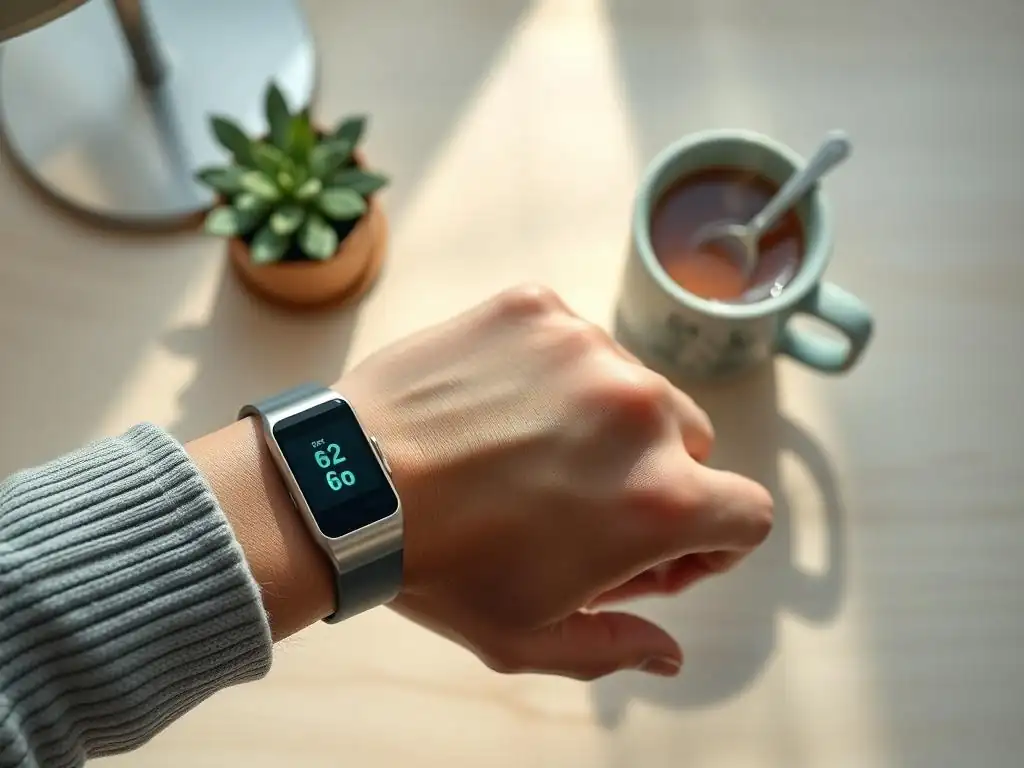
A low wearable stress score, typically represented by a score in the lower range of your device's scale (e.g., 0-25 on a 0-100 scale, or a "Rest" or "Calm" indicator), generally signifies that your body is in a state of rest, relaxation, or recovery. Physiologically, this often correlates with a balanced or parasympathetic-dominant autonomic nervous system state, characterized by higher Heart Rate Variability (HRV). Receiving a low stress score is usually a positive sign, indicating that your body is effectively managing demands and has sufficient resources for recovery.
These readings are common during periods of sleep, relaxation activities like meditation or gentle yoga, or simply when you are feeling calm and rested. A consistently low stress score when you are awake but inactive suggests a good baseline level of resilience. However, it's worth noting that an extremely low stress score or persistently low HRV, even during activity, could in rare cases indicate other underlying health issues, though for most users, it simply reflects a state of low physiological arousal and effective recovery, which is beneficial for mental well-being.
Moderate Stress Score: Understanding Elevated but Manageable Stress Levels
A moderate wearable stress score, often falling in the middle range (e.g., 26-50 on a 0-100 scale, or a "Low" to "Medium" indicator), suggests that your body is experiencing some level of physiological stress, but it is likely manageable and not indicative of significant overload. This level of stress can be a normal part of daily life, associated with moderate physical activity, engaging work tasks, or minor daily hassles. Physiologically, it might correspond to a slight decrease in HRV or minor increases in other stress indicators.
Interpreting a moderate score requires context. Did it occur during a challenging meeting? While rushing to catch a train? Or during a moderately intense workout?
These are all situations where an elevated stress response is natural and temporary. The key is to observe if moderate stress levels persist for extended periods or if they occur during times when you feel you should be relaxed. A moderate score serves as a reminder to check in with yourself – are you feeling overwhelmed, or is this just your body responding normally to daily demands? It highlights the need for awareness and potentially incorporating short breaks or mindfulness exercises.
High Stress Score: Recognizing Warning Signs and Potential Overload
A high wearable stress score, typically represented by a score in the upper range (e.g., 51-100 on a 0-100 scale, or a "High" or "Very High" indicator), is a significant signal that your body is under considerable physiological strain. This level often correlates with a strong sympathetic nervous system response, marked by significantly lower Heart Rate Variability (HRV), and potentially elevated heart rate and respiration. A high score can be triggered by intense physical exertion, acute emotional distress, illness, lack of sleep, significant mental workload, or even factors like dehydration or caffeine sensitivity.
While a high score during intense exercise is expected, a high score during periods of rest or moderate activity is a potential warning sign of chronic stress, burnout, or illness. Persistent high wearable stress score interpretation should prompt you to investigate potential causes and take action. This might involve prioritizing rest, engaging in deliberate stress-reduction techniques, evaluating your workload, or considering whether you are fighting off an illness. Ignoring consistently high stress scores can have detrimental effects on both physical and mental health, making this reading a critical piece of data for proactive mind care.
Case Study: Interpreting a High Stress Score on a Fitbit Inspire 3 After a Presentation
Consider Sarah, who uses a Fitbit Inspire 3 to track her daily activity and stress. One afternoon, after giving a major presentation at work, her Fitbit app shows a Stress Management Score significantly lower than her daily average (a lower score on Fitbit indicates higher impact from stress). Her real-time stress reading, if available, might also show a high peak during and immediately after the presentation, followed by a gradual decline.
Sarah's wearable stress score interpretation in this scenario would involve recognizing that the high reading is a physiological response to an acutely stressful event (the presentation). While the high score confirms her subjective feeling of being "pumped up" or nervous, it also serves as a reminder that her body is now in a state of heightened alert.
A responsible interpretation would lead Sarah to prioritize recovery: perhaps taking a few deep breaths, going for a short, relaxing walk, or ensuring she gets adequate rest that evening. If her stress score remained elevated for hours afterward despite relaxing, it might indicate that the presentation had a more significant or lasting impact than she initially thought, prompting her to engage in more deliberate stress recovery activities like meditation or spending time in nature.
This specific example highlights how a wearable stress score can validate feelings and guide immediate actions for better stress management.
Popular Wearable Stress Trackers: A Comparative Analysis
Fitbit Stress Management Score: Features and Accuracy Breakdown
Fitbit devices, particularly those in the Sense and Charge lines, offer a Stress Management Score, which is a daily score ranging up to 100. This score is calculated based on three main components: your responsiveness (measured through Heart Rate Variability and potentially EDA responses on Sense models), your exertion balance (impact of physical activity), and your sleep patterns.
A higher score indicates that your body is showing fewer physical signs of stress. Unlike real-time stress scores offered by some other brands, Fitbit's score is a reflection of your daily physiological state and how well your body handled the day's demands.
The accuracy of the Fitbit Stress Management Score relies on the quality of its sensor data, particularly during sleep when HRV is typically measured most reliably. While it doesn't provide moment-to-moment stress readings, its strength lies in offering a holistic daily summary that incorporates multiple factors known to influence stress and recovery. Users can see how different days compare and how lifestyle choices like sleep, exercise, and potentially mindfulness practices impact their score. This daily wearable stress score interpretation helps users identify trends and the cumulative effect of daily stressors.
Fitbit Sense 2: A Detailed Look at its Stress Tracking Capabilities
The Fitbit Sense 2 is positioned as a health-focused smartwatch with advanced stress tracking features. Its key differentiator is the continuous electrodermal activity (cEDA) sensor, which monitors skin conductance throughout the day and night. This allows the Sense 2 to not only contribute EDA data to the daily Stress Management Score but also to provide notifications about potential stress responses detected in real-time. When the cEDA sensor detects significant fluctuations, the watch may prompt the user to reflect on their current emotional state or engage in a guided mindfulness session directly from the wrist.
In addition to cEDA, the Sense 2 tracks HRV during sleep and assesses the impact of activity and sleep on overall stress load for the daily Stress Management Score. This combination of continuous cEDA monitoring for acute responses and the daily composite score provides a more comprehensive picture of stress than devices relying solely on HRV. The Sense 2 aims to move beyond just reporting a wearable stress score interpretation by integrating prompts and tools for immediate stress coping.
Fitbit Inspire 3: A Budget-Friendly Option for Stress Monitoring
The Fitbit Inspire 3 is a more accessible activity tracker that includes stress monitoring features, albeit less advanced than premium models like the Sense 2. It calculates the daily Stress Management Score by analyzing Heart Rate Variability (HRV) during sleep, activity levels throughout the day (exertion balance), and sleep patterns. While it lacks the continuous EDA sensor found in the Sense series, it still utilizes core metrics to provide users with a valuable daily snapshot of their physiological stress resilience.
For users seeking basic wearable stress score interpretation without the higher cost of a smartwatch, the Inspire 3 offers a solid entry point. The daily score provides a useful benchmark for understanding how lifestyle factors influence stress over time. Users can track how changes in sleep duration, exercise intensity, or relaxation practices correlate with changes in their Stress Management Score, empowering them to make simple, impactful adjustments to their routine based on their wearable data.
Garmin Body Battery: Energy Levels and Stress Correlation
Garmin's approach to stress tracking is often represented by its "Body Battery" metric, which estimates your energy reserves based on Heart Rate Variability (HRV), stress levels, and sleep quality. While Garmin also provides a real-time stress score (0-100, based primarily on HRV), the Body Battery offers a more intuitive representation of your overall physiological state – think of it as a personal energy gauge that charges when you rest and discharges when you experience stress (physical or mental) or activity.
A high Garmin stress score will typically cause your Body Battery to drain faster, while periods of rest and recovery (indicated by low stress scores and good sleep) will charge it. This correlation provides a practical wearable stress score interpretation: a high stress score indicates something is depleting your energy reserves. Monitoring your Body Battery alongside your stress score helps you understand the cumulative impact of stressors and recovery on your overall well-being and readiness.
Garmin Venu 3: Advanced Health Metrics for Stress Management
The Garmin Venu 3 is a feature-rich smartwatch that integrates advanced health tracking, including detailed stress monitoring via its real-time stress score and Body Battery. Leveraging its advanced optical heart rate sensor, the Venu 3 provides continuous stress tracking throughout the day, analyzing HRV to generate a score from 0 to 100. It visually represents this score on the watch face and in the Garmin Connect app, allowing users to see stress fluctuations minute by minute.
The Venu 3 also offers stress-related features like guided breathwork exercises accessible directly from the watch, which users can initiate when they notice a high stress score or feel overwhelmed. The integration of the real-time stress score with the Body Battery, sleep tracking, and other health metrics in the Garmin Connect app provides a robust platform for wearable stress score interpretation and actionable insights, helping users understand why their energy levels are low or high and how stress impacts their daily readiness.
Garmin Forerunner 265: Balancing Performance and Stress Tracking
The Garmin Forerunner 265, primarily a running watch, also incorporates comprehensive health monitoring, including the real-time stress score and Body Battery. While its focus is on training and performance, understanding stress levels is crucial for optimal recovery and preventing overtraining. The Forerunner 265 uses HRV data collected throughout the day and night to calculate the stress score (0-100), displaying it alongside performance metrics.
For athletes and active individuals, the wearable stress score interpretation on the Forerunner 265 is particularly valuable for balancing training load with recovery. A persistently high stress score, even during rest days, might indicate insufficient recovery from training, underlying illness, or significant non-training stress. By monitoring stress alongside training metrics like Training Status and Acute Load, users can make more informed decisions about when to push harder and when to prioritize rest, directly impacting their athletic performance and overall health.
Apple Watch and Stress: Mindfulness Apps and HRV Data
The Apple Watch doesn't offer a single, dedicated "stress score" metric in the same way as Fitbit or Garmin. Instead, it provides tools and data points that users can leverage for stress awareness and management, primarily through Heart Rate Variability (HRV) measurements and integration with mindfulness apps. The Apple Watch automatically measures HRV periodically throughout the day and night, and this data is accessible in the Health app on the paired iPhone.
While there isn't an official Apple "wearable stress score interpretation," users can look at their HRV trends in the Health app. A noticeable decline in average HRV over time could indicate increased stress, poor recovery, or illness. Furthermore, the Apple Watch promotes stress reduction through its built-in Mindfulness app (formerly Breathe), offering guided breathing exercises. Third-party apps on the App Store can also utilize the Apple Watch's sensors to provide more direct stress estimations or guided stress-relief programs, integrating HRV and potentially other metrics like heart rate peaks during periods of stillness.
Using the Apple Watch Series 9 with Mindfulness Apps for Stress Reduction
The Apple Watch Series 9, with its enhanced sensors and processing power, serves as an excellent platform for using mindfulness apps for stress reduction. The built-in Mindfulness app offers guided breathing and reflection sessions that can be initiated directly from the watch, providing a quick way to de-stress throughout the day. Many popular third-party mindfulness and meditation apps, like Calm or Headspace, have dedicated Apple Watch apps that offer guided sessions, ambient sounds, and mindful prompts.
By integrating these apps, users can receive reminders to take mindful breaks and track their progress in managing stress. While the Apple Watch Series 9 doesn't give a specific wearable stress score interpretation, the act of engaging with these apps, particularly when feeling stressed, aligns with using wearable technology proactively for mental well-being. The data from the watch, such as heart rate during a breathing session, can also provide feedback on the physiological impact of these practices.
Understanding HRV Data on Your Apple Watch for Stress Assessment
Understanding your Heart Rate Variability (HRV) data on your Apple Watch is key to using it for stress assessment. The watch passively collects HRV data, which is then stored and displayed in the Health app on your iPhone under the "Heart" section. You can view your average daily, weekly, monthly, or yearly HRV. While there's no single "good" HRV number (it varies significantly from person to person), tracking your personal trend is crucial for wearable stress score interpretation using Apple's platform.
A significant drop below your personal baseline HRV, especially when combined with feelings of fatigue or illness, is a strong indicator of increased physiological stress or insufficient recovery. Conversely, an increase in average HRV often correlates with improved fitness, better sleep, and effective stress management. While it requires a bit more manual interpretation compared to a dedicated stress score, monitoring HRV on the Apple Watch provides valuable insight into your autonomic nervous system's response to life's demands and helps inform your stress management strategies.
Oura Ring: Sleep, Recovery, and Stress Insights
The Oura Ring is a popular smart ring known for its focus on sleep tracking and recovery, which are intrinsically linked to stress management. While it doesn't provide a real-time stress score in the same way as some watches, it offers a comprehensive "Readiness Score" each morning, calculated based on sleep quality, HRV, resting heart rate, body temperature, and activity from the previous day. This Readiness Score serves as a powerful indicator of your body's capacity to handle physical and mental stress on any given day.
The Oura app provides detailed graphs of your nightly HRV and resting heart rate, two primary physiological markers influenced by stress. A lower than usual Readiness Score, often driven by poor sleep and/or lower HRV, is a strong signal that your body is under stress and requires recovery. The Oura Ring's wearable stress score interpretation is integrated into its overall Readiness Score, providing a holistic view of your body's state and guiding decisions about how to approach the day's demands.
Oura Ring Generation 3: Tracking Sleep and Stress for Optimal Recovery
The Oura Ring Generation 3 enhances its ability to track sleep and stress for optimal recovery. It collects highly accurate data on sleep stages, duration, and efficiency, which are fundamental pillars of stress resilience. During sleep, it precisely measures Heart Rate Variability (HRV) and resting heart rate, providing crucial insights into autonomic nervous system function. Lower sleep HRV or an elevated resting heart rate contribute negatively to the daily Readiness Score, indicating physiological stress or poor recovery.
Beyond sleep, the Gen 3 also tracks body temperature deviations, which can signal illness or stress. The app provides detailed graphs of these metrics, allowing users to see how specific nights of sleep, periods of high activity, or stressful events impact their HRV and readiness. This granular data supports sophisticated wearable stress score interpretation, enabling users to understand the root causes behind periods of low readiness and make targeted adjustments to prioritize recovery and manage stress effectively.
Beyond the Score: Using Wearable Data for Actionable Stress Management
Linking Stress Scores to Daily Activities: Identifying Triggers
The true power of wearable stress score interpretation lies in connecting the numbers to your daily life. Instead of just observing a high score, make note of what you were doing, who you were with, or where you were when that score occurred. Did your stress spike during your morning commute? While checking work emails? After a challenging conversation? By cross-referencing your stress data with your calendar, journal entries, or simply mental notes, you can begin to identify specific activities, people, or situations that consistently trigger a physiological stress response.
Many wearable apps allow you to annotate your day or integrate with calendar apps to help facilitate this correlation. For example, noticing that your stress score consistently rises during afternoon meetings might indicate that those meetings are a significant stressor. Identifying these triggers is the first crucial step in developing targeted coping strategies. It moves wearable stress score interpretation from passive observation to active self-discovery and problem-solving, empowering you to modify your environment or your response to known stressors.
Using Wearable Data to Personalize Mindfulness Practices
Wearable stress data can help personalize and optimize your mindfulness and relaxation practices. If your wearable stress score interpretation indicates high stress levels during specific times of the day, you can schedule short mindfulness breaks or breathing exercises to coincide with those periods. For instance, if your stress tends to peak mid-morning, setting a reminder to do a 5-minute guided meditation prompted by your watch could help proactively lower your physiological response.
Furthermore, some advanced wearables can provide feedback on the effectiveness of your stress-reduction efforts. Devices with real-time stress or EDA tracking can show you if a breathing exercise or a walk in nature is actually helping to lower your physiological stress response in the moment. Others might show an improvement in your daily stress score or HRV trends over time as a result of consistent meditation or yoga practice. This data provides positive reinforcement and helps you identify which specific techniques are most effective for your body, making your stress management efforts more efficient and tailored.
Integrating Stress Scores with Therapy and Counseling
Wearable stress data can be a valuable tool to discuss with a therapist or counselor. Bringing objective data about your physiological stress responses to sessions can provide concrete examples and patterns that might be difficult to articulate solely based on subjective feelings. For instance, showing a therapist how your wearable stress score interpretation consistently shows high levels during weekends, contrary to your expectation of relaxing, could uncover underlying issues related to unstructured time or social pressures.
This data can help your therapist gain a clearer picture of when and how your body is reacting to stress, allowing them to tailor therapeutic strategies more effectively. It can also serve as a way to track progress; observing a decrease in your average stress score or an improvement in HRV over time could demonstrate the positive impact of therapy, coping skills learned, or lifestyle changes implemented. Integrating wearable data into the therapeutic process fosters a more informed and collaborative approach to managing stress and improving mental well-being.
Example: Using the Garmin Body Battery Data to Schedule Rest Days
John, a keen amateur runner, uses a Garmin Forerunner watch which tracks his Body Battery and stress score. He notices that after a particularly challenging training session, his Body Battery drops significantly (e.g., from 80 to 25), and his stress score remains moderately high (e.g., averaging 45-50) for the rest of the day and into the next morning. His Body Battery might only recharge to 60 overnight, rather than its usual 80-90 after adequate rest.
Using this wearable stress score interpretation alongside the Body Battery data, John understands that his body is still recovering and under physiological stress from the intense workout. Instead of sticking rigidly to his training plan which scheduled another hard run, he decides to schedule a rest day or opt for a very light recovery walk.
He prioritizes getting extra sleep and focusing on nutrition to aid recovery. This proactive decision, guided by his wearable data, helps prevent overtraining, reduces the risk of injury, and ensures his body is better prepared for future training sessions, demonstrating how wearable tech facilitates smarter, data-informed decisions for both physical and mental health.
Maximizing Your Wearable's Stress Tracking Capabilities
Calibrating Your Wearable for Accurate Readings
To ensure the most accurate wearable stress score interpretation, proper calibration and consistent use of your device are essential. Most wearables require you to wear them regularly, including during sleep, to establish a personal baseline for metrics like Heart Rate Variability (HRV) and resting heart rate. This baseline is crucial because stress scores and related metrics are often relative to your personal norms, not universal standards. Wearing the device snugly but comfortably on the recommended location (wrist or finger, depending on the device) also helps ensure the optical sensors can get clean readings.
Additionally, some devices might benefit from manual calibration or specific setup steps outlined in the user manual. Providing accurate personal information like age, height, and weight during setup can also improve the algorithms' calculations. Avoid wearing the device inconsistently or switching wrists frequently, as this can disrupt the baseline data collection and lead to less reliable wearable stress score interpretation. Treat your wearable as a continuous monitoring tool for the best results.
Understanding Limitations: When to Seek Professional Help
While wearable devices provide valuable physiological data for wearable stress score interpretation, it's critical to understand their limitations. They measure physiological responses that correlate with stress, but they do not measure psychological stress, emotional state, or mental health conditions directly. A high stress score doesn't diagnose anxiety or depression, and a low score doesn't mean you are immune to mental health challenges.
Wearable data should be used as a tool for self-awareness and potential early warning, not as a substitute for professional medical or mental health advice. If you are experiencing persistent feelings of overwhelm, anxiety, depression, or if your high stress scores are consistently accompanied by concerning physical symptoms, it is imperative to consult a doctor or mental health professional. Your wearable can provide data to support that conversation, but it cannot replace a clinical assessment and personalized care plan.
Combining Wearable Data with Other Stress Management Techniques
The most effective approach to stress management involves combining the insights gained from wearable stress score interpretation with a variety of proven stress-reduction techniques. Use your wearable data to inform when and why you engage in these techniques. For example, if your data shows a stress spike after checking emails, you might then practice deep breathing or take a short walk away from your screen. If your daily stress score is consistently high, it might signal the need to incorporate more regular activities like exercise, meditation, spending time in nature, or connecting with loved ones into your routine.
Wearable data can help you track the impact of these techniques over time. Do your stress scores or HRV improve after starting a regular yoga practice? Does your Body Battery recover better after prioritizing 8 hours of sleep compared to 6? By integrating wearable insights with practices like mindfulness, exercise, healthy eating, adequate sleep, and social connection, you create a powerful, personalized strategy for building resilience and improving your overall mental well-being. Your wearable becomes a partner in your journey towards better stress management, not the sole solution.
Conclusion: Empowering Your Mental Well-being with Wearable Stress Insights
Taking Control of Your Stress Levels: A Proactive Approach
Understanding and utilizing your wearable's stress insights is a powerful step towards taking proactive control of your stress levels and enhancing your mental well-being. By moving beyond just counting steps to interpreting your wearable stress score, you gain access to objective data about your body's physiological state. This data, whether it's a real-time score, a daily summary, or underlying metrics like HRV and Body Battery, provides valuable feedback on how life's demands are impacting you.
This knowledge empowers you to identify personal stress triggers, recognize patterns of response, and make informed decisions about your daily habits and routines. It allows you to move from a reactive stance—dealing with stress only when it becomes overwhelming—to a proactive one, where you can anticipate challenges, prioritize recovery, and implement coping strategies before stress becomes debilitating. Integrating wearable stress score interpretation into your self-care routine is a modern, data-driven approach to building resilience and fostering a healthier, more balanced mind.
Frequently Asked Questions
What exactly is a wearable stress score, and what does it measure?
A wearable stress score is a metric provided by devices like smartwatches and fitness trackers. It aims to quantify your stress level based on physiological data like heart rate variability (HRV) and sleep patterns. It gives you an insight into your body's stress response.
How accurate are wearable stress scores in reflecting my actual stress levels?
While helpful, wearable stress scores aren't perfect. They offer an estimation based on physiological data. Accuracy can vary depending on the device, individual physiology, and the algorithm used to calculate the score. Consider them as indicators, not definitive diagnoses.
What factors besides actual stress can influence my wearable's stress score?
Several factors can affect your score beyond psychological stress. These include physical activity, sleep quality, caffeine or alcohol consumption, and even underlying medical conditions. It's crucial to consider these when interpreting the data.
My wearable indicates high stress, but I don't feel stressed. What should I do?
Don't panic! First, consider the other factors mentioned above. If those are ruled out, it might be a signal to pay closer attention to your body. Try relaxation techniques or consult with a healthcare professional if you're concerned about potential underlying issues.
What are some practical ways to use my wearable's stress score to improve my mental well-being?
Use the score as a tool for self-awareness and early intervention. Identify trends linked to stressful situations. Use it to track the effectiveness of stress management techniques like meditation or exercise.
Final Reflection: Decoding the Data, Understanding Ourselves
The relentless pace of modern life demands we understand the signals our bodies send, and wearable technology offers a powerful, albeit imperfect, window into our internal landscape. The ability to quantify stress, as presented by our wearables' stress scores, is no longer a futuristic fantasy; it's a readily available tool with the potential to revolutionize our approach to well-being. But understanding the nuances of these scores, beyond the simple numerical value, is crucial for truly harnessing their power.
The impact of readily available stress data is profound. It's shifting the conversation from vague feelings of overwhelm to a more data-driven, personalized approach to self-care. This shift, however, requires critical engagement. We must move beyond simply reacting to a high stress score and instead learn to interpret the context, understanding the individual factors contributing to the reading. The greatest discovery of all time is that a person can change his future by merely changing his attitude.
– Oprah Winfrey. This quote rings true when applied to our relationship with stress; by understanding the data, we can change our attitude towards managing it.
Consider this your call to action. Don't just passively observe your wearable's stress score; actively engage with it. Use it as a tool for self-discovery, prompting you to reflect on your daily habits, relationships, and stressors. What patterns emerge? What triggers your stress response? Armed with this self-awareness, you can begin to cultivate healthier coping mechanisms and build a more resilient, balanced life. The journey to well-being is not a destination, but a continuous process of learning and adaptation, and your wearable can be a valuable companion along the way.
Unlock Your Inner Calm: Master Your Stress Score
Thanks for taking the time to learn more about understanding your wearable's stress score! We hope this article provided valuable insights into managing your wellbeing. Ready to take control?
- Prioritize Your Calm: Identify your top three stress triggers from the article and create a personalized plan to address them this week. This is your key action!
- Share Your Journey: Connect with others in our community (link removed per instructions) and share your strategies for managing stress. Let's inspire each other!
- Explore Mindfulness Practices: Discover a new mindfulness technique, like deep breathing exercises or a guided meditation, to integrate into your daily routine. Even five minutes can make a difference.
What simple change will you make today to better understand and manage your stress levels?