
The Asylum as a Community: Social Structures Within 19th Century Walls

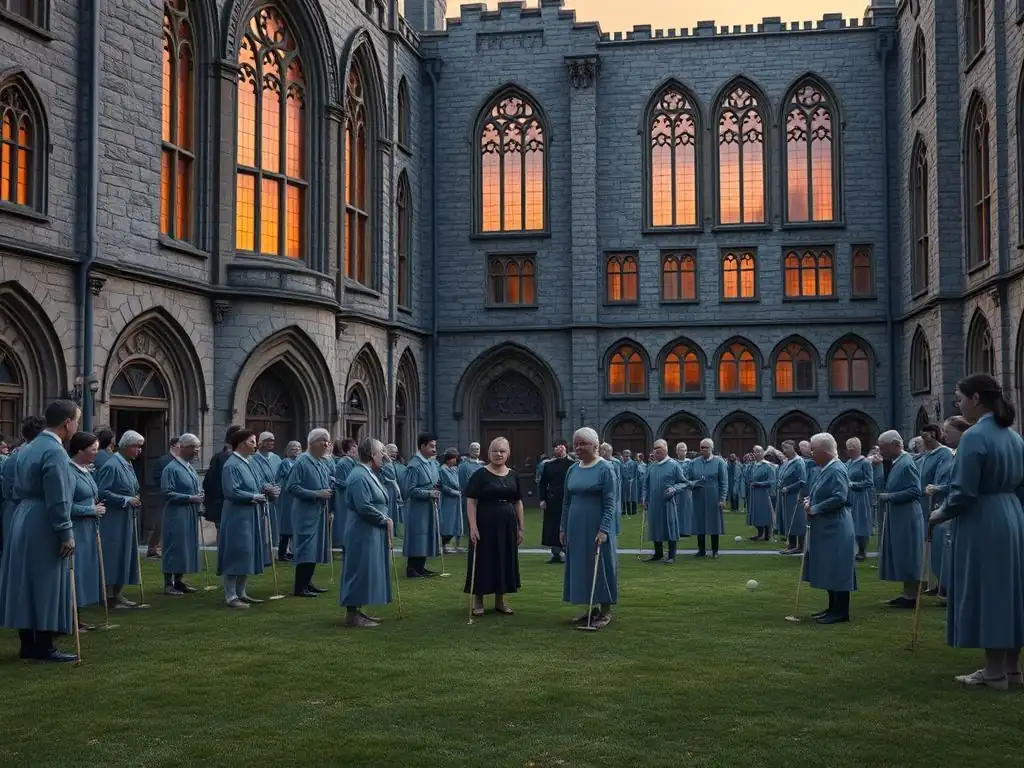
Welcome to Mind Care Guide, a place dedicated to understanding and nurturing mental well-being. Ever wondered about the social dynamics within the walls of 19th-century asylums? Our exploration into the 19th century asylum community structure might surprise you. Discover the unexpected social hierarchies and relationships that shaped life for both patients and staff, and perhaps, gain a new perspective on how we understand mental health care today. Intrigued? Let's delve deeper...
The Asylum as a Community: Social Structures Within 19th Century Walls
- Introduction: Understanding the 19th Century Asylum Community
- A Microcosm of Society: Replicating External Hierarchies Inside Asylum Walls
- Daily Life and Social Interactions within the 19th Century Asylum
- Power Dynamics and Social Control in the 19th Century Asylum
- The Impact of 19th Century Asylum Community Structure on Patient Well-being
- Case Studies: Examining Specific 19th Century Asylum Communities
- Beyond the Walls: The Asylum Community's Connection to the Outside World
- Legacy and Lessons: Understanding the 19th Century Asylum Community Today
- Conclusion: Reflecting on the 19th Century Asylum as a Social Space
-
Frequently Asked Questions
- What was the typical social hierarchy within a 19th century asylum?
- How did the physical layout of a 19th century asylum influence its community structure?
- What role did work and occupational therapy play in shaping social dynamics within asylums?
- Were there any formalized roles or responsibilities given to patients within the asylum community?
- How did the medical staff's perception of mental illness impact the social environment of the asylum?
- Final Reflection: Echoes of the Asylum: Community and Control in the 19th Century
- Unlock the Secrets of 19th-Century Asylum Life
Introduction: Understanding the 19th Century Asylum Community
The Evolution of Asylums in the 19th Century
The 19th century witnessed a dramatic transformation in the care and confinement of individuals deemed mentally ill. Moving away from earlier models of simple custodial care often within poorhouses or jails, the era saw the rise of dedicated institutions known as asylums. This period, particularly from the early 1800s onwards, was influenced by the moral treatment movement, which advocated for humane care, structured environments, and therapeutic activities.
Large-scale state and county asylums began to be constructed, especially in the latter half of the century, driven by ideals of providing separate, specialized care away from the general population, though often quickly facing challenges of overcrowding and underfunding.
By the late 19th century, many large state asylums in the United States housed well over a thousand patients, and some reached capacities exceeding 2,000 or even 3,000 individuals. For example, the Willard Asylum for the Insane in New York, opened in 1869, grew significantly over the decades, becoming a vast complex.
Similarly, in the UK, institutions like the Colney Hatch Lunatic Asylum, opened in 1851, were designed to accommodate over 1,200 patients. This expansion was fueled by increasing recognition of mental illness (or at least, increasing classification and commitment), population growth, and the belief that the asylum offered the best, if not only, solution for care and public safety.
This article delves into the complex social structures that existed within the walls of 19th-century asylums, exploring how these institutions functioned not just as medical facilities or places of confinement, but as unique, often insular, communities. We aim to understand the intricate web of relationships, hierarchies, and daily interactions that shaped the lives of both patients and staff. The 19th century asylum community structure was a fascinating, often challenging, social experiment.
Our scope includes examining the formal hierarchies established by the institutions – the roles of doctors, attendants, and administrators – as well as the informal social dynamics among patients themselves. We will explore how factors like class, gender, and diagnosis influenced one's position and experience within this closed world. Understanding the social dimensions is crucial because the environment and social interactions played a significant, though often debated, role in the therapeutic process and the overall well-being of those confined within the asylum's walls.
A Microcosm of Society: Replicating External Hierarchies Inside Asylum Walls
The society outside the asylum walls, with its rigid class structures and social norms, inevitably influenced the internal organization and dynamics of these institutions. Asylums, particularly those funded by the state or county, often reflected the social stratification of the broader population, although the poor and marginalized were disproportionately represented. Private asylums, conversely, catered specifically to the wealthy elite, offering different levels of comfort, privacy, and sometimes, distinct therapeutic approaches compared to public institutions.
Within public asylums, patients from more affluent backgrounds might receive slightly better accommodations, perhaps a private room or access to certain amenities, even if the overall environment was basic. Attendants and even doctors sometimes treated patients differently based on their perceived social standing or the financial contributions of their families. This inherent bias meant that the experience of being a patient within the 19th century asylum community structure was not uniform but heavily dependent on one's background.
The Role of Staff: Doctors, Attendants, and Hierarchy
At the apex of the asylum's formal hierarchy was the Superintendent or Medical Superintendent, typically a physician, who held immense authority over both medical treatment and institutional management. Below the Superintendent were other medical officers, often referred to as assistant physicians, who were responsible for daily patient care, diagnosis, and treatment decisions. This medical staff, though small relative to the patient population, wielded significant power.
The largest group of staff, and those with the most direct daily contact with patients, were the attendants (sometimes called keepers or nurses, though nursing as a formal profession in mental health was nascent). Attendants were often poorly paid, minimally trained, and worked long hours.
Their role was primarily custodial – ensuring order, cleanliness, and preventing escapes or self-harm – but they also managed patients' daily routines and interactions. The relationship between attendants and patients was central to the 19th century asylum community structure, and could range from genuinely caring to neglectful or even abusive, heavily dependent on the individual attendant and the ward's atmosphere.
Patient Hierarchy: Class, Gender, and Diagnosis
While formally all patients were under the authority of the medical staff, an informal patient hierarchy also existed within the asylum walls, influenced by various factors. Social class remained a significant differentiator; patients from wealthier backgrounds, particularly in private asylums or specific wards in public ones, often had better conditions and perhaps more respectful treatment from staff. Gender also played a crucial role, with men's and women's wards typically being strictly segregated and sometimes offering different activities or levels of freedom.
Furthermore, diagnostic categories, as understood at the time, could influence a patient's status and treatment within the 19th century asylum community structure. Patients deemed 'curable' or less disruptive might be placed on different wards than those considered 'chronic' or 'violent'. Long-term patients who adapted to institutional life might gain a certain seniority or influence among their peers. This complex interplay of formal staff authority and informal patient dynamics created a stratified social environment within the asylum.
Daily life in a 19th-century asylum was typically highly structured, driven by routines aimed at maintaining order and, in theory, promoting therapeutic benefits. A typical day might involve waking early, communal meals, periods of 'airing' or outdoor exercise, and participation in work therapy or recreational activities. Work therapy was a cornerstone, with patients often engaged in laundry, kitchen duties, farming the asylum grounds, or performing maintenance. For instance, large asylums like the Kirkbride-plan institutions in the US often had extensive farms where patients provided labor.
Recreational activities varied but could include walks, reading, music, dances, or simple games. These structured activities provided opportunities for socialization among patients, albeit within supervised settings. The extent and quality of these activities varied greatly depending on the asylum's funding, philosophy, and the number of staff available to supervise them. These shared experiences were fundamental aspects of the 19th century asylum community structure, fostering bonds or conflicts among residents.
Despite the often challenging environment and their individual struggles, patients formed relationships with one another within the asylum. These relationships could range from supportive friendships, where individuals shared their experiences and offered mutual comfort, to conflicts arising from close proximity, stress, or the nature of their illnesses. Patients often developed their own informal social networks and coping mechanisms.
These interactions were largely unsupervised, especially on crowded wards, and represented a significant, though often undocumented, aspect of the 19th century asylum community structure. While staff focused on managing behavior, patients navigated their confinement together, creating a subculture with its own rules, alliances, and ways of resisting or adapting to institutional life. Survival within the asylum often depended on forging connections with fellow inmates.
Staff-Patient Interactions: Power Dynamics and Care
The relationship between staff, particularly attendants, and patients was central to the daily experience within the asylum. This relationship was inherently marked by a significant power imbalance. Staff held authority over patients' movements, activities, access to amenities, and even basic needs. This power dynamic could manifest as benevolent care, firm but fair management, or, unfortunately, neglect and abuse.
The quality of staff-patient interactions varied widely between institutions and even between wards within the same asylum. In institutions influenced by moral treatment principles, efforts were made to encourage kindly, respectful interactions. However, understaffing, lack of training, and the sheer difficulty of managing large numbers of distressed individuals often led to impersonal, coercive, or even punitive interactions. Understanding these dynamics is key to grasping the lived reality of the 19th century asylum community structure.
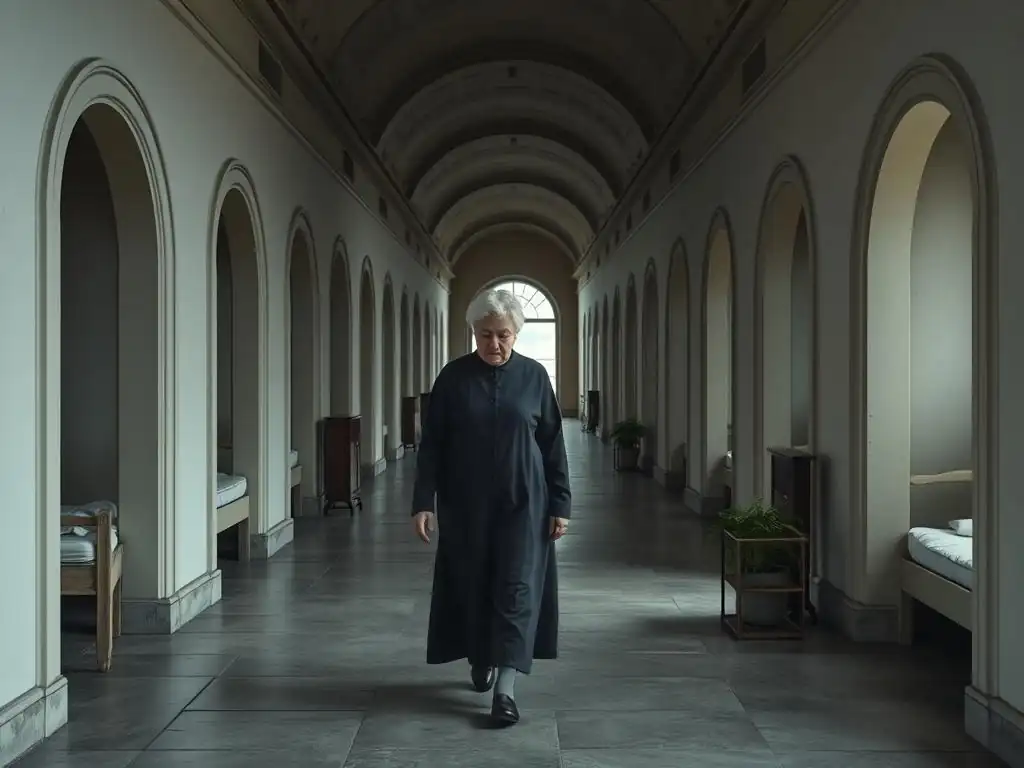
Medical authority was paramount within the 19th century asylum community structure. The Superintendent and medical officers held the power to diagnose, prescribe treatment (which could range from benign tonics and baths to more coercive methods like restraints or purgatives), determine length of stay, and control virtually every aspect of a patient's life. Their diagnoses, based on the limited psychiatric understanding of the era, often solidified a patient's status within the institution.
Medical decisions were rarely questioned internally, and patients had little to no agency in their own care or confinement, especially in public institutions. The medical model, while a step away from purely custodial approaches, also centralized power in the hands of a few professionals, shaping the entire social environment and reinforcing the patient's position as subject to external control.
Methods of Control and Discipline
Maintaining order and control over potentially large and diverse patient populations was a constant concern for asylum staff. Methods of control ranged from structured routines and constant supervision to more restrictive measures. Physical restraints, such as straitjackets, muffs, or padded cells, were used, sometimes routinely, to manage agitated or violent behavior, although the moral treatment movement initially sought to minimize these.
Discipline could also involve punitive measures, including isolation, withholding privileges, or even corporal punishment in some less reputable institutions or by abusive staff. The constant threat or use of such controls significantly impacted the social dynamics, fostering fear, resentment, and a sense of powerlessness among patients. The need for control often overshadowed therapeutic goals, fundamentally shaping the 19th century asylum community structure.
Resistance and Agency within the Asylum Environment
Despite the pervasive power dynamics and methods of control, patients within 19th-century asylums were not entirely passive victims. They found ways to exercise limited agency and resist institutional control, though often subtly. This could include feigning symptoms to avoid unwanted activities, forming alliances with other patients for mutual protection or support, hiding personal items, or engaging in minor acts of defiance.
Some patients attempted escape, wrote letters complaining of their treatment (though these were often intercepted by staff), or tried to influence their families or external visitors. While overt rebellion was rare and often met with harsh punishment, these small acts of resistance and the formation of informal patient communities demonstrate that even within the restrictive 19th century asylum community structure, individuals sought to maintain some level of autonomy and social connection.
The Impact of 19th Century Asylum Community Structure on Patient Well-being
The prevailing therapeutic approach in the early 19th century was 'moral treatment', which emphasized a humane environment, routine, work, and positive social interaction as key to recovery. Institutions like the York Retreat aimed to create a calm, family-like atmosphere. However, as the century progressed and asylums became larger and overcrowded, the ideals of moral treatment became increasingly difficult to implement. The sheer numbers of patients often overwhelmed staff, leading to a shift back towards more custodial care.
The social environment, intended to be therapeutic, could become detrimental in large, understaffed institutions. Lack of meaningful interaction with staff, enforced idleness in crowded wards, and the negative influence of disturbed fellow patients could exacerbate symptoms rather than alleviate them. The effectiveness of the 19th century asylum community structure as a therapeutic tool was heavily dependent on the institution's size, funding, and adherence to the principles of moral treatment.
Effects of Isolation and Confinement
Despite being part of a community of fellow patients, individuals within the asylum often experienced profound isolation. Separation from family, friends, and the outside world was inherent to confinement. Within the asylum, patients might also experience social isolation due to their symptoms, the stigma attached to mental illness, or being placed on wards with minimal stimulating interaction.
The physical confinement itself, often within locked wards and limited access to the outside, contributed to feelings of being cut off. This isolation, combined with the loss of personal autonomy and identity outside the institution, could have significant negative impacts on a patient's mental state, sometimes leading to further withdrawal, depression, or institutionalization – a state where individuals become so adapted to asylum life that they struggle to function outside it.
The Paradox of Community: Support vs. Control
The 19th century asylum community structure presented a paradox: it brought together individuals who might otherwise be isolated by their illness, offering potential for mutual support and shared experience, while simultaneously imposing strict control and limiting genuine autonomy and connection. For some, the structure and routine provided a sense of security and belonging they lacked elsewhere. Patients might find solace and understanding among peers who shared similar struggles.
However, the same structure was built upon power imbalances, confinement, and the potential for coercion. The 'community' was one of shared confinement rather than shared purpose or free association. The inherent tension between the therapeutic ideal of a supportive community and the practical reality of managing a large, diverse, and often distressed population through control and discipline was a defining feature of the 19th century asylum.
Case Studies: Examining Specific 19th Century Asylum Communities
Bethlem Royal Hospital, or 'Bedlam', in London, has a long and often notorious history dating back centuries, but its 19th-century iteration provides a stark example of social hierarchy and patient experience. By the early 1800s, Bethlem was still recovering from investigations into brutal conditions. While reforms were implemented, it remained a large institution. Patient experiences varied significantly based on their ability to pay. Those whose families could afford it might occupy private rooms with better care, while pauper patients were housed in large, often crowded, wards with minimal amenities and high attendant-to-patient ratios.
The structure of Bethlem reinforced social divisions, with different wings or sections sometimes implicitly or explicitly designated for different classes of patients. This social stratification within the patient body, coupled with the absolute authority of the medical staff and the often harsh realities of attendant care in a large public institution, shaped a distinct, and often challenging, 19th century asylum community structure where one's external social status continued to influence their internal experience.
York Retreat: Quaker Principles and Community Building
In contrast to large public institutions like Bethlem, the York Retreat, founded by the Quaker William Tuke in 1796, exemplified the early ideals of moral treatment and aimed to create a different kind of 19th century asylum community structure. The Retreat was small, initially housing only about 30 patients, primarily from middle and upper classes. Its philosophy centered on kindness, respect, routine, work, and religious observance, treating patients as members of a large, extended family rather than inmates.
The social structure prioritized humane interaction and minimized restraints. Attendants were encouraged to act as companions and caregivers rather than simply keepers. Patients participated in household tasks, gardening, and social activities alongside staff and the Tuke family. While perhaps idealized in historical accounts, the York Retreat demonstrated that a different, more therapeutic, community structure was possible, heavily influenced by its founding principles and smaller scale.
Comparing institutions like Bethlem and the York Retreat highlights the vast differences in 19th century asylum community structure. Bethlem, representative of large, often underfunded public asylums, struggled with overcrowding, rigid social hierarchies, and the challenges of managing large numbers, often leading to custodial care overriding therapeutic goals. Control and management of the masses became paramount.
The York Retreat, on the other hand, with its smaller scale, private funding base, and specific moral treatment philosophy, was able to foster a more intimate, family-like community focused on individual well-being and humane interaction. While not without its own limitations and class biases, it represented an alternative model. This comparison underscores that 'the 19th century asylum community structure' was not monolithic but varied significantly based on size, funding, philosophy, and the specific individuals running and inhabiting the institution.
Beyond the Walls: The Asylum Community's Connection to the Outside World
Family Involvement and Visitation
The connection between the asylum community and the outside world was tenuous for many patients, but family involvement and visitation played a role. Policies on visitation varied; some institutions encouraged it as part of the therapeutic process, believing maintaining family ties was beneficial, while others restricted it, seeing visitors as potentially disruptive or the family environment as contributing to the illness.
For families, visiting a relative in an asylum could be emotionally difficult due to the stigma attached to mental illness and the often distressing environment of the institution. Communication was also limited; letters were often censored by staff. While some families remained actively involved in their relative's care and lobbied for their release or better treatment, many patients lost contact with their families over time, further solidifying their place within the insular 19th century asylum community structure.
Public Perception and Stigma
Public perception of asylums and mental illness in the 19th century was complex and often contradictory. There was hope that asylums offered a cure or at least humane care, yet they were also viewed with fear, suspicion, and shame. Sensationalized accounts of asylum life, investigations into abuse, and the sheer otherness of the institutions contributed to significant public stigma.
This stigma affected the asylum community in multiple ways. It made it difficult for patients to reintegrate into society if discharged. It discouraged families from visiting or acknowledging their relative's confinement. It also influenced funding and public policy, often leading to neglect and under-resourcing of institutions. The 19th century asylum community structure existed within this broader context of societal fear and misunderstanding regarding mental illness.
The Asylum's Role in the Broader 19th Century Society
Asylums played a significant, albeit often uncomfortable, role in 19th-century society. They served as institutions for social control, removing individuals deemed disruptive, deviant, or simply unable to cope from the public sphere. They were also centers of early psychiatric research and training, where medical professionals attempted to understand and treat mental illness based on the limited knowledge available.
Furthermore, large public asylums were often major employers in their local areas and significant consumers of goods and services, making them important economic entities. They also served as architectural statements, with many being imposing, grand structures reflecting societal aspirations for ordered care, even as the reality within often fell short. The 19th century asylum community structure was thus not entirely isolated but interconnected with the social, economic, and medical currents of its time.
Legacy and Lessons: Understanding the 19th Century Asylum Community Today
Influence on Modern Mental Health Care
While the large, isolated 19th-century asylum model has largely been dismantled in many parts of the world through deinstitionalization movements, its legacy profoundly influences modern mental health care. The concept of dedicated facilities for mental health treatment, the development of psychiatric professions, and the ongoing debate about the balance between therapeutic care and custodial needs all have roots in the asylum era.
The failures of the large asylum system – particularly the issues of overcrowding, understaffing, and the potential for dehumanization – served as crucial lessons that informed later reforms. The focus on community-based care, patient rights, and integrated treatment approaches in contemporary mental health services can be seen, in part, as a reaction against the shortcomings of the 19th century asylum community structure.
Ethical Considerations and Historical Reflections
Studying the 19th century asylum community structure raises critical ethical considerations about autonomy, consent, patient rights, and the power of medical authority. The history of asylums forces us to confront difficult questions about how societies have historically treated vulnerable populations and the potential for institutions, even those founded with good intentions, to become places of confinement and control rather than healing.
Reflecting on this history encourages us to critically examine current mental health systems and ensure that the mistakes of the past are not repeated. It highlights the importance of patient voice, ethical treatment, and maintaining connections to family and community – principles often lacking within the walls of the 19th-century asylum.
The Importance of Community in Mental Well-being
Perhaps one of the most enduring lessons from examining the 19th century asylum community structure is the complex and vital role of community in mental well-being. While the asylum community was often flawed and coercive, the instances where patients found support among peers or benefited from positive staff interactions underscore the human need for connection and belonging, even in challenging circumstances.
Modern mental health care increasingly emphasizes the importance of social support networks, peer support, and community integration as essential components of recovery. Understanding the artificial and controlled 'community' of the 19th-century asylum helps illuminate by contrast the value of genuine, supportive communities built on respect, autonomy, and shared experience in fostering mental health.
The 19th-century asylum was far more than simply a place of confinement; it was a complex social space, a unique community shaped by formal hierarchies, informal patient dynamics, therapeutic ideals, and the harsh realities of institutional life. The 19th century asylum community structure reflected the social norms and prejudices of the time while simultaneously developing its own internal culture and rules.
Examining the daily lives, interactions, power dynamics, and the impact on well-being within these institutions offers crucial insights into the history of mental health care and the enduring challenges of supporting individuals experiencing mental illness. While the model has changed dramatically, the fundamental questions about humane care, patient autonomy, and the critical role of social environment remain central to contemporary discussions about mental well-being.
Frequently Asked Questions
The social hierarchy typically involved a clear distinction between the staff (doctors, nurses, attendants) and the patients. Within the patient population, there was often a gradation based on perceived sanity, wealth, or behavior.
How did the physical layout of a 19th century asylum influence its community structure?
The asylum's physical layout, often with separate wards and communal spaces, reinforced social divisions. Different wards were designated for different patient groups, limiting interaction and creating distinct sub-communities.
Work, often involving agricultural labor or domestic tasks, was seen as therapeutic but also created opportunities for social interaction. These activities fostered informal hierarchies based on skill and ability.
Were there any formalized roles or responsibilities given to patients within the asylum community?
Some asylums assigned patients specific roles such as assisting with cleaning or gardening. These roles, while sometimes exploitative, could provide a sense of purpose and improve social standing within the patient community.
The prevailing medical beliefs about mental illness shaped the staff's treatment of patients, directly impacting the social atmosphere. The belief in moral treatment aimed to rehabilitate patients through a structured, supportive environment, but could also be used as a tool for control.
Final Reflection: Echoes of the Asylum: Community and Control in the 19th Century
The rigid social structures of 19th-century asylums, far from being relics of a bygone era, offer a chillingly relevant lens through which to examine contemporary societal power dynamics. We've explored how these institutions, ostensibly designed for care, often functioned as sites of social control, mirroring broader societal anxieties about deviance and difference. The parallels with modern systems of institutionalization and marginalization are undeniable, prompting us to critically assess our own approaches to mental health and social justice.
The enduring legacy of these asylums is not simply architectural; it's woven into the fabric of our understanding of mental illness, social responsibility, and the very definition of community. The hierarchical structures, the enforced routines, the often-cruel methods of "treatment"—these elements continue to shape our perceptions and practices. As Michel Foucault so eloquently stated, Madness is not a disease, but a social construct.
This quote underscores the crucial point that the experience of those confined within these walls was profoundly shaped by the prevailing social norms and prejudices of the time, a reality that demands our continued attention and critical analysis.
Consider the ways in which societal structures still marginalize vulnerable populations. Reflect on the power dynamics at play in your own life and community. You, the reader, hold the power to challenge these systems, to advocate for more humane and equitable approaches to mental health care, and to build communities that truly embrace diversity and inclusivity. Let the echoes of the 19th-century asylum serve not as a cautionary tale alone, but as a call to action, urging us to create a future where compassion and understanding prevail over control and confinement.
Unlock the Secrets of 19th-Century Asylum Life
Thanks for exploring the fascinating, and often overlooked, social structures within 19th-century asylums! You've gained valuable insight into a complex and often misunderstood period of mental health history. Now, let's take that knowledge further:
- Dive deeper: Explore primary sources like historical asylum records or personal accounts online – you might uncover surprising stories!
- Share your thoughts: What surprised you most about the social dynamics within these institutions? Leave a comment below and share your insights with the community.
- Start a discussion: What parallels can you draw between these historical social structures and contemporary mental health care?
Ready to uncover even more hidden stories of the past?