
Hidden Signals: What Anxiety Looks Like in Young Children

Welcome to Mind Care Guide, a safe space dedicated to understanding and nurturing mental well-being.
Ever wondered if your child's behaviour is more than just typical childhood jitters? This can be a difficult journey, and we're here to help. Dive into "Hidden Signals: What Anxiety Looks Like in Young Children" to uncover the subtle – and sometimes overlooked – anxiety signs young children exhibit. Learning to recognize these early indicators is the first step toward providing the support they need. Let's explore together and empower you to make a real difference.
Hidden Signals: What Anxiety Looks Like in Young Children | Mind Care Guide
- Understanding Anxiety in Young Children: An Introduction
- Decoding Anxiety Signs Young Children Exhibit
- Common Anxiety Triggers in Young Children
- Differentiating Normal Childhood Fears from Anxiety Disorders
- Strategies for Supporting Anxious Young Children
- Parental Guidance: Helping Your Child Overcome Anxiety
- Professional Treatment Options for Childhood Anxiety
- Long-Term Impact of Untreated Anxiety in Young Children
- Resources for Parents and Caregivers of Anxious Children
-
Frequently Asked Questions
- What are some hidden anxiety signs to look for in young children?
- Why is it important to recognize anxiety signs in young children?
- How does anxiety in young children differ from typical childhood worries?
- What resources are available if I suspect my young child has anxiety?
- What are some effective strategies for helping a young child cope with anxiety?
- Final Reflection: Unmasking the Silent Struggle of Childhood Anxiety
- Unlock Your Child's Potential: Understanding Anxiety
Understanding Anxiety in Young Children: An Introduction
Why Recognizing Anxiety Signs in Young Children is Crucial
Understanding and identifying anxiety signs in young children is paramount because early intervention significantly impacts a child's long-term well-being. Unlike adults who can often articulate their feelings, young children express distress through behavior and physical symptoms. Missing these subtle cues means potentially delaying crucial support, allowing anxiety to become more entrenched and disruptive to their development. Recognizing these anxiety signs young children might exhibit allows parents and caregivers to respond with empathy and appropriate strategies, fostering resilience and better coping skills from an early age.
Moreover, undetected anxiety in early childhood can interfere with key developmental milestones. It can hinder social interactions, impact learning readiness, and affect family dynamics. By being attuned to the specific ways anxiety manifests in this age group, adults can provide the necessary reassurance, structure, and professional help when needed, preventing potential academic struggles, social isolation, and the development of more severe mental health issues later in life. Early recognition is not just about labeling a feeling; it's about opening the door to effective support and nurturing a child's emotional health.
The Prevalence of Anxiety Disorders in Early Childhood
Anxiety disorders are among the most common mental health conditions affecting children, and they can emerge surprisingly early in life. While precise figures for very young children (toddlers and preschoolers) are still an area of ongoing research, estimates suggest that between 5% and 10% of children and adolescents meet the criteria for an anxiety disorder at some point.
For young children, this might present as separation anxiety, specific phobias, or generalized worries that are excessive for their developmental stage. It's important to distinguish between normal developmental fears, like being scared of the dark at age three, and anxiety that is persistent, intense, and interferes with daily life.
Research indicates that anxiety disorders often have their onset in childhood or adolescence, with some forms, like separation anxiety, frequently beginning in the preschool years. For example, studies on preschool populations have found that a significant percentage of children exhibit clinically significant levels of anxiety symptoms. These early presentations of anxiety signs young children display can, if left unaddressed, persist into adolescence and adulthood. This underscores the importance of understanding the prevalence and recognizing the specific manifestations of anxiety in this vulnerable age group to facilitate timely support.
Decoding Anxiety Signs Young Children Exhibit
Beyond the Obvious: Subtle Signs of Anxiety in Toddlers and Preschoolers
While some anxiety signs in young children might be overt, like crying or clinging, many are more subtle and can easily be misinterpreted as typical "toddler behavior" or shyness. For toddlers and preschoolers, anxiety might manifest as excessive perfectionism in play, where they become distressed if blocks don't stack perfectly or a drawing isn't "right."
They might exhibit an unusual rigidity about routines, becoming highly upset by minor changes, or show extreme cautiousness, hesitating to explore new environments or try new activities even when encouraged. These aren't just quirks; they can be a child's way of trying to control a world that feels unpredictable and overwhelming due to underlying anxiety.
Another subtle indicator of anxiety signs young children display is an increase in repetitive behaviors or rituals, such as needing to check locks multiple times, arranging toys in a specific order, or repeating certain phrases. While some rituals are normal in development, an increase in their frequency or intensity, or distress when they cannot be performed, can signal anxiety.
Children might also show heightened sensitivity to sensory input, becoming easily overwhelmed by loud noises, bright lights, or certain textures, which can be linked to feeling constantly on edge. Paying close attention to these less obvious cues is vital for identifying potential anxiety early on.
Physical Manifestations of Anxiety: A Body's Silent Cry
Anxiety isn't just a feeling in the mind; it deeply impacts the body, especially in young children who may not have the words to express their internal state. Often, the first clear anxiety signs young children show are physical symptoms. These can be recurrent and appear without a clear medical explanation, leading parents to seek pediatric care before realizing the root cause might be psychological. Understanding these physical links is crucial for connecting the dots between a child's physical complaints and their emotional state.
Stomachaches and Headaches: Common Physical Symptoms
Recurrent stomachaches are perhaps one of the most frequently reported physical anxiety signs young children experience. A child might complain of their "tummy hurting" before school, social events, or transitions. These aren't faked; the physiological stress response activates the gut, leading to real discomfort, nausea, or even vomiting in some cases. Similarly, unexplained headaches, often described as a dull ache rather than severe pain, can be another physical manifestation of tension and worry. A child might report these symptoms on specific days or times correlated with stressful situations, providing a clue to the underlying anxiety.
For instance, a four-year-old might frequently complain of a stomachache every Monday morning before preschool, but be perfectly fine on weekends. Or a five-year-old might rub their temples and say their head hurts whenever they anticipate visiting a busy playground. These physical symptoms serve as a non-verbal communication of their internal distress. While it's essential to rule out medical causes with a doctor, persistent, unexplained physical complaints in young children, especially when linked to specific situations, are strong indicators that anxiety might be playing a significant role.
Sleep Disturbances and Nightmares: Anxiety's Impact on Rest
Anxiety significantly disrupts sleep patterns, and this is a common way that anxiety signs young children present. Difficulty falling asleep, frequent nighttime awakenings, and early morning waking are all potential indicators. A child might resist bedtime rituals, express fear of being alone in their room, or need excessive reassurance before they can settle down. The quiet of the night can be a time when worries, which might be suppressed during the day, surface and become overwhelming.
Nightmares are also frequently linked to childhood anxiety. Anxious children may experience vivid, frightening dreams more often than their non-anxious peers. These nightmares can be replays of real-life worries (like losing a parent) or more abstract fears. Waking up distressed from nightmares, having difficulty returning to sleep, and expressing fear about going to sleep the next night are all sleep-related anxiety signs young children might show. Chronic sleep deprivation due to anxiety can further exacerbate irritability, difficulty concentrating, and emotional regulation issues during the day, creating a challenging cycle for both the child and caregivers.
Behavioral Indicators: Anxiety Expressed Through Actions
When young children feel anxious, their feelings often translate directly into observable behaviors. They lack the sophisticated cognitive skills to process and verbalize complex emotions, so their actions become their language. These behavioral anxiety signs young children display can range from increased emotional outbursts to withdrawal and avoidance. Recognizing these behaviors as potential calls for help, rather than just misbehavior, is a critical step in supporting an anxious child.
Increased Irritability and Tantrums: Anxiety's Frustration
Contrary to the stereotype of the visibly worried child, anxiety in young children often manifests as increased irritability, frustration, and more frequent or intense tantrums. Feeling constantly on edge, overwhelmed, or unable to control their environment can make a child's emotional fuse much shorter. Minor inconveniences or changes in routine that a non-anxious child might tolerate could trigger a significant meltdown in an anxious child. This is because their nervous system is already in a state of heightened alert, making it difficult to cope with even small stressors.
For example, a four-year-old who is anxious about starting a new activity might become excessively whiny and defiant when it's time to leave, or have an explosive tantrum over a seemingly trivial matter like having the "wrong" snack. These outbursts are not necessarily intentional defiance but rather an overwhelming release of pent-up tension and worry they couldn't express otherwise. Recognizing that these behavioral challenges can be underlying anxiety signs young children show is crucial for responding with patience and understanding, rather than just focusing on discipline.
Avoidance Behaviors: Escaping Anxiety-Provoking Situations
Avoidance is a hallmark behavior of anxiety across all age groups, and it's a significant way that anxiety signs young children present. Children learn that avoiding situations that make them feel scared or uncomfortable provides immediate, albeit temporary, relief. This can lead to a pattern of withdrawal from activities, places, or people that trigger their anxiety. Common avoidance behaviors include refusing to go to school or preschool, avoiding social gatherings or playdates, staying physically close to a parent in new environments, or refusing to participate in specific activities like swimming or going down a slide.
This avoidance can significantly limit a child's experiences and opportunities for learning and development. A child anxious about separation might refuse to attend birthday parties unless a parent stays right by their side. A child with social anxiety might hide behind a parent's legs or refuse to speak when introduced to new children.
While avoidance reduces immediate distress, it prevents the child from learning that they can cope with the situation, thus reinforcing the anxiety. Identifying these avoidance patterns as anxiety signs young children exhibit is vital for developing strategies to gently encourage them to face their fears in a supported way.
Clinginess and Separation Anxiety: Seeking Reassurance and Security
Excessive clinginess and pronounced separation anxiety are among the most widely recognized anxiety signs young children display, particularly between the ages of one and five. While some degree of separation anxiety is normal during certain developmental phases, it becomes a concern when it is intense, persistent, and significantly interferes with daily routines like going to childcare, preschool, or even being in a different room from a parent at home. Anxious children may cry uncontrollably when a parent leaves, refuse to be comforted by others, or express intense worry about a parent's safety or return.
This behavior stems from a deep-seated need for security and reassurance. The child feels unsafe or unable to cope when separated from their primary caregiver. They might physically cling to a parent's leg, follow them from room to room, or have difficulty playing independently. These behaviors are not manipulative but rather a direct expression of their internal fear and distress. Understanding that this excessive neediness is an anxiety sign young children show allows caregivers to respond with empathy, predictable routines, and gradual, supported exposure to separation, rather than becoming frustrated by the behavior.
Common Anxiety Triggers in Young Children
Identifying Potential Sources of Stress and Worry
Identifying the specific triggers for anxiety in young children is a crucial step in helping them manage their fears. While some children have a general predisposition to anxiety, specific situations or experiences often exacerbate or initiate anxious responses. Recognizing these potential sources of stress allows parents and caregivers to anticipate challenges, prepare the child, and implement supportive strategies. It's important to remember that what might seem minor to an adult can feel overwhelming and threatening to a young child navigating a complex world.
Potential triggers are highly individual but often fall into categories related to change, uncertainty, perceived threat, or performance demands. Common triggers include transitions (like starting school or moving), new experiences, social interactions, separation from caregivers, and sensory overload. Understanding these triggers helps parents see the world from the child's perspective and tailor their support. For example, knowing that transitions are a trigger means providing extra warning and structure before changing activities or locations.
Academic Pressure and Performance Anxiety in Early Learning
Even in the relatively unstructured environment of preschool or early kindergarten, young children can experience pressure related to performance and academics, triggering anxiety. This isn't necessarily about grades, but rather about expectations – from parents, teachers, or even themselves – to perform certain tasks, follow instructions, or keep up with peers. Anxiety signs young children might show related to performance include reluctance to participate in group activities, refusal to attempt tasks they perceive as difficult (like drawing or building), distress over making mistakes, or excessive concern about following rules perfectly.
For example, a child might become visibly anxious during circle time if they are asked to share or answer a question in front of others. Another might refuse to draw or write if they feel their work won't be "good enough." This early form of performance anxiety can stem from a fear of failure, criticism, or embarrassment. It highlights how societal expectations, even at a young age, can contribute to the development of anxiety and underscores the need for encouraging a growth mindset that values effort over perfection in early learning environments.
Social anxiety, while often thought of as an adolescent or adult issue, can manifest as significant anxiety signs young children display, particularly when interacting with peers or unfamiliar adults. This type of anxiety involves intense fear or discomfort in social situations, leading to avoidance or distress during interactions. For a young child, this might look like extreme shyness, hiding behind parents, refusing to speak in social settings, difficulty joining group play, or becoming tearful or irritable when around unfamiliar children.
A child with social anxiety might desperately want to play with others but be paralyzed by fear of rejection, saying or doing the "wrong" thing, or simply being the focus of attention. They may stand on the sidelines of the playground, observe others but not approach, or only interact if a parent facilitates the play. This isn't just typical shyness; it's a level of distress that prevents them from engaging in developmentally appropriate social experiences. Recognizing these social anxiety signs young children exhibit is crucial for providing gentle encouragement and support to help them build confidence in social settings.
Separation Anxiety: Leaving Parents and Caregivers
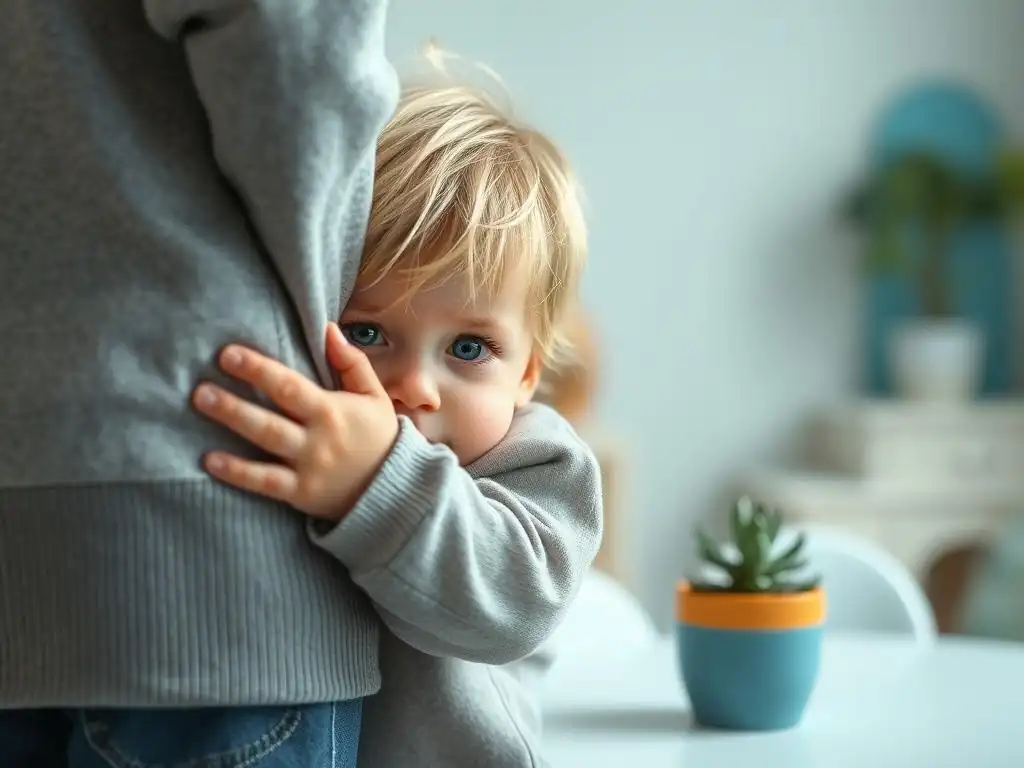
Separation anxiety is one of the most common anxiety triggers for young children, typically emerging around 8-12 months and often peaking again between 18 months and three years. While some level of distress upon separation is normal, it becomes a clinical concern (Separation Anxiety Disorder) when it is excessive for the child's developmental level, persistent, and causes significant distress or impairment. This manifests as intense crying, panic, refusal to be left with others, or excessive worry about the caregiver's safety when apart. These are classic anxiety signs young children often display when facing separation.
The trigger is, quite simply, the impending or actual departure of the primary caregiver. This can occur when being dropped off at childcare, when a parent leaves for work, or even when a parent goes into another room at home. The child's anxiety stems from a fear of abandonment or a belief that they cannot cope without the caregiver present. While it's a normal developmental phase, persistent, severe separation anxiety that prevents a child from attending school or participating in activities requires attention and support to help the child build confidence in their ability to manage separation.
Fear of the Unknown: Anxiety Around New Experiences
Young children thrive on predictability and routine. Consequently, new experiences and the unknown are significant triggers for anxiety in this age group. Starting a new school, visiting an unfamiliar place, meeting new people, trying a new food, or experiencing a change in routine can all provoke anxiety signs young children might show. The lack of predictability and the inability to fully understand what will happen can feel overwhelming and threatening to their sense of safety and control.
For example, a child might become highly agitated and resistant before visiting a new park because they don't know what it will be like. They might ask repetitive questions about an upcoming event (like a doctor's appointment or a party) as a way of trying to gain some sense of control and predictability over the unknown.
While a certain degree of caution around new things is healthy, excessive fear, persistent refusal to try new experiences, or significant distress in novel situations are potential anxiety signs young children exhibit, indicating a difficulty in tolerating uncertainty. Providing clear information, predictability where possible, and gradual exposure can help mitigate this type of anxiety.
Differentiating Normal Childhood Fears from Anxiety Disorders
When Fear Becomes Anxiety: Understanding the Threshold
It is entirely normal and healthy for young children to experience fears as they grow and learn about the world. Fears of the dark, monsters under the bed, strangers, or certain animals are common developmental milestones. These fears are typically transient, proportional to the perceived threat, and do not significantly interfere with the child's daily functioning or development. Understanding this distinction is key when observing potential anxiety signs young children display; not every fear indicates a disorder.
Fear crosses the threshold into anxiety when it is excessive, persistent, out of proportion to the actual threat, and significantly impacts the child's ability to engage in typical activities like attending school, playing with peers, or sleeping independently. For example, while fearing dogs is common, refusing to leave the house for fear of seeing any dog, or experiencing panic attacks at the sight of a dog on television, would be considered anxiety. The intensity, duration, and level of impairment are what differentiate a normal fear from a clinically significant anxiety disorder requiring attention.
Seeking Professional Evaluation: When to Consult a Child Psychologist
Deciding when to seek professional help for potential anxiety signs young children show can be challenging for parents. It is generally advisable to consult a child psychologist or pediatrician if a child's fears or worries seem excessive for their age, are persistent over several weeks or months, and significantly interfere with their daily life. This includes difficulty attending school or childcare, avoiding social situations, inability to sleep alone, frequent physical complaints without a medical cause, or significant distress that limits family activities.
A professional evaluation can help determine whether the child's symptoms are within the range of normal development or indicate an anxiety disorder. A child psychologist can conduct assessments, observe the child's behavior, speak with parents and teachers, and provide a diagnosis. They can then recommend appropriate interventions, which often involve therapeutic approaches tailored for young children. Consulting a professional ensures that the child receives the right support based on their specific needs and helps families develop effective strategies for managing the child's anxiety.
Strategies for Supporting Anxious Young Children
Creating a Safe and Supportive Home Environment
Creating a safe, predictable, and supportive home environment is foundational for helping young children manage anxiety. Children thrive on routine and predictability, as it reduces uncertainty and increases their sense of control. Establishing consistent schedules for meals, sleep, and activities can significantly reduce anxiety signs young children exhibit that are triggered by change or the unknown. A home where feelings are acknowledged and validated without judgment teaches children that it's okay to feel scared or worried.
Parents can foster a supportive environment by being present and available, offering comfort and reassurance without enabling avoidance. This involves listening patiently when a child expresses worries (even if they seem irrational to an adult), helping them name their feelings, and providing calm, consistent responses. Minimizing exposure to adult worries or conflicts, ensuring a stable family routine, and providing a physically safe space for the child to relax and play are all crucial elements. A predictable and nurturing home base empowers children to feel secure enough to gradually face their fears outside the home.
Teaching Coping Mechanisms: Empowering Children to Manage Anxiety
Empowering children with simple coping mechanisms gives them tools to manage their anxiety in the moment, fostering a sense of agency and control. These techniques, when practiced regularly, can help regulate the nervous system and reduce the intensity of anxious feelings. Introducing these skills through play, stories, or simple exercises makes them accessible and enjoyable for young children. Teaching these skills proactively, before anxiety becomes overwhelming, helps children build a toolbox they can draw upon when needed.
Examples of coping mechanisms include simple mindfulness activities adapted for children, sensory strategies like squeezing a stress ball or using a weighted lap pad, and guided relaxation exercises. The goal is not to eliminate anxiety entirely, but to teach children healthy ways to notice their anxious feelings and respond to them effectively. Practicing these skills together as a family can also normalize the experience of managing emotions and provide opportunities for bonding and support.
Deep Breathing Exercises: Calming the Nervous System
Deep breathing is one of the most effective and accessible tools for calming the nervous system when anxiety strikes. For young children, this can be taught through playful imagery, such as "bunny breaths" (short sniffs followed by a long exhale) or "balloon breaths" (imagining filling a balloon in their belly as they inhale and letting the air out as they exhale). Another popular technique is "smell the flower, blow out the candle," where the child inhales deeply through their nose and exhales slowly through their mouth.
Practicing these simple exercises regularly, even when the child isn't anxious, helps them become familiar and comfortable with the technique. When they start to feel anxious, guiding them through a few slow, deep breaths can interrupt the physiological stress response (rapid heart rate, shallow breathing) and help them feel calmer. This provides a concrete action they can take when they notice anxiety signs young children often feel bubbling up inside them, giving them a sense of control.
Positive Self-Talk: Challenging Negative Thoughts
Even young children can develop negative self-talk patterns related to their fears ("I can't do it," "It's too scary," "Something bad will happen"). Teaching them simple positive self-talk phrases can help challenge these anxious thoughts and build confidence. This isn't about dismissing their feelings but about introducing alternative, more empowering perspectives. Parents can help children identify their "worry thoughts" and replace them with "brave thoughts."
Examples of positive self-talk phrases for young children include: "I am brave," "I can try," "I can handle this," "Mommy/Daddy will be back," or "I am safe." Parents can model this by verbalizing their own positive self-talk when facing minor challenges. Practicing these phrases together, perhaps by making them into a song or a simple chant, helps children internalize them. Over time, this skill empowers children to reframe their anxious thoughts and build resilience against the anxiety signs young children often feel.
Visualization Techniques: Creating a Sense of Calm
Visualization is another powerful coping mechanism that can help anxious young children find a sense of calm and safety. This involves guiding the child to imagine a peaceful or happy place. This could be their favorite playground, a cozy spot in their room, a beach, or anywhere they feel safe and relaxed. Parents can lead them through a guided imagery exercise, describing the sights, sounds, smells, and feelings associated with this calm place.
For instance, "Close your eyes and imagine your favorite park. What colors do you see? Can you hear the birds singing? How does the grass feel under your feet? Imagine yourself playing there, feeling happy and safe." This technique helps distract the child from their anxious thoughts and activates the parasympathetic nervous system, promoting relaxation. Practicing this regularly, perhaps as part of a bedtime routine, can make it a readily available tool when they experience anxiety signs young children might feel during stressful moments.
The Role of Play Therapy in Addressing Childhood Anxiety
Play is the natural language of children, and play therapy utilizes this medium to help young children express and process their emotions, including anxiety. Unlike talk therapy, which relies heavily on verbal communication, play therapy allows children to work through their fears, worries, and experiences symbolically using toys, art materials, sandplay, and dramatic play. A trained play therapist provides a safe, non-judgmental space where the child can explore their internal world at their own pace.
Through play, children can act out stressful situations (like separation or social interactions), externalize their fears by giving them form (drawing a "worry monster"), and practice coping strategies. The therapist observes the child's play, interprets its meaning, and helps the child develop new ways of thinking and behaving. Play therapy is particularly effective for addressing the anxiety signs young children exhibit because it meets them at their developmental level, making the therapeutic process less intimidating and more engaging.
Parental Guidance: Helping Your Child Overcome Anxiety
Communicating Effectively with Your Anxious Child
Effective communication is fundamental when supporting an anxious child. This involves active listening, validating their feelings, and responding with calm reassurance rather than dismissing their worries. When a child expresses fear or worry, avoid saying things like "Don't be silly" or "There's nothing to be afraid of," as this can make them feel misunderstood or ashamed of their feelings. Instead, acknowledge their emotion: "I can see you're feeling scared about..." or "It sounds like you're worried about..."
Once their feeling is validated, you can gently help them understand the situation or problem-solve. Use simple, age-appropriate language. For example, if they are anxious about going to a party, you might say, "It's okay to feel a little nervous about new places. We will go together, and we can stay for a little while.
What could we do if you feel scared there?" This approach validates their emotion while offering support and a plan, empowering them to face the situation rather than avoid it. Consistent, calm communication builds trust and helps children feel safe enough to share their anxiety signs young children often keep hidden.
Modeling Calm and Resilience: Setting a Positive Example
Children learn by observing the adults in their lives. Therefore, modeling calm behavior and resilience in the face of your own challenges is one of the most powerful ways to help your anxious child. When you encounter a stressful situation, try to manage your own reactions calmly. Talk through your coping process out loud in a simple way ("I'm feeling a little frustrated right now, so I'm going to take a deep breath," or "This is a bit tricky, but I can figure it out"). This demonstrates healthy coping mechanisms.
Avoid expressing excessive anxiety or catastrophizing in front of your child, as this can inadvertently reinforce their own fears. If you are anxious yourself, seeking your own support or therapy is important, not only for your well-being but also to ensure you can provide the necessary emotional regulation and support for your child. Modeling courage, problem-solving, and a belief in your ability to handle difficulties shows your child that while life can be challenging, it is manageable, and that they too can develop the capacity to cope with their own anxiety signs young children feel.
Avoiding Reinforcement of Anxious Behaviors
While it's natural to want to protect your child from distress, constantly accommodating their anxiety and allowing them to avoid feared situations can inadvertently reinforce their anxious behaviors. When a child avoids something that makes them anxious (like going to a playdate) and you allow it, the immediate relief they feel strengthens the avoidance behavior ("Avoiding works!"). This prevents them from learning that they can cope with the situation and that their feared outcome might not happen, or isn't as bad as they imagined.
This doesn't mean forcing a child into terrifying situations. Instead, it involves a gradual, supported approach to facing fears, often called exposure therapy (when guided by a professional). For parents, it means gently encouraging the child to tolerate small amounts of anxiety.
For example, instead of letting a child skip a party entirely due to social anxiety, you might agree to go for just 15 minutes, with you staying close by. Gradually increasing the time or distance helps the child build confidence. Learning to gently challenge avoidance, while still being supportive, is key to helping children overcome the anxiety signs young children display.
Professional Treatment Options for Childhood Anxiety
Cognitive Behavioral Therapy (CBT) for Young Children
Cognitive Behavioral Therapy (CBT) is widely considered the gold standard treatment for anxiety disorders in children and adolescents, and it has been adapted effectively for young children (typically ages 4 and up). CBT for young children focuses on teaching them to identify their anxious feelings and thoughts, understand the link between their thoughts, feelings, and behaviors, and develop coping strategies to challenge their fears. These techniques are often delivered through play, stories, and age-appropriate activities to make them engaging and understandable.
A core component of CBT for young children is gradual exposure therapy, where the child is supported in gradually and safely confronting their feared situations. For example, a child with separation anxiety might start by spending a few minutes in a different room from their parent, then move to spending time at a grandparent's house, and eventually attending preschool. The therapist also works with parents to teach them strategies for supporting their child's brave efforts and managing their own reactions. CBT helps children understand their anxiety signs young children might feel and gives them practical tools to manage them.
Medication for Severe Anxiety Cases: Considerations and Precautions
In some cases of severe childhood anxiety where therapeutic interventions alone are not sufficiently effective, medication may be considered as part of a comprehensive treatment plan. This decision is typically made by a child psychiatrist or other qualified medical professional specializing in pediatric mental health, in close consultation with the family. Medications, most commonly selective serotonin reuptake inhibitors (SSRIs), are not usually the first line of treatment for young children but may be used when anxiety is significantly disabling.
The use of medication in young children requires careful consideration of potential benefits versus risks. Dosage must be carefully monitored, and side effects discussed. Medication is generally most effective when used in conjunction with therapy, as it can help reduce the intensity of anxiety symptoms enough for the child to engage more effectively in therapeutic work.
Parents should have open and thorough discussions with the prescribing physician about the rationale for medication, potential side effects, and the plan for monitoring the child's response. Medication is a tool to support recovery, not a standalone solution for the anxiety signs young children experience.
Long-Term Impact of Untreated Anxiety in Young Children
Untreated anxiety in young children can have significant and lasting negative impacts on their overall development. Socially, chronic anxiety can lead to isolation and difficulty forming peer relationships. Children may avoid social interactions, struggle with assertiveness, or be perceived as excessively shy or withdrawn, missing out on crucial opportunities to develop social skills. Emotionally, untreated anxiety can persist into adolescence and adulthood, increasing the risk of developing other mental health issues, such as depression or more severe anxiety disorders. It can also hinder emotional regulation skills, making it harder for children to manage frustration and other difficult emotions.
Academically, the constant state of worry and heightened alert associated with anxiety can interfere with concentration, memory, and learning. Children may struggle to focus in class, participate in discussions, or complete assignments due to intrusive thoughts or physical symptoms like stomachaches. Performance anxiety can lead to avoidance of challenging tasks or school refusal. Addressing the anxiety signs young children exhibit early is vital to prevent these potential long-term consequences and support healthy development across all domains.
The Importance of Early Intervention and Treatment
The importance of early intervention for childhood anxiety cannot be overstated. Research consistently shows that the earlier anxiety is identified and treated, the better the prognosis. Early intervention helps children develop coping skills during critical developmental windows, preventing anxiety from becoming a deeply ingrained pattern of thinking and behavior. It allows children to build confidence in managing their fears before avoidance behaviors become too established or the anxiety begins to severely impact their academic and social functioning.
Effective early treatment, often involving parent-supported therapy like CBT adapted for young children, can significantly reduce the severity and duration of anxiety symptoms. It empowers both the child and the family with strategies to navigate challenges and build resilience. By addressing the anxiety signs young children display promptly, caregivers can help children learn that their fears are manageable, build their capacity to face challenges, and set them on a healthier developmental trajectory, significantly improving their long-term mental health outcomes and quality of life.
Resources for Parents and Caregivers of Anxious Children
Books and Websites for Understanding and Managing Childhood Anxiety
Accessing reliable information is a critical first step for parents and caregivers supporting an anxious child. Numerous books offer practical guidance, explanations of childhood anxiety, and age-appropriate strategies. Look for titles written by child psychologists or experts in childhood mental health. Many books provide scripts for talking to children about worry, activities to practice coping skills, and ways to navigate challenging situations like separation or social events. Reading these resources can help parents better understand the anxiety signs young children might be showing and feel more equipped to respond effectively.
Additionally, several reputable websites provide valuable information, articles, and resources about childhood anxiety. Organizations focused on child mental health or specific anxiety disorders often have sections dedicated to parents and caregivers, offering insights into symptoms, causes, and treatment options. These online resources can be a convenient way to access information, find support groups, and learn about evidence-based strategies for managing the anxiety signs young children exhibit in daily life. While not a substitute for professional help, these resources can empower parents with knowledge and practical tools.
Support Groups for Parents Facing Similar Challenges
Connecting with other parents who are navigating similar challenges can provide invaluable emotional support, practical advice, and a sense of community. Support groups, whether in-person or online, offer a safe space for parents to share their experiences, frustrations, and successes in supporting their anxious children. Hearing from others who understand the unique difficulties of identifying and managing anxiety signs young children present can reduce feelings of isolation and provide new perspectives and coping strategies.
These groups often share information about local resources, recommended therapists, and effective techniques they have found helpful. They can also offer encouragement during difficult times. Finding a support group through local mental health organizations, community centers, or online platforms dedicated to parenting children with anxiety can provide a vital network of support for parents as they help their young children learn to manage and overcome anxiety.
Frequently Asked Questions
Beyond the obvious, look for increased clinginess, changes in sleep patterns, and unexplained physical complaints like stomach aches. These can signal underlying anxiety.
Why is it important to recognize anxiety signs in young children?
Early detection allows for timely intervention, preventing anxiety disorders from becoming more ingrained and potentially impacting their long-term development.
How does anxiety in young children differ from typical childhood worries?
While some worry is normal, anxiety is more persistent, intense, and interferes with their daily activities, such as school or playtime.
What resources are available if I suspect my young child has anxiety?
Consult your pediatrician or a mental health professional specializing in children. Mind Care Guide also offers information and support resources.
What are some effective strategies for helping a young child cope with anxiety?
Creating a predictable routine, practicing relaxation techniques (like deep breathing), and providing a supportive and understanding environment are crucial.
Final Reflection: Unmasking the Silent Struggle of Childhood Anxiety
The subtle signs of anxiety in young children are often missed, leading to delayed intervention and prolonged suffering. This article highlighted the crucial need for increased awareness and understanding of how anxiety manifests differently in young minds, emphasizing that it's not always screaming and crying, but often quiet withdrawal and seemingly inexplicable behaviors. Early recognition is paramount to providing the necessary support and fostering healthy development.
The impact of childhood anxiety extends far beyond the individual child; it ripples through families, schools, and communities. The pervasive nature of stress in our modern world means that many children are silently battling anxieties that go unnoticed or are misattributed to other issues. This underscores the importance of open communication, empathy, and a willingness to listen to the unspoken concerns of our youngest members. The most common way people give up their power is by thinking they don't have any.
- Alice Walker. This quote resonates deeply, as many adults underestimate the power and resilience of children, failing to recognize the strength they possess to overcome anxiety with the right support.
You, the reader, now hold a deeper understanding of the often-hidden signals of childhood anxiety. Take a moment to reflect on the children in your life – your own, your students, your neighbors. Are there subtle cues you might have overlooked? Learning to recognize these signs empowers you to offer support, seek professional help when needed, and ultimately, help a child navigate their anxieties and thrive. Let's work together to create a world where every child feels seen, heard, and understood.
Unlock Your Child's Potential: Understanding Anxiety
Thanks for taking the time to learn about the subtle signs of anxiety in young children. We hope this article provided valuable insights into supporting your little one. Now, let's turn that knowledge into action!
- Prioritize open communication: Start a conversation with your child today about their feelings. Even if they don't articulate anxiety directly, creating a safe space for emotional expression is crucial.
- Explore playful coping strategies: Introduce calming activities, like deep breathing exercises or mindfulness games, into their daily routine. Make it fun!
- Share this article: Help other parents by sharing this information on social media – you could make a real difference in a child's life.
What small step can you take today to build a stronger, more emotionally supportive relationship with your child?