
Finding Support: Therapy and Resources for Creative Professionals


Welcome to Mind Care Guide, a sanctuary for your mental well-being.
Are you a creative professional feeling the weight of expectations, the pressure of deadlines, or the sting of self-doubt? You're not alone. This journey can be challenging, and prioritizing your mental health is paramount. We understand.
This guide will shed light on therapy resources and support specifically tailored for creative individuals like you. Explore with us as we delve into the unique struggles faced by creatives and uncover pathways to lasting well-being. Are you ready to discover the support you deserve?
Finding Support: Therapy and Resources for Creative Professionals
- Understanding the Unique Mental Health Challenges Faced by Creative Professionals
- Why Therapy Can Be Beneficial for Creative Individuals
- Types of Therapy Suited for Creative Minds
- Finding the Right Therapist for Creative Professionals
- Affordable Therapy Options and Resources for Creative Professionals
- Building a Support System Beyond Therapy
- Creative Resources for Mental Wellbeing
- Addressing Specific Challenges: Resources for Writers, Musicians, and Visual Artists
- Overcoming Stigma and Seeking Help: A Message to Creative Professionals
-
Frequently Asked Questions
- How can therapy specifically benefit creative professionals?
- What are some common mental health challenges faced by creative individuals?
- What types of therapy are particularly helpful for creative professionals?
- Where can creative professionals find affordable therapy resources and support?
- How can I build a support system outside of therapy as a creative professional?
- Final Reflection: The Unseen Canvas of Mental Wellness
- Unleash Your Creative Potential: Take the Next Step
Understanding the Unique Mental Health Challenges Faced by Creative Professionals
The Pressure to Create: How it Impacts Mental Wellbeing
Creative professionals often operate under intense pressure to constantly produce original and high-quality work. This constant demand can lead to significant stress, burnout, and a pervasive sense of imposter syndrome. Unlike many traditional roles with predictable tasks, the creative process is often unpredictable and requires sustained inspiration, which isn't always available on demand.
The fear of losing one's creative edge or failing to meet expectations – whether internal or external – can be crippling. For example, a graphic designer might face tight deadlines for multiple projects simultaneously, each requiring a fresh, innovative approach, leading to sleepless nights and chronic stress. This relentless cycle can erode self-esteem and make it difficult for creative professionals to maintain a healthy work-life balance, negatively impacting their mental health.
Moreover, the subjective nature of creative work means that criticism is often personal and can feel like a judgment on one's identity and worth. Receiving negative feedback on a piece of art, a written manuscript, or a musical composition can be devastating, especially when so much personal investment has been poured into it. This vulnerability to critique, combined with the pressure to constantly innovate and stay relevant in a competitive market, creates a fertile ground for anxiety and depression.
Studies, including reports from organizations focused on artists' well-being, consistently highlight higher rates of mental health challenges within creative fields compared to the general population. The pressure isn't just about deadlines; it's about the constant internal demand for excellence and the external validation of one's unique vision. Finding effective creative professionals therapy resources support is crucial for navigating these pressures.
Isolation and the Creative Process: Combating Loneliness
The creative process, by its very nature, can often be a solitary endeavor. Writers spend hours alone with their thoughts, painters work in quiet studios, and composers dedicate significant time to individual creation. While this solitude can be conducive to deep focus and imaginative work, it can also lead to profound feelings of isolation and loneliness.
Many creative professionals work remotely or on a freelance basis, further limiting daily social interaction that might be present in a traditional office environment. This lack of regular face-to-face connection can make it harder to build a strong support network and can exacerbate feelings of detachment or alienation.
This isolation isn't just about physical solitude; it can also be an emotional experience. When deeply immersed in a creative project, it can feel difficult to connect with others who don't understand the specific struggles, triumphs, and unique demands of the artistic lifestyle. Sharing vulnerabilities or seeking support can feel challenging when one feels disconnected from peers or lacks a readily available community.
For instance, a freelance animator working from home might go days without significant social interaction, which can impact mood and motivation. Combating this isolation requires proactive effort to build connections, whether through online communities, local meetups, or seeking out creative professionals therapy resources support that understand these unique circumstances.
Financial Instability and Career Uncertainty: Stressors for Artists
A significant stressor for many creative professionals is the inherent financial instability and career uncertainty that often comes with the territory. Unlike careers with predictable salaries and clear career paths, the income of artists, writers, musicians, and other creatives can fluctuate wildly, making budgeting and long-term planning incredibly difficult. The "feast or famine" cycle of project-based work or the unpredictable nature of sales and commissions can lead to chronic financial anxiety. Securing health insurance, planning for retirement, or even affording basic necessities can be a constant worry, adding a heavy burden to the already demanding creative process.
Furthermore, career progression in creative fields is rarely linear. Success often depends on factors like networking, luck, market trends, and subjective taste, in addition to talent and hard work. This lack of a clear path can lead to feelings of being adrift or unsure about the future.
The pressure to constantly market oneself, hustle for gigs, and navigate complex industry dynamics adds another layer of stress. For example, a musician might spend years honing their craft only to face challenges finding consistent paying work, leading to doubts about their chosen path. This pervasive uncertainty about income and career trajectory is a major contributor to stress, anxiety, and burnout among creative professionals, highlighting the need for accessible creative professionals therapy resources support.
Why Therapy Can Be Beneficial for Creative Individuals
Exploring the Benefits of Therapy for Creative Professionals' Mental Health
Therapy offers a dedicated, confidential space for creative professionals to explore the complex interplay between their work, identity, and mental well-being. It provides a neutral ground to process the unique pressures they face, such as performance anxiety, comparison with peers, and the emotional toll of putting their work out into the world. A therapist can help individuals develop healthier coping mechanisms for stress and rejection, which are common occurrences in creative industries.
For instance, processing a negative review or a rejected grant application in therapy can help prevent it from spiraling into debilitating self-doubt. This support is invaluable for maintaining resilience in a challenging career.
Beyond crisis management, therapy can also be a powerful tool for personal growth and self-discovery for creative minds. It can help individuals understand the root causes of patterns like procrastination, perfectionism, or difficulty setting boundaries, which can hinder both their creative output and their overall happiness. By gaining insight into their thought processes and emotional responses, creative professionals can learn to navigate their inner landscape more effectively, leading to greater self-acceptance and confidence.
This can, in turn, positively impact their creativity, allowing them to approach their work with more freedom and less fear. Seeking creative professionals therapy resources support is an investment in both personal and professional flourishing.
How Therapy Addresses Creative Blocks and Self-Doubt
Creative blocks and self-doubt are frequent unwelcome companions for many artists and writers. Therapy can be highly effective in addressing these issues by exploring the underlying psychological factors that contribute to them. Often, blocks aren't just about a lack of ideas; they stem from deeper anxieties, fears of failure, or perfectionism that makes starting or finishing a project feel impossible.
A therapist can help identify these limiting beliefs and thought patterns, such as "My work isn't good enough" or "I'm not a real artist," and challenge their validity. Techniques like Cognitive Behavioral Therapy (CBT) can be particularly useful here, helping individuals reframe negative self-talk into more constructive perspectives.
Furthermore, therapy can help creative professionals explore the emotional roots of their blocks. For example, a writer struggling with a novel might uncover unresolved fears related to vulnerability or judgment from their past, which are manifesting as an inability to write. By working through these emotions in a safe therapeutic environment, they can release the psychological barriers holding them back.
Therapy can also provide strategies for managing the anxiety that often accompanies creative work, such as mindfulness techniques or exercises to tolerate uncertainty. Addressing self-doubt and creative blocks through therapy allows artists to access their full creative potential with greater freedom and confidence. Accessing appropriate creative professionals therapy resources support can unlock new levels of artistic expression.
Managing Anxiety and Depression in Creative Fields Through Therapy
Anxiety and depression are prevalent mental health conditions that can significantly impact the lives and careers of creative professionals. The unique stressors of the industry, such as financial insecurity, isolation, and subjective evaluation, can contribute to or exacerbate these conditions. Therapy provides evidence-based approaches to manage symptoms and improve overall mental well-being.
For instance, a musician struggling with performance anxiety might learn relaxation techniques and cognitive restructuring strategies in therapy to manage panic symptoms before going on stage. Similarly, a visual artist experiencing depression might work with a therapist to identify behavioral activation strategies, encouraging engagement in activities that provide pleasure or a sense of accomplishment, counteracting the inertia of depression.
Different therapeutic modalities offer various tools for managing anxiety and depression. Dialectical Behavior Therapy (DBT), for example, can help individuals develop distress tolerance skills and emotional regulation strategies, useful for navigating the intense emotional swings that can sometimes accompany the creative process. Interpersonal Therapy (IPT) can focus on improving relationships and social support, helping to combat the isolation that contributes to low mood.
By providing tailored interventions, therapy empowers creative professionals to understand their symptoms, develop effective coping strategies, and build resilience against the challenges of their field. Finding effective creative professionals therapy resources support is a vital step towards managing these conditions and thriving.
Types of Therapy Suited for Creative Minds
Art Therapy: Unleashing Creativity for Healing
Art Therapy is a distinct therapeutic approach that uses creative expression as a primary means of communication and healing. It is particularly well-suited for creative professionals because it leverages their natural inclination towards artistic mediums. In art therapy, individuals use materials like paint, clay, drawing, or collage to explore their emotions, thoughts, and experiences in a non-verbal way.
This can be incredibly helpful for processing complex feelings or experiences that are difficult to articulate verbally. For example, a writer struggling with a traumatic past event might find it easier to represent their feelings through abstract painting than by talking directly about it.
The process of creating art in a therapeutic setting can also provide insights into unconscious thoughts and feelings. An art therapist is trained to interpret the symbolism and themes present in the artwork, helping the individual gain a deeper understanding of themselves. It's important to note that art therapy is not about producing aesthetically pleasing work; it's about the process of creation and the insights gained from it.
For a visual artist experiencing a creative block, art therapy can feel less intimidating than traditional talk therapy, as it allows them to engage with materials they are comfortable with while exploring the psychological barriers behind the block. It offers a unique pathway for creative professionals therapy resources support by integrating their core identity into the healing process.
Cognitive Behavioral Therapy (CBT) for Creative Professionals: Managing Negative Thought Patterns
Cognitive Behavioral Therapy (CBT) is a widely-used therapeutic approach that focuses on identifying and changing negative thought patterns and behaviors. For creative professionals, CBT can be highly effective in addressing issues like perfectionism, imposter syndrome, procrastination, and anxiety related to performance or evaluation. The core principle is that our thoughts, feelings, and behaviors are interconnected, and changing one can impact the others.
For example, a musician who thinks "I'm going to mess up this performance" (thought) might feel intense anxiety (feeling) and therefore avoid practicing (behavior). CBT helps challenge that negative thought, perhaps replacing it with "I am prepared and capable," which can reduce anxiety and lead to more productive behavior.
CBT sessions typically involve identifying specific problems, setting goals, and learning practical techniques to manage negative thoughts and behaviors. Techniques might include cognitive restructuring (learning to identify and challenge distorted thinking), behavioral activation (scheduling positive activities), and exposure therapy (gradually facing feared situations, like performing or sharing work). For a writer struggling with self-doubt, CBT can help dismantle the belief that their work is worthless by examining the evidence for and against this thought and developing more balanced perspectives.
CBT provides concrete tools that creative professionals can use independently to manage their mental health challenges and build resilience. Including CBT among creative professionals therapy resources support options is essential.
Mindfulness-Based Therapy: Cultivating Present Moment Awareness for Artists
Mindfulness-Based Therapy, including approaches like Mindfulness-Based Stress Reduction (MBSR) and Mindfulness-Based Cognitive Therapy (MBCT), focuses on cultivating present moment awareness without judgment. This can be particularly beneficial for creative professionals who often grapple with rumination about past failures, anxiety about future projects, or getting lost in self-critical thoughts during the creative process. By practicing mindfulness, individuals learn to observe their thoughts, feelings, and sensations as they arise without getting swept away by them. This can help artists stay grounded and focused, reducing the impact of distractions and self-criticism.
For example, a painter might become frustrated by a mistake on the canvas and start spiraling into thoughts of "I'm a terrible artist." Mindfulness practice teaches them to notice the feeling of frustration and the thought of inadequacy without immediately believing or reacting to it. They can learn to simply observe the thought as a thought and return their attention to the present task of painting.
This non-judgmental awareness can also enhance the creative process itself, allowing for greater spontaneity and less inhibition. Mindfulness techniques, such as meditation, body scans, and mindful movement, provide practical ways for creative individuals to reduce stress, increase focus, and approach their work and life with greater calm and clarity. Integrating mindfulness into creative professionals therapy resources support can profoundly impact well-being.
Finding the Right Therapist for Creative Professionals
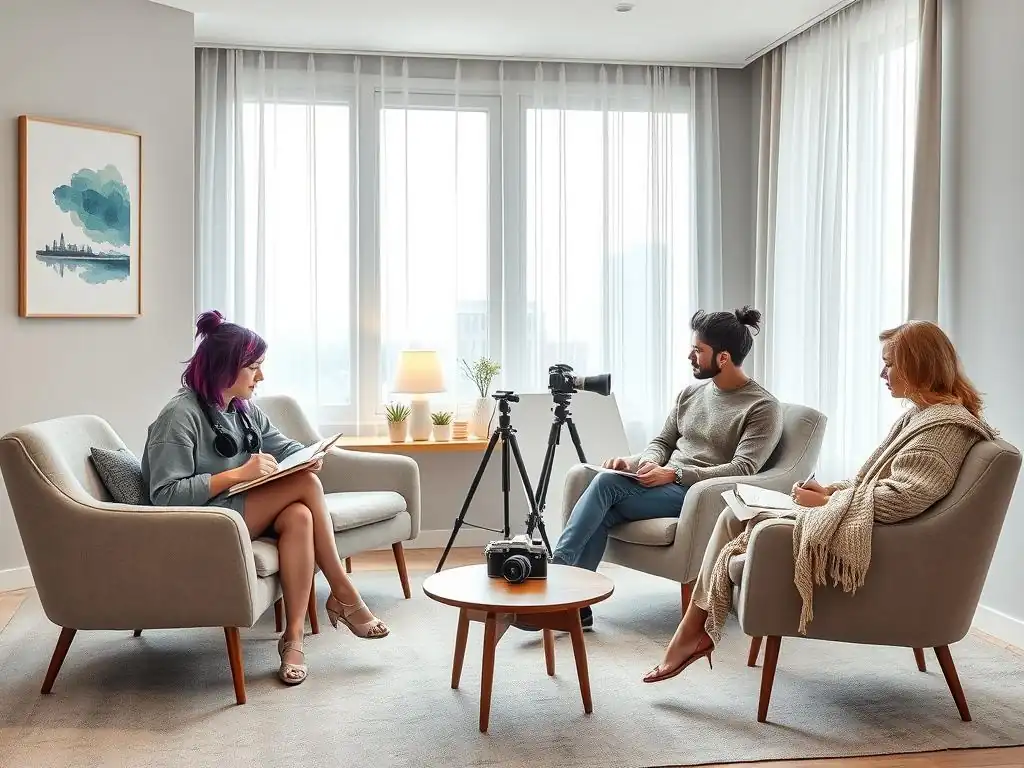
Key Considerations When Choosing a Therapist
Choosing the right therapist is a deeply personal process, and several factors are particularly important for creative professionals. Firstly, consider the therapist's therapeutic approach and whether it aligns with your preferences and needs. Are you interested in exploring the past (psychodynamic therapy), changing thought patterns (CBT), using creative expression (art therapy), or focusing on present moment awareness (mindfulness-based therapy)? Researching different modalities can help you identify what might be the best fit.
Secondly, consider the therapist's experience and background. While not strictly necessary, finding a therapist who has some understanding of the unique challenges faced by artists and creatives can be incredibly helpful. They may be more attuned to issues like creative blocks, performance anxiety, or the financial instability common in the field.
Accessibility and practicalities are also crucial considerations. Think about location (if seeking in-person therapy), availability (do their hours fit your schedule? ), and cost. It's important to discuss fees upfront and understand their payment policies. Consider whether they offer a sliding scale based on income, which can be particularly relevant for creative professionals with fluctuating finances. Finally, trust your intuition during the initial consultation.
The therapeutic relationship, or "alliance," is a key predictor of success in therapy. Do you feel comfortable talking to this person? Do they listen attentively and empathetically? A brief introductory call or session can help you gauge this fit before committing to ongoing therapy. Taking the time to find a therapist who understands the nuances of the creative life is a critical step in accessing effective creative professionals therapy resources support.
Searching for Therapists Experienced with Creative Individuals
Finding a therapist who specifically understands the creative world can significantly enhance the therapeutic experience. While many therapists are skilled at addressing general mental health issues, one familiar with the artistic life can grasp the specific context of your challenges more quickly and deeply. To find such therapists, you can start by looking for directories that allow filtering by specialization or keywords like "artists," "writers," "musicians," "creative professionals," or "performance anxiety." Some directories maintained by professional organizations may list therapists with specific interests or training in working with performing artists or other creative groups.
Networking within your creative community can also be fruitful. Ask trusted friends or colleagues in your field if they have therapist recommendations. Peer referrals can connect you with practitioners who have a proven track record of supporting creatives. Additionally, some arts organizations or unions offer lists of recommended mental health professionals.
While contacting a therapist, don't hesitate to ask about their experience working with artists or people in creative fields during an initial consultation call. Even if they don't specialize exclusively in this area, their willingness to understand and learn about your unique context is a positive sign. Proactively searching for therapists with this specific understanding is key to finding the most relevant creative professionals therapy resources support.
Questions to Ask Potential Therapists About Their Approach
When you have an initial consultation with a potential therapist, asking thoughtful questions can help you determine if they are the right fit, especially concerning your identity as a creative professional. Beyond standard questions about their experience and fees, consider asking: "Have you worked with many creative professionals or artists before? If so, what are some of the unique challenges you've observed in this population?" Their answer can provide insight into their familiarity and understanding of the specific pressures you face, such as dealing with rejection, financial instability, or the subjective nature of critique.
You might also ask about their approach to issues common among creatives: "How do you typically help clients navigate creative blocks or imposter syndrome?" or "What strategies do you use to help clients manage performance anxiety or public critique?" Their response can reveal their therapeutic techniques and whether they align with the type of support you are seeking.
Asking about their perspective on integrating your creative identity into therapy can also be valuable: "Do you see creativity as something we can explore or utilize in our sessions?" or "How do you incorporate a client's professional identity into the therapeutic process?" These questions help ensure you find a therapist who not only addresses your mental health concerns but also respects and understands the central role your creative work plays in your life, ensuring you find relevant creative professionals therapy resources support.
Affordable Therapy Options and Resources for Creative Professionals
Low-Cost Therapy Services and Clinics
Accessing mental health support shouldn't be limited by income, which is a significant concern for many creative professionals facing financial instability. Fortunately, several low-cost therapy options exist. Community mental health clinics often provide services on a sliding scale, meaning the fee is adjusted based on your income.
These clinics are typically staffed by licensed therapists, social workers, and psychologists and offer a range of individual and group therapy options. While there might be waiting lists in some areas, they provide essential services at significantly reduced costs compared to private practices. For example, a clinic might charge $20-$50 per session for someone earning below a certain threshold, compared to $150-$250 or more in private practice.
University training clinics are another excellent resource for affordable therapy. These clinics are part of psychology, social work, or counseling programs at universities and offer therapy services provided by graduate students under the close supervision of licensed faculty members. The fees are usually much lower than private practice, often ranging from $10-$30 per session.
While the therapists are still in training, the high level of supervision ensures quality care. Checking the websites of local universities with relevant graduate programs can help you find these clinics. Exploring these options is a practical step towards finding accessible creative professionals therapy resources support without breaking the bank.
Online Therapy Platforms: Accessible Mental Health Support
Online therapy platforms have become increasingly popular and offer a convenient and often more affordable way for creative professionals to access mental health support. These platforms connect users with licensed therapists via video calls, phone calls, or text-based messaging, allowing for sessions from the comfort of your home or studio. This flexibility is particularly beneficial for creatives with unpredictable schedules or those who live in remote areas with limited access to in-person therapists. Many platforms offer subscription models that can sometimes be more cost-effective than paying per session in traditional therapy, although costs vary widely.
The convenience of online therapy also reduces barriers like travel time and the need to take significant time away from work or creative projects. Some platforms allow you to switch therapists easily if the initial match isn't quite right, offering more flexibility in finding a good fit.
While online therapy isn't suitable for everyone or for severe mental health crises, it provides a valuable and accessible avenue for many creative professionals seeking help for common issues like anxiety, depression, stress, and creative blocks. Researching reputable platforms and comparing their services and costs is a good starting point for exploring this form of creative professionals therapy resources support.
Grants and Funding for Mental Health Care for Artists
Recognizing the unique challenges faced by artists, some organizations offer grants or financial assistance specifically for mental health care. These programs are designed to help creative professionals cover the costs of therapy, counseling, or other wellness services that might otherwise be unaffordable. While not as widespread as general financial aid, these targeted resources acknowledge the vital role artists play in society and the need to support their well-being. For instance, some arts foundations or benevolent funds have specific provisions for artists facing health crises, which can include mental health issues.
Identifying these grants requires some research, often involving looking into national, regional, and local arts councils, professional artist organizations, and non-profit foundations dedicated to supporting artists in need. These resources can provide a crucial financial bridge, allowing creative professionals to access necessary therapy without the added stress of financial burden. While eligibility criteria vary, these grants represent a valuable form of creative professionals therapy resources support specifically tailored to the artistic community's needs. Actively searching for these specialized funding opportunities can make a significant difference in accessing consistent mental health care.
Building a Support System Beyond Therapy
The Importance of Peer Support Groups for Creatives
While therapy provides professional guidance, peer support groups offer a unique and invaluable form of connection and understanding for creative professionals. Sharing experiences with others who truly grasp the specific challenges of the artistic life – the highs of inspiration, the lows of rejection, the financial anxieties, the struggle with self-promotion – can be incredibly validating and reduce feelings of isolation.
These groups provide a safe space to vent frustrations, share successes, offer advice, and simply feel seen and understood by people who walk a similar path. For example, a group of writers might discuss strategies for dealing with rejection letters or navigating the publishing industry, offering practical tips and emotional support.
Peer support can take various forms, from informal meetups to structured group therapy or support groups led by mental health professionals. Online communities and forums dedicated to specific creative disciplines (e.g., painters' forums, musicians' networks) can also serve as valuable sources of peer support, offering a sense of belonging and shared identity. The empathy and shared wisdom found in these groups can complement individual therapy and provide ongoing encouragement.
Connecting with peers is a powerful way for creative professionals to build a resilient support system and find solidarity in their journey. Integrating peer connection into overall creative professionals therapy resources support is vital.
Connecting with Other Artists and Creative Professionals
Beyond formal support groups, simply connecting with other artists and creative professionals on a regular basis is essential for fostering well-being. These connections can combat the inherent isolation of many creative processes and provide opportunities for collaboration, inspiration, and mutual encouragement. Attending industry events, workshops, conferences, or local meetups provides chances to meet like-minded individuals. Even informal coffee chats or studio visits with fellow creatives can provide valuable social interaction and a reminder that you are not alone in your struggles or triumphs.
Building relationships with other artists can also lead to mentorship opportunities, feedback on your work, and insights into navigating the business side of your field. Sharing experiences about dealing with difficult clients, negotiating contracts, or finding representation can be incredibly helpful. These connections can foster a sense of community and reduce the feeling of competition that can sometimes exist in creative industries. Actively cultivating relationships with peers is a proactive step towards building a strong support network that complements professional creative professionals therapy resources support and contributes significantly to overall mental health.
Creating a Healthy and Supportive Environment
A creative professional's environment significantly impacts their mental well-being. This includes both their physical workspace and the broader social and professional ecosystems they inhabit. Creating a physical workspace that is conducive to focus, comfort, and inspiration is important, whether it's a dedicated studio, a corner in a shared living space, or a rented desk in a co-working space. Ensuring it is organized, well-lit, and reflects your aesthetic preferences can positively influence mood and productivity. For instance, a musician might invest in soundproofing or ergonomic equipment to create a more supportive environment for practice and composition.
Equally important is cultivating a supportive social and professional environment. This involves setting healthy boundaries with clients, collaborators, and even friends or family who may not fully understand the demands of your work. It means learning to say no to projects that are detrimental to your well-being and surrounding yourself with people who respect your work and support your aspirations.
It might also involve seeking out professional communities or organizations that advocate for fair practices and offer resources for artists. Intentionally shaping both your physical and relational environment is a crucial, often overlooked, aspect of maintaining mental health for creative professionals, working in tandem with accessing creative professionals therapy resources support.
Creative Resources for Mental Wellbeing
Art-Based Activities and Exercises for Self-Care
Engaging in art-based activities for self-care is a natural and powerful way for creative professionals to support their mental well-being, separate from their professional work. These activities are not about producing a finished product for public consumption but about the process itself as a form of emotional release, stress reduction, and self-exploration. For example, a visual artist who spends their days creating digital illustrations for clients might find therapeutic value in unstructured painting with watercolors or sketching in a journal purely for pleasure, without any goal or critique in mind.
Other art-based self-care activities include sculpting with clay, doing collage, engaging in photography for personal expression, or even simple doodling. These activities allow for non-verbal expression of emotions and can provide a much-needed break from the pressures of performance and outcome. They can help quiet the inner critic that is often active during professional creative work. Dedicating time to these personal creative outlets solely for self-care is a vital practice for replenishing mental and emotional energy, offering a form of creative professionals therapy resources support that is accessible and often free.
Journaling and Creative Writing for Emotional Expression
Journaling and creative writing are potent tools for emotional expression and processing, particularly beneficial for writers but valuable for all creative professionals. Putting thoughts and feelings onto paper can help externalize and make sense of internal experiences. This can range from simple stream-of-consciousness writing to more structured journaling prompts, poetry, or even fictional short stories that explore difficult emotions or situations metaphorically. For instance, a musician struggling with anxiety before a performance might journal about their fears to better understand and manage them.
Creative writing as self-care differs from professional writing in its purpose; it's about exploration and expression, not publication or critique. It provides a safe space to explore difficult themes, process trauma, or simply record daily experiences and reflections. This practice can offer clarity, reduce stress, and provide a sense of control over one's narrative.
Regular journaling or creative writing can become a grounding ritual, helping creative professionals stay connected with their inner world and manage the emotional demands of their careers. Incorporating journaling into a daily routine is a simple yet effective component of comprehensive creative professionals therapy resources support.
Music and Movement Therapy Resources
Music and movement are powerful therapeutic tools that can significantly benefit creative professionals, especially those in music, dance, or performance fields. While formal Music Therapy or Dance/Movement Therapy are therapeutic modalities led by trained professionals (mentioned earlier as types of therapy), utilizing music and movement for self-care is also highly beneficial. This can involve listening to music mindfully to regulate mood, playing an instrument purely for enjoyment without pressure, dancing freely to express emotions, or engaging in mindful movement practices like yoga or tai chi.
For a dancer experiencing burnout, simply putting on their favorite music and improvising movement without choreography or audience in mind can be incredibly liberating and restorative. A visual artist feeling stressed might find that listening to calming music while working helps reduce anxiety. These activities connect the body and mind, offering a release for tension and a way to process emotions non-verbally.
Accessing resources like guided meditations with music, online dance classes focused on emotional expression, or simply creating personal playlists for different moods can enhance well-being. Utilizing music and movement is an accessible and often enjoyable way for creative professionals to support their mental health, complementing other creative professionals therapy resources support methods.
Addressing Specific Challenges: Resources for Writers, Musicians, and Visual Artists
Mental Health Resources for Writers
Writers face unique mental health challenges, including the solitary nature of the work, the pressure of the blank page, dealing with rejection slips, and the vulnerability inherent in sharing one's thoughts and stories with the world. Specific resources cater to these needs. Many writing organizations, such as author guilds or literary associations, offer wellness programs, helplines, or lists of therapists recommended by members. Online communities for writers provide peer support and forums to discuss shared struggles like procrastination or overcoming writer's block.
Additionally, resources focused on the business of writing often include advice on managing stress related to deadlines, contracts, and financial uncertainty. Some literary journals or websites occasionally publish articles specifically addressing the mental health of writers, offering coping strategies and insights. Exploring resources provided by writing-specific organizations or communities is an effective way for writers to find targeted creative professionals therapy resources support tailored to their profession.
Mental Health Resources for Musicians
Musicians encounter distinct pressures, including performance anxiety, the demanding nature of touring, financial instability from gig work, and the physical strain of playing instruments. Resources for musicians often focus on performance psychology, helping artists manage stage fright and optimize their performance mindset. Organizations dedicated to musicians' welfare, such as unions or non-profit foundations, frequently offer health insurance options, financial assistance, and mental health support programs. Some may have directories of therapists who specialize in working with performers.
Specific workshops or programs might address issues like hearing health, injury prevention, and substance use, which can be prevalent concerns in the music industry. Online forums and social media groups for musicians provide spaces for peer support and sharing experiences related to the unique lifestyle of a working musician. Seeking out resources provided by music-specific organizations or communities ensures musicians find creative professionals therapy resources support that understands their industry's specific demands.
Mental Health Resources for Visual Artists
Visual artists deal with challenges such as subjective critique, the difficulty of marketing and selling work, studio isolation, and navigating the gallery world. Resources for visual artists often include information on building a sustainable art career, which can help alleviate financial stress and career uncertainty. Art organizations, co-operatives, and gallery associations may offer workshops on professional development, networking opportunities, and sometimes provide directories of resources including mental health support tailored for artists.
Online platforms and communities for visual artists are valuable for peer support, sharing work, and discussing common issues like pricing art, dealing with commissions, or finding exhibition opportunities. Some art therapy resources might offer insights particularly relevant to visual artists looking to use their medium for personal well-being. Exploring resources provided by visual arts organizations or communities helps visual artists find creative professionals therapy resources support that is sensitive to their professional context.
Overcoming Stigma and Seeking Help: A Message to Creative Professionals
Reducing the Stigma Surrounding Mental Health in Creative Industries
Historically, there has been a romanticized, yet harmful, notion that creativity is linked to suffering or mental illness. This idea can contribute to a culture where seeking help is seen as a sign of weakness or a threat to one's artistic identity. Reducing the stigma surrounding mental health in creative industries is crucial for fostering environments where artists feel safe to seek the support they need. This involves openly discussing mental health challenges, sharing personal stories of recovery, and normalizing the idea that seeking therapy or using mental health resources is a sign of strength and self-awareness, not failure.
Challenging the myth of the "tortured artist" helps dismantle the idea that suffering is necessary for great art. While personal experiences often inform creative work, debilitating mental health issues can actually hinder creativity and productivity. Advocates within the creative community, including prominent artists who speak openly about their struggles, play a vital role in shifting perceptions. Promoting mental health awareness through workshops, panels, and educational materials within arts organizations can also help reduce stigma and encourage help-seeking behaviors. Creating an open dialogue is fundamental to making creative professionals therapy resources support accessible and utilized.
Encouraging Open Conversations About Mental Wellbeing
Fostering a culture of open conversation about mental wellbeing within creative circles is essential for dismantling stigma and building supportive communities. When artists feel comfortable sharing their struggles with peers, mentors, or even employers (where appropriate and safe), it normalizes the experience of facing mental health challenges. This can start with simple actions, like asking a colleague how they are really doing, sharing resources you've found helpful, or participating in discussions about mental health at industry events.
Leaders and established figures within creative fields have a particular responsibility to speak out and create space for these conversations. When respected artists share their own experiences with anxiety, depression, or burnout, it sends a powerful message that it's okay not to be okay and that seeking help is a valid and necessary part of a sustainable career. Encouraging open dialogue helps build trust and makes it easier for individuals to take the crucial step of seeking professional creative professionals therapy resources support when they need it.
Taking the First Step Towards Seeking Support: You Are Not Alone
To any creative professional reading this who is struggling: taking the first step towards seeking support can feel daunting, but it is a brave and necessary action. Remember that you are not alone in facing these challenges. Many artists, at all stages of their careers, experience similar pressures, anxieties, and moments of doubt. Reaching out for help is not a sign that you are failing as an artist or a person; it is a sign of your strength and commitment to your well-being.
Whether it's scheduling an initial consultation with a therapist, joining a peer support group, exploring online resources, or simply talking to a trusted friend about how you're feeling, every small step counts. The resources mentioned in this article – from therapy options to self-care practices and specific professional support networks – are available because the need is recognized. Your creativity is valuable, and so is your mental health.
Prioritizing your well-being is not selfish; it's essential for a fulfilling life and a sustainable creative career. You deserve support, and effective creative professionals therapy resources support is available to help you navigate your journey.
Frequently Asked Questions
How can therapy specifically benefit creative professionals?
Therapy can help creative professionals manage stress, burnout, and imposter syndrome, which are common challenges in creative fields. It also fosters self-awareness and coping mechanisms for dealing with criticism.
What are some common mental health challenges faced by creative individuals?
Creative individuals frequently struggle with anxiety, depression, and perfectionism, often fueled by the pressures of their work. The need for constant innovation and self-promotion can exacerbate these issues.
What types of therapy are particularly helpful for creative professionals?
Cognitive Behavioral Therapy (CBT) can help address negative thought patterns, while Acceptance and Commitment Therapy (ACT) can promote psychological flexibility. Art therapy itself can also be a valuable outlet for expression.
Where can creative professionals find affordable therapy resources and support?
Many organizations offer sliding-scale fees, group therapy sessions, and online resources to make therapy more accessible. Check with professional organizations and mental health charities for further assistance.
How can I build a support system outside of therapy as a creative professional?
Joining creative communities, attending workshops, and building relationships with mentors and peers can provide valuable support. Sharing experiences and seeking feedback can combat feelings of isolation.
Final Reflection: The Unseen Canvas of Mental Wellness
The creative spirit, often celebrated for its brilliance, also carries a unique vulnerability. The pressure to innovate, the inherent uncertainties of a creative career, and the emotional investment in one's work can take a significant toll on mental wellbeing. This article has explored the vital resources and support systems available to creative professionals, highlighting the importance of prioritizing mental health alongside artistic pursuits.
The journey of a creative professional is rarely a linear path of success; it's a winding road filled with self-doubt, rejection, and the constant pressure to produce. This inherent instability underscores the critical need for accessible and understanding mental health support. Creativity takes courage.
– Henri Matisse. This quote rings truer than ever when considering the emotional resilience required to navigate the complexities of a creative career. The stigma surrounding mental health within creative fields needs to be actively challenged, and open conversations about seeking help must become the norm, not the exception.
You, the creative individual, are the architect of your own wellbeing. This article is not just a list of resources; it's an invitation to prioritize your mental health with the same dedication and passion you pour into your craft. Take the time to explore the options presented, reach out to a professional if you need support, and remember that seeking help is a sign of strength, not weakness. Your wellbeing is the foundation upon which your creativity flourishes. Invest in it. Nurture it. Let your brilliance shine brightly, supported by a strong and healthy mind.
Unleash Your Creative Potential: Take the Next Step
Thank you for taking the time to explore the unique challenges and rewarding opportunities of seeking support as a creative professional. We hope this article provided valuable insights and encouraged you to prioritize your well-being. Now, it's time to turn those insights into action.
- Schedule a consultation with a therapist specializing in creative burnout or performance anxiety. This is the most crucial step towards prioritizing your mental health and maximizing your creative output.
- Share this article with fellow creatives who might benefit from the resources and information shared. Let's build a supportive community together!
- Explore mindfulness techniques mentioned in the article and experiment with incorporating them into your daily routine. Even small changes can make a significant difference.
What specific action will you take this week to nurture your mental well-being and fuel your creativity?