
Unleash Creativity: How Spending Time in Nature Sparks New Ideas


Welcome to Mind Care Guide, a sanctuary for your mental well-being.
Ever feel like your creativity is locked away, waiting for the right key? What if that key was as simple as stepping outside? Discover how nature boosts creative thinking in our latest article and unlock a wealth of inspiration and clarity. Read on to explore the profound connection between the natural world and your cognitive abilities, and begin your journey towards a more creative and balanced you.
Unleash Creativity: How Spending Time in Nature Sparks New Ideas
- Introduction: The Creative Power of Nature
- Nature's Impact on Creative Thinking: The Science Behind It
- Practical Ways to Harness Nature for Creative Inspiration
- Types of Creative Activities Enhanced by Nature
- Maximizing Your Creative Potential Through Nature Immersion
- Overcoming Barriers to Nature Connection for Creativity
- Real-Life Examples: Creative Individuals Inspired by Nature
- Conclusion: Embrace Nature for a More Creative Life
-
Frequently Asked Questions
- How does spending time in nature actually boost creative thinking?
- What types of nature experiences are most effective for enhancing creativity, according to Mind Care Guide?
- How much time in nature is necessary to experience a noticeable increase in creative thinking?
- What role does stress reduction play in nature's ability to enhance creativity?
- Can urban nature (parks, gardens) also provide the same creative benefits as wilderness areas?
- Final Reflection: The Untapped Wellspring of Nature's Creativity
- Ignite Your Imagination: Take Nature's Inspiration with You
Introduction: The Creative Power of Nature
Exploring the Connection Between Nature and Creativity
Throughout history, artists, scientists, writers, and thinkers have turned to the natural world for inspiration. From the Romantic poets walking through fields to modern innovators seeking quiet reflection by a lake, there's a deep-seated intuition that nature holds a key to unlocking creative potential. This connection goes beyond mere aesthetics; it suggests a fundamental relationship between our environment and our cognitive processes, particularly those involved in generating novel ideas and insights. Understanding this link is the first step in harnessing the power of the outdoors to enhance our own imaginative capacities.
This exploration delves into how immersing ourselves in natural settings can profoundly impact our mental state, fostering conditions ripe for creativity. It examines the psychological and physiological mechanisms at play, moving beyond anecdotal evidence to look at research that supports the idea that nature boosts creative thinking. By appreciating this connection, we can intentionally integrate nature experiences into our lives not just for relaxation, but as a deliberate strategy for sparking innovation and overcoming creative blocks.
Why Nature Boosts Creative Thinking: An Overview
The reasons why nature boosts creative thinking are multifaceted, touching upon various aspects of our psychological and biological makeup. One primary factor is the reduction of mental fatigue. Our modern lives often demand directed attention – focusing intensely on tasks, screens, and deadlines – which can deplete our cognitive resources and leave little room for the mind to wander and connect disparate ideas, a hallmark of creative thought. Nature, with its 'soft fascination' – engaging but not demanding – allows our directed attention to rest, enabling a more open, diffused state of mind.
Furthermore, nature provides a rich tapestry of sensory experiences and novel stimuli without the overwhelming clutter and noise of urban environments. The subtle shifts in light, the varied textures, the complex sounds, and the diverse forms found in natural landscapes offer a constant, yet non-demanding, input that can stimulate the senses and provoke new connections in the brain. This combination of reduced cognitive load and gentle sensory stimulation creates an optimal environment for the associative thinking and pattern recognition essential for creative breakthroughs.
Nature's Impact on Creative Thinking: The Science Behind It
Reduced Stress Levels: A Key to Enhanced Creativity
Chronic stress is a well-documented inhibitor of creative thinking. When we are stressed, our brains prioritize survival responses, narrowing our focus and limiting our ability to think flexibly and explore new possibilities. Spending time in nature has been scientifically shown to significantly reduce stress levels. Studies measuring physiological markers like cortisol (a stress hormone) and blood pressure often show a decrease after exposure to natural environments, even for relatively short periods.
This reduction in physiological stress translates into a calmer mental state. With the sympathetic nervous system (responsible for the 'fight or flight' response) quieting down, the parasympathetic nervous system ('rest and digest') becomes more active. This shift allows the brain to move out of a state of heightened vigilance and into one where it can engage in higher-order cognitive functions, including divergent thinking and imagination. Therefore, by acting as a powerful stress reliever, nature directly contributes to creating the mental space needed for creativity to flourish.
Enhanced Focus and Attention Restoration Theory (ART)
Beyond stress reduction, nature plays a crucial role in restoring our ability to focus, which paradoxically, can enhance creativity. Attention Restoration Theory (ART), proposed by environmental psychologists Stephen and Rachel Kaplan, suggests that urban and built environments constantly demand our 'directed attention' – the kind of focus needed for complex tasks, decision-making, and filtering distractions. This directed attention is a finite resource and can become fatigued, leading to irritability, errors, and difficulty concentrating.
Natural environments, however, engage 'soft fascination'. The gentle sounds of a stream, the patterns of leaves, or the movement of clouds capture our attention effortlessly, allowing our directed attention to rest and recover. This restoration of attentional capacity doesn't just improve concentration on tasks; it also frees up cognitive resources.
With a refreshed mind, we are better equipped to hold multiple ideas simultaneously, make novel associations, and sustain the mental effort required for creative problem-solving. Research, including studies showing improved performance on cognitive tests after nature walks, supports ART's premise that nature boosts creative thinking by restoring our mental energy.
Nature as a Source of Inspiration and Novel Stimuli
Nature is an inexhaustible source of inspiration, offering an unparalleled diversity of forms, patterns, colors, sounds, and processes. Unlike the often predictable and repetitive stimuli of human-built environments, nature presents constant novelty and complexity. The intricate structure of a snowflake, the dynamic flow of water, the vibrant hues of a sunset, or the interconnectedness of an ecosystem all provide rich sensory input that can spark the imagination.
This exposure to varied and often surprising stimuli can break us out of habitual thought patterns. When we encounter something unexpected or beautiful in nature, it can trigger curiosity, wonder, and a desire to understand or interpret. This active engagement with novel stimuli encourages the brain to form new neural connections and associations, which are fundamental to the creative process. Whether it's observing the resilience of a plant growing in harsh conditions or contemplating the vastness of a night sky, nature offers potent material for metaphors, ideas, and artistic expression across all disciplines.
Practical Ways to Harness Nature for Creative Inspiration
Nature Walks and Creative Breakthroughs
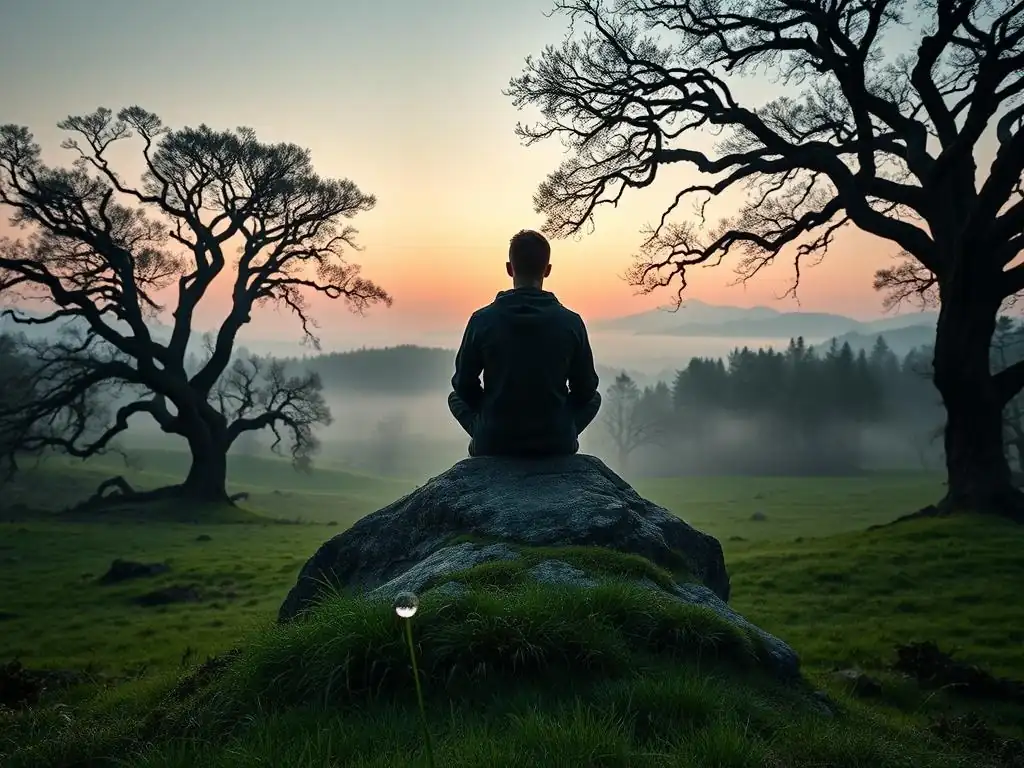
One of the simplest yet most effective ways to use nature to boost creative thinking is taking a walk outdoors. Unlike walking on a treadmill or through a busy city street, a walk in a park, forest, or along a coastline allows the mind to wander more freely. The gentle rhythm of walking combined with exposure to natural sights and sounds reduces mental chatter and opens up cognitive space. Research from Stanford University, for instance, indicated that walking boosted creative output by an average of 60% compared to sitting, with walking outdoors showing slightly better results than walking indoors.
To maximize the creative benefits of a nature walk, try walking without a specific destination or time constraint. Allow your attention to shift naturally between the external environment and your internal thoughts. Carry a small notebook or use a voice recorder on your phone to capture ideas as they arise. Don't censor yourself; just record whatever comes to mind. This practice of combining gentle physical activity with relaxed environmental observation is a powerful catalyst for generating new perspectives and solving problems.
Forest Bathing (Shinrin-Yoku) for Idea Generation
Forest bathing, or Shinrin-Yoku, is a practice originating in Japan that involves immersing oneself in the atmosphere of the forest. It's not strenuous hiking, but rather a slow, mindful engagement with the forest environment using all five senses. This practice is known for its significant stress-reducing benefits, lowering heart rate and blood pressure, and decreasing stress hormones. As discussed earlier, reduced stress is a direct pathway to enhanced creativity.
Beyond stress reduction, the sensory richness of the forest environment provides unique creative fodder. The scent of pine needles, the feel of moss, the dappled light filtering through leaves, and the myriad sounds of birds and insects offer a complex and soothing sensory experience. By intentionally slowing down and paying attention to these details during forest bathing, you engage your observational skills and open your mind to subtle patterns and connections that might otherwise be missed, providing a fertile ground for new ideas to emerge.
Creating a Nature-Inspired Workspace
Even if direct access to expansive natural landscapes is limited, you can still bring the creative benefits of nature into your workspace. Incorporating natural elements into your immediate environment can have a surprising impact on your cognitive function and creativity. This concept is part of biophilic design, which posits that humans have an innate need to connect with nature, and integrating natural elements into built spaces improves well-being and performance.
Simple additions like potted plants have been shown in some studies to improve productivity and reduce stress. Maximizing natural light is also crucial, as exposure to daylight regulates circadian rhythms and improves mood and alertness, all of which support creative thinking.
If possible, arrange your workspace to have a view of nature, even if it's just a tree or a small patch of sky. Using natural materials like wood or stone in decor, or incorporating natural sounds (like a small desk fountain or nature soundscapes), can further enhance the nature-inspired atmosphere, fostering a more relaxed and open mindset conducive to creative flow.
Gardening and the Creative Process
Engaging in gardening is another hands-on way to connect with nature and stimulate creativity. Gardening involves working with living systems – observing growth, understanding cycles, problem-solving challenges like pests or poor soil, and designing layouts. This active engagement with the natural world provides a continuous stream of learning opportunities and requires both practical ingenuity and imaginative vision.
The process of planning a garden, selecting plants, and nurturing them to maturity is inherently creative. It involves visualizing a future state and working to bring it into reality, much like any artistic or innovative project. The sensory experience of gardening – the feel of soil, the scent of flowers, the vibrant colors – also provides rich input that can inspire other creative pursuits.
Furthermore, the meditative aspect of repetitive tasks like weeding or planting can quiet the mind, allowing subconscious ideas to surface. Gardening, therefore, serves as a tangible, rewarding process that grounds you in nature while simultaneously cultivating your creative capacity.
Types of Creative Activities Enhanced by Nature
Nature Photography and Artistic Expression
Nature photography is perhaps one of the most direct ways to merge creative expression with the natural world. The endless variety of subjects – landscapes, wildlife, plants, intricate patterns, and dynamic weather – provides photographers with constant opportunities to hone their craft and express their unique vision. Capturing the fleeting beauty of a sunrise, the raw power of a storm, or the delicate detail of a flower requires keen observation, technical skill, and artistic sensibility.
Beyond simply documenting what is seen, nature photography encourages a deeper engagement with the environment. It prompts you to look closely, notice subtle variations, and consider composition and light in ways that reveal the essence or feeling of a scene. This process of active observation and interpretation is highly stimulating for the creative mind. The challenge of translating a three-dimensional experience into a two-dimensional image pushes creative boundaries, making nature an ideal muse for visual artists.
Writing and Nature: Unleashing Literary Creativity
For writers, nature has long been a fertile source of inspiration. The natural world provides settings, metaphors, symbols, and themes that resonate deeply with the human experience. From crafting vivid descriptions of landscapes to exploring the relationship between humans and the environment, nature offers an inexhaustible wellspring for literary creativity across genres, including poetry, fiction, and non-fiction.
Spending time writing in nature can also be particularly effective. Removing yourself from the distractions of indoor spaces and immersing yourself in a natural setting can quiet the internal critic and allow ideas to flow more freely. The sounds, sights, and smells of nature can stimulate the senses and evoke emotions or memories that fuel storytelling or lyrical expression. Many famous writers, from William Wordsworth to Mary Oliver, have attributed significant portions of their creative output to their deep connection with and observation of the natural world, demonstrating powerfully how nature boosts creative thinking for literary pursuits.
Music Composition Inspired by Natural Sounds
The sounds of nature offer a unique palette for musical composition. From the rhythmic crashing of waves and the complex chorus of birdsong to the subtle rustling of leaves and the distant rumble of thunder, natural soundscapes are rich with patterns, textures, and dynamics that can inspire musical ideas. Composers can draw inspiration from the literal sounds themselves, incorporating field recordings into their work, or abstract the patterns and structures found in nature to create new melodic or rhythmic motifs.
Listening attentively to natural sounds can also train the ear to perceive nuances and complexities often overlooked in everyday life. This heightened auditory awareness can translate into a more sophisticated approach to musical composition, encouraging experimentation with timbre, texture, and structure. Whether creating ambient soundscapes, classical pieces, or modern electronic music, reflecting the natural world's auditory environment offers a vast territory for creative exploration and innovation in music.
Problem Solving and Innovative Thinking in Nature
Nature's influence extends beyond artistic endeavors to impact problem-solving and innovative thinking in fields like science, engineering, and business. Biomimicry, for example, is an approach to innovation that seeks sustainable solutions to human challenges by emulating nature's time-tested patterns and strategies. Observing how organisms adapt, how ecosystems function, and how natural systems process information can provide blueprints for technological design, material science, and organizational structures.
Stepping away from a problem and into a natural setting can also provide the mental distance needed for insight. When the mind is relaxed and less focused on the specifics of the problem, it is more likely to make unexpected connections between disparate pieces of information. This diffused mode of thinking is crucial for 'aha!' moments and breakthroughs. Many scientists and inventors have reported solving complex problems while walking in nature or simply observing natural phenomena, highlighting nature's role not just in artistic inspiration, but in practical, innovative problem-solving.
Maximizing Your Creative Potential Through Nature Immersion
Mindful Nature Observation Techniques
Mindful nature observation involves engaging with the natural world with focused, non-judgmental awareness. Instead of simply seeing nature as a backdrop, you intentionally pay attention to sensory details: the specific shade of green on a leaf, the intricate pattern of bark, the feeling of the wind on your skin, the subtle scents in the air, or the layered sounds around you. This practice slows down your perception and deepens your connection to the present moment.
By observing nature mindfully, you train your brain to notice details and patterns it might otherwise filter out. This enhanced observational skill is directly beneficial for creativity, as it improves your ability to perceive nuances and gather rich sensory information that can fuel ideas. It also cultivates a sense of wonder and curiosity, mental states highly conducive to exploration and innovation. Dedicate even just a few minutes during your time outdoors to simply be present and observe mindfully.
Journaling in Nature: Capturing Creative Insights
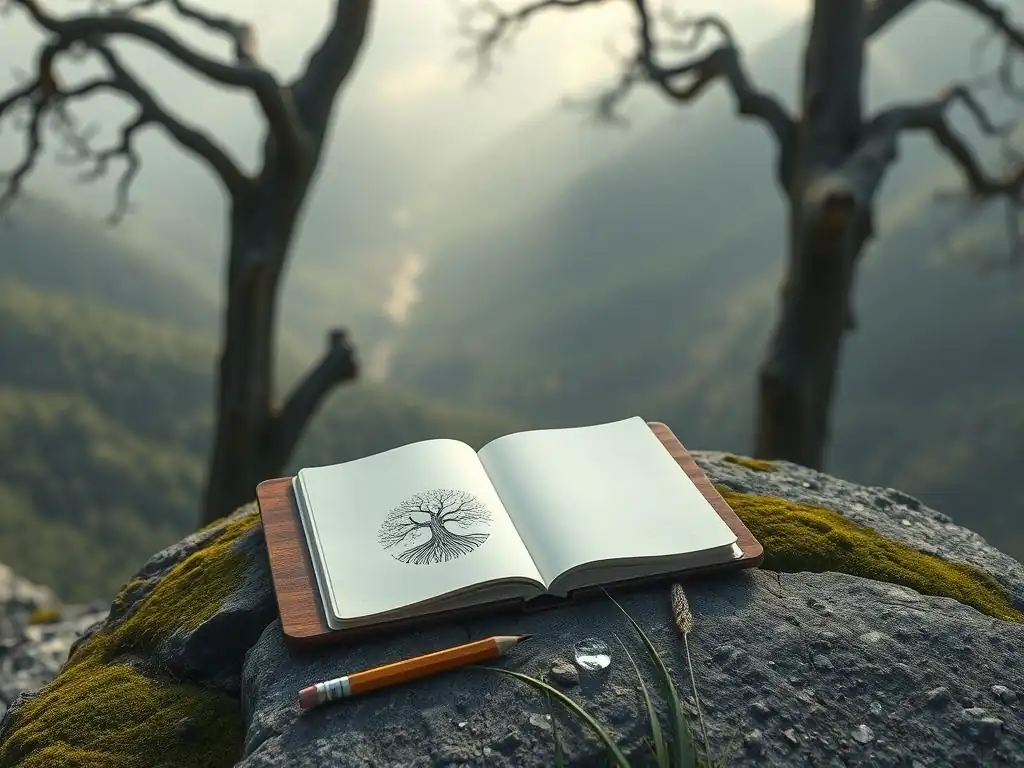
Combining time in nature with journaling is a powerful technique for capturing and developing creative insights. Nature provides the relaxed, stimulating environment that allows ideas to surface, while journaling provides the tool to record, explore, and expand upon them before they fade. Find a comfortable spot – perhaps by a tree, near water, or on a park bench – and let your thoughts flow onto the page.
Your nature journal can be used in many ways:
- Sensory Notes: Describe the sights, sounds, smells, textures, and feelings of the environment around you in detail.
- Idea Capture: Quickly jot down any ideas, metaphors, or connections that come to mind while you are relaxed and observing.
- Reflective Writing: Explore thoughts or feelings prompted by your natural surroundings. How does the environment make you feel? What memories or ideas does it trigger?
- Problem Exploration: Bring a specific creative challenge or problem with you and write about it in the context of the natural environment, allowing new perspectives to emerge.
The act of writing solidifies abstract thoughts and observations, making them more tangible and easier to work with later.
Connecting with Nature Through Meditation and Mindfulness
Integrating meditation or mindfulness practices with nature exposure further amplifies the creative benefits. Mindfulness meditation, often practiced in nature, involves focusing your attention on your breath or bodily sensations while gently acknowledging thoughts and feelings without judgment. When practiced outdoors, you can expand this awareness to include the natural environment – noticing the sounds of birds, the feeling of the ground beneath you, or the sensation of air moving around you.
This combination helps quiet the analytical mind and access deeper levels of consciousness where creative insights often reside. Meditation in nature reduces mental clutter, lowers stress, and enhances present-moment awareness. By cultivating a state of calm, focused openness, you become more receptive to intuitive nudges and unexpected connections. A simple practice could involve sitting quietly for 10-20 minutes in a park or garden, focusing on your breath while allowing the natural world to gently enter your awareness, noticing any thoughts or images that arise related to your creative projects.
Overcoming Barriers to Nature Connection for Creativity
Time Constraints and Nature Access
One of the most common barriers to harnessing nature's creative power is the perceived lack of time or access, especially for those living busy lives in urban areas. However, benefiting from nature doesn't necessarily require long excursions into the wilderness. Even brief exposures can be effective. Taking a 15-minute walk in a local park during lunch, sitting by a tree during a work break, or simply spending time near a window with a view of greenery can offer significant cognitive benefits.
Prioritizing nature time, even in small increments, is key. Schedule short "nature breaks" into your day just as you would schedule meetings or tasks. Look for nearby green spaces you might not have considered – small city parks, community gardens, or even tree-lined streets. The cumulative effect of frequent, short exposures can be substantial. The goal is to integrate nature connection into your routine, making it a regular, accessible part of your week, rather than a rare event.
Urban Environments and Nature Deficit Disorder
Rapid urbanization has led to many people spending less time in natural environments, a phenomenon sometimes referred to as "nature deficit disorder." This disconnect can impact mental well-being and potentially limit creative potential. Urban environments, while stimulating in some ways, are often characterized by constant noise, visual clutter, and a high demand on directed attention, conditions less conducive to the relaxed, open state needed for creativity.
Addressing this requires intentional effort. Explore ways to find or create pockets of nature within the city. This might involve visiting botanical gardens, public parks, or urban nature reserves. Advocate for more green spaces in your community. Consider participating in urban gardening projects. Even utilizing balconies or rooftops for small gardens can provide a valuable connection. The key is to actively seek out and engage with whatever natural elements are available, recognizing their importance for cognitive health and creative vitality.
Bringing Nature Indoors: Plants, Natural Light, and Sounds
When outdoor access is severely limited, or during unfavorable weather, bringing elements of nature indoors can provide a partial, yet beneficial, substitute. This is where biophilic design principles become particularly relevant for fostering creativity in indoor spaces. Integrating living plants into your home or office is one of the simplest and most effective methods; studies have linked indoor plants to improved mood and air quality, which can indirectly support cognitive function.
Maximizing exposure to natural light is also crucial. Position your workspace near windows and use sheer curtains to allow light in while maintaining privacy. Full-spectrum light bulbs can mimic natural light to some extent.
Incorporating natural sounds, such as recordings of rain, waves, or birdsong, can help create a more calming and less distracting auditory environment compared to urban noise. Using natural materials like wood, stone, or bamboo in furniture and decor, and incorporating natural patterns or images (like nature-inspired artwork), can further enhance the feeling of connection to the natural world, helping to foster a state where nature boosts creative thinking even when you're indoors.
Real-Life Examples: Creative Individuals Inspired by Nature
Georgia O'Keeffe: Finding Artistic Vision in the Desert Landscape
Georgia O'Keeffe, one of the most significant American artists of the 20th century, found profound and lasting inspiration in the stark, expansive landscapes of New Mexico. After first visiting in 1929, she was captivated by the desert environment – its unique light, vibrant colors, sculptural forms of mountains and bones, and resilient plant life. This landscape became the primary subject matter and driving force behind much of her most iconic work.
O'Keeffe spent extended periods living and working in the desert, immersing herself in its quiet solitude and observing its subtle details. Her close studies of flowers, bones, and rocks, often rendered in magnified scale, reveal an intense focus on the forms and patterns found in nature. The abstract qualities she found in the landscape directly influenced her move towards abstraction, demonstrating how a deep connection to a specific natural environment can shape an artist's entire aesthetic and creative journey. Her work is a testament to how nature boosts creative thinking, transforming raw observation into powerful artistic expression.
John Muir: Nature Writing and Conservation Advocacy
John Muir, a Scottish-American naturalist, author, and advocate of wilderness preservation, drew immense creative and intellectual inspiration from the natural world, particularly the Sierra Nevada mountains. His extensive travels and deep immersion in these landscapes fueled his prolific writing career, producing essays and books that eloquently described the beauty and importance of wild places. Muir's detailed observations of geology, botany, and ecology were intertwined with a spiritual reverence for nature, creating a unique literary voice that blended scientific curiosity with passionate advocacy.
Muir's creative output wasn't just descriptive; it was persuasive. His writings played a pivotal role in the establishment of national parks like Yosemite and Sequoia, fundamentally shaping the conservation movement in the United States. His ability to communicate the value of nature stemmed directly from his intimate relationship with it. By spending years exploring, studying, and living in the wilderness, Muir gained the insights and inspiration needed to articulate a powerful vision for preservation, proving how deep engagement with nature boosts creative thinking not only for artistic purposes but also for driving significant social and environmental change.
Conclusion: Embrace Nature for a More Creative Life
The Long-Term Benefits of Nature Exposure on Creativity
Integrating regular nature exposure into your life offers sustained and long-term benefits for creativity. It's not just about a temporary boost in idea generation; it's about cultivating a mental state and cognitive capacity that is more resilient, focused, and open over time. Consistent engagement with nature helps maintain lower stress levels, preventing the chronic mental fatigue that stifles creativity. It provides a continuous source of novel stimuli, keeping the mind engaged and preventing creative stagnation.
Furthermore, making nature a regular part of your routine can foster a deeper sense of connection to the world around you, enhancing empathy and perspective – qualities that enrich any creative endeavor. Over time, this connection can lead to a more intuitive and fluid creative process, where ideas seem to arise more naturally and frequently. The sustained practice of mindful observation in nature also sharpens attention and perception, skills that are invaluable for any creative discipline.
Nature as a Sustainable Source of Inspiration
Unlike finite resources, nature is an ever-changing, endlessly complex source of inspiration. Seasons shift, light changes, ecosystems evolve – there is always something new to observe, learn from, and be inspired by. This makes nature a truly sustainable wellspring for creative ideas and energy throughout a lifetime. Relying on nature as a muse encourages adaptability and responsiveness, mirroring the dynamic processes found in the natural world itself.
By consciously turning to nature to boost creative thinking, you tap into a universal, accessible resource that nourishes both the mind and the spirit. It offers a necessary counterbalance to the demands of modern life, providing space for reflection, restoration, and imaginative play. Embracing nature is not just a technique for generating ideas; it is a way of life that can enrich your creative process, enhance your well-being, and foster a deeper appreciation for the world around you.
Frequently Asked Questions
How does spending time in nature actually boost creative thinking?
Exposure to nature provides a break from the constant stimulation of modern life, allowing the brain to enter a more relaxed and reflective state. This can lead to new insights and ideas.
What types of nature experiences are most effective for enhancing creativity, according to Mind Care Guide?
While any time spent in nature is beneficial, experiences that involve immersion and sensory engagement are often the most impactful. Think hiking, gardening, or simply sitting quietly in a park.
How much time in nature is necessary to experience a noticeable increase in creative thinking?
There's no magic number, but even short bursts of nature exposure (e.g., 20-30 minutes) can have a positive effect. Regular, longer visits are likely to yield even greater benefits.
What role does stress reduction play in nature's ability to enhance creativity?
Nature is known to lower stress hormones like cortisol. Reduced stress frees up mental resources, allowing for more flexible and innovative thinking.
Can urban nature (parks, gardens) also provide the same creative benefits as wilderness areas?
Yes! While wilderness areas may offer a more profound experience, urban green spaces also provide a valuable connection to nature. They offer opportunities for stress reduction and mental restoration, supporting creative thinking.
Final Reflection: The Untapped Wellspring of Nature's Creativity
The connection between time spent in nature and enhanced creative thinking isn't just a pleasant theory; it's a vital resource in our increasingly digital world. Our minds, constantly bombarded with information and demands, desperately need the restorative power of the natural world to unlock their full potential. Ignoring this fundamental human need is a disservice to both individual well-being and collective innovation.
The impact of nature on our creative processes is profound and far-reaching. It's not just about escaping the pressures of daily life; it's about accessing a deeper wellspring of inspiration. We've seen how nature's inherent complexity and beauty can spark novel connections in the brain, fostering breakthroughs and innovative solutions. As renowned biologist E.O. Wilson eloquently stated, The more clearly we can focus our attention on the wonders and realities of the universe, the less taste we shall have for the destruction of our planet. Rarely is nature less than sublime.
This sentiment speaks to the intrinsic link between appreciating nature and nurturing our creative spirit, a spirit essential for solving the complex challenges facing humanity.
Consider how you can integrate more nature into your daily life. Take a walk in the park, sit by a tree, or simply observe the clouds drift across the sky. These seemingly small actions can have a transformative effect on your creative output and overall well-being. Embrace the restorative power of nature, and unlock the boundless creativity that lies dormant within you. Let the natural world be your muse, your sanctuary, and your source of endless inspiration.
Ignite Your Imagination: Take Nature's Inspiration with You
Thanks for taking the time to explore the power of nature to boost your creativity! We hope you discovered new ways to unlock your inner innovator. Ready to put these ideas into action?
- Start a Nature Journal: Dedicate just 15 minutes each day to sketching, writing, or simply observing your surroundings. This is your primary step to consistently tap into nature's creative wellspring.
- Share your nature-inspired moments: Tell us about a time nature sparked a creative idea for you! Leave a comment below.
- Challenge your perception: Try approaching a familiar natural space with fresh eyes this week. What new details or possibilities do you discover?
Ready to transform your creative process? Let's discuss your experience with nature journaling in the comments!