
Genetic Counseling for Mental Health: Understanding Inherited Risks


Welcome to Mind Care Guide, a safe space for exploring the complexities of mental well-being. Are you grappling with questions about your family's mental health history? Perhaps you're wondering if you're at risk. Understanding inherited mental health risks assessment can be a crucial step in proactive self-care and informed decision-making. Dive in to discover how genetic factors intertwine with our mental landscape, and what resources are available to help you navigate this intricate journey. Let's explore the science together and empower you with knowledge.
- Genetic Counseling for Mental Health: Understanding Inherited Risks - Mind Care Guide
- Understanding Inherited Mental Health Risks
- The Process of Genetic Counseling for Mental Health
- Benefits of Inherited Mental Health Risks Assessment
- Limitations and Challenges of Genetic Counseling
- Finding a Qualified Genetic Counselor for Mental Health
- Managing Inherited Mental Health Risks: Beyond Genetic Testing
- Conclusion: Embracing Genetic Insights for Better Mental Health Outcomes
-
Frequently Asked Questions
- What is genetic counseling for mental health, and how does it relate to inherited mental health risks assessment?
- Why should someone consider undergoing an inherited mental health risks assessment?
- What kind of information is gathered during an inherited mental health risks assessment?
- How accurate are inherited mental health risks assessments in predicting mental health outcomes?
- What resources are available through Mind Care Guide to support individuals after an inherited mental health risks assessment?
- Final Reflection: Navigating the Inheritance of Mental Wellness
- Unlock Your Family's Mental Wellness Journey
Genetic Counseling for Mental Health: Understanding Inherited Risks - Mind Care Guide
The Role of Genetics in Mental Health Conditions
Mental health conditions are complex, arising from a confluence of factors, including genetics, environment, and life experiences. While no single gene dictates whether someone will develop a mental disorder, variations in multiple genes can significantly influence a person's susceptibility.
Research, often involving twin and family studies, consistently demonstrates that genetic factors contribute to the likelihood of developing conditions such as schizophrenia, bipolar disorder, and major depressive disorder. For instance, studies have shown that if one identical twin has schizophrenia, there is approximately a 40-65% chance the other twin will also develop the condition, a rate far higher than in fraternal twins or the general population, highlighting a substantial genetic component.
Beyond specific disorders, genetic variations can influence personality traits, stress resilience, and response to certain medications, all of which play a role in overall mental well-being. Scientists are actively identifying specific genes and genetic pathways associated with different mental health challenges. While the picture is still incomplete, understanding this genetic contribution is crucial for a comprehensive view of mental health, moving beyond purely environmental or psychological explanations to acknowledge the biological underpinnings of vulnerability. This evolving knowledge base forms the foundation for understanding inherited mental health risks.
Why Consider Genetic Counseling for Mental Well-being?
Considering genetic counseling can be a proactive step for individuals concerned about their family history of mental illness or those already diagnosed. It provides a structured way to understand the potential inherited mental health risks within a family. A genetic counselor can help interpret complex genetic information, assess the likelihood of a condition occurring in an individual or their offspring based on family history and, sometimes, genetic testing, and explain what these risks mean in practical terms.
Furthermore, genetic counseling offers emotional support and helps individuals make informed decisions about their health and family planning. It's not just about predicting risk; it's about empowerment through knowledge. For someone with a strong family history of bipolar disorder, for example, understanding their potential inherited risk can inform decisions about monitoring their own mental health, adopting preventative strategies, and discussing concerns with healthcare providers. It demystifies the genetic aspect of mental health, replacing fear with understanding and providing a pathway for proactive management.
Understanding Inherited Mental Health Risks
Defining Inherited Susceptibility to Mental Disorders
Inherited susceptibility to mental disorders refers to the increased likelihood of developing a mental health condition due to genetic variations passed down through generations. It's important to distinguish this from inheriting a specific disorder directly. Most mental illnesses are polygenic, meaning they are influenced by many different genes, each contributing a small effect, rather than a single gene mutation. This is why inherited mental health risks are often described in terms of susceptibility or predisposition, rather than a guaranteed outcome.
Moreover, genetic predisposition interacts significantly with environmental factors, such as stress, trauma, substance use, and early life experiences. An individual might inherit a genetic vulnerability, but whether they develop a disorder often depends on these external triggers. Think of it like having a genetic tendency towards high blood pressure; lifestyle choices like diet and exercise play a critical role in whether the condition actually manifests. Assessing inherited mental health risks involves considering both the genetic blueprint and the environmental context.
Common Mental Health Conditions with Genetic Links
Many prevalent mental health conditions have been shown to have a significant genetic component, though the degree of heritability varies. Research using large population studies, including national registries and twin studies, has provided compelling evidence for these links. Understanding these connections is vital for anyone considering an inherited mental health risks assessment.
Here are some conditions with established genetic influences:
- Schizophrenia
- Bipolar Disorder
- Major Depressive Disorder
- Autism Spectrum Disorder
- Attention-Deficit/Hyperactivity Disorder (ADHD)
Schizophrenia and Genetic Predisposition
Schizophrenia is a severe mental disorder characterized by profound disruptions in thought processes, perceptions, emotional responsiveness, and social interactions. While its exact cause is unknown, genetic factors are considered a major contributor. The heritability of schizophrenia is estimated to be quite high, often cited in the range of 60-80%. This means that a large portion of the risk for developing schizophrenia is attributable to genetic factors.
The risk is significantly elevated for individuals with a family history. The lifetime risk for the general population is approximately 0.3% to 0.7%. However, if a parent has schizophrenia, the risk for their child increases to about 6%. If a non-twin sibling is affected, the risk is around 8%. For individuals with an identical twin affected by schizophrenia, the risk can be as high as 40-65%. This steep increase based on genetic relatedness strongly supports the role of inherited genetic variations in increasing susceptibility to this condition.
Bipolar Disorder: Identifying Heritable Factors
Bipolar disorder, marked by dramatic shifts in mood, energy, and activity levels, also has a strong genetic basis. Like schizophrenia, it is considered a highly heritable condition, with estimates often placing heritability around 70-85%. This high rate underscores the significant influence of inherited factors on the likelihood of developing bipolar disorder.
The risk for relatives of individuals with bipolar disorder is substantially higher than in the general population. While the lifetime risk for the general population is about 1-3%, having a first-degree relative (parent, sibling, or child) with bipolar disorder increases an individual's risk to approximately 5-10%. If both parents have bipolar disorder, the risk for their child can be even higher, potentially reaching 15-25%. Studies have identified several genes and chromosomal regions that may be associated with increased risk, though the specific genetic architecture is complex and involves multiple genes.
Major Depressive Disorder: Understanding the Genetic Component
Major Depressive Disorder (MDD) is one of the most common mental illnesses globally, characterized by persistent sadness and loss of interest. While environmental factors like stress and trauma are significant triggers, genetic predisposition also plays a role. The heritability of MDD is estimated to be lower than that of schizophrenia or bipolar disorder, typically ranging from 30-40%. This indicates a more complex interplay between genetic and environmental factors compared to the other conditions.
Despite the lower heritability compared to some other disorders, a family history of MDD still significantly increases an individual's risk. Individuals with a first-degree relative diagnosed with MDD are two to three times more likely to develop the disorder themselves compared to those without a family history. Research has identified variations in several genes that may influence susceptibility to depression, including those involved in neurotransmitter systems (like serotonin) and stress response pathways.
Autism Spectrum Disorder: Exploring Genetic Influences
Autism Spectrum Disorder (ASD) is a complex developmental disability affecting communication, social interaction, and behavior. Genetics is considered a major factor in the development of ASD, with heritability estimates often ranging from 50% to over 90%, depending on the study and how ASD is defined. Unlike some other conditions, ASD can sometimes be linked to specific genetic mutations or chromosomal abnormalities, although it is more often associated with the cumulative effect of multiple genes.
The recurrence risk for siblings of a child with ASD is significantly higher than the general population risk (which is about 1 in 36 children in the US, according to 2020 CDC data). For siblings born after a child with ASD, the risk can be as high as 7-20%, and in some cases even higher depending on specific genetic factors and the presence of other affected family members. This wide range reflects the heterogeneity of ASD and the complexity of its genetic architecture, which can involve both common genetic variants and rare, highly penetrant mutations.
Attention-Deficit/Hyperactivity Disorder (ADHD): The Role of Genetics
Attention-Deficit/Hyperactivity Disorder (ADHD) is a neurodevelopmental disorder characterized by persistent patterns of inattention and/or hyperactivity-impulsivity. Genetic factors play a substantial role in the etiology of ADHD, with heritability estimates typically falling in the range of 70-80%. This high heritability indicates that genetic predisposition is a primary driver of risk for ADHD.
Similar to other highly heritable conditions, the risk of developing ADHD is significantly elevated for individuals with affected family members. If a parent has ADHD, there is approximately a 30-50% chance that their child will also have the condition. Siblings of children with ADHD also have a significantly increased risk compared to the general population. Research has implicated genes involved in dopamine and noradrenaline neurotransmitter systems, which are critical for attention, motivation, and executive function, as contributing to ADHD susceptibility.
Family History as a Key Indicator of Inherited Risk
A thorough family history is arguably the most crucial initial step in assessing inherited mental health risks. It provides a snapshot of mental health conditions across multiple generations of a family. Genetic counselors often collect detailed information, creating a pedigree (a family tree diagram) that maps out diagnoses, ages of onset, treatment responses, and other relevant health information for relatives, including parents, siblings, children, grandparents, aunts, uncles, and cousins.
Analyzing this family history helps identify patterns of inheritance and assess the likelihood that genetic factors are playing a significant role in the observed conditions. For example, a pattern of multiple first-degree relatives across generations affected by the same condition (like bipolar disorder) or related conditions (like schizophrenia and schizoaffective disorder) strongly suggests an increased genetic predisposition. This information guides the genetic counselor in determining the potential risk for the individual seeking counseling and helps decide whether genetic testing might be informative. A detailed family history serves as the foundation for any inherited mental health risks assessment.
The Process of Genetic Counseling for Mental Health
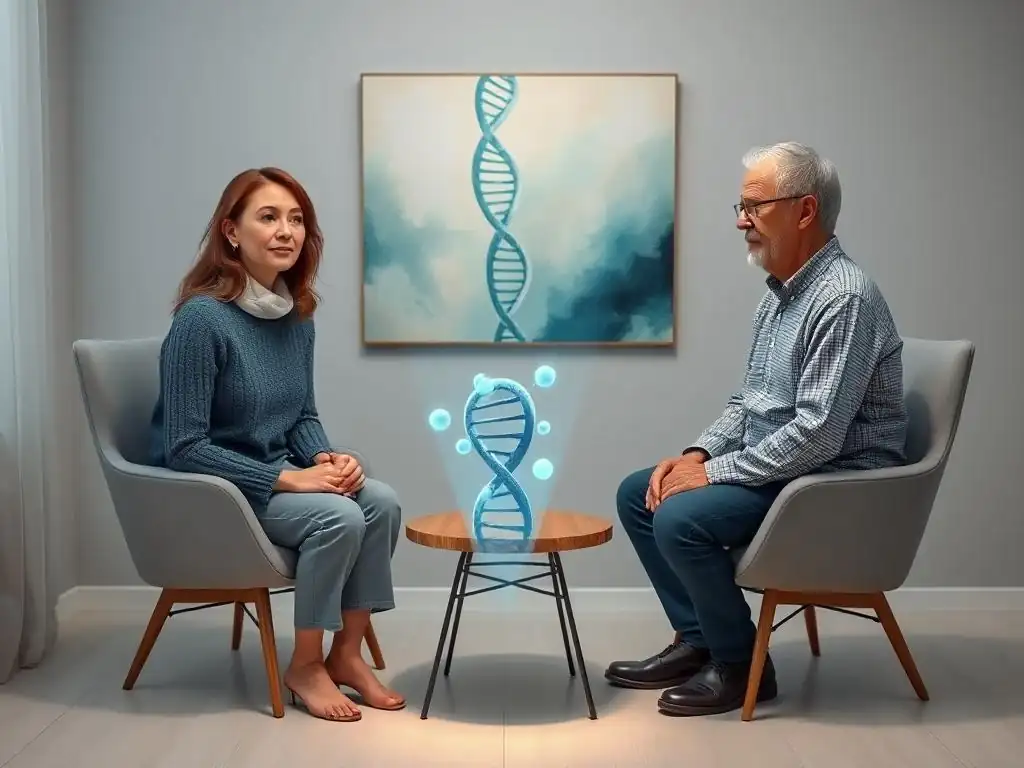
Initial Consultation and Risk Assessment
The genetic counseling process typically begins with an initial consultation. During this meeting, the genetic counselor will meet with the individual (and sometimes family members) to understand their reasons for seeking counseling, their concerns, and their goals. The counselor will explain the nature of genetic risk for mental health conditions, emphasizing that genetics is just one piece of a larger puzzle involving environmental and personal factors.
A key part of this initial session is the preliminary risk assessment. Based on the information shared about the individual's own mental health history (if any) and their family history, the counselor will provide a preliminary evaluation of the potential inherited mental health risks. This assessment is often qualitative (e.g., "increased risk," "significantly increased risk") rather than a precise numerical prediction, especially before detailed family history is gathered or testing is considered. The counselor will also discuss the potential benefits and limitations of genetic testing in the context of mental health.
Gathering Family Medical History and Pedigree Analysis
Following the initial consultation, a detailed family medical history is systematically collected. This often involves the individual filling out questionnaires and working with the counselor to gather information about as many relatives as possible, typically extending to third-degree relatives. The counselor will inquire about specific diagnoses, age of diagnosis, severity of illness, treatment outcomes, hospitalizations, suicides, and any other relevant medical or psychiatric conditions.
This information is then used to construct a pedigree, a standardized graphical representation of the family structure and health history. Analyzing the pedigree allows the genetic counselor to visualize patterns of inheritance, identify individuals at higher risk, and determine if the pattern is consistent with known genetic predispositions for certain mental health conditions. This detailed analysis is critical for a thorough inherited mental health risks assessment and for determining the appropriateness and potential value of genetic testing.
Genetic Testing Options for Mental Health: What to Expect
Genetic testing for mental health conditions is an evolving field and is generally more complex and less definitive than testing for single-gene disorders like cystic fibrosis. Currently, genetic testing is not used to diagnose most common mental illnesses but rather to identify genetic variations that may increase risk or potentially inform treatment choices (like how an individual might metabolize certain psychiatric medications).
If genetic testing is deemed appropriate and potentially informative based on the family history and consultation, the counselor will explain the available options, the specific genes or regions being analyzed, the laboratory process, and what the test results might indicate. They will also discuss the limitations, such as the fact that current tests don't capture all possible genetic risks and that a positive result doesn't guarantee illness, nor does a negative result eliminate all risk.
Types of Genetic Tests Available
Several types of genetic tests might be discussed or considered in the context of mental health, depending on the specific concerns and family history.
- Single-gene testing: Rarely used for common polygenic mental illnesses, but might be considered if a specific, rare syndrome associated with psychiatric symptoms is suspected (e.g., 22q11.2 deletion syndrome, which increases risk for schizophrenia).
- Multi-gene panels: These tests analyze multiple genes known to be associated with an increased risk for certain mental health conditions (e.g., panels for genes linked to bipolar disorder or schizophrenia risk). The interpretation of these panels can be complex as they look at variants with small individual effects.
- Pharmacogenomic testing: This type of testing analyzes genes that influence how a person metabolizes or responds to certain medications, including psychiatric drugs like antidepressants and antipsychotics. While not directly assessing risk for developing an illness, it can be valuable for guiding treatment decisions for someone already diagnosed or at high risk.
- Genome-wide studies (e.g., microarray, exome sequencing): More comprehensive tests that look at large portions of the genome. These are typically used in research settings but may be considered in complex cases or when looking for rare genetic causes of neurodevelopmental disorders associated with psychiatric features.
Interpreting Genetic Test Results
Interpreting genetic test results for mental health risks requires specialized expertise. Unlike testing for a single gene disorder where a positive result might indicate a high probability of developing the condition, results for complex mental illnesses are usually probabilistic. A test might identify genetic variations that are associated with an increased risk, but it cannot predict with certainty whether, when, or how severely an individual will be affected.
The genetic counselor will explain the findings in detail, putting them into the context of the individual's family history, personal health, and environmental factors. They will clarify what the identified genetic variations mean in terms of relative risk compared to the general population and discuss the limitations of the findings. For example, a test might show variants that double the general population risk, but if the general population risk is low (say, 1%), a doubled risk (2%) is still relatively low in absolute terms. The counselor helps translate these complex probabilities into understandable information.
Ethical Considerations in Genetic Testing for Mental Illness
Genetic testing for mental health raises significant ethical considerations that are carefully addressed during counseling. One major concern is the potential for psychological distress or anxiety upon receiving information about increased genetic risk. Counselors are trained to provide support and help individuals process this information in a healthy way.
Another critical ethical issue is the potential for genetic discrimination. While laws like the Genetic Information Nondiscrimination Act (GINA) in the United States offer some protection against discrimination in health insurance and employment based on genetic information, these protections have limitations (e.g., they don't cover life insurance, disability insurance, or long-term care insurance). Counselors discuss these protections and limitations openly.
Privacy of genetic information is also paramount, and counselors explain how data will be stored and protected. Finally, the implications for family members, who share some of the same genetic information, are discussed, emphasizing the importance of respecting their privacy and autonomy.
Benefits of Inherited Mental Health Risks Assessment
Empowering Individuals with Knowledge and Awareness
One of the most significant benefits of undergoing an inherited mental health risks assessment is the empowerment that comes with knowledge. Understanding one's potential genetic predisposition doesn't have to be a source of fear; instead, it can be a catalyst for proactive health management. For example, an individual learning they have a higher-than-average genetic risk for bipolar disorder might become more vigilant about monitoring their mood, sleep patterns, and energy levels, recognizing early warning signs they might otherwise overlook.
This awareness allows individuals to take control where possible, making informed decisions about lifestyle, stress management, and when to seek professional help. It shifts the perspective from a passive concern about potential future illness to an active engagement with one's mental well-being journey. This process helps demystify inherited risk, making it a manageable factor rather than an unknown threat.
Informing Treatment Decisions and Personalized Care
Information from an inherited mental health risks assessment, particularly if genetic testing is included (like pharmacogenomic testing), can potentially inform and personalize treatment decisions. While genetic risk profiles for complex illnesses don't dictate treatment, knowing about a predisposition might influence the type or intensity of monitoring recommended by a clinician.
Pharmacogenomic testing, specifically, can provide insights into how an individual's body might process certain psychiatric medications. For instance, a test might indicate that a person is a poor metabolizer of a common antidepressant, suggesting that a standard dose might lead to higher drug levels and increased side effects, or conversely, that they are a rapid metabolizer, meaning a standard dose might be ineffective.
This information can guide prescribers in selecting medications and dosages, potentially leading to more effective treatment with fewer side effects. A 2019 study published in Translational Psychiatry showed that using pharmacogenomic testing to guide antidepressant selection led to improved remission rates compared to standard care in patients with depression.
Family Planning and Reproductive Choices
For individuals planning to have children, understanding inherited mental health risks can be particularly relevant for reproductive decision-making. While most common mental illnesses have complex inheritance patterns that make definitive prediction for offspring impossible, counseling can help prospective parents understand the increased likelihood based on their family history and their own genetic profile (if tested).
Genetic counselors can discuss the specific recurrence risks for their future children, explaining the probabilities in an accessible way. This information allows individuals and couples to make informed choices that align with their values and goals. Options might include:
- Accepting the increased risk.
- Considering alternative reproductive options like using donor gametes.
- Planning for increased vigilance and early intervention for their children.
It's important to note that for most common mental illnesses, the increased risk to offspring is still relatively low in absolute terms, even if it's significantly higher than the general population risk. Counseling helps provide this crucial context.
Reducing Stigma Associated with Mental Illness
Genetic counseling can play a role in reducing the stigma associated with mental illness by highlighting its biological underpinnings. Understanding that conditions like schizophrenia or bipolar disorder have significant genetic and biological components can help shift perspectives away from blaming the individual or seeing the illness as a character flaw or moral failing.
By framing mental health conditions, in part, as disorders with biological roots influenced by inherited factors, it can foster greater empathy and understanding. This approach aligns mental health more closely with other medical conditions that have known genetic predispositions, such as heart disease or diabetes. Providing individuals and families with this scientific context can validate their experiences and encourage open conversations about mental health, contributing to a more compassionate and informed society.
Limitations and Challenges of Genetic Counseling
The Complexity of Gene-Environment Interactions
A significant limitation in genetic counseling for mental health is the intricate interplay between genes and the environment. As mentioned earlier, most mental health conditions are not caused by genes alone. An individual might carry genetic variants associated with increased risk, but whether the illness develops, and how severely, often depends on environmental factors like stress, trauma, social support, and lifestyle.
Current genetic tests for complex mental illnesses identify genetic susceptibility, not destiny. They cannot tell us which environmental factors might be most impactful for a given individual or how strongly they will interact with their specific genetic profile. This complexity makes precise prediction challenging and means that a genetic risk profile provides only a partial picture of an individual's overall vulnerability. Counseling must carefully explain this gene-environment interaction to manage expectations and avoid oversimplifying the causes of mental illness.
Incomplete Penetrance and Variable Expressivity
Related to gene-environment interaction are the concepts of incomplete penetrance and variable expressivity. Penetrance refers to the probability that a person with a particular genetic variation will actually develop the condition. For complex mental illnesses, penetrance is often incomplete; many people who carry risk-associated genetic variants never develop the disorder. This is why having a "risk gene" does not guarantee illness.
Variable expressivity means that even if a condition does develop in individuals with the same genetic predisposition, the severity, symptoms, and age of onset can differ widely. One person might have a mild, episodic form of bipolar disorder, while a relative with similar genetic risks might experience severe, frequent episodes. These phenomena add layers of complexity to interpreting genetic test results and predicting individual outcomes, making it challenging to provide definitive answers about future health.
The Emotional Impact of Genetic Information
Receiving information about an increased genetic risk for a serious mental illness can have a significant emotional impact. Individuals may experience anxiety, fear, sadness, or even guilt, especially if they have already seen family members struggle with the condition. There can also be concerns about the future, their own well-being, and the potential risk to their children.
Genetic counselors are trained to anticipate and address these emotional responses, providing psychological support throughout the process. However, managing the emotional burden of this information is a challenge that requires careful handling and ongoing support. It's crucial for individuals to have access to mental health professionals who can help them process these feelings and integrate the genetic information into their overall understanding of themselves and their health.
Addressing Concerns About Privacy and Discrimination
Concerns about the privacy of genetic information and the potential for discrimination are valid and significant challenges in genetic counseling for mental health. Despite legal protections like GINA in the US, individuals may worry about how their genetic information could affect their ability to obtain certain types of insurance (life, disability), their employment opportunities, or even social relationships.
Counselors must clearly explain the current legal landscape regarding genetic discrimination and discuss the practical implications of having this information in their health records. They also emphasize the importance of choosing reputable testing laboratories with strong privacy policies. While strides have been made in protecting genetic privacy, the evolving nature of genetic information use means that these concerns remain a critical aspect of the counseling conversation.
Finding a Qualified Genetic Counselor for Mental Health

Credentials and Expertise to Look For
Finding a qualified genetic counselor is essential for obtaining accurate information and support regarding inherited mental health risks assessment. Look for counselors who are certified by the American Board of Genetic Counseling (ABGC) or the Canadian Board of Genetic Counselling (CBGC). Certification ensures they have met rigorous standards of training and expertise.
Ideally, seek a counselor with experience or specific interest in psychiatric genetics or neurogenetics. While all certified genetic counselors are trained in general genetics, those with experience in mental health conditions will be more familiar with the specific complexities, current research, and testing options relevant to psychiatric disorders. Don't hesitate to ask about their experience in this specific area during your initial contact.
Resources for Locating Genetic Counseling Services
There are several reliable resources for finding qualified genetic counselors specializing in mental health or neurogenetics.
- National Society of Genetic Counselors (NSGC): Their website has a "Find a Genetic Counselor" tool that allows you to search by location and specialty (look for psychiatry, neurology, or pediatrics, as neurodevelopmental conditions often involve psychiatric symptoms).
- American College of Medical Genetics and Genomics (ACMG): While primarily for medical geneticists, their resources can sometimes help locate clinical genetics services that include counseling.
- University Medical Centers and Hospitals: Many large university hospitals and medical centers have genetics departments or clinics that offer counseling services, often with specialists in various areas, including psychiatric conditions.
- Professional Referrals: Your primary care physician, psychiatrist, or therapist may be able to provide a referral to a local genetic counseling service.
When searching, specify your interest in mental health or psychiatric genetics to find the most appropriate provider for your inherited mental health risks assessment needs.
Preparing for Your Genetic Counseling Appointment
Preparing for your genetic counseling appointment can help you get the most out of the session.
- Gather Family History: The most important step is to collect as much detailed information as possible about mental health conditions (and other significant medical conditions) in your family. Try to get specific diagnoses, age of onset, and outcomes for parents, siblings, children, grandparents, aunts, uncles, and cousins. Note any suicides or hospitalizations.
- List Your Questions: Write down all your questions and concerns beforehand. This ensures you don't forget anything during the appointment. Questions might include:
- What are my risks based on my family history?
- What are the benefits and limitations of genetic testing for my situation?
- How would genetic test results be used?
- What are the costs involved?
- What are the implications for my family members?
- How is genetic information kept private?
- Bring Relevant Medical Records: If you or a family member have received specific diagnoses or undergone previous genetic testing, bring copies of those records if possible.
- Consider Bringing a Support Person: Bringing a trusted family member or friend can be helpful for emotional support and to help remember the information discussed during the session.
Being prepared allows for a more focused and productive discussion about your inherited mental health risks.
Managing Inherited Mental Health Risks: Beyond Genetic Testing
Lifestyle Modifications and Preventative Strategies
Understanding inherited mental health risks is not solely about potential future illness; it's significantly about proactive management and prevention. Even with a genetic predisposition, lifestyle choices can profoundly impact mental well-being and potentially mitigate risk. Engaging in regular physical activity, for example, is widely recognized for its positive effects on mood and stress reduction. A 2020 review in the Journal of Affective Disorders highlighted exercise as an effective intervention for depression and anxiety, potentially influencing neurobiological pathways implicated in these conditions.
Prioritizing adequate sleep (typically 7-9 hours per night for adults), maintaining a balanced diet rich in fruits, vegetables, and omega-3 fatty acids, and practicing stress-reduction techniques like mindfulness or meditation are all valuable strategies. Avoiding substance abuse is also critical, as substances can trigger or worsen symptoms in individuals with genetic vulnerabilities. These lifestyle modifications empower individuals to build resilience and actively work towards maintaining their mental health, regardless of their genetic background.
Early Intervention and Therapeutic Support
Awareness of increased inherited mental health risks allows for greater vigilance and the potential for early intervention. If an individual or their family is aware of a predisposition, they can be more attuned to early signs and symptoms of a developing mental health condition. Seeking help at the first sign of difficulty, rather than waiting until a crisis point, can lead to better outcomes.
Accessing therapeutic support, such as psychotherapy (e.g., Cognitive Behavioral Therapy or Dialectical Behavior Therapy), can provide individuals with coping skills, strategies for managing stress, and support for navigating challenging emotions. For those at higher risk, proactive engagement with mental health professionals can facilitate prompt diagnosis and treatment if needed, potentially altering the trajectory of an illness. Early intervention has been shown to be particularly effective in conditions like psychosis and bipolar disorder, improving long-term prognosis.
The Importance of a Holistic Approach to Mental Well-being
Managing inherited mental health risks necessitates a holistic approach that considers the interconnectedness of mind, body, and environment. While genetics provides insight into predisposition, it is only one piece. Focusing solely on genetic risk without addressing other crucial factors is insufficient for promoting overall mental well-being.
A holistic approach integrates knowledge of genetic susceptibility with attention to lifestyle, physical health, social support networks, environmental stressors, and access to appropriate mental healthcare. It recognizes that mental health is dynamic and influenced by multiple forces. Individuals are encouraged to build strong social connections, pursue meaningful activities, manage chronic physical health conditions, and develop effective coping mechanisms. Inherited mental health risks assessment serves as valuable information within this broader framework of comprehensive mental health care.
Conclusion: Embracing Genetic Insights for Better Mental Health Outcomes
Understanding inherited mental health risks through genetic counseling offers valuable insights into the complex factors that contribute to conditions like schizophrenia, bipolar disorder, and major depressive disorder. While genetics do not predetermine destiny, they provide a window into individual susceptibility, empowering people with knowledge. This knowledge, gained through careful family history analysis and potentially genetic testing, can inform proactive lifestyle choices, guide treatment decisions, and facilitate thoughtful family planning discussions.
The process involves navigating complex information about gene-environment interactions, incomplete penetrance, and ethical considerations like privacy and potential discrimination. However, with the guidance of qualified genetic counselors, individuals can interpret this information in a supportive environment, transforming potential concerns into opportunities for empowerment and informed action. Embracing these genetic insights, alongside a commitment to a holistic approach to mental well-being, holds promise for improving individual outcomes and fostering greater understanding and reduced stigma surrounding mental illness.
The Future of Genetic Counseling in Mental Healthcare
The field of psychiatric genetics is rapidly advancing, with ongoing research identifying new genes and pathways associated with mental health conditions. As our understanding deepens and genetic testing technologies become more sophisticated and affordable, the role of genetic counseling in mental healthcare is likely to expand. Future developments may include polygenic risk scores that offer a more comprehensive assessment of risk based on thousands of genetic variants, although interpreting these complex scores for clinical use remains a challenge.
Pharmacogenomic testing is also expected to become more integrated into standard psychiatric care, helping clinicians personalize medication choices from the outset. Genetic counseling will be crucial in translating these complex genetic findings into understandable and actionable information for both patients and clinicians. As research progresses, genetic insights are poised to become an even more integral part of a comprehensive approach to inherited mental health risks assessment, prevention, and personalized treatment, ultimately contributing to improved mental health outcomes for individuals and families.
Frequently Asked Questions
What is genetic counseling for mental health, and how does it relate to inherited mental health risks assessment?
Genetic counseling for mental health is a process to help individuals and families understand their risk of inheriting mental health conditions. It uses family history and sometimes genetic testing to assess and explain these risks.
Why should someone consider undergoing an inherited mental health risks assessment?
An assessment can provide valuable information about your potential risk of developing certain mental health conditions. This allows for proactive management and informed decision-making regarding lifestyle, preventative measures, and future planning.
What kind of information is gathered during an inherited mental health risks assessment?
Typically, a detailed family history of mental health conditions is collected, along with information about your personal mental health and any relevant medical history. Genetic testing may be considered in some cases.
How accurate are inherited mental health risks assessments in predicting mental health outcomes?
These assessments provide risk estimates rather than definitive predictions. Mental health is influenced by both genetics and environmental factors, so the assessment provides a probability of risk rather than a guarantee.
What resources are available through Mind Care Guide to support individuals after an inherited mental health risks assessment?
Mind Care Guide offers access to mental health professionals, educational resources about various conditions, and supportive communities to help individuals navigate their mental well-being after receiving assessment results.
The understanding and management of inherited mental health risks are no longer a futuristic concept; they are a crucial element of preventative healthcare today. The increasing accessibility of genetic testing and the growing body of research into the genetic basis of mental illness demand a proactive approach to understanding our inherited predispositions. This knowledge empowers individuals and families to make informed decisions about their mental wellbeing, fostering a more proactive and compassionate approach to mental healthcare.
The impact of this knowledge extends far beyond individual families; it is reshaping our understanding of mental illness itself. By moving beyond a purely symptomatic approach, we begin to appreciate the complex interplay of genetics, environment, and lifestyle in shaping mental health. This shift in perspective is vital for reducing stigma and fostering a more holistic approach to treatment and prevention. The greatest discovery of all time is that a person can change his future by merely changing his attitude.
– Oprah Winfrey. This quote resonates deeply, as understanding our genetic predispositions allows us to change our attitudes towards preventative care and proactive lifestyle choices.
Now, consider your own family history. What patterns do you see? What steps can you take, armed with this new understanding of inherited mental health risks, to proactively safeguard your own wellbeing and that of your loved ones? Seek out genetic counseling, engage in open conversations with family members, and prioritize a lifestyle that supports mental resilience. The future of mental healthcare lies in our collective ability to embrace this knowledge and build a more informed and supportive society. Let's work together to create a future where understanding our genetic inheritance empowers us to build stronger, healthier minds.
Unlock Your Family's Mental Wellness Journey
Thanks for taking the time to learn about the impact of genetics on mental health! We hope this article provided valuable insights into inherited risks and empowers you to take proactive steps. Now, let's turn knowledge into action:
- Schedule a preliminary consultation with a genetic counselor. This is your first step towards understanding your family's unique risk profile and developing personalized strategies for prevention and support.
- Explore resources on genetic testing for mental health conditions. Many organizations offer comprehensive guides and support to navigate the complexities of genetic testing.
- Share this article with a family member who might find it beneficial. Open conversations about mental health are crucial for building support and reducing stigma.
What proactive steps will you take today to prioritize your family's mental wellbeing?