
The Top Features That Make a Mindfulness Journal Truly Helpful


Welcome to Mind Care Guide, a sanctuary for your mental well-being.
Feeling overwhelmed? You're not alone. Many are discovering the profound impact of simple practices like journaling. But are you truly unlocking its full potential? Dive into our latest guide to uncover the mindfulness journal benefits for stress and discover the top features that will make your journaling journey truly transformative. Let's explore how a few mindful moments can reshape your inner world.
The Top Features That Make a Mindfulness Journal Truly Helpful
- Understanding Mindfulness Journals: Benefits for Stress Reduction and Mental Well-being
-
Key Features of Effective Mindfulness Journals for Stress Management
- Feature 1: Guided Prompts for Enhanced Self-Reflection
- Feature 2: Space for Free Writing and Unstructured Thought
- Feature 3: Inclusion of Mindfulness Exercises and Techniques
- Feature 4: Trackers and Habit-Building Tools for Consistent Practice
- Feature 5: High-Quality Paper and Durable Binding for a Pleasant Experience
- Comparing Top Mindfulness Journals Based on Key Features and Stress Relief Benefits
- Choosing the Right Mindfulness Journal to Maximize Stress Reduction Benefits
-
Frequently Asked Questions
- What are the primary mindfulness journal benefits for stress reduction?
- How does a mindfulness journal differ from a regular diary or journal?
- What key features should I look for in a mindfulness journal to maximize its effectiveness for stress management?
- How often should I use a mindfulness journal to experience noticeable stress reduction benefits?
- Can a mindfulness journal replace other forms of therapy for managing stress, like medication or counselling?
- Final Reflection: Cultivating Calm Through Mindful Journaling
- Unlock Your Inner Peace: Start Journaling Today!
Understanding Mindfulness Journals: Benefits for Stress Reduction and Mental Well-being
What is a Mindfulness Journal and How Does it Help Reduce Stress?
A mindfulness journal is a dedicated space, typically a notebook or guided planner, used to cultivate present moment awareness and process thoughts and emotions without judgment. Unlike a traditional diary that might recount daily events, a mindfulness journal focuses on internal experiences – sensations, feelings, thoughts, and observations of the world around you. The act of writing itself requires focus and slows down the often-racing mind, pulling your attention into the physical act of putting pen to paper.
This simple process interrupts ruminative thought patterns, which are a significant contributor to stress and anxiety. By externalizing internal chatter onto the page, you create distance from your thoughts, allowing you to observe them rather than being consumed by them.
The core mechanism through which a mindfulness journal aids in stress reduction lies in its ability to foster self-awareness and emotional regulation. Regular journaling helps you identify triggers for stress, recognize patterns in your emotional responses, and gain perspective on challenging situations. For example, consistently noting feelings of tension or worry before a particular meeting can help you anticipate and prepare differently.
Furthermore, dedicating even a few minutes each day to this practice provides a structured pause, a moment of calm amidst busyness, which is inherently stress-reducing. This consistent practice builds resilience, enabling you to navigate future stressors with greater ease and equanimity, highlighting the significant mindfulness journal benefits for stress.
Exploring the Connection Between Journaling, Mindfulness, and Anxiety Relief
The intersection of journaling, mindfulness, and anxiety relief is powerful and well-documented anecdotally. Mindfulness, at its heart, is about paying attention to the present moment with curiosity and acceptance. Journaling provides a concrete tool to practice this attention. When you write about your current feelings or sensations, you are actively engaging with the present, grounding yourself. For someone experiencing anxiety, which often involves dwelling on past worries or future fears, this present-moment focus is crucial. It interrupts the cycle of anxious thoughts and brings you back to reality.
Moreover, journaling serves as a safe container for anxious thoughts. Putting worries down on paper can make them feel less overwhelming and more manageable. It allows you to examine anxious thoughts objectively, perhaps recognizing cognitive distortions or irrational fears that fuel anxiety.
For instance, writing down a catastrophic prediction might reveal how unlikely it is when seen in plain text. This process of externalization and examination, facilitated by journaling, is a key component of cognitive behavioral strategies often used for anxiety relief. Consistent mindfulness journaling helps train the mind to observe anxious feelings without getting swept away by them, reinforcing the mindfulness journal benefits for stress and overall mental well-being.
Key Features of Effective Mindfulness Journals for Stress Management
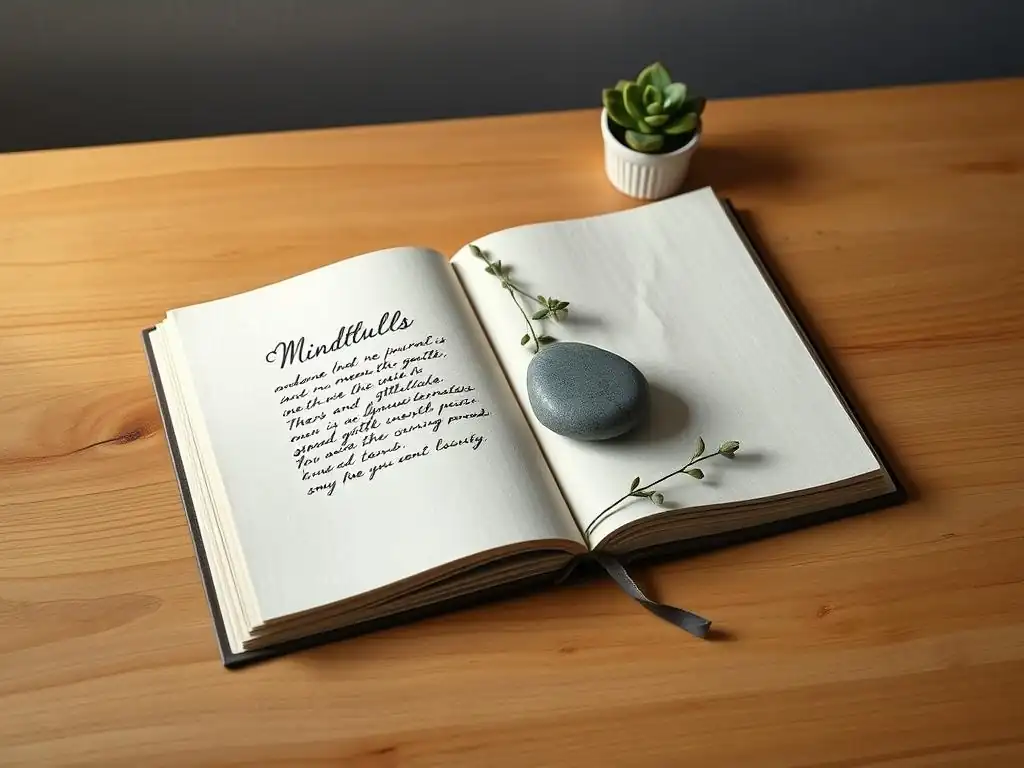
Feature 1: Guided Prompts for Enhanced Self-Reflection
Why Guided Prompts are Essential for Beginners Using Mindfulness Journals
For individuals new to mindfulness or journaling, facing a blank page can be intimidating and even counterproductive. Guided prompts provide a starting point, a gentle nudge in a specific direction, making the practice accessible and less daunting. They break down the vast concept of self-reflection into manageable questions or statements, guiding the user toward specific areas like gratitude, emotional awareness, or present-moment observation. This structure helps beginners overcome writer's block and ensures they engage with themes central to mindfulness practice right from the start, accelerating the realization of mindfulness journal benefits for stress.
These prompts act like training wheels, helping users understand what kind of reflection is beneficial for mental well-being. Without guidance, a beginner might simply list their daily activities, which, while a form of journaling, doesn't necessarily cultivate the deeper self-awareness mindfulness aims for. Prompts like "What is one thing you are grateful for today?" or "Describe a moment today when you felt fully present" directly steer the user towards mindful observation and positive reflection. This structured approach builds confidence and demonstrates the immediate value of the practice.
Example: The "Gratitude Reflection" Prompt in the Five Minute Journal
A classic example of an effective guided prompt is the daily gratitude reflection found in many popular mindfulness journals, such as the structure popularized by the Five Minute Journal format. This type of prompt typically asks the user to list three to five things they are grateful for. These can range from significant life events to simple everyday pleasures, like "the warmth of my coffee this morning" or "a kind word from a colleague." The prompt is simple, requires minimal time, but has a profound impact.
Focusing on gratitude shifts the mind away from anxieties, worries, and perceived lacks towards acknowledging the positive aspects of life, no matter how small. This intentional focus on the good is a direct countermeasure to negative rumination, a common component of stress and anxiety. By consistently engaging with this prompt, users train their brains to seek out and appreciate positivity, gradually altering their perspective and significantly contributing to the mindfulness journal benefits for stress reduction over time.
How to Use Guided Prompts to Maximize Mindfulness Journal Benefits for Stress
To maximize the mindfulness journal benefits for stress using guided prompts, approach them with honesty and a spirit of exploration rather than obligation. Don't feel pressured to write elaborate responses; a few sincere sentences are often more impactful than lengthy, forced prose. Try to engage with the prompt immediately upon reading it, allowing your genuine thoughts and feelings to emerge without overthinking. For instance, if the prompt is "What emotion are you feeling right now? ", pause, notice your physical sensations, and then write down the first emotion that comes to mind, accepting it without judgment.
Consistency is key. Aim to respond to prompts at a specific time each day, perhaps in the morning to set an intention or in the evening to reflect on the day. Allow yourself to be surprised by what comes up. Sometimes, a seemingly simple prompt can unlock deeper insights or reveal underlying stressors you weren't consciously aware of. Use the prompts as springboards for self-discovery, allowing them to guide you towards greater awareness and, consequently, more effective stress management.
Feature 2: Space for Free Writing and Unstructured Thought
The Importance of Unstructured Journaling in Complementing Guided Exercises
While guided prompts offer valuable structure, ample space for free writing is equally crucial in a truly helpful mindfulness journal. Unstructured writing, sometimes called stream-of-consciousness journaling or 'morning pages,' provides a space for uncensored expression. It's where you can unload whatever is on your mind – worries, frustrations, creative ideas, fleeting thoughts – without the constraint of a specific question or theme. This process is incredibly cathartic and serves as a mental decluttering tool.
Free writing complements guided prompts by allowing you to process thoughts and emotions that might not fit neatly into a predefined category. It's a space to vent stress, explore complex feelings, or simply ramble until clarity emerges. This lack of structure can be particularly beneficial when dealing with overwhelming stress or confusion, providing an immediate outlet for mental noise. It ensures that the journal serves as a comprehensive tool for mental processing, not just a structured reflection exercise.
Product Example: Journals with Ample Blank Space like the Mindful Morning Pages for Creative Exploration
Journals designed with a significant portion dedicated to blank, unlined, or lightly lined pages, such as those encouraging a "Morning Pages" practice, exemplify the value of unstructured space. These journals often feature large sections or even the majority of their pages left open for free expression. The emphasis is on quantity and flow rather than structure or specific content. The idea is to fill a certain number of pages (often three) each morning with whatever comes to mind, without editing or judgment.
This format is particularly beneficial for individuals who find that creative blocks or mental clutter impede their ability to focus or manage stress. The act of filling the pages, regardless of the content's perceived quality, helps to clear the mind and access deeper thoughts or creative impulses. It provides a dedicated space for the brain to "dump" its contents, reducing mental load and indirectly contributing to the mindfulness journal benefits for stress by freeing up cognitive resources.
Combating Writer's Block in Your Mindfulness Journal: Tips and Tricks
Writer's block can strike even when journaling for stress relief. If you find yourself staring at a blank page, especially during free writing, try these simple techniques. First, give yourself permission to write anything. It doesn't have to be profound or even make sense. Start with "I don't know what to write..." and see where that leads. Sometimes simply describing your physical surroundings or listing objects you see can kickstart the flow.
Another effective tip is to set a timer for a short duration, say 5 or 10 minutes, and commit to writing continuously until the timer goes off, without pausing to think or edit. This removes the pressure for perfection and encourages a stream-of-consciousness flow. Alternatively, if you're struggling with free writing after using prompts, try picking one word or phrase from a prompt response and using it as a starting point for an unstructured entry. Remember, the goal is process over perfection when seeking mindfulness journal benefits for stress.
Feature 3: Inclusion of Mindfulness Exercises and Techniques
Integrating Breathing Exercises and Body Scan Meditations into Your Journaling Practice
Beyond writing prompts, effective mindfulness journals often integrate spaces or instructions for practicing short mindfulness exercises like breathing techniques or body scans. These exercises are foundational to mindfulness and provide immediate tools for grounding and stress reduction. A journal might include a page explaining a simple square breathing technique or provide a checklist for a brief body scan meditation, guiding the user to notice sensations from head to toe.
Integrating these practices directly into the journal encourages their regular use. For instance, a journal might suggest doing a 60-second breathing exercise before responding to a prompt, helping the user arrive at the page in a more centered state. Following a body scan meditation, the journal could provide space to write down any sensations or insights that arose. This combination leverages the immediate calming effect of the exercises with the reflective processing power of writing, amplifying the mindfulness journal benefits for stress.
Product Example: The "Box Breathing Exercise" in the Headspace Journal – Affiliate Opportunity
Some journals, like those accompanying mindfulness apps or programs (such as the Headspace Journal, hypothetically used here as an example of a product type), specifically include instructions and space for particular mindfulness techniques. A common example is the "Box Breathing" exercise, where you inhale for a count of four, hold for four, exhale for four, and hold again for four, visualizing a box shape. A journal might dedicate a page to explaining this technique and provide blank space below for notes on how the exercise felt.
Including such specific, actionable exercises makes the journal a more dynamic tool for stress management. It's not just about reflecting on mindfulness; it's about actively practicing it. Having the instructions readily available within the journal removes barriers to practice, making it easy to incorporate short bursts of mindfulness throughout the day or as part of the journaling routine. This direct integration enhances the practical mindfulness journal benefits for stress relief.
How Mindfulness Exercises Enhance the Benefits of Journaling for Stress Relief
Mindfulness exercises like breathing or body scans enhance journaling's benefits by preparing the mind and body for reflection. Stress and anxiety often manifest physically as tension, shallow breathing, or restlessness. Engaging in a short exercise beforehand helps to alleviate these physical symptoms, making it easier to focus and access deeper thoughts and feelings for journaling. It shifts you from a reactive, stressed state to a more receptive, present state.
Furthermore, these exercises cultivate the core mindfulness skill of non-judgmental observation. Practicing a body scan teaches you to notice physical sensations without trying to change them or labeling them as 'good' or 'bad.' This skill directly translates to journaling, where you learn to write down thoughts and emotions without immediate self-criticism or analysis. This cultivated acceptance allows for more honest and effective processing of stressors through writing, significantly boosting the mindfulness journal benefits for stress management.
Feature 4: Trackers and Habit-Building Tools for Consistent Practice
The Role of Habit Trackers in Maintaining a Regular Mindfulness Journaling Routine
Consistency is paramount to reaping the full mindfulness journal benefits for stress. Life is busy, and establishing a new habit can be challenging. This is where integrated habit trackers prove invaluable. A simple tracker, often a grid where you can mark off each day you journal, provides a visual record of your commitment. Seeing a chain of completed days can be highly motivating and creates a positive feedback loop, encouraging continued practice.
Habit trackers also help identify inconsistencies. If you notice gaps in your tracking, it prompts reflection on why you missed those days and what obstacles you encountered. This awareness allows you to adjust your strategy, whether it's setting a reminder, choosing a different time of day, or simplifying your journaling process. By promoting regularity, trackers ensure that the cumulative benefits of mindfulness journaling for stress reduction are realized over time.
Product Example: The Panda Planner Journal with Integrated Habit Tracker and Mood Log – High CPC Keyword Focus
Journals designed as comprehensive planners often include robust tracking features. The Panda Planner (used here as an example of a type of planner/journal) is known for integrating daily, weekly, and monthly sections that include spaces for habit tracking, mood logging, and gratitude. Its layout encourages checking off tasks and habits, including journaling or mindfulness practice. The mood log allows users to rate their emotional state daily, creating a visual correlation between their practice and their well-being.
The combination of habit tracking and mood logging offers powerful insights into the mindfulness journal benefits for stress. By tracking journaling consistency alongside daily mood, users can visually see how regular practice might correlate with improved emotional states or reduced stress levels over weeks and months. This data-driven approach provides tangible evidence of the practice's impact, reinforcing motivation and solidifying the habit.
Using Trackers to Visualize Progress and Reinforce Positive Mindfulness Habits
Trackers provide a clear, visual representation of your dedication to mindfulness journaling. Seeing a growing streak of checkmarks offers a sense of accomplishment and reinforces the positive habit loop. It turns an abstract goal ("journal more") into a concrete, trackable activity. This visualization of progress is a powerful motivator, especially on days when motivation is low or stress is high.
Beyond simple checkmarks, some journals include mood scales, energy level trackers, or stress level ratings alongside the habit tracker. Filling these out daily allows you to see patterns you might not otherwise notice – perhaps stress levels decrease significantly after a week of consistent journaling, or mood improves on days when both journaling and a short meditation were completed. This data reinforces the perceived value of the practice, making it more likely to stick and maximizing the long-term mindfulness journal benefits for stress and anxiety management.
Feature 5: High-Quality Paper and Durable Binding for a Pleasant Experience
Why Paper Quality Matters for the Tactile Experience of Journaling
While seemingly a minor detail, the physical quality of a mindfulness journal significantly impacts the user experience and, consequently, the likelihood of maintaining the habit. The feel of the paper under your pen, the smoothness of the writing surface, and the absence of ink bleed-through contribute to a pleasant, almost meditative, tactile experience. Writing on thin, scratchy paper where ink ghosts or bleeds can be frustrating and detract from the calming intention of the practice.
High-quality paper, often thicker and smoother, makes the act of writing feel more intentional and enjoyable. It allows pens to glide effortlessly, making the physical process less about overcoming resistance and more about flowing with your thoughts. This enhanced tactile experience makes the journal a more inviting object, something you look forward to interacting with rather than a chore, subtly supporting the consistency needed to achieve the mindfulness journal benefits for stress.
Product Example: Leuchtturm1917 Journal with Acid-Free Paper and Lay-Flat Binding – Ideal for Gifting
Journals known for their craftsmanship, such as those by Leuchtturm1917 (used here as an example of a high-quality journal type), often feature details that enhance the writing experience. Acid-free paper ensures the pages won't yellow or degrade over time, preserving your thoughts and reflections. A lay-flat binding is crucial, allowing the journal to open completely flat on a desk without needing to be held open, making writing across the entire page easy and comfortable.
These features, while not directly related to prompts or exercises, contribute significantly to the overall usability and appeal of the journal. A journal that is a pleasure to hold and write in is more likely to be used consistently. This focus on the physical object itself aligns with the mindfulness principle of appreciating the present moment, making the act of journaling a more sensory and grounded experience.
Finding a Journal That Feels Good to Write In: Considerations for Tactile Learners
For individuals who are tactile learners or simply appreciate sensory experiences, the physical attributes of a journal are particularly important. When choosing a mindfulness journal with the goal of maximizing mindfulness journal benefits for stress, consider visiting a store where you can physically touch and feel the paper. Test different pens on a sample page if possible to see how the ink behaves. Pay attention to the cover material and binding – does it feel sturdy and comfortable to hold?
Think about how you plan to use the journal. Will you be writing at a desk, in bed, or on the go? A lay-flat binding is essential for desk use, while a durable, flexible cover might be better for portability. Don't underestimate the power of liking the physical object you interact with daily. A journal that feels good in your hands and is a pleasure to write in removes a potential barrier to consistent practice, making it easier to stick with your routine and unlock the full stress-reducing potential of mindfulness journaling.
Comparing Top Mindfulness Journals Based on Key Features and Stress Relief Benefits

Five Minute Journal: A Deep Dive into Guided Prompts and Mindfulness Exercises
The Five Minute Journal is structured around a simple, consistent daily routine designed to cultivate gratitude, positive affirmation, and reflection. Each day includes prompts for morning (list 3 things you're grateful for, 3 things that would make today great, daily affirmation) and evening (list 3 amazing things that happened today, how could I have made today even better?). This highly guided format makes it incredibly easy to start and maintain a daily practice, requiring minimal time commitment, typically under ten minutes total.
This journal's strength lies in its structured simplicity and positive focus. By consistently directing attention towards gratitude and positive experiences, it actively rewires the brain to focus on the good, which is a powerful antidote to stress and negative rumination. The brevity of the prompts makes it difficult to find excuses to skip a day, fostering the consistency essential for long-term mindfulness journal benefits for stress. It's particularly well-suited for beginners or those with limited time.
Analyzing the Pros and Cons of the Five Minute Journal for Stress Reduction
Pros: Its highly structured format and time efficiency are major advantages, making it very easy to integrate into a busy schedule. The focus on gratitude and positivity provides a consistent mental uplift, directly combating negative thought patterns associated with stress and anxiety. It's excellent for establishing a basic journaling habit and introducing the core concepts of positive psychology and mindful reflection in a non-intimidating way.
Cons: The rigid structure can feel limiting for those who prefer more space for free-form expression or deeper exploration of complex emotions or stressors. It doesn't offer much room for processing difficult feelings or detailed situational analysis, which some individuals find necessary for stress relief. While it encourages reflection, it doesn't typically include explicit mindfulness exercises like breathing or meditation instructions within its pages.
Mindful Morning Pages: Focusing on Unstructured Writing and Creative Exploration
The "Morning Pages" concept, often practiced in dedicated blank or lightly lined journals, involves writing three pages of stream-of-consciousness longhand first thing in the morning. There are no rules about content, grammar, or coherence; the goal is simply to fill the pages with whatever comes into your head – thoughts, feelings, worries, ideas, observations. This practice is less about guided reflection and more about mental clearing and creative unblocking.
This approach excels at providing a space to dump mental clutter, which is a significant source of stress and anxiety for many. By externalizing worries and distractions onto the page, it frees up mental space and allows for greater clarity and focus. It can also be a powerful tool for accessing intuition and creativity, as the uncensored flow often uncovers hidden thoughts or solutions. The unstructured nature allows for complete freedom in exploring stressors as they arise.
Examining the Strengths and Weaknesses of Mindful Morning Pages for Experienced Journalers
Strengths: The complete freedom of unstructured writing is a major strength, allowing for deep, uncensored processing of thoughts, emotions, and stressors. It's highly effective for combating mental blocks, reducing rumination, and providing a cathartic release. Experienced journalers who find guided prompts restrictive can delve into complex issues, explore root causes of stress, and gain profound insights through this free-form method.
Weaknesses: The lack of structure can be overwhelming for beginners, potentially leading to frustration or difficulty starting. It requires a significant time commitment (filling three pages can take 20-30 minutes), which may not be feasible for everyone. It doesn't inherently guide the user towards specific mindfulness techniques or positive reframing, relying instead on the cathartic and clarifying power of free expression. The mindfulness journal benefits for stress here come more from the process of release and clarity than targeted reflection.
Panda Planner Journal: Emphasis on Habit Tracking and Daily Mindfulness
The Panda Planner integrates elements of a daily planner, gratitude journal, and habit tracker. Each day includes sections for gratitude, affirmations, exercise, planning your day, and reflections (what went well, how to improve). Crucially, it features dedicated sections for habit tracking and a review section that encourages reflecting on your week or month, including habits you want to build (like mindfulness journaling).
The primary strength of the Panda Planner for stress management lies in its comprehensive approach to daily well-being and habit formation. By integrating mindfulness journaling prompts with daily planning and habit tracking, it encourages a holistic approach to managing stress and building positive routines. The visual trackers provide tangible evidence of consistency, motivating users to maintain their practice and observe its effects on their mood and stress levels.
Evaluating the Effectiveness of Panda Planner Journal for Building a Consistent Practice
The Panda Planner is highly effective for individuals who benefit from structure, planning, and visual tracking to build habits. The daily sections provide gentle reminders for positive reflection (gratitude, affirmations) and encourage incorporating activities beneficial for stress (exercise). The habit tracker makes it easy to monitor consistency with journaling and other mindfulness practices, creating accountability. The system is designed to be used daily, reinforcing the routine necessary for long-term mindfulness journal benefits for stress.
However, the emphasis on planning and productivity might not appeal to everyone seeking a purely reflective mindfulness journal. The space for free writing is typically limited compared to dedicated journals, making it less suitable for deep, unstructured processing of complex issues. While it encourages mindfulness activities, it doesn't usually include detailed instructions for specific techniques within its pages. Its effectiveness is highest for those who thrive on integrated planning and tracking systems.
Choosing the Right Mindfulness Journal to Maximize Stress Reduction Benefits
Identifying Your Specific Needs and Preferences for Journaling
Choosing the ideal mindfulness journal to maximize mindfulness journal benefits for stress begins with understanding your own needs and preferences. Ask yourself: What is my primary goal? Am I looking for a quick, structured way to incorporate gratitude and positivity? Do I need a space to extensively process difficult emotions and thoughts? Am I trying to build consistency with a new habit? Your answers will guide you toward journals with specific features like guided prompts, ample free writing space, or integrated trackers.
Consider how much time you realistically have to dedicate to journaling each day. If you have only 5-10 minutes, a highly structured, brief format like the Five Minute Journal might be best. If you can commit 20-30 minutes, unstructured 'Morning Pages' could be more beneficial for deeper processing. Also, think about your personality – do you prefer clear guidance, or do you thrive with complete freedom? Aligning the journal's features with your personal style increases the likelihood that you will stick with the practice.
Considering Your Experience Level with Mindfulness and Journaling
Your experience level with both mindfulness and journaling should influence your choice. If you are a complete beginner, a journal with clear guided prompts and perhaps integrated simple exercises will be less intimidating and provide a clearer path to experiencing the mindfulness journal benefits for stress. The structure helps you learn the 'how' of mindful reflection. Journals like the Five Minute Journal are often recommended for newcomers.
If you have some experience with mindfulness or have journaled before, you might prefer a journal that offers more flexibility. Journals with a mix of prompts and ample free space, or those primarily focused on unstructured writing, might allow for deeper exploration and more personalized practice. Experienced individuals may not need as much hand-holding and can benefit more from a format that accommodates their evolving understanding and application of mindfulness principles.
Tips for Incorporating Mindfulness Journaling into Your Daily Routine for Long-Term Stress Relief.
To truly unlock the long-term mindfulness journal benefits for stress, consistency is key. Start by committing to a small, manageable amount of time each day, even just 5 minutes. Choose a specific time that works best for you – first thing in the morning to set intentions, during a lunch break to reset, or before bed to process the day. Make it a non-negotiable part of your routine, like brushing your teeth.
Find a dedicated, comfortable space for your journaling practice, free from distractions if possible. Keep your journal and pen in this spot so they are readily available. Don't strive for perfection in your writing; focus on honesty and consistency. Remember that some days will be easier than others. If you miss a day, don't get discouraged; simply pick up where you left off the next day. Over time, this consistent practice will build your self-awareness, improve your emotional regulation, and significantly enhance your ability to manage stress.
Frequently Asked Questions
What are the primary mindfulness journal benefits for stress reduction?
Mindfulness journals help reduce stress by encouraging self-reflection and present moment awareness. This focused attention can interrupt the cycle of stressful thoughts and promote a sense of calm.
How does a mindfulness journal differ from a regular diary or journal?
Unlike regular journals, mindfulness journals emphasize present moment awareness and non-judgmental observation. They often include prompts designed to cultivate gratitude and acceptance rather than just chronicling events.
What key features should I look for in a mindfulness journal to maximize its effectiveness for stress management?
Look for journals with guided prompts, space for reflection on emotions, and exercises that promote mindfulness practices. These features will help you effectively manage stress.
How often should I use a mindfulness journal to experience noticeable stress reduction benefits?
Consistency is key. Aim for daily or near-daily use, even for just a few minutes. Regular practice allows you to cultivate a consistent sense of mindfulness.
Can a mindfulness journal replace other forms of therapy for managing stress, like medication or counselling?
No, a mindfulness journal is a complementary tool, not a replacement for professional help. While beneficial for stress management, it's important to seek professional guidance for more serious mental health challenges.
Final Reflection: Cultivating Calm Through Mindful Journaling
The pervasive stress of modern life demands effective coping mechanisms, and the mindful journal offers a powerful, accessible tool for navigating its challenges. Its ability to transform chaotic thoughts into manageable reflections is not merely a trend; it's a vital practice for fostering mental well-being in an increasingly demanding world. The features we've explored – prompts designed for self-discovery, space for creative expression, and the encouragement of consistent practice – are not mere additions, but essential components in unlocking the journal's full therapeutic potential.
The impact of mindful journaling extends beyond individual stress reduction; it contributes to a broader cultural shift towards prioritizing mental health. We are increasingly recognizing the importance of self-awareness and emotional regulation, and the journal serves as a tangible embodiment of this growing movement. The unexamined life is not worth living,
Socrates famously declared, and the mindful journal provides the perfect space for this crucial self-examination, allowing us to understand our inner landscape and cultivate a more compassionate relationship with ourselves.
Consider the power you hold in your hands. You now possess the knowledge to select a mindfulness journal that truly resonates with your needs, a tool capable of transforming your relationship with stress. Don't just read about the benefits; experience them. Choose a journal that speaks to you, commit to consistent practice, and witness the transformative power of mindful reflection unfold in your own life. Embrace the journey towards a calmer, more centered you.
Unlock Your Inner Peace: Start Journaling Today!
Thanks for taking the time to explore the power of mindful journaling! We hope you discovered valuable insights into creating a truly helpful practice. Ready to transform your self-reflection?
- Begin your mindful journaling journey today: Grab a notebook and pen (or open a digital journal) and dedicate just 5 minutes to reflecting on your day. Focus on gratitude and self-compassion.
- Share your experience: Tell us about your first journaling session! What surprised you? What did you discover about yourself?
- Challenge yourself: Try incorporating a new mindfulness technique from the article into your journaling practice.
What small step will you take today to cultivate more inner peace through journaling?