
Improve Family Relationships: ExpertChosen SelfHelp Books for Better Bonds

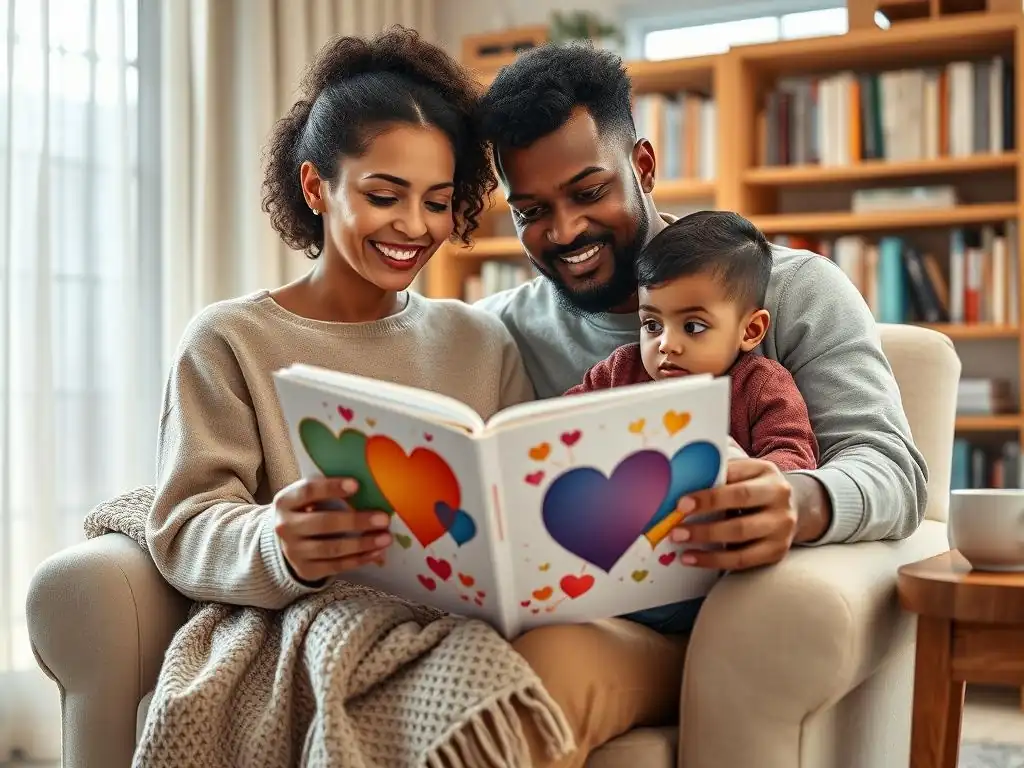
Welcome to Mind Care Guide, your sanctuary for navigating the complexities of mental well-being.
Feeling lost in the maze of family relationships? You're not alone. We understand the profound impact these connections have on our overall happiness. That's why we've carefully curated a selection of family relationships selfhelp books designed to empower you with the tools and insights needed to build stronger, healthier bonds. Curious to discover which expert-chosen titles can help you unlock a more fulfilling family life? Let's explore together...
Improve Family Relationships: Expert-Recommended Self-Help Books
- Strengthening Family Bonds Through Self-Help
-
Top 5 Self-Help Books for Family Relationships
- 1. "Hold Me Tight: Seven Conversations for a Lifetime of Love" by Dr. Sue Johnson
- 2. "The 5 Love Languages: The Secret to Love That Lasts" by Gary Chapman
- 3. "Difficult Conversations: How to Discuss What Matters Most" by Douglas Stone, Bruce Patton, and Sheila Heen
- 4. "Nonviolent Communication: A Language of Life" by Marshall B. Rosenberg
- 5. "Attached: The New Science of Adult Attachment and How It Can Help You Find - and Keep - Love" by Amir Levine and Rachel S.F. Heller
- Choosing the Right Book for Your Family
- Complementary Resources for Family Improvement
- Investing in Stronger Family Relationships
-
Frequently Asked Questions
- What are Family Relationships Self-Help Books and how can they improve family bonds?
- Are Family Relationships Self-Help Books suitable for addressing serious family issues like abuse or addiction?
- How do I choose the right Family Relationships Self-Help Book for my specific family dynamic?
- Can reading Family Relationships Self-Help Books alone guarantee immediate improvements in my family relationships?
- Where can I find a curated list of expert-chosen Family Relationships Self-Help Books?
- Final Reflection: Strengthening Family Bonds Through the Written Word
- Unlock Stronger Family Bonds Today!
Strengthening Family Bonds Through Self-Help
Improving family relationships is a journey that many individuals and families embark upon to foster stronger connections, resolve conflicts, and build a more supportive home environment. While professional therapy is a valuable resource, many people also find immense benefit in exploring self-help materials. These resources, particularly well-chosen self-help books for family relationships, offer accessible guidance, practical strategies, and a deeper understanding of common family dynamics. They provide tools that can be applied at your own pace, in the privacy of your home, empowering you to make positive changes in your interactions and bonds with loved ones.
Investing time in understanding the principles outlined in these books can be a powerful step toward healing old wounds, preventing future conflicts, and cultivating empathy among family members. Whether you are dealing with communication breakdowns, navigating challenging life transitions, or simply wishing to deepen your connection, the insights offered by expert-selected family relationships selfhelp books can provide a roadmap for positive change. They often demystify complex emotional processes and offer actionable steps, making the goal of a healthier family life feel more attainable.
Benefits of Using Self-Help Books for Family Relationships
Self-help books focused on family relationships offer numerous advantages for individuals and families seeking improvement. One primary benefit is accessibility; these resources are typically more affordable and readily available than ongoing therapy sessions. For instance, a single paperback book might cost around $15-$25, providing extensive information that could take multiple therapy sessions to cover, which can cost $100-$250+ per hour.
This makes them a practical starting point for many who are exploring ways to enhance their family connections without a significant financial commitment upfront. Furthermore, they offer flexibility, allowing readers to engage with the material at their own pace and revisit concepts as needed, reinforcing learning over time.
Beyond accessibility, family relationships selfhelp books provide structured guidance based on psychological principles and therapeutic approaches. They often break down complex issues into manageable parts, offering specific techniques for communication, conflict resolution, and understanding different perspectives.
For example, many books provide exercises or prompts that encourage reflection and application of new skills within real-life family interactions. Studies or general observations suggest that applying consistent strategies learned from these resources, such as active listening or setting healthy boundaries, can lead to noticeable improvements in family communication within a few months, potentially reducing the frequency of major arguments by a significant percentage, perhaps 20-30% or more in some cases, depending on the initial level of conflict and consistent effort.
Understanding Healthy Family Dynamics
Healthy family dynamics are characterized by mutual respect, open communication, clear boundaries, and the ability to navigate conflict constructively. In families with strong dynamics, members feel safe to express their thoughts and feelings, knowing they will be heard and valued. This doesn't mean the absence of disagreements; rather, it signifies the presence of effective strategies for resolving issues without resorting to blame, criticism, or withdrawal.
For example, in a healthy dynamic, instead of yelling when frustrated, a family member might use "I" statements to express their feelings and needs calmly, fostering understanding rather than defensiveness. Research consistently shows that families with healthy communication patterns report higher levels of satisfaction and well-being among members.
Furthermore, healthy family dynamics involve balancing individual autonomy with collective belonging. Members are encouraged to pursue their own interests and maintain their identities while also feeling connected to and supported by the family unit. This includes respecting personal boundaries and allowing space for individual growth.
An example might be parents supporting a child's decision to pursue a hobby different from family tradition or adult siblings respecting each other's independent lifestyles while still prioritizing regular connection. Cultivating these dynamics often requires intentional effort and learning, which is precisely where guidance from expert-recommended family relationships selfhelp books can be invaluable, offering insights into fostering empathy, building trust, and nurturing a sense of belonging.
Top 5 Self-Help Books for Family Relationships
Here are five highly regarded self-help books recommended by experts for their effectiveness in helping individuals and families improve their relationships.
1. "Hold Me Tight: Seven Conversations for a Lifetime of Love" by Dr. Sue Johnson
Dr. Sue Johnson's "Hold Me Tight" is a foundational text based on Emotionally Focused Therapy (EFT), a highly effective approach to relationship counseling. While often focused on romantic partnerships, its core principles about attachment needs and emotional connection are profoundly applicable to all close family relationships, including parent-child and adult sibling bonds. The book guides readers through seven specific conversations designed to help partners (or family members) understand their emotional responses and needs, identify negative interaction patterns, and create moments of secure connection. It emphasizes that relationship distress often stems from a fear of disconnection and unmet attachment needs.
The book is structured around practical exercises and insights derived from years of clinical practice and research into adult attachment. It provides a roadmap for moving from conflict and distance to closeness and security. Readers learn to recognize their "demon dialogues"—the predictable, negative cycles of interaction that cause pain—and discover how to interrupt these patterns by expressing their deeper emotions and needs in a way that invites connection rather than conflict.
For instance, a common "demon dialogue" might involve one person pursuing and criticizing while the other withdraws; "Hold Me Tight" teaches how to slow down, identify the underlying fear (e.g., "Am I important to you? "), and express it vulnerably.
Why "Hold Me Tight" is Recommended
"Hold Me Tight" is widely recommended by therapists and counselors because it is grounded in extensive research on adult attachment and the science of love and connection. Emotionally Focused Therapy (EFT), the basis of the book, boasts strong empirical support, with studies showing significant improvement in relationship satisfaction for a high percentage of couples who undergo the therapy, often maintained over time. Dr. Johnson translates complex psychological concepts into accessible language, making the powerful insights of EFT available to a broader audience seeking to improve their family relationships.
The book's focus on emotional connection and attachment needs resonates deeply with the core dynamics of family life. It helps individuals understand why certain interactions trigger strong emotional responses and how to move towards a place of safety and security within the family unit. Instead of just offering communication tips, it addresses the underlying emotional architecture of relationships, making the changes more profound and lasting. Its structured approach through the seven conversations provides a clear path for readers to follow, making the process of strengthening bonds feel less daunting.
Key Concepts: Attachment Theory and Emotional Connection
- Attachment Theory: The book is built on the premise that humans have innate needs for close emotional connection and security from key figures throughout life, not just in infancy.
- Secure Attachment: Understanding what it means to feel safely connected and how this security allows individuals to thrive.
- Attachment Injuries: Recognizing how moments of disconnection or perceived abandonment can create deep wounds in relationships.
- Demon Dialogues: Identifying the negative patterns of interaction (like "Find the Bad Guy," "The Protest Polka," and "Freeze and Flee") that push family members apart.
- Accessing and Expressing Emotions: Learning to identify and communicate underlying feelings and needs, rather than just reacting to surface behaviors.
- Creating Corrective Emotional Experiences: Engaging in conversations that help heal past hurts and build new, positive interaction cycles.
- Building Bridges: Developing empathy and understanding for a family member's perspective and emotional world.
Monetization: Affiliate Link & Attachment-Focused Online Course
This book offers a valuable resource for those seeking to improve their family bonds. Readers interested in purchasing "Hold Me Tight" can often find it through various online retailers. For those who wish to delve deeper into the principles of attachment and apply them more directly to their family dynamics, exploring an online course focused on attachment theory in relationships could be a beneficial next step. Such courses often provide guided exercises and further explanations of the concepts presented in the book, helping individuals integrate the learning into their daily interactions and strengthen their family relationships.
2. "The 5 Love Languages: The Secret to Love That Lasts" by Gary Chapman
Gary Chapman's "The 5 Love Languages" is a widely popular book that offers a simple yet powerful framework for understanding how people give and receive love. While originally written for married couples, its principles are universally applicable to family relationships of all kinds—between parents and children, siblings, or even extended family members. Chapman posits that individuals primarily express and understand love through one or two of five distinct "languages": Words of Affirmation, Acts of Service, Receiving Gifts, Quality Time, and Physical Touch. Misunderstandings often arise when family members are speaking different love languages.
The book encourages readers to identify their own primary love language and, crucially, the primary love language of their family members. It then provides practical suggestions for how to effectively express love in ways that resonate most deeply with each person.
For example, a parent whose child's primary love language is Quality Time might prioritize dedicated one-on-one time without distractions, whereas a parent of a child whose language is Acts of Service might show love by helping with homework or chores. Understanding these differences can significantly reduce conflict and increase feelings of being loved and appreciated within the family unit.
Understanding and Applying the Five Love Languages
The core of "The 5 Love Languages" lies in recognizing that what makes one person feel loved might not have the same impact on another. For instance, dedicating an hour of undivided attention (Quality Time) might be incredibly meaningful to one family member, while another might feel most loved when you do a chore for them without being asked (Acts of Service). The book provides questionnaires and examples to help readers identify their own and their family members' primary love languages. Once identified, the key is intentional effort to "speak" the other person's language regularly.
Applying the concepts involves consciously choosing to express love in ways that are meaningful to the recipient. If your teenager's love language is Words of Affirmation, simply saying "I'm really proud of how you handled that situation" or "You did a great job on that project" can fill their "love tank" far more effectively than buying them a gift. Conversely, if their language is Receiving Gifts, thoughtful small tokens can be very impactful. The book provides specific, actionable ideas for each language, making it easy for readers to implement the principles in their daily interactions and improve family relationships.
Practical Communication Tips
While focused on expressing love, "The 5 Love Languages" inherently provides practical communication tips by highlighting the importance of understanding another person's perspective and needs. By learning a family member's love language, you are learning a crucial aspect of how they communicate and interpret connection. The book encourages observing how family members express love to others and what they complain about most often, as these can be clues to their own love language.
Beyond identifying languages, the book implicitly promotes better communication by encouraging intentionality in interactions. It shifts the focus from "I showed them I love them, why don't they feel it?" to "How can I show them love in a way they will understand and appreciate?" This mindset shift promotes empathy and more effective relationship-building efforts. For example, understanding that a family member values Quality Time might lead you to suggest a focused conversation or activity together, opening up channels for deeper communication beyond just task-oriented discussions.
Monetization: Affiliate Link & Love Languages Assessment
For readers interested in applying this powerful framework to their family relationships, purchasing "The 5 Love Languages" is a great starting point. The book is readily available through various booksellers. To further enhance the learning and application, many resources are available, including official online assessments to help individuals pinpoint their love language more accurately. Taking an official Love Languages assessment can provide clarity and a concrete foundation for starting to "speak" the languages of your family members more effectively, fostering stronger connections and improving family relationships.
3. "Difficult Conversations: How to Discuss What Matters Most" by Douglas Stone, Bruce Patton, and Sheila Heen
Written by experts from the Harvard Negotiation Project, "Difficult Conversations" provides a systematic approach to handling the unavoidable challenging discussions that arise in all relationships, including within families. The authors break down any difficult conversation into three underlying structures: the "What Happened?" conversation (what we think happened, who is to blame), the "Feelings" conversation (our emotions and their validity), and the "Identity" conversation (what the situation says about us). The book argues that most people get stuck by focusing only on the "What Happened?" and trying to prove they are right.
The book offers practical strategies for navigating these three layers simultaneously, moving from a stance of certainty and blame to curiosity and learning. Instead of starting with conclusions, the authors recommend starting with the "Third Story"—an objective account of the situation that both parties can agree on—before sharing your own perspective and inviting the other person to share theirs.
They provide frameworks for expressing feelings constructively, managing your own emotional reactions, and understanding the impact the conversation has on your sense of self. This approach is invaluable for addressing sensitive family issues, from setting boundaries with relatives to resolving long-standing disputes.
Navigating Challenging Family Discussions
Families are complex systems where disagreements and difficult topics are inevitable. "Difficult Conversations" equips readers with tools to approach these moments constructively rather than destructively. Whether it's discussing inheritance issues, addressing a family member's concerning behavior, or resolving conflicts over parenting styles, the book provides a roadmap. It teaches readers how to identify the assumptions they are making in a conflict (e.g., assuming malicious intent) and how to test those assumptions by genuinely inquiring into the other person's perspective.
For instance, imagine a disagreement between adult siblings about caring for an aging parent. Instead of each sibling arguing why their approach is right and blaming the other for being unhelpful, the book suggests starting by acknowledging the shared goal (the parent's well-being) and exploring each person's concerns, feelings (perhaps exhaustion or guilt), and the impact the situation is having on their lives (Identity conversation). This allows for a more empathetic and potentially collaborative problem-solving process, moving beyond the surface-level argument about who does more and improving family relationships.
Strategies for Effective Communication and Conflict Resolution
The book offers a wealth of specific strategies for improving communication and resolving conflict in family settings. A key strategy is shifting from a message of certainty ("You are wrong") to a learning stance ("Help me understand what happened from your perspective"). This involves active listening, asking open-ended questions, and paraphrasing to ensure understanding. Another crucial technique is disentangling intent from impact; recognizing that someone's actions may have had a negative impact on you, regardless of their intentions, and communicating this impact without assuming negative intent.
Furthermore, the book provides guidance on how to express your feelings without judgment or blame, using phrases like "I feel..." rather than "You made me feel...". It also addresses the "Identity Conversation" by helping readers anticipate and manage their own reactions to challenging feedback or the possibility of being wrong, enabling them to stay present and engaged in the discussion. Mastering these strategies can transform tense family standoffs into opportunities for deeper understanding and stronger bonds, making it an essential resource among family relationships selfhelp books.
Monetization: Affiliate Link & Communication Skills Workshop
For those ready to tackle challenging family discussions head-on, acquiring "Difficult Conversations" is a powerful step. The book is widely available for purchase online. To put the book's principles into practice and develop these crucial skills more effectively, participating in a communication skills workshop or a program specifically focused on navigating difficult conversations could be highly beneficial. Such workshops often provide role-playing opportunities and expert feedback, helping individuals build confidence and competence in applying these techniques to improve family relationships.
4. "Nonviolent Communication: A Language of Life" by Marshall B. Rosenberg

Marshall B. Rosenberg's "Nonviolent Communication (NVC)" offers a powerful framework for compassionate communication and conflict resolution, highly applicable to improving family relationships. NVC is based on the idea that all human actions are attempts to meet universal human needs, and conflict arises when our strategies for meeting needs clash, or when we judge and demand rather than observe and request. The NVC process involves four key components: Observation (stating the facts without judgment), Feeling (identifying the emotion related to the observation), Need (connecting the feeling to a universal human need), and Request (making a clear, actionable request).
The book guides readers in applying this four-part process both when expressing themselves and when listening to others. It teaches how to differentiate between observations and evaluations, feelings and thoughts, and needs and strategies. By focusing on underlying needs (like safety, connection, understanding, autonomy), NVC helps family members connect on a deeper, more empathetic level, even amidst disagreement. It provides a concrete method for expressing anger and frustration constructively and for hearing difficult messages without becoming defensive, fostering greater harmony and understanding within the family.
Building Empathy and Understanding
A core aim of Nonviolent Communication is to cultivate empathy, which is crucial for strong family relationships. The NVC process inherently promotes empathy by guiding individuals to listen for the underlying feelings and needs of others, even when their words are critical or hostile. For example, instead of hearing a family member's complaint as an accusation ("You never help around the house! "), an NVC approach would involve trying to hear the feeling (perhaps frustration or exhaustion) and the need (maybe for support or ease).
The book provides extensive examples of how to apply empathic listening in various situations. It teaches techniques for guessing feelings and needs, even when the other person isn't expressing them clearly, and staying present with their experience without interrupting or offering advice. This practice of deep, empathic listening can transform family interactions, helping members feel truly seen and heard, which is a powerful foundation for resolving conflicts and strengthening bonds.
Using NVC for Conflict Resolution
Nonviolent Communication offers a structured and compassionate approach to resolving conflicts within families. By focusing on identifying the unmet needs behind everyone's positions, NVC helps shift the dynamic from a battle of who is right or wrong to a collaborative effort to find strategies that meet everyone's needs. The four-part process provides a clear script for expressing your own position vulnerably and respectfully, and for understanding the other person's.
For example, instead of arguing about a specific rule with a teenager, an NVC-informed parent might say: "When I see clothes left on the floor (Observation), I feel frustrated (Feeling) because I have a need for order and ease in our shared space (Need). Would you be willing to pick up your clothes and put them in the hamper by the end of the day?
(Request)." This approach is less likely to trigger defensiveness than a command or criticism and opens the door for dialogue about needs and potential solutions, making it an effective tool among family relationships selfhelp books.
Monetization: Affiliate Link & NVC Training Program
Readers interested in learning this powerful communication method for their family interactions can purchase "Nonviolent Communication: A Language of Life" from various online retailers. To gain proficiency in applying NVC principles, especially in challenging family dynamics, engaging in an NVC training program or workshop can be highly beneficial. These programs often include guided practice, role-playing, and feedback from certified trainers, providing a deeper and more practical understanding of how to use NVC to build stronger, more empathetic family relationships.
5. "Attached: The New Science of Adult Attachment and How It Can Help You Find - and Keep - Love" by Amir Levine and Rachel S.F. Heller
Building on attachment theory, "Attached" focuses specifically on adult romantic relationships but offers profound insights directly applicable to understanding and improving dynamics within the family unit, especially between adult family members or between parents and children. The authors identify three main adult attachment styles: Anxious (often crave closeness but fear abandonment), Avoidant (value independence and often feel uncomfortable with too much closeness), and Secure (feel comfortable with intimacy and interdependence). They explain how these styles develop and how they play out in interactions.
The book helps readers identify their own attachment style and the styles of their family members. Crucially, it provides practical advice on how to communicate effectively with individuals of different styles. For example, understanding that an Avoidant family member might need space after conflict, or that an Anxious family member might need reassurance, can drastically change how you approach disagreements and bids for connection. The book empowers readers to navigate these differences constructively, leading to more fulfilling and less conflict-ridden family relationships.
Understanding Attachment Styles in Family Relationships
"Attached" provides a clear framework for recognizing patterns in how family members relate to connection and intimacy. For example, a parent with an Anxious attachment style might struggle with a teenager seeking more independence, interpreting it as rejection. Conversely, a sibling with an Avoidant style might consistently withdraw from family gatherings or emotional conversations, not out of dislike, but discomfort with intense closeness. Recognizing these underlying styles helps depersonalize behaviors that might otherwise feel hurtful.
The book emphasizes that attachment styles are not destiny and understanding them is the first step towards healthier interactions. It explains the concept of "earned security," meaning individuals can move towards a more secure attachment style through understanding, conscious effort, and positive relationship experiences. Applying these concepts from "Attached" within a family context allows for greater empathy and strategic communication tailored to each family member's unique needs for closeness and space.
Improving Communication and Intimacy
"Attached" offers specific communication strategies tailored to interacting with different attachment styles. For instance, when communicating with an Anxious family member who might worry about abandonment, the book suggests being clear, consistent, and reassuring. For an Avoidant family member who might feel overwhelmed by emotional intensity, it recommends respecting their need for space and communicating important issues calmly and directly, avoiding pressure.
The book also provides guidance for securely attached individuals on how to effectively communicate their needs and boundaries while supporting family members with insecure styles. By providing practical tips for navigating common interaction pitfalls associated with each style (e.g., the Anxious-Avoidant trap), "Attached" helps readers foster greater emotional intimacy and reduce conflict. It empowers individuals to make conscious choices in their interactions, fostering a more secure and connected family environment, making it a valuable addition to the collection of family relationships selfhelp books.
Monetization: Affiliate Link & Attachment-Based Coaching
Interested readers can find "Attached" available for purchase through various online retailers. To gain a deeper understanding of your own and your family members' attachment styles and receive personalized guidance on applying these concepts, considering attachment-based coaching could be highly beneficial. Coaches trained in attachment theory can help individuals identify relationship patterns, develop strategies for more secure interactions, and work towards building stronger, more fulfilling family relationships based on a solid understanding of attachment dynamics.
Choosing the Right Book for Your Family
Selecting the most helpful self-help book for your family depends largely on the specific challenges you are facing and the areas you want to focus on. If your family struggles primarily with understanding each other's emotional needs and reactions, books like "Hold Me Tight" or "Attached" which delve into attachment theory, might be most beneficial. If the main issue is frequent arguments or difficulty discussing sensitive topics without conflict, "Difficult Conversations" or "Nonviolent Communication" could provide the necessary tools for better dialogue and resolution.
Consider the existing dynamic in your family. Are members willing to engage with new concepts? Some books are more theoretical, while others are highly practical with exercises. Assess what approach is most likely to resonate. For instance, if the family is open to psychological concepts, "Hold Me Tight" might be a good fit. If they prefer simple, actionable steps, "The 5 Love Languages" could be a better starting point among family relationships selfhelp books. It's also perfectly acceptable to start with one book and move on to others as your understanding and needs evolve.
Identifying Your Family's Specific Needs
Pinpointing the core issues within your family is the first crucial step in choosing the right self-help resource. Are you dealing with communication breakdowns where misunderstandings are frequent? Perhaps family members struggle to express their feelings or listen effectively. Data suggests that poor communication is cited as a primary reason for relationship distress in a significant percentage of families, potentially affecting over 60% of those seeking counseling. A book focusing on communication skills, like "Difficult Conversations" or "Nonviolent Communication," would be directly relevant here.
Alternatively, the challenges might stem from a lack of emotional connection or feeling distant despite living together. This could be related to differing ways family members show and perceive love, as explored in "The 5 Love Languages," or deeper attachment patterns discussed in "Hold Me Tight" and "Attached." Consider common points of conflict: Are they about logistics (chores, money), emotional issues (feeling unappreciated, misunderstood), or navigating major life changes?
Identifying these specifics helps narrow down which family relationships selfhelp books offer the most targeted solutions. For instance, a family struggling with empty nest syndrome might benefit from resources addressing changing roles and emotional connection in adult relationships.
Considering Different Approaches to Relationship Improvement
Self-help books for family relationships employ various approaches to improving bonds, and understanding these can help you choose one that aligns with your family's needs and preferences. Some books, like "Hold Me Tight" and "Attached," take a psychological approach rooted in attachment theory, focusing on understanding underlying emotional needs and past experiences that shape current interactions. This can be very powerful for gaining deep insight but might feel more theoretical to some readers.
Other books, such as "The 5 Love Languages" and "Difficult Conversations," offer more practical, skill-based approaches. They provide specific frameworks, steps, and scripts for changing communication patterns and behaviors. While perhaps less focused on deep emotional history, their direct, actionable advice can lead to quicker observable changes in daily interactions. For example, implementing strategies from "The 5 Love Languages" can yield positive feedback almost immediately as family members start feeling more loved. Consider whether your family is more receptive to exploring emotional roots or practicing new communication techniques when selecting among family relationships selfhelp books.
Complementary Resources for Family Improvement
While self-help books are valuable tools, they are often most effective when used in conjunction with other resources or viewed as a stepping stone to further support. Improving family relationships is a complex process, and sometimes external guidance or more interactive learning is necessary to make significant progress or address deeply ingrained issues. Combining reading with other forms of support can provide a more comprehensive approach to fostering healthier family dynamics and ensuring lasting positive change.
Exploring complementary resources can offer different perspectives, personalized guidance, and opportunities to practice new skills in a supported environment. These might range from professional therapeutic interventions to structured online learning experiences. Recognizing that self-help is part of a broader spectrum of support available can empower families to seek the right level of assistance needed to thrive.
Family Therapy Options
For families facing significant or persistent challenges, professional family therapy is a highly recommended option. Therapy provides a safe, neutral space guided by a trained professional who can help identify complex patterns, mediate conflicts, and teach communication skills tailored to the family's specific situation.
Therapists use various modalities, such as Systemic Family Therapy, Structural Family Therapy, or Emotionally Focused Family Therapy (EFFT), which is based on the same principles as "Hold Me Tight." Studies consistently show that family therapy can be highly effective in treating a wide range of issues, from behavioral problems in children and adolescents to marital conflict and family transitions, with success rates often reported between 50% and 70% depending on the specific issue and therapeutic model.
Unlike self-help books, which offer general guidance, a family therapist can provide personalized insights and interventions. They can help families navigate power dynamics, understand the impact of past events on current interactions, and practice new ways of relating in real-time during sessions. For families struggling with issues like addiction, mental illness within a family member, or trauma, therapy is often essential for comprehensive healing and building a supportive environment that self-help books alone cannot fully provide. Many find that reading family relationships selfhelp books can be a great way to prepare for therapy or reinforce concepts learned in sessions.
Online Relationship Skills Courses
In addition to or as an alternative to therapy, online relationship skills courses offer structured learning experiences that can complement the knowledge gained from family relationships selfhelp books. These courses are often based on evidence-based therapeutic approaches like Cognitive Behavioral Therapy (CBT), Dialectical Behavior Therapy (DBT), or specific communication models like NVC or those found in "Difficult Conversations." They typically include video lessons, workbooks, exercises, and sometimes even access to online communities or facilitators.
Online courses provide a more interactive and guided experience than reading a book. They often break down concepts into digestible modules and include practical assignments that encourage applying skills in real-life family interactions. For example, a course might guide you through practicing active listening with a family member or collaboratively setting a family goal using principles learned in the course.
These courses can range in price and duration, offering flexibility for different needs and budgets. While they lack the personalized interaction of therapy, they offer a structured way to build practical skills and deepen understanding, reinforcing the benefits gained from reading family relationships selfhelp books.
Investing in Stronger Family Relationships
Investing time, effort, and sometimes resources into improving family relationships yields significant returns in terms of individual well-being and collective happiness. Strong family bonds provide a crucial support system throughout life's challenges and joys. Utilizing resources like expert-recommended family relationships selfhelp books is a proactive step towards building resilience, fostering empathy, and creating a home environment where everyone feels loved, secure, and understood.
The strategies and insights gained from these resources empower individuals to become agents of positive change within their family systems. By understanding dynamics, improving communication, and consciously choosing to interact in healthier ways, families can navigate conflicts more effectively, deepen their connections, and build a legacy of strong, supportive relationships for future generations. This investment is not just about fixing problems but about nurturing a thriving family unit.
Creating a Supportive Family Environment
A supportive family environment is one where members feel safe, valued, and encouraged to be themselves. This involves consistent emotional availability, celebrating successes, and offering comfort during difficulties. Self-help books for family relationships often provide guidance on fostering this environment by teaching skills like active listening, expressing appreciation, and validating feelings. For instance, consistently practicing expressing gratitude for small acts of kindness within the family can significantly increase feelings of being valued, creating a more positive atmosphere.
Building support also involves establishing clear and respectful boundaries. This means communicating what is acceptable and unacceptable behavior within the family and respecting each other's individual needs for space and autonomy. While challenging, setting boundaries is a crucial act of self-respect and respect for others, preventing resentment and conflict. Books like "Difficult Conversations" offer strategies for having these essential boundary discussions constructively. Research indicates that families with clear boundaries and high levels of emotional support tend to have members with better mental health outcomes and greater resilience to stress, highlighting the tangible benefits of investing in these areas.
Improving Communication and Conflict Resolution
Effective communication and constructive conflict resolution are the cornerstones of strong family relationships. Self-help books provide invaluable tools for mastering these skills. They move beyond simple "tips" to explain the underlying psychological principles of why we react the way we do in conflict and how to shift towards more productive interactions. Learning to identify and express needs using frameworks like Nonviolent Communication, or understanding how attachment styles influence communication patterns from "Attached," are powerful steps.
Improving communication also involves recognizing and changing negative interaction cycles. As highlighted in "Hold Me Tight," identifying "demon dialogues" and consciously choosing to respond differently can interrupt patterns of criticism, defensiveness, or withdrawal. Practicing techniques from "Difficult Conversations" helps family members discuss sensitive topics with less blame and more understanding. While perfection is not the goal, a commitment to continuous learning and application of these communication and conflict resolution skills, supported by insights from family relationships selfhelp books, leads to a more harmonious, resilient, and deeply connected family unit capable of navigating life's inevitable challenges together.
Frequently Asked Questions
What are Family Relationships Self-Help Books and how can they improve family bonds?
These books offer expert advice and practical strategies to enhance communication, resolve conflicts, and foster stronger connections within families. They can help improve understanding and empathy among family members.
Are Family Relationships Self-Help Books suitable for addressing serious family issues like abuse or addiction?
While helpful, these books often serve as a starting point. Professional therapy or counseling is typically necessary for addressing serious family issues like abuse or addiction effectively.
How do I choose the right Family Relationships Self-Help Book for my specific family dynamic?
Consider the specific challenges your family faces and look for books that directly address those issues. Reading reviews and checking the author's credentials can also help in making an informed decision.
Can reading Family Relationships Self-Help Books alone guarantee immediate improvements in my family relationships?
No, reading is only the first step. Active participation, consistent effort, and open communication are crucial for implementing the strategies and achieving lasting positive changes.
Where can I find a curated list of expert-chosen Family Relationships Self-Help Books?
Resources like Mind Care Guide often provide curated lists of recommended books, based on expert opinions and user reviews, to help you find the most effective resources for your needs.
Final Reflection: Strengthening Family Bonds Through the Written Word
The quest for stronger family relationships is a timeless pursuit, and the sheer volume of self-help books dedicated to this goal reflects its enduring importance in our modern, often fragmented lives. These books offer not just advice, but a lifeline, a pathway to navigate the complexities of familial connection and build a more fulfilling family life. The power of the written word, when coupled with practical strategies and empathetic understanding, can be transformative.
The impact of these books extends far beyond individual families; they contribute to a broader cultural conversation about the importance of healthy relationships and the effort required to nurture them. The shared experiences and relatable struggles depicted within these pages create a sense of community, reminding us that we are not alone in our challenges. The family you come from isn't as important as the family you create.
This quote highlights the agency we have in shaping our familial bonds, regardless of our past. It's a message echoed throughout many of the books explored in this article, offering hope and empowerment to those seeking positive change.
Now, consider your own family dynamics. What resonates most with you from the books discussed? What small step can you take today – a conversation, an act of kindness, a simple gesture – to strengthen your family bonds?
Don't underestimate the power of intention and consistent effort. Choose a book that speaks to your specific needs, commit to reading it thoughtfully, and allow its wisdom to guide you on your journey towards creating a more loving and supportive family environment. The journey may not always be easy, but the rewards – deeper connections, increased understanding, and a stronger sense of belonging – are immeasurable.
Unlock Stronger Family Bonds Today!
Thanks for taking the time to explore ways to improve your family relationships! We hope you found valuable insights and inspiration in this article. Now it's time to put that knowledge into action. Ready to build even deeper connections?
- Dive into one of the recommended self-help books: Start reading today – even a few pages can make a difference. Pick the one that resonates most with your current family dynamics.
- Share this article with a family member who might find it helpful. Starting a conversation is often the first step to positive change.
- Consider starting a family book club: Choose a book together and discuss it openly, fostering deeper understanding and empathy.
What small step will you take this week to nurture your family relationships?