
Quick Calm: Apps with Short Meditation Sessions for Busy Beginners


Welcome to Mind Care Guide, your sanctuary for nurturing mental well-being.
Feeling overwhelmed? You're not alone. Many find it difficult to carve out time for mental wellness. That's why we're diving into Meditation apps for beginners, focusing on short, impactful sessions that fit seamlessly into even the busiest schedules. Curious how a few minutes a day can transform your state of mind? Let's explore together...
Quick Calm: Apps with Short Meditation Sessions for Busy Beginners
- Finding Your Zen: Meditation Apps for Beginners with Limited Time
- Top Meditation Apps for Beginners Offering Short Sessions (5-15 Minutes)
- Maximizing Your Meditation Practice: Tips for Busy Beginners
- Beyond Apps: Complementary Practices for Enhanced Mental Well-being
- Conclusion: Embrace the Power of Short Meditations for a Calmer, Happier You
-
Frequently Asked Questions
- How can meditation apps help beginners who are short on time?
- What features should I look for in a meditation app if I'm a beginner?
- Are meditation apps effective for improving mental well-being?
- How much do meditation apps typically cost?
- Which meditation apps are specifically recommended for beginners with busy lifestyles?
- Final Reflection: Finding Stillness in the Digital Age
- Unlock Your Inner Peace: Start Your Meditation Journey Today!
Finding Your Zen: Meditation Apps for Beginners with Limited Time
Embarking on a meditation practice can feel daunting, especially when faced with a packed schedule. Many aspiring meditators believe they need significant blocks of time, perhaps 30 minutes or more, to experience any real benefit. This misconception often prevents busy individuals from even starting. The reality is that consistent, even short, sessions can cultivate mindfulness and reduce stress effectively. For someone just starting out, finding meditation apps for beginners that cater to a time-constrained lifestyle is key to building a sustainable habit. These apps understand that life happens and offer accessible entry points into the world of mindfulness.
The good news is that the digital age has brought forth numerous tools designed precisely for this challenge. Modern beginner meditation apps provide guided sessions explicitly structured to fit into tight schedules, often lasting just 5, 10, or 15 minutes. These quick calm sessions are perfect for integrating into a commute, a lunch break, or even just a few moments before starting the day.
By leveraging technology, learning meditation becomes less about finding large chunks of free time and more about incorporating brief moments of peace throughout your day. This approach makes mindfulness achievable for almost anyone, regardless of how busy they are.
The Challenge of Time: Why Short Meditation Sessions Matter
In today's fast-paced world, time feels like a precious and often scarce commodity. Between work commitments, family responsibilities, social engagements, and personal errands, finding a dedicated 20 or 30 minutes for a traditional meditation practice can seem impossible for many.
This lack of perceived available time is one of the most significant barriers preventing individuals from exploring the benefits of mindfulness and meditation. The thought of adding one more thing to an already overflowing schedule can be overwhelming, leading people to dismiss meditation as something they'll "get to later" when life slows down – a time that often never arrives.
This is where the value of short meditation sessions becomes paramount, especially when using meditation apps for beginners. A 5 or 10-minute guided meditation is far less intimidating than a longer one. It requires minimal disruption to a busy day and can be easily squeezed into small pockets of time.
For example, someone might listen during their morning commute on public transport, take a few moments during a coffee break at work, or practice just before bed. These brief, manageable sessions lower the barrier to entry, making it easier for beginners to commit and experience immediate, albeit subtle, benefits, thereby building momentum and encouraging continued practice.
Benefits of Quick Meditations for Beginners' Mental Well-being
Even brief periods of focused mindfulness can yield significant positive effects on mental well-being, particularly for those new to the practice. Short meditation sessions, facilitated by beginner meditation apps, help train the mind to focus and return to the present moment, which is the core skill of mindfulness. Regularly taking just 5-10 minutes to pause and breathe can interrupt the cycle of anxious thoughts, reduce the body's stress response, and foster a greater sense of calm and control amidst daily chaos. This immediate relief from stress is a powerful motivator for beginners to continue.
Furthermore, consistent short meditations build resilience over time. While the effects of a single short session might be subtle, the cumulative impact of daily practice is substantial. Over weeks and months, even brief daily check-ins can improve emotional regulation, enhance self-awareness, and increase overall mental clarity. Beginners often report feeling less reactive to stressful situations, experiencing improved focus, and noticing a general uplift in mood. These tangible benefits, achievable without dedicating large amounts of time, demonstrate that even micro-doses of mindfulness can significantly contribute to a beginner's journey toward better mental health.
Top Meditation Apps for Beginners Offering Short Sessions (5-15 Minutes)
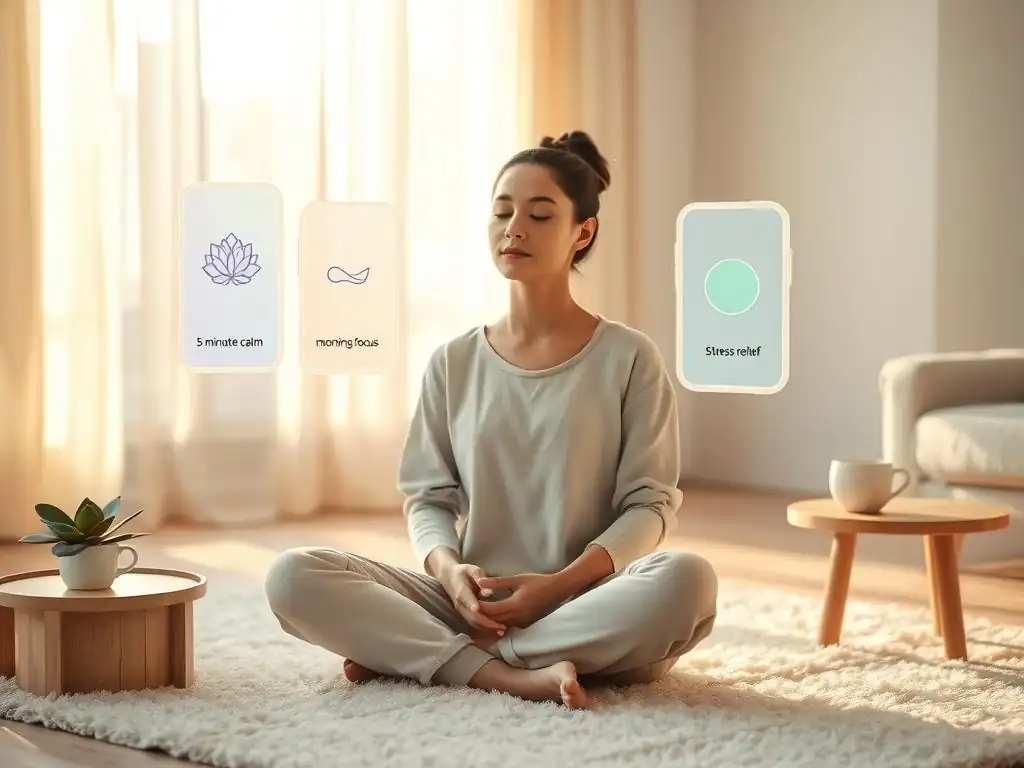
Feature Comparison: Headspace vs. Calm vs. Insight Timer vs. Ten Percent Happier vs. Aura
Comparing the features of leading meditation apps for beginners offering short sessions reveals distinct approaches. Headspace is known for its structured, progressive courses and playful animations, making the learning process very clear and sequential. Calm offers a broader wellness scope, including Sleep Stories, music, and nature sounds, in addition to its guided meditations, making it appealing for relaxation beyond just traditional practice. Insight Timer stands out with its vast library of free content from diverse teachers globally, alongside a simple meditation timer, offering immense variety.
Ten Percent Happier focuses on a practical, science-backed approach, specifically targeting skeptics and busy individuals with straightforward techniques and interviews with experts. Aura uses AI to personalize micro-meditations based on user input about their current mood and feelings, offering very short, targeted sessions for specific needs throughout the day. Each app provides guided sessions ideal for beginners looking for quick calm, but their supplementary features, content style, and overall user experience cater to slightly different preferences and goals, from structured learning to open exploration or targeted relief.
Pricing and Subscription Model Comparison
The pricing structures for these beginner meditation apps generally follow a freemium or subscription model, with variations in what's offered for free. Headspace typically offers a limited free trial or basic pack, with full access requiring a paid subscription, often around $13 USD monthly or approximately $70 USD annually, though prices can vary by region and promotions. Calm also operates on a subscription model, providing some free basic content but gating most premium features, including the full meditation library and Sleep Stories, behind a paywall often priced similarly to Headspace, perhaps $15 USD monthly or $70 USD annually.
Insight Timer is notable for its extensive free library, boasting over 100,000 free meditations and talks. They offer an optional paid subscription, Insight Timer Plus, for around $10 USD monthly or $60 USD annually, which unlocks offline listening, advanced player features, and premium courses. Ten Percent Happier's approach is primarily subscription-based, with a free trial period.
Their subscription is often priced higher than Headspace or Calm, potentially around $100 USD annually, reflecting their focus on expert content and practical application. Aura offers a free trial and limited free content, with a premium subscription required for full access to personalized meditations and features, often priced around $60 USD annually or $12 USD monthly. It's advisable to check the latest pricing directly on their platforms as it can change.
Which App is Right for You? Considering Your Needs and Preferences
Choosing the right meditation app for beginners depends heavily on individual needs, learning style, and budget. If you prefer a highly structured, step-by-step introduction to meditation with a clear curriculum, Headspace is an excellent choice. Its emphasis on foundational techniques makes it very beginner-friendly. If your goal extends beyond meditation to include better sleep and general relaxation, and you enjoy soothing soundscapes and stories, Calm might be a better fit. Its diverse content library offers multiple pathways to unwind.
For those who want vast variety, prefer exploring different teachers and styles, or are seeking the most comprehensive free offering, Insight Timer is unparalleled. Its sheer volume of content allows users to find exactly what resonates with them. If you're a pragmatic, perhaps slightly skeptical individual who wants practical, science-backed techniques explained clearly and efficiently, Ten Percent Happier is designed with you in mind.
Finally, if you value personalization and need very short, on-demand meditations tailored to your current emotional state, Aura's AI-driven approach provides a unique and convenient solution for quick stress relief throughout the day. Consider trying the free versions or trials of a couple of these apps to see which interface, tone, and content style best supports your journey.
Maximizing Your Meditation Practice: Tips for Busy Beginners
Setting Realistic Goals: Start Small and Build Gradually
When beginning a meditation practice with meditation apps for beginners, it's crucial to set realistic expectations, especially when time is limited. Aiming for a 20-minute session daily when you can barely find 5 minutes is a recipe for frustration and giving up. Instead, start small. Commit to just 3-5 minutes a day. Many apps offer sessions of precisely this length. Successfully completing a short session consistently builds confidence and reinforces the habit. It's far better to meditate for 5 minutes daily than to attempt 20 minutes once a week and feel like you're failing.
As you become more comfortable and notice the benefits, you can gradually increase the duration. Perhaps add a minute every few weeks, moving from 5 to 6, then 8, and eventually to 10 or 15 minutes if your schedule allows. The key is consistency over duration initially. Celebrate the small victories – showing up for even a few minutes is a significant step. Remember, the goal is progress, not perfection. By starting small and building gradually, you create a sustainable practice that fits into your busy life without becoming another source of pressure.
Finding Time in Your Schedule: Integrating Meditation into Your Daily Routine
Integrating meditation into a busy schedule requires intentionality and creativity. Instead of trying to find time, think about making time by slotting it into existing parts of your routine. Consider moments that are often transitional or even slightly unproductive. Could you meditate for 5 minutes right after waking up, before checking your phone? What about during your commute, while waiting for coffee to brew, or during the first few minutes of your lunch break? Meditation apps for beginners with short sessions are designed for these exact opportunities.
Another effective strategy is 'habit stacking.' Pair your meditation practice with an activity you already do daily. For instance, "After I brush my teeth in the morning, I will meditate for 5 minutes." Or, "Before I eat lunch, I will do a 10-minute guided meditation." Scheduling it like any other important appointment can also help ensure it happens. Use a calendar reminder or an app notification. The goal is to make the practice feel less like an add-on and more like an integral, non-negotiable part of your day, similar to brushing your teeth or eating.
[ ] Identify a 5-minute window in your morning routine.
[ ] Choose a beginner meditation app with short sessions.
[ ] Schedule a daily reminder for your chosen meditation time.
[ ] Practice for 3-5 minutes daily for one week.
[ ] Reflect on how the short sessions felt.
Creating a Peaceful Environment: Minimizing Distractions
While meditation apps for beginners offer flexibility, creating a relatively peaceful environment, even for a short session, can significantly enhance the experience. This doesn't require a dedicated meditation room, but rather minimizing common distractions. Find a quiet corner where you won't be interrupted. If possible, let others in your household or office know you'll be taking a few minutes for yourself. Sitting comfortably, either on a cushion on the floor or in a chair with your feet flat on the ground, can help you feel grounded.
Turning off notifications on your phone is essential, as even a single ping can pull you out of focus. If external noise is an issue, consider using noise-canceling headphones, especially when meditating in public spaces or noisy environments. The aim isn't to eliminate all distractions, as noticing distractions and gently returning your focus is part of the practice. However, reducing obvious interruptions allows you to settle more easily into the short session and make the most of your limited time, helping you cultivate that sense of quick calm.
Beyond Apps: Complementary Practices for Enhanced Mental Well-being
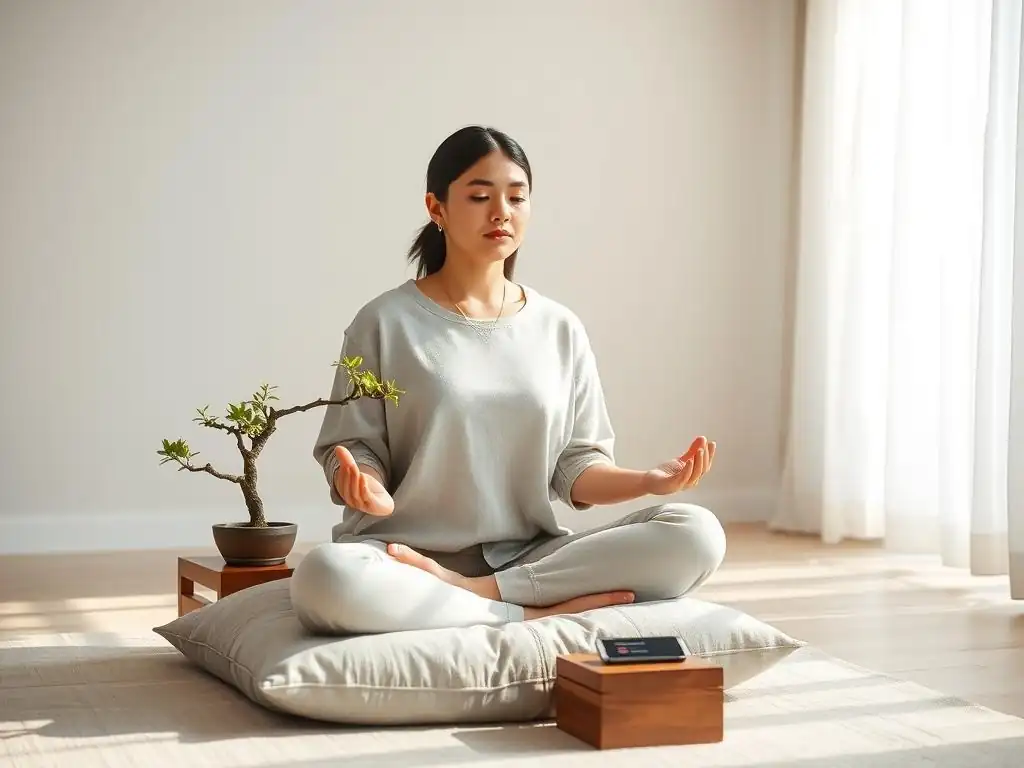
Mindful Breathing Exercises: Quick Techniques for Stress Relief
Beyond using meditation apps for beginners, simple mindful breathing exercises offer an immediate and portable way to manage stress and cultivate presence. These techniques require no technology and can be done anytime, anywhere, making them perfect complements to app-based practice. One fundamental technique is focusing on the breath: simply paying attention to the sensation of air entering and leaving your nostrils or the rise and fall of your abdomen. Even 60 seconds of focused breathing can help calm the nervous system and bring you back to the present moment when feeling overwhelmed.
Another popular technique is box breathing, often used by first responders and athletes for its calming effect. It involves inhaling deeply for a count of four, holding the breath for a count of four, exhaling slowly for a count of four, and holding the breath out for a count of four, repeating the cycle several times.
This structured breathing pattern helps regulate your breathing rate and heart rate, quickly reducing feelings of anxiety. Integrating these quick breathing exercises throughout the day, perhaps before a challenging meeting or during a stressful commute, can significantly enhance the benefits gained from your short app-led meditations.
Journaling for Self-Reflection: Connecting with Your Thoughts and Emotions
Journaling serves as a powerful complementary practice to meditation, providing a space for self-reflection and emotional processing that differs from the stillness of meditation. While meditation helps you observe thoughts without judgment, journaling allows you to explore them more deeply, giving them form and structure on paper. This can be particularly helpful for beginners who might find their minds racing during meditation; journaling before or after a session can help clear mental clutter or process insights that arose.
Even just 5-10 minutes of free-writing about your day, your feelings, or challenging situations can provide clarity and perspective. It allows you to externalize worries, reducing their power, and can help identify patterns in your thinking or emotional responses. Many people find it beneficial to journal about their meditation experience itself – noting how they felt before and after a session, challenges they faced, or moments of insight. This practice deepens self-awareness and reinforces the connection between your inner state and your daily experiences.
Gratitude Journal Recommendation: Cultivating Positivity and Reflection
A specific and highly beneficial form of journaling for enhanced mental well-being is maintaining a gratitude journal. This practice involves regularly writing down things you are thankful for, no matter how small. It shifts your focus from what's going wrong or missing to what's going right and what you already have. This simple act, performed consistently, can rewire your brain to notice and appreciate the positive aspects of life, fostering a more optimistic outlook and increasing overall happiness.
Committing just 3-5 minutes each day, perhaps in conjunction with your short meditation session using beginner meditation apps, to list 3-5 things you are grateful for can have a profound impact. These could be simple things like a good cup of coffee, a sunny day, a kind word from a colleague, or the comfort of your home. This intentional practice of focusing on gratitude helps counteract the mind's natural negativity bias and cultivates a sense of contentment and appreciation, reinforcing the positive effects of your mindfulness practice.
Conclusion: Embrace the Power of Short Meditations for a Calmer, Happier You
The Journey to Mindfulness: Even a Few Minutes Can Make a Difference
Embarking on the path to mindfulness and mental well-being doesn't require a radical overhaul of your life or hours of dedicated practice. For busy beginners, the accessibility and convenience offered by meditation apps for beginners featuring short sessions are game-changers. These tools demonstrate that even brief moments of intentional pause and focus can significantly reduce stress, improve mental clarity, and foster a greater sense of peace amidst the demands of modern life. The key is consistency and finding a practice that fits seamlessly into your existing routine.
Remember that the journey to mindfulness is personal and unfolds over time. There will be days when even 5 minutes feels challenging, and that's okay. The goal is not to stop thinking, but to become more aware of your thoughts without getting carried away by them.
By leveraging the power of short meditations available through these excellent beginner meditation apps and complementing them with simple practices like mindful breathing or journaling, you are building resilience and cultivating a stronger, calmer mind, one mindful minute at a time. The benefits are real, achievable, and well worth the small investment of your time.
Frequently Asked Questions
How can meditation apps help beginners who are short on time?
Meditation apps designed for beginners often offer short, guided meditation sessions ranging from 5 to 10 minutes, making them easier to incorporate into a busy schedule. They provide structured guidance, helping new meditators learn the basics and stay engaged.
What features should I look for in a meditation app if I'm a beginner?
Look for apps with guided meditations, beginner-friendly instructions, and different session lengths to accommodate your schedule. A variety of meditation techniques and progress tracking can also be beneficial.
Are meditation apps effective for improving mental well-being?
Studies suggest that regular meditation, facilitated by apps, can reduce stress, improve focus, and promote emotional regulation. The consistency and convenience offered by apps can contribute to these positive effects.
How much do meditation apps typically cost?
Many meditation apps offer a free trial or a basic free version with limited content. Premium features and access to more extensive libraries usually require a subscription fee.
Which meditation apps are specifically recommended for beginners with busy lifestyles?
The Mind Care Guide recommends apps offering quick, guided meditations, like those mentioned in "Quick Calm: Apps with Short Meditation Sessions for Busy Beginners." Look for apps prioritizing short sessions and easy-to-understand instructions.
Final Reflection: Finding Stillness in the Digital Age
The relentless pace of modern life often leaves us feeling overwhelmed and disconnected, but the simple act of incorporating short meditation sessions into our daily routines can be a powerful antidote. This article explored a range of apps designed specifically for beginners, showcasing how accessible and beneficial even a few minutes of mindfulness can be. The ease of access provided by these apps is transforming the way we approach stress management and self-care, making meditation a realistic practice for even the busiest individuals.
The impact of readily available meditation apps is undeniable; they're democratizing mindfulness, bringing its benefits to a wider audience than ever before. This shift towards prioritizing mental well-being is a positive cultural change, reflecting a growing awareness of the importance of inner peace in a demanding world. The time to repair the roof is when the sun is shining.
– John F. Kennedy. This quote, while not directly about meditation, speaks to the proactive nature of incorporating these practices into our lives before we're overwhelmed by stress. It's a preventative measure, a form of self-investment that yields significant returns.
Now, consider your own life. What small changes could you implement to incorporate even five minutes of daily mindfulness? Perhaps you could try one of the apps highlighted in this article, or explore other methods of finding stillness. This isn't about achieving perfect serenity; it's about cultivating a consistent practice of self-compassion and awareness. Begin today, even with just a single breath, and experience the transformative power of quiet moments in your busy life. You deserve the peace it offers.
Unlock Your Inner Peace: Start Your Meditation Journey Today!
Thanks for taking the time to explore the world of quick meditations! We hope you found some valuable tools to manage stress and boost your well-being. Ready to integrate these practices into your daily life?
- Begin with a 5-minute session: Choose one of the apps mentioned and dedicate just five minutes to a guided meditation. Notice the difference it makes in your energy levels.
- Share your experience: Tell a friend about your meditation journey and encourage them to try it too. Sharing your progress can be incredibly motivating!
- Explore different meditation styles: Don't be afraid to experiment! Try different apps and techniques to find what resonates with you best.
What small step will you take today to cultivate more calmness in your life?