Online Counseling for Depression: What Your Insurance Might *Not* Cover
🌟 Discover the truth about insurance coverage depression online counseling—many plans may not fully cover these vital services. Learn how to navigate…
Read article

Discover the best online counseling platforms for depression tailored to your budget and insurance needs. Our curated guide compares costs, coverage options, and therapy quality across leading services, helping you find affordable, accessible support from licensed professionals. Whether you’re seeking sliding-scale fees, insurance reimbursements, or low-cost subscription plans, we break down what each platform offers—so you can make an informed choice for your mental health journey. Start today with confidence, knowing you’re investing in care that fits your financial reality.

🌟 Discover the truth about insurance coverage depression online counseling—many plans may not fully cover these vital services. Learn how to navigate…
Read article
🌟 Discover the essential online counseling depression coverage options available to you, empowering you to access mental health support conveniently and affordably.…
Read article
🌟 Discover how to navigate online therapy for depression by balancing cost and quality. Our comprehensive guide helps you find affordable, effective…
Read article
😊 Discover the top affordable online therapy options tailored for depression, providing accessible, effective support without breaking the bank. This guide highlights…
Read article
🌟 Discover the top online counseling platforms offering affordable depression support, ensuring quality care without breaking the bank. Learn about online counseling…
Read article
🌟 Discover the essential online depression support platform comparison to find tailored, affordable, and comprehensive mental health resources, empowering you to choose…
Read article
🌟 Discover how to unlock online mental health insurance coverage tailored for depression, empowering you with accessible resources and support in our…
Read article
🌟 Discover the online therapy depression cost breakdown in our comprehensive guide, helping you understand pricing, insurance options, and affordable solutions to…
Read article
✨ Discover how insuranceaccepted online therapy for depression is transforming mental health care, making accessible, affordable support available from the comfort of…
Read article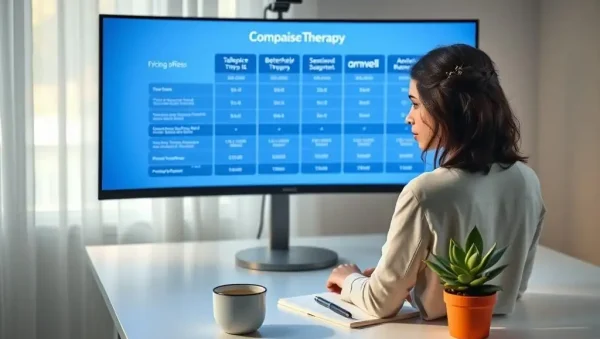
🌟 Discover the top online platforms for depression with our comprehensive online depression treatment cost comparison, helping you find affordable, effective mental…
Read article
🌟 Discover the best online therapy platforms for severe depression with our comprehensive online therapy depression cost analysis, helping you make informed,…
Read article
💡 Explore the key online counseling depression cost factors, helping you understand affordability and value. This guide sheds light on pricing variations,…
Read articleFinding the right online counseling platform for depression is about more than just matching with a therapist—it’s about balancing affordability, insurance compatibility, and the depth of care you need. This guide breaks down the leading platforms by cost structure, coverage options, and specialized depression support, empowering you to make a confident, informed choice without sacrificing quality or breaking your budget.
Most platforms for depression offer either subscription-based plans (flat monthly fees for unlimited messaging and weekly live sessions) or pay-per-session options. Subscriptions, like those from BetterHelp or Talkspace, typically range from $65 to $99 per week, billed monthly, which can be more predictable for ongoing care. Pay-per-session platforms, such as MDLive or LiveHealth Online, charge around $85–$120 per 45-minute appointment, making them ideal for those needing occasional check-ins rather than continuous support.
Be wary of hidden costs: some platforms charge extra for psychiatric medication management, worksheets, or after-hours messaging. Look for transparent pricing pages and ask about sliding-scale fees if you have financial hardship. For depression, consistent weekly sessions often yield better outcomes than sporadic visits, so prioritize a model that your budget can sustain long-term—many platforms offer discounts for quarterly or yearly commitments, reducing effective monthly costs by 20–30%.
Coverage varies dramatically between platforms. While BetterHelp and ReGain do not accept insurance directly, they provide superbills you can submit for out-of-network reimbursement—though many insurers reject these for “telemental health” unless clearly coded. Talkspace, on the other hand, partners with major insurers (Aetna, Cigna, Optum, and some Blue Cross plans) for in-network coverage, drastically lowering your copay to $15–$30 per session. MDLive also accepts Medicare and many commercial plans, with virtual visits often treated like in-person copays.
Before signing up, call your insurance provider and ask three questions: 1) Is telemental health covered under my plan? 2) Are out-of-network providers reimbursed, and at what percentage? 3) Do you require a prior authorization for depression counseling? Many employers now include telehealth riders, so also check your benefits portal for “Virtual Care” or “Behavioral Health” tabs. If uninsured, explore state-funded programs or platforms like Open Path Collective, which offers $40–$60 sessions on a sliding scale.
For structured depression treatment, Talkspace stands out with its “Depression Care” program, which includes CBT-based worksheets, mood tracking, and dedicated psychiatric support for medication adjustments. BetterHelp excels in sheer therapist variety, allowing you to filter for depression specialists and schedule unlimited messaging, though video sessions are limited to one per week on standard plans. MDLive is preferred for rapid crisis intervention, often offering same-day appointments for severe depressive episodes, with board-certified psychiatrists on staff.
For a more holistic approach, Amwell integrates therapy with lifestyle coaching, which can be beneficial for depression linked to sleep or stress. Meanwhile, Doctor on Demand provides evidence-based behavioral activation techniques specifically designed for depression, not just generic talk therapy. Read recent user reviews on Trustpilot or the App Store—platforms with consistent 4-star ratings for “depression support” and “therapist empathy” are your safest bet. Always verify therapist credentials (LCSW, PsyD, LMFT) and their experience with major depressive disorder before booking.
If mainstream platforms stretch your budget, consider Open Path Collective (one-time $65 lifetime fee, then $40–$70 per session) or Pride Counseling for LGBTQ+ depression support, which offers reduced rates for community members. University-affiliated platforms like iTherapy provide free or low-cost (under $30/session) services with supervised graduate student therapists—a viable option for mild to moderate depression. Also explore 7 Cups, which offers free peer support chats and paid licensed therapy from $35/week.
Don’t overlook employee assistance programs (EAPs)—many employers now include 6–8 free sessions via platforms like LifeWorks or ComPsych. For chronic depression, check if your state’s Medicaid telehealth coverage includes counseling: 48 states now cover it. Negotiate directly: some independent therapists on Psychology Today offer lower rates for cash-pay clients, especially for weekly sessions lasting longer than 3 months. Always ask about “sliding scale” before you mention insurance—many platforms have unadvertised hardship programs.
For mild depression (low mood, occasional lack of motivation), budget-friendly platforms like BetterHelp with messaging-only plans ($45/week) provide adequate support. For moderate depression (trouble functioning at work/school, sleep changes), choose Talkspace or MDLive with insurance coverage to ensure weekly video sessions and medication monitoring if needed. For severe depression (suicidal ideation, inability to perform daily tasks), prioritize platforms with crisis response protocols—like Amwell or Doctor on Demand—that guarantee immediate callback within 24 hours and have direct lines to emergency services.
Always opt for platforms offering asynchronous messaging between sessions for depression, as this allows you to log negative thoughts and receive therapist input—a proven adjunct to video therapy. Verify that the platform offers secure access to your treatment plan and progress notes, which helps with continuity if you switch providers. Most importantly, read the platform’s refund policy: choose ones with prorated refunds if you discontinue within the first month, and never pay for a year upfront until you’ve completed at least four sessions.
Yes, but only some. Talkspace, MDLive, and LiveHealth Online accept major insurers like Cigna, Aetna, and Blue Cross for in-network coverage. BetterHelp and ReGain do not, but provide superbills for out-of-network reimbursement. Check with your insurer first—most require no prior authorization for telemental health.
Subscription platforms like BetterHelp cost $260–$400 monthly for weekly sessions and unlimited messaging. Pay-per-session platforms average $85–$120 per session. With insurance copays, you might pay as little as $20–$40 per session. Sliding-scale options like Open Path charge $40–$70, while EAPs offer free sessions.
Yes, many platforms integrate psychiatry. Talkspace and MDLive have psychiatric providers who prescribe antidepressants after a video assessment. BetterHelp does not prescribe, but can refer you to affiliated psychiatrists. Expect additional fees of $50–$150 per medication management session.
Research shows teletherapy is equally effective for mild to moderate depression, especially with CBT-based approaches. It improves access for those with transportation or schedule barriers. However, severe depression with safety risks may still require in-person crisis care—online platforms are best for ongoing maintenance.
Nearly all platforms allow free switching. BetterHelp and Talkspace let you request a new therapist within the first week, and most allow unlimited switches at any time. Your subscription transfers seamlessly. Read each platform’s guarantee—many offer a prorated refund if you’re unhappy after the first session.