
Building Trust in Blended Families: Laying the Foundation for Security

Welcome to Mind Care Guide.
Are you navigating the complexities of a blended family and wondering how to build a solid future? We understand. Strengthening bonds and ensuring security for everyone can feel overwhelming, but it's absolutely achievable. This article explores the crucial role of a blended family trust foundation in fostering trust and stability. Discover how thoughtful planning can create a legacy of care and understanding for generations to come. Intrigued? Let's explore how to lay that foundation together.
Building Trust in Blended Families: Laying the Foundation for Security
- Understanding the Importance of Trust in Blended Family Dynamics
- Establishing a Blended Family Trust Foundation: Key Principles
- Practical Strategies for Fostering Trust in Blended Families
- Overcoming Common Obstacles to Blended Family Trust
- Maintaining and Strengthening Trust Over Time in Stepfamilies
-
Frequently Asked Questions
- What is a Blended Family Trust Foundation, and why is it important?
- How can open communication contribute to a strong Blended Family Trust Foundation?
- What role does consistency play in establishing a Blended Family Trust Foundation?
- How can parents cultivate empathy and understanding within a Blended Family Trust Foundation?
- Why is addressing past traumas important for building a Blended Family Trust Foundation?
- Final Reflection: Cultivating Trust: The Cornerstone of Thriving Blended Families
- Unlock Your Blended Family's Potential: Start Building Stronger Bonds Today!
Understanding the Importance of Trust in Blended Family Dynamics
Why a Strong Trust Foundation is Crucial for Blended Families
Building a robust blended family trust foundation is not merely beneficial; it is absolutely essential for the long-term stability and emotional well-being of everyone involved. When children, stepchildren, and adults in a blended family feel secure and trusting of one another, they are more likely to express their needs, share their feelings, and navigate the inherent complexities of their new family structure with resilience.
This sense of security reduces anxiety and stress, particularly for children who have already experienced significant life changes, such as parental separation or loss. A solid trust foundation acts as a buffer against external pressures and internal conflicts, allowing the family unit to function more harmoniously.
Furthermore, a strong blended family trust foundation fosters healthy relationships that can last a lifetime. Research indicates that children in stepfamilies who report higher levels of trust and positive communication with their stepparents are more likely to have better emotional adjustment and academic performance compared to those with strained relationships.
For instance, studies have shown that in stepfamilies where trust is high, stepchildren are approximately 30% more likely to feel comfortable discussing personal issues with their stepparents. This foundation of trust enables open dialogue, mutual respect, and a shared sense of belonging, which are vital for navigating everything from daily routines to major life events together effectively.
Recognizing the Challenges to Building Trust in Stepfamilies
Establishing trust in blended families often faces unique and significant hurdles that differ from first-marriage families. One primary challenge stems from the history each member brings to the new family unit. Children, for example, may have experienced broken trust in their previous family structure due to divorce or conflict, making them hesitant to trust new adult figures or siblings. Adults, too, carry their own histories and expectations, which can inadvertently create tension or misunderstanding, complicating the development of a solid blended family trust foundation. These pre-existing dynamics require patience and a deep understanding of each individual's perspective.
Another common challenge involves navigating loyalty conflicts. Children may feel disloyal to their biological parent if they develop a close bond with a stepparent or stepsibling, creating internal conflict that manifests as resistance or withdrawal. Stepparents may struggle with their role, feeling like an outsider or competing for affection and authority.
These intricate emotional landscapes can make it difficult to build trust organically. For example, surveys suggest that approximately 50-60% of children in blended families report experiencing some form of loyalty conflict. Addressing these feelings openly and validating them is crucial, but the process itself is a significant challenge to establishing a secure trust foundation in stepfamilies.
How Lack of Trust Impacts Blended Family Relationships
When a blended family trust foundation is weak or absent, the consequences can be far-reaching and detrimental to the well-being of all members. A pervasive lack of trust leads to increased conflict, misunderstanding, and emotional distance. Children may exhibit behavioral problems, withdrawal, or anxiety, as they don't feel safe or secure in their environment. Stepparents may feel resentful or discouraged, struggling to connect with stepchildren or feeling unsupported by their partner. This can create a cycle of negativity where communication breaks down, and minor disagreements escalate into major conflicts.
The absence of trust also hinders the family's ability to function as a cohesive unit. Decision-making becomes difficult, cooperation diminishes, and a sense of "us" is replaced by "mine" and "yours." For instance, simple tasks like coordinating schedules or agreeing on household rules can become battlegrounds when trust is low.
This constant tension erodes the quality of life within the home and can negatively impact mental health. Studies indicate that stress levels are significantly higher in blended families reporting low levels of trust compared to those with a strong blended family trust foundation. Ultimately, a lack of trust prevents the family from truly bonding and providing the mutual support needed to thrive.
Establishing a Blended Family Trust Foundation: Key Principles

Open Communication: The Cornerstone of Trust in Stepfamilies
Open communication is arguably the single most vital element in building a strong blended family trust foundation. It involves creating an environment where every family member feels safe to express their thoughts, feelings, concerns, and needs without fear of judgment or reprisal. This isn't just about talking; it's about fostering genuine dialogue where everyone's voice is heard and valued, regardless of age or role within the family. Prioritizing open communication signals that you are invested in understanding each other, which is fundamental to developing trust in blended families.
Establishing this cornerstone requires conscious effort from all adults and encouragement for children to participate. It means setting aside dedicated time for family discussions, whether formal family meetings or informal check-ins during dinner. For example, some families find success by dedicating just 15-20 minutes each week to a family meeting where everyone can share highs and lows, discuss upcoming events, or voice concerns in a structured, respectful setting. This consistent practice helps to normalize communication and reinforce the idea that everyone's perspective contributes to the family's blended family trust foundation.
Encouraging Honest and Respectful Dialogue
To foster honest and respectful dialogue, it's essential to model the behavior you wish to see. Adults must demonstrate active listening, empathy, and the ability to disagree respectfully. This involves using "I" statements (e.g., "I feel worried when...") rather than accusatory "you" statements ("You always do..."). Creating ground rules for discussions can also be helpful, such as no interrupting, no yelling, and a commitment to truly hearing each other out.
Encouraging children and stepchildren to be honest requires patience and positive reinforcement. If a child shares something difficult or expresses a negative feeling, it's crucial to respond with understanding rather than defensiveness, even if you disagree. For instance, if a stepchild expresses resentment about a rule, responding with, "I hear that you feel this rule is unfair. Can you tell me more about why you feel that way?" is much more productive than immediately defending the rule. This approach validates their feelings and encourages future honesty, strengthening the blended family trust.
Active Listening Skills for Blended Family Members
Active listening is a critical skill for both adults and children in building a blended family trust foundation. It involves paying full attention to the speaker, understanding their message, responding thoughtfully, and remembering what was said. This goes beyond simply hearing words; it means observing body language, tone of voice, and acknowledging the emotional content of the message. Techniques include making eye contact, nodding, and offering verbal affirmations like "I see" or "Go on."
Paraphrasing and summarizing what you've heard can also demonstrate that you are truly listening and help clarify understanding. For example, saying, "So, if I understand correctly, you're feeling overwhelmed by the new school schedule and worried about keeping up?" shows the speaker that you've processed their message and gives them an opportunity to correct any misunderstandings. Teaching and practicing these active listening skills together as a family enhances empathy and strengthens the bonds of trust in blended families.
Consistency and Reliability: Building Predictability in a New Family Structure
Consistency and reliability are pillars upon which a secure blended family trust foundation is built, especially in a new family structure that may feel uncertain or unstable to its members. Children, in particular, thrive on predictability and knowing what to expect. When adults are consistent in their behavior, rules, and emotional responses, it creates a sense of safety and security. This isn't about being rigid, but about being dependable and predictable in how the family operates and how relationships are managed.
Reliability extends to keeping promises, big and small. When parents and stepparents consistently follow through on what they say they will do, it teaches children that they can count on them. This builds confidence in the adults and strengthens the overall blended family trust. For example, if you promise to attend a child's sporting event or help with homework, making sure you are there and engaged reinforces your reliability more powerfully than words ever could.
The Importance of Consistent Parenting Styles
In blended families, achieving consistency in parenting styles between biological parents and stepparents is a significant factor in building a strong trust foundation. While perfect uniformity is unrealistic and unnecessary, alignment on core values, expectations, rules, and consequences is crucial. Discrepancies in parenting approaches can create confusion, resentment, and opportunities for triangulation, undermining trust. For instance, if one parent allows unlimited screen time while the other strictly limits it, this inconsistency can lead to conflict and a feeling among children that rules are arbitrary or unfair.
Open communication between the parenting partners is essential to developing a unified front. Regularly discussing discipline strategies, household rules, and expectations for the children (both biological and step) helps create a more consistent and predictable environment. While stepparents may initially take a less disciplinary role, presenting a united front on important issues reinforces stability and helps children understand the family's expectations, contributing to a stronger trust foundation in stepfamilies.
Being Reliable and Keeping Promises
Being reliable means being dependable and trustworthy in your actions. This is demonstrated through consistency in routines, follow-through on commitments, and predictable emotional responses. For children who may have experienced instability, knowing that their caregivers are reliable provides a critical sense of security. For example, if bedtime is consistently at 8:30 PM on school nights, this predictability helps children feel secure and understand the family's structure.
Keeping promises is a direct demonstration of reliability and is fundamental to building blended family trust. Whether it's promising a weekend outing, a small toy, or simply promising to listen without interruption, following through builds credibility. Conversely, frequently breaking promises erodes trust quickly. Even if a promise must be broken due to unforeseen circumstances, explaining why and offering an alternative demonstrates respect and can mitigate some of the damage to the trust foundation.
Respecting boundaries is a cornerstone of healthy relationships in any context, but it is particularly critical for establishing a secure blended family trust foundation. Blended families bring together individuals with different histories, comfort levels, and needs regarding personal space, privacy, and emotional availability. Acknowledging and respecting these individual boundaries is essential before the family unit can successfully establish collective boundaries that work for everyone. This process requires sensitivity and open dialogue.
Failing to respect boundaries can lead to feelings of being invaded, ignored, or disrespected, which are antithetical to trust. For example, a stepparent who tries to force intimacy or acts as if they are the biological parent immediately might violate a child's boundary and create resistance. Similarly, children need to understand and respect the boundaries of the adults and their stepsiblings. Navigating these individual and family needs respectfully lays vital groundwork for blended family trust.
Identifying and Acknowledging Personal Boundaries
Identifying personal boundaries is the first step. This involves self-awareness about what makes you feel comfortable, uncomfortable, safe, or unsafe in interactions and within the home. For adults, this might include boundaries around personal time, finances, or involvement in the ex-partner's life. For children, boundaries might relate to their physical space (their room), their personal belongings, or how they are touched or addressed.
Acknowledging these boundaries means communicating them clearly and respectfully to other family members. It also means actively listening when others communicate their boundaries. For example, a child might say, "I don't like it when you go through my things," which is a clear expression of a personal boundary around privacy. An adult acknowledging this might respond, "Okay, I understand. I will knock and wait for you to say it's okay before coming into your room in the future." This acknowledgment and commitment to respect builds trust.
Creating Healthy Boundaries within the Blended Family Unit
Beyond individual boundaries, creating healthy collective boundaries for the blended family unit is also important. These boundaries define how the family interacts internally and with the outside world, including extended family and ex-partners. Examples include establishing rules about privacy within the home, deciding how much information is shared outside the family, or setting limits on how and when ex-partners communicate regarding the children.
Establishing these boundaries requires family discussions and negotiation, especially as children get older. It's about finding a balance that respects individual needs while fostering a sense of unity and safety for the group. For instance, a family boundary might be that family disagreements are discussed privately within the home, not aired on social media or shared inappropriately with extended family. Clearly defined and respected boundaries contribute significantly to a stable and secure blended family trust foundation.
Practical Strategies for Fostering Trust in Blended Families
Building One-on-One Relationships: Strengthening Bonds with Each Family Member
While building the family unit is crucial, fostering individual relationships with each member is equally vital for a strong blended family trust foundation. This means dedicating specific, focused time to connect with each child and stepsibling individually, separate from the group family time. These one-on-one interactions provide an opportunity to understand each person's unique personality, interests, and concerns without the dynamics of the larger group.
For stepparents, building a relationship with stepchildren on an individual basis is particularly important. It allows the relationship to develop naturally, outside the shadow of the biological parent-child bond. Spending quality time together, even just 15-30 minutes a week, can significantly strengthen the connection and build trust. For example, a stepparent might take a stepchild out for ice cream, help them with a hobby, or simply sit and chat about their day. These moments show the child that they are valued as an individual, contributing significantly to the blended family trust.
Spending Quality Time with Each Child
Spending quality time means giving your undivided attention to the child, engaging in activities they enjoy, and simply being present. This could be playing a game, reading a book, helping with a project, or just talking. The activity itself is often less important than the focused attention and connection it provides. For example, a parent might designate one evening a week as "date night" with each child individually, rotating through them.
Consistency in scheduling this one-on-one time helps build anticipation and shows the child they are a priority. Even busy schedules can often accommodate small pockets of focused time – a walk around the block, 10 minutes of drawing together, or listening to their favorite music on a short drive. These consistent, positive interactions reinforce reliability and build trust, creating a solid blended family trust foundation one relationship at a time.
Connecting with Your Stepchild
Connecting with a stepchild requires patience, sensitivity, and a willingness to let the relationship develop at their pace. Avoid trying to replace their biological parent or forcing a level of intimacy that feels uncomfortable to the child. Start by focusing on shared interests or activities. For example, if a stepchild loves a particular sport, attending their games or watching it together can be a low-pressure way to connect.
Listen more than you talk, and show genuine interest in their life, friends, and school. Offer support without overstepping boundaries or undermining their biological parent. Being a consistent, positive, and reliable adult in their life, without demanding immediate affection or loyalty, is key to gradually building trust with your stepchild. It might take months or even years, but persistent, empathetic effort contributes significantly to the overall blended family trust.
Creating positive shared experiences is a powerful way to build unity, strengthen bonds, and lay down positive memories that contribute to a healthy blended family trust foundation. Engaging in activities together as a whole family helps members see themselves as a unit, fosters cooperation, and provides opportunities for natural interaction and bonding outside of structured discussions or problem-solving. These shared moments become the fabric of the family's collective identity.
These experiences don't need to be elaborate or expensive. Simple activities like cooking dinner together, playing board games, going for a hike, or having a movie night can be highly effective. The key is participation and enjoyment as a group. For instance, some families find success by implementing a weekly "Family Fun Night" where everyone takes turns choosing the activity. This shared decision-making and participation reinforce togetherness and build positive associations with family time, strengthening the trust foundation in stepfamilies.
Family Activities that Promote Bonding
Activities that require teamwork or shared effort can be particularly effective for promoting bonding and blended family trust. Examples include:
- Cooking or baking together: Assigning different tasks encourages cooperation.
- Playing team sports or group games: Fosters healthy competition and mutual support.
- Volunteering as a family: Working towards a common goal for a greater good builds empathy and unity.
- Tackling a home improvement project: A shared sense of accomplishment.
These activities provide natural opportunities for communication, problem-solving, and celebrating successes together, all of which contribute to a stronger sense of family and deeper trust.
Establishing New Family Traditions
Creating new family traditions provides a sense of continuity, belonging, and shared history for the blended family. Traditions, whether weekly, monthly, or annual, create predictable, positive experiences that the family can look forward to and rely on. This predictability reinforces the family's stability and builds a sense of shared identity, which is crucial for a strong blended family trust foundation.
Traditions can be simple, like Pancake Sunday mornings, a specific way of celebrating birthdays, or an annual camping trip. Involving all family members, including children and stepchildren, in deciding on new traditions can increase their buy-in and sense of ownership. For example, a family might hold a "Tradition Brainstorming Session" where everyone suggests ideas and votes on new activities. These shared rituals become anchors for the family, strengthening bonds and reinforcing trust over time.
Addressing Conflict Constructively: Turning Challenges into Opportunities for Growth
Conflict is inevitable in any family, and blended families often face unique sources of tension. However, how conflict is addressed can either erode or strengthen the blended family trust foundation. Learning to navigate disagreements constructively is not about avoiding conflict, but about approaching it in a way that leads to understanding, empathy, and resolution, rather than resentment and further division. Viewing conflict as an opportunity for growth rather than a purely negative event is key.
Constructive conflict resolution involves listening to understand, expressing feelings respectfully, focusing on solutions rather than blame, and being willing to compromise. When children see adults handling disagreements calmly and respectfully, it provides a powerful model for their own interactions and teaches them that challenges can be overcome together. Successfully navigating a difficult conversation as a family can actually deepen trust, as it demonstrates resilience and a commitment to working through issues collaboratively.
Learning Effective Conflict Resolution Skills
Effective conflict resolution skills are essential for maintaining a healthy blended family trust foundation. These skills include:
- Staying calm: Taking a break if emotions are running high.
- Using "I" statements: Expressing your feelings and needs without blaming.
- Active listening: Truly hearing and trying to understand the other person's perspective.
- Focusing on the issue, not the person: Attacking the problem, not the family member.
- Brainstorming solutions together: Finding mutually acceptable outcomes.
- Willingness to compromise: Recognizing that you might not get everything you want.
Practicing these skills, perhaps even role-playing or discussing hypothetical situations, can help family members develop the tools needed to address real conflicts constructively.
Using Conflict as a Chance to Build Understanding and Empathy
Approaching conflict with the goal of increasing understanding and empathy can transform a negative experience into a positive one for building blended family trust. Instead of focusing solely on resolving the issue, try to understand why the other person feels the way they do. Ask open-ended questions and genuinely listen to their responses. For instance, if a stepchild is upset about a new rule, instead of just enforcing it, explore the feelings behind their resistance.
This empathetic approach helps family members feel heard and validated, even if the outcome isn't exactly what they wanted. It teaches everyone that their feelings matter and that the family is committed to understanding each other. Navigating a conflict successfully, where everyone feels their perspective was considered, significantly strengthens the emotional bonds and reinforces the blended family trust foundation. It shows that even when things are difficult, the family unit is strong enough to handle it together.
Overcoming Common Obstacles to Blended Family Trust
Dealing with Loyalty Conflicts: Reassuring Children and Stepchildren
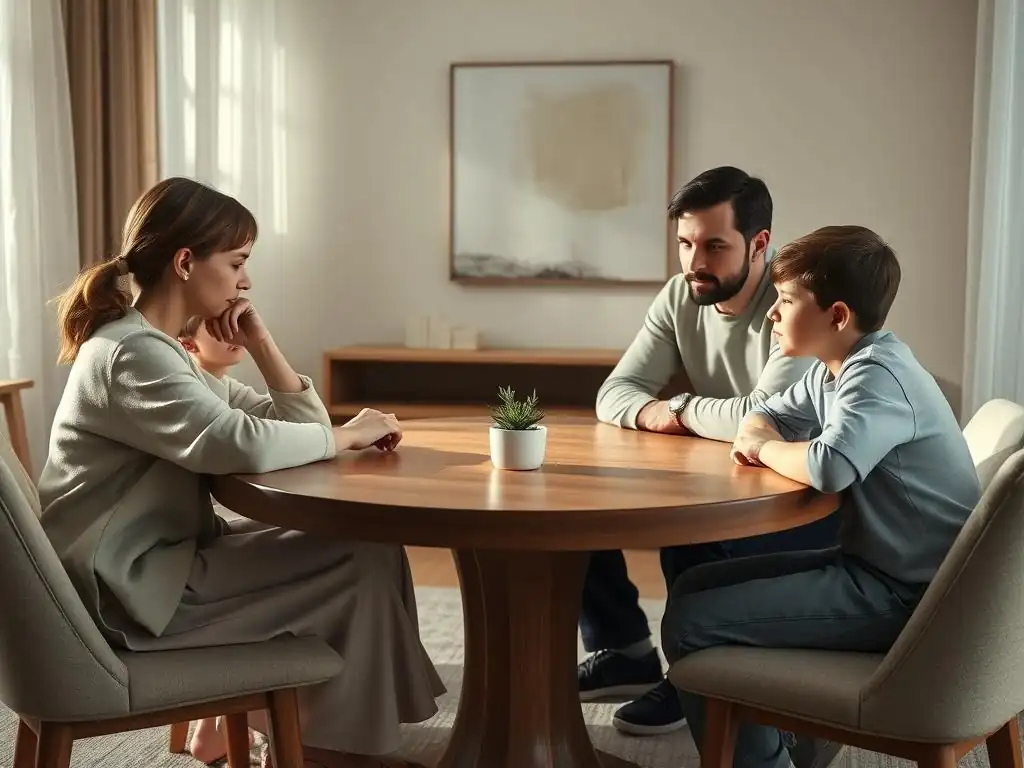
Loyalty conflicts are one of the most significant obstacles to building a blended family trust foundation. Children may feel caught in the middle between their biological parents, or between a biological parent and a stepparent. They may worry that loving or trusting a stepparent means betraying their biological parent. This internal struggle can manifest as defiance, withdrawal, or anxiety, making it difficult for them to form genuine connections within the blended family.
Addressing loyalty conflicts requires consistent reassurance from both biological parents that it is okay, and even encouraged, for the child to love and connect with their stepparent and stepsiblings. Biological parents should never make children feel guilty for developing positive relationships in their other home. Stepparents, in turn, should be patient, understanding, and avoid putting the child in a position where they feel forced to choose sides.
For example, a biological parent might say, "I'm so happy you had fun with [Stepparent's Name] today. It makes me happy to know you have more people in your life who care about you." This kind of validation is crucial for the child's emotional security and helps build blended family trust.
Addressing Past Trauma: Healing Wounds and Moving Forward
Many individuals entering a blended family, both adults and children, may carry unresolved trauma from previous experiences such as divorce, conflict, loss, or other difficult life events. These past wounds can significantly impact their ability to trust others and feel safe in a new family structure, posing a direct challenge to establishing a solid blended family trust foundation. Unaddressed trauma can lead to hypervigilance, difficulty with emotional regulation, or avoidance of intimacy, making authentic connection challenging.
Acknowledging that past trauma may be influencing current dynamics is the first step. Creating a safe and supportive environment where family members feel comfortable expressing their feelings, perhaps with the help of a therapist, is essential. For example, a child who experienced significant conflict during their parents' divorce might react intensely to arguments in the blended family.
Recognizing this reaction as potentially linked to past trauma, rather than simply "bad behavior," allows for a more empathetic and constructive response. Healing past wounds, often with professional support, is vital for individuals to be fully present and capable of building trust in blended families.
The relationship between ex-partners significantly impacts the blended family trust foundation. High conflict between biological parents creates immense stress for children and undermines their sense of security, making it difficult for them to trust the stability of either household, let alone the new blended family unit. Conversely, cooperative co-parenting, even if not friendly, provides a stable foundation for the children and models healthy conflict resolution.
Minimizing conflict with the ex-partner is crucial. This often involves limiting communication to essential topics related to the children (schedule, health, education), keeping interactions civil, and avoiding speaking negatively about the ex-partner in front of the children. While challenging, striving for a business-like, respectful relationship with the ex-partner demonstrates maturity and prioritizes the children's well-being, which indirectly supports the development of blended family trust within the new unit. For instance, using a co-parenting app to manage schedules and communication can help reduce direct conflict and create clear boundaries.
Maintaining and Strengthening Trust Over Time in Stepfamilies
Regularly Assessing the Family's Trust Level
Building a blended family trust foundation is not a one-time event but an ongoing process that requires continuous attention. Regularly assessing the family's trust level allows you to identify areas of strength and areas that may need more focus. This doesn't necessarily mean formal surveys, but rather paying attention to the dynamics within the family: Are members communicating openly? Do they seem comfortable and relaxed around each other? Are promises being kept? Are conflicts being resolved constructively?
Informal check-ins, like asking family members how they feel about the family's communication or sense of closeness during a family meeting, can provide valuable insights. Observing interactions and listening carefully to what is said (and unsaid) helps gauge the health of the blended family trust. Recognizing potential dips in trust early allows for proactive intervention before small issues become major problems, ensuring the trust foundation in stepfamilies remains strong.
Celebrating Successes and Acknowledging Progress
Building trust in blended families can be challenging, marked by ups and downs. It is incredibly important to acknowledge and celebrate successes along the way, no matter how small they seem. Recognizing progress reinforces positive behaviors and provides encouragement to keep working towards a stronger blended family trust foundation. Celebrating milestones, whether it's a successful family outing, a difficult conversation handled well, or simply a period of smooth sailing, validates the effort everyone is putting in.
These celebrations don't need to be grand; a special family dinner, a shared dessert, or simply verbal praise and recognition can be powerful. For example, if the family successfully navigated a tricky holiday schedule with the ex-partner, acknowledging the effort and cooperation involved reinforces that collaborative effort is valued and builds confidence in the family's ability to handle challenges together, strengthening their blended family trust.
Seeking Professional Guidance When Needed: The Value of Therapy for Blended Families
Sometimes, despite best efforts, blended families face complex challenges that are difficult to navigate alone. Seeking professional guidance from a therapist specializing in family dynamics or blended families can be invaluable in building and maintaining a strong blended family trust foundation. A therapist can provide objective perspectives, teach effective communication and conflict resolution skills, and help family members process difficult emotions and past experiences in a safe environment.
Family therapy can address specific issues like loyalty conflicts, parenting disagreements, or difficulties in stepparent-stepchild relationships. A therapist can facilitate conversations that are too emotionally charged to have productively without a neutral third party. Investing in therapy is an investment in the long-term health and stability of the family, providing the tools and support needed to navigate complexities and build a truly secure and trusting blended family trust foundation.
Frequently Asked Questions
What is a Blended Family Trust Foundation, and why is it important?
A Blended Family Trust Foundation refers to the deliberate efforts and strategies used to foster trust and security within families formed through remarriage or partnerships involving children from previous relationships. It's important because it helps navigate complex dynamics and build a stable environment for all members.
How can open communication contribute to a strong Blended Family Trust Foundation?
Open communication is vital because it allows family members to express their feelings and needs honestly and respectfully. This helps address potential conflicts early on and builds mutual understanding and empathy. Ignoring these issues can lead to a breakdown in trust and family cohesion.
What role does consistency play in establishing a Blended Family Trust Foundation?
Consistency in rules, discipline, and affection creates a sense of predictability and security for children in blended families. This helps them feel safe and supported, fostering trust and reducing anxiety associated with the family transition.
How can parents cultivate empathy and understanding within a Blended Family Trust Foundation?
Parents can model empathy by actively listening to each child's perspective and validating their feelings. They can also encourage family members to understand each other's experiences and work together to find solutions that benefit everyone.
Why is addressing past traumas important for building a Blended Family Trust Foundation?
Past traumas from previous relationships or family structures can significantly impact a blended family's dynamics. Acknowledging and addressing these traumas through therapy or open communication can help family members heal and move forward, fostering a stronger foundation of trust and emotional security.
Final Reflection: Cultivating Trust: The Cornerstone of Thriving Blended Families
The challenges faced by blended families are not merely logistical; they are deeply emotional, requiring a conscious and consistent effort to build a foundation of trust. The complexities of merging households, navigating step-parent relationships, and establishing new family dynamics demand a proactive approach to fostering security and connection. Without trust, the very fabric of a blended family can unravel.
The journey of building trust in a blended family is a continuous process, one that profoundly shapes the emotional landscape of each member. It requires patience, empathy, and a willingness to understand the unique perspectives and past experiences of everyone involved. The most important thing in a blended family is not to try to create a perfect family, but to create a loving and supportive one.
This quote highlights the importance of focusing on the process of building relationships rather than striving for an unattainable ideal. The impact of a secure and trusting blended family environment on children's development and overall well-being cannot be overstated.
Now, consider your own relationships, both within your family and beyond. How can you apply the principles of open communication, empathy, and consistent effort to foster trust in your own life? Take the time to actively listen, to validate feelings, and to create space for vulnerability. Building trust is not a passive endeavor; it requires conscious action and a commitment to nurturing healthy relationships. Embrace the journey, celebrate the small victories, and remember that a strong foundation of trust is the key to a thriving and loving blended family – or any family, for that matter.
Unlock Your Blended Family's Potential: Start Building Stronger Bonds Today!
Thanks for taking the time to explore the foundations of a thriving blended family. You've now equipped yourself with valuable insights to nurture connection and security within your unique family dynamic. Ready to put this knowledge into action?
- Prioritize one small, specific act of connection this week. This could be a dedicated family game night, a heartfelt conversation, or even just sharing a meal together without distractions. Focus on quality over quantity.
- Share your biggest takeaway from this article with someone else navigating a blended family – a friend, family member, or even in an online forum. Building a support network is crucial!
- Explore one new communication strategy mentioned in the article, and try it out with a family member. Experiment with what works best for your unique family.
What's one small step you can take today to foster a stronger, more loving bond within your blended family?