
Famous and Infamous: Notable 19th Century Asylums and Their Stories

Welcome to Mind Care Guide.
Ever wondered about the real story behind the walls of yesterday's mental institutions? We often hear whispers and see caricatures, but the truth is far more complex and often heartbreaking. Delve into the fascinating, and sometimes disturbing, 19th century asylum history explored in our featured article. Discover the stories of those who lived, worked, and shaped these institutions, and uncover the hidden narratives that continue to influence our understanding of mental health today. Are you ready to confront the past and learn from its lessons?
Famous and Infamous: Notable 19th Century Asylums and Their Stories
- Introduction to 19th Century Asylum History
- The Most Famous 19th Century Asylums: A Closer Look
- The Infamous Side of 19th Century Asylums: Dark Chapters in Mental Health History
- Common Themes and Patterns in 19th Century Asylum Mental Healthcare
- The Legacy of 19th Century Asylums on Modern Mental Health
- Conclusion: Remembering the History of 19th Century Asylums
-
Frequently Asked Questions
- What were some common misconceptions about asylums in the 19th century?
- How did the treatment of patients differ between famous and infamous 19th-century asylums?
- What factors contributed to the rise of large asylums in the 19th century?
- Where can I find reliable resources to learn more about 19th century asylum history?
- How did the 19th-century asylum system influence modern mental health care?
- Final Reflection: Echoes of the Past, Lessons for the Future
- Unearth More Asylum Histories: Dive Deeper into the 19th Century
Introduction to 19th Century Asylum History
Understanding the Landscape of Mental Healthcare in the 1800s
The 19th century marked a pivotal era in the understanding and treatment of mental illness. Prior to this period, individuals suffering from mental health conditions were often housed in poorhouses, jails, or kept within families with minimal professional care. The prevailing views often attributed mental illness to moral failing, demonic possession, or incurable organic disease, leading to neglect or harsh, ineffective treatments.
The burgeoning industrial revolution and growing urban populations also brought new social stresses, increasing the visibility of mental distress and prompting a search for more structured solutions. This period saw the initial, often contradictory, attempts to establish dedicated institutions for the care of the mentally ill, setting the stage for the complex history of 19th century asylum history.
This shift wasn't uniform or rapid. While some reformers advocated for humane treatment and therapeutic environments, many existing facilities remained overcrowded and underfunded. The concept of "madness" itself was poorly defined, encompassing a wide range of conditions from severe psychoses to epilepsy, intellectual disabilities, and even social non-conformity.
Medical understanding was rudimentary, relying heavily on observation and often speculative theories about the brain and nervous system. The development of the asylum as a primary mode of care reflects both a humanitarian impulse to provide refuge and treatment, and societal pressures to remove individuals deemed disruptive or incapable from public view. Exploring this landscape is crucial to understanding the full scope of 19th century asylum history.
The Rise of the Asylum: A New Approach to Mental Illness?
The rise of the asylum movement in the 19th century was initially fueled by ideals of moral treatment. Pioneered by figures like Philippe Pinel in France and William Tuke in England, moral treatment emphasized kindness, therapeutic activities, a structured daily routine, and a supportive environment as alternatives to chains and harsh physical restraint.
It was believed that removing the individual from stressful environments and placing them in a tranquil, orderly setting could facilitate recovery. This philosophy greatly influenced the design and stated purpose of early 19th-century asylums, which were often built in rural areas with spacious grounds for recreation and work.
However, the noble intentions of the moral treatment era faced significant challenges. As the century progressed, asylum populations grew dramatically, often outpacing capacity and resources. Factors contributing to this growth included increased recognition (or labeling) of mental illness, longer patient stays, and the commitment of individuals for social rather than purely medical reasons.
Overcrowding became endemic in many institutions by the latter half of the century, leading to a decline in the quality of care and a departure from the principles of moral treatment. Custodial care, focusing primarily on housing and managing large numbers of patients, often replaced therapeutic ambitions, marking a complex turn in 19th century asylum history.
The Most Famous 19th Century Asylums: A Closer Look
Bethlem Royal Hospital: From Bedlam to Modern Psychiatry
Bethlem Royal Hospital's Founding and Early Years
Bethlem Royal Hospital, often referred to historically as "Bedlam," boasts one of the longest and most complex histories of any institution for the mentally ill, dating back to the 13th century. By the 19th century, it had already acquired centuries of notoriety, often associated with chaotic conditions and public spectacle, where visitors could pay a penny to view the patients. The early 19th century saw Bethlem housed in a new building in St. George's Fields, Southwark, completed in 1815.
While intended to be a grand and modern facility, it quickly became a symbol of the challenges facing asylum care. Reports from parliamentary committees in the early 1800s highlighted continued instances of harsh restraint and inadequate care, despite the new premises.
Despite its infamous reputation, Bethlem also saw periods of reform and pioneering work throughout the 19th century. Physicians like Sir Alexander Morison introduced systematic lectures on mental diseases and attempted more clinical approaches to diagnosis and treatment, including early forms of pharmacological intervention using substances like opium and cannabis, although these were often speculative and based on limited understanding. The hospital also played a role in the developing field of psychiatry, influencing other institutions and contributing, albeit sometimes controversially, to the evolving understanding of mental illness in the 19th century asylum history narrative.
Key Figures and Innovations at Bethlem Royal Hospital
Throughout the 19th century, several figures associated with Bethlem attempted to steer it towards more humane and scientific approaches. Dr. John Conolly, though more famously associated with Hanwell Asylum and the non-restraint movement, also influenced practices at Bethlem through his advocacy for removing mechanical restraints. Later in the century, figures like Henry Maudsley, a prominent psychiatrist, trained at Bethlem and contributed significantly to psychiatric theory, emphasizing physical causes of mental illness, though his focus often shifted away from purely moral treatment towards biological explanations.
Bethlem also served as a site for early psychiatric research and data collection, however rudimentary. Efforts were made to classify mental illnesses based on observed symptoms, contributing to the nascent field of psychiatric nosology. While not always successful or ethical by modern standards, these attempts represented a move towards a more clinical understanding of mental health conditions. The institution's sheer scale and long history meant it was invariably intertwined with both the darkest aspects and the slow, often difficult progress within 19th century asylum history.
The Patient Experience: Life Inside Bethlem Royal Hospital
Life for patients within Bethlem in the 19th century varied significantly depending on the era and their social status, though for many, it was far from the therapeutic ideal. Early in the century, conditions could still be harsh, with reports detailing patients being chained or kept in solitary confinement for extended periods. While mechanical restraints gradually decreased throughout the century, life remained institutional and often monotonous. Patients from wealthier backgrounds might have slightly better accommodations or more individual attention, but the majority experienced a regime focused on order and containment.
Daily life typically involved structured activities, often including manual labor like gardening, cleaning, or crafts, intended for both therapeutic and economic benefit. However, the sheer number of patients, which could reach several hundred, often meant limited individual care. The lack of effective treatments for severe conditions meant many patients spent years, even decades, within the asylum walls. Personal accounts and historical records paint a picture of isolation, loss of autonomy, and a life lived largely out of public view, reflecting the challenging realities faced by individuals within 19th century asylum history.
McLean Asylum: Pioneering Treatments and a Focus on Moral Treatment
McLean Asylum's Approach to Moral Treatment
McLean Asylum, founded in 1811 in Charlestown, Massachusetts (later relocating to Belmont), became renowned for its commitment to the principles of moral treatment in the United States. Unlike some older, more custodial institutions, McLean was designed from the outset to be a therapeutic environment. It featured spacious grounds, well-ventilated rooms, and facilities for recreation and work. The staff, including physicians like Dr. Luther V. Bell, emphasized kindness, persuasion, and individual attention over coercion and restraint. Patients were encouraged to engage in activities such as farming, handicrafts, lectures, and social gatherings, fostering a sense of community and purpose.
The asylum's approach aimed to restore patients' self-esteem and social skills, which were seen as crucial for recovery. The staff-to-patient ratio was often higher than in many public asylums, allowing for more personalized care. While it primarily served wealthier patients who could afford its fees, McLean's model of combining comfortable surroundings with a focus on therapeutic activities and humane treatment set a benchmark for other institutions and represents a significant aspect of 19th century asylum history in America.
Notable Cases and Medical Advancements at McLean Asylum
McLean attracted patients from prominent families and individuals from various walks of life, including notable figures like mathematician Charles F. Adams and poet Robert Lowell (though Lowell's time was in the 20th century, McLean's reputation was built in the 19th). While specific medical "advancements" in the modern sense were limited across 19th century psychiatry, McLean's contribution lay more in its systematic application of moral treatment and its efforts to understand and classify mental illnesses. Physicians at McLean documented patient cases in detail, contributing to the growing body of knowledge about mental disorders, even if effective cures remained elusive.
Dr. Luther V. Bell, superintendent from 1836 to 1855, developed classifications for mental illnesses, including his description of "Bell's Mania," a form of acute delirium. While his theories were later superseded, his work exemplifies the period's attempts to bring scientific rigor to psychiatry. McLean also utilized various physical treatments common at the time, such as baths, dietary regimes, and mild medications, but these were often secondary to the core philosophy of moral therapy. The institution's emphasis on documentation and case study contributed valuable, albeit sometimes flawed, data to the burgeoning field of 19th century asylum history and psychiatric understanding.
Criticisms and the Evolving Landscape of Mental Healthcare at McLean Asylum
Despite its positive reputation, McLean was not immune to the broader challenges facing 19th century asylums. As the century progressed, the initial optimism surrounding moral treatment waned as chronic cases accumulated and the limitations of available therapies became apparent. While McLean maintained a relatively higher standard of care compared to many public institutions, it still faced pressures related to cost, patient outcomes, and the evolving understanding of mental illness. The focus on wealthier clientele also meant it did little to address the needs of the vast majority of the population suffering from mental health issues.
Furthermore, as biological explanations for mental illness gained traction towards the end of the century, the purely environmental and moral focus began to be questioned. Treatments like hydrotherapy, electrotherapy (in its early forms), and later, pharmacological interventions became more prominent, sometimes overshadowing the core principles of moral treatment. McLean's history thus mirrors the broader trajectory of 19th century asylum history: an initial period of idealistic reform followed by the complex realities of scale, limited medical knowledge, and changing societal views on mental health.
Bloomingdale Asylum: A Case Study in Asylum Design and Community Integration
The Architecture and Grounds of Bloomingdale Asylum
Bloomingdale Asylum, originally the asylum department of New York Hospital, opened in 1821 in what is now Morningside Heights, Manhattan, on a large, picturesque estate overlooking the Hudson River. Its design was heavily influenced by the principles of moral treatment, emphasizing a tranquil and therapeutic environment. The main building was grand, and the grounds were extensive, featuring gardens, farms, and walking paths. The intention was to provide patients with fresh air, exercise, and engagement with nature, seen as essential components of recovery.
The layout included separate wings or buildings for different classes of patients, aiming to provide tailored care and prevent disturbances. The architecture itself was intended to be imposing yet comforting, a stark contrast to the often prison-like conditions of earlier institutions. This focus on creating a specific, healing environment through architectural design and landscape integration was a key feature of the asylum movement in the early to mid-19th century and a notable aspect of Bloomingdale's contribution to 19th century asylum history. The spaciousness and rural setting were considered vital therapeutic tools.
Bloomingdale Asylum's Role in the Local Community
Located initially on the outskirts of a rapidly growing New York City, Bloomingdale Asylum had a complex relationship with its surrounding community. While providing care for individuals from New York and beyond, it also operated as a relatively self-sufficient estate. Patients and staff often worked on the asylum's farm, contributing to its sustenance. The asylum employed local residents and procured goods and services from nearby businesses, integrating it economically into the area.
However, as the city expanded northward, the asylum's once-rural setting became increasingly urbanized. This led to tensions with neighbors and eventually contributed to the decision to relocate the asylum further upstate to White Plains in the late 1890s. Despite this eventual conflict, for much of the 19th century, Bloomingdale was a significant, if somewhat isolated, institution within the community, representing the era's attempt to provide asylum care within a semi-pastoral setting, a common theme in 19th century asylum history.
Stories of Patients and Staff at Bloomingdale Asylum
Bloomingdale, like other prominent asylums, housed a diverse group of patients, including individuals from wealthy families who could afford the private care and those supported by public funds. Patient records, where they survive, offer glimpses into the lives within the asylum walls, detailing reasons for admission (often vague like "melancholia," "mania," or even "domestic trouble"), treatments received (baths, exercise, work therapy, various medications), and perceived outcomes. While the asylum aimed for therapeutic success, many patients became long-term residents due to the chronic nature of their conditions or the lack of effective treatments.
Staff members, from physicians and attendants to farmhands and administrators, played crucial roles. Accounts suggest a range of experiences, from dedicated caregivers attempting to apply moral treatment principles to instances of neglect or harshness, reflecting the challenges of managing large, complex institutions with limited training and resources. The stories of patients and staff at Bloomingdale, though often fragmented, are essential to understanding the human experience within 19th century asylum history.
The Infamous Side of 19th Century Asylums: Dark Chapters in Mental Health History
Willard Asylum for the Chronic Insane: Neglect, Overcrowding, and Lost Lives
Overcrowding and Understaffing at Willard Asylum
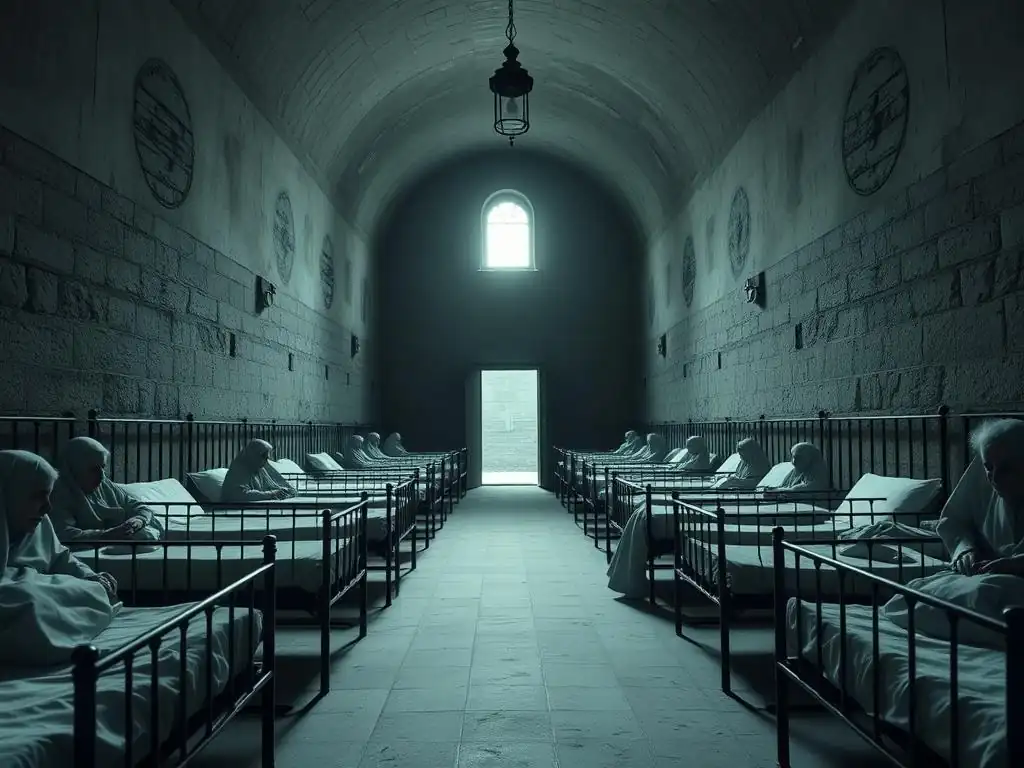
Willard Asylum for the Chronic Insane, established in 1869 on the shores of Seneca Lake in New York, was specifically created to house the chronically mentally ill who had previously languished in county poorhouses. While its founding represented a move away from the horrific conditions often found in poorhouses, Willard quickly faced its own severe challenges, primarily overwhelming overcrowding and chronic understaffing.
Designed initially for a few thousand patients, its population swelled significantly, reaching over 5,000 patients by the early 20th century. This massive influx far exceeded the capacity of the buildings and the number of staff available to provide adequate care.
The sheer numbers meant that individualized attention, a cornerstone of the failed moral treatment ideal, was impossible. Patients were often housed in large, dormitory-style wards with minimal privacy or personal space. The limited staff were often overworked, underpaid, and lacked proper training in mental healthcare, leading to conditions ripe for neglect and abuse. This persistent state of overcrowding and understaffing became a defining characteristic of Willard and many other large state asylums in the latter half of the 19th century, highlighting a critical failure point in 19th century asylum history.
Instances of Patient Neglect at Willard Asylum
The conditions at Willard led to numerous documented instances of neglect. With thousands of patients and insufficient staff, basic needs like hygiene, adequate clothing, and timely medical attention were often not met. Patients might spend days or weeks in soiled clothing, suffer from preventable illnesses, or receive minimal care for physical ailments. The lack of engagement and therapeutic activity meant many patients spent their days in idleness, leading to further deterioration of their mental and physical health.
Reports from investigators and former staff sometimes detailed harrowing conditions, including inadequate food, lack of heating in winter, and a pervasive sense of despair. While not necessarily intentional cruelty in every instance, the systemic failure to provide sufficient resources resulted in a level of neglect that profoundly impacted the lives and dignity of the patients. The history of Willard serves as a stark reminder of the potential for even well-intentioned institutions to become places of suffering when overwhelmed by numbers and starved of resources, a somber chapter in 19th century asylum history.
The Legacy of Willard Asylum: A Reminder of the Need for Ethical Care
Willard Asylum eventually closed in 1995. Its legacy is complex, representing both an attempt to address the plight of the chronically ill and a failure to provide truly humane and therapeutic care on a large scale. The discovery of thousands of unclaimed suitcases belonging to former patients upon its closure in the 1990s became a powerful symbol of the lives contained and often forgotten within its walls. These suitcases, filled with personal belongings, offered poignant glimpses into the identities and histories of individuals stripped of their autonomy and confined for decades.
The story of Willard is a critical case study in 19th century asylum history, illustrating the dangers of warehousing large populations of vulnerable individuals without adequate support, oversight, and a genuine commitment to their well-being. It underscores the ethical imperative for mental healthcare systems to prioritize individual dignity, provide sufficient resources, and avoid the pitfalls of purely custodial care. The lessons from Willard remain relevant today in discussions about deinstitutionalization, community care, and the rights of individuals with chronic mental illness.
Trans-Allegheny Lunatic Asylum: Controversial Treatments and Questionable Practices
Unethical Medical Practices at Trans-Allegheny Lunatic Asylum
The Trans-Allegheny Lunatic Asylum (later renamed Weston State Hospital), located in Weston, West Virginia, is another institution whose history is marked by controversy, particularly regarding its medical practices. Opened in 1864, the asylum was built with grand architectural ambitions influenced by the Kirkbride Plan, which advocated for therapeutic design. However, like many large asylums, it eventually succumbed to overcrowding and resource constraints, leading to a decline in the quality of care and the implementation of questionable treatments.
While some treatments common in the 19th century, such as hydrotherapy (using baths) and work therapy, were relatively benign, Trans-Allegheny also utilized more invasive and controversial methods as they emerged later in the century and into the 20th. Although lobotomy is primarily a 20th-century procedure, the groundwork of experimental interventions was laid in the late 19th century.
Patients might be subjected to various forms of physical restraint, questionable medications, and early, often poorly understood, attempts at physical interventions based on speculative theories about the causes of mental illness. The historical record suggests that the pressure to manage large numbers of difficult cases sometimes led to the adoption of control-oriented or experimental practices with limited regard for patient consent or long-term well-being, contributing to the darker side of 19th century asylum history.
The Use of Restraints and Seclusion at Trans-Allegheny Lunatic Asylum
Mechanical restraints and seclusion were common practices in 19th-century asylums, used ostensibly to manage dangerous or agitated patients, but often employed due to understaffing or lack of therapeutic alternatives. Trans-Allegheny was no exception. While initial moral treatment ideals sought to minimize restraint, the reality of managing thousands of patients in overcrowded conditions often led to its overuse. Patients might be confined to padded cells or restrained in straitjackets or chairs for extended periods, sometimes days or weeks.
The use of such methods, while seen by some staff as necessary for control, often exacerbated patients' distress, led to physical deterioration, and stripped individuals of their dignity. Critics argued that these practices were more about controlling behavior for institutional convenience than about therapeutic benefit. The prevalence of restraint and seclusion at institutions like Trans-Allegheny highlights the gap between the idealistic vision of asylum care and the harsh realities faced by patients and staff in many large public institutions within 19th century asylum history.
The Fight for Patient Dignity at Trans-Allegheny Lunatic Asylum
Despite the challenging conditions and questionable practices, there were undoubtedly staff members at Trans-Allegheny who strove to provide humane care and advocate for their patients. However, the systemic issues of overcrowding, underfunding, and limited medical knowledge presented formidable obstacles. The fight for patient dignity in institutions like this was often a quiet, uphill battle waged by individual attendants or reform-minded superintendents against entrenched institutional inertia.
The history of Trans-Allegheny, like Willard, serves as a cautionary tale about the potential for large, isolated institutions to become places where patient rights and dignity are compromised. It underscores the importance of external oversight, adequate funding, ethical guidelines, and a focus on therapeutic relationships to prevent the abuses that occurred in the shadows of 19th century asylum history. The legacy of institutions like Trans-Allegheny continues to shape public perception and inform ongoing efforts to improve mental healthcare systems.
Common Themes and Patterns in 19th Century Asylum Mental Healthcare
Social and economic forces were paramount in shaping the landscape of 19th century asylum history. The rapid industrialization and urbanization of the era led to increased social disruption, poverty, and stress, arguably contributing to a rise in visible mental distress. Public pressure to remove the mentally ill from poorhouses and streets fueled the expansion of state-funded asylums.
However, this expansion often occurred without commensurate increases in funding or staffing, leading directly to the overcrowding crisis that plagued institutions by the mid-to-late century. Economic downturns further exacerbated these issues, resulting in budget cuts that directly impacted patient care, staffing levels, and the maintenance of facilities.
Moreover, social attitudes towards mental illness were deeply ingrained, often viewing it with fear, shame, and moral judgment. This stigma contributed to the isolation of asylums, both geographically and socially, and made it difficult to advocate for adequate resources or challenge inhumane practices. The class divide was also evident; private asylums like McLean and Bloomingdale offered relatively better conditions for those who could afford them, while public asylums like Willard and Trans-Allegheny struggled to cope with vast numbers of impoverished patients, highlighting how socio-economic status profoundly influenced access to care and quality of life within 19th century asylum history.
The Evolution of Diagnostic Practices and Treatments
Diagnostic practices in 19th-century asylums were rudimentary and constantly evolving. Early in the century, classifications were often broad and descriptive, relying on observable behaviors like "mania," "melancholia," "dementia," or "moral insanity."
There was limited understanding of the underlying causes of most conditions, leading to diagnoses that sometimes conflated mental illness with epilepsy, intellectual disability, or even social deviance. Towards the latter half of the century, figures like Emil Kraepelin began developing more systematic classifications based on the long-term course and outcome of illnesses, laying groundwork for modern diagnostic manuals, but this was a slow process within the context of 19th century asylum history.
Treatment methods were equally varied and often experimental. Moral treatment, emphasizing environment, routine, and kindness, was initially popular but proved difficult to sustain on a large scale. Physical treatments included hydrotherapy (baths, showers), dietary changes, bloodletting (less common later in the century), purgatives, and sedatives like opium, chloral hydrate, and later, barbiturates.
Mechanical restraints and seclusion were widespread tools for managing behavior. As the century closed, interest grew in surgical interventions and early forms of electrotherapy, reflecting a shift towards more physically invasive methods, often driven by a lack of effective alternatives and a desperate search for cures within the confines of 19th century asylum history.
The Role of Stigma and Misunderstanding in Patient Outcomes
Stigma and a fundamental misunderstanding of mental illness significantly impacted patient outcomes in 19th-century asylums. Mental illness was widely perceived as a source of shame, leading families to institutionalize relatives not only for treatment but also to hide them from society. This social isolation often severed patients' ties with their communities and families, removing a crucial support system that could aid recovery or facilitate reintegration. Once admitted, the label of "lunatic" or "insane" was incredibly difficult to shed, often leading to indefinite confinement regardless of a patient's actual condition or potential for improvement.
The lack of public understanding also meant there was limited external pressure for reform until investigative reports brought conditions to light. Misconceptions about the curability of mental illness led to the accumulation of chronic patients, transforming therapeutic institutions into custodial warehouses. This pervasive stigma not only affected how patients were treated within the asylum but also determined their prospects for life outside it, making the journey through 19th century asylum history a deeply isolating experience for many.
The Legacy of 19th Century Asylums on Modern Mental Health

The Influence of Asylum Practices on Contemporary Psychiatric Care
While the large, isolated 19th-century asylum model has largely been dismantled in many parts of the world through deinstitutionalization, its legacy continues to influence contemporary psychiatric care in complex ways. The concept of a dedicated therapeutic environment, central to the initial moral treatment ideals, persists in modern psychiatric hospitals and residential treatment centers, albeit on a much smaller scale and with vastly different approaches. The emphasis on structured daily routines, therapeutic activities, and the importance of a supportive milieu can trace roots back to early asylum practices.
Furthermore, the 19th century saw the beginnings of systematic clinical observation and documentation of mental illness within these institutions, laying some of the foundational groundwork for psychiatric diagnosis and research. While many early classifications and theories were flawed, the attempt to categorize and study mental disorders within a medical framework emerged strongly during this period.
The challenges faced by asylums in managing large patient populations also highlighted the need for trained staff and ethical guidelines, informing the development of professional standards in mental healthcare that evolved throughout the 20th century and beyond, carrying lessons learned from 19th century asylum history.
The Ongoing Debate About Institutionalization vs. Community-Based Treatment
One of the most direct legacies of 19th-century asylums is the ongoing debate about the role of institutionalization versus community-based care for individuals with severe and persistent mental illness. The failures and abuses within large asylums fueled the deinstitutionalization movement of the latter half of the 20th century, driven by advances in psychopharmacology, civil rights advocacy, and the recognition that many patients fared better in less restrictive settings. This led to the closure of many historic asylums.
However, the transition to community-based care has been fraught with challenges, including insufficient funding for community services, lack of adequate housing, and difficulties coordinating care, sometimes leading to homelessness, incarceration, or inadequate support for vulnerable individuals. The debate continues regarding the appropriate level of care for those who require intensive support, weighing the potential benefits of structured environments against the risks of isolation and loss of autonomy associated with institutionalization. The history of 19th century asylums provides a critical backdrop to this contemporary discussion, reminding us of the potential pitfalls of both over-institutionalization and inadequate community support.
Reflecting on the Past to Improve the Future of Mental Well-being
Understanding the history of 19th-century asylums is not merely an academic exercise; it offers vital lessons for improving mental well-being today. The era highlights the critical importance of adequate resources and staffing in mental healthcare settings. Overcrowding and underfunding consistently led to a decline in care quality, a lesson that remains relevant as modern mental health services face funding challenges. It also underscores the dangers of isolating individuals with mental illness, both physically within institutions and socially through stigma.
Furthermore, the history demonstrates the need for continuous evaluation and reform in mental healthcare practices. The shift from harsh restraints to moral treatment, and later to pharmacological and community-based approaches, shows that what is considered best practice evolves with scientific understanding and societal values. By reflecting on the ethical failures and humanitarian aspirations of 19th century asylum history, we are better equipped to advocate for compassionate, evidence-based, and rights-respecting care for all individuals experiencing mental health challenges in the future.
Conclusion: Remembering the History of 19th Century Asylums
The Importance of Understanding 19th Century Asylum History for Mental Health Professionals
For mental health professionals today, understanding 19th century asylum history is crucial for several reasons. Firstly, it provides essential context for the evolution of psychiatric diagnosis, treatment, and the very structure of mental healthcare systems. Knowing the origins and limitations of early approaches helps professionals appreciate the progress that has been made and understand the historical roots of current practices and challenges. It illuminates why certain treatments were adopted, why institutions grew and declined, and how prevailing social attitudes influenced clinical care.
Secondly, studying this history fosters a critical perspective on current practices. By examining past ethical failures, such as the overuse of restraints, lack of consent, and the warehousing of patients, professionals can better identify and challenge potential ethical dilemmas in contemporary settings. It reinforces the importance of patient autonomy, dignity, and rights.
Furthermore, understanding the impact of stigma and societal misunderstanding in the past can inform efforts to combat these issues today, promoting greater empathy and reducing barriers to care. The long and complex journey through 19th century asylum history offers invaluable lessons for ethical, effective, and compassionate practice in modern mental health.
Continuing the Conversation: Further Research and Resources on 19th Century Mental Health
The history of 19th-century asylums is a rich and ongoing area of research, with new studies continually shedding light on the lives of patients and staff, the effectiveness of treatments, and the societal forces at play. Exploring primary sources, such as patient records, asylum reports, and personal accounts, offers powerful insights into the human experience of mental illness and institutionalization during this era. Academic books and articles from historians of medicine and psychiatry provide detailed analyses of specific institutions, treatment philosophies, and policy changes.
For those interested in delving deeper into 19th century asylum history, numerous archives hold records from these institutions, offering invaluable resources for researchers. Museums and historical sites associated with former asylums also provide opportunities to learn about their architecture, daily life, and the stories of those who lived and worked within their walls.
Engaging with these resources allows for a more nuanced understanding of a complex and often difficult period, ensuring that the lessons from the past continue to inform our approach to mental health in the present and future. The conversation about 19th century mental health is far from over, and continued exploration is vital.
Frequently Asked Questions
What were some common misconceptions about asylums in the 19th century?
Many believed asylums were solely for the "insane," overlooking their role as social repositories for the poor, elderly, and those with developmental disabilities. The public often feared asylums, fueled by sensationalized stories and a lack of understanding.
How did the treatment of patients differ between famous and infamous 19th-century asylums?
Famous asylums often pioneered moral treatment, emphasizing compassion and rehabilitation. Infamous asylums, however, were characterized by overcrowding, neglect, and brutal practices like lobotomies and restraints.
What factors contributed to the rise of large asylums in the 19th century?
Factors included urbanization, industrialization, and a growing belief that mental illness was a curable disease, leading to increased institutionalization. Social control also played a role, as asylums served to manage "undesirables."
Where can I find reliable resources to learn more about 19th century asylum history?
Websites like the Mind Care Guide, alongside academic journals and historical archives, offer primary source documents and expert analyses. Look for resources that present a balanced view of asylum history.
How did the 19th-century asylum system influence modern mental health care?
The asylum system highlighted the need for structured care and observation, but also demonstrated the dangers of institutional abuse and neglect. Modern care strives for community-based treatment and patient rights, learning from past mistakes.
Final Reflection: Echoes of the Past, Lessons for the Future
The chilling stories of 19th-century asylums remain relevant today, not as relics of a bygone era, but as stark reminders of the ongoing struggle for mental health understanding and compassionate care. While the physical structures may be gone or repurposed, the societal attitudes and systemic failures they represent continue to cast a long shadow on our approach to mental illness. The echoes of neglect, misunderstanding, and inhumane treatment resonate powerfully in our current conversations about mental healthcare access and equity.
The legacy of these institutions profoundly shaped our cultural understanding of mental illness, often perpetuating stigma and fear rather than fostering empathy and support. The romanticized portrayals in literature and film often overshadow the harsh realities experienced by patients. The insane were not merely ill; they were also dangerous, unpredictable, and fundamentally different from the rest of humanity.
This perception, prevalent in the 19th century, continues to fuel prejudice and hinder progress towards truly inclusive and effective mental healthcare systems. We must actively confront this legacy to build a more compassionate and informed future.
Consider the stories you've read, the individuals whose lives were shaped—and often shattered—within those asylum walls. Let their experiences serve as a catalyst for your own reflection. How can we ensure that the mistakes of the past are not repeated? What steps can you take, in your own sphere of influence, to challenge stigma, advocate for better mental healthcare, and promote a more humane and understanding approach to mental illness? The fight for equitable and compassionate mental healthcare is far from over; let the history of 19th-century asylums inspire you to join the ongoing struggle for a better future.
Unearth More Asylum Histories: Dive Deeper into the 19th Century
Thanks for exploring the fascinating (and sometimes unsettling!) world of 19th-century asylums with us! You've gained valuable insight into a pivotal era in mental healthcare. Now, let's take that knowledge further:
- Delve into your local asylum's history: Many communities have rich, untold stories waiting to be discovered. Research your local historical society or archives – you might uncover surprising connections to the past!
- Share this article with others: Spark a conversation about the evolution of mental healthcare and the legacies of these institutions. What lessons can we learn from history?
- Explore primary source documents: Search online archives for patient records, staff diaries, or photographs from these asylums – it's a window into a very different world.
What local historical resource will you explore first to uncover hidden stories of your community's past?