
The Role of Philosophy in Redefining Madness (Enlightenment Era)


Welcome to Mind Care Guide, a place dedicated to nurturing your mental well-being.
Ever wondered how our understanding of mental health has evolved? In a time when "madness" was often misunderstood and feared, philosophy offered a new lens through which to view these experiences. Dive into our exploration of philosophical approaches to madness, particularly during the Enlightenment era, and discover how these ideas shaped our present understanding of mental health. Are you ready to challenge conventional wisdom and explore the profound connection between philosophy and the human mind?
The Role of Philosophy in Redefining Madness (Enlightenment Era)
- Introduction: Philosophical Approaches to Madness in the Enlightenment
- Shifting Paradigms: Enlightenment Philosophers and Mental Health
- Key Philosophical Concepts Shaping the Understanding of Madness
- Case Studies: Philosophers' Impact on Asylum Reform
- Critiques and Limitations of Enlightenment Philosophy on Madness
- The Legacy of Enlightenment Philosophy on Contemporary Mental Health
- Conclusion: Philosophical Approaches to Madness - A Lasting Impact
-
Frequently Asked Questions
- How did philosophical thought during the Enlightenment Era influence the understanding of madness?
- What are some examples of philosophical concepts that were applied to the study of madness?
- How did philosophers challenge traditional views of madness as simply a form of demonic possession or divine punishment?
- Did philosophical approaches during this era lead to improved treatment methods for people experiencing madness?
- What are the limitations of applying philosophical frameworks to understand madness?
- Final Reflection: Unmasking Madness, Redefining Humanity
- Unlock Your Understanding of Enlightenment-Era Madness
Introduction: Philosophical Approaches to Madness in the Enlightenment
Setting the Stage: Pre-Enlightenment Understandings of Mental Illness
Before the Enlightenment, understandings of mental illness were often rooted in superstition, religious interpretations, or humoral theories inherited from antiquity. Madness was frequently seen as a result of demonic possession, divine punishment, or an imbalance of bodily fluids like black bile, as posited by Hippocrates and later Galen. Treatment often involved exorcisms, prayers, purges, or harsh physical restraints, reflecting a view of the afflicted individual as either morally blameworthy or fundamentally other, rather than suffering from a medical condition.
Institutions existed, but they were often places of confinement and control rather than therapeutic care. For instance, Bedlam (Bethlem Royal Hospital) in London, founded in the 14th century, became notorious by the 17th century for its inhumane conditions, where inmates were sometimes chained and even displayed to the public, illustrating the prevalent fear and misunderstanding surrounding mental affliction.
This era lacked a systematic, rational framework for understanding mental states outside the norm. While some physicians attempted empirical observation, the dominant paradigms were heavily influenced by theological or mystical explanations. The individual experiencing mental distress was often stripped of agency and dignity, their suffering interpreted through a lens of pathology that was more moral or spiritual than medical or psychological. This historical context is crucial for appreciating the radical shift brought about by the philosophical approaches to madness that emerged during the Enlightenment.
The Enlightenment's Challenge to Traditional Views of Madness
The Enlightenment, a period characterized by a profound emphasis on reason, individualism, and scientific inquiry, fundamentally challenged these long-standing views. Philosophers of this era sought to apply the principles of rationality and empirical observation to all aspects of human existence, including the complexities of the human mind. They questioned inherited dogma and superstition, advocating instead for knowledge grounded in sensory experience and logical deduction. This intellectual movement provided a new lens through which to examine what had previously been labeled simply as "madness."
This shift encouraged a move away from supernatural explanations and towards a more naturalistic understanding of mental states. While still nascent, the idea began to take hold that mental deviations might be explained by physical causes, environmental factors, or errors in reasoning, rather than exclusively by spiritual forces or moral failings. This intellectual groundwork laid by Enlightenment thinkers provided the essential foundation for developing new philosophical approaches to madness, paving the way for later reforms in treatment and care.
Shifting Paradigms: Enlightenment Philosophers and Mental Health
John Locke's Influence: Reason, Experience, and the Understanding of Mental Derangement
John Locke, a central figure in the Enlightenment, significantly impacted the philosophical understanding of the mind through his empirical epistemology. In his Essay Concerning Human Understanding (1689), Locke argued that the mind is a tabula rasa (blank slate) at birth and that all knowledge is derived from sensory experience and reflection.
He differentiated between "idiots," who lacked the capacity for reason due to inherent cognitive deficits, and "madmen," who possessed reason but were led astray by connecting ideas incorrectly. Locke's famous example was a man who believed his soul was made of glass, illustrating a failure in the association of ideas based on faulty sensory input or reasoning, not a complete absence of reason itself.
This distinction was revolutionary because it suggested that madness was not a total loss of rationality but a disorder of it, a malfunction in the processing of ideas or sensory information. By framing it this way, Locke opened the door for the possibility that such disorders could be understood, perhaps even corrected, through rational inquiry and environmental modification, rather than being seen as incurable states beyond human comprehension or intervention. His work provided a philosophical basis for investigating the mechanisms of thought and how they might go awry, contributing to the development of more nuanced philosophical approaches to madness.
The Rise of Empiricism: Observing and Classifying Mental Disorders
The broader embrace of empiricism during the Enlightenment encouraged the systematic observation and recording of phenomena, including human behavior and mental states. Thinkers and early medical practitioners began to approach mental variations not just as undifferentiated "madness" but as potentially distinct conditions that could be described, classified, and perhaps even understood through careful study. This empirical method, championed by figures like David Hume, prioritized sensory data and experience over abstract speculation or tradition.
This focus on observation led to early attempts at categorizing different forms of mental disturbance based on presenting symptoms. While still rudimentary by modern standards, this represented a significant departure from the monolithic concept of "madness."
For example, physicians like William Cullen in Scotland attempted to create nosologies (classifications of diseases) that included mental disorders, proposing categories like "neuroses" for conditions affecting the nervous system, some of which encompassed what we now consider mental illnesses. This empirical impulse, a core tenet of Enlightenment philosophical approaches to madness, laid the groundwork for the development of psychiatry as a medical discipline focused on observable phenomena.
Moral Treatment: A Philosophical Shift Towards Humane Care
Emerging in the late 18th century, the "moral treatment" movement was a direct practical application of Enlightenment philosophical ideals, particularly those emphasizing human dignity, reason, and the potential for improvement. Pioneers of this approach believed that mental illness was often the result of moral or psychological stress and that recovery could be fostered through a humane environment, routine, purposeful activity, and compassionate interaction. This contrasted sharply with the prevailing use of chains, isolation, and harsh physical methods.
Key to moral treatment was the belief that the mentally ill were still rational beings capable of responding to kindness, encouragement, and a structured, supportive environment. Instead of being treated as wild beasts, they were seen as individuals whose reason was temporarily impaired but potentially restorable. This approach, exemplified by institutions like the York Retreat, was deeply philosophical, rooted in Quaker beliefs about the inherent worth of every individual and the Enlightenment faith in the power of reason and environment. It represented a significant evolution in philosophical approaches to madness, shifting the focus from mere containment to therapeutic engagement.
Key Philosophical Concepts Shaping the Understanding of Madness
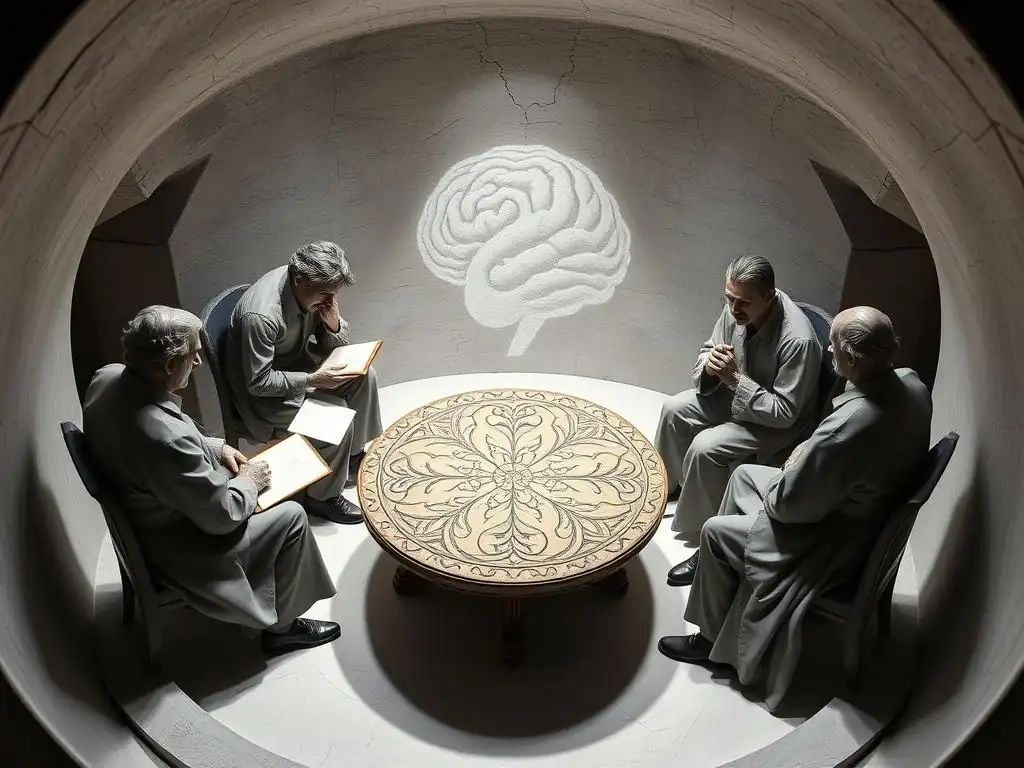
Reason vs. Unreason: Defining the Boundaries of Sanity
A central theme in Enlightenment philosophy was the elevation of reason as the defining characteristic of humanity and the primary tool for acquiring knowledge and navigating the world. Consequently, "madness" was often defined in opposition to this ideal – as the absence or perversion of reason. Philosophers grappled with where the boundaries lay between rational thought, eccentric behavior, and outright derangement. This philosophical dichotomy between reason and unreason became the primary framework for understanding and categorizing mental states.
Thinkers explored how reason could break down or become distorted. Immanuel Kant, for instance, discussed mental disorders within his anthropological writings, often viewing them as disturbances of the mind's faculties (cognition, feeling, will) that hindered rational thought and action. The focus was on the capacity for logical thought and self-control. This emphasis, while providing a framework for understanding deviations, also potentially pathologized any departure from societal norms of rationality, highlighting a complex aspect of philosophical approaches to madness during this era.
Individual Liberty and the Confinement of the Mentally Ill
The Enlightenment placed immense value on individual liberty, autonomy, and rights. However, this posed a significant philosophical challenge when considering individuals deemed "mad." If liberty is paramount, under what circumstances is it justifiable to deprive someone of their freedom through confinement? Philosophers and legal thinkers wrestled with balancing the rights of the individual with the need for public safety and the perceived need to protect the individual from themselves.
The justification for confinement often rested on the argument that the "mad" person, lacking reason, was incapable of exercising their liberty responsibly or making sound judgments about their own well-being or the safety of others. Confinement was thus framed, sometimes genuinely and sometimes as a pretext, as a protective measure or a necessary condition for potential restoration of reason. This tension between the philosophical commitment to liberty and the practical reality of managing severe mental disturbance was a complex ethical problem inherent in the philosophical approaches to madness of the time.
While the Enlightenment emphasized universal reason, some thinkers began to implicitly or explicitly acknowledge the role of society and culture in shaping perceptions and definitions of madness. The idea emerged that what was considered rational or irrational could be influenced by social norms, expectations, and power structures. This laid early groundwork for later sociological perspectives on mental illness.
Michel Foucault, a later historian and philosopher building on Enlightenment themes, extensively documented how the "Great Confinement" of the 17th and 18th centuries gathered various marginalized groups, including the poor, the unemployed, criminals, and the "mad," into institutions. He argued that this confinement was less about medical treatment and more about social control and the exclusion of those who deviated from the emerging norms of bourgeois society and labor.
While Foucault's work is post-Enlightenment, it analyzes and critiques the social implications of the era's focus on reason and order, suggesting that even seemingly objective philosophical approaches to madness can be deeply intertwined with societal values and power dynamics.
Case Studies: Philosophers' Impact on Asylum Reform
Philippe Pinel: Applying Enlightenment Principles to Asylum Practices in France
Philippe Pinel, a French physician and philosopher, is famously associated with the humanitarian reform of mental asylums, particularly at Bicêtre and Salpêrière hospitals in Paris during the French Revolution. Inspired by Enlightenment ideals of human rights and reason, Pinel advocated for the removal of chains and shackles from patients, a radical step at the time. He believed that patients should be treated with kindness, respect, and provided with clean, airy environments and opportunities for exercise and work.
Pinel's approach was not merely custodial; it was rooted in a philosophical belief in the potential for recovery and the dignity of the individual, even when afflicted by madness. He meticulously observed and documented patient behavior, attempting to classify disorders based on symptoms and understand individual histories, reflecting the Enlightenment's empirical spirit. His work exemplified how philosophical approaches to madness, specifically the emphasis on reason, humanity, and observation, could translate directly into practical, compassionate care reforms within institutions.
William Tuke and the York Retreat: Quaker Philosophy and Compassionate Care
In England, William Tuke, a Quaker merchant and philanthropist, founded the York Retreat in 1796. This institution became a leading example of "moral treatment," offering a stark contrast to the harsh conditions found in other asylums like the nearby York Asylum. Tuke's philosophy was deeply influenced by Quaker principles of equality, inner light (inherent goodness), and the importance of community and gentle persuasion over coercion.
The York Retreat provided a family-like atmosphere where patients were encouraged to engage in purposeful activities, conversation, and religious devotion. Physical restraint was minimized, and staff were trained to interact with patients with kindness and understanding. Tuke's work demonstrated how a specific philosophical approach to madness, drawing from religious and ethical convictions aligned with Enlightenment humanitarianism, could create a therapeutic environment focused on restoring the individual's sense of self-worth and connection to reality, achieving significantly better outcomes than punitive methods.
Vincenzo Chiarugi: Pioneering Humane Treatment in Italy
Less widely known than Pinel or Tuke in some historical accounts, Vincenzo Chiarugi was an Italian physician who also implemented significant reforms based on Enlightenment principles at the Bonifacio Hospital in Florence starting in the 1780s. Chiarugi wrote On Insanity and its Classification (1793-94), a treatise that advocated for humane treatment of the mentally ill based on medico-philosophical principles. He believed that mental illness was a disease, not a moral failing, and that patients deserved medical care and dignity.
Chiarugi's reforms included removing chains, providing comfortable living conditions, occupational therapy, and recreational activities. His work was guided by a philosophy that combined medical understanding with a strong ethical commitment to the well-being of the patient. He detailed specific rules for the management of patients, emphasizing respect, minimal restraint, and therapeutic activities. Chiarugi's efforts underscore that the application of philosophical approaches to madness towards humane reform was a widespread phenomenon across Europe during this period, driven by shared Enlightenment ideals.
Critiques and Limitations of Enlightenment Philosophy on Madness

Despite the philosophical advancements of the Enlightenment, the social stigma surrounding mental illness remained deeply entrenched. While philosophers might discuss reason and human dignity in abstract terms, the reality for many individuals experiencing mental distress was continued fear, misunderstanding, and social exclusion. Institutions, even reformed ones, often struggled to overcome societal prejudices that viewed madness with suspicion and fear.
The emphasis on reason, while progressive in some ways, also inadvertently contributed to stigma by sharply delineating "sane" from "insane," often casting those who deviated from rational norms as fundamentally other. Public attitudes, shaped by centuries of folklore and fear, did not immediately transform based on philosophical treatises or asylum reforms. This highlights a significant limitation: the gap between the enlightened philosophical approaches to madness articulated by intellectuals and the enduring social realities faced by those afflicted.
The Exclusion of Certain Groups: Gender and Socioeconomic Biases in Treatment
The application of Enlightenment ideals in mental healthcare was not universally equitable. Women, for instance, were often diagnosed and treated based on prevailing gender norms and societal expectations, with conditions like "hysteria" pathologizing behaviors that deviated from passive domesticity. Their experiences were frequently interpreted through a patriarchal lens, limiting the scope of genuinely empathetic or effective care.
Furthermore, access to the more humane "moral treatment" was often limited to the middle and upper classes who could afford private care in places like the York Retreat. Public asylums, where the poor were confined, often remained overcrowded and underfunded, with conditions that lagged significantly behind the philosophical ideals being discussed. This demonstrates that while philosophical approaches to madness offered a vision of improved care, their practical implementation was often marred by existing social inequalities and biases.
The Limits of Reason: Acknowledging the Complexity of Mental Illness
While the Enlightenment's focus on reason provided a valuable framework for understanding some aspects of mental function and dysfunction, it also had limitations. Not all forms of mental illness can be adequately explained or treated solely through the lens of impaired reason or faulty associations of ideas. Conditions involving severe mood disturbances, psychosis, or complex trauma do not always fit neatly into a model based primarily on cognitive processes.
Later psychological and psychiatric developments revealed the multifaceted nature of mental illness, involving biological, emotional, and unconscious factors that were not fully accounted for by the Enlightenment's predominantly rationalist perspective. While the philosophical approaches to madness of this era were crucial steps forward, they represented an incomplete picture, primarily focusing on cognitive deviations and sometimes overlooking the profound emotional and non-rational aspects of mental suffering.
The Legacy of Enlightenment Philosophy on Contemporary Mental Health
The Enduring Influence of Reason and Empiricism
The Enlightenment's emphasis on reason and empiricism continues to be foundational to modern mental healthcare. The scientific study of the brain and mind, the development of diagnostic criteria based on observable symptoms and patterns, and the evaluation of treatment efficacy through research methods are direct descendants of this philosophical tradition. Contemporary psychology, psychiatry, and neuroscience rely heavily on empirical data, logical analysis, and the pursuit of rational explanations for mental phenomena.
Diagnostic manuals like the DSM (Diagnostic and Statistical Manual of Mental Disorders), while subject to ongoing debate and revision, represent a continued effort to classify mental conditions based on observable criteria, a practice rooted in the Enlightenment's empirical impulse and the desire to bring order and understanding to the complexities of the mind. The commitment to understanding mental health through systematic study and evidence-based practice is a lasting legacy of Enlightenment philosophical approaches to madness.
The Importance of Human Dignity in Mental Healthcare
The humanitarian impulse of the Enlightenment, particularly as manifested in the moral treatment movement, laid crucial groundwork for the modern emphasis on patient rights, dignity, and person-centered care. The idea that individuals experiencing mental illness are not merely their symptoms but are persons deserving of respect, autonomy, and compassionate treatment is a direct inheritance from this era's philosophical shifts.
Contemporary mental health ethics and legal frameworks, such as laws protecting patient rights, ensuring informed consent, and promoting community-based care over institutionalization, echo the Enlightenment's valuation of individual liberty and inherent worth. While the struggle for equitable and humane care is ongoing, the fundamental principle that individuals with mental health challenges are full human beings with rights is a profound legacy of the philosophical approaches to madness that emerged in the 18th century.
Philosophical Underpinnings of Modern Mental Health Ethics
Many ethical debates and principles in contemporary mental health have roots in Enlightenment philosophy. Discussions around autonomy (the patient's right to make decisions), beneficence (acting in the patient's best interest), non-maleficence (avoiding harm), and justice (fair distribution of resources and treatment) can all be traced back to broader ethical frameworks developed or significantly influenced during the Enlightenment.
The ongoing conversation about involuntary commitment, the balance between individual liberty and societal safety, and the definition of mental capacity for decision-making are direct continuations of the philosophical problems raised during the Enlightenment concerning reason, liberty, and madness. Modern mental health professionals and policymakers continue to grapple with these complex issues, drawing, consciously or unconsciously, on the ethical foundations laid by Enlightenment philosophical approaches to madness.
Conclusion: Philosophical Approaches to Madness - A Lasting Impact
Reflecting on the Enlightenment's Contributions and Shortcomings
The Enlightenment period marked a pivotal moment in the history of understanding and treating mental illness. By challenging supernatural explanations and emphasizing reason, empiricism, and human dignity, Enlightenment philosophers provided a new, more rational, and ultimately more humane framework for viewing madness. The movement towards moral treatment and asylum reform, though imperfect and unevenly applied, represented a significant step away from purely punitive or custodial approaches.
However, the era's philosophical approaches to madness also had limitations. The strong focus on reason sometimes failed to capture the full complexity of mental suffering, and the practical application of ideals was often hindered by social biases and inequalities. Stigma persisted, and humane treatment was not universally accessible. Acknowledging these shortcomings is essential for a balanced understanding of the Enlightenment's legacy.
The Ongoing Relevance of Philosophy in Addressing Mental Health Challenges
Despite the limitations, the core principles championed by Enlightenment thinkers — the value of reason and empirical inquiry, the inherent dignity of the individual, and the possibility of understanding and alleviating suffering — remain profoundly relevant to contemporary mental health. Philosophy continues to play a vital role in shaping how we think about mental illness, informing ethical guidelines, challenging societal prejudices, and prompting reflection on the nature of the mind and consciousness.
The ongoing dialogue about the definition of mental health, the ethics of intervention, the role of society in contributing to distress, and the very nature of subjective experience demonstrates that philosophical approaches to madness are not confined to history. They are active, evolving frameworks that continue to guide research, clinical practice, and advocacy efforts aimed at improving the lives of individuals affected by mental health challenges. The Enlightenment's legacy reminds us that understanding the mind requires not only scientific inquiry but also deep philosophical reflection on what it means to be human.
Frequently Asked Questions
How did philosophical thought during the Enlightenment Era influence the understanding of madness?
Enlightenment philosophy emphasized reason and individualism, leading to a shift away from purely supernatural explanations of madness towards more naturalistic and medical models. This period saw the emergence of moral treatment approaches.
What are some examples of philosophical concepts that were applied to the study of madness?
Thinkers applied concepts like empiricism and rationalism to understand the origins and nature of madness. The idea of the social contract also played a role, questioning the treatment of individuals deemed "mad" by society.
How did philosophers challenge traditional views of madness as simply a form of demonic possession or divine punishment?
Enlightenment philosophers, influenced by the Scientific Revolution, began to challenge supernatural explanations. They advocated for observation and reason, seeking natural causes and potential cures for mental distress.
Did philosophical approaches during this era lead to improved treatment methods for people experiencing madness?
While not a direct cure, philosophical approaches influenced the development of more humane treatment methods. The emphasis on reason and individual rights paved the way for moral therapy and a reduction in harsh confinement practices.
What are the limitations of applying philosophical frameworks to understand madness?
Philosophical approaches, while insightful, sometimes lacked empirical validation and could be overly abstract. The focus on reason could also overlook the complex emotional and social factors contributing to mental distress.
Final Reflection: Unmasking Madness, Redefining Humanity
The Enlightenment's grappling with "madness" remains profoundly relevant today. Our understanding of mental illness, while vastly improved, still struggles with stigma, inadequate resources, and a persistent need to move beyond simplistic diagnostic categories. The philosophical approaches explored in this article offer a crucial framework for navigating these ongoing challenges.
The legacy of the Enlightenment's philosophical engagement with madness continues to shape our cultural perceptions and treatment approaches. While we've moved beyond the brutal asylums and inhumane practices of the past, the underlying questions about the nature of reason, emotion, and the self remain central to our understanding of mental health. The madman is not a man who has lost his reason, but a man whose reason has been lost to him.
This quote, though its origin is debated, highlights the enduring tension between individual experience and societal norms in defining mental illness. It underscores the importance of approaching the subject with empathy and a deep understanding of the human condition, a lesson deeply rooted in the Enlightenment's philosophical inquiries.
Consider the implications of these historical perspectives on your own understanding of mental health. Challenge the simplistic narratives, question the assumptions, and embrace the complexity of human experience. By engaging with the philosophical underpinnings of our understanding of madness, you can contribute to a more compassionate, nuanced, and ultimately more effective approach to mental health care – both for yourself and for others. Let the legacy of the Enlightenment inspire you to advocate for a future where mental illness is understood with empathy and treated with respect.
Unlock Your Understanding of Enlightenment-Era Madness
Thanks for exploring the fascinating intersection of philosophy and mental illness during the Enlightenment! You've now gained a deeper understanding of how societal perceptions shaped the treatment and understanding of "madness." Ready to delve even further?
- Dive deeper: Research a specific philosopher or medical practitioner mentioned in the article and explore their contributions to the field further. Consider focusing on their less-known works or contemporary critiques.
- Share your thoughts: Engage in a discussion about how these historical perceptions of mental illness continue to influence our understanding today. What parallels do you see?
- Challenge the norm: Explore alternative perspectives on mental health from marginalized groups or individuals within the Enlightenment era— whose voices were often excluded from mainstream discourse.
What surprising connection between philosophy and the definition of mental illness will you uncover next?