
Finding Grounding: Yoga Techniques for Feeling Centered

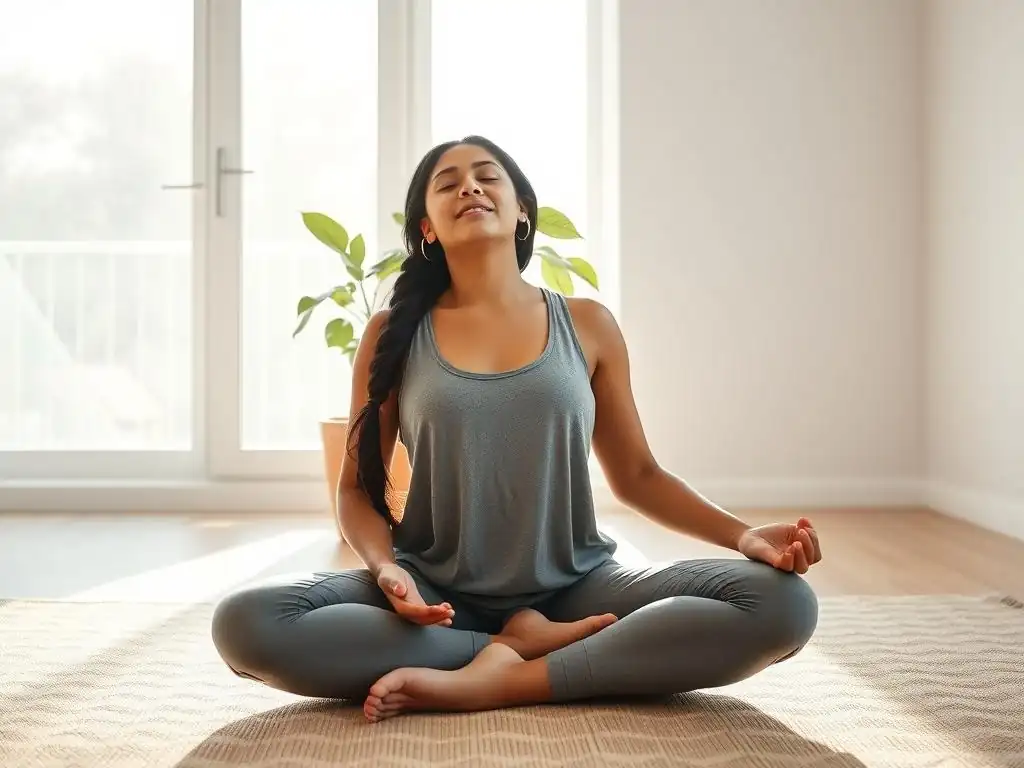
Welcome to Mind Care Guide, where your journey toward mental well-being begins. In a world full of distractions and challenges, finding your center can feel daunting. Here, we delve into the transformative power of yoga grounding techniques for anxiety relief, offering you a pathway to tranquility and self-discovery. Are you ready to explore how these ancient practices can bring peace to your mind and strengthen your resilience? Join us as we uncover the tools that can help you feel more grounded in your daily life, encouraging you to take the first step toward a more balanced and fulfilling existence.
- Finding Grounding: Yoga Techniques for Feeling Centered - Mind Care Guide
-
Yoga Grounding Techniques for Anxiety Relief: A Practical Guide
- Mountain Pose (Tadasana): Building a Foundation of Stability
- Tree Pose (Vrksasana): Finding Balance and Inner Strength
- Child's Pose (Balasana): Releasing Tension and Finding Comfort
- Seated Forward Fold (Paschimottanasana): Calming the Nervous System
- Legs-Up-the-Wall Pose (Viparita Karani): Restorative Grounding
-
Incorporating Yoga Grounding Techniques into Your Daily Routine
- Creating a Grounding Yoga Sequence for Anxiety
- Mindful Breathing (Pranayama) Techniques to Enhance Grounding
- Box Breathing (Sama Vritti Pranayama) for Emotional Regulation
- Using Visualization and Meditation to Deepen Your Grounding Practice
- Body Scan Meditation for Present Moment Awareness
- Grounding Visualizations: Roots Anchoring to the Earth
- The Long-Term Benefits of Yoga for Grounding and Anxiety Management
- Additional Resources for Anxiety Relief and Mental Well-being
-
Frequently Asked Questions
- What are Yoga grounding techniques and how can they help with anxiety?
- How does the "Mountain Pose" specifically contribute to anxiety relief?
- Can Yoga grounding techniques be practiced anywhere, or do I need a special space?
- How often should I practice Yoga grounding techniques to experience anxiety relief?
- Are there any potential risks or considerations when using Yoga grounding techniques for anxiety?
- Final Reflection: Finding Your Center in a Chaotic World
- Unleash Your Inner Calm: Start Your Grounding Journey Today!
Finding Grounding: Yoga Techniques for Feeling Centered - Mind Care Guide
What is Grounding? Exploring the Concept of Being Present
Grounding is essentially the practice of bringing your awareness back to the present moment. It's about anchoring yourself in the here and now, engaging your senses to connect with your physical body and your immediate surroundings. When you feel grounded, you are less likely to be swept away by racing thoughts about the past or future, which are often sources of anxiety. It's the feeling of being stable, secure, and fully present, much like a tree with deep roots firmly planted in the earth, able to withstand strong winds.
This sense of presence isn't just a mental state; it has tangible effects on your nervous system. When grounded, your body's stress response tends to calm down. This can manifest as a slower heart rate, more relaxed muscles, and a general feeling of ease. Developing effective grounding techniques is a fundamental skill for anyone seeking to manage stress and improve their overall mental resilience, providing a reliable anchor in turbulent times.
The Connection Between Anxiety and Lack of Grounding
Anxiety often pulls us away from the present moment. It can manifest as excessive worry about future events, replaying past mistakes, or feeling detached from one's body and surroundings. This disconnect creates a feeling of being adrift, unmoored, and vulnerable to the relentless tide of anxious thoughts. When we lack grounding, the sympathetic nervous system, responsible for the "fight or flight" response, can remain activated, leading to physical symptoms like restlessness, rapid breathing, and muscle tension.
Conversely, cultivating grounding through practices like yoga helps activate the parasympathetic nervous system, promoting relaxation and a sense of safety. When you are physically and mentally connected to the present, the anxious mind has less fuel to feed on. By focusing on sensory input – the feeling of your feet on the floor, the rhythm of your breath, the stretch in your muscles – you interrupt the cycle of worry and bring yourself back to a state of calm awareness. This is where specific yoga grounding techniques for anxiety relief become invaluable tools.
Why Yoga is Effective for Grounding and Anxiety Relief
Yoga is uniquely suited for cultivating grounding because it intentionally integrates the mind and body through movement, breath, and focused attention. Unlike purely physical exercise, yoga encourages a mindful presence in each posture, prompting you to notice physical sensations, observe your breath, and quiet external distractions. This inherent focus on the present moment is the very essence of grounding. The physical postures themselves, especially those that emphasize contact with the earth or require balance, naturally draw your awareness to your body and its connection to the ground beneath you.
Furthermore, yoga's emphasis on breathwork (pranayama) provides a direct pathway to calming the nervous system, which is crucial for anxiety relief. Deep, conscious breathing anchors you in the present and signals to your body that it is safe to relax. The combination of mindful movement, breath awareness, and intentional focus on physical sensations makes yoga a powerful practice for enhancing grounding and significantly reducing symptoms of anxiety, offering practical yoga grounding techniques for anxiety relief that can be accessed anywhere.
Yoga Grounding Techniques for Anxiety Relief: A Practical Guide
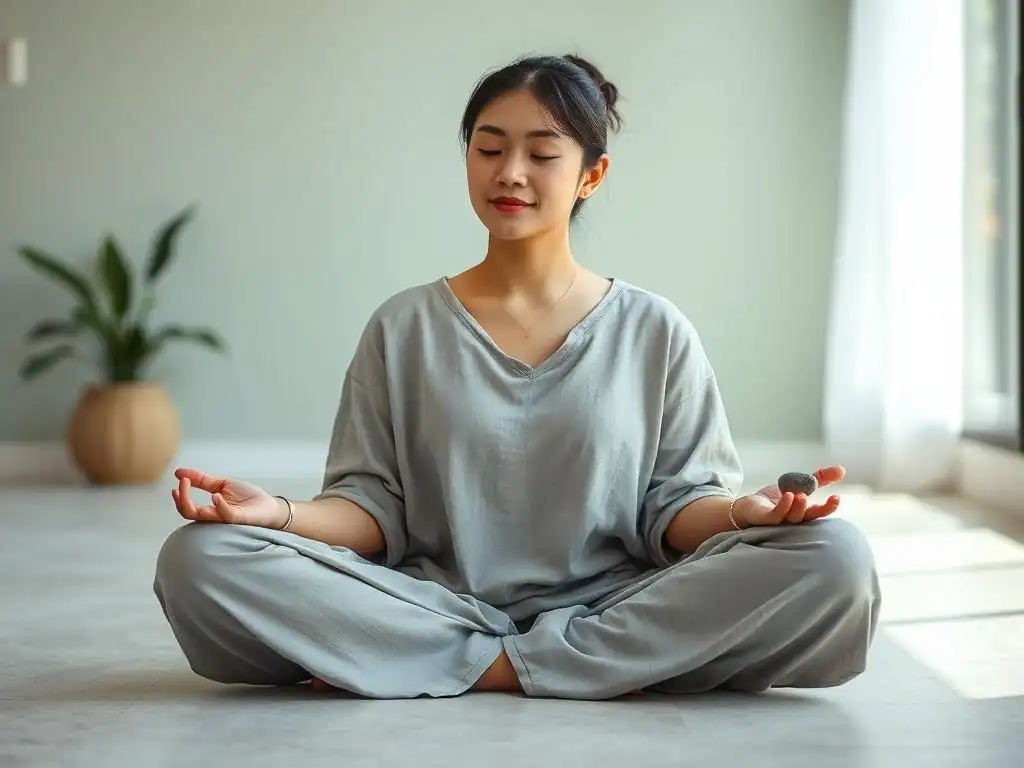
Mountain Pose (Tadasana): Building a Foundation of Stability
Mountain Pose might seem simple, just standing, but it is foundational for grounding. It involves standing tall with feet together or hip-width apart, distributing weight evenly through the soles of the feet. The arms hang by the sides, palms facing forward or towards the body. The gaze is steady, and the breath is calm. This pose cultivates awareness of your posture, your connection to the earth, and the subtle shifts of weight, bringing your focus firmly into your physical body and the present moment.
Proper execution involves actively pressing down through all four corners of each foot – the base of the big toe, the base of the little toe, and the inner and outer heel. Imagine roots growing from your feet into the ground. Gently lift through the arches to avoid collapsing the ankles, engage the thigh muscles, and lengthen the spine upwards, drawing the shoulder blades slightly down and back. This active engagement, combined with focused breathing, makes Tadasana a powerful starting point for any grounding sequence.
How to Perform Mountain Pose for Grounding
- Begin by standing with your feet together or hip-width apart, toes pointing forward.
- Distribute your weight evenly across the soles of your feet. Feel the contact points with the floor.
- Gently rock slightly forward and backward, side to side, until you find your center of balance.
- Draw your awareness to the sensation of your feet pressing into the earth. Imagine roots extending downwards.
- Straighten your legs without locking your knees. Engage your thigh muscles subtly.
- Lengthen your spine upwards, drawing your navel gently towards your spine.
- Relax your shoulders down and back, letting your arms hang naturally by your sides with palms facing forward or towards your body.
- Keep your chin parallel to the floor and your gaze soft and steady.
- Breathe deeply and evenly, feeling the breath fill your chest and abdomen. Hold for several breaths, focusing solely on the feeling of stability and contact with the ground.
Benefits of Mountain Pose for Anxiety and Focus
Mountain Pose directly addresses anxiety by providing a tangible sense of stability and presence. By consciously rooting down through your feet, you create a physical anchor that helps counter the feeling of being overwhelmed or unmoored by anxious thoughts. This simple act of standing mindfully helps shift your focus from internal worries to external, physical reality – the feeling of the ground beneath you, the air on your skin, the sensation of your body in space.
Regular practice of Tadasana can improve body awareness, making you more attuned to physical signs of stress or tension, allowing you to address them proactively. It also enhances focus and concentration by requiring present-moment attention to maintain alignment and balance. Incorporating this fundamental pose as part of your yoga grounding techniques for anxiety relief can build a strong physical and mental foundation for managing daily stressors.
Tree Pose (Vrksasana): Finding Balance and Inner Strength
Tree Pose is a standing balance posture that requires focus, stability, and patience – qualities essential for managing anxiety. It involves standing on one leg, placing the sole of the other foot on the inner ankle, calf, or upper thigh (avoiding the knee joint). The hands can be at the heart center, extended overhead, or resting on the hips. Maintaining balance requires conscious effort and a steady gaze, drawing your awareness inward and anchoring you in the present challenge of the pose.
This pose teaches resilience and acceptance. Falling out of Tree Pose is common, especially for beginners. The practice lies in gently returning to the pose without judgment, embodying the ability to recover and find stability even after experiencing difficulty. This mirrors the process of managing anxiety – recognizing when you feel off-balance and gently guiding yourself back to a centered state using effective yoga grounding techniques.
Step-by-Step Instructions for Tree Pose
- Begin in Mountain Pose (Tadasana), feeling grounded and stable.
- Shift your weight onto your left foot, feeling it rooting down firmly.
- Bend your right knee and turn the thigh outwards.
- Using your hand, place the sole of your right foot on the inner left ankle (toes on the floor), inner calf, or inner upper thigh. Avoid placing the foot directly on the knee joint.
- Bring your hands to your heart center in Anjali Mudra (prayer position) or rest them on your hips for stability.
- Find a steady point to gaze at in front of you (Drishti) – this helps with balance.
- Lengthen your standing leg and spine upwards.
- Once stable, you can choose to extend your arms overhead, keeping shoulders relaxed.
- Hold for several breaths, focusing on your breath and maintaining balance.
- To release, gently lower your right foot back to the ground and return to Mountain Pose.
- Repeat on the other side.
Modifications for Beginners and Those with Balance Issues
- Using a Wall: Stand near a wall and place one hand on it for support. This provides external stability while you work on finding your internal balance.
- Foot Position: Keep the toes of the lifted foot on the floor, with the heel resting against the ankle of the standing leg. This provides extra support and makes the pose less challenging while still offering grounding benefits.
- Chair Support: Sit in a sturdy chair and perform the pose by lifting one foot and placing it on the opposite inner ankle or shin. This allows you to experience the pose's benefits without the challenge of standing balance.
- Shorter Holds: Start by holding the pose for just a few breaths (e.g., 3-5) and gradually increase the duration as your balance improves.
The Mental and Emotional Benefits of Tree Pose
Tree Pose is a powerful metaphor for resilience and finding stability amidst change. The physical act of balancing requires intense focus, which naturally pulls your mind away from anxious loops and into the present task. It builds concentration and teaches patience, as maintaining the pose requires steady, mindful effort. The feeling of rooting down through the standing leg while simultaneously lifting upwards cultivates a sense of both stability and growth.
Emotionally, Tree Pose can foster a sense of quiet confidence and inner strength. Successfully holding the pose, even for a short time, provides a tangible experience of finding balance within yourself. It encourages you to trust your body and your ability to find equilibrium, which can be incredibly empowering when dealing with the unpredictable nature of anxiety. Practicing Tree Pose as part of your yoga grounding techniques for anxiety relief can help you feel more centered and capable.
Child's Pose (Balasana): Releasing Tension and Finding Comfort
Child's Pose is a deeply comforting and restorative posture that encourages surrender and release. It involves kneeling on the floor, bringing the hips back towards the heels, and folding the torso forward over the thighs. The forehead rests on the mat, and the arms can extend forward or rest alongside the body. This pose creates a sense of being held and protected, allowing the body to relax deeply and the mind to quiet down.
Balasana is particularly effective for grounding because it minimizes external stimuli and encourages an inward focus. The physical contact of the forehead on the mat can be very calming, activating pressure points associated with relaxation. The gentle compression of the abdomen against the thighs can also have a soothing effect on the nervous system. It is a go-to pose for finding immediate relief and re-centering when feeling overwhelmed by anxiety.
Proper Alignment in Child's Pose for Deep Relaxation
To maximize the grounding and relaxing benefits of Child's Pose, consider these alignment points:
- Start on your hands and knees.
- Bring your big toes to touch, and spread your knees wide or keep them hip-width apart. Wider knees allow more space for the torso.
- As you exhale, lower your hips back towards your heels. It's okay if your hips don't touch your heels completely.
- Walk your hands forward, or bring them back alongside your body with palms facing up. Arms forward offers a stretch, arms back encourages deeper relaxation.
- Rest your forehead on the mat. If your forehead doesn't comfortably reach, place a folded blanket or block underneath it.
- Allow your shoulders to relax and melt towards the mat.
- Breathe deeply into your back body, feeling the gentle expansion with each inhalation and the release with each exhalation.
- Stay here for several breaths, or longer if desired, allowing gravity to support you and releasing tension from the back, hips, and shoulders.
Variations of Child's Pose for Enhanced Grounding
- Knees Wide, Arms Forward: This classic variation provides a gentle stretch in the back and shoulders while encouraging the torso to sink between the thighs, promoting a sense of surrender and grounding.
- Knees Together, Arms Back: With knees closer, the abdomen is more compressed, which can be soothing for digestion and calming for the nervous system. Arms back alongside the body allows the shoulders to completely relax, fostering a deeper sense of release.
- Supported Child's Pose: Place a bolster or large cushion lengthwise between your knees. Rest your torso on the bolster as you fold forward. This variation offers significant support, allowing for profound relaxation and a feeling of being fully held, enhancing the grounding experience.
- Forehead Support: If your forehead doesn't rest comfortably on the floor, stack your fists or use a block or folded blanket under your forehead. This ensures comfortable contact, which is key for activating relaxation responses.
Using Child’s Pose as a Tool for Managing Anxiety
Child's Pose serves as an immediate refuge when anxiety spikes. Its enclosed, fetal-like shape can evoke a sense of safety and protection. By folding inward and resting your forehead on the ground, you create a physical boundary from the external world, allowing you to turn your attention inward. The deep breathing encouraged by the pose further calms the nervous system, helping to slow a racing heart and quiet intrusive thoughts.
When you feel overwhelmed, taking just a few moments in Child's Pose can provide a necessary pause. It allows you to physically release tension held in the back, hips, and shoulders – common storage areas for stress. This pose embodies the principle of surrender – letting go of the need to control and simply allowing yourself to rest and be supported. Incorporating Balasana into your routine offers a reliable yoga grounding technique for anxiety relief, providing a physical space to process difficult emotions.
Seated Forward Fold (Paschimottanasana): Calming the Nervous System
Seated Forward Fold is a pose that stretches the back of the body and encourages introspection. Sitting with legs extended forward, the torso folds over the thighs, reaching towards the feet. While it can be a deep stretch, the emphasis for grounding and anxiety relief is on the folding action and the gentle compression of the front body, which has a calming effect on the nervous system. This pose requires patience and acceptance, as the depth of the fold varies greatly from person to person.
The act of folding forward creates a sense of turning inward, shutting out external distractions and focusing on internal sensations. The gentle pressure on the abdomen can massage internal organs and stimulate the parasympathetic nervous system. Combined with mindful breathing, this pose can effectively quiet the mind and release physical tension, making it a valuable addition to your practice of yoga grounding techniques for anxiety relief.
How to Perform Seated Forward Fold Safely and Effectively
- Begin by sitting on the floor with your legs extended straight out in front of you. You can sit on the edge of a folded blanket or cushion if your hips are tight, to help tilt the pelvis forward.
- Flex your feet, drawing your toes back towards your shins.
- Inhale and lengthen your spine, sitting up tall.
- As you exhale, begin to hinge forward from your hips, keeping your spine relatively straight initially.
- Rest your hands on your thighs, shins, or feet, wherever they comfortably reach without straining.
- Allow your torso to soften and round over your legs. Let your head and neck relax.
- Focus on lengthening your spine with each inhale and folding a little deeper (or simply releasing tension) with each exhale.
- Avoid forcing the stretch. The goal is relaxation and release, not touching your toes.
- Hold the pose for several breaths, noticing the sensations in your body and the calming effect on your mind.
The Grounding Effect of Forward Folds on the Mind
Forward folds, like Paschimottanasana, inherently promote a sense of turning inward and shutting out the external world. This physical act of folding creates a contained space, which can feel protective and safe when you're feeling overwhelmed or anxious. The gentle compression of the front body against the thighs, even if only slight, can stimulate the vagus nerve, which plays a key role in the body's relaxation response.
Mentally, the pose encourages surrender. You are releasing the need to be upright and active, allowing gravity to assist in softening and letting go. This mirrors the mental process of releasing anxious thoughts – acknowledging them but choosing not to hold onto them tightly. By focusing on the breath and the physical sensations of the stretch and compression, you anchor your awareness in the present moment, effectively using the pose as a powerful yoga grounding technique for anxiety relief.
Legs-Up-the-Wall Pose (Viparita Karani): Restorative Grounding
Legs-Up-the-Wall Pose is a gentle inversion that is incredibly restorative and calming. It involves lying on your back with your hips close to a wall and extending your legs straight up the wall. A cushion or folded blanket can be placed under the hips for added comfort and a deeper inversion effect. The arms can rest out to the sides, overhead, or on the belly. This pose uses gravity to gently drain fluid from the legs and feet, promoting circulation and reducing fatigue, while also having a profound effect on the nervous system.
Viparita Karani is often described as a "reset" button for the body and mind. The mild inversion helps to calm the nervous system, reduce heart rate, and encourage relaxation. By elevating the legs, you gently shift circulation, which can alleviate feelings of restlessness or 'wired' energy often associated with anxiety. It provides a passive yet powerful way to ground yourself by bringing your awareness to your body's subtle sensations and the soothing effect of the pose.
Setting Up Legs-Up-the-Wall Pose for Maximum Comfort
- Find a clear wall space.
- Sit sideways next to the wall, with one hip touching the wall.
- Scoot your hips as close to the wall as comfortable.
- Lie back onto your mat or the floor, simultaneously swinging your legs up the wall.
- Adjust your position so your hips are either touching the wall or a few inches away, depending on what feels comfortable for your hamstrings.
- If using support, place a folded blanket or bolster under your hips before swinging your legs up, adjusting it so your lower back feels supported and slightly elevated.
- Allow your arms to rest comfortably by your sides, palms up, or place one hand on your heart and the other on your belly.
- Close your eyes or soften your gaze.
- Ensure your neck is long and relaxed. If needed, place a thin blanket or towel rolled under your neck (not shoulders).
- Settle into the pose, allowing your body to be fully supported by the floor and the wall.
Benefits of Viparita Karani for Reducing Stress and Promoting Relaxation
Viparita Karani is a cornerstone of restorative yoga and is highly effective for stress and anxiety relief. The gentle inversion helps to downregulate the nervous system, shifting it from a sympathetic (fight or flight) state to a parasympathetic (rest and digest) state. This leads to a decrease in heart rate, blood pressure, and stress hormones like cortisol. The pose provides a sense of calm and stillness that is deeply grounding.
Beyond the nervous system benefits, elevating the legs can alleviate physical symptoms of anxiety, such as restless legs or fatigue from standing. It promotes lymphatic drainage and improves circulation, contributing to a feeling of lightness and ease in the lower body. Mentally, being in this supported, quiet pose creates space for the mind to settle. It's a passive practice that requires nothing but presence, making it an ideal yoga grounding technique for anxiety relief when you feel depleted or overwhelmed. Staying in the pose for 5-15 minutes can offer significant calming benefits.
Incorporating Yoga Grounding Techniques into Your Daily Routine
Creating a Grounding Yoga Sequence for Anxiety
Designing a short sequence focusing on grounding can be a powerful tool for managing anxiety. A simple sequence might start with a few moments in Mountain Pose (Tadasana) to establish presence and connection to the earth. Follow this with Tree Pose (Vrksasana) to cultivate balance and focus. Transition to Child's Pose (Balasana) for release and comfort, and finish with Legs-Up-the-Wall Pose (Viparita Karani) for deep relaxation and nervous system calming. This combination addresses physical stability, mental focus, emotional release, and physiological rest.
The key is consistency and mindful movement. Even dedicating 10-15 minutes daily or several times a week to these yoga grounding techniques for anxiety relief can make a significant difference. You can adapt the sequence based on your energy levels and time availability. On days when you feel particularly anxious, spending more time in Child's Pose or Legs-Up-the-Wall might be most beneficial, while on days you need to feel more centered and stable for an upcoming event, focusing on Mountain and Tree Pose could be more helpful.
Mindful Breathing (Pranayama) Techniques to Enhance Grounding
Breath is the bridge between the mind and body, and conscious breathing techniques (Pranayama) are fundamental to grounding. By focusing on the breath, you immediately anchor your awareness in the present moment, interrupting the cycle of anxious thoughts. Pranayama practices can directly influence the nervous system, shifting it towards a state of calm. Integrating breathwork into your yoga practice, or practicing it independently, significantly enhances the grounding effect.
Simple techniques like simply observing your natural breath, noticing the inhale and exhale, or slightly lengthening your exhalation can immediately begin to calm the nervous system. More structured practices, such as Diaphragmatic Breathing or Alternate Nostril Breathing, offer specific ways to regulate energy and promote a sense of inner peace and stability. These breathing exercises are potent yoga grounding techniques for anxiety relief, accessible anytime, anywhere.
Diaphragmatic Breathing (Belly Breathing) for Calming the Mind
Diaphragmatic breathing, also known as belly breathing, is a simple yet powerful technique for activating the body's relaxation response. When we are anxious, our breathing often becomes shallow and rapid, primarily using the chest. Belly breathing encourages deep, full breaths that engage the diaphragm, located just below the lungs. This type of breathing sends a signal to the brain to calm down, reducing heart rate and blood pressure.
To practice:
- Find a comfortable seated or lying position.
- Place one hand on your chest and the other on your belly, just below your rib cage.
- Inhale slowly through your nose, feeling your belly rise against your hand. Your chest should remain relatively still.
- Exhale slowly through pursed lips or your nose, feeling your belly fall. Gently draw your navel towards your spine as you exhale fully.
- Continue breathing in this manner for several minutes, focusing on the sensation of your belly rising and falling.
Alternate Nostril Breathing (Nadi Shodhana) for Balancing Energy
Alternate Nostril Breathing is a balancing pranayama technique that helps to calm the mind and reduce stress and anxiety. It involves breathing through one nostril at a time, alternating between the two. This practice is believed to balance the flow of energy (prana) in the body and mind, promoting a sense of equilibrium and centeredness. It requires focus and conscious control of the breath, making it a highly effective grounding practice.
To practice (avoid if you have nasal congestion):
- Sit in a comfortable seated position with a straight spine.
- Close your eyes or soften your gaze.
- Bring your right hand to your face. Rest your index and middle fingers on your forehead between your eyebrows.
- Use your thumb to close your right nostril and your ring finger to close your left nostril.
- Close your right nostril with your thumb and exhale completely through the left nostril.
- Inhale deeply through the left nostril.
- Close the left nostril with your ring finger, release the thumb from the right nostril, and exhale completely through the right nostril.
- Inhale deeply through the right nostril.
- Close the right nostril with your thumb, release the ring finger from the left nostril, and exhale completely through the left nostril.
- This completes one round. Continue alternating nostrils in this pattern for several rounds, breathing smoothly and evenly.
Box Breathing (Sama Vritti Pranayama) for Emotional Regulation
Box Breathing, also known as Sama Vritti Pranayama, is a simple yet powerful technique for regulating the breath and calming the nervous system. It involves inhaling, holding, exhaling, and holding the breath for equal counts, typically a count of four. This rhythmic pattern provides a structure for the breath, which can help to quiet a busy mind and create a sense of stability and control when feeling anxious or overwhelmed. It's easily adaptable and can be done anywhere.
To practice:
- Find a comfortable seated position.
- Exhale completely to empty your lungs.
- Inhale slowly through your nose for a count of four.
- Hold your breath for a count of four.
- Exhale slowly through your nose or mouth for a count of four.
- Hold your breath (lungs empty) for a count of four.
- This completes one round. Repeat for several minutes, focusing on the counts and the steady rhythm of the breath. You can adjust the count to 3 or 5 if four feels too long or short.
Using Visualization and Meditation to Deepen Your Grounding Practice
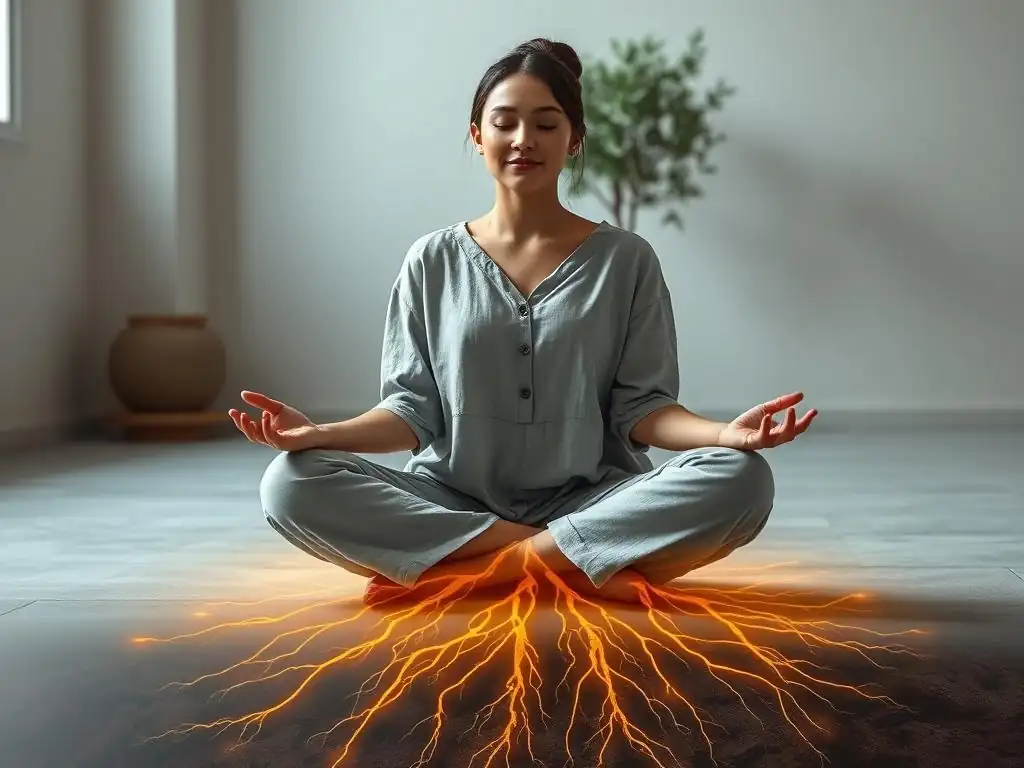
While yoga poses provide a physical anchor, visualization and meditation techniques offer mental pathways to grounding. Integrating these practices can deepen the effects of the physical postures, creating a more holistic approach to managing anxiety. Visualization involves creating mental images that evoke feelings of stability and presence, while meditation cultivates present-moment awareness without judgment. Combined with yoga grounding techniques for anxiety relief, these practices create a powerful synergy.
For example, during a pose like Child's Pose or Legs-Up-the-Wall, you can simultaneously visualize yourself rooted deeply into the earth or feeling completely supported and safe. Meditation practices, even just a few minutes of focused breathing or body scanning, train the mind to stay present and observe thoughts without getting carried away by them. These mental techniques complement the physical grounding of yoga beautifully.
Body Scan Meditation for Present Moment Awareness
A body scan meditation is a practice that involves bringing your attention to different parts of your body, systematically moving your awareness from head to toe or vice versa. The goal is not to change anything, but simply to notice the physical sensations present in each area – warmth, coolness, tingling, pressure, absence of sensation – without judgment. This practice is incredibly grounding because it anchors your awareness firmly in your physical body and the present moment experience.
By directing your attention internally and focusing on tangible physical sensations, you interrupt the cycle of worrying thoughts that fuel anxiety. It helps you become more aware of where you hold tension in your body, allowing you to consciously release it. Regularly practicing body scan meditation, perhaps before or after your yoga practice, can improve your overall body awareness and capacity for present-moment focus, enhancing the effectiveness of your yoga grounding techniques for anxiety relief.
Grounding Visualizations: Roots Anchoring to the Earth
Visualizations can be a powerful tool to enhance the feeling of grounding, especially when combined with standing or seated yoga poses. A common and effective visualization involves imagining yourself as a sturdy tree. As you stand in Mountain Pose or Tree Pose, visualize strong, thick roots extending from the soles of your feet deep into the earth below. Feel these roots anchoring you firmly, drawing up stability and nourishment from the ground.
Alternatively, in any seated or lying pose, you can visualize yourself sinking heavily into the support beneath you – the floor, a cushion, or the wall. Imagine your body becoming heavy and solid, connected to the earth's gravitational pull. This mental image reinforces the physical sensation of being supported and stable, counteracting the airy, disconnected feeling that often accompanies anxiety. Integrating these visualizations enhances the mental aspect of your yoga grounding techniques for anxiety relief.
The Long-Term Benefits of Yoga for Grounding and Anxiety Management
Reducing Chronic Anxiety Through Consistent Practice
Consistent practice of yoga, particularly incorporating yoga grounding techniques for anxiety relief, can lead to a significant reduction in chronic anxiety over time. While a single yoga session can offer immediate relief, the cumulative effects of regular practice are profound. By repeatedly engaging the parasympathetic nervous system through mindful movement, breathwork, and present-moment awareness, you train your body and mind to respond to stress more effectively.
Over weeks and months, this consistent effort can lower your baseline anxiety levels. You may find that anxious thoughts occur less frequently, are less intense, and are easier to manage when they do arise. The physical tension often associated with chronic anxiety, such as tight shoulders or jaw, may also decrease. This shift isn't about eliminating anxiety entirely, but about building resilience and developing the capacity to navigate challenging emotions with greater ease and stability.
Improving Body Awareness and Self-Regulation
One of the key long-term benefits of yoga is enhanced body awareness (interoception). Through mindful movement and attention to physical sensations in poses, you become more attuned to the subtle signals your body sends. This includes recognizing the early signs of stress or anxiety – perhaps a tightening in the chest, a knot in the stomach, or shallow breathing – before they escalate into a full-blown panic response.
Increased body awareness directly supports self-regulation. By noticing these physical cues earlier, you can proactively apply grounding techniques or breathing exercises to manage your state. You develop a better understanding of what your body needs to feel safe and centered. This improved ability to read your body's signals and respond skillfully is a vital component of long-term anxiety management and is significantly cultivated through consistent yoga practice focused on grounding.
Cultivating a Sense of Inner Peace and Resilience
Beyond managing immediate anxiety symptoms, regular engagement with yoga grounding techniques helps to cultivate a deeper sense of inner peace and resilience. As you consistently practice anchoring yourself in the present moment and finding stability within your body, you build an inner reservoir of calm. This inner peace isn't dependent on external circumstances but arises from your capacity to connect with your inner resources.
Resilience is your ability to bounce back from challenges. By navigating difficult poses with patience, accepting moments of imbalance, and consistently returning to your breath, you train your mind to approach life's difficulties with greater equanimity. Yoga teaches you that you possess the tools within you to find stability and peace, even when faced with uncertainty. This cultivated sense of inner strength and resilience is perhaps the most enduring benefit of incorporating yoga grounding techniques for anxiety relief into your life.
Additional Resources for Anxiety Relief and Mental Well-being
- Exploring the link between breath and stress relief in yoga.
- Gentle yoga sequences for calming an overactive mind.
- Using restorative yoga to support emotional healing.
- The role of meditation in complementing yoga for mental health.
Links to Mental Health Organizations
Frequently Asked Questions
What are Yoga grounding techniques and how can they help with anxiety?
Yoga grounding techniques are practices designed to connect you to the present moment and the earth. They help reduce anxiety by shifting your focus away from anxious thoughts and anchoring you in your body.
How does the "Mountain Pose" specifically contribute to anxiety relief?
Mountain Pose (Tadasana) promotes physical stability and awareness of your body's alignment. This awareness encourages a sense of calm and centeredness, which can counteract feelings of anxiety.
Can Yoga grounding techniques be practiced anywhere, or do I need a special space?
Yoga grounding techniques are highly accessible and can be practiced virtually anywhere. You don't need special equipment or a dedicated space; just a few moments of mindful awareness.
How often should I practice Yoga grounding techniques to experience anxiety relief?
The frequency depends on your individual needs, but even short, regular practices can be beneficial. Aim for a few minutes daily, or whenever you feel anxiety rising.
Are there any potential risks or considerations when using Yoga grounding techniques for anxiety?
While generally safe, people with certain physical limitations should consult with a doctor before starting. It is also important to remember that Yoga is not a substitute for professional mental health treatment.
Final Reflection: Finding Your Center in a Chaotic World
The pursuit of grounding techniques, particularly through yoga, is more vital now than ever before. In a world saturated with information, demands, and anxieties, the ability to find inner stillness and cultivate a sense of centeredness is not a luxury, but a necessity for navigating the complexities of modern life. The techniques explored in this article – from mindful breathing exercises to grounding poses – offer a practical pathway to reclaiming your equilibrium and fostering resilience in the face of daily stressors.
The impact of incorporating these practices into my own life has been profound. The simple act of pausing, breathing deeply, and connecting with my body has become a powerful antidote to the overwhelming feelings of anxiety that often accompany a busy schedule. The time to repair the roof is when the sun is shining.
– John F. Kennedy. This quote resonates deeply because proactively building inner strength through grounding techniques is far more effective than reacting to anxiety once it has taken hold. It's about preventative self-care, a crucial element often overlooked in our fast-paced society.
Now, I invite you to integrate these yoga grounding techniques into your own daily routine. Begin with just five minutes of mindful breathing, or try a simple grounding pose before bed. Observe the subtle shifts in your energy, your mood, and your overall sense of well-being. Remember, the journey to finding your center is a personal one, and even small, consistent steps can lead to significant and lasting changes. Embrace the power of presence, and discover the transformative potential of grounding yourself in the midst of life's storms.
Unleash Your Inner Calm: Start Your Grounding Journey Today!
Thanks for taking the time to explore the world of grounding yoga techniques with Mind Care Guide! We hope you've discovered some new ways to find peace and center yourself. Ready to deepen your practice?
- Prioritize one grounding pose: Choose your favorite from the article and dedicate 5 minutes each day to it. Notice the difference it makes in your energy levels and mental clarity.
- Share your experience: Tell us (and others!) which pose resonated most with you in the comments below. Let's build a supportive community focused on inner peace.
- Explore a related practice: Consider trying meditation or mindful breathing to complement your grounding yoga routine.
What small step will you take today to cultivate more inner calm?