
Sleep Better Tonight: Tai Chi Techniques for Restful Sleep and a Calm Mind

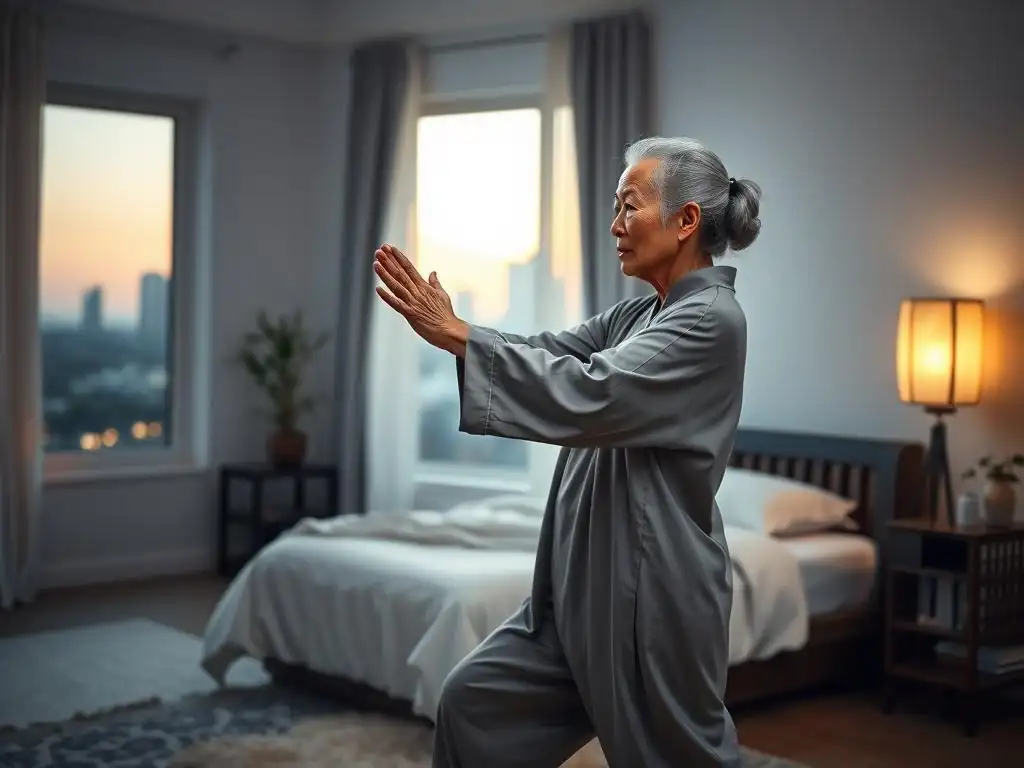
Welcome to Mind Care Guide, a space dedicated to nurturing your mental well-being.
Struggling to quiet your mind at night? You're not alone. Discover how the ancient practice of Tai Chi can offer surprising sleep problems relief. Dive into our guide and unlock the secrets to a more restful sleep and a calmer, more centered you. Intrigued? Let's explore the gentle power of Tai Chi together...
Sleep Better Tonight: Tai Chi Techniques for Restful Sleep and a Calm Mind
- Introduction: Tai Chi for Sleep – A Gentle Path to Restful Nights
- The Science Behind Tai Chi and Improved Sleep
- Specific Tai Chi Techniques for Sleep Enhancement
- Creating a Tai Chi Sleep Routine: A Step-by-Step Guide
- Addressing Common Sleep Challenges with Tai Chi
- Tips for Maintaining a Consistent Tai Chi Practice for Sleep
- Beyond Sleep: The Broader Benefits of Tai Chi for Mental Health
- Conclusion: Embracing Tai Chi for Lasting Sleep and a Calmer Mind
-
Frequently Asked Questions
- What is Tai Chi and how can it help with sleep problems?
- How does Tai Chi differ from other forms of exercise in addressing sleep issues?
- Are there specific Tai Chi techniques recommended for improving sleep quality?
- How long does it take to see improvements in sleep after starting Tai Chi?
- Are there any risks or precautions to consider before starting Tai Chi for sleep?
- Final Reflection: Finding Stillness, Finding Sleep
- Unlock Your Inner Calm: Start Sleeping Soundly Tonight
Introduction: Tai Chi for Sleep – A Gentle Path to Restful Nights
Understanding the Connection: Tai Chi, Mental Well-being, and Sleep Quality
The intricate relationship between mental well-being and sleep quality is well-established, forming a feedback loop where poor sleep can exacerbate mental health issues like anxiety and depression, and conversely, psychological distress can severely disrupt sleep patterns. Tai Chi, an ancient Chinese practice involving slow, deliberate movements, meditation, and deep breathing, offers a unique approach to address this connection.
It operates on the principle that physical health and mental clarity are interconnected, fostering a state of calm that is conducive to restful sleep. By engaging the body and mind in gentle, flowing exercises, Tai Chi helps to quiet the 'racing thoughts' that often keep individuals awake at night, thereby offering potential Tai chi sleep problems relief.
Research supports the notion that mind-body practices like Tai Chi can positively impact both mental health and sleep. Studies have shown improvements in sleep quality parameters, such as reduced sleep latency (time taken to fall asleep) and increased sleep efficiency (percentage of time spent asleep while in bed), among regular Tai Chi practitioners.
For instance, a meta-analysis published around 2013 reviewing multiple studies found that Tai Chi significantly improved sleep quality in older adults and patients with chronic conditions. This suggests that Tai Chi doesn't just help with surface-level relaxation but influences the underlying physiological and psychological factors contributing to sleep disturbances.
Why Choose Tai Chi for Sleep Problems Relief?
Choosing Tai Chi for Tai chi sleep problems relief presents a compelling alternative or complement to conventional methods. Unlike some sleep aids that may come with side effects or the potential for dependence, Tai Chi is a non-pharmacological, low-impact activity suitable for most age groups and fitness levels. It addresses sleep issues holistically by targeting common root causes like stress, anxiety, and a hyperactive nervous system, rather than just masking the symptoms. The practice cultivates a sense of peace and body awareness that extends beyond the practice session, influencing bedtime habits and overall sleep hygiene.
Furthermore, incorporating Tai Chi into a routine can provide long-term benefits for managing sleep disturbances. It empowers individuals with self-management tools, teaching techniques like mindful breathing and gentle movement that can be employed anytime, anywhere, especially when struggling to fall asleep or waking up during the night. This self-efficacy is crucial for sustainable Tai chi sleep problems relief, offering a gentle yet powerful path towards achieving consistently restful nights without relying solely on external interventions.
The Science Behind Tai Chi and Improved Sleep
How Tai Chi Reduces Stress and Anxiety: Modulation of the HPA Axis and Reduced Cortisol Levels
Stress and anxiety are primary culprits behind many sleep problems. Tai Chi has been shown to effectively reduce these psychological stressors, partly through its impact on the Hypothalamic-Pituitary-Adrenal (HPA) axis, the body's central stress response system. Chronic stress leads to the overactivation of the HPA axis, resulting in elevated levels of cortisol, often referred to as the "stress hormone." High cortisol levels, particularly at night, can interfere with the production of melatonin, the hormone that regulates sleep-wake cycles, making it difficult to fall asleep and stay asleep.
Regular Tai Chi practice helps to modulate the HPA axis, promoting a more balanced stress response. Studies, including some involving older adults with moderate sleep disturbances, have indicated that participants who practiced Tai Chi showed reduced levels of cortisol compared to control groups. This reduction in cortisol, especially in the evening, helps to create a biochemical environment more conducive to sleep onset and maintenance, contributing significantly to Tai chi sleep problems relief. The slow, meditative movements and focused breathing inherent in Tai Chi act as a natural antidote to the 'fight or flight' response triggered by stress.
Tai Chi's Impact on the Nervous System: Increased Parasympathetic Activity and Heart Rate Variability
Beyond hormonal regulation, Tai Chi significantly influences the autonomic nervous system (ANS), which controls involuntary bodily functions like heart rate, breathing, and digestion. The ANS has two main branches: the sympathetic nervous system (responsible for the 'fight or flight' response) and the parasympathetic nervous system (responsible for the 'rest and digest' state). Sleep is primarily a parasympathetic activity. Chronic stress or anxiety can lead to sympathetic dominance, keeping the body in a state of alert that prevents relaxation and sleep.
Tai Chi practice encourages a shift towards increased parasympathetic activity. The slow, rhythmic movements and deep, controlled breathing stimulate the vagus nerve, a key component of the parasympathetic system. This stimulation helps to slow the heart rate, lower blood pressure, and promote a sense of calm.
Furthermore, Tai Chi has been shown to improve Heart Rate Variability (HRV), a measure of the variation in time between heartbeats. Higher HRV is generally associated with better ANS regulation, stress resilience, and improved sleep quality. By enhancing parasympathetic tone and HRV, Tai Chi helps the body transition into the relaxed state necessary for falling asleep and experiencing restorative sleep cycles, offering a direct pathway for Tai chi sleep problems relief.
Exploring the Mind-Body Connection: Tai Chi's Holistic Approach
Tai Chi's profound effect on sleep quality stems from its holistic approach, which explicitly recognizes and strengthens the intricate connection between the mind and body. The practice is not merely a physical exercise; it's a moving meditation that requires focused attention on posture, movement, and breath. This integration of physical movement with mental focus helps to quiet the incessant 'chatter' in the mind that often prevents sleep. By bringing awareness to the present moment and the sensations within the body, Tai Chi helps individuals detach from worries about the past or future, which are common sources of bedtime anxiety.
This deep engagement with the present moment, cultivated through Tai Chi, fosters a state of mindfulness. Mindfulness, in turn, has been shown to reduce rumination and worry, two significant barriers to sleep. The gentle, flowing movements release physical tension stored in the muscles, while the meditative aspect calms the nervous system.
This dual action – releasing physical tightness and calming mental agitation – creates an optimal state for sleep, embodying the core principle of Tai chi sleep problems relief through mind-body harmony. It's this comprehensive approach that distinguishes Tai Chi from practices that only address physical or mental aspects in isolation.
Specific Tai Chi Techniques for Sleep Enhancement
Breathing Exercises for Relaxation and Sleep Onset
Diaphragmatic Breathing: The Foundation of Tai Chi Sleep Benefits
Diaphragmatic breathing, also known as abdominal breathing, is a fundamental technique in Tai Chi and a powerful tool for promoting relaxation and sleep onset. Unlike shallow chest breathing, which can signal stress, diaphragmatic breathing involves engaging the diaphragm, a large muscle located below the lungs, to draw air deep into the abdomen. This type of breathing maximizes oxygen intake and triggers the body's relaxation response by stimulating the vagus nerve. Practicing diaphragmatic breathing before bed signals to the body that it is safe to relax and transition towards sleep.
To practice diaphragmatic breathing for sleep, find a comfortable position, either sitting or lying down. Place one hand on your chest and the other on your abdomen, just below your rib cage. Inhale slowly and deeply through your nose, feeling your abdomen expand as air fills your lungs. Your chest should remain relatively still.
Exhale slowly through your mouth, gently contracting your abdominal muscles to push the air out. Focus on the rise and fall of your abdomen with each breath. Aim for slow, even breaths, perhaps inhaling for a count of four and exhaling for a count of six. This simple practice, even for just 5-10 minutes, can significantly calm the nervous system and pave the way for restful sleep, offering a direct contribution to Tai chi sleep problems relief.
Counting Breaths: A Simple Technique for Calming the Mind
Counting breaths is a simple yet effective meditative technique often incorporated into Tai Chi practice that is excellent for quieting a busy mind before sleep. When the mind is racing with thoughts, focusing on the breath provides an anchor to the present moment, helping to interrupt cycles of worry and rumination. This technique enhances the benefits of diaphragmatic breathing by adding a layer of mental focus.
To practice counting breaths, assume a comfortable position and begin diaphragmatic breathing. As you exhale, silently count "one." On the next exhale, count "two," and so on, up to "ten." Once you reach ten, start over from "one."
If your mind wanders and you lose count, simply acknowledge the distraction without judgment and gently return your focus to your breath, starting the count again from "one." This repetitive, gentle mental task occupies the part of the brain that might otherwise be generating anxious thoughts, allowing the body to relax and prepare for sleep. Practicing counting breaths for 10-15 minutes before bed can be a powerful strategy for achieving Tai chi sleep problems relief by calming mental noise.
Gentle Movements to Promote Sleep Readiness
Warm-up Exercises: Preparing the Body for Restful Sleep
Before engaging in specific Tai Chi postures for sleep, performing gentle warm-up exercises helps to release physical tension and prepare the body for relaxation. These warm-ups are typically slow, fluid movements that increase circulation and gently stretch muscles and joints without causing strain. Examples include gentle neck rotations, shoulder circles, torso twists, and hip circles. These movements are performed slowly and mindfully, coordinated with the breath.
The purpose of these warm-ups isn't to get the heart rate up or build heat, but rather to loosen stiff areas and bring awareness to the body. Releasing physical tension held in the muscles, often a result of stress or prolonged sitting, is crucial for achieving a state of relaxation necessary for sleep. By gently moving the body and focusing on the sensations, these warm-ups help transition from the day's activities to a more relaxed, introspective state, setting the stage for effective Tai chi sleep problems relief through subsequent practices.
Tai Chi Postures for Sleep: Cloud Hands (Promotes Relaxation) and Parting the Wild Horse's Mane (Calms the Mind)
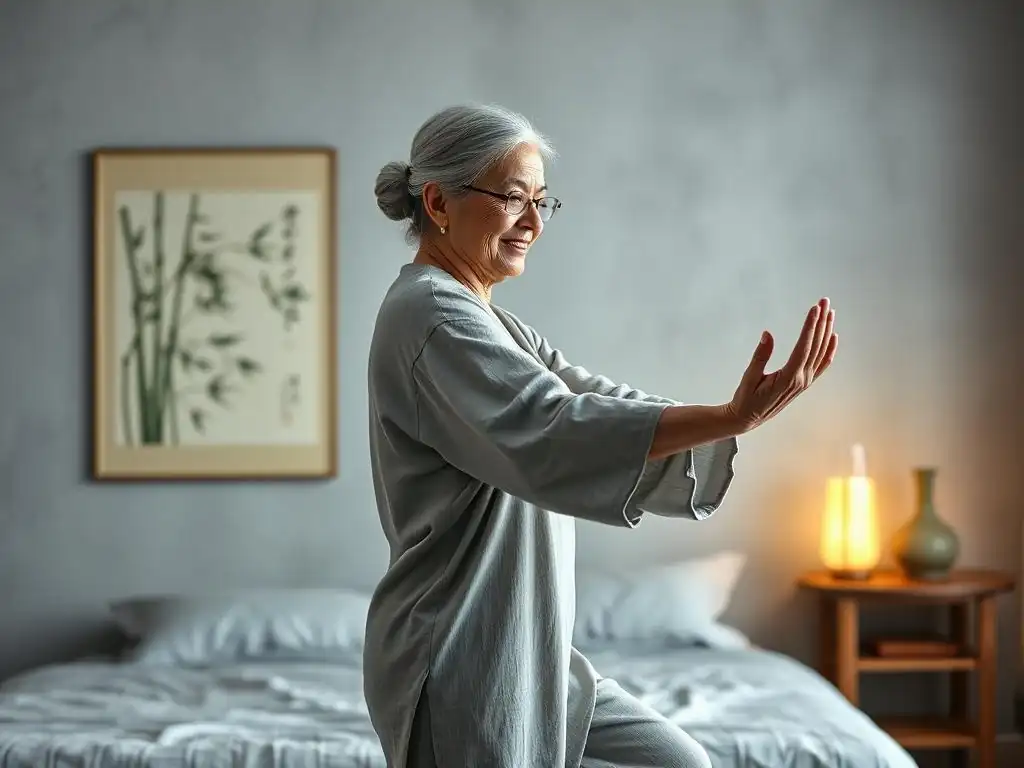
Certain Tai Chi postures are particularly beneficial for promoting relaxation and calming the mind before sleep. Two classic examples are "Cloud Hands" and "Parting the Wild Horse's Mane." Cloud Hands is a foundational movement involving slow, circular arm movements coordinated with gentle weight shifts from one leg to the other. The movement is continuous and flowing, resembling clouds drifting across the sky. This posture promotes relaxation by encouraging fluidity in the upper body and shoulders, areas where tension is often held. The rhythmic, repetitive nature of Cloud Hands is inherently calming and meditative, helping to quiet mental activity.
Parting the Wild Horse's Mane is another fundamental posture involving coordinated arm movements and a step forward. While slightly more complex than Cloud Hands, it is performed slowly and deliberately. This posture helps to calm the mind by requiring focused attention on the coordination of movement, breath, and weight transfer. The expansive yet controlled movements help to release blocked energy and promote a sense of ease. Practicing these postures gently and mindfully for 10-15 minutes before bed can significantly reduce physical and mental tension, making them excellent techniques for Tai chi sleep problems relief.
Mental Cultivation Techniques for a Calm Mind Before Bed
Mindfulness Meditation in Tai Chi: Achieving Inner Peace
Mindfulness is a cornerstone of Tai Chi practice and a powerful tool for achieving inner peace conducive to sleep. Within Tai Chi, mindfulness is cultivated by paying non-judgmental attention to the present moment – the sensations in the body, the rhythm of the breath, and the flow of movement. This practice of present-moment awareness helps to anchor the mind and prevent it from dwelling on worries or anxieties that can interfere with sleep.
Regularly practicing mindfulness within the context of Tai Chi teaches the mind to become less reactive to thoughts and feelings. Instead of getting caught up in a spiral of anxious thinking about sleep (e.g., "What if I can't fall asleep tonight? "), the practitioner learns to observe these thoughts without engaging with them, gently returning attention to the breath or movement. This mental discipline is invaluable for calming the mind before bed, reducing sleep-onset latency, and improving overall sleep quality, contributing significantly to Tai chi sleep problems relief.
Visualization Techniques: Guiding Your Mind Towards Sleep
Visualization is another mental technique that can be integrated with Tai Chi principles to guide the mind towards a state ready for sleep. While not always explicitly taught as a separate step within a Tai Chi form, the practice cultivates a focused, calm mental state that makes visualization easier and more effective. Before bed, after or during a gentle Tai Chi session, one can use visualization to promote relaxation and sleep.
A common visualization technique involves imagining a peaceful, calming scene, such as a serene beach, a tranquil forest, or a quiet meadow. Engage all senses in the visualization – imagine the gentle sound of waves, the feel of soft sand, the scent of pine trees, or the warmth of sunlight.
Another technique is to visualize tension leaving the body with each exhale, perhaps as a dark cloud dissipating, replaced by lightness and relaxation with each inhale. By actively directing the mind towards peaceful imagery, visualization helps to quiet anxious thoughts and create a mental environment conducive to falling asleep, enhancing the benefits of Tai chi sleep problems relief.
Creating a Tai Chi Sleep Routine: A Step-by-Step Guide
Setting the Stage: Creating a Peaceful Sleep Environment
Creating a peaceful sleep environment is a crucial first step in developing an effective Tai Chi sleep routine. The physical space where you prepare for sleep significantly impacts your ability to relax and fall asleep. This involves minimizing distractions and optimizing comfort. Ensure your bedroom is dark, quiet, and cool – generally recommended to be between 60-67°F (15-19°C). Remove electronic devices that emit blue light, which can interfere with melatonin production.
Consider elements like comfortable bedding, blackout curtains, or earplugs if needed. The goal is to create a sanctuary dedicated to rest and relaxation. Performing your gentle Tai Chi exercises in or near this peaceful environment can help train your body and mind to associate the space with calm and sleep readiness, reinforcing the effectiveness of Tai chi sleep problems relief techniques. This prepares both your internal state and external surroundings for a successful transition to sleep.
The Ideal Time for Tai Chi Before Bed: 1-2 Hours Before Sleep
Timing is important when incorporating Tai Chi for sleep enhancement. While daytime practice has cumulative benefits for stress reduction and overall well-being, a dedicated session specifically for promoting sleep is best performed 1-2 hours before your intended bedtime. This allows sufficient time for the calming effects of the practice to settle in without making you overly alert right before you lie down.
Practicing Tai Chi in this timeframe helps to wind down from the day's activities and mentally prepare for rest. It provides a buffer period between the demands of the evening (like finishing chores or spending time with family) and the transition to sleep. A session lasting 20-30 minutes during this window can significantly reduce mental and physical tension, making it easier to fall asleep when you finally get into bed, maximizing the potential for Tai chi sleep problems relief.
Sample Tai Chi Sleep Sequence: A Practical Guide
Here is a sample sequence combining elements of Tai Chi and related practices that can be performed as part of a bedtime routine for Tai chi sleep problems relief:
- Gentle Warm-up (5 minutes): Begin with slow, mindful movements like neck rolls, shoulder circles, and gentle torso twists. Focus on releasing tension in key areas.
- Diaphragmatic Breathing (5-10 minutes): Sit or lie comfortably and practice deep, abdominal breathing, focusing on the rise and fall of your abdomen. Optionally, incorporate counting breaths.
- Selected Gentle Tai Chi Postures (10-15 minutes): Perform a few simple, flowing movements like Cloud Hands or Parting the Wild Horse's Mane. Focus on slow, continuous motion coordinated with your breath. Perform each posture several times, moving with intention but without strain.
- Standing or Sitting Meditation (5-10 minutes): Conclude with a period of quiet standing or sitting meditation. Focus on your breath or bodily sensations. If using visualization, do so during this time.
- Final Relaxation (Optional, 5 minutes): Lie down in bed and take a few more deep breaths, allowing your body to sink into the mattress. Release any remaining tension.
This sequence, performed consistently, can train your body and mind to associate these actions with winding down and preparing for sleep, providing effective Tai chi sleep problems relief.
Addressing Common Sleep Challenges with Tai Chi
Tai Chi for Insomnia Relief: Focused Breathing and Gentle Movement
Insomnia, characterized by difficulty falling or staying asleep, is often exacerbated by a hyperactive mind and physical tension. Tai Chi offers a multi-pronged approach for insomnia relief by directly addressing these root causes. The focused breathing techniques, such as diaphragmatic breathing and counting breaths, help to quiet the racing thoughts and anxiety that frequently accompany the inability to fall asleep. By shifting attention to the breath, the mind becomes less engaged in worry loops.
Simultaneously, the gentle, flowing movements of Tai Chi release physical tension stored in the body. When the body is relaxed, it sends signals to the brain that it is safe to rest. Combining focused breathing with gentle movement creates a state of profound relaxation that counteracts the physiological arousal associated with insomnia. Regular practice builds resilience against the stress and anxiety that can trigger insomnia episodes, offering sustainable Tai chi sleep problems relief.
Overcoming Nighttime Anxiety with Tai Chi Practices
Nighttime anxiety, where worries escalate as bedtime approaches or awaken someone during the night, is a significant barrier to restful sleep. Tai Chi is particularly effective in managing this type of anxiety due to its emphasis on mindfulness and calming the nervous system. The practice teaches individuals to observe anxious thoughts and feelings without getting overwhelmed by them, a crucial skill when faced with nighttime worries.
Techniques like mindful breathing and gentle, repetitive movements provide an anchor in the present moment, diverting attention away from anxious rumination. The practice also helps to regulate the autonomic nervous system, reducing the physiological symptoms of anxiety, such as a racing heart or shallow breathing. By cultivating a calm, centered state of mind and body, Tai Chi empowers individuals to navigate nighttime anxiety more effectively, promoting a quicker return to sleep or preventing anxiety from escalating before bed, thereby providing valuable Tai chi sleep problems relief.
Tai Chi for Jet Lag and Shift Work Sleep Disruption
Adjusting sleep schedules due to jet lag or shift work poses unique challenges to the body's natural circadian rhythm. While Tai Chi isn't a magic bullet for instantly resetting your internal clock, it can significantly help manage the associated symptoms and promote sleep readiness during off-cycle times, offering Tai chi sleep problems relief in challenging circumstances. The practice helps to reduce the stress and disorientation that often accompany circadian disruption.
Performing gentle Tai Chi movements and breathing exercises at appropriate times can help signal to your body that it's time to wind down or wake up. For instance, a gentle session before an off-cycle sleep period can promote relaxation and make it easier to fall asleep despite your body's confusion. Conversely, a slightly more invigorating (but still gentle) session upon waking can help improve alertness. The stress-reducing benefits also help the body cope better with the physiological strain of adjusting to new schedules, facilitating a smoother transition and improving the quality of sleep obtained.
Tips for Maintaining a Consistent Tai Chi Practice for Sleep
Finding a Qualified Tai Chi Instructor: Importance of Proper Guidance
While many basic Tai Chi movements and breathing exercises can be learned from online resources or books, finding a qualified Tai Chi instructor is highly recommended, especially when seeking Tai chi sleep problems relief. An experienced instructor can provide personalized guidance, correct your posture and movements to prevent injury, and help you understand the underlying principles of the practice. They can also offer variations or modifications tailored to your specific needs or physical limitations.
Learning from an instructor ensures you are performing the techniques correctly to maximize their benefits for sleep and overall well-being. They can also guide you on integrating mindfulness and breathing effectively within the movements. While self-practice is valuable, initial guidance from a professional can establish a strong foundation and make your Tai Chi journey safer and more effective for achieving restful sleep.
Integrating Tai Chi into Your Daily Life: Making it a Habit
Consistency is key to reaping the full benefits of Tai Chi for sleep problems relief. Integrating the practice into your daily routine, even for short periods, is more effective than infrequent, lengthy sessions. Aim to make Tai Chi a regular habit, perhaps practicing for 15-30 minutes each day, with a specific focus on the bedtime routine session.
Consider scheduling your Tai Chi practice like any other important appointment. You might practice in the morning to start the day with calm energy, and again in the evening as part of your wind-down routine. Even practicing for 5-10 minutes during a break at work or in the afternoon can help manage stress throughout the day, contributing to better sleep at night. The more consistently you practice, the more deeply the calming effects will become ingrained, providing more profound and lasting Tai chi sleep problems relief.
Monitoring Your Progress: Tracking Sleep Quality and Well-being
To understand the impact of Tai Chi on your sleep, it can be helpful to monitor your progress. Keep a simple sleep diary where you track your bedtime, wake-up time, estimated sleep duration, how long it took to fall asleep, and how rested you feel upon waking. Note down when you practiced Tai Chi and for how long.
Additionally, track your overall well-being, including stress levels, mood, and energy levels. Over time, you may start to see patterns emerging, noticing that on days or weeks you are consistent with your Tai Chi practice, your sleep quality improves, and your stress levels decrease. This data can be incredibly motivating and help you fine-tune your Tai Chi routine for optimal Tai chi sleep problems relief.
Beyond Sleep: The Broader Benefits of Tai Chi for Mental Health
Tai Chi for Stress Management and Emotional Regulation
While this article focuses on Tai chi sleep problems relief, it's important to recognize that Tai Chi offers extensive benefits for overall mental health, particularly in stress management and emotional regulation. The slow, deliberate movements and focused breathing help to activate the parasympathetic nervous system, counteracting the body's stress response. Regular practice lowers baseline stress levels and improves the body's ability to recover from stressful situations.
Furthermore, the mindfulness aspect of Tai Chi teaches individuals to observe their thoughts and emotions without judgment. This non-reactive awareness is crucial for emotional regulation, allowing practitioners to respond to challenging feelings with greater calm and clarity rather than being overwhelmed by them. This enhanced capacity for stress management and emotional regulation contributes significantly to improved mental well-being beyond just better sleep.
Tai Chi for Improved Focus and Cognitive Function
The meditative nature of Tai Chi also has positive effects on cognitive function, including improved focus and concentration. The practice requires sustained attention to posture, movement, and breath, training the mind to stay present and minimize distractions. This mental discipline translates into improved ability to focus on tasks in daily life.
Studies have suggested that regular Tai Chi practice can enhance executive functions, such as attention span, working memory, and cognitive flexibility. For instance, research involving older adults has shown improvements in cognitive test scores after participating in Tai Chi programs. This cognitive enhancement, alongside stress reduction and improved sleep, contributes to a clearer, more focused mind throughout the day.
Tai Chi as a Holistic Approach to Mental Wellness
Ultimately, Tai Chi serves as a powerful holistic approach to mental wellness. It doesn't isolate mental health from physical health but rather integrates them into a unified system. By simultaneously addressing physical tension, calming the nervous system, regulating stress hormones, and cultivating mindfulness, Tai Chi promotes a state of balance and harmony that supports overall psychological well-being.
Embracing Tai Chi means adopting a lifestyle practice that nurtures both the mind and body. It provides tools for self-care, resilience, and inner peace that extend far beyond the mat. For those seeking Tai chi sleep problems relief, they often find that the practice offers a pathway not just to better sleep, but to a calmer, more balanced, and more resilient state of mental health in general.
Conclusion: Embracing Tai Chi for Lasting Sleep and a Calmer Mind
Embracing Tai Chi offers a gentle, accessible, and powerful path towards lasting sleep and a calmer mind. This ancient practice, rooted in the principles of mind-body harmony, provides effective Tai chi sleep problems relief by addressing the underlying causes of sleep disturbances, such as stress, anxiety, and a hyperactive nervous system. Through focused breathing, gentle movements, and mental cultivation techniques like mindfulness and visualization, Tai Chi helps quiet the racing thoughts and physical tension that often prevent restful sleep.
Integrating Tai Chi into your bedtime routine, ideally 1-2 hours before sleep, creates a dedicated time for winding down and preparing your body and mind for rest. Consistent practice, guided by a qualified instructor if possible, builds resilience against daily stressors and strengthens the body's natural ability to relax and fall asleep.
Beyond the immediate benefits for sleep, Tai Chi enhances stress management, emotional regulation, and cognitive function, contributing to overall mental wellness. By making Tai Chi a regular part of your life, you invest in a holistic practice that nurtures both your physical and psychological health, paving the way for consistently peaceful nights and a more tranquil state of being.
Frequently Asked Questions
What is Tai Chi and how can it help with sleep problems?
Tai Chi is a gentle form of exercise that combines meditation and slow, flowing movements. It can help with sleep problems by reducing stress, promoting relaxation, and improving overall well-being.
How does Tai Chi differ from other forms of exercise in addressing sleep issues?
Unlike high-impact exercises, Tai Chi is low impact and focuses on mind-body connection. This makes it a suitable option for people of all ages and fitness levels, particularly those seeking a calming approach to sleep improvement.
Are there specific Tai Chi techniques recommended for improving sleep quality?
Yes, certain Tai Chi forms are specifically designed to promote relaxation and reduce anxiety. Focusing on deep breathing, mindful movement, and visualization can be particularly beneficial for improving sleep quality.
How long does it take to see improvements in sleep after starting Tai Chi?
While individual results may vary, many people experience noticeable improvements in their sleep quality within a few weeks of practicing Tai Chi regularly. Consistency is key to achieving lasting benefits.
Are there any risks or precautions to consider before starting Tai Chi for sleep?
Tai Chi is generally safe, but it's important to consult with your doctor before starting any new exercise program, especially if you have pre-existing health conditions. Also, find a qualified instructor to learn proper techniques.
Final Reflection: Finding Stillness, Finding Sleep
The pursuit of restful sleep is a universal human experience, and the escalating rates of sleep disorders highlight the urgent need for effective, holistic solutions. The rising tide of stress and anxiety in modern life makes finding peace and quiet before bed a significant challenge, impacting our physical and mental well-being. This is where the ancient practice of Tai Chi offers a powerful, yet often overlooked, remedy.
The gentle movements and mindful focus inherent in Tai Chi have profoundly impacted my own sleep patterns, shifting my relationship with rest from a struggle to a sanctuary. The practice cultivates a sense of calm and centeredness that extends far beyond the mat, permeating my daily life and creating a more peaceful internal landscape. As Lao Tzu wisely observed, Nature does not hurry, yet everything is accomplished.
This philosophy, embodied in the slow, deliberate movements of Tai Chi, allows the body and mind to unwind naturally, preparing the way for deeper, more restorative sleep.
Now, consider your own relationship with sleep. Are you consistently achieving the restful slumber your body and mind crave? I invite you to explore the gentle art of Tai Chi, to discover the profound connection between mindful movement, inner peace, and the sweet embrace of a truly restful night's sleep. Even incorporating just a few minutes of Tai Chi before bed can make a noticeable difference. Begin your journey towards a calmer mind and a better night's sleep – your well-being awaits.
Unlock Your Inner Calm: Start Sleeping Soundly Tonight
Thanks for taking the time to explore the power of Tai Chi for better sleep! We hope you found valuable insights into how these gentle movements can transform your nights. Now it's time to put those insights into action.
- Begin your Tai Chi journey tonight: Start with the Sun Salutation sequence outlined in the article – even 5 minutes can make a difference. Focus on the slow, deliberate movements and your breath.
- Share your experience: Let others know about your journey to better sleep – share this article with friends or family who might benefit from the techniques. Discuss your experience in the comments below!
- Explore a local Tai Chi class: Many communities offer introductory Tai Chi classes. Search online for options near you and take the first step towards a consistent practice.
Ready to embrace a more peaceful, restful night? What small step will you take today to improve your sleep?