
The Social Media Comparison Trap: Protecting Your Mental Peace

Welcome to Mind Care Guide, your sanctuary for navigating the complexities of mental well-being.
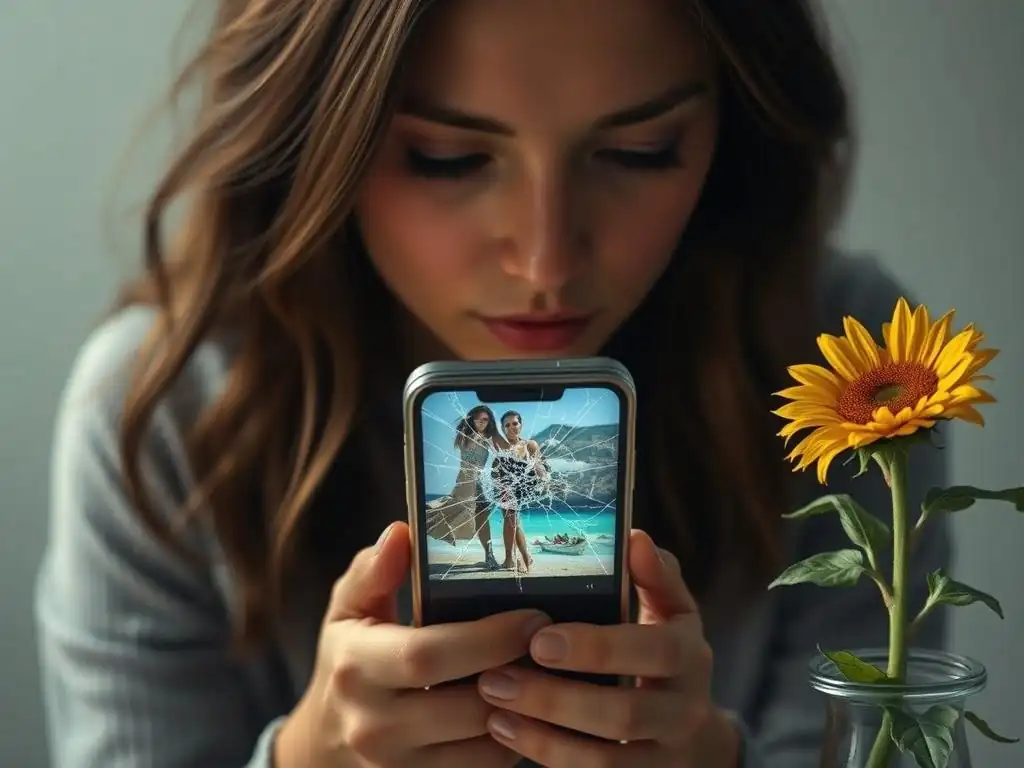
Ever feel that nagging sense of inadequacy after scrolling through social media? You're not alone. Dive into "The Social Media Comparison Trap: Protecting Your Mental Peace" to understand the profound social media comparison impact and discover practical strategies to reclaim your mental peace in an increasingly connected world. Let's explore how to build a healthier relationship with social media, together.
Navigating the Social Media Landscape: Protecting Your Mental Well-being
- Introduction: Understanding Social Media's Impact
- Understanding Social Comparison
- Negative Impacts of Social Media Comparison
- Recognizing Problematic Social Media Usage
- Strategies for Protecting Mental Health
- Building a Healthier Relationship with Social Media
- Resources
- Conclusion: Cultivating Self-Acceptance
-
Frequently Asked Questions
- How does social media comparison specifically impact mental well-being?
- What are some common signs that I'm falling into the social media comparison trap?
- What practical steps can I take to reduce the negative impact of social media comparison?
- Are there any strategies for reframing my perspective when I find myself comparing myself to others on social media?
- When should I seek professional help if social media comparison is severely affecting my mental health?
- Final Reflection: Reclaiming Your Peace in the Digital Age
- Unleash Your Authentic Self: Break Free from Social Media Comparisons
Social media platforms have become deeply integrated into the daily lives of young adults, particularly college and university students. These platforms serve as primary channels for communication, information sharing, and social connection. Data from various studies consistently shows high engagement rates; for example, reports often indicate that upwards of 90% of young adults aged 18-29 use social media, and many spend several hours on these platforms daily. This ubiquitous presence means that interactions, observations, and comparisons made online are a significant part of their social and emotional environment.
The sheer volume of content consumed and shared within these digital spaces creates a constant stream of information about peers' lives, achievements, and appearances. Students are navigating academic pressures, forming identities, and building new social networks, often with social media running in parallel to their real-world experiences.
This constant digital connection, while offering benefits like staying in touch with friends and family, also presents unique challenges related to self-perception and mental health, largely due to the inherent nature of comparing oneself to others' carefully curated online personas. Understanding this high level of engagement is crucial to appreciating the potential social media comparison impact on this demographic.
Social comparison, the act of evaluating oneself in relation to others, is a fundamental human behavior. However, the digital age has amplified this tendency dramatically. Social media platforms, designed to showcase highlights and best moments, create an environment ripe for upward social comparison – comparing oneself to those perceived as "better off." This constant exposure to idealized versions of reality can significantly affect a person's mental state, contributing to feelings of inadequacy, envy, and dissatisfaction with one's own life.
The unique aspect of the impact of social media comparison is its scale and frequency. Unlike traditional forms of comparison limited to immediate social circles, social media exposes individuals to a vast, often global, network of peers, influencers, and even strangers. This endless stream of potential comparison points can make it difficult to maintain a healthy perspective and appreciate one's own journey and accomplishments. Research suggests a clear link between increased social media use, particularly passive consumption that fuels comparison, and negative mental health outcomes such as heightened anxiety and depressive symptoms among young adults.
Social comparison theory, first proposed by psychologist Leon Festinger in 1954, posits that individuals have an innate drive to evaluate their own opinions and abilities by comparing themselves to others. This comparison helps us understand where we stand in relation to others and provides a basis for self-improvement and self-evaluation. There are generally two directions of comparison: upward social comparison, where we compare ourselves to those we perceive as superior, and downward social comparison, where we compare ourselves to those we perceive as less fortunate.
While traditional social comparison often occurred within limited, real-world contexts (like comparing grades with classmates or skills with colleagues), social media has fundamentally altered the landscape. Platforms present curated, often idealized, versions of reality, making upward comparison almost inevitable. The theory suggests that while upward comparison can sometimes be motivating, constant exposure to seemingly perfect lives online can lead to feelings of inadequacy, low self-esteem, and envy, amplifying the negative social media comparison impact. The theory remains highly relevant in explaining why users engage in comparison online and the psychological consequences that follow.
Social comparison on platforms like Instagram, Facebook, TikTok, and X (formerly Twitter) manifests in various ways. The most common is upward social comparison, where users compare their own lives, achievements, appearances, or possessions to those they view as better or more successful online. This could involve comparing one's academic progress to a peer's reported achievements, one's physical appearance to filtered selfies, or one's social life to photos of parties and events.
Downward social comparison also occurs, though perhaps less frequently in the context of negative mental health impacts from idealized feeds. Sometimes, seeing someone else's struggles online can temporarily boost one's own self-esteem, but the dominant experience on social media is exposure to carefully constructed "highlight reels." Another type is lateral social comparison, comparing oneself to peers perceived as similar. However, even lateral comparison online can become upward comparison if peers present idealized versions of their lives. The pervasive nature of upward comparison is a key factor behind the significant social media comparison impact on users' self-perception and mood.
Identifying Personal Triggers
Recognizing what specifically triggers negative feelings during social media use is a critical step in mitigating the social media comparison impact. Triggers vary widely from person to person. For one student, it might be seeing posts about academic achievements or internships that make them feel behind. For another, it could be images related to body image or lifestyle that spark feelings of dissatisfaction. Identifying these specific triggers requires mindful observation of one's emotional state while scrolling.
Ask yourself: What types of posts consistently make you feel anxious, sad, envious, or inadequate? Is it travel photos, career updates, relationship posts, or physical appearance-focused content? Keeping a brief mental note or even a physical journal for a few days can help reveal patterns.
For instance, a student might notice that scrolling through LinkedIn updates makes them feel stressed about their own career path, while scrolling through Instagram makes them feel bad about their social life. Pinpointing these specific comparison points allows for targeted strategies, such as unfollowing certain accounts or limiting exposure to particular types of content, thereby directly addressing the sources of negative comparison.
Anxiety and Feelings of Inadequacy
Constant exposure to the carefully curated lives of others on social media can significantly fuel anxiety and deep-seated feelings of inadequacy. When individuals, particularly young adults navigating identity formation, are bombarded with images and narratives of seemingly perfect lives – perfect bodies, perfect relationships, perfect careers – their own reality can feel lacking in comparison. This upward social comparison creates a perpetual state of feeling "not good enough."
Studies have shown a correlation between high social media use and increased levels of anxiety among college students. For example, research published in journals like the Journal of Social and Clinical Psychology has indicated that the more time students spend on social media, the higher their reported levels of anxiety and depressive symptoms, often linked directly to experiences of social comparison. A student might see peers effortlessly achieving academic success or enjoying vibrant social lives online, leading them to question their own efforts and feel inadequate about their own struggles, contributing heavily to the negative social media comparison impact.
Social media platforms are fertile ground for envy. Seeing others' successes, possessions, and experiences highlighted online can trigger feelings of resentment and longing for what others have. This "social media envy" is a distinct phenomenon that has been linked in numerous studies to increased symptoms of depression. The constant stream of positive updates from others can make one's own life feel mundane or unsuccessful by comparison, fostering a sense of being left out or falling behind.
Research from institutions like the University of Houston has explored the link between Facebook use, envy, and depression, finding that envy mediated the relationship between time spent on the platform and depressive symptoms. When a student scrolls through feeds filled with vacation photos, engagement announcements, or job offer celebrations while they are struggling with coursework or feeling lonely, the resulting envy can be profound and contribute to feelings of hopelessness and sadness, demonstrating a significant negative social media comparison impact.
Body Image Issues and Unrealistic Expectations
Social media's emphasis on visual content makes it a major contributor to body image concerns and the formation of unrealistic beauty standards. Platforms like Instagram are saturated with highly filtered, edited, and carefully posed images that present unattainable ideals. Comparing one's own natural appearance to these manufactured images can lead to significant dissatisfaction with one's body.
This constant exposure can distort perceptions of what is normal or achievable, creating immense pressure to conform to unrealistic standards. Studies have consistently shown a link between social media use, particularly the consumption of appearance-focused content, and increased body dissatisfaction, disordered eating behaviors, and negative self-esteem among young people.
For instance, a study might find that female college students who spend more time viewing idealized body images online report higher levels of body dissatisfaction compared to those who spend less time or view different content. This direct social media comparison impact on body image is a serious mental health concern.
Fear of Missing Out (FOMO)
Fear of Missing Out, or FOMO, is a pervasive anxiety triggered by the belief that others are having rewarding experiences from which one is absent. Social media, with its constant updates on social events, parties, and gatherings, is a primary driver of FOMO. Seeing friends or acquaintances enjoying activities without you can lead to feelings of exclusion, loneliness, and dissatisfaction with one's current situation.
FOMO is closely tied to social comparison, as the fear stems from comparing one's own current, perhaps uneventful, situation to the exciting activities others are posting about. This can lead to compulsive checking of social media, a need to constantly be "in the know," and a diminished ability to enjoy one's own present moment.
Research indicates that FOMO is associated with lower mood and life satisfaction, particularly among young adults who are highly engaged with social media. The feeling that "everyone else is having fun" while you are not is a direct consequence of the social media comparison impact on perceived social inclusion.
Decreased Self-Esteem
Ultimately, the cumulative effect of constant upward social comparison, fueled by anxiety, envy, body image issues, and FOMO, is often a significant decrease in self-esteem. When individuals repeatedly compare their authentic, often messy, lives to the polished highlight reels of others, they are likely to find themselves coming up short. This repeated negative self-evaluation erodes confidence and self-worth.
The relentless exposure to perceived success and happiness online can make individuals feel inadequate, unsuccessful, and less valuable than their peers. This is particularly harmful during formative years like those spent in college, where identity and self-worth are actively being shaped. The negative social media comparison impact on self-esteem can affect academic performance, social interactions, and overall life satisfaction, creating a cycle where low self-esteem might even drive more compulsive social media use in an attempt to feel connected or validated, further exacerbating the problem.
One of the most straightforward indicators of potentially problematic social media usage, often linked to comparison issues, is the sheer amount of time spent on these platforms. While there's no universally agreed-upon definition of "excessive," spending several hours daily scrolling through feeds, often aimlessly, can signal a problem. This is time that could be spent on other activities beneficial for mental health, such as exercise, hobbies, in-person social interactions, or academic work.
If a student finds themselves spending three, four, or even more hours a day on social media, often without a specific purpose other than browsing others' content, it's worth examining the underlying reasons and the impact it's having. This excessive time commitment leaves ample opportunity for upward comparison, increasing the likelihood of experiencing the negative social media comparison impact such as anxiety and dissatisfaction. Tracking screen time using built-in phone features or external apps can provide objective data on usage patterns.
Constant Monitoring of Others' Activities
A key behavior associated with problematic social media use centered around comparison is the compulsive need to monitor the activities of others. This goes beyond casual browsing and involves actively seeking out updates from specific individuals or groups, often driven by curiosity, envy, or a fear of missing out. This might manifest as repeatedly checking the profiles of peers, ex-partners, or perceived rivals to see what they are doing, who they are with, and how successful or happy they appear to be.
This constant monitoring is a direct manifestation of the drive to compare and can become an obsessive habit. It fuels the negative cycle by providing a continuous stream of potential comparison points, many of which are likely to trigger feelings of inadequacy or envy. Recognizing this behavior – the urge to check specific profiles or constantly refresh feeds to see what others are up to – is crucial in identifying the extent of the social media comparison impact on one's daily thoughts and feelings.
A significant red flag indicating that social media usage might be problematic and linked to comparison issues is consistently experiencing negative emotions after using the platforms. Instead of feeling connected or entertained, individuals might feel anxious, sad, jealous, frustrated, or simply worse about themselves and their own lives after scrolling through their feeds. This immediate shift in mood is a strong indicator that the content consumed, particularly content that triggers comparison, is detrimental.
If a student notices that they frequently close an app feeling deflated, inadequate, or envious of others, it's a clear sign that their social media use pattern, likely involving significant social comparison, is having a negative social media comparison impact on their mental health. Paying attention to this emotional aftermath is more telling than just the amount of time spent online. It highlights the qualitative experience of using social media and whether it's contributing to distress rather than positive engagement.
Neglecting Real-Life Relationships
Problematic social media usage, often driven by the need to compare or present a certain image online, can lead to the neglect of real-life relationships. This can manifest in several ways: choosing to spend time scrolling alone rather than socializing with friends or family, being physically present with others but constantly distracted by phone notifications, or prioritizing online interactions and validation over face-to-face connections.
When the digital world and the comparisons it fosters become more compelling or consuming than interactions in the physical world, it can lead to social isolation, despite feeling "connected" online. Real-life relationships provide crucial social support, empathy, and nuanced interactions that are often missing from online exchanges. Neglecting these vital connections due to excessive or comparison-driven social media use is a significant sign of a problematic relationship with technology and underscores the broader social media comparison impact on overall well-being.
Comparing Life to Others' "Highlight Reels"
One of the most common and damaging aspects of social media use is the tendency to compare one's complete, unfiltered life – including struggles, mundane moments, and imperfections – to the carefully curated "highlight reels" that others present online. People typically share only their best moments, achievements, and most flattering appearances on social media, creating an unrealistic and skewed representation of reality.
Recognizing that you are comparing your entire existence to a heavily filtered and edited version of someone else's life is a crucial step in understanding problematic usage. This comparison is inherently unfair and inevitably leads to feelings of inadequacy. If you find yourself constantly thinking, "Why isn't my life as exciting/successful/happy as theirs?" based on what you see online, you are likely falling into this trap. This pattern is a core component of the negative social media comparison impact and requires a conscious shift in perspective to overcome.
Strategies for Protecting Mental Health
Acknowledge and Validate Feelings
The first step in managing the negative social media comparison impact is to acknowledge and validate the feelings that arise from it. It's okay and entirely normal to feel inadequate, envious, or anxious after seeing certain content online, especially given how social media is designed. Suppressing or dismissing these feelings can be counterproductive. Instead, recognize them for what they are – a natural response to an unnatural environment.
Allow yourself to feel these emotions without judgment. Understand that many people experience similar feelings when exposed to idealized online content. Validating your feelings can help reduce their intensity and empower you to take action. For example, thinking "It's understandable that I feel a bit down after seeing all those vacation photos when I'm stuck studying; social media often shows only the good parts" is more helpful than thinking "I'm silly for feeling bad about this." This self-compassionate approach is foundational to building resilience against the pressures of online comparison.
One of the most effective ways to reduce the negative social media comparison impact is to simply spend less time on the platforms that trigger it. This doesn't necessarily mean quitting entirely, but rather setting intentional limits on usage. This could involve setting daily time limits using built-in phone features or apps, scheduling specific times for checking social media rather than mindlessly scrolling throughout the day, or taking regular "digital detox" breaks for a few hours or days.
Reducing exposure decreases the frequency of encountering content that sparks comparison. Even a small reduction, say from three hours a day to one hour, can significantly lessen the opportunities for upward comparison and its associated negative feelings. Consider replacing some of that social media time with activities that genuinely nourish your well-being, such as spending time outdoors, pursuing a hobby, or connecting with friends in person.
Unfollow Triggering Accounts
If certain accounts consistently make you feel inadequate, envious, or negative about yourself, a simple yet powerful strategy is to unfollow or mute them. This applies to accounts of people you know, influencers, or even brands that promote unrealistic lifestyles or beauty standards. Curating your feed to remove content that triggers upward comparison is a direct way to mitigate the negative social media comparison impact.
Go through your following list and critically evaluate how each account makes you feel. If an account consistently leaves you feeling worse about yourself, it's contributing to the problem. Don't feel obligated to follow someone just because you know them or because they are popular. Prioritize your mental peace over digital politeness or fear of missing out on their specific updates. A cleaner, less triggering feed can make a significant difference in your overall social media experience.
Curate Feed for Positivity
Beyond unfollowing negative triggers, actively seek out and follow accounts that promote positivity, inspiration, realistic perspectives, and genuine connection. This could include accounts focused on mental health advocacy, self-compassion, body neutrality, humor, or hobbies that genuinely interest you. Intentionally shaping your feed can transform social media from a source of stress into a tool for positive engagement and learning.
Look for accounts that share diverse experiences, celebrate authenticity, and offer encouragement rather than showcasing unattainable ideals. Filling your feed with content that makes you feel good, informed, or connected in a healthy way can counteract the negative effects of comparison. The goal is to make your social media environment one that supports, rather than undermines, your mental well-being, shifting the social media comparison impact from negative to potentially neutral or even positive if used mindfully.
Focus on Personal Strengths
Counteracting the tendency to focus on perceived weaknesses when comparing yourself to others online involves intentionally shifting your focus to your own strengths, accomplishments, and unique qualities. Social media highlights external markers of success and happiness, but true self-worth comes from within and is based on a much broader range of attributes.
Take time to reflect on your personal strengths, skills, values, and achievements, no matter how small they seem. Keep a running list, mentally or in a journal. When you find yourself comparing negatively to someone online, consciously pivot your thoughts to focus on what you are good at, what you have accomplished, and what makes you uniquely you. This practice helps build resilience and reinforces a sense of self-worth that is not dependent on external validation or comparison to others' highlight reels, thereby reducing the sting of the social media comparison impact.
Practice Gratitude
Cultivating gratitude is a powerful antidote to the envy and dissatisfaction that often stem from social media comparison. When you focus on appreciating what you have rather than dwelling on what others appear to have, it changes your perspective and fosters a sense of contentment.
Make it a daily practice to identify things you are grateful for. This could be simple things like a good meal, supportive friends, a comfortable place to live, or progress in your studies. Regularly acknowledging these positives helps ground you in your own reality and reminds you of the abundance already present in your life, making the perceived abundance in others' online lives less impactful. This intentional focus on gratitude can significantly reduce the negative social media comparison impact by shifting your internal state from lack to appreciation.
Seek Support
If the negative social media comparison impact is significantly affecting your mental health, reaching out for support is a sign of strength. Talk to trusted friends, family members, a mentor, or a mental health professional about your struggles. Sharing your feelings can provide perspective, validation, and practical coping strategies.
Many universities and colleges offer counseling services specifically for students dealing with stress, anxiety, and issues related to social media and comparison. Don't hesitate to utilize these resources. Sometimes, talking through the feelings of inadequacy or envy with a trained professional can provide valuable insights and coping mechanisms tailored to your specific situation. Support groups, whether online or in person, can also offer a sense of community with others who understand and share similar challenges.
Set Boundaries and Time Limits
Developing a healthier relationship with social media begins with establishing clear boundaries. Decide how much time you are willing to spend on social media each day and stick to it. Use timers, app limits, or schedule specific check-in times. Avoid having social media be the first thing you see in the morning or the last thing at night, as these times can be particularly vulnerable for negative comparison.
Consider implementing "no-phone" zones or times, such as during meals, study sessions, or social gatherings. These boundaries help reclaim time and mental energy that can be better spent on real-world activities and interactions. Setting these limits is an active way to control your exposure and reduce the frequency of encountering content that triggers the negative social media comparison impact.
Here are some task-based examples:
- [ ] Set a daily limit of 60 minutes for social media apps.
- [ ] Turn off notifications for non-essential apps.
- [ ] Avoid checking social media for the first hour after waking up.
- [ ] Put phone away during meals or study blocks.
Engage in Mindful Consumption
Instead of mindlessly scrolling, practice mindful social media consumption. Pay attention to how certain content makes you feel. Before you open an app, ask yourself why you are doing it – are you looking for connection, information, or just escaping boredom? While using the app, notice the emotions that arise when you see specific posts.
If a post triggers negative feelings like envy or inadequacy, acknowledge it without judgment and consciously remind yourself of the curated nature of social media. Mindful consumption helps you become an active observer of your own reactions rather than a passive recipient of potentially harmful content. This awareness is key to recognizing the social media comparison impact in real-time and choosing to disengage or shift your focus.
Constantly remind yourself that what you see on social media is a highly filtered and often unrealistic portrayal of reality. People typically share only their successes, happiest moments, and most flattering images. They don't post about their failures, struggles, bad days, or mundane routines. Understanding this is crucial to counteracting the negative social media comparison impact.
Think of social media profiles as marketing campaigns for an individual's life – designed to present the best possible version. Your own life, and everyone else's, includes challenges, imperfections, and ordinary moments that are rarely broadcast online. Holding onto this truth helps contextualize the content you see and reduces the likelihood of feeling inadequate by comparison.
Block Quote Example: Comparing your behind-the-scenes to everyone else's highlight reel is the fastest way to feel inadequate.
- Unknown
Prioritize Real-Life Connections
Nurture and prioritize your real-life relationships over digital interactions. Spend quality time with friends and family in person. Engage in activities together that don't involve screens. Real-life connections provide deeper emotional support, genuine empathy, and a sense of belonging that social media often cannot replicate.
Investing time and energy in face-to-face interactions can help ground you in reality and provide a more accurate social comparison pool – comparing yourself to peers in your immediate environment whom you see in their full, unedited complexity. This can help diminish the importance you place on online validation and the often-distorted comparisons found on social media, significantly reducing the negative social media comparison impact.
Shift your focus from passive consumption and comparison to active, positive engagement. Use social media as a tool for genuine connection with friends and family. Share aspects of your own life authentically (if you choose to share), but focus more on interacting with others in meaningful ways – commenting thoughtfully, sending private messages, or sharing content that genuinely interests you and others.
Instead of scrolling endlessly through strangers' idealized lives, use the platforms to maintain relationships with people you care about, join groups related to your interests, or follow causes you support. Using social media intentionally for connection rather than comparison can transform the experience from one that breeds anxiety and envy into one that fosters a sense of community, mitigating the negative social media comparison impact.
Resources
Mental Health Support Services
If you are struggling with the negative social media comparison impact or other mental health challenges, please know that help is available.
- University/College Counseling Services: Most institutions offer free or low-cost mental health counseling to students. These services can provide support for anxiety, depression, low self-esteem, and issues related to social media use.
- National Suicide Prevention Lifeline: Provides 24/7 free and confidential support for people in distress. (Note: As per instructions, no links are included, but this service exists).
- Crisis Text Line: Offers free, 24/7 crisis support via text message. (Note: As per instructions, no links are included, but this service exists).
Online Resources and Support Groups
Numerous reputable websites and online communities offer information and support for managing mental health, social media's impact, and comparison issues.
- Websites like NAMI (National Alliance on Mental Illness) or Mental Health America provide extensive information on various mental health conditions and coping strategies.
- Online forums and support groups exist where individuals can share experiences and strategies for dealing with social media comparison and its effects.
- Educational resources that explain cognitive biases like the 'availability heuristic' (seeing only what's posted, which is often positive) can help put social media content into perspective.
Several mobile applications are designed to help users monitor and limit their social media consumption, thereby helping to reduce the social media comparison impact.
- Screen time tracking features are built into most smartphones (e.g., iOS Screen Time, Android Digital Wellbeing) allowing you to see how much time you spend on each app and set limits.
- Third-party apps like
Freedom,Cold Turkey, orOfftimeoffer more robust features for blocking apps or websites for set periods, scheduling internet downtime, and tracking usage across devices. - Mindfulness and meditation apps (e.g.,
Calm,Headspace) can help build the awareness needed for mindful social media consumption and manage the anxiety that comparison can cause.
Conclusion: Cultivating Self-Acceptance
Navigating the social media landscape as a young adult presents unique challenges, particularly regarding the pervasive nature of social comparison and its significant social media comparison impact on mental well-being. While social media offers avenues for connection and information, its design often fosters an environment ripe for feelings of inadequacy, envy, and anxiety as users compare their authentic lives to the idealized versions presented online.
Protecting your mental peace in this digital age requires intentional effort. It involves recognizing the signs of problematic usage, understanding the psychological mechanisms behind social comparison, and actively implementing strategies to curate your online experience and shift your focus inward. By setting boundaries, unfollowing triggers, practicing mindfulness and gratitude, prioritizing real-life connections, and remembering that social media is not reality, you can significantly reduce the negative effects of comparison.
Ultimately, building resilience against the social media comparison trap is about cultivating self-acceptance and recognizing that your worth is inherent and not dependent on how your life stacks up against the highlight reels of others. Embrace your own journey, imperfections and all, and seek support when needed to foster a healthier relationship with both social media and yourself.
Frequently Asked Questions
Social media comparison can lead to feelings of inadequacy and low self-esteem as individuals often compare themselves to the curated and often unrealistic portrayals of others' lives. This can trigger feelings of anxiety and depression, negatively impacting overall mental well-being.
Signs include feeling persistently envious or resentful after using social media, experiencing a decline in self-esteem, and spending excessive time comparing yourself to others online. These behaviors indicate a potentially unhealthy relationship with social media.
You can start by limiting your time on social media and being mindful of the accounts you follow, unfollowing those that trigger negative emotions. Actively focusing on your own strengths and achievements is also helpful.
Try to remember that social media often presents an idealized version of reality, and many posts are carefully curated. Focus on appreciating your own unique journey and accomplishments, rather than measuring yourself against others.
If you're experiencing persistent feelings of sadness, anxiety, or low self-worth due to social media comparison, consider reaching out to a therapist or counselor. They can provide strategies for managing these feelings and improving your mental well-being.
Final Reflection: Reclaiming Your Peace in the Digital Age
The relentless scroll of social media feeds us a carefully curated diet of perfection, leaving many feeling inadequate and anxious. This curated reality, far from reflecting genuine lived experience, fuels a pervasive comparison trap that significantly impacts our mental well-being. The consequences are real, impacting self-esteem, relationships, and overall happiness. We've explored the mechanisms of this trap, from the neurological responses to idealized images to the insidious algorithms designed to keep us engaged, often at the expense of our mental health.
The impact of social media comparison is far-reaching, subtly shaping our values and perceptions of success. It's a pervasive cultural force, influencing everything from body image to career aspirations. The pressure to present a flawless online persona is immense, and the constant exposure to others' seemingly perfect lives can lead to feelings of inadequacy and envy. As the philosopher Seneca wisely noted, It is not how much we have, but how much we enjoy, that makes happiness.
This quote reminds us that true fulfillment lies not in external validation or comparisons, but in cultivating inner peace and appreciating our own unique journey.
Now, consider your own relationship with social media. Are you actively participating in the comparison trap, or are you consciously choosing to curate your online experience to prioritize your mental well-being? Take a moment to reflect on your digital habits. Unfollow accounts that trigger negative feelings, limit your screen time, and focus on nurturing genuine connections offline. Remember, your worth is not defined by likes, followers, or curated images. Embrace your authentic self, and reclaim your peace in the digital age.
Thanks for taking the time to explore the impact of social media comparisons on your mental well-being. We hope you gained valuable insights into protecting your peace of mind. Now, let's turn those insights into action!
- Prioritize your mental health: Dedicate 15 minutes each day to an activity that brings you joy and helps you disconnect from social media's pressures. This could be anything from meditation to spending time in nature. This is your primary focus.
- Share your journey: Tell a friend or family member about your experience with social media comparison and your commitment to prioritizing your mental well-being. Their support can be invaluable.
- Explore mindful alternatives: Try substituting your social media scrolling time with a creative outlet, like journaling or painting. Find what truly nourishes your soul.
What small step will you take today to cultivate a healthier relationship with social media and rediscover your inner peace?