
Finding Stillness in Chaos: Practical Guided Meditation Tips

Welcome to Mind Care Guide, your sanctuary for cultivating inner peace and navigating the complexities of mental well-being.
Feeling overwhelmed by anxiety? You're not alone. Discover practical techniques and resources within, starting with our comprehensive guide to guided meditation for anxiety relief. Learn how to silence the noise and find a moment of calm amidst the storm. Intrigued? Let's begin your journey to a more grounded and peaceful you.
- Finding Stillness in Chaos: Practical Guided Meditation Tips for Anxiety Relief
- Preparing for Your Guided Meditation Session: Setting the Stage for Stillness
-
Practical Guided Meditation Techniques for Anxiety Relief
- Guided Meditation for Beginners: A Simple Breathing Exercise
- Body Scan Meditation for Anxiety: Releasing Tension and Promoting Awareness
- Visualization Meditation for Anxiety Relief: Creating a Peaceful Mental Landscape
- Mindfulness Meditation with Guided Imagery: Focusing on the Present Moment
- Progressive Muscle Relaxation (PMR) Guided Meditation for Stress Reduction
- Choosing the Right Guided Meditation Resources
- Overcoming Challenges in Guided Meditation for Anxiety
- Integrating Guided Meditation into Your Daily Routine for Long-Term Anxiety Relief
- Advanced Guided Meditation Practices for Deeper Relaxation and Anxiety Control
- The Importance of Self-Compassion in Your Guided Meditation Journey
-
Frequently Asked Questions
- What is guided meditation and how can it help with anxiety?
- How does guided meditation differ from other forms of meditation?
- How often should I practice guided meditation for anxiety relief to see results?
- What are some practical tips for creating a conducive environment for guided meditation?
- Where can I find reliable guided meditation resources for anxiety relief?
- Final Reflection: Cultivating Inner Peace in a Turbulent World
- Unveil Your Inner Calm: Start Your Meditation Journey Today
Finding Stillness in Chaos: Practical Guided Meditation Tips for Anxiety Relief
What is Guided Meditation? A Beginner's Guide
Guided meditation is a form of meditation where a teacher or guide leads you through the practice, often using spoken instructions, music, or sounds. This guidance can be live, through a recording, or via a meditation app. The guide helps direct your focus, whether it's on your breath, bodily sensations, visualizations, or specific intentions like cultivating kindness. For beginners, this can be particularly helpful as it provides structure and prevents the feeling of being lost or unsure of what to do, a common barrier when first attempting to meditate.
The core idea is to follow the instructions given by the guide. This might involve closing your eyes, finding a comfortable posture, and then being led through steps such as becoming aware of your breath, scanning your body for tension, or imagining a peaceful scene. The guide's voice acts as an anchor, gently bringing your attention back whenever your mind wanders, which is a natural part of the process. Unlike unguided meditation where you set your own focus, guided sessions provide a pre-designed path, making the practice accessible and less intimidating, especially when seeking guided meditation for anxiety relief.
How Guided Meditation Helps Reduce Anxiety and Stress
Guided meditation works to reduce anxiety and stress by activating the body's relaxation response. When you are anxious, your sympathetic nervous system is often in overdrive, triggering the "fight or flight" response. Guided meditation, especially practices focused on breath and body awareness, helps to shift the balance towards the parasympathetic nervous system, promoting a state of calm. This physiological shift can lead to a decrease in heart rate, blood pressure, and respiration rate, counteracting the physical symptoms of anxiety.
Furthermore, guided meditation helps to train the mind to observe thoughts and feelings without getting caught up in them. Anxiety often involves worrying about the future or dwelling on the past. A guided practice encourages you to gently bring your attention back to the present moment whenever your mind drifts. Over time, this practice can reduce the tendency to ruminate on anxious thoughts, creating mental space and reducing their emotional impact. The guidance provides a specific focus, making it easier to redirect a racing mind often associated with anxiety.
The Science Behind Guided Meditation and Anxiety Management
Research into the effects of meditation on the brain provides compelling evidence for its role in anxiety management. Studies using fMRI scans have shown that regular meditation practice can lead to changes in brain structure and function, particularly in areas related to attention, self-awareness, and emotion regulation. For instance, the amygdala, the brain region responsible for processing fear and threat, has been shown to decrease in volume or activity after consistent meditation practice, potentially reducing reactivity to stressors.
Moreover, meditation has been linked to changes in neurotransmitter levels and stress hormones. Practices like guided meditation for anxiety relief can influence the levels of cortisol, often referred to as the stress hormone. Elevated cortisol levels are commonly associated with chronic stress and anxiety. Several studies suggest that regular meditation can help lower cortisol levels, contributing to a greater sense of calm and reduced physiological stress responses. While results vary, consistent practice over several weeks, even for just 10-20 minutes daily, has shown promising outcomes in reducing perceived stress and anxiety levels in participants in various research trials.
Preparing for Your Guided Meditation Session: Setting the Stage for Stillness
Creating a Calm and Quiet Environment for Effective Meditation
Setting up a dedicated space, even a small one, can significantly enhance your guided meditation for anxiety relief practice. Choose a location where you are least likely to be interrupted, such as a quiet corner of a room or even a closet if space is limited. The goal is to minimize external distractions. Inform others in your household about your meditation time if possible. Simple steps like turning off notifications on your phone, closing doors and windows, and ensuring the temperature is comfortable can make a big difference in your ability to settle into the practice without disruption.
Consider the sensory elements of your chosen space. Soft lighting, perhaps from a lamp rather than harsh overhead lights, can be more conducive to relaxation. Some people find that using an eye mask helps block out light and encourages inward focus. While not essential, a comfortable cushion or blanket can improve your physical comfort, allowing you to maintain your posture more easily. The key is to create an environment that feels safe, peaceful, and supportive of your intention to find stillness and reduce anxiety through guided meditation.
Choosing the Right Time and Duration for Your Guided Meditation Practice
Consistency is often more important than duration when starting guided meditation for anxiety relief. Begin with a duration that feels manageable, such as 5 to 10 minutes. Even short, consistent sessions can yield significant benefits over time. As you become more comfortable, you can gradually increase the duration. Aim for a time of day when you are typically less rushed and have a few uninterrupted minutes. For some, this might be first thing in the morning before the day's demands begin, while others find the evening helpful to unwind before sleep.
Experiment with different times to see what works best for you and your schedule. If morning meditation feels too challenging, try a short session during a lunch break or in the late afternoon to transition from work to evening. The flexibility of guided meditation means you can often fit it into pockets of time.
Don't feel pressured to meditate for long periods initially; even 5-7 minutes of focused, guided practice can begin to train your mind and nervous system towards a calmer state, providing tangible relief from anxiety. The important thing is to establish a regular rhythm, even if it's brief.
Comfortable Posture and Breathing Techniques for Enhanced Relaxation
Finding a comfortable posture is crucial for sustained guided meditation. You don't have to sit cross-legged on the floor if that's uncomfortable. Sitting on a chair with your feet flat on the ground and your back straight but relaxed is perfectly acceptable. If sitting on the floor, use cushions to elevate your hips above your knees, which can help maintain a straight spine. The goal is to find a position where you can remain still and alert without excessive strain. Your hands can rest comfortably in your lap or on your knees.
While a guided meditation will often direct your breath, incorporating simple breathing techniques beforehand can deepen relaxation. A basic technique is diaphragmatic breathing, or "belly breathing." Place one hand on your chest and the other on your abdomen. Inhale deeply through your nose, allowing your abdomen to rise, and exhale slowly through your mouth, feeling your abdomen fall. This type of breathing activates the parasympathetic nervous system and is a foundational element in many forms of guided meditation for anxiety relief. Even a few conscious, deep breaths before starting the guided audio can help settle your mind and body.
Practical Guided Meditation Techniques for Anxiety Relief
Guided Meditation for Beginners: A Simple Breathing Exercise
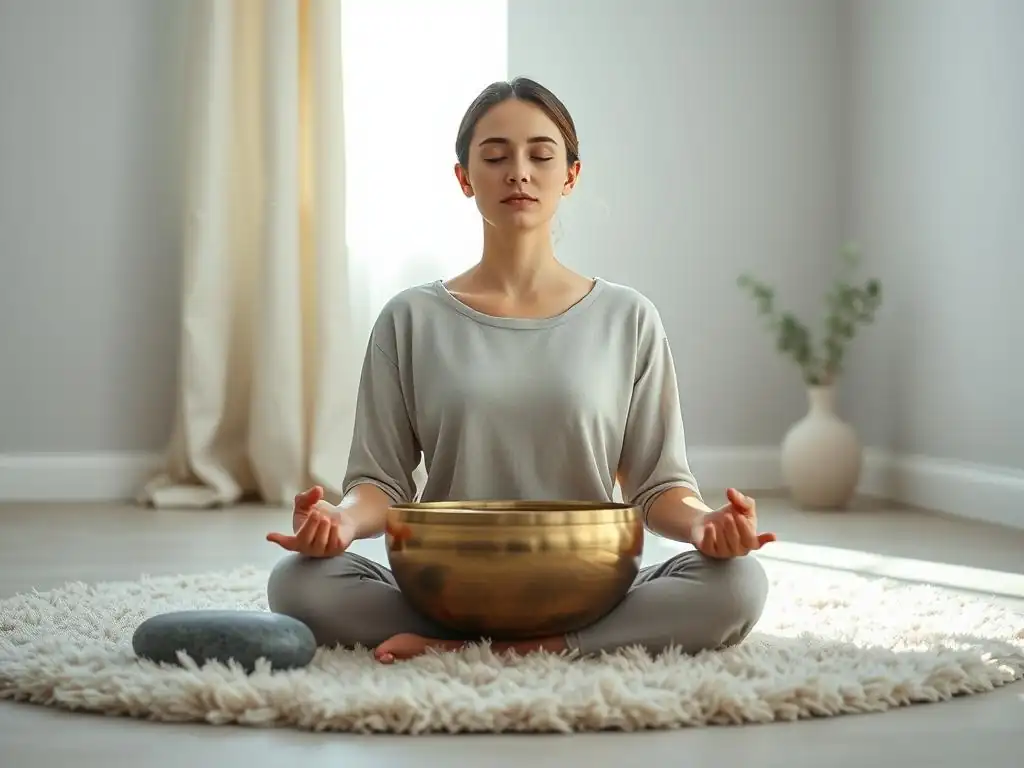
For those new to guided meditation for anxiety relief, starting with a focus on breath is often recommended. A simple guided breathing exercise might begin with instructions to find a comfortable seat and gently close the eyes. The guide would then direct your attention to the sensation of your breath as it enters and leaves your body. You might be instructed to notice the rise and fall of your abdomen or chest, the feeling of air moving through your nostrils, or the subtle pause between inhale and exhale.
The guidance would encourage you to simply observe the breath without trying to change it. When your mind wanders, as it inevitably will, the guide will gently remind you to notice that your mind has drifted and then kindly bring your attention back to the breath. This process of noticing and returning is the core practice. A typical beginner session might last 5-10 minutes, offering repeated, simple instructions to anchor your awareness to the present moment through the physical sensation of breathing, providing immediate, albeit temporary, relief from anxious thoughts.
Body Scan Meditation for Anxiety: Releasing Tension and Promoting Awareness
Body scan meditation is a powerful technique within guided meditation for anxiety relief that involves systematically bringing awareness to different parts of the body, noticing physical sensations without judgment. A guide will typically lead you through the body, starting from the toes and moving up to the crown of the head, or vice versa. You are instructed to simply observe any sensations present in each area – warmth, coolness, tingling, tension, or absence of sensation.
The purpose of a body scan is to cultivate present moment awareness and to gently release physical tension often held unknowingly in the body due to anxiety. As the guide moves your attention from one area to the next, you are invited to breathe into any areas of tightness and imagine the tension softening or dissolving with each exhale.
This practice helps to reconnect the mind and body, grounding you in the physical reality of the present rather than being lost in anxious thoughts about the future. Regular practice, even for 15-20 minutes a few times a week, can increase your overall body awareness and ability to recognize and release stress.
Visualization Meditation for Anxiety Relief: Creating a Peaceful Mental Landscape
Visualization meditation involves creating calming mental images guided by a narrator. This technique is particularly effective for guided meditation for anxiety relief as it offers an escape from distressing thoughts by focusing the mind on pleasant, soothing scenarios. A guide might lead you through imagining a peaceful place, such as a serene beach, a quiet forest, or a cozy cabin. You are encouraged to engage all your senses in this imagined environment – feeling the warmth of the sun, hearing the gentle sounds of nature, smelling the fresh air, seeing the colors and textures around you.
By immersing yourself in this peaceful mental landscape, you divert your attention away from anxiety-provoking thoughts and activate areas of the brain associated with relaxation and positive emotions. The vivid details provided by the guide help make the visualization feel more real and absorbing. This technique can be very effective in shifting your mood and promoting a sense of safety and tranquility, offering a mental sanctuary whenever anxiety arises. Many find that even a 10-minute visualization session can significantly reduce feelings of overwhelm and stress.
Mindfulness Meditation with Guided Imagery: Focusing on the Present Moment
Mindfulness meditation, often combined with guided imagery, centers on paying attention to the present moment without judgment. In a guided session aimed at anxiety relief, this might involve instructions to notice sensory input – the sounds around you, the feeling of the air on your skin, the taste in your mouth. The guide encourages an attitude of open curiosity towards whatever arises in your awareness, whether it's a pleasant sensation, a difficult emotion, or a distracting thought.
When combined with imagery, the guide might use metaphors or simple visualizations to support the mindfulness practice, such as imagining thoughts as clouds floating by or difficult emotions as waves that rise and fall. The core principle remains: observe what is happening in the present moment, internally and externally, with acceptance. This practice helps to де-escalate anxiety by teaching you that thoughts and feelings are temporary events, not absolute truths, reducing their power to overwhelm you. Consistent practice, even 10-15 minutes daily, builds your capacity to remain present and less reactive to anxious triggers.
Progressive Muscle Relaxation (PMR) Guided Meditation for Stress Reduction
Progressive Muscle Relaxation (PMR) is a technique that involves tensing and then releasing different muscle groups in the body sequentially. As a guided meditation for anxiety relief, a narrator leads you through this process, instructing you to first tense a specific muscle group (like your hands or shoulders) for a few seconds, notice the sensation of tension, and then deliberately release the tension, noticing the feeling of relaxation that follows. This systematic approach typically moves through the body, from the feet up to the head.
PMR is particularly effective for anxiety because it directly addresses the physical tension that often accompanies it. By consciously creating and releasing tension, you become more aware of the difference between a tense and relaxed state. This heightened awareness allows you to recognize when you are holding tension in your body during periods of stress or anxiety and provides a tool to release it. Many people find that a 20-30 minute guided PMR session before bed helps to reduce physical restlessness and mental rumination, promoting better sleep, which in turn supports overall anxiety management.
Choosing the Right Guided Meditation Resources
Guided Meditation Apps for Anxiety: A Comparison
Mobile applications have become a popular resource for guided meditation for anxiety relief, offering convenience and a wide variety of content. While specific apps cannot be named here, many offer extensive libraries of guided sessions varying in length (from 3 minutes to 60 minutes or more) and focus (anxiety, sleep, focus, self-compassion). Key features often include customizable session lengths, options for background music or nature sounds, progress tracking, and reminders.
When choosing an app, consider factors like the quality of the guides' voices (clear, calming), the relevance of the content to your specific needs (look for sections dedicated to anxiety, stress, or overwhelm), and the overall user interface. Some apps offer free content, while others require a subscription for full access. Many provide a free trial period, allowing you to explore their offerings before committing. Exploring a few options during free trials is a practical way to find a guided meditation approach that resonates with you.
Online Guided Meditation Programs and Courses
Beyond apps, numerous online platforms offer structured guided meditation for anxiety relief programs or courses. These often provide a more in-depth learning experience than standalone sessions, sometimes including educational components about the principles of mindfulness and meditation. Programs might be designed to span several weeks, gradually introducing different techniques and concepts, which can be beneficial for building a consistent practice and understanding the underlying mechanisms of how meditation helps with anxiety.
Online courses may offer video instruction, live sessions with teachers, community forums, and supplementary materials like workbooks. The cost and format vary widely, from free introductory courses to paid, multi-week programs. These resources can be particularly helpful if you prefer a more structured learning path or want to understand the theory behind the practice. Look for programs that explicitly address anxiety and offer a clear curriculum or set of modules to follow.
Finding a Qualified Guided Meditation Teacher or Therapist
For some individuals, particularly those dealing with significant anxiety or trauma, working with a qualified guided meditation teacher or a therapist who incorporates meditation into their practice can be highly beneficial. A live teacher can provide personalized guidance, answer questions in real-time, and offer specific techniques tailored to your unique challenges. They can also help navigate difficulties that arise during meditation, such as intense emotions or resistance.
Therapists trained in mindfulness-based approaches, such as Mindfulness-Based Stress Reduction (MBSR) or Mindfulness-Based Cognitive Therapy (MBCT), often lead guided meditations as part of therapy sessions. These professionals can offer a deeper understanding of how meditation interacts with psychological processes and provide support for integrating the practice into managing clinical anxiety. Seeking guidance from a certified teacher or licensed therapist ensures you receive instruction from someone with appropriate training and experience.
Overcoming Challenges in Guided Meditation for Anxiety
Dealing with Distractions and Wandering Thoughts
One of the most common challenges in guided meditation for anxiety relief is dealing with a busy or wandering mind. It's important to understand that thoughts will arise – this is a normal function of the mind, not a sign of failure. When you notice your mind has drifted away from the guide's instructions, the practice is not about forcing thoughts away, but gently noticing where your attention has gone.
The key is to cultivate a non-judgmental attitude towards these distractions. When you realize you've been thinking about your to-do list or an upcoming event, simply acknowledge it without self-criticism. Then, gently redirect your attention back to the guide's voice or the anchor they suggest, whether it's the breath, a body sensation, or a visualization. Think of it as training a puppy – you gently guide it back without scolding. This repeated act of noticing and returning is the core work of building focus and resilience against anxious rumination.
Managing Restlessness and Physical Discomfort
Anxiety can manifest as physical restlessness, making it challenging to sit still during guided meditation. You might feel fidgety, tense, or experience discomfort. First, ensure your posture is as comfortable as possible before starting. If discomfort arises during the session, gently acknowledge it without immediately reacting. Sometimes, simply noticing the sensation with curiosity can lessen its intensity.
If the urge to move is strong or discomfort is significant, it's okay to make small adjustments to your posture slowly and mindfully. The goal isn't to endure pain, but to find a balance between stillness and ease. If restlessness is overwhelming, some guided practices incorporate gentle movement or can be done while walking slowly. Remember that the practice is about cultivating awareness and kindness towards yourself, not achieving perfect stillness. Be patient with your body and its needs.
Addressing Negative Thoughts and Emotions During Meditation
During guided meditation for anxiety relief, you may encounter negative thoughts, difficult emotions, or even increased anxiety. This can be unsettling, but it's also an opportunity for growth. The guidance often encourages you to simply notice these internal experiences without getting swept away by them. Imagine them as visitors – you don't have to invite them to stay for tea, but you can acknowledge their presence without resistance.
Instead of trying to push away negative thoughts or feelings, try observing them with a sense of curiosity. Where do you feel this emotion in your body? What thoughts are accompanying it? The guide might suggest labeling the experience internally (e.g., "thinking," "worry," "sadness") as a way to create some distance. This practice of mindful observation helps to де-personalize these experiences, showing you that while these thoughts and feelings are present, they do not define you and are subject to change. Be compassionate towards yourself; it takes practice to sit with discomfort.
Integrating Guided Meditation into Your Daily Routine for Long-Term Anxiety Relief
Creating a Consistent Meditation Schedule
Establishing a consistent schedule is key to reaping the long-term benefits of guided meditation for anxiety relief. Even meditating for 10-15 minutes at roughly the same time each day can help build a habit. Consider "habit stacking" – pairing your meditation with an existing daily activity, such as meditating right after brushing your teeth in the morning or immediately after arriving home from work. This makes it easier to remember and integrate into your routine.
Don't aim for perfection; aim for regularity. If you miss a day, don't get discouraged. Simply start again the next day. Tracking your practice, perhaps with a simple calendar or within a meditation app, can provide a visual reminder of your commitment and progress. Finding a time that works reliably within your unique schedule, whether it's early morning, during a lunch break, or before bed, significantly increases the likelihood of sticking with it.
Combining Guided Meditation with Other Relaxation Techniques
Guided meditation can be a powerful standalone practice, but its benefits for anxiety relief can be amplified when combined with other relaxation techniques. For example, starting your day with 10 minutes of guided meditation followed by gentle stretching or yoga can create a calming morning routine. Ending your day with a body scan meditation after a warm bath can promote deeper relaxation and prepare you for sleep.
Other complementary practices include deep breathing exercises performed throughout the day when you feel anxiety rising, journaling after a meditation session to process thoughts and emotions that surfaced, or listening to calming music. The combination of different techniques creates a multi-faceted approach to managing stress and anxiety, leveraging the strengths of each method. Experiment to find which combinations feel most supportive and effective for your personal needs.
Tracking Your Progress and Celebrating Your Achievements
Monitoring your progress, even informally, can be highly motivating when using guided meditation for anxiety relief. This doesn't mean tracking whether you achieved a state of perfect stillness (which isn't the goal), but rather noticing subtle shifts over time. Keep a simple journal where you jot down how you felt before and after a meditation session, any insights that arose, or specific challenges you faced.
Over time, you might notice that you feel slightly calmer after meditating, that you are less reactive to stressors, or that your anxious thoughts don't hold your attention for as long. Celebrate these small victories! Acknowledging your commitment and the positive changes you observe, no matter how minor they seem, reinforces the value of the practice and encourages you to continue. Focus on the journey and the effort you are putting in, rather than fixating on achieving a specific outcome.
Advanced Guided Meditation Practices for Deeper Relaxation and Anxiety Control
Exploring Different Styles of Guided Meditation
Once you are comfortable with basic guided meditation for anxiety relief focusing on breath or body scans, you might explore other styles to deepen your practice. Loving-kindness meditation (Metta) involves sending wishes of well-being to yourself and others, which can be particularly helpful in counteracting self-criticism and fostering connection, both relevant to anxiety. Walking meditation involves bringing mindful awareness to the physical sensations of walking.
Other styles include insight meditation (Vipassanā), which focuses on observing the impermanent nature of all phenomena, or meditations incorporating affirmations or specific intentions. Exploring different guides and approaches can keep your practice fresh and introduce you to techniques that resonate more deeply with you at different times. Don't be afraid to try new styles as you become more experienced; variety can enrich your practice and offer new perspectives on managing anxiety.
Customizing Your Guided Meditation Sessions to Suit Your Needs
As you become more familiar with guided meditation, you can begin to customize your sessions, even when using recorded guidance. If you find certain types of background sounds distracting, choose recordings without them. If you have limited time one day, select a shorter session. If you are feeling particularly restless, opt for a guided walking meditation or a body scan.
Some advanced practitioners may even begin to use the guided sessions as a starting point, using the guide's initial instructions to settle in and then continuing the meditation on their own, incorporating elements from different practices. The ability to adapt your practice based on your current state and needs is a sign of growing mindfulness and control over your anxiety management tools.
Using Affirmations and Positive Self-Talk in Guided Meditation
Incorporating affirmations and positive self-talk can enhance the benefits of guided meditation for anxiety relief. An affirmation is a positive statement that you repeat to yourself, such as "I am safe," "I am calm," or "I am capable of handling this." During a guided session, particularly one focused on a specific theme like self-compassion or confidence, the guide might weave in affirmations.
You can also integrate your own affirmations into your practice. After settling into a meditative state, you might silently repeat an affirmation that feels supportive. This can help to counteract negative self-talk and reinforce positive beliefs about your ability to manage anxiety. Using affirmations during meditation can help embed these positive messages deeply within your consciousness, making them more accessible during challenging moments.
The Importance of Self-Compassion in Your Guided Meditation Journey
Cultivating Kindness and Understanding Towards Yourself
Self-compassion is a cornerstone of effective guided meditation for anxiety relief. It involves treating yourself with the same kindness, care, and understanding you would offer a friend who is struggling. When practicing meditation, this means being patient with yourself when your mind wanders, when you feel restless, or when difficult emotions arise. Instead of getting frustrated, acknowledge the challenge with warmth and acceptance.
Anxiety often comes with a harsh inner critic. Cultivating self-compassion directly counters this. As you sit in meditation, gently remind yourself that experiencing anxiety is part of the human condition, and that it's okay to feel what you feel. Approaching your meditation practice with kindness, rather than as another task to perform perfectly, transforms it from a potential source of frustration into a nurturing act of self-care.
Letting Go of Self-Criticism and Judgment
Self-criticism and judgment are significant barriers to finding stillness and peace, especially when dealing with anxiety. During guided meditation, the mind may offer thoughts like "I'm not doing this right," "My mind is too busy," or "I'm failing at meditation." Recognizing these thoughts as simply mental events, rather than truths, is part of the practice.
Letting go of self-judgment doesn't mean you won't experience it, but rather that you won't dwell on it or let it dictate your worth. When judgmental thoughts arise, notice them without attaching to them. The guide's voice often models this non-judgmental attitude. Practice observing these critical thoughts with a gentle detachment, understanding that they are habits of the mind that can be gradually softened through consistent, compassionate practice.
Embracing Imperfection and the Learning Process
Your guided meditation for anxiety relief journey will not be a linear path to perfect calm. There will be days when it feels easy and others when it feels like a struggle. Embracing this imperfection is vital. Every session, regardless of how "successful" it feels, is an opportunity to practice bringing awareness and kindness to your present experience.
View your meditation practice as a learning process. Each time you sit down, you are learning more about your mind, your body, and how you experience anxiety. There is no destination to reach, only the ongoing practice of showing up with curiosity and compassion. Accepting that your practice will have ups and downs, and treating yourself with patience through the challenges, is perhaps one of the most profound ways guided meditation helps foster true, sustainable anxiety relief.
Frequently Asked Questions
What is guided meditation and how can it help with anxiety?
Guided meditation is a type of meditation where a narrator guides you through imagery and relaxation techniques. It can help with anxiety by promoting relaxation and reducing stress.
How does guided meditation differ from other forms of meditation?
Unlike other forms of meditation that might focus on silence or a specific mantra, guided meditation involves following a narrator's instructions and using visualization techniques.
How often should I practice guided meditation for anxiety relief to see results?
Consistency is key. Aim for at least 15-20 minutes of guided meditation several times a week to start noticing a reduction in anxiety symptoms.
What are some practical tips for creating a conducive environment for guided meditation?
Find a quiet space, minimize distractions, and use comfortable seating or lying down. Consider using headphones to enhance focus and immersion.
Where can I find reliable guided meditation resources for anxiety relief?
Reputable sources include the Mind Care Guide website, meditation apps like Headspace or Calm, and YouTube channels specializing in mindfulness and relaxation.
Final Reflection: Cultivating Inner Peace in a Turbulent World
The relentless pace of modern life leaves many feeling overwhelmed, and anxiety has become a pervasive shadow in our collective experience. Finding moments of stillness amidst the chaos is no longer a luxury, but a vital necessity for our mental and emotional well-being. This article explored practical techniques for guided meditation, offering a pathway to calm the racing mind and cultivate inner peace.
The journey towards self-awareness and stress reduction through meditation is deeply personal, and its impact resonates far beyond the cushion or quiet space where the practice takes place. The ability to find stillness within oneself profoundly influences how we navigate our daily lives, impacting our relationships, our work, and our overall sense of self. As the poet Mary Oliver so eloquently stated: Pay attention. Be astonished. Tell about it.
This is the essence of mindful meditation – paying attention to the present moment, being astonished by its beauty, and then sharing that newfound peace with the world.
Now, consider your own life. Where do you feel the weight of anxiety pressing down? What small steps can you take today to incorporate even five minutes of guided meditation into your routine? Don't underestimate the power of these quiet moments; they are the seeds from which a more peaceful, resilient, and joyful you will grow. Begin your journey towards inner stillness, and watch as the transformative power of guided meditation unfolds within you.
Unveil Your Inner Calm: Start Your Meditation Journey Today
Thank you for taking the time to explore the power of guided meditation with us! We hope you discovered valuable techniques to find stillness amidst the daily chaos. Now, it's time to put your newfound knowledge into practice.
- Begin your first guided meditation session today. Even 5 minutes can make a difference. Focus on your breath and let the peace wash over you. This is your primary step towards a calmer, more centered you.
- Share your experience! Let others know about the benefits of guided meditation. Discuss your initial experience in the comments below—we’d love to hear your journey.
- Explore different guided meditation styles. Experiment with various techniques to find what resonates most with you. There’s a perfect practice waiting to be discovered!
Ready to embark on your path towards inner peace? What's your biggest challenge in finding stillness, and how can we support you on your journey?