
Overcoming Distractions: Staying Present in Guided Practice


Welcome to Mind Care Guide, your sanctuary for navigating the complexities of mental well-being. Are you finding it hard to quiet the noise and truly experience the now? Many of us struggle with distractions that pull us away from the present moment. This article delves into the powerful practice of mindfulness, offering practical guidance and support. Discover how to cultivate inner peace and focus with our Staying present guided practice mindfulness techniques. Ready to begin your journey towards a more centered and grounded you? Let's explore together…
Overcoming Distractions: Staying Present in Guided Practice
- Introduction: The Importance of Presence in Guided Meditation
- Understanding the Nature of Distractions in Guided Practice
- Practical Techniques for Staying Present During Guided Practice
- Advanced Strategies for Enhancing Presence in Guided Meditation
- Dealing with Specific Types of Distractions in Guided Practice
- Creating a Supportive Environment for Staying Present
- The Benefits of Staying Present in Guided Practice Mindfulness
- Troubleshooting Common Challenges in Staying Present
- Integrating Mindfulness into Daily Life: Extending the Benefits Beyond Meditation
- Conclusion: Embracing the Journey of Staying Present in Guided Practice
-
Frequently Asked Questions
- What is the key benefit of staying present during a guided mindfulness practice?
- How does a guided practice help with staying present, especially for beginners?
- What are some common distractions experienced during mindfulness, and how can I handle them?
- How often should I engage in staying present guided practice mindfulness to see noticeable improvements in my well-being?
- Where can I find reliable resources for staying present guided practice mindfulness exercises?
- Final Reflection: Cultivating Presence in a Distracted World
- Unlock Your Focus: Deepen Your Practice Today!
Introduction: The Importance of Presence in Guided Meditation
What is Guided Practice Mindfulness and Why Does Presence Matter?
Guided practice mindfulness involves following verbal instructions from a teacher or recording to cultivate present moment awareness. This practice often includes focusing on the breath, body sensations, sounds, or thoughts, guided step-by-step. The core intention is to gently direct attention without judgment, fostering a state of non-reactive observation. Staying present in guided practice mindfulness is fundamental because the benefits of meditation, such as reduced stress and improved focus, arise directly from this sustained, non-judgmental attention to the here and now. Without presence, the practice becomes a passive listening exercise rather than an active cultivation of awareness.
Presence is the engine of guided mindfulness practice. It's the difference between simply hearing words and truly experiencing the meditation. When you are fully present, you are engaging with the instructions, noticing what arises in your experience (sensations, thoughts, emotions) as the guide speaks, and practicing the skill of returning your attention when it wanders.
Research, including studies often published in journals like Mindfulness or the Journal of Consulting and Clinical Psychology, consistently shows that the depth of present moment awareness cultivated during meditation correlates with positive outcomes, such as decreased symptoms of anxiety and depression and enhanced emotional regulation. Therefore, mastering the art of staying present is key to unlocking the transformative potential of guided practice.
The Challenge of Distractions During Meditation
Even with a soothing voice and clear instructions, distractions are an inevitable part of guided practice. The mind is naturally prone to wandering, jumping between thoughts, memories, plans, and worries. Physical sensations, external noises, or even internal emotional states can pull attention away from the guided instruction. This isn't a sign of failure; it's simply how the human mind functions. Recognizing that distractions will arise is the first step in learning to work with them rather than being defeated by them.
The challenge lies not in eliminating distractions—an impossible task—but in how we relate to them. Often, when we get distracted, we might feel frustrated, impatient, or judgmental towards ourselves ("I'm bad at this," "My mind is too busy"). These reactions add a layer of suffering on top of the distraction itself and can further pull us away from staying present guided practice mindfulness. Understanding that distraction is universal—affecting beginners and experienced meditators alike—can foster self-compassion, which is a crucial element in developing resilience and the ability to gently redirect attention back to the guided practice.
Understanding the Nature of Distractions in Guided Practice
Identifying Common Types of Distractions: Physical, Mental, and Emotional
Distractions during guided practice can manifest in various forms, broadly categorized as physical, mental, and emotional. Physical distractions include discomforts like an itchy nose, restless legs, back pain, or even noticing the temperature of the room. They are rooted in the body's sensations and needs. Mental distractions are perhaps the most common, encompassing the endless stream of thoughts—planning the day, replaying conversations, worrying about the future, judging the practice itself, or simply getting lost in fantasy.
Emotional distractions involve strong feelings that arise during meditation, such as frustration, boredom, sadness, anger, or even excitement. These emotions can be intense and overwhelming, pulling attention away from the guided instructions and towards the feeling itself or the narrative associated with it.
For example, a feeling of boredom might lead to thoughts about stopping the practice, while anxiety might manifest as a racing heart and worried thoughts, both significantly impacting one's ability to remain focused on staying present guided practice mindfulness. Learning to identify which type of distraction is arising is the first step in developing specific strategies to work with it mindfully.
The Root Causes of Distractions: Stress, Anxiety, and Boredom
While distractions are a normal function of the mind, certain states can exacerbate them. Stress and anxiety are significant contributors to mental distraction. When the nervous system is activated, the mind tends to become more restless, hypervigilant, and prone to intrusive thoughts. A person experiencing high levels of stress might find their mind constantly rehashing stressors or anticipating potential problems, making it difficult to settle into the quiet focus required for staying present guided practice mindfulness. The amygdala, the brain's fear center, can be more active under stress, contributing to this heightened state of mental busyness.
Boredom is another common root cause, particularly when the meditation feels repetitive or challenging. If the mind isn't actively engaged or sees the practice as monotonous, it will seek stimulation elsewhere, leading to wandering thoughts about more "interesting" things. For some, boredom can also be a way of avoiding uncomfortable feelings or thoughts that might arise in stillness. Understanding these underlying causes—whether physiological responses to stress, habitual thought patterns linked to anxiety, or the mind's aversion to stillness or repetition—provides valuable insight into why distractions occur and how to approach them with greater understanding and patience.
Recognizing Distraction Patterns in Your Guided Meditation Practice
Becoming aware of your personal distraction patterns is a powerful step towards cultivating presence. Do you tend to get lost in future planning? Do you find yourself constantly replaying past events? Are you often distracted by physical discomfort? Or do certain emotions reliably pull you away from the guidance? Keeping a simple mental note or even a brief journal after your practice can reveal these patterns. For instance, you might notice that on stressful days, your primary distraction is anxious thoughts about work, whereas on weekends, it might be planning social activities.
Recognizing these patterns isn't about judgment, but about gaining insight. If you notice you consistently get distracted by physical sensations around the 10-minute mark, you might proactively incorporate gentle stretching before your practice or adjust your posture. If your mind habitually jumps to future worries, you can gently acknowledge this pattern when it arises during staying present guided practice mindfulness ("Ah, there's the future-planning mind") and compassionately guide your attention back to the present sound of the guide's voice or the sensation of breath. This self-awareness empowers you to meet distractions with intention rather than just reacting to them.
Practical Techniques for Staying Present During Guided Practice
Anchoring Techniques: Using Breath and Body Awareness
Anchoring techniques are fundamental tools for staying present guided practice mindfulness. The most common anchor is the breath. The guide will often direct your attention to the physical sensations of breathing—the rise and fall of the abdomen, the air moving in and out of the nostrils, or the expansion and contraction of the chest. The breath is always happening in the present moment, making it a reliable reference point. When your mind wanders, the practice is simply to notice that it has wandered and gently, without self-criticism, bring your attention back to the sensations of breathing.
Body awareness serves as another powerful anchor. Guided meditations often involve a body scan, systematically bringing attention to different parts of the body and noticing any sensations present. Even in a seated meditation focused on breath, you can anchor yourself by feeling the contact points of your body with the chair or cushion, the weight of your hands in your lap, or the posture of your spine.
These physical sensations are concrete and present, providing a stable point of focus to return to when thoughts or emotions pull your attention away. Regularly practicing with these anchors strengthens your ability to redirect your focus, a core skill in cultivating mindful presence.
The Power of Sensory Engagement: Focusing on Sounds and Sensations
Beyond the breath and body, engaging with other sensory experiences can also be a potent way of staying present in guided practice. Sounds, both external and internal, are constantly occurring and can serve as anchors. The guide might instruct you to simply notice sounds as they arise and pass away, without getting caught up in identifying or judging them.
Hearing a car outside, a clock ticking, or even the rumbling of your own stomach becomes an opportunity to practice present moment awareness. The key is to observe the sound itself—its quality, duration, and intensity—rather than getting lost in thoughts about the sound.
Similarly, focusing on other sensations in your environment or within your body can ground you. Feeling the temperature of the air on your skin, the texture of your clothing, or the subtle movements within your body can all bring your attention back to the present moment.
Some guided practices specifically invite you to open your awareness to the full sensory field. By intentionally directing your attention to these ever-changing sensory inputs, you train your mind to stay engaged with the present reality rather than drifting into the abstract world of thoughts and worries, enhancing your capacity for staying present guided practice mindfulness.
Labeling and Acknowledging Thoughts Without Judgment: Mindfulness of Thoughts
While breath and body are anchors, thoughts are often the primary source of distraction. Mindfulness of thoughts involves recognizing thoughts as mental events—just thoughts—without getting swept away by their content or judging them as good or bad. A common technique is "labeling," where you briefly and gently note the type of thought as it arises, perhaps mentally saying "thinking," "planning," "worrying," or "remembering." This act of labeling creates a slight distance from the thought, allowing you to see it more objectively rather than being fully immersed in it.
Acknowledging thoughts without judgment is crucial for staying present guided practice mindfulness. When a thought arises, the practice is not to push it away or analyze it, but simply to notice its presence. Imagine thoughts floating by like clouds in the sky.
You see the cloud, acknowledge it's there, and then let it continue on its way, bringing your attention back to your chosen anchor or the guide's voice. This practice helps to weaken the habitual tendency to get entangled in thought streams and strengthens your ability to disengage and return to the present moment awareness being cultivated by the guided practice.
Cultivating Acceptance and Non-Attachment to Distractions
A cornerstone of mindfulness, and essential for navigating distractions, is cultivating acceptance and non-attachment. Acceptance doesn't mean liking the distraction or giving up on staying present; it means acknowledging that the distraction is here right now without fighting it. When you find yourself lost in thought, instead of thinking, "Oh no, I'm distracted again, I'm failing," the practice is to notice the distraction with kindness ("Okay, the mind has wandered, that's what minds do") and gently return. This acceptance reduces the secondary layer of frustration or self-criticism that often accompanies distraction.
Non-attachment complements acceptance. It involves recognizing that thoughts, feelings, and sensations are impermanent—they arise, they linger for a while, and then they pass away. Trying to cling to pleasant states or push away unpleasant ones only creates more struggle.
By practicing non-attachment, you learn to observe distractions without getting stuck in them. You allow the thought or feeling to be there, without needing it to be different, trusting that it will eventually shift. This attitude of gentle acceptance and non-attachment significantly eases the effort involved in staying present guided practice mindfulness, making the return to the present moment smoother and more compassionate.
Advanced Strategies for Enhancing Presence in Guided Meditation
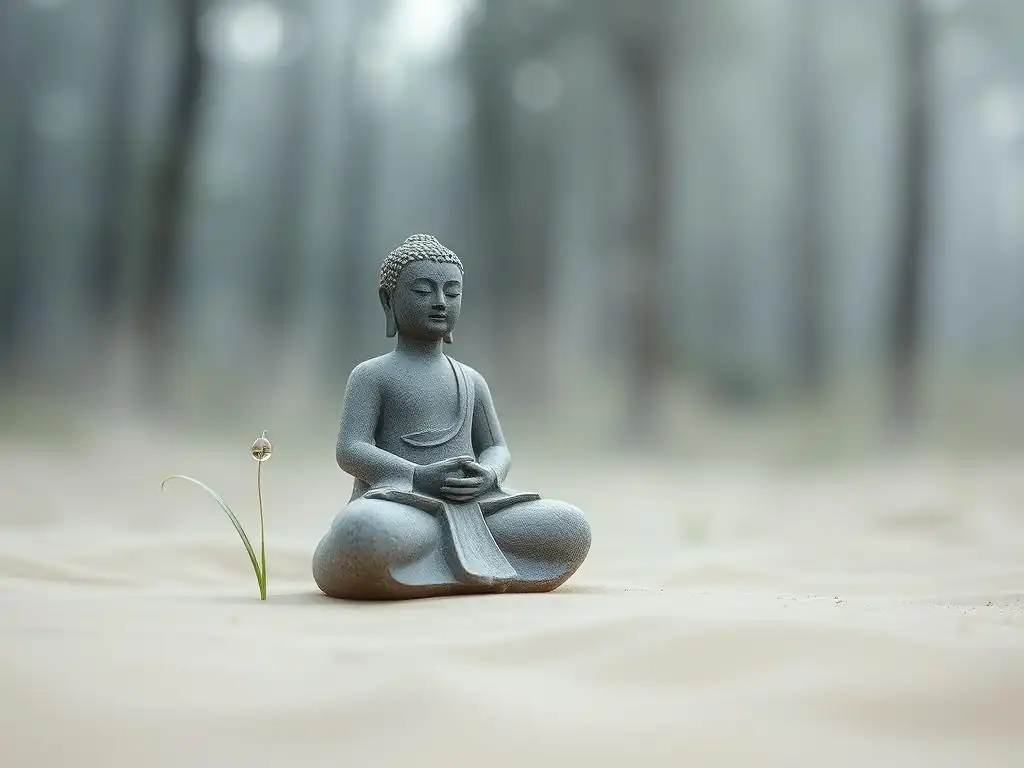
Visualization Techniques: Creating a Focused Mental Space
While some guided practices use visualization as the primary focus, it can also be employed as a strategy to enhance presence when the mind is particularly restless. The guide might lead you through visualizing a calm, peaceful space—a serene garden, a quiet beach, or a safe room.
This creates a mental refuge that can help settle a busy mind and provide a more stable internal environment for focusing on the core practice instructions. For example, visualizing the breath as a gentle wave or picturing thoughts as leaves floating down a stream can make the abstract concepts of anchoring and non-attachment more concrete.
Another form of visualization involves picturing yourself fully engaged in the guided practice, calm and focused. This isn't about forcing a state, but about setting an intention and gently guiding your mental imagery towards it. Some guided practices might use light visualizations, like imagining a soft light filling the body with each breath. These techniques, when used mindfully, can help corral a scattered mind and provide a focal point that supports staying present guided practice mindfulness, especially for individuals who are visually oriented or find abstract concepts challenging initially.
Using Affirmations and Intentions to Reinforce Presence
Setting a clear intention before starting your guided practice can significantly influence your ability to stay present. An intention is a gentle reminder of why you are practicing and what you hope to cultivate. Your intention might be simply "to be present with whatever arises," "to practice self-compassion," or "to listen deeply to the guide." Repeating a simple affirmation related to presence, either silently or mentally, before or during the meditation can also reinforce this focus. Examples include "I am here now," "I breathe in presence, I breathe out distraction," or "I gently return to the present."
These affirmations and intentions act as anchors themselves, providing a mental touchstone to return to when the mind wanders. When you notice you've been distracted, you can gently recall your intention or affirmation as a way of redirecting your focus back to the guided practice. This isn't about rigid control but about setting a compassionate direction for your practice. Studies on intention-setting in mindfulness, though less abundant than those on core techniques, suggest that clarifying purpose can enhance engagement and persistence in the face of difficulty, aiding in staying present guided practice mindfulness.
Body Scan Meditation: Deepening Body Awareness and Presence
While the body scan is often a guided practice in itself, integrating principles of body awareness into other guided meditations can deepen presence. A full body scan involves systematically bringing non-judgmental attention to physical sensations throughout the body, from head to toe. This practice heightens proprioception and interoception—the awareness of the body's position and internal state. By regularly practicing body scans, you train your mind to notice subtle physical sensations, which strengthens the body as an anchor during any type of guided meditation.
Even during a guided meditation focused on breath or sounds, you can periodically check in with your body. Notice where your body is making contact with the surface you're sitting or lying on. Feel the weight of your limbs.
Scan for areas of tension and gently soften them if possible. This brief check-in can serve as a powerful reset button, pulling your attention out of mental loops and back into the concrete reality of physical sensation. This enhanced body awareness cultivated through practices like the body scan directly supports staying present guided practice mindfulness by providing a readily available and reliable anchor.
Dealing with Specific Types of Distractions in Guided Practice
Overcoming Physical Discomfort During Meditation
Physical discomfort is a common distraction, ranging from minor itching to significant pain. The mindful approach is not to ignore or suppress the discomfort, but to bring curious, non-judgmental awareness to it. If you feel an itch, for instance, instead of automatically scratching, try bringing your full attention to the sensation of the itch itself.
Notice its location, intensity, and quality. Often, simply observing the sensation without reacting to it can cause it to subside. If the discomfort is significant, the guided practice might even direct you to breathe into the area of pain or tension, sending gentle awareness there.
For persistent or intense physical discomfort, acceptance and gentle adjustment are key for staying present guided practice mindfulness. Acknowledge the discomfort is present. If adjusting your posture slightly can alleviate it without creating a new distraction, do so mindfully.
If the discomfort remains but is manageable, practice staying present with it, observing the sensations without getting caught in thoughts about the discomfort ("This is unbearable," "How much longer?"). If the pain is too intense to focus, it's okay to pause, move, or even end the practice early, noting this experience without self-judgment. Finding a comfortable, stable posture before you begin can prevent many physical distractions.
Managing Racing Thoughts and Mental Chatter
Racing thoughts are perhaps the most frequently cited distraction. When the mind is a whirlwind of mental chatter, trying to force it to stop is usually counterproductive. Instead, employ the technique of labeling and non-attachment discussed earlier. See the thoughts as mental events. You can even visualize them, perhaps as cars passing by on a road, clouds drifting across the sky, or leaves floating down a stream. Your job is simply to observe them without getting into the passenger seat.
Regularly returning to your chosen anchor—the breath, body sensations, or sounds—is essential when dealing with racing thoughts. Each time you notice you've been swept away by a thought stream, gently acknowledge it ("thinking," "planning," "worrying") and kindly guide your attention back to the anchor. This act of returning is the core practice of staying present guided practice mindfulness; it's like doing a bicep curl for your attention muscle.
The more you practice this gentle redirection, the stronger your ability to disengage from mental chatter and return to the present moment becomes. Be patient and persistent; consistent practice gradually helps to calm the mental storm.
Handling Emotional Disruptions: Anger, Sadness, and Fear
Strong emotions like anger, sadness, or fear can be particularly challenging distractions during guided practice. When intense feelings arise, they can feel overwhelming and pull your attention completely away from the guide's voice. The mindful approach is to turn towards the emotion with courage and compassion, rather than trying to push it away. Acknowledge the emotion is present ("There is sadness," "Noticing fear"). Where do you feel this emotion in your body? Bring gentle, non-judgmental awareness to the physical sensations associated with the emotion.
Breathe with the emotion. You are not trying to make it go away, but simply to be present with its energy. Imagine breathing into the area where the emotion is felt, and breathing out softness or release.
If the emotion is very intense, you might temporarily shift your focus from the guided instructions to simply being present with the raw sensation of the feeling, perhaps placing a hand on your chest or abdomen where the feeling is strongest. As with thoughts, emotions are impermanent. By allowing them to be present without getting lost in the story about the emotion, you create space for them to move and shift, allowing you to eventually return to staying present guided practice mindfulness with greater ease.
Creating a Supportive Environment for Staying Present
Optimizing Your Meditation Space: Minimizing External Distractions
Creating a dedicated and optimized physical space can significantly reduce external distractions and support staying present guided practice mindfulness. While you can technically meditate anywhere, choosing a quiet location where you are less likely to be interrupted is ideal. This might mean finding a corner of a room, using a spare bedroom, or even practicing outdoors in a peaceful spot. Inform others in your household that you are meditating to minimize noise and interruptions.
Consider factors like lighting, temperature, and comfort. Dim lighting can be conducive to inward focus, while ensuring you are comfortably warm or cool prevents temperature from becoming a distraction. Sitting on a comfortable cushion or chair that supports good posture can prevent physical discomfort. While complete silence may not always be possible, minimizing obvious external noise sources like turning off the TV or putting your phone on silent mode (or even in another room) can make a noticeable difference in your ability to settle and focus on the guided practice.
Establishing a Consistent Meditation Schedule
Consistency is often more important than duration when building a meditation practice and improving your ability to stay present guided practice mindfulness. Establishing a regular schedule, even if it's just for 10-15 minutes daily, helps to build the habit and signals to your mind and body that this is a dedicated time for stillness and focus. Trying to fit meditation in randomly throughout a chaotic day can make it harder to settle down and resist distractions.
Choosing a time that works best for you, whether it's first thing in the morning before the day's demands begin, during a lunch break, or in the evening to wind down, can enhance your ability to practice consistently. When meditation becomes a regular part of your routine, your mind and body begin to anticipate this period of quiet focus, which can make it easier to transition into a state of presence and less likely to be hijacked by external or internal distractions. Aiming for a similar time each day, even on weekends if possible, strengthens this habit.
Using Guided Meditation Apps and Resources Effectively
Guided meditation apps and online resources can be invaluable tools for staying present guided practice mindfulness, but using them effectively is key. Choose an app or guide whose voice and style resonate with you. Some people prefer calm, slow voices, while others benefit from a slightly more energetic or instructional tone. Experiment with different guides and types of guided meditations (e.g., body scan, loving-kindness, breath focus) to find what supports your presence best on any given day.
Make use of features like setting session length, choosing background sounds (or silence), and tracking your progress, if the app offers it. However, be mindful of the app itself becoming a distraction—avoid checking notifications immediately before or after, and resist the urge to switch practices frequently if it stems from impatience rather than genuine exploration.
Some apps offer series or courses focused on specific challenges like dealing with distraction, which can provide structured support for improving your ability to stay present. Treat the app as a tool to support your practice, not a magic fix, and remember that the real work is in your internal engagement with the guidance.
The Benefits of Staying Present in Guided Practice Mindfulness

Reducing Stress and Anxiety Through Focused Attention
One of the most well-documented benefits of staying present guided practice mindfulness is its profound impact on stress and anxiety. By repeatedly bringing your attention back to the present moment, you train your mind to spend less time dwelling on past worries or future fears—the primary drivers of anxiety and stress. Studies, such as those often cited from programs like Mindfulness-Based Stress Reduction (MBSR), have shown significant reductions in perceived stress levels, sometimes by 20% or more, after just an 8-week course involving daily mindfulness practice.
The practice of gently acknowledging distractions without judgment also builds resilience to stressful thoughts. Instead of getting overwhelmed by them, you learn to see them as temporary mental events. This shift in perspective creates space between you and your reactions to stressors. By anchoring yourself in the present during guided practice, you activate the parasympathetic nervous system, promoting relaxation and counteracting the body's stress response. This ability to self-regulate your nervous system is a direct result of cultivating present moment awareness.
Enhancing Self-Awareness and Emotional Regulation
Staying present in guided practice mindfulness cultivates a deeper understanding of your internal landscape—your thoughts, feelings, and physical sensations. By paying non-judgmental attention to what arises during meditation, you become more familiar with your typical thought patterns, your emotional triggers, and how emotions manifest in your body. This enhanced self-awareness is the foundation for improved emotional regulation. You learn to recognize emotions as they begin to arise, rather than being blindsided by them or reacting impulsively.
For example, through mindful presence, you might notice that feelings of frustration often start with a tightening in your chest or jaw. Recognizing this early warning sign allows you to choose a mindful response—perhaps taking a few deep breaths or acknowledging the frustration with kindness—instead of immediately reacting with anger or withdrawal. This ability to observe and understand your emotional responses, fostered by consistent staying present guided practice mindfulness, empowers you to navigate difficult feelings with greater skill and less reactivity in daily life.
Improving Focus and Concentration in Daily Life
The core mechanism of mindfulness meditation is training your attention. Each time you notice your mind has wandered during guided practice and gently bring it back to your anchor, you are strengthening your capacity for focus and concentration. This skill is not confined to the meditation cushion; it generalizes to other areas of your life. As you become more adept at recognizing and disengaging from internal distractions during meditation, you also become better at staying focused on tasks at work, listening attentively in conversations, or concentrating on activities you enjoy.
Research supports this, indicating that regular mindfulness practice can lead to measurable improvements in attention span and cognitive function. For instance, some studies using attention-based tasks show improved performance after mindfulness training. By diligently practicing staying present guided practice mindfulness, you are essentially exercising your attention muscle, making it stronger and more resilient to the constant barrage of distractions in the modern world, ultimately leading to greater efficiency and presence in your daily activities.
Troubleshooting Common Challenges in Staying Present
What to Do When You Keep Getting Distracted
It's perfectly normal to get distracted repeatedly during guided practice; in fact, noticing that you've been distracted is the practice. If you find yourself getting distracted very frequently, perhaps every few seconds, first, acknowledge this without judgment. It's not a failure; it's just your mind being active. Second, gently but firmly bring your attention back to your anchor (breath, body, sound, or the guide's voice). The emphasis is on gentle and repeated return.
You might also experiment with your anchor. If focusing on the breath feels too subtle or difficult, try focusing on the physical sensations of sitting, which can be more grounding. If external sounds are pulling you away, try focusing on the internal sounds of your body or the guide's voice itself.
Consider shortening your meditation duration temporarily. A well-focused 5-minute practice where you are actively practicing returning is more beneficial than a 20-minute practice where you are mostly lost in thought and feeling frustrated. Remember, the goal is not an empty mind, but a mind that can recognize when it has wandered and gently return to staying present guided practice mindfulness.
Addressing Feelings of Frustration and Impatience
Frustration and impatience are common reactions to distraction, and they are themselves distractions. When you notice feelings of frustration ("I should be better at this," "This isn't working") or impatience ("When will this be over? "), acknowledge these feelings with kindness. Label them mentally ("Frustration," "Impatience"). Where do you feel these emotions in your body? Bring gentle awareness to the physical sensations.
Practice self-compassion. Remind yourself that distraction is normal and that you are doing your best. You might place a hand on your heart as a gesture of kindness towards yourself. Use these feelings as an opportunity to practice mindfulness of emotions. Instead of getting caught up in the story of why you're frustrated, simply observe the feeling itself. By meeting these challenging emotions with acceptance and compassion during staying present guided practice mindfulness, you lessen their power to pull you away from the present moment and cultivate a more resilient and kind relationship with your practice and yourself.
Adjusting Your Guided Practice to Suit Your Needs
Your ability to stay present can vary from day to day depending on factors like stress levels, fatigue, or what's happening in your life. It's important to approach your guided practice with flexibility and adjust it to suit your needs on a given day. If you're feeling particularly restless, a longer or more subtle practice might be too challenging; a shorter, more active guided meditation (like walking meditation or mindful movement) might be more effective for staying present guided practice mindfulness.
If a particular guide's voice or style is consistently distracting, explore other options. If sitting still is proving difficult due to physical restlessness or pain, try a guided practice specifically designed for lying down or gentle movement. Don't be afraid to modify the duration or content of your practice. The goal is to engage in mindful presence, and sometimes that requires adapting the form of the practice to meet your current state. Listening to your needs and adjusting accordingly is an act of self-care that supports sustainable and effective guided practice.
Integrating Mindfulness into Daily Life: Extending the Benefits Beyond Meditation
Practicing Mindful Breathing Throughout the Day
The skills learned during guided practice mindfulness can and should be extended into daily life. Mindful breathing is one of the easiest ways to do this. You don't need to be sitting formally to pay attention to your breath. Throughout the day, take intentional moments to notice your breathing. This could be while waiting in line, sitting at your desk, or before responding to an email. Simply take three conscious breaths, noticing the sensation of the air moving in and out.
These short, informal moments of mindful breathing act as mini-meditations, bringing you back to the present moment and interrupting automatic pilot. They can help you pause before reacting, reduce stress in the moment, and increase your overall sense of presence. Regularly punctuating your day with mindful breaths reinforces the habit of returning to the present, making it easier to settle into staying present guided practice mindfulness during your formal sessions and extending the calm and focus benefits throughout your day.
Applying Mindfulness to Everyday Activities: Eating, Walking, and Working
Mindfulness can be applied to almost any activity. Mindful eating involves paying attention to the sensory experience of food—its smell, texture, taste, and even the sounds of chewing—without judgment or distraction. Mindful walking involves noticing the sensations in your feet as they make contact with the ground, the movement of your legs, the swing of your arms, and the sights and sounds around you. Mindful working can involve focusing fully on one task at a time, noticing when your mind wanders and gently bringing it back to the task at hand.
By intentionally bringing mindful awareness to these routine activities, you train your attention muscle in different contexts and discover moments of presence throughout your day. This reduces the time spent on automatic pilot and increases engagement with your life as it's happening. Applying the principles of staying present guided practice mindfulness to everyday actions reinforces the skills learned in formal practice and helps to weave mindfulness into the fabric of your daily experience, leading to a more engaged and less reactive life.
Cultivating a Mindful Lifestyle for Sustained Well-being
Ultimately, the aim is not just to be mindful during guided practice, but to cultivate a mindful lifestyle. This involves bringing an attitude of present moment awareness, non-judgment, and compassion to all aspects of your life. It means noticing your thoughts and feelings as they arise throughout the day without getting swept away by them. It means paying attention to your interactions with others, listening fully and responding thoughtfully. It means engaging with your environment with curiosity and openness.
Cultivating a mindful lifestyle is an ongoing process, not a destination. It involves consciously choosing presence over distraction, acceptance over resistance, and compassion over judgment, not just during formal meditation but in every moment. By consistently practicing staying present guided practice mindfulness and integrating its principles into your daily life, you build resilience, deepen self-understanding, improve your relationships, and foster a sustained sense of well-being that extends far beyond the time spent on the meditation cushion.
Conclusion: Embracing the Journey of Staying Present in Guided Practice
Key Takeaways for Cultivating Presence in Meditation
Mastering the art of staying present in guided practice mindfulness is a journey, not a destination, marked by gentle persistence and self-compassion. Key takeaways include recognizing that distractions are normal and not a sign of failure; understanding the different types and root causes of distractions; and utilizing practical techniques like anchoring to the breath, body, or senses to gently redirect attention. Labeling thoughts and cultivating acceptance and non-attachment are crucial for navigating internal distractions without judgment.
Furthermore, enhancing presence can involve strategies like visualization and setting intentions, while addressing specific challenges requires tailored approaches, whether it's working with physical discomfort or managing intense emotions. Creating a supportive environment through optimizing your space, establishing a consistent schedule, and effectively using resources like guided meditation apps also plays a vital role. Ultimately, the benefits—reduced stress, enhanced self-awareness, improved focus—are direct results of this dedicated practice of returning to the present moment, again and again.
The Ongoing Process of Refining Your Mindfulness Practice
Refining your ability to stay present guided practice mindfulness is an ongoing process of learning and adaptation. Some days will feel easier, and others will feel more challenging. There is no endpoint where distractions cease entirely. Instead, the practice is about developing a more skillful and compassionate relationship with your wandering mind. Each time you notice you've been distracted and gently return, you are strengthening the neural pathways associated with attention and self-regulation.
Embrace the imperfections of your practice. Some days, you might feel you spent most of the time lost in thought, and that's okay. Acknowledge it without judgment and simply commit to showing up for the next session. The cumulative effect of consistent, kind effort is powerful. As you continue to practice staying present guided practice mindfulness, you will gradually find it easier to settle, your periods of focus may lengthen, and your ability to navigate distractions with grace will grow, enriching not just your meditation time but your entire experience of life.
Frequently Asked Questions
What is the key benefit of staying present during a guided mindfulness practice?
The main benefit is a reduced tendency to get caught up in distracting thoughts and emotions. This leads to a greater sense of inner peace and focus.
How does a guided practice help with staying present, especially for beginners?
Guided practice provides structured support and a clear focus, making it easier to direct attention. The guidance helps prevent the mind from wandering as much, building concentration.
What are some common distractions experienced during mindfulness, and how can I handle them?
Common distractions include wandering thoughts, physical sensations, and external noises. Acknowledge them without judgment and gently redirect your focus to the present moment.
How often should I engage in staying present guided practice mindfulness to see noticeable improvements in my well-being?
Consistency is key; aim for at least 10-15 minutes of practice daily. Regular practice will gradually improve your ability to stay present and manage distractions.
Where can I find reliable resources for staying present guided practice mindfulness exercises?
Mind Care Guide offers various guided meditations and resources. You can also explore reputable mindfulness apps and online platforms for further support.
Final Reflection: Cultivating Presence in a Distracted World
The relentless pace of modern life often leaves us feeling fragmented, unable to fully engage in even the most beneficial practices like guided meditation. This constant barrage of notifications, demands, and anxieties directly undermines our ability to truly benefit from the restorative power of mindfulness practices, especially guided practice. Finding presence, therefore, isn't just a personal preference; it's a crucial skill for navigating the complexities of the 21st century.
The struggle to stay present during guided practice is a universal one, reflecting a broader societal challenge of maintaining focus and inner peace. It's a constant negotiation between our desire for stillness and the persistent pull of external and internal distractions. This internal battle highlights the importance of consistent practice and self-compassion. As Thich Nhat Hanh wisely said, Breathing in, I calm body and mind. Breathing out, I smile. Dwelling in the present moment I know this is the only moment.
This simple yet profound statement underscores the power of returning to the breath, a cornerstone of overcoming distractions and cultivating presence.
You now possess the tools to navigate the distractions that inevitably arise during your guided practice. Remember the techniques discussed – gentle redirection of your attention, self-compassionate acknowledgement of wandering thoughts, and the anchoring power of your breath. Don't be discouraged by moments of distraction; instead, view them as opportunities to strengthen your focus and deepen your connection to the present moment. Embrace the journey, and allow the practice of presence to transform not only your guided meditations, but also your daily life.
Unlock Your Focus: Deepen Your Practice Today!
Thanks for taking the time to explore the power of presence in guided practice. We hope you gained valuable insights into minimizing distractions and enhancing your mindfulness. Ready to take the next step?
- Prioritize one area of focus: Identify the biggest distraction disrupting your practice and create a plan to address it this week. This might involve adjusting your environment, setting clearer intentions, or trying a new guided meditation technique.
- Share your experience: Discuss your challenges and successes with fellow practitioners. What unique strategies have you found effective? Share your insights!
- Explore additional resources: Delve deeper into the wealth of mindfulness techniques available on MindCareGuide.org to further personalize your practice. We have many articles and resources that could help.
What small change will you implement today to cultivate greater presence in your guided practice?