
Build Unbreakable Connection: Top Online Courses for Relationship Communication

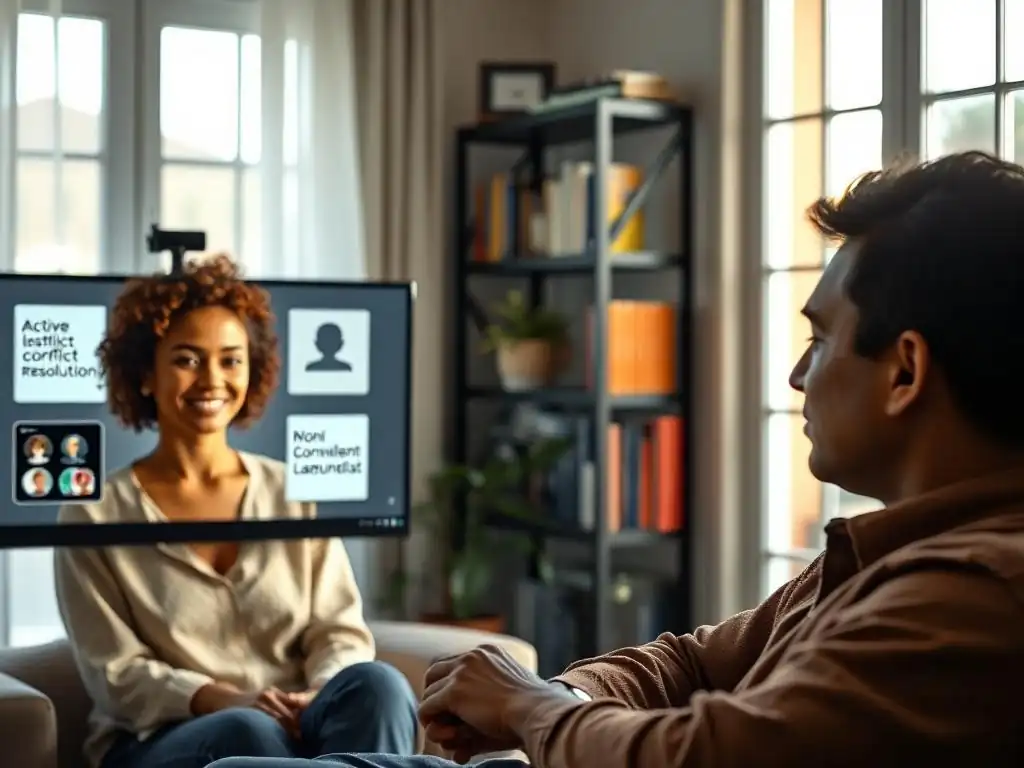
Welcome to Mind Care Guide, your trusted companion on the path to mental well-being.
Are you yearning for deeper, more meaningful connections in your relationships? Perhaps you've felt the strain of miscommunication, especially in the digital age. You're not alone. Discover how online relationship communication courses can empower you to navigate the complexities of modern relationships and build unbreakable bonds. Ready to transform your interactions and foster genuine understanding? Let's explore the top courses waiting to help you.
Build Unbreakable Connection: Top Online Courses for Relationship Communication
- Unlock Deeper Connections: Why Relationship Communication Courses Matter
-
Top 5 Online Relationship Communication Courses for a Stronger Bond
- 1. "Communication CPR" by Dr. John Howard: Reviving Connection Through Dialogue
- 2. Gottman Institute's Online Courses: The Gold Standard in Relationship Communication
- 3. "Conflict Resolution Skills" by Udemy: Navigating Disagreements Effectively
- 4. Relationship Hero's Coaching Program: Personalized Communication Guidance
- 5. "Nonviolent Communication" by Center for Nonviolent Communication: Fostering Empathy
- Choosing the Right Online Relationship Communication Course for You
- Beyond the Course: Sustaining Effective Communication in Your Relationship
- Invest in Your Relationship: The Long-Term Benefits of Improved Communication
- Affiliate Disclosure.
-
Frequently Asked Questions
- How can online relationship communication courses improve my relationship?
- Are online relationship communication courses effective for long-distance relationships?
- What are the key topics covered in online relationship communication courses?
- How much time commitment is required for online relationship communication courses?
- Where can I find reputable online relationship communication courses?
- Final Reflection: Cultivating Deeper Connections in a Digital Age
- Unlock Deeper Connections: Strengthen Your Relationships Today!
Unlock Deeper Connections: Why Relationship Communication Courses Matter
The Power of Effective Communication in Relationships
Effective communication serves as the bedrock for any healthy and thriving relationship, whether it's with a romantic partner, family member, or friend. It's the essential tool that allows individuals to understand each other's perspectives, share feelings honestly, and navigate life's challenges together. When communication flows freely and respectfully, partners feel heard, validated, and connected, fostering an environment of trust and mutual support that strengthens the bond over time.
Conversely, poor communication can lead to misunderstandings, resentment, and emotional distance. It's not just about talking; it's about truly listening, interpreting non-verbal cues, and responding empathetically. Mastering these skills is crucial for maintaining intimacy and resolving conflicts constructively, paving the way for a more fulfilling and resilient partnership.
Understanding Common Communication Roadblocks
Many relationships encounter communication difficulties that act as significant roadblocks to connection. These often include defensive responses, stonewalling (shutting down during conflict), criticism, and contempt – behaviors the Gottman Institute famously identifies as the "Four Horsemen of the Apocalypse" for relationships. Another common issue is a lack of active listening, where individuals are formulating their response instead of truly hearing what the other person is saying.
Other obstacles involve difficulty expressing needs and feelings clearly, fear of vulnerability, or relying on passive-aggressive tactics instead of direct communication. These patterns can become deeply ingrained, making it challenging for couples to break free without guidance. Recognizing these roadblocks is the first step toward improvement, highlighting the need for targeted learning and practice in effective communication techniques.
How Online Relationship Courses Can Transform Your Interactions
Online relationship communication courses offer an accessible and flexible way for individuals and couples to acquire the skills needed to overcome communication challenges and deepen their connection. These platforms provide structured lessons, exercises, and often interactive components designed by experts in psychology, counseling, and relationship dynamics. They break down complex concepts into manageable modules that can be studied at one's own pace and privacy.
Engaging with online relationship communication courses allows participants to learn proven strategies for active listening, empathetic responding, constructive conflict resolution, and expressing needs assertively and kindly. By providing practical tools and opportunities for practice, these courses empower individuals to transform negative communication patterns into positive ones, leading to reduced conflict, increased intimacy, and a more satisfying partnership. The flexibility of online learning makes it an ideal option for busy individuals or those who prefer learning from the comfort of their home.
Top 5 Online Relationship Communication Courses for a Stronger Bond
1. "Communication CPR" by Dr. John Howard: Reviving Connection Through Dialogue
Dr. John Howard's "Communication CPR" course is designed to help couples revive their connection by teaching essential dialogue skills. Based on decades of clinical experience, the program focuses on fundamental techniques for expressing oneself clearly, listening effectively, and navigating disagreements without causing further damage. It aims to provide immediate, practical tools that couples can implement in their daily interactions to improve understanding and reduce tension.
The course emphasizes that communication isn't just about talking, but about creating a safe space for both partners to be heard and understood. It addresses common pitfalls like assumptions and misinterpretations, offering clear strategies to build empathy and mutual respect. This focus on practical application makes it a popular choice for couples seeking tangible improvements quickly.
Key Features of "Communication CPR":
- Structured lessons breaking down complex communication concepts into understandable steps.
- Practical exercises and role-playing scenarios to practice skills in a safe environment.
- Focus on active listening, empathetic responses, and clear expression of needs.
- Guidance on de-escalating conflict and preventing arguments from spiraling.
Benefits of "Communication CPR" for Couples
Couples who complete "Communication CPR" often report significant improvements in their ability to communicate constructively. They learn how to express frustrations without resorting to blame or criticism, leading to less frequent and less intense arguments. The emphasis on empathy helps partners understand each other's perspectives better, fostering a deeper emotional connection and reducing feelings of isolation.
The skills taught in the course are applicable to a wide range of situations, from discussing finances to resolving minor daily annoyances. Many couples find that practicing the "CPR" techniques leads to increased patience and understanding, creating a more positive atmosphere in the relationship. This improved foundation can lead to greater intimacy and shared happiness.
Pricing and Access Options for "Communication CPR"
Access to "Communication CPR" is typically offered through Dr. Howard's official website or associated platforms. The pricing structure can vary, sometimes offering a single purchase option for lifetime access or a subscription model. While specific figures fluctuate, the course is generally positioned as an affordable alternative to long-term therapy, with costs often ranging from a few hundred dollars.
Availability is entirely online, allowing participants to access the course materials, videos, and exercises at any time and from anywhere with an internet connection. Some packages may include bonus materials or access to community forums, enhancing the learning experience. Potential participants should check the official source for the most current pricing and access details.
Real-Life Success Story: Increased Intimacy and Understanding
One couple, Sarah and Michael, who had been struggling with constant arguments and feeling misunderstood, decided to try "Communication CPR." Michael often felt attacked when Sarah brought up issues, and Sarah felt unheard and frustrated by Michael's defensiveness. After working through the course modules and practicing the exercises, they learned to use "I feel" statements instead of "You always" accusations.
Michael began practicing active listening, focusing on understanding Sarah's feelings before formulating a response. Sarah, in turn, learned to express her needs more clearly and gently. Within two months, they noticed a dramatic decrease in explosive arguments and a significant increase in their ability to discuss difficult topics calmly. Sarah reported feeling more connected and understood, while Michael felt less attacked and more able to engage constructively, ultimately strengthening their bond and intimacy.
2. Gottman Institute's Online Courses: The Gold Standard in Relationship Communication
The Gottman Institute, founded by Drs. John and Julie Gottman, is renowned for its research-based approach to relationships. Their work, spanning over 40 years, involves observing couples and identifying patterns that predict relationship success or failure. This extensive research forms the basis of their methodologies and resources, including their highly regarded online offerings.
Their online relationship communication courses translate complex scientific findings into practical, actionable strategies for couples. They cover essential topics like building friendship, managing conflict, and creating shared meaning, all grounded in empirical data. This commitment to a science-first approach makes the Gottman Institute's resources a trusted choice for couples seeking evidence-based guidance.
Gottman Method: A Science-Based Approach to Relationship Success
The Gottman Method is built upon the concept of the "Sound Relationship House," a framework outlining the essential components of a healthy relationship, starting with building Love Maps (knowing each other's inner world) and ending with creating Shared Meaning. It identifies specific communication patterns, both positive (like bids for connection and repairing attempts) and negative (the Four Horsemen), providing tools to strengthen the former and combat the latter.
Research supporting the Gottman Method includes studies observing thousands of couples, with high accuracy rates in predicting relationship outcomes. For instance, their ability to predict divorce with over 90% accuracy after just minutes of observing a couple's interaction highlights the power of their diagnostic framework and the importance of addressing specific communication dynamics. The method provides concrete techniques for turning towards bids for connection, practicing the regulated expression of negative emotions, and developing shared rituals.
Exploring Gottman's "Seven Principles for Making Marriage Work" Online Course
One of their flagship online relationship communication courses is based on the bestselling book "The Seven Principles for Making Marriage Work." This course guides couples through the core principles identified in Dr. John Gottman's research. It covers topics such as enhancing your Love Maps, nurturing fondness and admiration, turning towards each other instead of away, letting your partner influence you, solving solvable problems, overcoming gridlock, and creating shared meaning.
The online format includes videos, exercises, and quizzes designed to help couples understand and apply each principle to their own relationship. It provides a structured path for couples to work through the material together, fostering discussion and practice. The course aims to equip couples with a comprehensive toolkit for building a strong and lasting partnership based on scientific insights.
Gottman Relationship Checkup: Identifying Areas for Improvement
Beyond full courses, the Gottman Institute offers assessment tools like the Gottman Relationship Checkup. This online questionnaire, completed individually by each partner, provides a comprehensive analysis of the relationship's strengths and challenges based on the Gottman Method. It covers various areas, including friendship, intimacy, conflict management, shared values, and trust.
The Checkup generates a detailed report highlighting specific areas where the couple is doing well and areas that need attention. This can be incredibly valuable for couples unsure where to start or seeking targeted guidance. While not a course itself, it serves as an excellent prerequisite or companion to online relationship communication courses, helping couples pinpoint exactly which skills they need to develop.
Gottman Workshop at Home: Creating a Communication-Rich Environment
For couples seeking an experience similar to their in-person workshops but with the flexibility of online access, the Gottman Workshop at Home is available. This online program replicates the content and exercises of their popular "Art and Science of Love" weekend workshop. It's an intensive dive into the Gottman Method principles, offering couples dedicated time and structured activities to deepen their understanding and practice key skills.
The workshop includes video presentations by Drs. John and Julie Gottman, along with numerous exercises designed for couples to complete together. It covers topics like managing conflict gently, enhancing romance, and building a shared life. This format allows couples to create a focused, communication-rich environment in their own home, working through the material at their own pace over several days or weeks.
Udemy, a vast online learning platform, hosts numerous courses on relationship skills, including specialized online relationship communication courses focused specifically on conflict resolution. These courses are often taught by experienced therapists, coaches, or mediators and offer practical strategies for navigating disagreements constructively rather than letting them escalate into damaging arguments. The focus is on transforming conflict from a destructive force into an opportunity for growth and deeper understanding within the relationship.
Courses on Udemy are typically self-paced and include video lectures, downloadable resources, and exercises. They cover a range of techniques applicable not only to romantic relationships but also to family, work, and social interactions. The accessibility and wide variety of options available on platforms like Udemy make them a popular choice for individuals looking to improve specific communication skills like conflict management.
Learning to Navigate Disagreements Constructively
Conflict is an inevitable part of any close relationship, but how couples handle it makes all the difference. Online courses on conflict resolution teach techniques for approaching disagreements as a team working on a problem, rather than adversaries fighting against each other. This involves shifting the mindset from winning an argument to finding a mutually acceptable solution that respects both partners' needs and feelings.
Key skills taught include identifying the root cause of conflict, staying calm under pressure, and focusing on the issue at hand rather than resorting to personal attacks. Participants learn to express their concerns clearly and calmly, listen without interruption, and work collaboratively towards a resolution. These constructive approaches reduce the emotional toll of arguments and strengthen the relationship's ability to weather storms.
Building Assertiveness Without Aggression
A crucial component of effective conflict resolution is learning to be assertive without being aggressive. Aggression involves demanding or attacking, often violating the other person's rights or feelings. Passivity involves suppressing one's own needs and feelings to avoid conflict. Assertiveness, however, is about expressing one's thoughts, feelings, and needs honestly and directly while respecting the rights and feelings of the other person.
Conflict resolution courses provide frameworks for practicing assertive communication. This includes using "I" statements to express feelings and needs ("I feel frustrated when..." instead of "You always make me frustrated"), setting boundaries clearly, and making requests rather than demands. Developing assertiveness empowers individuals to advocate for themselves within the relationship while maintaining respect and open dialogue.
Practical Techniques for De-escalating Conflict
When emotions run high during a disagreement, it's easy for the situation to escalate quickly. Conflict resolution courses teach practical techniques specifically designed to de-escalate tension and bring the conversation back to a manageable level. These techniques might include taking a short break when feeling overwhelmed (as recommended by Gottman research, often suggesting at least 20 minutes to allow the nervous system to calm down), using calming language, or validating the other person's feelings ("I can see why you would feel that way").
Other de-escalation strategies involve active listening to show you are engaged, finding common ground, or injecting humor (appropriately) to lighten the mood. Learning these skills provides individuals with tools to prevent arguments from becoming explosive and damaging, allowing for more productive conversations even when discussing sensitive topics. The ability to de-escalate is vital for maintaining a safe emotional space in the relationship.
Case Study: Using Conflict Resolution Skills to Resolve Recurring Arguments
Consider a couple, David and Lisa, who frequently argued about household chores. David felt Lisa nagged him, and Lisa felt David wasn't doing his share. Their arguments often ended with one person walking away in frustration. After taking a Udemy course on conflict resolution skills, they learned to approach the topic differently. Lisa learned to express her need for help using "I feel overwhelmed when..." statements rather than criticizing David's lack of effort.
David learned to listen actively and respond calmly, acknowledging Lisa's feelings instead of becoming defensive. They also practiced the technique of scheduling a specific time to discuss the issue rather than bringing it up spontaneously during stressful moments. By applying the de-escalation and assertive communication techniques learned in the online course, they were able to have a productive conversation, agree on a clearer division of labor, and significantly reduce the frequency and intensity of their chore-related conflicts.
4. Relationship Hero's Coaching Program: Personalized Communication Guidance

Relationship Hero offers a different model from traditional self-paced online relationship communication courses; they provide personalized coaching sessions with trained relationship experts via phone, chat, or video. This service is designed for individuals or couples who need immediate support, tailored advice, and one-on-one guidance for specific relationship challenges, including communication breakdowns.
The platform connects users with coaches who have diverse backgrounds in therapy, counseling, and coaching. This personalized approach allows for dynamic interaction, real-time feedback, and strategies specifically applicable to the user's unique situation, offering a level of customization not typically found in pre-recorded online courses.
One-on-One Coaching with Experienced Relationship Experts
The core offering of Relationship Hero is direct interaction with experienced relationship coaches. These coaches are vetted professionals with backgrounds relevant to relationship dynamics and communication. Users can schedule sessions based on their availability, providing flexibility for busy schedules. The coaching can focus on a wide range of issues, from improving daily interactions to navigating major conflicts or rebuilding trust.
This one-on-one format allows the coach to listen deeply to the specifics of the user's situation, ask clarifying questions, and provide tailored advice and exercises. Unlike generic online courses, the guidance is dynamic and responsive, adjusting based on the user's progress and evolving needs. This personalized attention can be particularly effective for individuals struggling with complex or deeply ingrained communication patterns.
Tailored Strategies for Your Unique Relationship Challenges
One of the main advantages of a coaching program like Relationship Hero is the ability to receive strategies specifically tailored to your unique relationship challenges. A self-paced course provides general principles, but a coach can help you apply those principles to your specific dynamics, personality styles, and ongoing issues. If a couple struggles with a specific recurring argument pattern, the coach can help dissect that pattern and develop alternative responses.
For example, if one partner tends to shut down during conflict, the coach can work with both individuals on strategies for managing overwhelming emotions and re-engaging constructively. If the issue is difficulty expressing needs, the coach can provide personalized scripts and practice opportunities. This bespoke approach ensures that the communication skills learned are directly relevant and applicable to the user's life.
Developing Effective Communication Habits for Long-Term Success
Coaching isn't just about resolving immediate issues; it's also about building sustainable habits for long-term relationship success. A coach can help users identify their personal communication pitfalls and work on developing consistent, positive patterns. This might involve practicing active listening daily, scheduling regular check-ins with a partner, or developing a personal script for expressing needs assertively.
Through regular sessions, the coach provides accountability and support as users work to integrate new communication behaviors into their routine. The goal is to move beyond simply understanding concepts to consistently applying effective techniques, ultimately transforming communication from a point of struggle into a source of strength and connection in the relationship over time.
Testimonial: Improved Communication and Relationship Satisfaction
A user named Emily shared her experience using Relationship Hero after she and her partner hit a rough patch characterized by frequent misunderstandings and feeling disconnected. They struggled to have calm conversations about even minor issues, and major topics were avoided entirely. They opted for coaching sessions focusing on improving their communication.
Emily reported that their coach helped them identify specific triggers and develop strategies for pausing before reacting defensively. They practiced using validating language and active listening techniques during their sessions. Within a month, Emily and her partner noticed a significant reduction in conflict and an increase in their ability to discuss challenging topics calmly. Emily stated, "Our communication is so much better. We actually feel like we're on the same team again, and our overall relationship satisfaction has improved dramatically."
5. "Nonviolent Communication" by Center for Nonviolent Communication: Fostering Empathy
Nonviolent Communication (NVC), developed by Dr. Marshall B. Rosenberg, is a powerful framework for communication that emphasizes empathy, honesty, and connection. It's not just a set of techniques but a consciousness shift focused on understanding the underlying needs and feelings driving human behavior. The Center for Nonviolent Communication (CNVC) offers various resources, including online workshops and training, to teach individuals and couples the principles and practices of NVC.
NVC provides a structured way to express oneself clearly and empathetically, listen deeply to others, and navigate conflict by focusing on unmet needs rather than blame or judgment. Learning NVC through online resources can fundamentally change how individuals interact, fostering deeper connection and understanding in all relationships.
Understanding the Principles of Nonviolent Communication
The core of NVC lies in its four components: Observations, Feelings, Needs, and Requests. Observations are stating facts without judgment. Feelings are expressing emotions without blame. Needs are identifying the universal human needs (like safety, connection, or understanding) that are alive in you. Requests are asking for specific, actionable things that could help meet those needs, without demanding.
Learning NVC involves understanding how our language often contributes to disconnection through judgment, diagnosis, and blame. The principles encourage shifting from a language of criticism to a language of compassion, focusing on what is alive in ourselves and others. This foundational understanding is key to applying NVC effectively in various situations.
Expressing Needs and Feelings Honestly and Respectfully
A central practice in NVC is learning to express one's own feelings and needs honestly and respectfully. This involves moving away from veiled accusations or passive aggression and instead using clear, direct language about one's internal experience. For example, instead of saying "You never help around the house, you're so lazy," an NVC approach might be "When I see dirty dishes in the sink (Observation), I feel overwhelmed and frustrated (Feelings) because I have a need for support and ease (Needs). Would you be willing to help me clean up the kitchen tonight? (Request)."
This structure allows the speaker to be vulnerable and clear about their internal state without attacking the listener. Online relationship communication courses based on NVC provide guided practice in formulating these expressions, helping individuals become more articulate about their inner world and reducing defensiveness in their partners.
Building Empathy and Connection Through NVC
NVC also provides a powerful framework for listening to others with empathy. This involves hearing the other person's words and attempting to connect with the feelings and needs behind them, even if they are expressed judgmentally or aggressively. The process involves listening for the Observation, Feeling, Need, and Request in what the other person is saying, and reflecting back to check understanding.
For instance, if a partner says angrily, "You're always late! You clearly don't care about my time," an NVC-informed response might be, "Are you feeling frustrated (Feeling) when I arrive after the agreed time (Observation) because you have a need for punctuality and consideration (Need)?". This empathetic listening helps de-escalate conflict and builds connection by showing the speaker that they are being heard and their underlying needs are being acknowledged, even if you disagree with their initial expression.
Applying NVC to Everyday Interactions: Examples and Exercises
Online NVC training often includes practical exercises and real-life examples to help participants apply the principles to their everyday interactions. These might involve role-playing scenarios, analyzing sample conversations, or practicing the four components in journaling exercises. Participants learn how to use NVC not just during conflict but also for expressing appreciation, making requests, and simply deepening understanding in daily conversations.
Examples might include how to respond empathetically when a friend is upset, how to make a clear request of a family member, or how to express joy and gratitude using the NVC framework. The goal is to make NVC a living practice that permeates all communication, fostering a more compassionate and connected way of relating to oneself and others.
Choosing the Right Online Relationship Communication Course for You
Assessing Your Relationship Communication Needs
Before diving into online relationship communication courses, take some time to assess your specific needs and goals. What aspects of communication are most challenging for you or your partner? Are you struggling with conflict resolution, feeling unheard, expressing your needs, or building intimacy? Consider what you hope to achieve by taking a course – is it to reduce arguments, feel more connected, or simply understand each other better?
Reflecting on past communication breakdowns can provide clues. Identify patterns or recurring issues that you want to address. Having a clear understanding of your needs will help you narrow down the options and choose a course that focuses on the areas where you need the most improvement, whether that's active listening, assertiveness, or managing emotional reactivity.
Considering Your Learning Style and Preferences
Online learning offers various formats, and considering your learning style and preferences is crucial for choosing a course you'll stick with and benefit from. Do you learn best through video lectures, reading materials, interactive exercises, or live sessions? Some online relationship communication courses are entirely self-paced with pre-recorded content, while others might include live webinars, group discussions, or one-on-one coaching components.
Think about how much structure you need. A highly structured course might be best if you need clear guidance and accountability. If you prefer flexibility and can motivate yourself, a self-paced course might be suitable. Also, consider whether you want to learn individually or work through the material with your partner, as some courses are designed specifically for couples to take together.
Evaluating Course Content, Instructor Credentials, and Reviews
Once you have a few potential online relationship communication courses in mind, thoroughly evaluate their content, the credentials of the instructors, and reviews from past participants. Look at the course outline or syllabus to see if the topics covered align with your identified needs. Does the course delve deeply into the specific communication skills you want to learn?
Research the instructors – what is their background, experience, and training in relationship counseling, psychology, or communication? Reputable instructors often have advanced degrees, clinical experience, or recognized certifications (like Gottman Method certification or NVC trainer certification). Finally, read reviews and testimonials from other students. Look for feedback on the course's effectiveness, the quality of the instruction, the clarity of the materials, and the overall learning experience.
Comparing Pricing, Length, and Accessibility
Practical factors like pricing, course length, and accessibility also play a role in your decision. Online relationship communication courses vary significantly in cost, from affordable short modules on platforms like Udemy to more expensive, comprehensive programs or coaching services. Determine your budget and look for options that offer good value for the content provided.
Consider the time commitment. How long is the course designed to take? Are the modules short and easily digestible, or are they longer and more intensive? Ensure the course length fits your schedule and ability to commit. Finally, check the accessibility features – is the platform easy to use? Are the materials accessible on different devices? Are there any technical requirements? Comparing these factors will help you find a course that is not only effective but also feasible for you to complete.
Beyond the Course: Sustaining Effective Communication in Your Relationship

Practicing Active Listening and Empathy Regularly
Completing an online relationship communication course is a fantastic start, but sustaining effective communication requires ongoing practice. Active listening and empathy are skills that improve with consistent effort. Make a conscious effort to truly listen when your partner is speaking, focusing on understanding their message and feelings without interrupting or formulating your response prematurely.
Practice empathy by trying to see the situation from your partner's perspective and validating their feelings, even if you don't agree with their viewpoint. This doesn't mean you have to concede your position, but simply acknowledging their emotional experience ("It sounds like you're feeling really stressed about this") can make a huge difference in fostering connection and reducing tension. Integrating these practices into daily interactions, even outside of conflict, builds a stronger foundation.
Scheduling Dedicated Time for Meaningful Conversations
In busy lives, it's easy for communication to become purely logistical ("Did you pick up the dry cleaning?"). To maintain a strong emotional connection, it's vital to schedule dedicated time for meaningful conversations. This could be a weekly "relationship check-in," a daily ritual like sharing your day without distractions, or simply setting aside time to talk about dreams, fears, or shared interests.
These intentional conversations provide opportunities to practice the skills learned in online relationship communication courses in a low-pressure environment. They allow couples to stay connected to each other's inner worlds, build intimacy, and address potential issues before they escalate into major conflicts. Prioritizing this time signals to your partner that the relationship and their feelings are important.
Seeking Professional Help When Needed (Couples Therapy)
While online relationship communication courses offer valuable tools and strategies, they are not a substitute for professional therapy, especially when dealing with deep-seated issues, trauma, or severe conflict. If you find that the skills learned in a course are not sufficient to overcome your challenges, or if communication has become consistently hostile or withdrawn, seeking couples therapy is a sign of strength, not failure.
A trained therapist can provide a safe space to explore complex dynamics, mediate difficult conversations, and help address underlying psychological factors impacting communication. Online relationship communication courses can serve as an excellent complement to therapy, providing foundational skills that can then be refined and applied with the guidance of a professional. Knowing when to seek additional support is key to long-term relationship health.
Utilizing Communication Tools and Resources (e.g., Journals, Apps)
Beyond structured courses and therapy, numerous tools and resources can help couples maintain effective communication habits. Relationship journaling can be a way for individuals to process their thoughts and feelings before discussing them or as a shared activity where couples write letters or reflections to each other. Apps designed for couples can offer prompts for conversation, track relationship goals, or provide daily check-ins.
Some couples find it helpful to create shared documents outlining communication agreements or rules for conflict. Utilizing these tools can provide structure and prompts for practicing the skills learned in online relationship communication courses. They serve as reminders and aids in incorporating positive communication behaviors into the everyday fabric of the relationship, reinforcing the lessons learned and supporting ongoing growth.
Invest in Your Relationship: The Long-Term Benefits of Improved Communication
Building a Stronger, More Fulfilling Partnership
Investing time and effort in improving your relationship communication through online courses and ongoing practice yields significant long-term benefits. At the heart of it, better communication leads to a stronger, more resilient, and ultimately more fulfilling partnership. When partners feel truly heard and understood, the foundation of the relationship is solidified, allowing it to withstand external pressures and internal disagreements.
Effective communication allows couples to navigate life's transitions, support each other through challenges, and celebrate successes together. It fosters a sense of being a team, working collaboratively towards shared goals. This shared journey, built on open and honest dialogue, creates a deeper sense of connection and shared purpose, making the relationship a source of joy and strength.
Reducing Conflict and Increasing Intimacy
Improved communication directly impacts the frequency and intensity of conflict. By learning to express needs assertively, listen empathetically, and de-escalate tension, couples can transform arguments from damaging battles into opportunities for growth and understanding. Less conflict frees up emotional energy that can then be directed towards nurturing intimacy.
As communication becomes safer and more positive, partners feel more comfortable being vulnerable and sharing their deepest thoughts and feelings. This increased emotional intimacy often leads to greater physical intimacy and overall closeness. Studies consistently show a strong correlation between positive communication patterns and higher levels of relationship satisfaction and intimacy.
Enhancing Trust and Connection
Trust is built through consistent, reliable interactions, and effective communication is fundamental to this process. When partners communicate honestly, follow through on agreements, and respond to each other's needs, trust is enhanced. Learning to repair misunderstandings and apologize sincerely after conflict further strengthens trust, showing a commitment to the relationship and each other's well-being.
The enhanced connection that results from improved communication goes beyond simply getting along. It's about feeling deeply seen, understood, and valued by your partner. This profound sense of connection creates a secure base from which both individuals can thrive, knowing they have unwavering support and understanding in their relationship.
Creating a Lasting Legacy of Love and Understanding
The investment in online relationship communication courses and the subsequent practice of these skills create a lasting legacy. Not only does it benefit the couple directly, but it also sets a positive example for children, family members, and friends. Demonstrating healthy communication patterns teaches valuable lessons about resolving conflict respectfully, expressing emotions constructively, and building strong relationships.
The skills learned contribute to a positive cycle, where effective communication fosters a happy relationship, which in turn provides a stable and nurturing environment. This creates a ripple effect, influencing the well-being of the entire family system and contributing to a legacy of love, understanding, and healthy connection that can span generations.
Affiliate Disclosure.
Frequently Asked Questions
How can online relationship communication courses improve my relationship?
These courses provide structured learning and practical exercises to enhance your communication skills. They teach you how to effectively listen, express yourself, and resolve conflicts.
Are online relationship communication courses effective for long-distance relationships?
Yes, online courses are particularly beneficial for couples in long-distance relationships. They offer tools to bridge the physical gap and maintain a strong emotional connection through improved communication.
What are the key topics covered in online relationship communication courses?
Typically, these courses cover topics like active listening, non-violent communication, conflict resolution strategies, and understanding each other's needs. They aim to build healthier communication patterns.
How much time commitment is required for online relationship communication courses?
The time commitment varies, but most courses require a few hours per week. This includes watching video lessons, completing exercises, and participating in discussions to apply the learned concepts.
Where can I find reputable online relationship communication courses?
Websites like Mind Care Guide, Coursera, Udemy, and specialized relationship platforms offer various courses. Look for courses with positive reviews, experienced instructors, and a curriculum aligned with your needs.
Final Reflection: Cultivating Deeper Connections in a Digital Age
The need for effective communication in relationships has never been more critical, especially as our lives increasingly unfold online. The rise of digital communication, while offering convenience, also presents unique challenges to fostering genuine connection. Misunderstandings can easily arise, and the nuances of human interaction can be lost in the translation of text and emojis. This necessitates a proactive approach to learning and improving our online relationship communication skills.
The impact of improved communication extends far beyond the digital realm; it shapes the very fabric of our personal lives and relationships. Stronger communication skills not only enhance our romantic partnerships but also enrich our friendships, family bonds, and professional interactions. As the saying goes, The single biggest problem in communication is the illusion that it has taken place.
This article aimed to combat that illusion by providing resources to help individuals cultivate more meaningful and fulfilling relationships, both online and offline, through targeted learning.
Now, consider your own relationships. What areas could benefit from improved communication? Perhaps you've noticed patterns of misunderstanding or conflict. Perhaps you long for deeper intimacy and connection. This article isn't just a list of courses; it's an invitation. It's an invitation to invest in yourself and your relationships by actively seeking out the knowledge and tools to build unbreakable bonds, regardless of the platform. Take the first step today. Choose a course, start learning, and watch your relationships flourish.
Unlock Deeper Connections: Strengthen Your Relationships Today!
Thanks for taking the time to explore the power of online courses in improving relationship communication! You've gained valuable insights into building stronger, more fulfilling connections. Now it's time to put that knowledge into action.
- Enroll in a course: Choose the communication style that resonates most with you and start learning practical skills to enhance your relationships immediately.
- Share this article: Spread the word and help others discover the transformative power of effective communication. Perhaps tag a friend who could benefit from these insights!
- Join the conversation: What's one communication technique you're most excited to try? Share your thoughts in the comments below!
Ready to invest in the most important relationships in your life?