
The Ethics of Design: How Social Media Platforms Affect Our Minds


Welcome to Mind Care Guide, a space dedicated to nurturing your mental well-being.
Ever wondered about the subtle ways your online experiences shape your thoughts and feelings? You're not alone. Dive into our exploration of the social media mental health impact and uncover the ethical considerations behind the platforms we use daily. Prepare to question, learn, and discover how to navigate the digital world with greater awareness and care. Let's begin...
The Ethics of Design: How Social Media Platforms Affect Our Minds
- Introduction: Understanding the Social Media Mental Health Impact
- The Psychology Behind Social Media Engagement
- Negative Psychological Effects of Social Media
- Ethical Design Considerations for Social Media Platforms
- Social Media Addiction: A Growing Concern for Mental Health
- Positive Aspects of Social Media and Mental Health
- The Future of Social Media and Mental Well-being
- Strategies for Healthy Social Media Use
- Conclusion: Navigating the Complex Relationship Between Social Media and Mental Health
-
Frequently Asked Questions
- How does the design of social media platforms contribute to potential mental health issues?
- What are some ethical considerations for social media companies regarding their platform's impact on users' mental well-being?
- Can excessive social media use lead to feelings of loneliness and isolation?
- What specific strategies can individuals use to mitigate the negative effects of social media on their mental health?
- Does social media have any potential benefits for mental health, and if so, what are they?
- Final Reflection: Rewiring Our Relationship with Social Media
- Unlock Your Mind's Potential: Take Control of Your Social Media
Social media platforms have become deeply integrated into the fabric of modern life, influencing how we communicate, gather information, and perceive ourselves and the world around us. With billions of users worldwide – platforms like Facebook boast over 3 billion monthly active users, while Instagram and TikTok each have over a billion – their reach is undeniable. This widespread adoption means that the design choices made by these platforms have a significant, often subtle, social media mental health impact on users of all ages.
The constant connectivity and curated realities presented online can alter our social interactions, self-esteem, and emotional states. Research indicates a correlation between heavy social media use and increased feelings of loneliness, anxiety, and depression, particularly among young adults and adolescents. For instance, a 2017 study involving over 500,000 US adolescents found a significant rise in depressive symptoms and suicide rates that coincided with increased smartphone ownership and social media use during the same period. Understanding this pervasive influence is the first step in addressing its ethical dimensions.
Given the profound reach and influence of social media, the companies that design and operate these platforms bear significant ethical responsibilities. Their design choices – from the layout of the feed to the notification systems and the underlying algorithms – are not neutral; they are engineered to maximize engagement, which can inadvertently contribute to negative social media mental health impact. Ethical design calls for prioritizing user well-being alongside business objectives.
This involves considering the potential psychological consequences of features like infinite scroll, like counts, and targeted advertising. It requires platforms to think critically about how their interfaces might encourage addictive behaviors, foster social comparison, or facilitate the spread of harmful content. An ethical approach would necessitate greater transparency, offering users more control, and actively designing features that promote healthier online interactions and digital well-being, rather than solely focusing on metrics like time spent on the platform.
Social media algorithms are sophisticated systems designed to determine which content users see and in what order. Their primary goal is often to maximize engagement – keeping users scrolling, liking, and interacting for as long as possible. Algorithms analyze user behavior, such as past likes, shares, comments, and time spent viewing specific posts, to predict what content will be most appealing and attention-grabbing. This creates personalized feeds that are highly effective at capturing and holding attention.
This relentless pursuit of engagement, however, can have a significant social media mental health impact. By constantly serving up content tailored to individual interests and past behaviors, algorithms can create filter bubbles, limit exposure to diverse perspectives, and even amplify content that triggers negative emotions or addictive tendencies.
For example, if a user interacts with content related to dieting or body image concerns, algorithms may serve more of this content, potentially exacerbating body dissatisfaction. The opaque nature of these algorithms also means users often don't understand why they are seeing certain content, making it difficult to manage their online experience.
Dopamine Loops and the Pursuit of Validation Online
The design of social media platforms often leverages psychological principles related to reward systems in the brain, particularly the release of dopamine. Features like notifications for likes, comments, or mentions create unpredictable positive reinforcement – you never know exactly when or how much validation you'll receive. This unpredictability makes checking for updates highly rewarding and encourages repetitive behavior, similar to how variable rewards function in slot machines. Each notification or positive interaction provides a small hit of dopamine, reinforcing the behavior of checking the app.
This constant pursuit of validation through likes, shares, and positive comments online can become a powerful, often subconscious, drive. Users may feel compelled to post content that they believe will receive positive feedback, leading to carefully curated, often unrealistic, online personas. When validation isn't received, or when negative feedback occurs, it can lead to feelings of disappointment, anxiety, or inadequacy. This creates a cycle where users are constantly seeking external validation through the platform, contributing to a complex social media mental health impact centered around self-worth being tied to online metrics.
Social media platforms are environments ripe for social comparison. Users are constantly exposed to curated highlights of other people's lives – their achievements, perfect vacations, attractive appearances, and seemingly effortless happiness. This constant stream of idealized content makes it easy for users to compare their own realities to these often-unrealistic portrayals. This upward social comparison – comparing oneself to those perceived as better off – is a well-documented psychological phenomenon that can negatively affect self-esteem and contribute to feelings of envy and inadequacy.
Studies have consistently shown a link between increased social comparison on platforms like Instagram and Facebook and higher levels of depressive symptoms and body dissatisfaction, particularly among young women. Seeing friends or even strangers appear to live perfect lives can lead individuals to feel their own life is lacking, even if those online portrayals are far from the full picture. This inherent design feature of social media, which facilitates easy and constant comparison, is a significant factor in its overall social media mental health impact.
A growing body of research points to a correlation between heavy social media use and increased rates of anxiety and depression, particularly among adolescents and young adults. The constant pressure to present a perfect online persona, the fear of missing out (FOMO), cyberbullying, and the exposure to curated, often unrealistic, depictions of others' lives can all contribute to feelings of inadequacy, stress, and sadness.
For instance, a study published in the Journal of Abnormal Psychology in 2017 found that young adults who used social media for two hours or more per day were significantly more likely to report feelings of social isolation than those who spent less time online, despite being theoretically more connected.
Furthermore, the passive consumption of social media content – endlessly scrolling through feeds without active interaction – has been linked to worse mental health outcomes than active engagement. This suggests that simply observing others' lives online can be detrimental. The constant influx of information and social stimuli can also contribute to feelings of being overwhelmed, impacting sleep patterns and overall mental resilience. The cumulative effect of these factors represents a significant social media mental health impact that warrants serious attention.
The Impact of Cyberbullying and Online Harassment
Social media platforms, while facilitating connection, also provide avenues for harmful behavior such as cyberbullying and online harassment. Unlike traditional bullying, cyberbullying can occur at any time, is often anonymous or pseudonymous, and can reach a wide audience instantly, making it particularly distressing for victims. Examples include spreading rumors, posting embarrassing photos or videos, sending threatening messages, or intentionally excluding someone online.
The psychological toll of cyberbullying can be severe, leading to intense feelings of shame, isolation, anxiety, depression, and in tragic cases, suicidal ideation. A report by the Cyberbullying Research Center indicated that over a third of US middle and high school students have experienced cyberbullying, and a significant percentage report it negatively impacting their feelings about themselves or their relationships. Platforms have an ethical responsibility to design systems that prevent and address cyberbullying effectively, as its impact on social media mental health is profound and potentially life-threatening.
Body Image Issues and Unrealistic Expectations
Social media platforms, particularly image-focused ones like Instagram and TikTok, are rife with content that can contribute to negative body image and promote unrealistic beauty standards. Filters, photo editing tools, and the prevalence of highly curated, often professional-quality images create an environment where users are constantly exposed to idealized and often unattainable physical appearances. This can lead individuals, especially adolescents and young women, to feel dissatisfied with their own bodies.
Studies have shown a strong correlation between time spent on social media and increased body dissatisfaction, disordered eating behaviors, and the pursuit of cosmetic procedures. For example, research has linked exposure to filtered selfies to negative self-esteem and a desire for cosmetic surgery. The constant exposure to these idealized images, coupled with the pressure to present a similarly flawless version of oneself online, contributes significantly to the social media mental health impact related to body image concerns, fostering comparison and self-criticism.
Fear of Missing Out (FOMO) and its Consequences
Fear of Missing Out (FOMO) is a psychological phenomenon exacerbated by social media, where individuals feel apprehension that others might be having rewarding experiences from which they are absent. Seeing friends or acquaintances posting about social events, travel, or exciting activities can trigger feelings of envy, inadequacy, and anxiety about missing out on potentially enjoyable or important experiences. The constant visibility of others' activities online fuels this fear, creating a perpetual cycle of checking social media to see what others are doing.
This constant state of worry and the compulsion to stay updated can lead to increased stress, poor sleep quality, and reduced satisfaction with one's own life. It can also drive individuals to engage in activities they don't genuinely enjoy or can't afford, simply to create content that portrays an exciting life online and alleviate their FOMO. The pervasive nature of FOMO is a direct consequence of the always-on, constantly updating nature of social media feeds and contributes significantly to the overall social media mental health impact experienced by users.

Transparency and User Control Over Algorithms
One crucial ethical consideration for social media platforms is transparency regarding their algorithms and providing users with meaningful control over their feeds. Currently, the inner workings of algorithms that determine what content users see are largely hidden, making it difficult for individuals to understand why they are shown certain posts or advertisements. This lack of transparency can feel manipulative and limits a user's ability to curate a healthier online environment.
Ethical design would involve explaining, in clear and accessible language, how algorithms prioritize content. More importantly, it would empower users with robust controls – perhaps allowing them to filter topics they wish to see less of, adjust the weighting of certain types of content (e.g., friends vs. public figures), or even opt for a more chronological or less algorithmically curated feed. Providing this level of control could significantly mitigate some negative social media mental health impacts by allowing users to shape their own digital experience rather than being passively subjected to algorithmic decisions.
Promoting Responsible Use and Digital Well-being
Social media platforms have a responsibility to design features that actively promote responsible use and digital well-being, rather than solely optimizing for maximum engagement. This could involve implementing nudges or features that encourage users to take breaks, manage their time on the platform, or reflect on their usage patterns. Examples of such features, though sometimes limited, include usage dashboards that show time spent on the app or optional notifications reminding users to take a break after a certain duration.
Further ethical design could involve defaulting to settings that prioritize well-being, such as turning off read receipts or like counts by default, giving users the choice to opt-in if they desire these features. Platforms could also design interfaces that make it easier for users to curate positive feeds, mute triggering content, or limit interactions with accounts that cause distress. Proactively incorporating well-being features into the core design is essential for mitigating negative social media mental health impact.
Combating Misinformation and Harmful Content
The rapid spread of misinformation, hate speech, and other harmful content is a major ethical challenge for social media platforms with significant social media mental health impact. Exposure to false narratives, conspiracy theories, or hateful rhetoric can fuel anxiety, distrust, and polarization. Platforms have a moral obligation to implement effective systems for identifying and mitigating the spread of such content, balancing this with principles of free expression.
This requires significant investment in content moderation, utilizing both human reviewers and sophisticated AI systems. It also involves designing features that make it harder for misinformation to go viral, such as adding friction to sharing content that hasn't been verified or clearly labeling disputed information. While challenging, failure to adequately address harmful content contributes to a toxic online environment that can severely impact users' mental and emotional well-being.
Protecting User Privacy and Data Security
Protecting user privacy and ensuring data security are fundamental ethical requirements for any online platform, especially those handling vast amounts of personal information like social media. Users share intimate details about their lives, thoughts, and relationships on these platforms, and the misuse or breach of this data can have serious psychological consequences, including anxiety, distress, and vulnerability.
Ethical design necessitates robust security measures to prevent data breaches and transparent policies about how user data is collected, used, and shared. Users should have clear and accessible controls over their privacy settings, allowing them to determine what information is visible to others and how their data is utilized for purposes like targeted advertising. A breach of trust regarding privacy can severely undermine a user's sense of safety and security online, adding another layer to the complex social media mental health impact.
Social media addiction, while not formally recognized as a clinical disorder in the DSM-5, is a behavioral pattern characterized by excessive and compulsive use of social media platforms that interferes with daily life. Identifying the signs is crucial for addressing its potential social media mental health impact. Common indicators include:
- Spending excessive amounts of time on social media, often much longer than intended.
- Feeling restless, anxious, or irritable when unable to access or use social media.
- Neglecting responsibilities at work, school, or home due to social media use.
- Withdrawing from real-life social interactions in favor of online ones.
- Experiencing negative consequences (e.g., sleep deprivation, poor performance) but continuing to use social media compulsively.
- Constantly thinking about social media or feeling a strong urge to use it.
- Using social media to escape from negative moods or feelings.
Recognizing these patterns is the first step toward understanding the grip social media might have and its contribution to mental health challenges.
There is a growing body of evidence suggesting a strong link between problematic or addictive social media use and various mental health disorders. Studies have shown correlations between excessive social media engagement and increased symptoms of depression, anxiety, loneliness, and even ADHD. The constant need for validation, exposure to curated realities, cyberbullying, and the disruption of sleep patterns associated with overuse can all exacerbate existing vulnerabilities or contribute to the onset of new mental health challenges.
For individuals already struggling with conditions like social anxiety, social media can become a crutch, replacing face-to-face interactions and potentially worsening real-world social skills. For those prone to depression, the constant exposure to seemingly happier lives online can deepen feelings of inadequacy and hopelessness. The addictive nature of platform design, prioritizing engagement above all else, plays a significant role in fostering these unhealthy patterns of use and amplifying their social media mental health impact on vulnerable individuals.
Managing and overcoming problematic social media use often requires intentional strategies and behavioral changes. It begins with acknowledging the issue and understanding its social media mental health impact. Practical steps can include:
- Setting strict time limits for social media use, potentially using built-in phone features or third-party apps.
- Turning off non-essential notifications to reduce the urge to constantly check the phone.
- Designating specific times or places where social media is off-limits (e.g., during meals, before bed, in the bedroom).
- Unfollowing accounts that trigger negative feelings or comparison.
- Actively scheduling real-life social activities and hobbies to replace time spent online.
- Practicing mindfulness to become more aware of the impulse to check social media and the feelings associated with it.
- Deleting apps from your phone temporarily or permanently if necessary.
For individuals struggling with severe compulsive use or those who find social media significantly exacerbating existing mental health conditions, seeking professional help from a therapist or counselor specializing in behavioral addictions can provide tailored support and strategies for recovery.
Despite the potential pitfalls, social media can also have positive social media mental health impact by facilitating connection and community building. For individuals who may feel isolated due to geographical location, health issues, or social anxieties, online platforms can provide vital access to supportive communities based on shared interests, identities, or experiences. These online connections can offer a sense of belonging and reduce feelings of loneliness.
For example, support groups for specific health conditions, LGBTQ+ communities, or hobbyist groups thrive on social media, providing spaces where individuals can share experiences, seek advice, and offer mutual support without the barriers of physical proximity. While not a complete replacement for in-person interaction, these online networks can be particularly valuable for those who find it difficult to connect in traditional settings, offering a lifeline of social support.
Access to Mental Health Resources and Information
Social media platforms have become significant channels for disseminating mental health information and resources. Organizations, mental health professionals, and advocates use these platforms to share educational content, raise awareness about various conditions, and provide links to support services, crisis hotlines, and therapeutic tools. This widespread availability of information can help demystify mental illness and empower individuals to seek help.
Campaigns promoting mental health awareness often gain significant traction on social media, reaching broad audiences quickly. Users can discover self-help strategies, learn about different therapy modalities, and find inspiration from others who are openly discussing their mental health journeys. While caution is needed regarding the credibility of sources, the accessibility of mental health information via social media represents a positive social media mental health impact, breaking down barriers to knowledge and support.
Raising Awareness and Reducing Stigma Surrounding Mental Illness
Social media has played a crucial role in recent years in fostering open conversations about mental health and challenging the stigma associated with mental illness. Individuals, including public figures, increasingly use platforms to share their personal struggles, experiences with therapy, and recovery journeys. This vulnerability helps to normalize mental health challenges and encourages others to speak up and seek help.
Hashtag campaigns and awareness initiatives focused on mental health gain significant visibility on platforms like Twitter and Instagram, reaching millions and fostering a sense of collective understanding and empathy. By providing a platform for diverse voices to share their stories, social media can contribute to a cultural shift towards greater acceptance and support for those living with mental health conditions, thereby reducing the social media mental health impact of stigma and isolation.
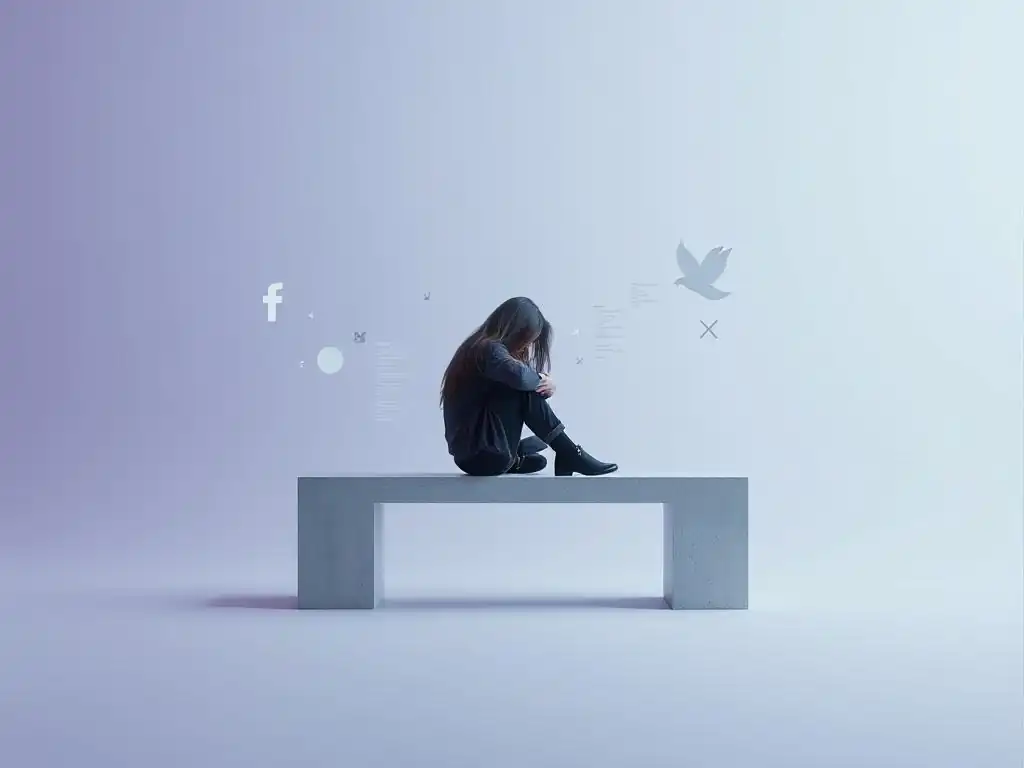
The growing awareness of the social media mental health impact is prompting discussions and some movement towards more ethical design practices. The future may see platforms incorporating well-being principles more deeply into their core functionality. This could include:
- Defaults that limit notifications or hide potentially triggering metrics like like counts.
- Features that actively prompt users to take breaks or engage in offline activities.
- Algorithmic adjustments that prioritize diverse content and positive interactions over purely engagement-driven amplification.
- Tools that make it easier for users to understand and control their data and feed content.
- Design choices that reduce the addictive potential of features like infinite scroll.
These innovations, driven by both ethical considerations and potentially regulatory pressure, could lead to platforms that are not just engaging, but also genuinely supportive of user mental health.
The Role of Artificial Intelligence in Promoting Mental Health Online
Artificial intelligence (AI), while central to engagement algorithms, also holds potential for positive social media mental health impact. AI can be used to:
- Identify and flag harmful content, including cyberbullying, hate speech, and potentially self-harm-related posts, for human review.
- Detect patterns of distress in user language (while respecting privacy) and potentially offer resources or suggestions for support.
- Power chatbots or automated systems that provide initial mental health information or connect users to crisis lines.
- Personalize the presentation of mental health resources based on user interests or expressed needs.
While there are significant ethical considerations around privacy and surveillance when using AI for mental health purposes, its potential to help identify users at risk and provide timely access to support represents a promising avenue for future development.
Empowering Users to Take Control of Their Digital Experiences
Ultimately, the future of social media and mental well-being also hinges on empowering users. Platforms can contribute by providing intuitive tools and clear information, but users must also be equipped with the knowledge and skills to navigate the digital landscape mindfully. This involves digital literacy education that teaches critical evaluation of online content, understanding of algorithmic influence, and strategies for managing screen time and online interactions.
Future developments could include collaborative efforts between platforms, educators, and mental health professionals to create resources embedded within the platforms themselves, guiding users towards healthier digital habits. Empowering users means shifting the dynamic from passive consumption to active, intentional engagement, allowing individuals to harness the benefits of social media while minimizing its potential social media mental health impact.
Setting Boundaries and Limiting Screen Time
Establishing clear boundaries is perhaps the most fundamental strategy for mitigating the negative social media mental health impact. This involves consciously deciding how much time you will spend on social media and sticking to those limits.
- [ ] Use your phone's built-in screen time tracking tools.
- [ ] Set daily limits for specific social media apps.
- [ ] Schedule "digital detox" periods each day or week.
- [ ] Avoid using social media in the first hour after waking up and the last hour before sleeping.
- [ ] Turn off notifications that aren't essential.
- [ ] Delete apps from your phone temporarily to break habits.
Consistently implementing these boundaries helps regain control over your time and reduces the likelihood of falling into compulsive scrolling patterns.
Curating Your Feed for Positive Content
The content you consume on social media directly influences your mood and perspective. Actively curating your feed to focus on positive, inspiring, and informative content can significantly improve your social media mental health impact.
- [ ] Unfollow accounts that make you feel inadequate, anxious, or negative.
- [ ] Follow accounts that share uplifting content, educational information, or genuine connections.
- [ ] Mute conversations or topics that are triggering or overly negative.
- [ ] Engage more with content that genuinely interests and benefits you.
- [ ] Use platform features to hide or see less of content types you don't want to view.
Intentionally shaping your online environment ensures that your social media experience is more supportive and less detrimental to your well-being.
Practicing Mindfulness and Self-Awareness Online
Bringing mindfulness to your social media use involves paying attention to your feelings and behaviors while online, without judgment. This self-awareness helps you recognize patterns that might be harmful.
- [ ] Pause before opening a social media app and ask yourself why you are checking it.
- [ ] Notice how different types of content make you feel (e.g., inspired, envious, anxious).
- [ ] Be aware of the urge to compare yourself to others and consciously redirect your thoughts.
- [ ] Pay attention to physical sensations while scrolling (e.g., tension, eye strain).
- [ ] Practice deep breathing exercises if you feel overwhelmed or anxious online.
Developing this awareness allows you to make more conscious choices about your social media engagement and its social media mental health impact.
Seeking Professional Help When Needed
If you find that social media use is significantly contributing to feelings of anxiety, depression, isolation, or is interfering with your daily life, it may be time to seek professional support.
- [ ] Consult a therapist or counselor who can help you understand the underlying reasons for problematic social media use.
- [ ] Discuss strategies for managing digital habits and developing healthier coping mechanisms.
- [ ] Seek help if you are experiencing cyberbullying or online harassment and need support navigating the situation.
- [ ] If you suspect social media use is linked to or exacerbating a diagnosed mental health condition, talk to your doctor or mental health provider.
Professional guidance can provide tailored strategies and support to address the complex relationship between social media and your mental well-being.
Promoting a More Ethical and Mindful Digital Landscape
The relationship between social media and mental health is undeniably complex, presenting both opportunities for connection and support, and significant risks to well-being. As we have explored, the design choices of social media platforms play a crucial role in shaping user behavior and influencing psychological outcomes. Features intended to maximize engagement can inadvertently foster addiction, comparison, anxiety, and exposure to harmful content, contributing to a significant social media mental health impact.
Moving forward requires a collective effort to promote a more ethical and mindful digital landscape. This involves urging platforms to prioritize user well-being through transparent algorithms, features that support responsible use, and robust systems for combating harmful content. It also necessitates ongoing dialogue about the ethical responsibilities of technology companies whose products are so deeply intertwined with our emotional and social lives.
The Importance of Individual Responsibility and Platform Accountability
Navigating the digital world in a way that supports mental health requires a dual approach: platform accountability and individual responsibility. While platforms must be held accountable for designing ethically and mitigating risks, users also have a role to play in cultivating healthy digital habits. This includes setting boundaries, curating positive online environments, practicing self-awareness, and seeking help when needed.
The social media mental health impact is not solely determined by the technology itself, but by how it is designed, how it is used, and the broader societal context. By demanding more ethical design from platforms and adopting mindful practices in our own social media use, we can work towards a future where digital connectivity enhances rather than detracts from our mental well-being. Understanding this intricate balance is key to fostering a healthier relationship with the online world.
Frequently Asked Questions
Social media's design often utilizes features like infinite scrolling and personalized algorithms that promote compulsive usage. This can lead to increased anxiety and a fear of missing out (FOMO).
Social media companies have an ethical responsibility to prioritize user well-being over engagement metrics. This includes transparency about algorithms and mitigating harmful content.
Yes, despite connecting people, excessive social media use can ironically lead to feelings of isolation. Comparison to others' curated lives can foster feelings of inadequacy and loneliness.
Individuals can limit their screen time, curate their feeds to focus on positive content, and practice mindful engagement. Building strong offline connections is also crucial.
Yes, social media can offer access to support groups, mental health resources, and facilitate connection with like-minded individuals. However, its use needs to be mindful and balanced.
The pervasive influence of social media on our mental well-being is no longer a fringe concern; it's a defining challenge of our time. The carefully crafted algorithms, designed to maximize engagement, often prioritize profit over the psychological health of users. This article has explored the ethical dilemmas inherent in this design, highlighting the manipulative techniques employed and their devastating consequences. We must confront this reality head-on, for the sake of our collective mental health.
The insidious nature of these platforms lies in their ability to subtly shape our perceptions of reality, fostering unrealistic comparisons and anxieties. We are constantly bombarded with curated images of perfection, leading to feelings of inadequacy and low self-esteem. This constant pressure to conform to an idealized online persona takes a significant toll. As Sherry Turkle eloquently stated, We expect more from technology and less from each other.
This quote perfectly encapsulates the isolating effect of prioritizing online interactions over genuine human connection, a consequence directly linked to the design choices of social media companies.
Consider the power you hold as a user. You have the agency to curate your online experience, to consciously limit your exposure to potentially harmful content, and to prioritize meaningful interactions over superficial engagement. Choose to engage with platforms mindfully, prioritizing your mental well-being over the allure of endless scrolling. This isn't about abandoning social media entirely, but about reclaiming your relationship with it, shaping it to serve your needs, not the other way around. Let's collectively strive for a more ethical digital landscape, one that prioritizes human well-being over profit.
Thanks for taking the time to explore the impact of social media on our minds! You’ve gained valuable insights into ethical design and its influence on our well-being. Now, let's put that knowledge into action.
- Prioritize mindful social media use: Set realistic daily limits for your screen time and consciously choose moments for disconnection. This is the key step to reclaiming your mental space.
- Share this article: Spread awareness about ethical design in social media. Let's start a conversation about responsible platform use with your friends and family.
- Explore alternative platforms: Consider using smaller, community-focused platforms as an experiment. What positive changes might you discover?
What small change will you make today to cultivate a healthier relationship with social media?