
Is Your Scroll Hurting Your Soul? Social Media and Anxiety Explored


Welcome to Mind Care Guide, a safe space for nurturing your mental well-being.
Feeling overwhelmed by the endless scroll? In today's hyper-connected world, it's easy to feel the pressures of social media weighing you down. Are you experiencing a creeping anxiety that seems directly linked to your online life? You're not alone. This article dives deep into understanding the connection between your digital habits and your mental state, providing practical social media anxiety management tips to help you reclaim your peace of mind. Ready to find a healthier balance? Let's explore together...
Is Your Scroll Hurting Your Soul? Social Media and Anxiety Explored
- Understanding the Link Between Social Media and Anxiety
- Identifying Social Media Anxiety: Signs and Symptoms
- Social Media Anxiety Management Tips: Practical Strategies for Relief
- Breaking Free: Strategies for Detoxing from Social Media
- Building a Healthier Relationship with Social Media
- Long-Term Solutions: Seeking Professional Help for Social Media Anxiety
- The Future of Social Media and Mental Well-being
-
Frequently Asked Questions
- How does social media contribute to anxiety?
- What are some practical social media anxiety management tips?
- Can social media ever be beneficial for mental well-being?
- What are some signs that social media is negatively impacting my mental health?
- Where can I find additional support if I'm struggling with social media-related anxiety?
- Final Reflection: Reclaiming Your Peace in a Digital Age
- Unleash Your Digital Wellbeing: Reclaim Your Peace of Mind
The digital age has ushered in unprecedented connectivity, yet it has also coincided with a notable increase in reported anxiety symptoms, particularly among younger generations. This phenomenon, often termed social media anxiety, describes the feelings of unease, worry, and nervousness triggered by interactions with or exposure to social networking platforms. While social media offers valuable tools for connection and information sharing, its pervasive nature and design features can inadvertently foster environments ripe for psychological distress.
Studies indicate a significant correlation between heavy social media use and increased levels of anxiety and depression. For instance, research from [Approximate year, e.g., the mid-2010s] suggested that individuals spending more than [Approximate number, e.g., two hours] daily on social media were significantly more likely to report psychological distress compared to those with less usage.
This modern epidemic isn't confined to a specific group; it impacts people across various demographics, though adolescents and young adults appear particularly vulnerable. The constant stream of curated content, the pressure to present an idealized self, and the fear of missing out (FOMO) contribute to a persistent low-grade stress that can escalate into clinical anxiety for some.
The sheer volume of information and social stimuli available at our fingertips means our brains are constantly processing comparisons, judgments, and perceived social slights, a stark contrast to the slower, more contained social interactions of previous eras. Addressing social media anxiety requires understanding its roots and developing effective social media anxiety management tips.
Several core mechanisms underpin the link between social media use and anxiety. One primary driver is the constant exposure to others' seemingly perfect lives, leading to upward social comparison. Users often present highlights, achievements, and idealized versions of themselves online, creating an unrealistic standard against which others measure their own lives. This can lead to feelings of inadequacy, envy, and self-doubt. Research published around [Approximate year, e.g., 2017] indicated that passive consumption of social media content (simply viewing others' posts without interacting) was particularly linked to negative effects on mood and increased anxiety symptoms.
Another significant factor is the addictive nature of these platforms. Features like notifications, likes, and comments provide intermittent positive reinforcement, similar to gambling mechanisms, which can create a compulsive checking habit. The anticipation of these rewards, coupled with the potential for negative feedback or lack of engagement, can generate significant stress and anxiety.
Furthermore, cyberbullying, online harassment, and the fear of public shaming or judgment are very real threats within the digital space, capable of causing profound psychological harm and triggering intense anxiety responses. Understanding these triggers is the first step in implementing effective social media anxiety management tips to protect one's mental health.
Social media-induced anxiety manifests in various ways, often mirroring symptoms of generalized anxiety disorder but specifically tied to online interactions or their anticipation. Common signs include a persistent feeling of worry or dread before or after using social media, excessive checking of notifications, and difficulty concentrating on offline tasks because of intrusive thoughts related to online activity. Physically, this anxiety might present as restlessness, increased heart rate, sweating, or sleep disturbances, particularly if scrolling late into the night. Emotionally, individuals might experience irritability, sadness, or a sense of worthlessness after comparing themselves to others online.
Consider the user who feels compelled to check their phone every few minutes, experiencing a pang of anxiety if they see no new notifications, or the individual who spends hours crafting a post, then agonizes over the number of likes or comments it receives. These behaviors, when persistent and distressing, point towards social media anxiety. It's not just the time spent online, but the quality of that time and the emotional response it elicits that are key indicators.
If you find yourself constantly seeking validation online, feeling inadequate compared to your peers' online personas, or experiencing significant distress when unable to access social media, these could be red flags. Recognizing these symptoms is crucial for seeking appropriate social media anxiety management tips.
Are You Experiencing FOMO? Fear Of Missing Out and Its Impact
Fear Of Missing Out (FOMO) is a distinct, yet often intertwined, component of social media anxiety. It's the uneasy and sometimes anxious feeling that you are missing exciting or interesting events, experiences, or opportunities happening right now, often fueled by posts seen on social media platforms. This constant awareness of what others are doing can lead to a pervasive sense of dissatisfaction with one's own life and choices. Studies have shown a strong correlation between high levels of FOMO and increased social media usage, as individuals compulsively check their feeds to alleviate this fear, paradoxically often exacerbating it.
The impact of FOMO extends beyond mere dissatisfaction; it can drive behaviors that contribute directly to anxiety. For example, someone experiencing FOMO might feel pressured to attend events they don't genuinely want to attend, overspend to keep up with perceived social norms, or constantly interrupt real-life interactions to check their phone, fracturing their presence and connection in the moment. This cycle of checking, feeling inadequate, and checking again creates a fertile ground for anxiety to flourish. Understanding FOMO's role is vital when exploring effective social media anxiety management tips.
Social comparison, particularly upward comparison (comparing oneself to those perceived as better off), is a fundamental psychological process amplified and distorted by social media. Platforms curate highlight reels of people's lives – filtered photos, vacation snapshots, career successes, and perfect relationships – presenting an often unattainable standard. When users constantly compare their own 'behind-the-scenes' reality, including struggles and mundane moments, to others' 'highlight reels', it inevitably leads to feelings of inadequacy, envy, and lower self-esteem. This downward spiral of negative self-assessment fueled by social media is a significant contributor to anxiety and depression.
Consider the impact of seeing countless posts about friends' exotic vacations while you're dealing with daily stresses at home, or seeing peers achieve career milestones that make you question your own progress. These comparisons, while potentially motivating in some contexts, are overwhelmingly negative when based on incomplete or idealized online representations. The sheer volume and frequency of these comparisons on social media make them particularly potent anxiety triggers. Implementing social media anxiety management tips often involves consciously reducing the frequency and intensity of these comparisons.
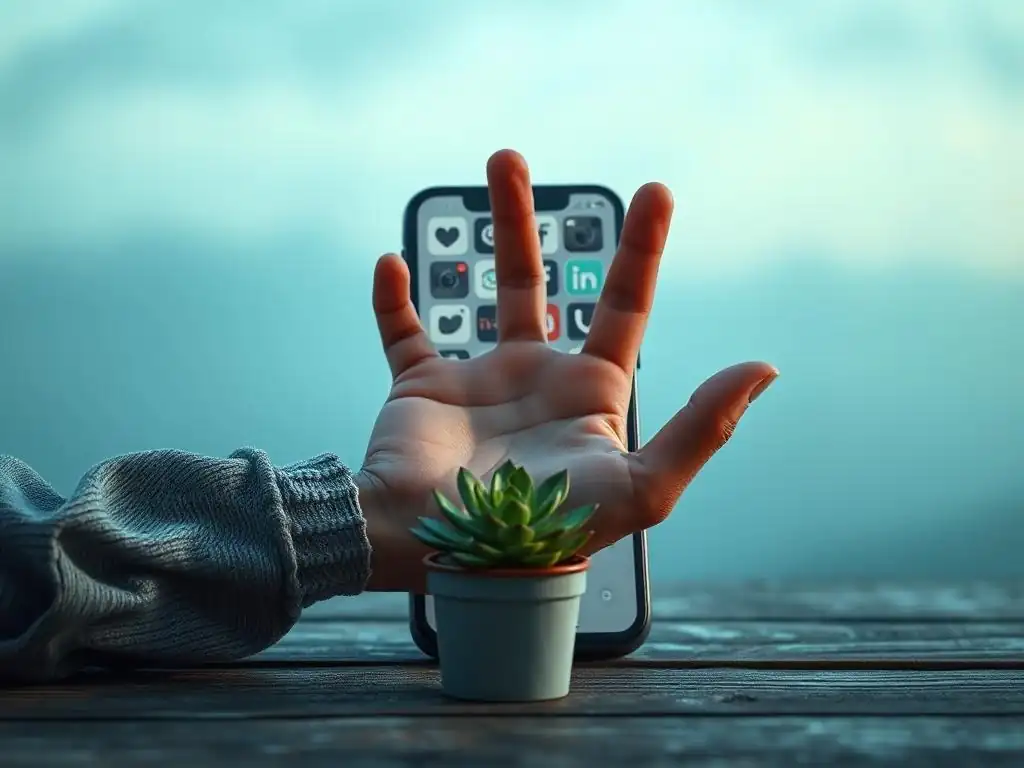
Managing social media anxiety begins with establishing healthier digital habits. This isn't about complete abstinence for everyone, but rather creating a relationship with social media that serves you, rather than drains you. One effective tip is to curate your feed intentionally. Unfollow accounts that consistently make you feel anxious, inadequate, or envious. Instead, follow accounts that inspire, educate, or genuinely connect you with friends and family in a positive way. Think of your feed as a garden – weed out what's harmful and cultivate what helps you grow.
Another crucial habit is setting specific times for social media use. Avoid mindlessly scrolling throughout the day. Designate short periods, perhaps [Approximate duration, e.g., 15-20 minutes] in the morning and evening, for checking updates. This structure reduces the impulsive checking that fuels anxiety and frees up mental space for other activities. Engaging actively rather than passively can also help; instead of just scrolling, try to connect meaningfully with a few people. These simple, consistent changes are foundational social media anxiety management tips.
Limiting Screen Time: A Crucial Step in Managing Anxiety
Directly limiting the amount of time spent on social media is one of the most impactful social media anxiety management tips. Many smartphones and third-party apps offer built-in tools to track and restrict usage time for specific applications. Setting daily limits, such as capping social media use at [Approximate duration, e.g., one hour] per day, can significantly reduce exposure to potential triggers. When the limit is reached, the app becomes inaccessible, providing a hard boundary that prevents endless scrolling.
Beyond daily limits, consider implementing 'no-phone zones' or 'no-social-media times' during your day. This could mean no phones during meals, no social media for the first hour after waking up, or abstaining entirely on weekends. These periods allow your mind to rest and engage with the physical world without the constant pull of notifications and updates. Reducing overall screen time frees up valuable time and mental energy that can be directed towards anxiety-reducing activities like exercise, hobbies, or spending time with loved ones offline.
Mindful Scrolling: Techniques for a Healthier Online Experience
Mindful scrolling is a technique that involves bringing conscious awareness to your social media use. Instead of reflexively opening apps and scrolling aimlessly, take a moment to ask yourself: Why am I opening this app? What am I hoping to find or do? How does this content make me feel? This simple practice can interrupt the automatic, often anxiety-driven, behavior of endless scrolling.
When you encounter content, observe your reaction without judgment. If a post triggers negative feelings like envy or inadequacy, acknowledge it and consider why. You might decide to hide that post, unfollow the account, or simply close the app. Mindful scrolling transforms social media use from a passive, often negative experience into an active, intentional one. It helps you regain control over your digital interactions and is a powerful addition to your toolkit of social media anxiety management tips.
Taking a break from social media, known as a social media detox, can offer significant benefits for mental wellbeing, particularly for those struggling with anxiety. Stepping away removes you from the constant stream of potential triggers – comparisons, FOMO, and the pressure to perform online. This creates space for your mind to decompress and reset. Many people report feeling calmer, more present, and less stressed after even a short break.
A detox can also improve sleep quality, as the blue light from screens and the mental stimulation of scrolling late at night are removed. Furthermore, it can help break compulsive checking habits and reduce the addictive pull of the platforms. By removing the digital distractions, a detox encourages you to reconnect with yourself and your immediate environment, fostering a greater sense of peace and reducing anxiety linked to the digital world. It's a powerful, albeit sometimes challenging, step among social media anxiety management tips.
Planning is key to a successful social media detox. Start by deciding on the duration of your break – it could be a few days, a week, a month, or longer. Inform close friends and family that you'll be offline so they don't worry or try to reach you through channels you won't be checking. Delete the apps from your phone to remove the temptation of quick access; simply logging out is often not enough.
Before starting, identify what activities you will replace social media with. Boredom is a major trigger for returning to platforms, so having alternative plans is crucial. This could include reading, exercising, pursuing a hobby, spending time in nature, or connecting with people face-to-face. When the urge to check social media arises, acknowledge it, but redirect your energy to one of your planned activities. A structured approach makes this challenging but rewarding social media anxiety management tip much more achievable.
Reconnecting with Offline Activities
A core component of a social media detox, and a vital long-term strategy, is actively reconnecting with offline activities and relationships. Social media often consumes time and energy that could otherwise be spent on pursuits that genuinely nourish your soul and reduce anxiety. This could involve picking up an old hobby you've neglected, learning a new skill, volunteering, or simply spending quality, uninterrupted time with friends and family.
Prioritize activities that engage your senses and require your full presence, such as cooking, gardening, painting, playing a musical instrument, or going for a walk in nature. These activities provide a sense of accomplishment, promote mindfulness, and strengthen real-world connections, all of which are powerful antidotes to anxiety. By intentionally investing in your offline life, you build a stronger foundation for your mental wellbeing that is less dependent on the fleeting validation and potential stressors of the online world. This is a fundamental pillar of effective social media anxiety management tips.
Cultivating Self-Esteem in the Digital Age
Building resilience against social media anxiety requires cultivating a strong sense of self-esteem that is independent of online validation. The digital age often encourages us to derive our worth from external metrics like likes, followers, and comments. Shifting this perspective is vital. Focus on your intrinsic qualities, your values, your skills, and your relationships outside of the digital realm. Practice self-compassion – recognize that the curated lives you see online are not the full picture, and everyone faces challenges.
Engage in activities that genuinely make you feel good about yourself, whether it's mastering a skill, helping others, or achieving personal goals, regardless of whether they are shareable online. Limit exposure to content that consistently makes you feel inadequate. Consider muting or unfollowing accounts that trigger negative comparisons without the need for a full detox. Building self-esteem is an ongoing process, but it's a crucial defense mechanism and a proactive social media anxiety management tip in the digital landscape.
Setting Boundaries: Protecting Your Mental Health Online
Establishing clear boundaries around social media use is essential for protecting your mental health. This goes beyond just limiting time; it involves defining how, when, and why you use these platforms. Set boundaries around when you use social media, such as avoiding it during work hours, before bed, or immediately upon waking. Define boundaries around where you use it, perhaps keeping it out of the bedroom or off the dinner table.
Crucially, set boundaries around what you engage with and who you interact with. You have control over your feed and your interactions. Do not feel obligated to respond to every message instantly or engage with every post. Use privacy settings effectively and be mindful of the information you share. Think of these boundaries as protective shields for your mental space. Implementing these limits is a practical and empowering set of social media anxiety management tips.
Fostering Authentic Connection
While social media promises connection, it can sometimes lead to superficial interactions that lack depth. To counter social media anxiety, prioritize fostering authentic connections, both online and offline. Online, this might mean engaging in meaningful conversations with friends and family rather than just liking posts, or joining groups focused on shared interests where genuine discussion is encouraged.
Offline, make a conscious effort to spend quality time with people you care about. Face-to-face interactions, even simple ones, release oxytocin, a hormone that promotes bonding and reduces stress. Prioritize deep conversations, shared experiences, and mutual support in your real-world relationships. These authentic connections provide a sense of belonging and validation that is far more fulfilling and anxiety-reducing than the fleeting interactions often found on social media. Nurturing these real-world bonds is perhaps one of the most powerful social media anxiety management tips available.
Recognizing the Need for Therapy
For some individuals, social media anxiety can escalate to a level that significantly impairs daily functioning, leading to persistent distress, avoidance behaviors, and even panic attacks. If anxiety related to social media is consuming your thoughts, interfering with your responsibilities (work, school, relationships), causing significant physical symptoms, or leading to feelings of hopelessness, it may be time to seek professional help. Therapy provides tools and strategies tailored to your specific needs, which can be more effective than self-help methods alone when anxiety is severe.
Don't view seeking therapy as a sign of weakness, but rather a proactive step towards regaining control over your mental health. A mental health professional can help you understand the underlying causes of your anxiety, whether they are solely linked to social media or exacerbated by it, and develop a personalized plan for recovery. Recognizing when the impact of social media goes beyond manageable stress and requires expert intervention is a critical part of long-term social media anxiety management tips.
Several therapeutic approaches are effective in treating anxiety, including that which is linked to social media use. Cognitive Behavioral Therapy (CBT) is widely recommended. CBT helps individuals identify and challenge the negative thought patterns and beliefs that contribute to their anxiety (e.g., "Everyone else is happier than me," "If my post doesn't get likes, I'm not interesting"). It also helps develop healthier coping mechanisms and behaviors related to social media use.
Exposure therapy, often a component of CBT, might involve gradually and safely exposing individuals to anxiety-provoking social media situations (like posting something or viewing certain content) in a controlled environment to help them build tolerance and reduce the fear response. Acceptance and Commitment Therapy (ACT) can also be helpful, focusing on accepting anxious feelings without letting them control behavior, and committing to actions aligned with personal values, which may involve reducing time spent on platforms that trigger anxiety. These therapies provide structured pathways to managing social media anxiety.
Finding a Therapist
Finding the right therapist is a crucial step in addressing social media anxiety. You can start by consulting your primary care physician, who may be able to provide referrals. Many mental health organizations and websites offer therapist directories that allow you to search by location, specialization (e.g., anxiety, digital well-being), and insurance coverage. Consider whether you prefer individual therapy or group therapy, as support groups can also be beneficial for sharing experiences and strategies.
When contacting potential therapists, feel free to ask about their experience treating anxiety, particularly in the context of technology use. The relationship between you and your therapist is important, so don't hesitate to schedule initial consultations to find someone you feel comfortable opening up to. Investing in professional support is a significant and often necessary step in implementing effective, long-term social media anxiety management tips and reclaiming your peace of mind.
Tech Companies' Role in Promoting Mental Health
There is increasing recognition that tech companies themselves have a significant role to play in mitigating the negative mental health impacts of their platforms. This involves designing features that promote well-being rather than solely focusing on maximizing engagement. Some platforms have begun experimenting with features like hiding like counts, offering time-management tools within the app, and providing resources for mental health support directly to users who may be showing signs of distress.
Future developments could include more robust tools for content filtering, clearer indicators of edited or filtered images, and algorithms designed to prioritize content that is genuinely connecting and uplifting rather than anxiety-inducing or purely comparative. Increased transparency about how algorithms work and their potential psychological effects is also vital. Holding tech companies accountable for the impact of their products is a growing area of focus in the broader discussion around social media anxiety management tips and digital well-being.
Beyond individual strategies like setting boundaries and mindful scrolling, broader societal and technological strategies are emerging to help mitigate social media anxiety. Educational initiatives in schools and communities are teaching digital literacy and critical thinking skills, helping users navigate online content more discerningly and understand the potential for manipulation or idealized representations.
Technological innovations might include AI-powered tools that can detect signs of distress in user behavior and offer timely support or suggest taking a break. Research is also exploring how platform interfaces could be redesigned to reduce addictive patterns and promote healthier interaction styles. As our understanding of the link between social media and anxiety deepens, so too will the array of strategies available for effective social media anxiety management tips, moving towards a more balanced digital ecosystem.
Creating a Supportive Online Environment
Ultimately, fostering a supportive online environment is a collective responsibility that can significantly reduce social media anxiety. This involves users committing to posting more authentically, celebrating real-life achievements alongside digital ones, and being mindful of the impact their content might have on others. It also means actively combating cyberbullying and online harassment by reporting harmful behavior and supporting those who are targeted.
Platforms can facilitate this by creating clearer community guidelines and enforcing them consistently. Encouraging positive and supportive interactions through feature design can also make a difference. When online spaces feel less like competitive arenas and more like genuine communities, the anxiety associated with participation is likely to decrease. Building a kinder, more authentic digital world is perhaps the most holistic approach to long-term social media anxiety management.
Frequently Asked Questions
Social media can contribute to anxiety by fostering social comparison, creating a fear of missing out (FOMO), and exposing users to cyberbullying or negative content.
Practical tips include limiting screen time, being mindful of the content consumed (curating your feed), and engaging in real-life social interactions.
Yes, social media can be beneficial when used mindfully, such as for connecting with supportive communities, accessing mental health resources, and promoting positive self-expression.
Signs include increased feelings of anxiety or depression, constant comparison to others, difficulty disconnecting, and a decline in self-esteem.
Mind Care Guide offers comprehensive resources including articles, support groups, and links to mental health professionals specializing in social media anxiety management.
Final Reflection: Reclaiming Your Peace in a Digital Age
The relentless scroll of social media, once a source of connection, has become a breeding ground for anxiety for many. This pervasive anxiety, fueled by curated perfection and the constant pressure to compare, is no longer a niche problem; it's a widespread epidemic impacting mental wellbeing on a global scale. We've explored the insidious ways social media algorithms exploit our vulnerabilities, triggering feelings of inadequacy and fueling a cycle of negative self-perception.
The impact of this digital landscape on our mental health is undeniable, subtly shaping our self-esteem and influencing our perceptions of reality. We've seen how the curated highlight reels of others can distort our own sense of self-worth, leading to feelings of inadequacy and isolation. As the philosopher Seneca once wisely stated, Every new beginning comes from some other beginning's end.
This applies perfectly to our relationship with social media; we must be willing to end unhealthy patterns to begin a journey towards healthier digital habits and a more peaceful inner life.
Now, it's your turn. Consider your own relationship with social media. Are you finding it nourishing or draining? Are you actively managing your time online, or are you passively letting the algorithm dictate your emotional state? Take a moment to reflect on your digital habits and consciously choose to prioritize your mental wellbeing. Unplug, reconnect with the present moment, and rediscover the joy in real-life connections. Your peace of mind is worth fighting for.
Unleash Your Digital Wellbeing: Reclaim Your Peace of Mind
Thanks for taking the time to explore the often-hidden link between social media and anxiety. We hope you gained valuable insights into how to navigate the digital world with more mindfulness and self-awareness. Now, let's turn those insights into action!
- Prioritize a Digital Detox: Identify one social media platform that consistently drains your energy, and commit to taking a one-week break. Notice how you feel!
- Share Your Experience: Discuss your thoughts and feelings about your social media usage with a friend, family member, or in the comments below. Sharing can be incredibly powerful.
- Explore Mindful Alternatives: Try replacing some of your social media time with activities that nurture your well-being – like journaling, spending time in nature, or pursuing a creative hobby.
What small step can you take today to cultivate a healthier relationship with your digital life?