
Can a Smartwatch Truly Deepen Your Meditation Practice?

Welcome to Mind Care Guide.
Feeling overwhelmed? You're not alone. We understand the daily struggles that can impact your mental well-being, and we're here to help. Curious about how technology can play a role in finding inner peace? Dive into our article exploring the Smartwatch meditation benefits guide and discover if a wearable device could be the key to unlocking a deeper, more effective meditation practice. What if the answer to calmer days is right on your wrist? Let's explore together...
Can a Smartwatch Truly Deepen Your Meditation Practice? - A Mind Care Guide
- Smartwatch Meditation: Unlocking Deeper Mindfulness or Just Another Gadget?
- The Pros: Smartwatch Meditation Benefits Guide - Exploring the Advantages
- The Cons: Potential Drawbacks of Using a Smartwatch for Meditation
- Smartwatch Features for Mindfulness: A Deeper Dive
- Recommendations: When and How to Use a Smartwatch for Meditation
- Conclusion: Smartwatch Meditation - A Valuable Tool, but Not a Replacement for Inner Work.
-
Frequently Asked Questions
- Can a smartwatch really improve my meditation practice?
- What specific features of a smartwatch are most beneficial for meditation?
- Are there any potential downsides to using a smartwatch for meditation?
- How do I choose the right smartwatch for meditation?
- Is it necessary to buy an expensive smartwatch to experience meditation benefits?
- Final Reflection: The Mindful Tech Paradox
- Unlock Deeper Meditation: Start Your Practice Now
Smartwatch Meditation: Unlocking Deeper Mindfulness or Just Another Gadget?
The ancient practice of meditation, focused on cultivating mindfulness and inner peace, has found itself intersecting with the cutting-edge world of wearable technology. As smartwatches become ubiquitous, offering everything from fitness tracking to communication, their potential role in supporting mental well-being, specifically meditation, is gaining attention. For those seeking a comprehensive Smartwatch meditation benefits guide, understanding how these devices integrate with traditional practices is key.
While purists might argue that meditation requires disconnecting from technology, proponents suggest that smartwatches can offer valuable tools and data points that complement the practice. The question isn't whether the device is the meditation, but whether it can serve as a supportive aid, helping individuals build consistency, gain insights into their physiological responses, and access guided sessions conveniently. This exploration aims to illuminate the potential advantages and disadvantages of using a smartwatch on your meditation journey.
The Pros: Smartwatch Meditation Benefits Guide - Exploring the Advantages
Real-Time Biofeedback for Enhanced Awareness
One significant advantage highlighted in any Smartwatch meditation benefits guide is the ability to receive real-time biofeedback. During meditation, your body undergoes subtle physiological changes – your heart rate might slow, your breathing deepen, and your heart rate variability (HRV) might increase. Smartwatches equipped with optical heart rate sensors can track these metrics as you meditate.
This data provides a tangible link between your internal state and physical responses. For example, seeing your heart rate gently decrease from a resting 70-80 beats per minute towards 60-70 bpm during a calm session can be a powerful reinforcement of the meditation's effect. Similarly, monitoring changes in HRV, a metric reflecting the balance of your autonomic nervous system, can offer insights into your stress levels and how well your meditation practice is helping to manage them. While not medical-grade, this real-time data can help users become more attuned to their body's signals, deepening their interoceptive awareness.
Guided Meditation Apps at Your Wrist: Convenience and Accessibility
Smartwatches offer unparalleled convenience for accessing guided meditation sessions. Instead of needing your phone or computer, you can often start a session directly from your wrist. Many popular meditation apps have companion smartwatch versions, allowing you to browse and play guided meditations, breathing exercises, or mindfulness prompts with just a few taps.
This accessibility removes potential barriers to practice, making it easier to squeeze in a session anytime, anywhere – whether you're on a lunch break, waiting for an appointment, or winding down before bed. The ability to initiate a session discreetly and quickly from your wrist encourages more frequent practice, a crucial element in developing a consistent meditation habit. This convenience is a core component of the Smartwatch meditation benefits guide for busy individuals.
Consistent Reminders and Tracking Progress: Building a Habit
Building a consistent meditation practice can be challenging. Smartwatches excel at providing gentle, customizable reminders throughout the day, prompting you to take a moment for mindfulness or meditation. These nudges can be incredibly effective in transforming sporadic attempts into a regular routine.
Beyond reminders, smartwatches track your meditation sessions, logging duration and sometimes even physiological data associated with the session. Seeing a record of your practice – perhaps noting that you've meditated for 20 minutes daily for the past week, or tracking your average heart rate during sessions over time – can be highly motivating.
This tracking offers a visual representation of your commitment and progress, fostering accountability and reinforcing the habit, which is a key aspect explored in any guide focusing on Smartwatch meditation benefits. Studies on habit formation suggest that consistent cues and tracking significantly increase the likelihood of establishing new routines.
Reduced Distractions: A Phone-Free Meditation Experience
Meditating with your phone can be a minefield of potential distractions – incoming calls, notifications, tempting app icons. While a smartwatch can also receive notifications, many models offer a 'Do Not Disturb' or 'Mindfulness' mode that silences alerts specifically during a meditation session initiated on the watch.
Starting a session directly from the watch allows you to leave your phone in another room, creating a more focused and less interrupted environment. By minimizing the risk of getting pulled into emails or social media just before or after a session, the smartwatch can help maintain the meditative state and prevent external digital noise from intruding on your inner quiet. This potential for a less distracted experience is a notable benefit for many users.
The Cons: Potential Drawbacks of Using a Smartwatch for Meditation
Over-Reliance on Technology: Losing Connection to Inner Awareness?
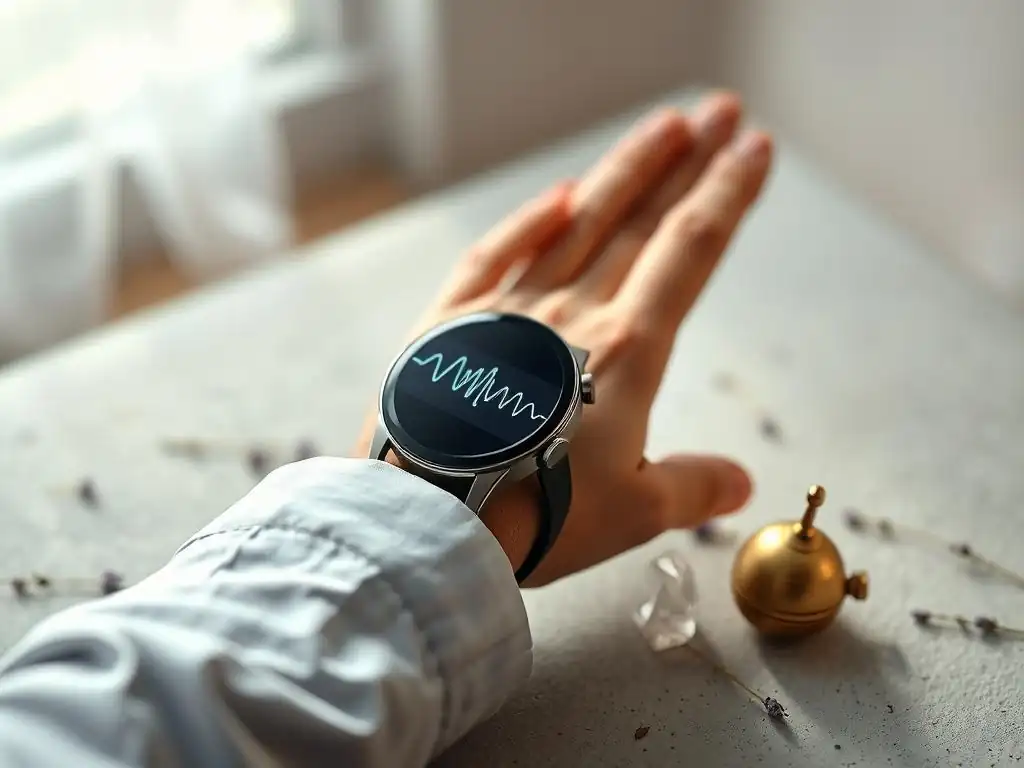
A significant concern when using technology like a smartwatch for meditation is the potential for over-reliance on external metrics rather than cultivating inner awareness. Meditation is fundamentally about paying attention to internal states – breath, bodily sensations, thoughts, and emotions. Focusing too much on the numbers on your wrist – Is my heart rate low enough? Is my HRV increasing? – can shift your attention outward.
This external focus risks turning meditation into a performance metric or a data analysis exercise, rather than an exploration of presence and non-judgmental awareness. The true depth of meditation comes from the subjective experience, which cannot be fully captured by physiological data. Relying solely on the smartwatch might hinder the development of the subtle interoceptive skills that are at the heart of a deep practice.
Accuracy Concerns: Are the Measurements Reliable?
While smartwatch sensors have improved considerably, they are generally designed for fitness tracking and general wellness, not medical-grade accuracy. Optical heart rate sensors, for instance, can be affected by wrist placement, movement, skin perfusion, and even tattoos. While they typically provide a good estimate during rest or steady activity, their readings might be less precise during the stillness of meditation or for subtle variations like HRV.
The data presented by a consumer smartwatch should be viewed as indicative trends rather than absolute, clinically precise measurements. Basing your perception of a "successful" meditation session solely on these numbers could be misleading if the data is inaccurate. Understanding these limitations is crucial and often mentioned as a caveat in a balanced Smartwatch meditation benefits guide.
The Cost Factor: Is a Smartwatch a Necessary Investment for Mindfulness?
Smartwatches represent a significant financial investment, often ranging from just over $100 to upwards of $400 or more, depending on the brand and features. Meditation, in its purest form, requires no equipment and is entirely free.
For someone interested in starting or deepening their practice, the cost of a smartwatch could be seen as an unnecessary barrier. There are countless free resources available – guided meditations online, books, and simple breathing exercises that require nothing but your own body and mind. While a smartwatch offers convenience and data, its price point raises the question of whether it's a truly essential tool for cultivating mindfulness, especially compared to zero-cost alternatives.
Potential for Distraction: Notifications and Other Features
Despite features designed to minimize distractions, a smartwatch is inherently a connected device with multiple functions. Even with 'Do Not Disturb' enabled, the presence of the device on your wrist, the potential for it to vibrate unexpectedly (e.g., low battery warning), or the temptation to check the time or other metrics during meditation can be distracting.
Furthermore, setting up sessions, navigating menus, or dealing with app glitches on a small screen can pull you out of a calm state before you even begin. For individuals easily drawn to technology or notifications, the smartwatch itself, even when intended for mindfulness, can become another source of digital noise competing for attention.
Smartwatch Features for Mindfulness: A Deeper Dive
Heart Rate Variability (HRV) Monitoring: Understanding Your Stress Response
Heart Rate Variability (HRV) is the physiological phenomenon of the variation in the time interval between consecutive heartbeats. Unlike heart rate, which measures the average beats per minute, HRV looks at the tiny fluctuations in timing. A higher HRV generally indicates a more adaptable nervous system, often associated with lower stress levels, better recovery, and overall well-being. A lower HRV can be linked to stress, fatigue, or illness.
Many modern smartwatches can measure HRV, typically overnight or during specific 'stress' checks. Tracking your HRV over time can provide insights into your body's stress load and recovery status. While meditation aims to cultivate presence, the long-term practice has been shown in some studies to positively influence HRV, potentially leading to a higher baseline. Seeing how your HRV trends might correlate with consistent meditation can be a motivating data point, although interpreting HRV data requires understanding its nuances and limitations.
Guided Breathing Exercises: Promoting Relaxation and Calm
Many smartwatches include built-in guided breathing exercises. These features typically provide visual cues or gentle vibrations on your wrist to guide you through paced breathing patterns – for example, inhaling for four seconds, holding for seven, and exhaling for eight (the 4-7-8 technique), or simply slow, deep breaths.
Paced breathing is a powerful technique for calming the nervous system and is often integrated into meditation practices. Having these guides readily available on your wrist makes it easy to take a moment for deep breathing whenever you feel stressed or need to re-center, independent of a full meditation session. This immediate, accessible tool for physiological regulation is a practical benefit highlighted in a Smartwatch meditation benefits guide.
Sleep Tracking and Meditation: A Holistic Approach to Well-being
The connection between sleep, stress, and mental well-being is profound. Poor sleep can exacerbate stress and anxiety, making it harder to focus and practice mindfulness. Smartwatches with sleep tracking capabilities monitor your sleep duration, stages (like light, deep, REM), and disturbances.
Understanding your sleep patterns can inform your overall well-being strategy, including your meditation practice. For instance, if your sleep quality is consistently poor, you might prioritize relaxing evening meditations or breathing exercises using your smartwatch to help improve it. Conversely, a regular meditation practice can often lead to improved sleep quality. By offering both sleep tracking and meditation tools, a smartwatch supports a more holistic approach to managing stress and enhancing mental wellness.
Recommendations: When and How to Use a Smartwatch for Meditation

Best Smartwatches for Meditation Beginners:
For individuals new to both meditation and potentially wearable tech, simplicity and ease of use are paramount. Smartwatches best suited for beginners typically offer:
- Intuitive interfaces for starting guided sessions quickly.
- Basic, reliable heart rate tracking.
- Simple, built-in guided breathing exercises.
- Clear, non-overwhelming reminders for practice.
- Integration with popular, user-friendly meditation apps.
The focus should be on features that encourage habit formation and provide basic physiological feedback without drowning the user in complex data. The goal is to make starting meditation feel accessible and less intimidating.
Best Smartwatches for Advanced Meditators:
More experienced meditators might seek deeper insights and greater customization from their smartwatch. Features beneficial for advanced users could include:
- Detailed HRV tracking and analysis over time.
- Ability to track "open" or unguided meditation sessions accurately.
- Compatibility with apps that offer advanced metrics or customization options.
- Robust data export capabilities for personal analysis.
- Potentially more accurate sensors, if available in consumer devices.
Advanced users may be less reliant on guided sessions and more interested in monitoring subtle physiological shifts during their established practice, using the data as a tool for further exploration rather than a primary guide.
Tips for Maximizing Smartwatch Meditation Benefits:
Here are some tips to help you get the most out of using a smartwatch for your meditation practice, forming a practical Smartwatch meditation benefits guide:
- Disable Notifications During Sessions: Use the watch's 'Do Not Disturb' or 'Mindfulness' mode to silence alerts.
- Place Your Phone Away: Remove the primary source of digital distraction.
- Focus Inward, Not Just on Data: Use biofeedback as information, not a judgment of your practice's success. Pay primary attention to your internal experience.
- Integrate Reminders Mindfully: Set reminders as gentle nudges, not strict commands.
- Experiment with Features: Try guided breathing, different meditation lengths, and tracking to see what supports your practice best.
- Clean Your Sensor: Ensure accurate heart rate readings by keeping the sensor clean and the watch snug (but not too tight).
- Use Tracking for Consistency: Review your session history to celebrate consistency and identify patterns, but don't get discouraged by missed days.
- Remember It's a Tool: The smartwatch is an aid; the practice is the inner work you do.
Conclusion: Smartwatch Meditation - A Valuable Tool, but Not a Replacement for Inner Work.
Using a smartwatch for meditation offers compelling advantages, from convenient access to guided sessions and helpful reminders to providing real-time biofeedback like heart rate and HRV. For many, these features can serve as valuable tools for building consistency, gaining insight, and making meditation more accessible in a busy world. A comprehensive Smartwatch meditation benefits guide highlights how these devices can genuinely support and enhance a mindfulness practice.
However, it is crucial to approach smartwatch meditation with awareness. The potential for distraction, concerns about data accuracy, the financial cost, and the risk of focusing excessively on external metrics are significant drawbacks to consider. Ultimately, the core of meditation lies in cultivating present moment awareness and inner connection, a practice that transcends technology.
A smartwatch can be a supportive companion on this journey, offering data and convenience, but it cannot replace the fundamental act of turning your attention inward. Used mindfully, it can be a beneficial aid; used improperly, it could become another barrier. The most profound meditation benefits still come from consistent, dedicated inner work, with or without a device on your wrist.
Frequently Asked Questions
Can a smartwatch really improve my meditation practice?
Yes, a smartwatch can significantly enhance your meditation through real-time biofeedback and guided meditation apps. It offers insights into your heart rate variability and stress levels, helping you adjust your technique for deeper relaxation.
What specific features of a smartwatch are most beneficial for meditation?
Key features include heart rate monitoring, stress level tracking, and integrated meditation apps. These provide data-driven feedback and structured guidance, making meditation more effective and personalized.
Are there any potential downsides to using a smartwatch for meditation?
Distractions are a potential drawback. Constant notifications can disrupt your focus, so it's crucial to disable alerts and minimize screen time during your practice. Over-reliance on data can also hinder intuition.
How do I choose the right smartwatch for meditation?
Look for smartwatches with accurate heart rate sensors, reliable stress tracking, and compatibility with popular meditation apps. Battery life is also important for longer sessions. Read reviews focusing on meditation use.
Is it necessary to buy an expensive smartwatch to experience meditation benefits?
No, you don't need a top-of-the-line model. Many affordable smartwatches offer the essential features for meditation, such as heart rate monitoring and basic guided meditation apps. Focus on functionality over price.
Final Reflection: The Mindful Tech Paradox
The integration of technology into our mindfulness practices is no longer a futuristic fantasy; it's a present-day reality. Smartwatches, once solely associated with fitness tracking, are increasingly becoming tools for deepening meditation, offering guided sessions, biofeedback, and subtle reminders to cultivate presence. This raises crucial questions about the balance between technological assistance and the inherent simplicity of mindful awareness.
The journey of integrating technology into meditation is a fascinating exploration of our relationship with both inner peace and external devices. It's a testament to our constant search for tools to enhance our well-being, even in the most introspective of practices. The potential benefits are undeniable – increased accessibility to meditation for beginners, personalized guidance, and objective data on progress. Yet, the potential for distraction remains a significant concern. The greatest obstacle to discovery is not ignorance, but the illusion of knowledge.
This quote, though not directly about technology and meditation, highlights the risk of relying too heavily on external validation rather than cultivating inner awareness.
Consider this: the smartwatch can be a helpful guide, but it cannot replace the core essence of meditation – the quiet observation of your breath, thoughts, and feelings. You are the architect of your own inner peace. Use this article as a starting point to explore the potential benefits of technology in your meditation practice, but remember to prioritize the cultivation of inner stillness and self-awareness above all else. Experiment, reflect, and discover what truly supports your journey towards a more mindful and peaceful life.
Unlock Deeper Meditation: Start Your Practice Now
Thanks for taking the time to explore the fascinating world of meditation and smartwatches! We hope you gained valuable insights into how technology can enhance your mindfulness journey. Ready to take the next step?
- Begin your personalized meditation journey: Identify a quiet space and dedicate just 5 minutes to focusing on your breath. Feel the calmness wash over you.
- Download a guided meditation app and pair it with your smartwatch. Track your progress and explore different techniques to find what resonates with you.
- Share your experience! Tell us in the comments below – what surprised you most about using technology to deepen your meditation?
What small step will you take today to cultivate a deeper connection with your inner peace?