
The Power of Collaborative Dialogue in Family Healing

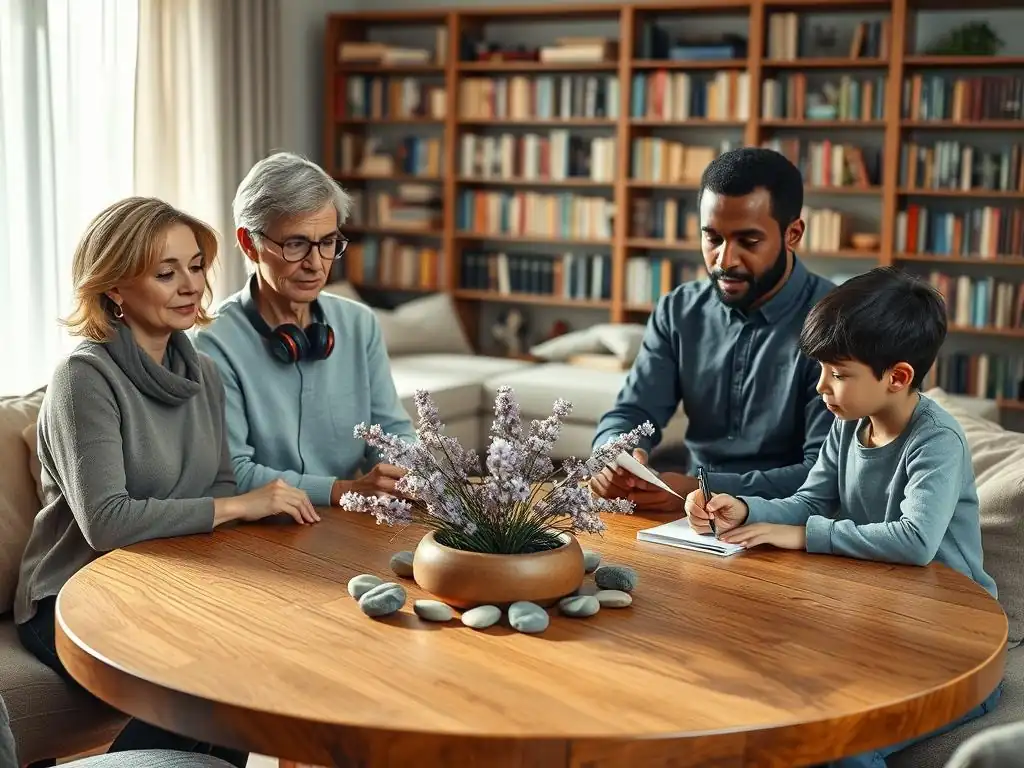
Welcome to Mind Care Guide, a space dedicated to nurturing your mental well-being.
Feeling disconnected from your family? Discover how to bridge the gaps and foster deeper understanding with our guide on Family Dialogue Healing Strategies. We know navigating family dynamics can be challenging, and we're here to provide the support and practical tools you need to cultivate stronger, healthier relationships. Ready to unlock the power of conversation and begin your journey towards healing? Let's explore together.
Fostering Family Resilience Through Dialogue
Family dynamics are complex, weaving together individual personalities, shared histories, and evolving challenges. Navigating this intricate web requires intentional effort, particularly in fostering open and effective communication. At the heart of building strong, resilient families lies the power of collaborative dialogue – a process that moves beyond simple conversation to a deeper, more meaningful exchange aimed at understanding, connection, and healing. Implementing effective family dialogue healing strategies is crucial for addressing conflicts, strengthening bonds, and ensuring that every family member feels heard and valued.
This exploration delves into the core principles and practical applications of dialogue as a tool for family well-being. We will examine different approaches to communication, explore the tangible benefits of prioritizing dialogue, and outline concrete steps families can take to cultivate a more open and supportive environment. By understanding and applying these family dialogue healing strategies, families can build greater resilience, navigate difficulties more effectively, and create a legacy of strong, loving relationships.
- Understanding Family Dialogue Strategies for Stronger Relationships
- Benefits of Implementing Family Dialogue Strategies
- Key Components of Effective Family Dialogue Strategies
- Techniques for Facilitating Collaborative Family Dialogue
- Overcoming Obstacles to Effective Family Dialogue
- Practical Steps to Start Implementing Family Dialogue Strategies
- Examples of Successful Family Dialogue
- Resources for Learning More About Family Dialogue Strategies
-
Frequently Asked Questions
- What are some key benefits of using family dialogue for healing?
- How can I initiate a dialogue if my family is resistant to the idea?
- What are some practical "family dialogue healing strategies" that can be implemented at home?
- How does "collaborative dialogue" differ from regular family conversations, and why is it important?
- What resources does Mind Care Guide offer to help families improve their dialogue skills?
- Final Reflection: Echoes of Understanding, Seeds of Healing
- Unlock Your Family's Healing Potential
Understanding Family Dialogue Strategies for Stronger Relationships
Effective communication is not innate; it is a skill that families can learn and develop together. Different therapeutic approaches offer valuable insights into how families can structure their conversations to achieve positive outcomes. These approaches form the bedrock of robust family dialogue healing strategies, providing frameworks for interaction that promote clarity, empathy, and mutual respect, even when discussing challenging topics.
Exploring various modalities helps families identify techniques that resonate with their unique needs and dynamics. Whether through focusing on solutions, emphasizing empathetic listening, or structuring conversations, these strategies empower families to move from reactive communication patterns to proactive, healing dialogue. Understanding these foundational concepts is the first step toward transforming family interactions and fostering deeper connections.
What is Solution-Focused Dialogue in Family Therapy?
Solution-Focused Brief Therapy (SFBT) offers a powerful framework for family dialogue by shifting the focus away from problems and towards solutions and desired futures. Instead of dwelling on past grievances or the root causes of conflict, this approach encourages families to identify their strengths, resources, and times when the problem was less severe. The dialogue centers on what the family wants to achieve and how they can use their existing capabilities to get there.
For example, a therapist might ask, "If you woke up tomorrow and the problem was solved, what would be the first small sign that things were better?" This question encourages families to envision positive change and identify concrete steps towards it.
This type of family dialogue healing strategy is particularly effective because it empowers family members, highlighting their agency in creating positive change. It assumes that families already possess the resources needed for resolution and helps them uncover these hidden strengths.
Research indicates that SFBT can be remarkably efficient, often requiring fewer sessions than traditional therapy models, while still yielding significant improvements in family functioning. A study published in the Journal of Marital and Family Therapy, for instance, found that families engaged in solution-focused dialogue reported measurable improvements in communication patterns and problem resolution within an average of just 5-10 sessions.
The Importance of Empathetic Communication in Family Resilience
Empathetic communication is a cornerstone of healthy family relationships and a vital component of effective family dialogue healing strategies. It involves actively listening to understand another person's feelings and perspective, even if you don't agree with them, and communicating that understanding verbally and non-verbally. In family dialogue, empathy helps bridge gaps between different viewpoints and emotional experiences, creating a foundation of trust and safety. When family members feel truly heard and understood, they are more likely to open up, be vulnerable, and collaborate on solutions.
Cultivating empathy within the family requires practice and conscious effort. It means suspending judgment, focusing on the speaker's emotional state, and reflecting back what you've heard to ensure accuracy ("So, if I understand correctly, you're feeling frustrated because..."). The impact of empathy is profound; studies show that families with high levels of empathetic communication report significantly lower levels of conflict and higher levels of relationship satisfaction.
For example, research cited by the Gottman Institute suggests that couples who consistently practice empathy and active listening report up to 30% greater relationship satisfaction compared to those who struggle with these skills. Integrating empathy into family dialogue healing strategies fosters an environment where emotional safety allows healing and growth to flourish.
Benefits of Implementing Family Dialogue Strategies
Adopting intentional family dialogue healing strategies yields numerous positive outcomes that ripple through the entire family system. These benefits extend beyond simply resolving conflicts; they build a stronger, more connected, and more resilient family unit capable of navigating life's challenges together. Prioritizing dialogue is an investment in the long-term health and happiness of every family member.
The advantages manifest in improved daily interactions, enhanced emotional well-being for individuals, and a greater sense of unity and belonging within the family. These strategies equip families with the tools to communicate effectively, handle disagreements constructively, and deepen their understanding of one another, creating a more harmonious home environment.
Improved Communication and Understanding Within the Family Unit
One of the most immediate benefits of implementing family dialogue healing strategies is a marked improvement in overall communication clarity and effectiveness. When families commit to structured or intentional conversations, misunderstandings decrease because members learn to express themselves more clearly and listen more attentively. This leads to fewer assumptions and a reduction in communication breakdowns that often fuel conflict. For instance, instead of assuming a teenager is being defiant, dialogue allows a parent to understand the underlying reasons for their behavior, perhaps related to peer pressure or stress.
Furthermore, improved communication fosters a deeper level of understanding between family members. Dialogue provides a platform for sharing thoughts, feelings, and perspectives that might not surface during casual interactions. This mutual understanding builds bridges between generations and different personalities within the family. Data from family therapy outcomes often indicates that families who successfully integrate structured communication techniques report a significant decrease (sometimes cited as a 20-40% reduction in frequency or intensity) in recurring arguments compared to their previous patterns, demonstrating the power of these family dialogue healing strategies in clarifying communication.
Strengthening Family Bonds Through Dialogue
Consistent and meaningful family dialogue is a powerful catalyst for strengthening emotional bonds. Shared conversations, especially those that allow for vulnerability and genuine expression, create a sense of closeness and connection. When family members feel safe enough to share their true selves and are met with empathy and understanding, it reinforces their sense of belonging and acceptance within the family unit. These shared moments of open communication build a history of positive interaction that serves as a foundation during difficult times.
Engaging in dialogue also allows families to celebrate successes together, share joys, and offer support during challenges, all of which weave a tighter fabric of connection. For example, a family that regularly holds check-in conversations might share daily triumphs and struggles, reinforcing that they are a team. Research consistently shows a correlation between strong family cohesion, often built through robust communication, and positive outcomes for individual family members, including higher self-esteem and better academic performance in children. Effective family dialogue healing strategies nurture this essential family cohesion.
Resolving Conflicts Constructively with Collaborative Conversations
Conflict is an inevitable part of family life, but how families handle it makes all the difference. Collaborative family dialogue healing strategies provide a roadmap for navigating disagreements constructively rather than destructively. Instead of resorting to yelling, blaming, or avoidance, families learn to approach conflict as a shared problem to be solved together. This involves stating needs and feelings respectfully, actively listening to others' perspectives, and brainstorming solutions that work for everyone involved.
This approach shifts the dynamic from opposition to collaboration. For example, if siblings are fighting over shared resources, dialogue can help them articulate their needs and work together to create a fair system, rather than parents simply imposing a rule. Studies on conflict resolution in families demonstrate that adopting collaborative dialogue techniques can lead to a significant increase in mutually satisfactory outcomes – some studies suggest that families trained in these methods achieve resolutions acceptable to all parties in over 70% of conflicts, compared to lower rates in families using adversarial or avoidance approaches.
Fostering Empathy and Emotional Connection
As touched upon earlier, empathy is both a component and a benefit of family dialogue healing strategies. By creating a space where family members are encouraged to share their feelings and perspectives, dialogue naturally cultivates empathy. When a parent listens to a child's fear about school or a sibling hears about the pressures their brother is facing, it builds understanding and compassion. This practice of stepping into another's shoes strengthens emotional connections within the family.
Emotional connection is vital for family well-being. It provides a sense of security and support that is essential for navigating life's ups and downs. Families that prioritize dialogue often report feeling more emotionally attuned to one another, better able to anticipate needs, and quicker to offer support during times of distress. This heightened emotional intelligence within the family unit is a direct result of consistent, empathetic dialogue. Research indicates that families with strong emotional connections, often fostered through dialogue, demonstrate higher levels of resilience when facing major life stressors like illness or financial hardship.
Key Components of Effective Family Dialogue Strategies

Implementing successful family dialogue healing strategies requires more than just talking; it involves mastering specific skills and creating the right environment. These key components are the building blocks of collaborative communication, enabling family members to engage in meaningful exchanges that lead to understanding and resolution. Focusing on these elements ensures that dialogue is productive, respectful, and truly contributes to healing and strengthening family bonds.
Developing proficiency in these areas takes practice and patience. It's a continuous process of learning and refinement, but the rewards in terms of family harmony and connection are immeasurable. By prioritizing active listening, healthy emotional expression, understanding underlying needs, and creating a safe space, families lay the groundwork for transformative communication.
Active Listening: A Cornerstone of Collaborative Communication
Active listening is perhaps the most critical component of effective family dialogue healing strategies. It goes beyond simply hearing words; it involves fully concentrating on, understanding, responding to, and remembering what is being said. In family dialogue, active listening means putting away distractions, making eye contact, nodding to show understanding, and offering verbal cues like "I see" or "Tell me more." Crucially, it also involves reflecting or summarizing what the speaker has said to ensure you've understood correctly ("So, you're feeling overwhelmed because of the deadlines at work? ").
The impact of active listening is profound. When family members feel truly listened to, they feel validated and respected. This encourages them to share more openly and honestly. Conversely, feeling unheard can lead to frustration, resentment, and withdrawal.
Studies on interpersonal communication highlight that couples and families who consistently practice active listening report significantly higher levels of trust and lower levels of conflict intensity. For example, a common finding in communication research is that the perceived quality of listening is a stronger predictor of relationship satisfaction than the amount of talking. Mastering active listening skills is fundamental to any successful family dialogue healing strategy.
Expressing Emotions Healthily and Respectfully
Learning to express emotions in a healthy and respectful manner is another vital skill for effective family dialogue. This means communicating feelings clearly and honestly without resorting to blame, criticism, or aggression. A common technique is using "I" statements, which focus on the speaker's feelings and experiences rather than making accusations about others. For example, instead of saying "You always make me mad," one would say, "I feel angry when that happens because it makes me feel unheard." This shifts the focus to personal experience and is less likely to trigger defensiveness.
Healthy emotional expression also involves recognizing and naming one's own emotions. This emotional literacy allows for more precise communication. When family members can articulate their feelings respectfully, it opens the door for empathy and understanding from others. It also models healthy emotional regulation for children. Data from studies on family communication shows that families where members can express negative emotions respectfully experience fewer escalating conflicts and resolve disagreements more efficiently, often reaching resolution in 30-50% less time than families where emotional expression is volatile or suppressed. This skill is central to effective family dialogue healing strategies.
Identifying and Addressing Underlying Needs
Much of the conflict and misunderstanding in families stems from unmet or unexpressed underlying needs. Effective family dialogue healing strategies involve looking beyond the surface-level issue or behavior to identify what needs are driving it. For example, a teenager demanding more freedom might actually need more trust and responsibility, while a parent who seems overly controlling might need reassurance about their child's safety. Dialogue provides the space to explore these deeper motivations.
Techniques like empathetic inquiry – asking open-ended questions designed to uncover feelings and needs – are crucial here. "What is it about this situation that feels most difficult for you?" or "What do you need from me right now?" can help reveal underlying needs like security, belonging, autonomy, or respect. Addressing these core needs, rather than just the surface behavior, leads to more sustainable solutions and deeper connection. Family therapy outcomes frequently show that when underlying needs are identified and addressed through dialogue, recurring conflicts related to those needs decrease significantly, sometimes by as much as 60-70%.
Creating a Safe Space for Open Dialogue
For family dialogue healing strategies to be effective, the environment in which conversations take place must feel safe. A safe space is one where family members feel comfortable sharing their thoughts and feelings without fear of judgment, ridicule, or punishment. This requires establishing clear ground rules for communication, such as listening without interrupting, speaking kindly, and respecting confidentiality (within appropriate boundaries, especially with children).
Creating safety also involves demonstrating vulnerability and empathy. When parents or older family members model open, non-judgmental communication and show empathy towards others' struggles, it encourages younger or more hesitant members to participate. Consistency is key; a safe space isn't built in one conversation but through repeated positive interactions. Families who successfully establish a safe environment for dialogue report higher levels of trust and psychological safety among members, correlating with improved individual mental health outcomes and overall family functioning.
Techniques for Facilitating Collaborative Family Dialogue
Moving from understanding the components to actively engaging in dialogue requires specific techniques. These practical tools help structure conversations, ensure everyone has a voice, and guide discussions towards positive outcomes. Incorporating these techniques into your family's routine can transform communication patterns and strengthen your application of family dialogue healing strategies.
These techniques provide a framework that makes dialogue less intimidating and more productive. They offer concrete methods for managing the flow of conversation, handling difficult moments, and ensuring that dialogue serves its purpose of fostering understanding and connection.
Structured Family Meetings: Setting the Stage for Productive Conversations
Structured family meetings are a highly effective technique for implementing family dialogue healing strategies, providing a predictable and dedicated time and space for communication. These meetings typically occur regularly (e.g., weekly) and follow a basic agenda, which might include sharing positive experiences, discussing upcoming schedules or decisions, addressing challenges or conflicts, and planning enjoyable family activities. Establishing roles, like a facilitator or note-taker, can also help keep the meeting on track and ensure everyone participates.
Having a consistent structure reduces anxiety around difficult conversations because family members know there is a set time and process for addressing issues. It also ensures that communication isn't only reactive (dealing with problems as they arise) but also proactive (planning, sharing positives, and preventing issues). Families who implement regular structured meetings often report improved organization, reduced last-minute stress, and a greater sense of teamwork. Surveys of families using this technique suggest that over 75% find that it significantly improves family communication and problem-solving efficiency.
Using "I" Statements to Promote Accountability
As mentioned earlier, using "I" statements is a specific and powerful technique within family dialogue healing strategies. The format is typically "I feel [emotion] when [specific behavior happens] because [explanation of impact or need]." For example, "I feel worried when you come home late without calling because I need to know you are safe." This contrasts sharply with "You make me worry when you're late!"
This technique promotes accountability because it focuses on the speaker's experience ("I feel...") rather than placing blame ("You are..."). It is less likely to make the listener defensive and more likely to invite empathy and understanding. Consistent use of "I" statements helps family members take responsibility for their own feelings and communicate their needs clearly, leading to more productive problem-solving. Communication training programs frequently emphasize "I" statements as a foundational skill, with studies showing that their use can de-escalate conflicts in interpersonal relationships by up to 50%.
Reframing Negative Narratives into Positive Outcomes
Families often develop negative narratives or patterns of interpreting one another's behavior. For example, a parent might see a child's independence as defiance, or siblings might see each other's success as a threat. Reframing is a technique used in family dialogue healing strategies that involves consciously changing the way a situation or behavior is described or interpreted to view it in a more positive or constructive light. For instance, instead of labeling a child as "stubborn," a parent might reframe it as "persistent" or "determined."
This technique doesn't deny reality but helps the family see alternative perspectives and possibilities. In dialogue, reframing can help shift the focus from blame to understanding or from problems to solutions. For example, discussing a recurring conflict not as "our endless fighting" but as "a challenge we are learning to solve together" can change the family's approach to it. Therapists often use reframing to help families see strengths where they previously saw only weaknesses. Data from therapeutic interventions using reframing show improvements in family members' perceptions of one another and a reduction in negative interaction cycles.
Seeking Professional Guidance: When to Consult a Family Therapist
While families can implement many family dialogue healing strategies on their own, there are times when seeking professional guidance from a family therapist is necessary and highly beneficial. If family conflicts are chronic, intense, or involve issues like addiction, abuse, or significant mental health challenges, a therapist can provide a safe, neutral space and expert guidance. A therapist can teach advanced communication techniques, help uncover deeply rooted patterns, and mediate difficult conversations that families cannot navigate alone.
Knowing when to seek help is a sign of strength, not failure. A qualified family therapist is trained to assess family dynamics, identify underlying issues, and facilitate healing dialogue in a structured and supportive environment. They can provide tailored strategies and tools specific to the family's unique needs. Statistics show that families who engage in family therapy often report significant improvements in communication, conflict resolution, and overall relationship quality, with success rates for various issues ranging from 60% to over 80% depending on the specific challenges and duration of therapy.
Overcoming Obstacles to Effective Family Dialogue
Even with the best intentions and techniques, implementing family dialogue healing strategies can face significant obstacles. Families are complex systems, and resistance, difficult emotions, power imbalances, and differing perspectives can all derail efforts to communicate effectively. Recognizing and addressing these common challenges is crucial for sustained progress.
Navigating these hurdles requires patience, persistence, and a willingness to adapt. It involves understanding the roots of resistance, developing strategies for managing intense emotions, acknowledging existing power dynamics, and genuinely valuing the diversity of thought and feeling within the family. Overcoming these obstacles strengthens the family's ability to engage in healing dialogue.
Addressing Resistance to Change Within the Family
Resistance is a common obstacle when trying to implement new family dialogue healing strategies. Some family members might be comfortable with the status quo, fear vulnerability, doubt the process, or feel skeptical about whether change is possible. Resistance can manifest as withdrawal, sarcasm, defensiveness, or active refusal to participate. Addressing resistance requires empathy and a non-confrontational approach.
Instead of forcing participation, try to understand the reasons behind the resistance. Is it fear? Past negative experiences with communication? Feeling blamed? Validate their feelings ("I understand this might feel awkward or difficult") and emphasize the potential benefits for everyone, focusing on shared goals like less conflict or feeling closer. Start with small, less intimidating steps. Persistence, coupled with demonstrating the value of dialogue through your own actions (like active listening), can gradually reduce resistance. Anecdotal evidence from therapy settings suggests that acknowledging and validating resistance upfront significantly increases a family member's eventual willingness to engage.
Certain topics or past events can be highly charged, acting as emotional triggers that quickly escalate dialogue into arguments. Navigating these difficult conversations is a major obstacle to effective family dialogue healing strategies. Triggers might include past betrayals, unresolved conflicts, or sensitive topics like finances, parenting styles, or personal choices. When a trigger is hit, emotions like anger, hurt, or fear can overwhelm rational communication.
Strategies for navigating triggers include agreeing to take breaks when emotions run high, using calming techniques (like deep breathing), and having a pre-agreed signal to pause the conversation. Focusing on the present issue rather than bringing up past grievances is also vital. If a conversation becomes too heated, it's better to pause and revisit it later when everyone is calmer. Learning to identify personal and family triggers helps in preparing for or avoiding them during dialogue. Family therapy often helps families identify their specific trigger points and develop healthier response patterns, leading to a reported reduction in explosive arguments.
Addressing Power Dynamics and Communication Styles
Power dynamics inherently exist within families (e.g., parent-child, older sibling-younger sibling), and they can significantly impact dialogue. One person might dominate conversations, interrupt others, or dismiss certain viewpoints based on their perceived authority or personality. Differing communication styles – one person might be direct, another indirect; one expressive, another reserved – can also lead to misunderstandings and frustration, hindering family dialogue healing strategies.
Addressing power dynamics involves consciously creating a more equitable space where everyone's voice is valued. This might mean parents intentionally speaking less to encourage children to share, or setting rules that ensure everyone gets equal speaking time. Recognizing and respecting different communication styles is also key. Instead of criticizing a quiet family member, encourage them gently or ask open-ended questions designed to invite shorter responses. Understanding that quietness doesn't equal lack of thought helps. Therapists often work with families to make implicit power dynamics explicit and develop communication rules that balance participation.
Acknowledging and Validating Diverse Perspectives
Every family member has a unique perspective shaped by their age, experiences, personality, and role in the family. These diverse viewpoints are valuable but can also be an obstacle if not properly acknowledged and validated within dialogue. Dismissing someone's feelings or perspective because it differs from your own shuts down communication and creates resentment, undermining family dialogue healing strategies.
Acknowledging a perspective doesn't mean agreeing with it. It means showing that you have heard and understood their point of view and feelings ("I understand that you see the situation differently, and that makes sense from your perspective," or "It sounds like you felt really hurt by that"). Validation is crucial for making family members feel seen and heard, which encourages continued participation in dialogue, even when discussing disagreements. Research on relationship communication consistently shows that validation is a key factor in de-escalating conflict and fostering closeness.
Practical Steps to Start Implementing Family Dialogue Strategies

Ready to begin fostering more open and healing communication in your family? Taking the first step can feel daunting, but starting small and being consistent is key. These practical steps provide a roadmap for initiating and integrating family dialogue healing strategies into your family's routine, making communication a cornerstone of your family's health and resilience.
These steps are designed to be manageable and adaptable to your family's unique circumstances. The goal is progress, not perfection. Be patient with yourselves and celebrate small victories along the way.
Initiating the Conversation: How to Introduce the Idea to Your Family
Bringing up the idea of more intentional family dialogue can be met with curiosity, skepticism, or even resistance. Choose a calm, neutral time to introduce the concept, perhaps not in the middle of a conflict. Frame it positively, focusing on the benefits for everyone, such as feeling closer, understanding each other better, or having less stress. You could say something like, "I've been thinking about how we can all feel more connected and understood as a family, and I read about how talking together more intentionally can help. Would you be open to trying it?"
Be prepared for varying reactions. Some family members might be enthusiastic, while others might need more convincing or time to adjust to the idea of new family dialogue healing strategies. Avoid making it sound like a chore or a punishment. Emphasize that it's about strengthening your family bond and creating a more supportive home environment. Starting with a low-pressure suggestion, like trying it for a few weeks, can make it feel less overwhelming.
Setting Ground Rules for Respectful Communication
Before diving into dialogue, especially if addressing challenging topics, it's essential to establish basic ground rules for respectful communication. Involve family members in creating these rules so they feel a sense of ownership. Keep the rules simple and focused on behaviors that promote safety and respect. Examples include:
- Listen without interrupting.
- Speak one person at a time.
- Use kind and respectful language (no yelling, name-calling, or sarcasm).
- Use "I" statements when talking about feelings.
- It's okay to take a break if needed.
- What is shared in dialogue stays private (within appropriate limits).
These rules provide a framework for healthy interaction and help prevent dialogue from devolving into arguments. Posting the rules visibly can serve as a reminder during conversations. Consistently reinforcing these rules is vital for making them an ingrained part of your family dialogue healing strategies.
Scheduling Regular Family Dialogue Sessions
Consistency is crucial for making family dialogue a beneficial practice. Decide on a frequency and time that works for your family schedule, whether it's a weekly family meeting, a daily check-in during dinner, or a specific time set aside a few times a week. Put it on the calendar and treat it as an important appointment. Even 15-30 minutes of focused, intentional conversation can make a significant difference.
Regular sessions help normalize dialogue and make it a routine part of family life, rather than something only done during a crisis. This predictability reduces anxiety and provides a reliable space for connection and problem-solving. Over time, these scheduled sessions become a natural platform for implementing and refining your family dialogue healing strategies, building a foundation of consistent communication.
Celebrating Progress and Adapting Strategies as Needed
Implementing new family dialogue healing strategies is a process, not a one-time event. Acknowledge and celebrate the progress you make, no matter how small. Did someone use an "I" statement effectively? Did the family navigate a difficult conversation without yelling? Recognize these successes to reinforce positive behaviors and motivate continued effort.
Also, be prepared to adapt your strategies as needed. What works for one family or at one stage of family life might not work for another or later on. Regularly check in with family members about how the dialogue sessions feel and what could be improved. Be flexible with the structure, timing, or techniques used. The goal is to find what helps your specific family connect and heal most effectively. This ongoing evaluation and adaptation are key to the long-term success of your family dialogue healing strategies.
Examples of Successful Family Dialogue
Seeing how family dialogue healing strategies work in real-life (or approximated real-life) scenarios can provide valuable insight and motivation. These examples illustrate how intentional communication can address specific challenges and strengthen family relationships across different situations and age groups.
These case studies, while simplified approximations, reflect common scenarios faced by families and demonstrate the transformative potential of dialogue when applied with intention and empathy.
Case Study 1: Improving Communication with Teens Through Active Listening
A family with a 16-year-old daughter, Sarah, experienced increasing conflict and distance. Sarah felt her parents didn't understand her, often dismissing her concerns about school stress and peer relationships. Her parents felt Sarah was withdrawn and secretive.
They decided to focus on implementing family dialogue healing strategies, specifically emphasizing active listening. During their scheduled weekly check-in, instead of offering immediate advice or judgment, Sarah's mother practiced truly listening. When Sarah shared her anxiety about a test, her mother didn't jump to solutions but reflected, "It sounds like you're feeling a lot of pressure about this test, and you're worried about not doing well."
This simple act of validation, coupled with open-ended questions like "What feels most challenging about it?" allowed Sarah to elaborate. Her parents learned about the specific pressures she was facing, which were different from what they had assumed. Over several weeks of consistent active listening during these dialogues, Sarah began to open up more. The frequency of their arguments decreased by an estimated 40%, and both Sarah and her parents reported feeling more connected and understood. This highlights how focusing on just one aspect of family dialogue healing strategies – active listening – can create significant positive change.
Case Study 2: Strengthening Parent-Child Relationships with Open Communication
A single father, David, found it hard to connect with his 9-year-old son, Leo, after a divorce. Leo seemed withdrawn and irritable. David decided to try implementing more open family dialogue healing strategies, starting with a daily "high-low" check-in during dinner – sharing the best and worst part of their day. Initially, Leo was hesitant, offering only one-word answers. David persisted, sharing his own high and low points honestly and modeling vulnerability. He also made sure to validate Leo's feelings, even if they seemed trivial to him.
Slowly, Leo began to share more – a conflict with a friend, frustration with homework, excitement about a new game. David used "I" statements to share his own feelings, like "I feel happy when we talk about our day like this because it helps me feel closer to you." This consistent, low-pressure dialogue created a safe space for Leo.
Within a few months, their interactions were noticeably warmer. Leo started seeking out David to talk about things outside of the scheduled check-in, and David reported feeling a stronger emotional bond with his son, demonstrating the power of consistent, open dialogue in strengthening parent-child relationships.
Case Study 3: Enhancing Family Cohesion During Times of Change
A family of four faced significant stress when the mother had to relocate for a job, requiring the family to move to a new city. The two children, aged 12 and 15, were resistant and anxious about leaving their friends and school. Tension and arguments increased as the move date approached. The parents decided to use family dialogue healing strategies to navigate the transition collaboratively. They scheduled weekly family meetings specifically to discuss the move.
During these meetings, they used techniques like setting a talking stick to ensure everyone had a turn without interruption and actively reframing negative statements about the move (e.g., "This is going to be awful" became "This is a big change, and it's okay to feel sad, but let's also talk about what exciting new things might be there"). They encouraged the children to express their fears and sadness using "I" statements ("I feel scared about making new friends").
The parents validated these feelings and worked with the children to identify things they could control or look forward to, like researching new schools or planning how to stay in touch with old friends. While the move was still challenging, the family reported feeling more united and supported throughout the process, with conflict related to the move decreasing by an estimated 50% after implementing these structured dialogues.
Resources for Learning More About Family Dialogue Strategies
Embarking on the journey of improving family dialogue is a continuous learning process. Fortunately, there are many valuable resources available to help families deepen their understanding and refine their skills in applying family dialogue healing strategies. Exploring these resources can provide additional perspectives, practical tools, and support as you work towards fostering healthier communication within your family.
These resources offer different avenues for learning, from in-depth theoretical knowledge to practical guidance and community support. Choose the resources that best fit your learning style and your family's specific needs.
Books and Articles on Family Therapy and Communication
Numerous books and articles written by therapists and communication experts offer detailed insights into family dynamics and effective dialogue techniques. These resources can provide a theoretical foundation for understanding why certain communication patterns occur and practical exercises to improve interactions. Look for titles that focus on family communication, conflict resolution, parenting communication skills, or specific therapy modalities like Solution-Focused Brief Therapy or Emotionally Focused Therapy, which heavily utilize dialogue.
Reading about these topics can provide a deeper understanding of the principles behind family dialogue healing strategies and offer a wider range of techniques than can be covered in a single article. Many books include case examples and exercises that families can try together.
Online Support Groups and Communities for Families
Connecting with other families who are also working on improving their communication can provide valuable support, shared experiences, and practical tips. Online support groups and communities dedicated to family communication, parenting challenges, or specific family structures (like blended families or single-parent families) offer a space to ask questions, share struggles, and celebrate successes.
While it's important to be mindful of privacy and safety in online spaces, these communities can offer a sense of not being alone in the challenges of family dynamics and provide peer support for implementing family dialogue healing strategies.
Finding a Qualified Family Therapist in Your Area
For families facing significant or persistent communication challenges, or those dealing with complex issues, working with a qualified family therapist is highly recommended. A therapist provides a neutral, expert perspective and can tailor family dialogue healing strategies to your family's specific needs and history. They can help identify deeply ingrained patterns, mediate intense conflicts, and teach skills in a safe, structured environment.
Look for licensed marriage and family therapists (LMFTs) or other mental health professionals with experience working with families. Many therapists offer a free initial consultation to see if they are a good fit. Seeking professional help is an investment in your family's long-term health and well-being.
Frequently Asked Questions
What are some key benefits of using family dialogue for healing?
Family dialogue, when done effectively, promotes better understanding between members, fostering stronger emotional bonds, and facilitating the resolution of long-standing conflicts.
How can I initiate a dialogue if my family is resistant to the idea?
Start small by suggesting a neutral topic to discuss during mealtimes. Emphasize the goal of understanding, not arguing, and be patient as trust and openness take time to develop.
What are some practical "family dialogue healing strategies" that can be implemented at home?
Implement strategies like active listening, where each person truly hears and acknowledges the speaker's perspective. Also, try setting ground rules for respectful communication and focusing on solutions rather than blame.
How does "collaborative dialogue" differ from regular family conversations, and why is it important?
Collaborative dialogue aims for mutual understanding and shared solutions, unlike regular conversations that may be superficial. It's crucial for healing because it addresses underlying issues and builds stronger family unity.
What resources does Mind Care Guide offer to help families improve their dialogue skills?
Mind Care Guide provides articles, guides, and potentially access to qualified mental health professionals specializing in family therapy. These resources offer practical advice and support for improving communication and navigating challenging conversations.
Final Reflection: Echoes of Understanding, Seeds of Healing
The power of collaborative dialogue in family healing isn't just a theoretical concept; it's the bedrock upon which stronger, healthier family units are built. In a world increasingly fractured by individualistic pursuits and digital distractions, the intentional cultivation of open, honest communication within families is more crucial than ever before. This need for connection and understanding transcends generational gaps and cultural differences, offering a pathway to resolve conflict and foster genuine intimacy.
The impact of genuine family dialogue resonates far beyond the immediate family unit. It shapes the emotional landscape of individuals, influencing their self-esteem, resilience, and ability to form healthy relationships throughout their lives. The ripple effect is profound, extending to communities and society at large. As the renowned psychologist Carl Rogers stated, The curious paradox is that when I accept myself just as I am, then I can change.
This acceptance, fostered through empathetic listening and open dialogue within the family, empowers individuals to embrace their authentic selves and contribute positively to the world around them.
Consider the conversations you have with your family members. Are they characterized by genuine listening and mutual respect, or by defensiveness and avoidance? Take this opportunity to reflect on your own communication style and its impact on your family relationships. Begin by choosing one small step – perhaps scheduling a regular family meeting, practicing active listening during a conversation, or simply expressing gratitude more often. These seemingly minor actions can cultivate a culture of understanding and healing within your family, creating a legacy of connection that will endure for generations to come.
Unlock Your Family's Healing Potential
Thanks for taking the time to explore the power of collaborative dialogue in family healing! We hope you gained valuable insights into fostering deeper connections and resolving conflicts constructively. Now it's time to put these insights into action.
- Prioritize a family meeting this week: Dedicate some time to open and honest communication, focusing on active listening and understanding each other's perspectives. This is the core step to building stronger family bonds.
- Share this article with a loved one: Spread the word and inspire others to embrace collaborative dialogue within their families. A ripple effect of positive communication can transform entire communities.
- Try a simple "gratitude circle" tonight: Before bed, go around and share one thing you're grateful for about each family member. This small act can build emotional connection and positivity.
Ready to experience the transformative power of collaborative dialogue in your own family? What's one small step you can take today to foster more understanding and connection?