
The History of TM: From Ancient Roots to Modern Practice


Welcome to Mind Care Guide!
Are you feeling overwhelmed by the stresses of modern life? We understand. Delve into the fascinating world of mindfulness and meditation with us. Discover the profound impact of ancient practices on your mental well-being as we begin Tracing TM history benefits minds. Prepare to uncover the rich tapestry of Transcendental Meditation, from its ancient roots to its modern application, and learn how it can empower you to find inner peace and resilience. Intrigued? Let's explore!
The History of Meditation: From Ancient Roots to Modern Practice
- Introduction: Tracing Meditation's History and Its Benefits for Modern Minds
- Ancient Roots of Meditation: Precursors to Various Modern Techniques
- The Emergence of Various Meditation Techniques
- The Evolution of Meditation: Adapting to Modern Life
- Considerations and Nuances in Meditation Practice
- Core Principles of Effective Meditation Practice
- Meditation and Mental Well-being: Exploring the Benefits
- The Future of Meditation: Continued Relevance in a Modern World
- Conclusion: Reflecting on the Journey of Meditation and Its Enduring Impact on Minds
-
Frequently Asked Questions
- What are the ancient roots of Transcendental Meditation (TM)?
- How has TM evolved from its ancient origins to its modern practice?
- What are some of the claimed mental well-being benefits of practicing TM?
- How does TM differ from other types of meditation techniques?
- Is there any scientific evidence to support the mental health benefits of TM?
- Final Reflection: The Enduring Power of Transcendental Meditation
- Unlock Your Inner Calm: Start Your TM Journey Today
Introduction: Tracing Meditation's History and Its Benefits for Modern Minds
Meditation, a practice involving techniques designed to promote a state of deep relaxation and focused mind, boasts a history stretching back thousands of years. Its journey spans continents and cultures, evolving from ancient spiritual disciplines into a globally recognized tool for enhancing mental and physical well-being. Tracing meditation's history reveals a rich tapestry of human endeavor dedicated to understanding consciousness and finding inner peace.
This historical trajectory is not merely an academic exercise; understanding where meditation comes from illuminates its profound relevance for contemporary society. In an age marked by unprecedented levels of stress, anxiety, and distraction, exploring the roots and evolution of meditation offers valuable insights into practices that can significantly benefit modern minds. From its earliest contemplative origins to its integration into healthcare and technology today, meditation continues its enduring impact on individual lives and collective well-being.
Ancient Roots of Meditation: Precursors to Various Modern Techniques
Long before formal religious or philosophical systems codified meditation practices, early humans likely engaged in activities that served as precursors to focused contemplation. Across different cultures, rituals, rhythmic drumming, chanting, or solitary vigils might have induced states of altered consciousness or deep focus, perhaps for spiritual connection, healing, or problem-solving. These early forms, though not labeled "meditation" as we know it, laid groundwork for practices involving intentional shifts in attention and awareness.
The more formalized history of meditation is often traced back to ancient India, where traditions like Yoga and Vedanta began exploring techniques for controlling the mind and achieving higher states of consciousness. These practices were deeply intertwined with philosophical and spiritual goals, aiming for liberation from suffering and union with the divine or ultimate reality. They emphasized discipline, concentration, and introspection as pathways to profound inner transformation.
Early Contemplative Practices: Development of Focused Attention
Evidence suggests that various ancient cultures engaged in practices that cultivated focused attention and altered states of consciousness. Shamanistic traditions across indigenous populations, for instance, often involved rhythmic drumming, chanting, or visionary quests that required intense concentration and led to non-ordinary states.
While distinct from seated meditation, these practices share the core element of intentionally directing and sustaining attention, a fundamental skill developed in many modern meditation techniques. Archaeological findings, such as cave paintings depicting figures in what appear to be trance-like states, hint at the antiquity of these contemplative endeavors, possibly dating back tens of thousands of years in some regions.
These early practices were often embedded within a communal or ritualistic context, serving purposes ranging from healing and divination to strengthening social bonds and connecting with the spiritual world. The development of focused attention within these frameworks was not solely for individual enlightenment but often served the well-being of the entire community. This highlights that the capacity for intentional inner exploration and attention regulation is a deeply ingrained human trait, predating formal religious doctrines and forming a universal basis for later, more structured meditation systems.
The Upanishads and Early Philosophical Meditation
The Upanishads, a collection of philosophical texts originating in ancient India between roughly the 8th and 4th centuries BCE, represent a significant development in the history of contemplative practice. These texts delve into the nature of reality, consciousness, and the self, proposing that ultimate truth (Brahman) can be realized through introspection and meditation.
They introduced concepts like dhyana (meditation) and samadhi (contemplative absorption), outlining systematic approaches to quiet the mind and turn awareness inward. The famous declaration "Tat tvam asi" ("That thou art") from the Chandogya Upanishad encapsulates the core idea that the individual self (Atman) is identical with the universal consciousness (Brahman), a realization sought through meditative contemplation.
The practices described in the Upanishads and related Vedic texts laid the philosophical and practical foundation for later Indian traditions, including classical Yoga as codified by Patanjali in the Yoga Sutras (estimated between 2nd century BCE and 2nd century CE). Patanjali's eight limbs of Yoga include Dhyana and Samadhi as key stages, preceded by Pratyahara (withdrawal of the senses) and Dharana (concentration). These texts provided detailed frameworks for cultivating mental discipline and achieving states of deep meditative absorption, influencing not only Hindu philosophy but also contributing to the broader stream of contemplative practices that would spread throughout Asia.
The Development of Mindfulness in Early Buddhist Traditions
Siddhartha Gautama, the Buddha, who lived around the 5th century BCE, significantly shaped the trajectory of meditation, particularly introducing and emphasizing mindfulness practices. His path to enlightenment involved intense meditation under the Bodhi tree, where he developed profound insights into the nature of suffering, impermanence, and non-self. The practices he taught, central to the Eightfold Path, included Samyak Smriti (Right Mindfulness) and Samyak Samadhi (Right Concentration). Mindfulness, in the Buddhist context, involves paying attention to the present moment experience – thoughts, feelings, bodily sensations, and external phenomena – with non-judgmental awareness.
Key early Buddhist texts like the Satipatthana Sutta ("Foundations of Mindfulness") provide detailed instructions for cultivating mindfulness of the body, feelings, mind, and phenomena. This systematic approach to observing one's inner and outer world became a cornerstone of Buddhist meditation traditions, particularly Vipassanā (insight) meditation.
The goal was not just relaxation but developing profound insight into the true nature of reality, leading to liberation from suffering. As Buddhism spread across Asia, these mindfulness and concentration practices adapted to different cultures and philosophies, leading to the diverse forms of Buddhist meditation practiced today, from Theravada Vipassanā to Mahayana and Vajrayana techniques.
The Emergence of Various Meditation Techniques
As meditation traditions spread and evolved, they branched into a multitude of techniques, each with its own philosophy, focus, and method. While sharing core principles like attention and awareness, these diverse approaches cater to different temperaments and goals. The transmission of these practices across continents, particularly their introduction to the West, led to further adaptations and the development of secularized forms.
The 20th century witnessed a significant acceleration in the cross-cultural exchange of meditation techniques. Gurus, monks, and teachers from various Asian traditions began sharing their knowledge with Western audiences, often adapting their teachings to resonate with a new cultural context. This period saw the rise of prominent schools and lineages, each contributing unique perspectives and methodologies to the global landscape of meditation practice.
Mindfulness-Based Stress Reduction (MBSR): Jon Kabat-Zinn's Contribution
A pivotal moment in the modern history of meditation was the development of Mindfulness-Based Stress Reduction (MBSR) by Dr. Jon Kabat-Zinn at the University of Massachusetts Medical School in 1979. Kabat-Zinn, a molecular biologist and longtime meditator, created an 8-week program that stripped away the religious and cultural elements of traditional Buddhist mindfulness, presenting it as a secular, evidence-based intervention for stress, anxiety, pain, and illness. The program incorporates guided mindfulness meditation, body scan exercises, gentle yoga, and group discussion, requiring participants to commit to daily home practice.
MBSR became a crucial bridge, bringing mindfulness into mainstream healthcare and psychology. Its effectiveness has been validated by extensive scientific research over the past four decades. Studies have shown MBSR can significantly reduce symptoms of anxiety and depression, improve coping mechanisms for chronic pain patients, and enhance overall psychological well-being. For example, a 2014 meta-analysis published in JAMA Internal Medicine reviewed 47 trials with 3,515 participants and found moderate evidence that MBSR and similar programs improved anxiety and depression symptoms. This data-driven approach was instrumental in gaining acceptance for meditation in clinical and academic settings.
Vipassanā Meditation: Insight Meditation Traditions
Vipassanā, meaning "insight" or "clear seeing," is a core meditation practice in the Theravada Buddhist tradition and has gained significant popularity in secular forms in the West. As taught by figures like S.N. Goenka, Vipassanā involves systematic observation of the body and mind to develop insight into the impermanent, suffering, and non-self nature of existence. The technique typically begins with focusing on the breath (Anapanasati) to calm the mind, then shifts to scanning the body for sensations, observing them without reaction or judgment, and recognizing their constantly changing nature.
The Insight Meditation Society (IMS), founded in Massachusetts in 1975 by Joseph Goldstein, Jack Kornfield, and Sharon Salzberg, played a key role in bringing Vipassanā to a wider Western audience. These teachers adapted the traditional retreat format, offering intensive silent retreats focused on Vipassanā practice. While rooted in Buddhist principles, the secular Vipassanā taught at centers like IMS focuses on psychological liberation and understanding the mind's workings rather than religious conversion. Research on Vipassanā practitioners suggests improvements in emotional regulation, increased self-awareness, and changes in brain activity patterns related to attention and introspection.
Zen Meditation: Focus on Zazen and Koans
Zen Buddhism, which originated in China and spread to Japan, Korea, and Vietnam before reaching the West, offers a distinct approach to meditation centered around Zazen (seated meditation). Zen emphasizes direct experience and intuitive understanding over scripture study or complex rituals. In Zazen, practitioners typically sit with upright posture, either focusing on the breath or simply maintaining a state of alert, non-judgmental awareness, often referred to as "just sitting" or Shikantaza. The goal is to quiet the discursive mind and awaken to one's inherent Buddha-nature.
Some schools of Zen, particularly Rinzai Zen, also utilize Koans – paradoxical riddles or questions (e.g., "What is the sound of one hand clapping?") – as objects of meditation. Koans are designed to challenge the intellect and break down conceptual thinking, leading to a sudden flash of insight or awakening.
Zen centers and temples have been established globally, offering spaces for communal Zazen and instruction from qualified teachers. Studies on experienced Zen meditators have observed specific brain activity patterns, such as sustained alpha and theta waves, associated with states of deep relaxation and heightened awareness, and research indicates potential benefits for attention control and emotional processing.
The Evolution of Meditation: Adapting to Modern Life
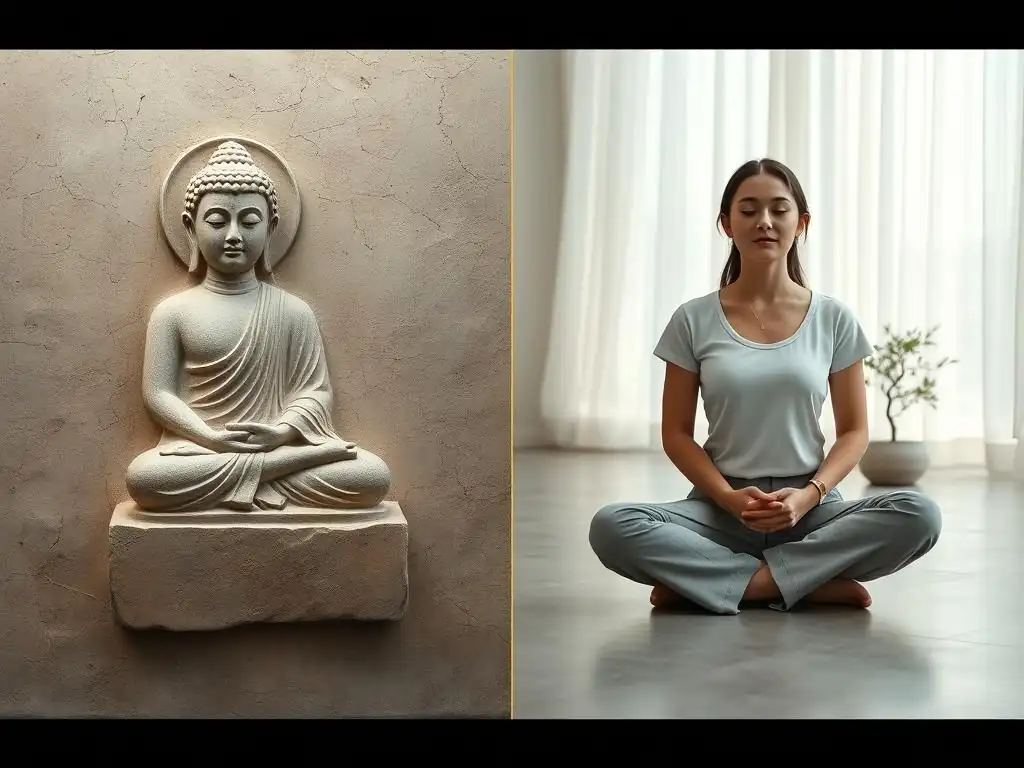
The 20th and 21st centuries have seen meditation move from relatively obscure spiritual practices to a widely accepted tool for personal development and health. This evolution is driven by increasing scientific validation, technological advancements, and a growing societal focus on mental well-being. Meditation has adapted to integrate seamlessly into the rhythms and demands of modern life.
This adaptation involves not only secularization but also packaging and delivery methods that fit contemporary lifestyles. From brief guided sessions available on smartphones to structured programs offered in workplaces and hospitals, meditation has become more accessible than ever before. This widespread adoption reflects a recognition of its practical benefits in managing the challenges of the modern world.
Scientific Research on the Benefits of Meditation: Validating Meditation's Impact
One of the most significant factors in meditation's modern evolution is the explosion of scientific research exploring its effects on the brain and body. Beginning in the late 20th century and accelerating rapidly in the 21st, neuroscientists, psychologists, and medical researchers have used advanced tools like fMRI, EEG, and physiological measures to investigate what happens during and after meditation. This research provides empirical evidence supporting many of the benefits traditionally attributed to the practice, validating meditation's impact for a skeptical, science-minded audience.
Key findings from this research include demonstrable changes in brain structure and function. Studies have shown that long-term meditators may have increased gray matter thickness in areas associated with attention, interoception (awareness of internal bodily states), and emotional regulation, such as the prefrontal cortex and insula. Research also indicates reduced activity in the amygdala, the brain's fear center, suggesting a biological basis for reduced anxiety and stress reactivity.
Furthermore, studies have documented meditation's positive effects on physiological markers like blood pressure, heart rate variability, and cortisol levels, further cementing its credibility as a health intervention. The number of peer-reviewed articles on mindfulness and meditation has grown exponentially, from a handful in the 1980s to thousands annually in recent years, reflecting its firm establishment as a legitimate area of scientific inquiry.
Meditation Apps and Digital Resources: Democratizing Access
The advent of smartphones and the internet has revolutionized access to meditation instruction and practice. Meditation apps like Headspace, Calm, and Ten Percent Happier, along with countless websites and online courses, have made guided meditations and mindfulness exercises available to millions globally, often at low or no cost. These platforms offer a wide variety of content, from short, themed meditations for specific situations (e.g., commuting, before sleep) to longer courses on particular techniques or concepts.
These digital resources have played a crucial role in democratizing access to meditation, removing barriers of location, time, and cost that might have previously prevented people from learning. While they may not replace the depth of instruction from a qualified teacher, they serve as an excellent entry point for beginners and provide consistent support for regular practice. Popular apps report tens of millions of downloads and active users, illustrating the scale of their impact in bringing meditation into daily life for a vast number of people seeking to improve their mental well-being.
Meditation and its Integration into Healthcare and Corporate Wellness Programs
Building on the foundation of scientific validation, meditation is increasingly being integrated into mainstream institutions, particularly healthcare and corporate environments. Hospitals and clinics now offer mindfulness-based programs as adjunct treatments for conditions ranging from chronic pain and cardiovascular disease to anxiety disorders and PTSD. Therapists often incorporate mindfulness techniques into various psychotherapy modalities, such as Cognitive Behavioral Therapy (CBT) and Dialectical Behavior Therapy (DBT).
In the corporate world, companies are recognizing the toll of workplace stress on productivity and employee well-being. Consequently, meditation and mindfulness training are becoming common components of corporate wellness programs. These initiatives aim to help employees manage stress, improve focus, enhance resilience, and foster a more positive work environment.
Studies suggest that mindfulness programs in the workplace can lead to reduced stress levels, lower burnout rates, and potentially decrease healthcare costs for employers. For example, a survey by Fidelity Investments and the National Business Group on Health found that a significant percentage of employers were offering mindfulness or meditation programs as part of their wellness initiatives.
Considerations and Nuances in Meditation Practice
While meditation offers numerous benefits, it's not a one-size-fits-all solution, and engaging with the practice involves important considerations regarding guidance, ethics, and potential challenges. Acknowledging these nuances ensures a more informed and potentially safer approach to meditation. The growing popularity of meditation necessitates a responsible framework for teaching and practice.
Understanding that meditation can sometimes surface difficult emotions or experiences is crucial. While often portrayed as universally calming, the process of turning inward can also reveal underlying stress, trauma, or discomfort. Therefore, the context and support surrounding the practice are as important as the technique itself.
The Importance of Qualified Guidance and Individualized Approaches
While guided meditations via apps are accessible and helpful for many, the depth and complexity of meditation practice, especially for those with specific mental health considerations or seeking deeper transformation, often benefit significantly from qualified guidance. Experienced teachers can offer personalized instruction, help navigate challenges that arise during practice, and provide context from their own years of dedication. They can also help individuals find the techniques best suited to their temperament, goals, and current life circumstances.
Meditation is not a monolithic practice; different techniques yield different results and resonate differently with individuals. Someone struggling with severe anxiety might benefit from a technique focused on calming the nervous system, while someone seeking to understand difficult emotions might find insight practices more useful. A qualified teacher can help assess individual needs and recommend appropriate approaches, ensuring that the practice is supportive rather than overwhelming. Relying solely on generic instructions, particularly when dealing with complex emotional or psychological states, might not be sufficient or could even be counterproductive for some individuals.
Ethical Considerations in Meditation Instruction
As meditation gains popularity and becomes a profession for many teachers, ethical considerations are paramount. The power dynamic inherent in the teacher-student relationship requires clear ethical guidelines to prevent potential harm or exploitation. Responsible teachers adhere to principles such as maintaining appropriate boundaries, avoiding conflicts of interest, teaching within their scope of training, and ensuring confidentiality. Transparency regarding training, lineage, and teaching philosophy is also important for students choosing a teacher.
Organizations like the International Mindfulness Teachers Association (IMTA) and various Buddhist lineages have developed ethical codes for teachers to follow. These codes often address issues such as power dynamics, appropriate touch (in practices involving physical guidance), financial transparency, and handling disclosures of trauma or sensitive information. Upholding high ethical standards is vital for maintaining trust in the meditation community and ensuring that students feel safe and supported in their practice journey.
Potential Challenges and Contraindications of Meditation Practice
While generally safe and beneficial, meditation practice is not without potential challenges or contraindications for certain individuals. For some, the process of quieting the mind or observing internal states can initially increase anxiety, bring up suppressed traumatic memories, or intensify difficult emotions. For individuals with severe mental health conditions, such as active psychosis, severe dissociation, or recent trauma without adequate support, intensive meditation might not be advisable and should be approached with caution and under the guidance of both a meditation teacher and a mental health professional.
Research on the potential adverse effects of meditation is still an emerging field, but anecdotal reports and some studies suggest that a small percentage of practitioners may experience challenging psychological effects. These can range from increased anxiety or depression to, in rare cases, feelings of derealization or depersonalization. It is crucial for both teachers and practitioners to be aware of these possibilities and to approach meditation practice with sensitivity, especially when dealing with vulnerable populations. Recognizing that meditation is a powerful tool that requires mindful application is key to maximizing its benefits while minimizing potential risks.
Core Principles of Effective Meditation Practice
Despite the diversity of techniques, many forms of meditation share core principles that contribute to their effectiveness in cultivating mental well-being. These principles form the bedrock of practice, guiding practitioners towards greater awareness, acceptance, and inner peace. Understanding these fundamentals is key to engaging with meditation meaningfully, regardless of the specific method employed.
These foundational principles provide a common thread that connects ancient contemplative traditions with modern secular approaches. They highlight the universal human capacity for intentional awareness and the potential for transforming our relationship with our thoughts, feelings, and experiences through dedicated practice.
Cultivating Present Moment Awareness: Focusing on the Breath
At the heart of many meditation practices is the cultivation of present moment awareness. This involves intentionally bringing one's attention to what is happening right now, without getting lost in thoughts about the past or worries about the future. The breath is frequently used as an anchor for this awareness because it is always happening in the present moment. By focusing on the physical sensations of the breath – the rise and fall of the abdomen, the air entering and leaving the nostrils – practitioners train their attention to stay grounded in the here and now.
This practice is fundamental because the mind naturally tends to wander. We spend significant time ruminating about past events or rehearsing future scenarios. Regularly returning attention to the breath builds the mental muscle of focus and helps to interrupt these habitual patterns of mind-wandering. It allows individuals to experience life directly as it unfolds, rather than being constantly filtered through layers of thought and judgment. This sustained attention to the present is a key mechanism through which meditation reduces stress and enhances clarity.
Developing Acceptance and Non-Judgment: Observing Thoughts and Feelings
Another core principle is developing an attitude of acceptance and non-judgment towards one's internal experience. As the mind wanders or difficult emotions arise during meditation, the practice is not to push them away or evaluate them as "good" or "bad." Instead, it is about observing thoughts, feelings, and physical sensations with curiosity and kindness, simply noticing their presence without getting entangled or reacting impulsively. This is often described as witnessing internal phenomena like clouds drifting across the sky.
This non-judgmental observation is transformative because it changes our relationship with difficult experiences. Instead of being overwhelmed by anxiety or frustration, we learn to recognize these states as temporary phenomena. This creates psychological space, allowing for a more measured response rather than an automatic reaction. By practicing acceptance on the cushion, individuals gradually cultivate the ability to meet challenging life situations with greater equanimity and resilience, reducing the secondary suffering that often arises from resisting or judging our own experiences.
Fostering Compassion and Loving-Kindness: Expanding Awareness
While many meditation techniques begin with focusing inward, many traditions also emphasize expanding awareness outward and cultivating positive emotional states, particularly compassion and loving-kindness (Metta). Loving-kindness meditation involves intentionally directing feelings of warmth, friendliness, and good wishes towards oneself and others, starting with oneself, then loved ones, neutral persons, difficult persons, and eventually all beings.
Practices like Metta meditation actively cultivate empathy and connection. By systematically wishing well-being upon others, practitioners gradually soften feelings of anger, resentment, and isolation. This expansion of awareness beyond one's immediate concerns fosters a greater sense of interconnectedness and can significantly improve interpersonal relationships. While focused attention and non-judgment build a strong inner foundation, compassion practices help to open the heart and extend that cultivated peace and acceptance towards the wider world, contributing to both personal and collective well-being.
Meditation and Mental Well-being: Exploring the Benefits

The primary reason for meditation's widespread adoption in the modern world is its demonstrable positive impact on mental well-being. Decades of research and countless personal testimonies highlight its effectiveness in addressing common psychological challenges and fostering greater emotional health. Tracing meditation's history shows a consistent thread of seeking inner peace and mental clarity, goals that resonate strongly with contemporary needs.
From reducing the pervasive effects of stress and anxiety to enhancing our ability to manage emotions and improve cognitive function, meditation offers a multifaceted approach to nurturing the mind. It provides practical tools for navigating the complexities of modern life and cultivating a more resilient and fulfilling inner landscape.
Reducing Stress and Anxiety Through Meditation
One of the most widely recognized benefits of meditation is its ability to reduce stress and anxiety. Chronic stress is a significant factor in many physical and mental health issues, and meditation offers a potent antidote. Practices that involve focusing on the breath or body sensations activate the body's relaxation response, counteracting the "fight or flight" response triggered by stress. Regular meditation has been shown to lower levels of stress hormones like cortisol in the body.
Furthermore, meditation trains the mind to be less reactive to stressful thoughts and external triggers. By observing anxious thoughts without getting swept away by them, individuals develop the capacity to recognize stress signals early and respond more skillfully. Studies have consistently shown that mindfulness-based interventions can lead to significant reductions in self-reported stress levels and clinical anxiety symptoms.
For instance, research indicates that participation in an MBSR program can lead to a decrease in amygdala activity when exposed to stressful stimuli, suggesting a reduced biological stress response. This reduction in reactivity is a key mechanism by which meditation benefits minds grappling with daily pressures.
Enhancing Emotional Regulation with Meditation
Emotional regulation, the ability to understand and manage one's emotions effectively, is crucial for mental well-being, and meditation significantly enhances this capacity. Meditation helps individuals become more aware of their emotional states as they arise, recognizing feelings like anger, sadness, or frustration in the moment rather than being blindsided by them. This increased awareness allows for a pause between experiencing an emotion and reacting to it.
Through practices of non-judgmental observation, meditators learn to tolerate uncomfortable emotions without being overwhelmed or acting impulsively. They develop the ability to observe emotions as temporary states, not defining characteristics of the self. This perspective shift fosters greater emotional resilience. Research using fMRI has shown that regular meditation practice can strengthen connections between the prefrontal cortex (involved in executive control and decision-making) and the amygdala, suggesting improved top-down regulation of emotional responses. This enhanced ability to navigate the emotional landscape is a profound benefit tracing meditation history benefits minds.
Improving Sleep Quality and Cognitive Function
Sleep disturbances are often linked to stress and a racing mind, and meditation can play a significant role in improving sleep quality. By helping to calm the nervous system and reduce the tendency towards ruminative thinking (worrying about the past or future), meditation makes it easier to fall asleep and stay asleep. Guided sleep meditations are particularly popular digital resources for this purpose. Studies have shown that mindfulness meditation can improve sleep scores and reduce insomnia symptoms in various populations.
Beyond sleep, meditation also offers cognitive benefits. Regular practice has been associated with improvements in attention span, concentration, working memory, and cognitive flexibility. The sustained focus required in many meditation techniques trains the brain to maintain attention and resist distractions.
Research has identified changes in brain networks associated with attention and executive function in meditators. For example, studies have shown that meditators perform better on tasks requiring sustained attention and have increased activity in brain regions like the dorsal anterior cingulate cortex. These cognitive enhancements further demonstrate how tracing meditation history benefits minds by providing tools for sharper focus and clearer thinking.
Meditation as a Tool for Personal Growth and Self-Awareness
Beyond symptom reduction, meditation serves as a powerful catalyst for personal growth and self-awareness. By regularly turning attention inward, practitioners gain deeper insights into their own thought patterns, emotional triggers, habitual reactions, and underlying beliefs. This increased self-understanding is the first step towards making conscious choices for change rather than being driven by unconscious patterns.
Meditation fosters introspection, allowing individuals to connect with their values, clarify their priorities, and cultivate a greater sense of purpose. It can illuminate aspects of the self that were previously hidden or ignored, leading to a more integrated and authentic sense of identity. This journey of self-discovery, facilitated by consistent practice, empowers individuals to live more intentionally and align their actions with their deepest aspirations. This profound aspect of personal transformation underscores the enduring value of tracing meditation history benefits minds seeking not just relief from suffering, but also a richer, more meaningful life.
The Future of Meditation: Continued Relevance in a Modern World
As we look ahead, meditation is poised to become even more integrated into the fabric of society. Driven by ongoing scientific discovery, increasing global awareness of mental health, and technological innovation, the practice continues to evolve and find new applications. The journey of tracing meditation history reveals a remarkable adaptability that ensures its continued relevance.
The future will likely see deeper scientific understanding of how meditation works, more personalized approaches to practice, and its further integration into diverse sectors. Its role in supporting mental well-being in a rapidly changing world seems increasingly vital.
The Role of Neuroscience in Understanding Meditation's Effects
Neuroscience will continue to play a crucial role in unraveling the mysteries of how meditation impacts the brain and mind. Advanced imaging techniques like fMRI, EEG, and MEG, coupled with sophisticated data analysis, are providing increasingly detailed maps of the neural correlates of meditative states and traits. Researchers are investigating how different meditation techniques might target specific brain networks and how long-term practice leads to structural and functional changes through neuroplasticity – the brain's ability to rewire itself.
Future research may pinpoint specific "neural signatures" associated with different benefits, potentially allowing for more tailored meditation recommendations based on an individual's needs or neurobiological profile. For instance, understanding how certain practices enhance connectivity in brain networks related to self-reference could inform interventions for conditions involving distorted self-perception. This ongoing scientific exploration provides a robust foundation for understanding why tracing meditation history benefits minds, moving beyond subjective experience to objective biological understanding.
Meditation and the Growing Interest in Mental Health and Well-being
The global conversation around mental health has expanded dramatically in recent years, shedding light on the widespread prevalence of conditions like anxiety, depression, and burnout. This increased awareness has fueled a demand for accessible, effective tools and practices that support psychological well-being, positioning meditation as a highly relevant intervention. As societies grapple with the mental health consequences of modern stressors, from digital overload to economic uncertainty, the appeal of a practice that cultivates inner resilience and peace is likely to grow.
Meditation is increasingly seen not just as a therapeutic tool for illness but as a foundational practice for promoting overall well-being, resilience, and flourishing. Educational institutions, workplaces, and public health initiatives are recognizing its potential for prevention and health promotion. This societal shift towards prioritizing mental well-being ensures that meditation will remain a vital practice for individuals and communities seeking to navigate the complexities of contemporary life with greater ease and clarity.
The Potential for Further Research on the Benefits of Meditation for the Brain
Despite the significant progress made in understanding meditation's effects, there is still vast potential for further research, particularly regarding its impact on the brain. Scientists are exploring questions about the optimal "dosage" and frequency of practice for specific outcomes, how meditation interacts with other interventions (like therapy or medication), and its potential benefits for populations not yet extensively studied, such as children or individuals with specific neurological conditions.
Research is also delving deeper into the mechanisms of action, investigating how meditation influences gene expression, inflammation markers, and the gut-brain axis. Understanding these intricate biological pathways will provide a more complete picture of meditation's holistic impact. This continued scientific inquiry will refine our understanding of how tracing meditation history benefits minds, potentially unlocking new applications and making the practice even more effective and widely accessible in the future.
Conclusion: Reflecting on the Journey of Meditation and Its Enduring Impact on Minds
Tracing the history of meditation reveals a practice deeply embedded in human culture, evolving from ancient spiritual quests to a scientifically validated tool for modern well-being. From the early contemplative practices of indigenous cultures and the philosophical explorations of the Upanishads to the systematic mindfulness of Buddhism and the diverse techniques practiced today, meditation has demonstrated a remarkable capacity to adapt and endure.
This journey highlights a continuous human endeavor to understand the mind, cultivate inner peace, and find liberation from suffering. Today, supported by rigorous scientific research and made accessible through technology, meditation continues its profound impact. It offers powerful, practical methods for reducing stress, managing emotions, improving focus, and fostering self-awareness. Ultimately, tracing meditation's history benefits minds by providing a roadmap to practices that have stood the test of time, offering a path to greater resilience, clarity, and well-being in our complex modern world.
Frequently Asked Questions
What are the ancient roots of Transcendental Meditation (TM)?
Transcendental Meditation's roots lie in the ancient Vedic tradition of India. It's a meditation technique derived from the teachings passed down through generations of spiritual masters.
How has TM evolved from its ancient origins to its modern practice?
While retaining its core principles, TM has been adapted for modern life by Maharishi Mahesh Yogi. He systematized the technique and made it accessible to a wider audience, emphasizing its scientific benefits.
What are some of the claimed mental well-being benefits of practicing TM?
TM is often associated with reduced stress, anxiety, and depression. Proponents claim it enhances cognitive function, improves emotional regulation, and fosters a sense of inner peace.
How does TM differ from other types of meditation techniques?
TM is a mantra-based technique that involves silently repeating a personalized mantra. Unlike some other forms of meditation, it doesn't require concentration or effort. It focuses on effortless awareness.
Is there any scientific evidence to support the mental health benefits of TM?
Yes, a growing body of research suggests that TM may offer several mental health benefits. Studies have shown its potential to reduce blood pressure, improve sleep quality, and alleviate symptoms of anxiety and depression.
Final Reflection: The Enduring Power of Transcendental Meditation
The ancient practice of Transcendental Meditation (TM) continues to resonate deeply in our modern, fast-paced world, offering a powerful antidote to the pervasive stress and anxiety of contemporary life. Its enduring appeal lies not just in its historical depth, but in its demonstrable ability to cultivate inner peace and enhance cognitive function – benefits increasingly sought after in our increasingly demanding society. The exploration of TM's history reveals a timeless wisdom that remains remarkably relevant today.
Tracing the evolution of TM, from its Vedic origins to its global dissemination, reveals a profound impact on individual lives and societal well-being. The practice's emphasis on inner stillness and self-awareness offers a counterpoint to the external pressures that often dominate our lives. The purpose of human life is to serve, and to show compassion and the will to help others.
This quote, while not directly from a TM proponent, perfectly encapsulates the inner peace and outward compassion that TM cultivates, fostering a ripple effect of positive change in the world. The ongoing research into the neurological and psychological benefits of TM further solidifies its place as a valuable tool for personal growth and societal harmony.
Consider the profound implications of this ancient practice for your own life. What if you could cultivate a deeper sense of inner peace, enhance your focus and creativity, and experience a more fulfilling life? The journey of exploring TM, as detailed in this article, is not just a historical exploration; it's an invitation.
It's an invitation to delve into the rich tapestry of this ancient practice and to discover the transformative power it holds for you. Take the time to explore the resources available, to consider the potential benefits, and to embark on a path towards a more centered, peaceful, and ultimately, more meaningful existence.
Unlock Your Inner Calm: Start Your TM Journey Today
Thanks for exploring the fascinating history of Transcendental Meditation with us! We hope you gained a deeper understanding of this powerful practice and its enduring legacy. Now it's time to take the next step.
- Begin your free introductory meditation: This will give you a taste of the transformative power of TM.
- Share your thoughts and experiences: Connect with others on our social media and let us know what resonated most with you in this article.
- Learn more about finding a certified instructor in your area and experience the benefits for yourself.
Ready to discover the profound impact TM can have on your life? What initial step will you take to explore the practice further?