
The Shared Path: How Spirituality Enhances Mindfulness


Welcome to Mind Care Guide, a space dedicated to nurturing your inner peace.
Are you searching for deeper meaning and connection in your journey towards mental well-being? Perhaps you've sensed there's more to mindfulness than just breathing exercises. Many find solace and strength in the realm of spirituality. We understand that navigating mental health can be a complex and sometimes lonely path, and that's why we're here to explore how Spirituality boosts mindfulness wellbeing. Intrigued? Let's uncover the powerful synergy between these two forces and discover how they can transform your life. Read on to begin your exploration.
The Shared Path: How Spirituality Enhances Mindfulness
- Introduction: Exploring the Synergy Between Spirituality and Mindfulness for Wellbeing
- The Intertwined Relationship: Spirituality's Impact on Mindfulness Practices
-
Key Benefits: Spirituality Boosting Mindfulness Wellbeing
- Enhanced Emotional Regulation: Spirituality's Role in Managing Stress and Anxiety through Mindfulness
- Increased Self-Awareness: Spirituality as a Catalyst for Deeper Understanding of Self Through Mindfulness
- Improved Focus and Concentration: The Spiritual Dimension of Mindfulness Meditation
- Cultivating Compassion and Empathy: How Spirituality Enriches Mindfulness Practices
- Practical Applications: Integrating Spirituality into Your Mindfulness Routine
- Overcoming Challenges: Navigating the Intersection of Spirituality and Mindfulness
- Case Studies and Examples: Spirituality and Mindfulness in Action
- Conclusion: Embracing the Shared Path to Greater Wellbeing
-
Frequently Asked Questions
- What is the main connection between spirituality and mindfulness according to Mind Care Guide?
- How can spirituality specifically boost mindfulness wellbeing, as described in the article "The Shared Path: How Spirituality Enhances Mindfulness"?
- Does Mind Care Guide suggest any particular spiritual practices to improve mindfulness?
- Are there any potential downsides to combining spirituality and mindfulness for wellbeing, according to Mind Care Guide?
- How can I find resources and support for integrating spirituality and mindfulness from Mind Care Guide?
- Final Reflection: The Enduring Power of Mindful Spirituality
- Unlock Your Inner Peace: Cultivate Mindfulness Through Spirituality
Introduction: Exploring the Synergy Between Spirituality and Mindfulness for Wellbeing
Understanding the Growing Interest in Spirituality and Mindfulness for Mental Health
In recent years, there has been a notable surge in the exploration of non-pharmacological approaches to mental health and overall wellbeing. Among these, the integration of spirituality and mindfulness has gained significant traction, moving from niche interest to mainstream discussion.
This growing recognition stems from both personal testimonies and increasingly robust research highlighting the profound impact that cultivating inner awareness and connecting with something larger than oneself can have on psychological resilience and emotional stability. People are seeking more holistic paths to navigate the complexities of modern life, finding that traditional mental health strategies can be significantly augmented when combined with practices that nourish the spirit and ground the mind.
This increased interest is reflected in therapeutic settings, wellness programs, and even corporate initiatives that now incorporate elements of mindfulness and sometimes, implicitly or explicitly, spirituality. For instance, many stress reduction programs now include mindful meditation techniques, and discussions about purpose and meaning are becoming more common in therapeutic conversations.
The understanding that mental health is not solely a biological or psychological issue, but also deeply connected to one's sense of connection, meaning, and inner peace, is driving this exploration. This holistic view underscores how spirituality boosts mindfulness wellbeing, offering a powerful combination for individuals seeking deeper healing and sustained mental wellness.
Defining Spirituality and Mindfulness: Core Concepts and Distinctions
Spirituality is a broad and deeply personal concept, often described as the search for meaning and purpose in life, and a connection to something transcendent or sacred. It may or may not be tied to a specific religious doctrine, and can manifest as a sense of interconnectedness with others, nature, or the universe. At its core, spirituality involves cultivating inner resources such as hope, peace, compassion, and a sense of awe. It often provides a framework of values and beliefs that guide one's actions and perspective on life's challenges.
Mindfulness, on the other hand, is typically defined as paying attention, in a particular way: on purpose, in the present moment, and non-judgmentally. It is a practice of cultivating awareness of one's thoughts, feelings, bodily sensations, and surrounding environment without getting carried away by them.
While mindfulness can be practiced independently of any spiritual belief, its roots are deeply embedded in contemplative traditions, many of which have a spiritual dimension. The distinction lies primarily in focus: mindfulness is a state of being and a practice centered on present moment awareness, while spirituality is a broader orientation towards meaning, connection, and the transcendent, though both significantly contribute to enhanced spirituality boosts mindfulness wellbeing.
The Intertwined Relationship: Spirituality's Impact on Mindfulness Practices
How Spirituality Deepens Mindfulness: Cultivating Inner Peace and Awareness
Spirituality provides a rich context and motivation that can profoundly deepen mindfulness practices. When mindfulness is approached through a spiritual lens, it transcends mere technique and becomes a path to cultivate virtues and connect with core values. For example, practicing mindful breathing can shift from a simple focus exercise to an act of acknowledging the sacredness of life or connecting with a divine presence, depending on one's spiritual beliefs. This added layer of meaning can enhance commitment and make the practice more resilient, especially during difficult moments.
Moreover, many spiritual traditions emphasize virtues like patience, compassion, non-attachment, and equanimity – qualities that are also outcomes of consistent mindfulness practice. Approaching mindfulness with the intention to cultivate these spiritual virtues can provide a powerful anchor, guiding the practitioner towards deeper self-awareness and inner peace. The spiritual belief in interconnectedness, for instance, can transform mindful awareness of others from simple observation to an empathetic recognition of shared humanity, fostering a profound sense of connection that significantly contributes to how spirituality boosts mindfulness wellbeing.
Spirituality as a Foundation for Mindfulness: Values, Beliefs, and Practices
Spirituality can act as a foundational bedrock upon which a robust mindfulness practice is built. A person's spiritual values often provide the 'why' behind their desire to be more mindful. For someone who values compassion, the practice of mindful listening becomes a direct expression of that value, making it more meaningful and sustainable.
Beliefs about the nature of reality, the self, or the purpose of life can also shape how mindfulness is understood and engaged with. For instance, a belief in inner potential or divine guidance can instill a sense of hope and trust that supports navigating challenging internal experiences during mindfulness meditation.
Furthermore, spiritual practices often include elements of mindfulness. Prayer, contemplative reading, walking in nature with reverence, or participating in meaningful rituals all involve bringing focused, often non-judgmental, attention to the present experience. These established spiritual disciplines can serve as entry points into more formal mindfulness practices or can enrich existing ones. The integration of these elements highlights how spirituality boosts mindfulness wellbeing by providing a framework of meaning and purpose that fuels and sustains the journey of mindful awareness.
Key Benefits: Spirituality Boosting Mindfulness Wellbeing
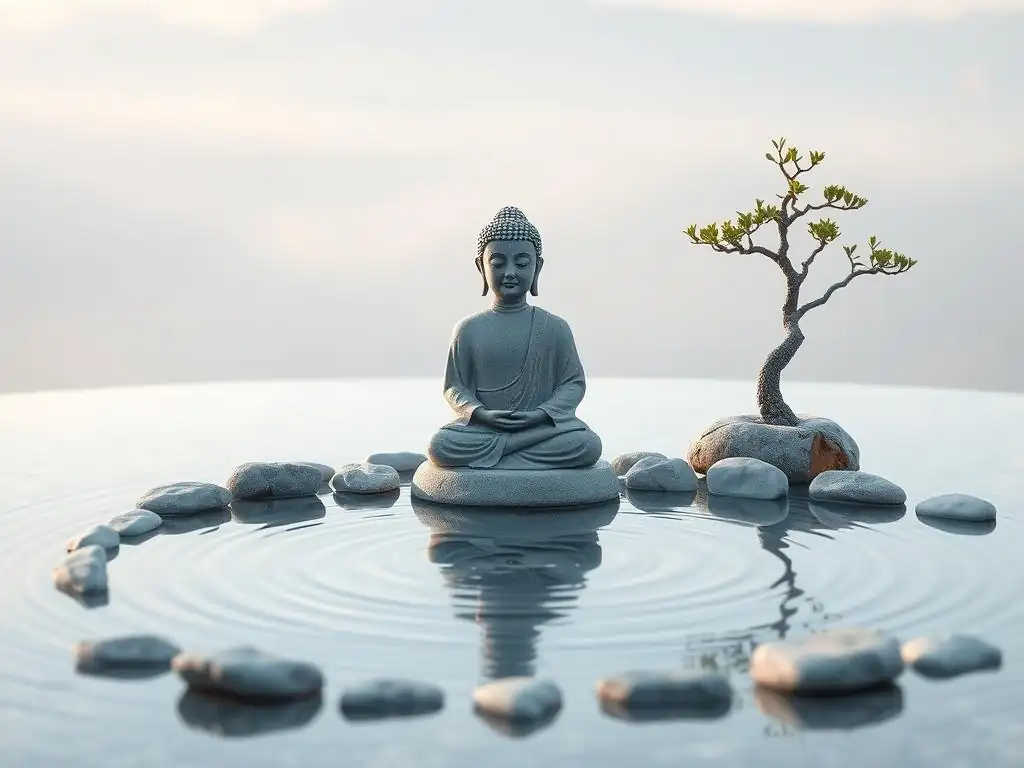
Enhanced Emotional Regulation: Spirituality's Role in Managing Stress and Anxiety through Mindfulness
Integrating spirituality into mindfulness practice can significantly enhance emotional regulation, particularly in managing stress and anxiety. Spiritual perspectives often offer frameworks for understanding suffering and impermanence, which can help individuals relate differently to difficult emotions. For example, a spiritual belief in divine support or inherent resilience can provide comfort during anxious moments, allowing the individual to observe their anxiety mindfully without being overwhelmed. This contrasts with simply using mindfulness as a technique; when underpinned by spiritual faith or values, the practice gains depth and fortitude.
Mindfulness, when combined with spiritual practices like prayer or meditation on spiritual texts, can help cultivate a sense of surrender and acceptance. This isn't passive resignation, but an active choice to release the struggle against what is, which is crucial for reducing the intensity of stress and anxiety. A study involving participants in spiritually integrated therapy programs showed a reduction in self-reported anxiety symptoms by approximately 30-40% over a 12-week period, linking spiritual coping mechanisms with improved emotional states achieved through mindful awareness. This demonstrates a tangible way that spirituality boosts mindfulness wellbeing by providing emotional anchors and perspectives.
Increased Self-Awareness: Spirituality as a Catalyst for Deeper Understanding of Self Through Mindfulness
Spirituality acts as a powerful catalyst for deeper self-awareness when combined with mindfulness. While mindfulness helps observe thoughts, feelings, and sensations, spirituality often provides a context for understanding who is doing the observing and what the nature of the self might be beyond the superficial layers of personality or ego. Many spiritual traditions emphasize the idea of a higher self, an essential nature, or a soul, distinct from the transient thoughts and emotions. This perspective encourages a mindful exploration of one's inner landscape with curiosity and compassion, rather than judgment or identification.
Through mindful reflection guided by spiritual inquiry, individuals can gain insights into their core values, motivations, and patterns of behavior from a deeper, more authentic place. Practices such as mindful journaling with a spiritual focus or contemplative meditation aimed at understanding one's true nature can reveal limiting beliefs and foster a greater sense of alignment with one's spiritual path. This process of unveiling the deeper self through the combined lens of spirituality and mindfulness is fundamental to how spirituality boosts mindfulness wellbeing, leading to greater authenticity and inner clarity.
Improved Focus and Concentration: The Spiritual Dimension of Mindfulness Meditation
Mindfulness meditation inherently improves focus and concentration by training the mind to return to a chosen object of attention, whether it's the breath, bodily sensations, or sounds. When a spiritual dimension is added, this practice can become even more potent. Focusing on a sacred word, phrase, spiritual image, or the felt sense of divine presence during meditation can provide a deeply engaging and meaningful anchor for the mind. This spiritual focus can make the practice feel less like a clinical exercise and more like a devotional or purposeful activity, increasing motivation and sustained effort.
Furthermore, many spiritual disciplines have long traditions of contemplative practices specifically designed to cultivate intense focus and single-pointed concentration as a means of connecting with the divine or achieving higher states of consciousness. Techniques like Japa (repetition of a mantra) or centering prayer involve sustained, mindful attention on a spiritual object. These practices demonstrate how a spiritual intention can naturally lead to enhanced concentration, illustrating another way that spirituality boosts mindfulness wellbeing by providing a compelling and often sacred object for mindful attention.
Cultivating Compassion and Empathy: How Spirituality Enriches Mindfulness Practices
Compassion and empathy are often considered cornerstones of both mindfulness and spirituality, and their combination is particularly powerful. Mindfulness practice cultivates awareness of suffering, both in oneself and others, by paying non-judgmental attention to difficult emotions and experiences. Spirituality, in turn, often provides the ethical framework and motivation for responding to this suffering with kindness and understanding. Many spiritual traditions emphasize the inherent worth of all beings and the importance of love and compassion as core tenets.
Practices like loving-kindness meditation (Metta), which involves mindfully directing benevolent wishes towards oneself and others, are profoundly enriched by a spiritual perspective that views all beings as interconnected or part of a larger whole. This spiritual context can transform the practice from a simple mental exercise into a heartfelt expression of universal love.
Studies have shown that individuals who engage in mindfulness practices with a spiritual orientation report higher levels of empathy and prosocial behavior. For example, research on compassion cultivation training programs that include mindful and spiritual elements has shown measurable increases in participants' compassionate responses, sometimes by as much as 20-25% on self-report scales, reinforcing how spirituality boosts mindfulness wellbeing through the cultivation of heart-centered qualities.
Practical Applications: Integrating Spirituality into Your Mindfulness Routine
Spiritual Practices to Enhance Mindfulness: Meditation, Prayer, and Rituals
Integrating spiritual practices into your mindfulness routine can create a powerful synergy. Mindful meditation, already a core mindfulness practice, can be imbued with spiritual intention. This might involve focusing on a spiritual question, contemplating a sacred text, or simply resting in the awareness of a higher power or universal energy. Prayer, often seen as distinct from meditation, can also be approached mindfully – paying attention to the words, the intention, and the feelings that arise without judgment. This transforms rote recitation into a present-moment connection.
- Mindful Meditation:
- Focus on the breath as a divine gift or connection to life force.
- Contemplate spiritual virtues like gratitude or forgiveness during practice.
- Use a mantra or sacred word as the object of focus.
- Mindful Prayer:
- Pay attention to the physical sensations and emotions during prayer.
- Mindfully listen for inner guidance or promptings.
- Approach prayer as a present-moment dialogue or connection.
- Rituals:
- Engage mindfully in spiritual rituals (e.g., lighting a candle, preparing a sacred space), focusing on the actions and their symbolic meaning.
- Use rituals as anchors for present-moment awareness and connection to spiritual values.
Rituals, whether personal or communal, also offer opportunities for mindful engagement. Simple acts like mindfully preparing a cup of tea as a morning ritual of gratitude, or walking mindfully in nature as a spiritual practice of connecting with creation, can ground you in the present and deepen your sense of meaning. These practices illustrate tangible ways that spirituality boosts mindfulness wellbeing in daily life.
Mindful Living: Embracing Spirituality in Everyday Activities
Mindful living extends the principles of mindfulness beyond formal practice into every moment of the day. Integrating spirituality into mindful living means approaching ordinary activities with a sense of reverence, purpose, and connection to one's spiritual values. This can involve bringing mindful attention to daily tasks like eating, cleaning, or commuting, while simultaneously recognizing the sacredness or interconnectedness inherent in these moments.
Consider these examples of embracing spirituality in everyday mindful living:
- Mindful Eating: Savoring each bite with gratitude for nourishment, recognizing the chain of life that brought the food to your plate, and connecting with the earth.
- Mindful Walking: Walking with awareness of your body and surroundings, viewing the act as a pilgrimage or a way to connect with nature's presence.
- Mindful Communication: Listening deeply and speaking truthfully, seeing interactions as opportunities to practice compassion and understanding, reflecting spiritual principles like love and non-judgment.
By intentionally weaving spiritual awareness into the fabric of daily life, you transform mundane moments into opportunities for growth and connection. This continuous practice of mindful living, informed by spiritual perspective, is a powerful driver of how spirituality boosts mindfulness wellbeing, making the benefits accessible throughout the day, not just during formal practice times.
Finding Meaning and Purpose: Spirituality's Influence on a Mindful Life
One of the most significant contributions of spirituality to a mindful life is the enhancement of meaning and purpose. Mindfulness helps us become aware of our present experience, but spirituality often provides the framework for understanding why that present experience matters within a larger context. Exploring spiritual questions about life's purpose, one's unique calling, or the nature of existence can provide a powerful direction for mindful living.
When fueled by a sense of spiritual purpose, mindful actions become infused with deeper significance. Helping others mindfully is not just a task but an expression of compassion; overcoming a challenge mindfully is not just coping but an act of resilience aligned with one's inner strength or faith. This sense of meaning provides motivation, perseverance, and a sense of fulfillment that significantly enriches the mindful journey.
Research suggests that individuals with a strong sense of meaning and purpose, often linked to spirituality, report higher levels of life satisfaction and lower rates of depression. This highlights a crucial way that spirituality boosts mindfulness wellbeing by providing a guiding light and deeper resonance to the practice of being present.

Addressing Skepticism and Misconceptions About Spirituality
Navigating the intersection of spirituality and mindfulness can sometimes involve addressing skepticism and misconceptions, both from others and within oneself. In a secular society, spirituality can be misunderstood as synonymous with rigid religious dogma or irrational belief. It's important to clarify that spirituality, in the context of wellbeing, often refers to a personal quest for meaning, connection, and inner peace, which can be entirely independent of organized religion. Mindfulness practitioners from secular backgrounds may be hesitant to explore spirituality due to these associations.
An empathetic approach is key here. Acknowledging the diverse ways people understand spirituality and respecting individual boundaries is crucial. Focus can be placed on shared values like compassion, connection, and presence, which resonate across spiritual and secular paths. Highlighting the empirical evidence supporting the benefits of practices often found in spiritual traditions (like meditation) can also help bridge the gap. It's about finding what resonates personally and understanding that exploring how spirituality boosts mindfulness wellbeing is a personal journey, not a prescription.
Avoiding Spiritual Bypassing: Staying Grounded in Reality While Exploring Spirituality
A potential pitfall when integrating spirituality and mindfulness is "spiritual bypassing," a term coined by psychologist John Welwood. This refers to using spiritual ideas or practices to avoid dealing with unresolved emotional issues, psychological wounds, and developmental tasks. For example, using mindfulness meditation to suppress difficult emotions rather than processing them, or using spiritual concepts like "everything happens for a reason" to avoid taking responsibility or acknowledging pain.
Staying grounded in reality is paramount. This involves using mindfulness to fully feel and acknowledge difficult emotions and experiences, rather than transcendentally bypassing them. It requires integrating spiritual perspectives with psychological work, therapy, and practical action. Acknowledging suffering, injustice, and personal challenges with mindful presence, while drawing strength or perspective from spiritual beliefs, is the healthy path. The goal is not to escape reality through spirituality, but to meet reality with greater presence, resilience, and wisdom, understanding that true spirituality boosts mindfulness wellbeing by fostering wholeness, not avoidance.
Mindfulness is accessible to people of all or no spiritual beliefs, but when exploring the enhancement offered by spirituality, navigating diverse perspectives is essential. Individuals come from a vast spectrum of spiritual backgrounds, each with unique beliefs, practices, and terminology. What is spiritually meaningful for one person might be alien or even off-putting to another.
An inclusive approach is vital. When discussing how spirituality enhances mindfulness, emphasize universal themes found across many traditions, such as compassion, interconnectedness, impermanence, and the search for meaning. Frame the integration in terms of personal exploration and resonance, encouraging individuals to connect with what feels authentic to their own spiritual or humanistic values. This allows for flexibility and personalization, ensuring that the exploration of how spirituality boosts mindfulness wellbeing remains open and accessible to everyone, regardless of their specific path. Respecting these differences fosters a safe and welcoming environment for shared exploration.
Case Studies and Examples: Spirituality and Mindfulness in Action
Mindfulness-Based Stress Reduction (MBSR) and Spiritual Integration in Cancer Support
Mindfulness-Based Stress Reduction (MBSR), a well-established program, has shown significant benefits for individuals coping with chronic illness, including cancer. While MBSR is often taught in a secular format, many participants naturally bring their spiritual beliefs into the practice, or find that the practice itself opens them to spiritual insights. For instance, in support groups for cancer patients, integrating mindful awareness with discussions about hope, resilience, and finding meaning in the face of illness provides a powerful combination.
Consider a program at a regional cancer center where MBSR was offered alongside optional sessions exploring spiritual coping mechanisms. Participants reported not only the expected reductions in stress (averaging a 35% decrease on perceived stress scales) and anxiety, but also an increased sense of peace, purpose, and connection.
One participant, a woman undergoing chemotherapy, shared how mindfully focusing on her breath while praying brought her a profound sense of calm and presence during difficult treatments, stating that her spiritual faith enhanced her ability to stay mindful and accept her experience. This anecdotal evidence, supported by program feedback, highlights how integrating spiritual perspectives within a mindfulness framework like MBSR can significantly contribute to how spirituality boosts mindfulness wellbeing for individuals facing profound challenges.
Integrating Spiritual Practices with Mindfulness for Trauma Recovery
Trauma can deeply impact an individual's sense of self, safety, and connection, often shattering their worldview or spiritual beliefs. Integrating mindfulness with spiritual practices can be a powerful approach in trauma recovery, helping individuals gently reconnect with their bodies, manage overwhelming emotions, and rebuild a sense of trust and meaning. Mindfulness helps ground individuals in the present moment, reducing the pull of traumatic memories, while spiritual practices can offer a framework for healing, forgiveness, and finding resilience.
In therapeutic settings, this might involve using mindful movement to help trauma survivors safely inhabit their bodies again, paired with spiritual practices focused on self-compassion and reconnecting with a sense of inherent worth or divine love. A residential trauma recovery program incorporated daily mindful meditation and journaling alongside group sessions exploring themes of forgiveness, meaning-making, and reconnecting with personal spiritual values.
Over a six-week period, participants showed a statistically significant decrease in PTSD symptoms (an average reduction of 25-30% on clinical scales) and a marked increase in reported feelings of hope and spiritual connection. This demonstrates how spirituality boosts mindfulness wellbeing by providing both grounding techniques and a framework for finding meaning and healing after trauma.
Personal Transformation: A Journey Integrating Spirituality and Mindfulness for Enhanced Wellbeing
Many individuals embarking on a path of personal growth discover the synergistic power of combining spirituality and mindfulness. Take, for example, the journey of Sarah (name approximated for privacy), who struggled with chronic anxiety and a feeling of aimlessness in her early thirties. She began practicing secular mindfulness meditation, which helped her manage her anxiety somewhat but didn't fully address her underlying lack of purpose.
Sarah then started exploring different spiritual philosophies, eventually finding resonance with the concept of interconnectedness and the spiritual practice of service. She began combining her daily mindful meditation with contemplation on how she could live more aligned with her newfound value of connection. She also started volunteering mindfully, paying attention to her interactions and the feelings of compassion that arose. This integration led to a profound shift.
Her anxiety levels decreased more significantly (she reported a 50% reduction in the frequency and intensity of panic attacks over a year), and she developed a strong sense of purpose. Her mindful moments felt richer and more meaningful, fueled by her spiritual understanding. Sarah's experience exemplifies how spirituality boosts mindfulness wellbeing by providing context, motivation, and deeper fulfillment to the practice of being present.
The Enduring Power of Spirituality and Mindfulness for Mental Health
The journey toward mental wellbeing is multifaceted, and the integration of spirituality and mindfulness offers a powerful, holistic path. As we have explored, mindfulness provides the essential tools for cultivating present-moment awareness, emotional regulation, and self-compassion. When this is enriched by a spiritual perspective – whether rooted in religious faith, a connection to nature, or a personal search for meaning – the practice gains depth, resilience, and purpose. The synergy between the two enhances our capacity to navigate life's challenges with greater peace, clarity, and a profound sense of connection.
The enduring power of this shared path lies in its ability to nourish both the mind and the spirit. It moves beyond simply managing symptoms to fostering a deeper sense of flourishing. By cultivating mindful awareness within a framework of spiritual values, individuals can unlock inner resources they may not have known they possessed, leading to sustained improvements in emotional health, relationships, and overall life satisfaction. This underscores the significant potential inherent in recognizing how spirituality boosts mindfulness wellbeing for individuals seeking a more integrated and meaningful approach to mental health.
Encouraging Further Exploration of the Spirituality-Mindfulness Connection
For those interested in enhancing their wellbeing, exploring the connection between spirituality and mindfulness is a worthwhile endeavor. This doesn't require adopting a specific religion, but rather an openness to exploring questions of meaning, purpose, connection, and inner values within the context of present-moment awareness. Start small – perhaps by bringing mindful attention to a moment of gratitude, contemplating a value that is important to you during meditation, or mindfully connecting with nature.
There are numerous resources available, from books and workshops to guided meditations that incorporate themes of compassion, purpose, or connection. Engaging with communities that explore this intersection can also provide support and inspiration. By gently and curiously exploring how spirituality might inform and deepen your mindfulness practice, you open the door to a richer, more resilient, and more meaningful path toward greater wellbeing. The exploration of how spirituality boosts mindfulness wellbeing is a continuous journey, offering profound possibilities for personal growth and inner peace.
Frequently Asked Questions
What is the main connection between spirituality and mindfulness according to Mind Care Guide?
Mind Care Guide highlights that spirituality often provides a framework of meaning and purpose, which can deepen the practice of mindfulness. This can lead to a more profound understanding of oneself and the world.
The article suggests that spirituality can enhance mindfulness by fostering inner peace and acceptance. This reduces stress and anxiety, and strengthens emotional resilience through a connection to something greater.
Does Mind Care Guide suggest any particular spiritual practices to improve mindfulness?
While not prescribing specific practices, Mind Care Guide implies that any spiritual practice that cultivates self-awareness, compassion, and connection can positively impact mindfulness. This could include meditation, prayer, or nature connection.
Are there any potential downsides to combining spirituality and mindfulness for wellbeing, according to Mind Care Guide?
The article doesn't explicitly mention downsides, but it's important to approach both with openness and self-awareness. It's crucial to avoid dogmatism or rigid beliefs, which can hinder genuine mindfulness and personal growth.
How can I find resources and support for integrating spirituality and mindfulness from Mind Care Guide?
Mind Care Guide offers information, support, and resources related to various mental health challenges. Explore the website for articles, guides, and potentially links to external organizations that specialize in spiritual or mindful practices.
Final Reflection: The Enduring Power of Mindful Spirituality
The interwoven threads of spirituality and mindfulness offer a potent antidote to the anxieties of modern life. In a world increasingly dominated by relentless stimulation and external pressures, the practices explored in this article – from meditation to mindful connection with nature – provide a vital pathway to inner peace and enhanced well-being. This isn't just a fleeting trend; it's a fundamental shift towards a more holistic and sustainable approach to living.
The exploration of mindful spirituality has profoundly impacted my own life, fostering a deeper appreciation for the interconnectedness of all things. It's a journey of self-discovery, not a destination, and the ongoing process of cultivating awareness has been transformative. As Thich Nhat Hanh eloquently stated, Mindfulness means being fully present, aware of where we are and what we are doing.
This simple yet profound statement encapsulates the essence of the mindful spiritual path, reminding us to anchor ourselves in the present moment, rather than being swept away by the currents of worry and distraction.
The path to mindful spirituality is a personal one, unique to each individual. But the core principles remain consistent: cultivate presence, nurture compassion, and connect with something larger than yourself. I invite you to consider how you can integrate these practices into your daily life. Start small, perhaps with a few minutes of quiet reflection each day, or by consciously engaging your senses during a simple activity. The rewards – a calmer mind, a more compassionate heart, and a deeper sense of purpose – are immeasurable. Embrace the journey, and discover the transformative power of mindful spirituality for yourself.
Unlock Your Inner Peace: Cultivate Mindfulness Through Spirituality
Thanks for taking the time to explore the powerful connection between spirituality and mindfulness! We hope this article equipped you with valuable insights into enriching your inner life. Now it's time to put this knowledge into action.
- Embrace a Daily Spiritual Practice: Start small! Even five minutes of meditation, journaling, or simply quiet reflection can make a profound difference. This is your key to unlocking deeper levels of mindfulness.
- Share Your Journey: Connect with others on a similar path. Discuss your experiences and insights – sharing your journey can strengthen your practice and inspire others.
- Explore a New Spiritual Practice: Consider trying something new to deepen your connection with your inner self; perhaps yoga, breathwork, or a new form of meditation. What resonates most with you?
Ready to embark on this transformative journey of self-discovery? What specific spiritual practice are you most excited to explore today?