
Hidden Tactics for Turning Family Arguments into Understanding

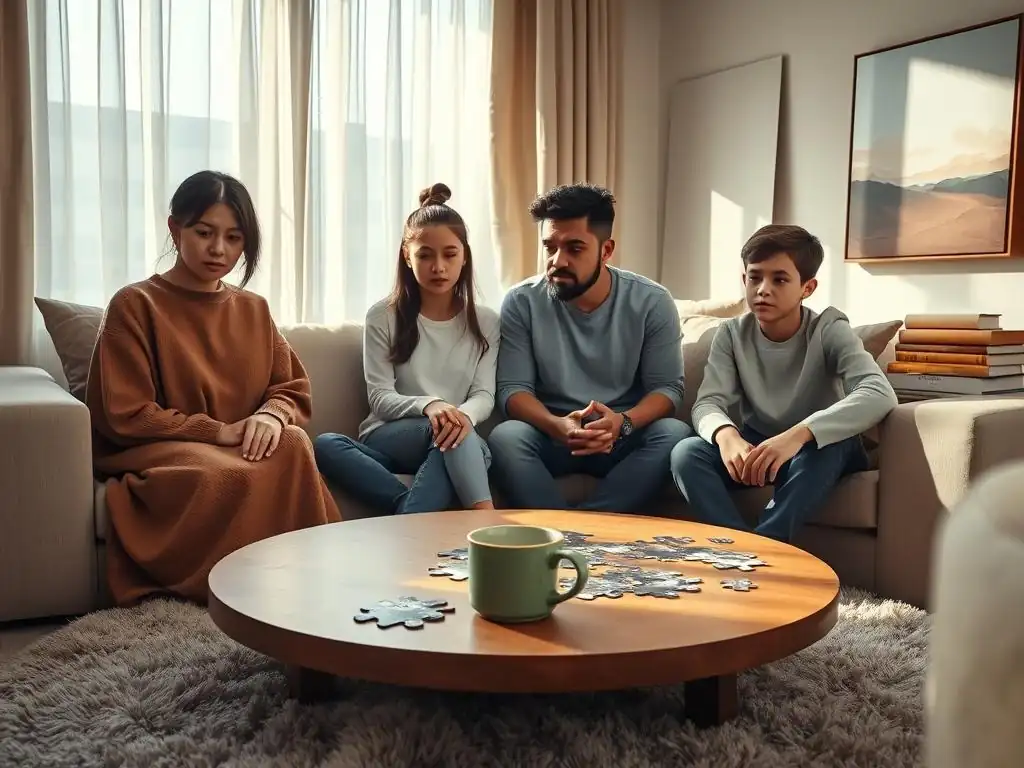
Welcome to Mind Care Guide, a space designed to support your mental well-being. Feeling overwhelmed by family disagreements? You're not alone. Discover hidden tactics for turning family arguments into understanding within our comprehensive guide, "Hidden Tactics for Turning Family Arguments into Understanding." Curious about how to de-escalate tension and build stronger connections? Let's explore effective family argument resolution strategies together, starting with practical tips that can make a real difference in your home.
Navigating Family Disagreements: A Guide to Understanding and Resolution
Family life, while often a source of immense joy and support, can also be a landscape dotted with disagreements and conflicts. Learning effective family argument resolution strategies isn't about eliminating conflict entirely – that's often unrealistic – but rather transforming it into opportunities for deeper connection and understanding. This guide explores various tactics, from identifying the roots of discord to implementing practical communication techniques, all aimed at fostering harmony within your family unit. Mastering these approaches can turn stressful confrontations into constructive dialogues, strengthening bonds rather than fracturing them.
- Understanding the Roots of Family Conflict
- Proactive Strategies for Preventing Conflict
- Turning Arguments into Opportunities for Growth
- Tactics for De-escalating Heated Arguments
- Mastering Effective Communication Techniques
- Repairing Relationships After a Conflict
- Long-Term Strategies for Fostering Harmony
- The Importance of Self-Care
-
Frequently Asked Questions
- What are some hidden tactics to de-escalate a family argument quickly?
- How can I use 'understanding' as a tool during family arguments?
- What are some family argument resolution strategies that focus on long-term solutions?
- How can I improve communication within my family to prevent arguments from escalating?
- What resources does Mind Care Guide offer to help families with conflict resolution?
- Final Reflection: Bridging the Family Divide Through Understanding
- Unlock Deeper Family Connections Today!
Understanding the Roots of Family Conflict
Before diving into specific strategies for resolving family arguments, it's crucial to understand why conflicts arise in the first place. Often, what appears on the surface as a simple disagreement is rooted in deeper issues, unmet needs, or differing perspectives. Taking the time to explore these underlying causes is the first step toward effective family argument resolution strategies. Without this foundational understanding, attempts at resolution may only address symptoms, leading to recurring conflicts.
Identifying Common Triggers: Finances, Chores, and Parenting Styles
Many family conflicts stem from predictable, everyday triggers. Financial disagreements, for instance, are frequently cited as a major source of tension; studies often place money worries among the top stressors for couples and families. Arguments might revolve around budgeting, spending habits, debt, or differing financial goals. For example, one partner might prioritize saving aggressively for retirement, while the other feels it's important to spend on current family experiences, leading to friction over every major purchase.
Household chores are another common battleground. Unequal distribution of tasks, differing standards of cleanliness, or simple forgetfulness can escalate into resentment and arguments. One parent might feel overwhelmed by carrying the majority of the mental load and physical labor, while the other feels their contributions are unappreciated or unseen.
Parenting styles also frequently collide, especially in blended families or when co-parenting. Disagreements over discipline methods, screen time rules, academic expectations, or social boundaries for children can create significant rifts between parents, and even between parents and children. A common scenario involves one parent being perceived as too strict and the other as too lenient, leading to children potentially playing one parent against the other, further complicating the dynamic.
Recognizing Underlying Needs: Respect, Autonomy, and Appreciation
Beneath the surface-level triggers often lie deeper, unmet psychological needs. Individuals involved in a family argument may be feeling a lack of respect, a need for greater autonomy, or a desire for appreciation. For example, an argument about a teenager staying out late might not just be about the curfew; it could be the teenager's need for greater autonomy clashing with the parent's need for safety and control. If the parent communicates their concern through criticism ("You never listen! "), the teenager might feel disrespected, further fueling the conflict.
Similarly, a dispute over chores might mask a deeper need for appreciation. The person feeling overburdened might not simply want help with the dishes; they might want their efforts to be acknowledged and valued. If their complaints are met with defensiveness or dismissal ("I do plenty! "), their need for appreciation remains unmet, and the conflict persists. Understanding these underlying needs – whether it's a need for security, connection, identity, or fairness – is crucial for effective family argument resolution strategies. Addressing the root need, rather than just the immediate issue, paves the way for more sustainable peace.
The Role of Communication Styles: Passive, Aggressive, and Assertive
The way family members communicate during conflict significantly impacts the outcome. Passive communication involves avoiding expressing one's needs or feelings, often leading to resentment and unresolved issues. Someone using a passive style might silently stew about an issue with their sibling rather than bringing it up directly, causing the tension to build until it eventually explodes over something minor.
Aggressive communication, conversely, involves expressing needs or feelings in a way that is hostile, demanding, or disrespectful of others' rights. This often involves blaming, yelling, or using harsh language. An aggressive response to a disagreement about finances might involve one partner yelling, "You're so irresponsible with money! We'll never get ahead because of you!" which immediately puts the other person on the defensive and shuts down productive dialogue.
Assertive communication, on the other hand, involves expressing one's needs and feelings clearly and respectfully, while also considering the needs and feelings of others. This is the cornerstone of effective family argument resolution strategies. An assertive approach to the finance issue might be, "I feel worried about our savings goal when I see this expense. Can we talk about how we can manage our budget together?" This opens the door for discussion rather than confrontation.
Proactive Strategies for Preventing Conflict
While it's impossible to eliminate all disagreements, many family conflicts can be prevented or significantly minimized through proactive measures. Implementing regular communication practices and establishing clear expectations before tensions rise is a key component of effective family argument resolution strategies. These strategies build a foundation of understanding and trust, making it easier to navigate disagreements when they do occur.
Establishing Family Meeting Norms: Agenda, Respectful Dialogue, and Action Items
Regular family meetings can serve as a valuable forum for addressing potential issues before they escalate into full-blown arguments. Establishing clear norms for these meetings is essential. A simple agenda can help keep the discussion focused, perhaps including sections for 'Wins of the Week,' 'Upcoming Events/Logistics,' 'Concerns/Things to Discuss,' and 'Action Items.' This structure ensures that both positive aspects and potential areas of conflict are addressed.
Crucially, norms should emphasize respectful dialogue. This means agreeing to listen without interruption, avoiding personal attacks, and allowing everyone a chance to speak. Families might agree on a 'talking stick' rule or a time limit for each person's turn. Ending the meeting with clear action items – who is responsible for what, and by when – ensures that discussions lead to tangible outcomes, preventing the same issues from resurfacing repeatedly. For instance, if chores were discussed, the action item might be "Mom and Dad will create a chore chart by Friday, and kids will review it Saturday morning."
Creating a Safe Space: Confidentiality and Non-Judgmental Listening
For family members to feel comfortable sharing concerns that could potentially lead to conflict, the environment must feel safe. This involves establishing confidentiality within the meeting context – what is discussed in the meeting stays in the meeting, protecting privacy and vulnerability. It also requires a commitment to non-judgmental listening. When someone shares a feeling or concern, the response should ideally be one of understanding, not immediate defense or criticism.
For example, if a teenager expresses feeling overwhelmed by homework and chores, a non-judgmental response would be, "It sounds like you're feeling a lot of pressure right now. Can you tell us more about what's making you feel overwhelmed?" rather than "Well, maybe if you managed your time better..." Creating this safe space allows underlying issues to surface in a controlled, supportive environment, making them easier to address proactively using family argument resolution strategies.
Practicing Active Listening: Paraphrasing, Clarifying, and Summarizing
Active listening is a fundamental skill for preventing and resolving family conflicts. It involves fully concentrating on, understanding, responding to, and remembering what is being said. Key techniques include paraphrasing what you've heard ("So, if I understand correctly, you're feeling frustrated because the dishes weren't done when you got home?
"), clarifying points you don't understand ("Could you explain what you mean by 'fair share' of the chores? "), and summarizing the main points at the end of the conversation or section of the discussion ("Okay, so we've talked about the budget for groceries and agreed to track spending for the next month").
By actively listening, you demonstrate that you value the other person's perspective, even if you don't agree with it. This reduces defensiveness and encourages open communication. For example, when a child complains about a rule, actively listening to their perspective ("It sounds like you feel the rule about screen time is unfair because your friends have different rules?") opens the door for a calm discussion about the reasons for the rule, rather than an immediate power struggle. Practicing active listening is a core family argument resolution strategy that builds empathy and understanding.
Turning Arguments into Opportunities for Growth

While preventing conflict is ideal, disagreements are a natural part of family life. The key is to view arguments not as failures, but as opportunities for growth, deeper understanding, and strengthening relationships. Approaching conflict with this mindset is a powerful shift in how we apply family argument resolution strategies. It moves the focus from "winning" the argument to learning and connecting.
Moving Beyond Blame: Collaborative Problem-Solving
Arguments often devolve into a cycle of blame: "You always..." or "You never..." This approach is counterproductive and prevents any meaningful resolution. Shifting from blame to collaborative problem-solving reframes the conflict as a shared challenge that the family can tackle together. Instead of asking "Whose fault is this? ", the question becomes "How can we solve this problem?"
This involves identifying the core issue together and brainstorming potential solutions as a team. For instance, if the argument is about chronic lateness affecting family plans, instead of blaming the habitually late person, the family can discuss why the lateness is happening and brainstorm strategies together: setting reminders, leaving earlier, or adjusting expectations. This collaborative approach, a key family argument resolution strategy, fosters a sense of unity and shared responsibility, making individuals more invested in the solution.
Employing Empathy: Perspective-Taking and Validation
Empathy is the ability to understand and share the feelings of another. In the heat of an argument, this can be incredibly difficult, but it's vital for turning conflict into growth. Employing empathy means actively trying to see the situation from the other person's perspective, even if you disagree with it. This doesn't mean you have to agree they are "right," but you acknowledge the validity of their feelings and viewpoint for them.
Validation is communicating that you understand and accept their feelings, even if you don't share them or agree with the behavior. Phrases like "I can see why you would feel frustrated when..." or "It makes sense that you would be upset because..." can be incredibly powerful in de-escalating tension and showing you care about their emotional experience.
For example, if a teenager is upset about a consequence, validating their frustration ("I understand you're really angry about losing your phone privileges") doesn't mean you're reversing the consequence, but it acknowledges their feelings, which can open the door for a calmer discussion about the situation and the underlying issue. This empathetic approach is a cornerstone of effective family argument resolution strategies.
Using "I" Statements: Expressing Needs and Feelings
One of the most practical tools for shifting from blame to understanding is the use of "I" statements. Instead of starting sentences with "You," which can sound accusatory, "I" statements focus on your own feelings and needs. The basic structure is typically: "I feel [emotion] when [situation] because [reason], and I need/would like [what you need/want]."
For example, instead of saying, "You make me so angry when you leave your stuff everywhere! ", try: "I feel frustrated when clothes are left on the floor because it makes the house feel messy, and I would really appreciate it if everyone could put their things away." This focuses on your experience and need without attacking the other person, making them less likely to become defensive and more likely to hear your message. Using "I" statements is a fundamental communication skill in effective family argument resolution strategies, encouraging open and non-confrontational expression.
Tactics for De-escalating Heated Arguments
Sometimes, despite best efforts, arguments can become heated and emotionally charged. In these moments, the priority shifts from immediate resolution to de-escalation – bringing the emotional intensity down so that productive communication becomes possible again. Having specific tactics prepared for these situations is a crucial part of family argument resolution strategies.
Taking a Time-Out: Agreeing on a Cool-Down Period
When emotions are running high, our ability to think rationally and communicate effectively is significantly impaired. One of the most effective de-escalation tactics is agreeing to take a time-out. This isn't walking out or abandoning the conversation, but mutually agreeing to pause the discussion for a set period to allow everyone to calm down. It's helpful to agree on this strategy before arguments occur, perhaps during a calm family discussion or meeting.
The agreement should include how the time-out will be called (e.g., "I need a time-out" or a pre-arranged signal), the duration (e.g., 20 minutes, an hour), and crucially, when and where the conversation will resume. During the time-out, individuals should engage in calming activities like deep breathing, going for a walk, or listening to music – anything that helps regulate emotions. Returning to the discussion after a break, when everyone is calmer, significantly increases the chances of a constructive outcome. This planned pause is a vital family argument resolution strategy for managing intense emotions.
Employing Humor: Using Lightheartedness to Diffuse Tension
Humor, when used appropriately and not sarcastically or dismissively, can be a powerful tool for de-escalating tension. A well-timed, lighthearted comment or a shared inside joke can break the tension and remind everyone that despite the disagreement, there is still love and connection. This isn't about making light of the issue itself, but about shifting the emotional atmosphere.
For example, if an argument about who used the last of the milk is becoming surprisingly heated, someone might say with a smile, "Okay, clearly this milk carton holds unimaginable power over us! Maybe we need a family summit on dairy product management." This acknowledges the absurdity of the escalating conflict over a minor issue and can prompt a shared laugh, bringing the emotional temperature down.
However, it's crucial to gauge the mood; using humor inappropriately can make things worse if it feels like you're not taking the other person's feelings seriously. Used skillfully, though, it's a valuable tactic in family argument resolution strategies.
In the midst of conflict, it's easy to feel like you're on opposing teams. Reminding everyone of the family's shared values or common goals can help shift the focus from the disagreement itself to the underlying bond and purpose. This could involve recalling shared positive memories, reiterating the family's commitment to love and support, or focusing on a common objective the family is working towards.
For instance, if parents are arguing intensely about how to handle a child's behavior issue, one parent might pause and say, "Look, we're both upset right now, but we both want what's best for [child's name]. Let's remember that we're on the same team here, trying to help them thrive." This refocuses the discussion on the shared love for the child and the common goal of their well-being, making it easier to work together on a solution. Highlighting shared values reinforces the fundamental connection that underlies effective family argument resolution strategies.
Mastering Effective Communication Techniques
Effective communication is the bedrock of strong relationships and essential for navigating family disagreements constructively. Beyond basic listening, mastering specific techniques can significantly improve the quality of interactions during and after conflict. These techniques are core components of successful family argument resolution strategies.
The Art of Compromise: Finding Mutually Beneficial Solutions
Compromise is not about one person winning and the other losing; it's about finding a solution where both parties feel their essential needs are addressed, even if they don't get everything they initially wanted. This requires flexibility, creativity, and a willingness to look for middle ground. It's about finding mutually beneficial solutions that work for everyone involved.
For example, if siblings are arguing over sharing a single computer for homework and gaming, a compromise might involve setting a schedule where each person gets dedicated time slots for their respective activities, perhaps with some flexibility built in. This isn't the ideal scenario for either sibling (one wanted unlimited gaming, the other unlimited homework time), but it's a solution that respects both their needs and allows the shared resource to be used effectively. Learning to compromise is a vital skill in family argument resolution strategies, teaching valuable lessons in negotiation and cooperation.
Using Reflective Listening: Confirming Understanding and Showing Empathy
Reflective listening is a technique where the listener paraphrases or repeats back what they've heard the speaker say, focusing on both the content and the underlying feeling. This serves two main purposes: it allows the listener to check if they've understood correctly, and it shows the speaker that they are being heard and their feelings are being acknowledged. Phrases like "It sounds like you're feeling..." or "So, if I're hearing you right, you're concerned about..." are key.
For example, if a parent is expressing frustration about their teenager's messy room, the teenager could use reflective listening by saying, "So, you're feeling frustrated because you think my room is too messy and you're worried it reflects poorly on the house?" This simple act can diffuse the parent's frustration because they feel heard and understood. Even if the teenager disagrees about the level of messiness, this validation opens the door for a calmer discussion about expectations and standards. Reflective listening is a powerful empathetic tool within family argument resolution strategies.
The Importance of Non-Verbal Communication: Body Language and Tone
Communication isn't just about the words we use; our non-verbal cues play a significant role. Body language, facial expressions, tone of voice, and posture can either support or contradict our verbal message, and they often convey more emotion than the words themselves. During an argument, negative non-verbal cues like crossed arms, eye-rolling, a harsh tone, or turning away can escalate tension rapidly.
Conversely, being mindful of positive non-verbal communication can aid de-escalation and effective communication. Maintaining open posture, making appropriate eye contact, using a calm and even tone of voice, and nodding to show you're listening can help create a more receptive environment. For instance, even if you're saying, "I understand," a sarcastic tone or dismissive body language will convey the opposite message. Being aware of and intentionally managing your non-verbal cues is a critical, often overlooked, aspect of effective family argument resolution strategies.
Repairing Relationships After a Conflict

Arguments, even when handled constructively, can leave emotional residue. The period after a conflict is just as important as the conflict itself for maintaining healthy family relationships. Focusing on repair and rebuilding trust is an essential phase in effective family argument resolution strategies.
Forgiveness: Acknowledging Hurt and Choosing to Move Forward
Forgiveness in a family context doesn't necessarily mean condoning hurtful behavior, but rather acknowledging the hurt that occurred and making a conscious choice to release resentment and move forward. This is a process that can take time and varies for each individual. Sometimes, a simple apology is enough; other times, deeper conversations or actions are needed to rebuild trust.
Offering forgiveness allows healing to begin, preventing past hurts from festering and impacting future interactions. It's important to note that forgiveness is a personal act; you can forgive someone even if they haven't apologized, for your own peace of mind. However, mutual forgiveness, where both parties acknowledge their role in the conflict and the hurt caused, is incredibly powerful for repairing family bonds. It's a challenging but vital step in the application of family argument resolution strategies.
Rebuilding Trust: Consistency and Reliability
Trust can be damaged during arguments, especially if harsh words were exchanged, promises were broken, or boundaries were violated. Rebuilding trust is a gradual process that requires consistent, reliable behavior over time. It involves demonstrating through actions that you are committed to the relationship and to handling future conflicts more constructively.
If the argument stemmed from broken promises (e.g., not following through on a chore or a commitment), rebuilding trust means consistently fulfilling those responsibilities going forward. If hurtful words were exchanged, it means making a conscious effort to communicate respectfully, even when upset. Small, consistent acts of reliability, honesty, and kindness contribute significantly to repairing the foundation of trust within the family. This consistent effort is fundamental to long-term success in family argument resolution strategies.
Seeking Professional Help: Recognizing When External Support is Needed
Sometimes, family conflicts are too deeply rooted or emotionally charged to be effectively resolved without external support. Recognizing when professional help is needed is a sign of strength, not failure. A family therapist or counselor can provide a neutral space and equip family members with advanced communication skills and family argument resolution strategies.
Professional help is particularly beneficial when conflicts are chronic, involve complex issues like addiction or mental health challenges, or when communication has completely broken down. A therapist can help identify destructive patterns, facilitate difficult conversations, and guide the family toward healthier ways of interacting. For example, a therapist might use techniques like genograms to explore intergenerational patterns of conflict or teach specific structured communication exercises. Knowing when to seek this external support is a crucial aspect of comprehensive family argument resolution strategies.
Long-Term Strategies for Fostering Harmony
Effective family argument resolution strategies are not just about managing conflict when it arises; they also involve cultivating a positive family environment that minimizes the frequency and intensity of disagreements in the first place. These long-term strategies build resilience, strengthen bonds, and promote overall family well-being.
Cultivating Gratitude: Expressing Appreciation Regularly
A simple but powerful strategy for fostering harmony is regularly expressing gratitude and appreciation for one another. In the rush of daily life, it's easy to take family members for granted. Making a conscious effort to notice and acknowledge the positive contributions and qualities of each person can significantly improve the emotional climate of the home.
This could be as simple as saying "Thank you for doing the dishes," "I really appreciate you listening to me today," or "I'm grateful for your sense of humor." Some families incorporate gratitude practices, like sharing one thing they are thankful for at dinner, or keeping a family gratitude journal. Regularly expressing appreciation creates a positive emotional bank account that can help buffer against the inevitable stresses and disagreements that arise, making family argument resolution strategies more effective when needed.
Spending quality time together strengthens family bonds and creates a sense of connection that is vital for navigating conflict. This means setting aside dedicated time for shared activities that everyone enjoys, whether it's playing board games, going for hikes, watching movies, or sharing meals without distractions like phones.
Equally important is prioritizing meaningful conversations. Beyond logistics and task management, make time to check in with each other emotionally, ask about each other's day, share personal experiences, and discuss thoughts and feelings. These interactions build empathy and understanding, making it easier to communicate openly and honestly when disagreements arise. A family that feels deeply connected is better equipped to apply family argument resolution strategies constructively because the underlying relationship feels secure.
Addressing Intergenerational Trauma: Breaking Cycles of Negative Behavior
Family conflict patterns can sometimes be rooted in intergenerational trauma or learned negative behaviors passed down through generations. This might include patterns of unresolved conflict, emotional suppression, aggression, or avoidance. Recognizing and addressing these deeper, historical dynamics is a complex but important long-term strategy for fostering lasting harmony.
This process often involves gaining insight into family history, understanding how past experiences have shaped current behaviors and communication styles, and making conscious choices to break negative cycles. This might involve individual therapy to process personal trauma or family therapy to address systemic issues. For example, a family that grew up in an environment where conflict was always met with explosive anger might consciously work on developing calmer, more assertive communication techniques. Addressing these deep-seated patterns is a significant undertaking but crucial for implementing truly transformative family argument resolution strategies.
The Importance of Self-Care
Navigating family dynamics, especially during times of conflict, can be emotionally and mentally taxing. Effective family argument resolution strategies are not just about how you interact with others; they also depend heavily on your own emotional state and well-being. Prioritizing self-care is essential for managing your reactions, maintaining perspective, and engaging constructively in resolving disagreements.
Recognizing Emotional Triggers: Identifying Personal Vulnerabilities
Understanding your own emotional triggers is a critical aspect of self-awareness in family conflict. What specific topics, behaviors, or tones of voice tend to provoke a strong emotional reaction in you? For instance, someone might be particularly triggered by criticism, feeling dismissed, or feeling controlled. Identifying these vulnerabilities allows you to anticipate your reactions and manage them more effectively during an argument.
Keeping a journal or simply reflecting on past conflicts can help pinpoint these triggers. Once identified, you can develop strategies to respond differently when a trigger occurs, perhaps by using a pre-planned coping mechanism or taking a time-out before reacting impulsively. Recognizing your personal triggers empowers you to take responsibility for your own emotional regulation, which is fundamental to applying family argument resolution strategies calmly and effectively.
Developing Healthy Coping Mechanisms: Exercise, Mindfulness, and Hobbies
When faced with stress or emotional intensity from family conflict, having healthy coping mechanisms is vital. Relying on destructive coping strategies like excessive eating, substance use, or withdrawal can worsen the situation and damage relationships further. Instead, developing healthy ways to manage stress and regulate emotions is key.
Examples of healthy coping mechanisms include regular physical exercise, practicing mindfulness or meditation, engaging in hobbies you enjoy, spending time in nature, or creative expression like writing or painting. These activities help reduce stress hormones, clear your mind, and provide a healthy outlet for difficult emotions. Having a repertoire of these coping strategies allows you to manage your own emotional state during or after a family argument, ensuring you can engage in or return to applying family argument resolution strategies from a more grounded place.
Seeking External Support: Friends, Mentors, or Therapists
Just as families may need external support, individuals navigating challenging family dynamics can benefit immensely from their own support network. Talking to a trusted friend, seeking guidance from a mentor, or working with an individual therapist can provide perspective, emotional support, and coping tools.
Discussing family issues with someone outside the situation can offer valuable insights and help you process your feelings in a safe space. A therapist can help you understand family dynamics, develop personal boundaries, and learn specific skills for managing your reactions and communicating more effectively. While family therapy focuses on the unit, individual support focuses on your personal well-being and your ability to function healthily within the family system. Prioritizing this personal support is an often-underestimated but crucial element in the broader landscape of successful family argument resolution strategies.
Frequently Asked Questions
Hidden tactics often involve active listening, empathy, and understanding the other person's perspective. Focusing on common ground instead of immediately reacting can also help.
How can I use 'understanding' as a tool during family arguments?
By actively seeking to understand the root cause of the other person's feelings, you can identify underlying needs and address them directly, leading to more constructive dialogue.
What are some family argument resolution strategies that focus on long-term solutions?
Long-term strategies involve establishing clear communication rules, scheduling regular family meetings to discuss concerns, and seeking professional help if needed to address deep-seated issues.
How can I improve communication within my family to prevent arguments from escalating?
Improving communication involves practicing active listening, using "I" statements to express feelings, and avoiding accusatory language. Regular family check-ins can also help.
What resources does Mind Care Guide offer to help families with conflict resolution?
Mind Care Guide provides informational articles, support forums, and links to mental health professionals specializing in family therapy and conflict resolution techniques.
Final Reflection: Bridging the Family Divide Through Understanding
The ability to navigate family conflict constructively is not just a skill; it's a cornerstone of healthy relationships and lasting peace. In a world increasingly fractured by division, mastering effective communication within the family unit becomes even more crucial, impacting not only individual well-being but also the broader social fabric. The strategies outlined in this article—from active listening to empathetic communication—offer a powerful toolkit for transforming heated arguments into opportunities for growth and connection.
The impact of unresolved family conflict extends far beyond the immediate participants. It can create lasting rifts, influence future relationships, and even contribute to broader societal issues. The emotional toll is immense, leaving individuals feeling isolated, misunderstood, and burdened by resentment. As the saying goes, The family is the first temple of peace.
This sentiment highlights the profound importance of fostering a harmonious family environment, not just for the sake of individual happiness, but for the collective well-being of society as a whole. The skills discussed here—patience, empathy, and a willingness to understand differing perspectives—are transferable to all aspects of life, fostering stronger bonds in every relationship.
You now hold the key to unlocking more peaceful and fulfilling family interactions. Consider the strategies presented here—not as mere techniques, but as opportunities for personal growth and deeper connection. Practice active listening, cultivate empathy, and choose understanding over judgment. By consciously implementing these tools, you can transform your family dynamics, creating a space where love, respect, and understanding flourish. The journey towards resolving family arguments is ongoing, but the rewards—stronger bonds, increased happiness, and a more peaceful home—are immeasurable.
Unlock Deeper Family Connections Today!
Thanks for taking the time to explore new ways to navigate family disagreements. You've gained valuable insights into fostering understanding and building stronger bonds. Now, let's put that knowledge into action!
- Implement one new communication technique from the article this week. Even a small change can make a big difference.
- Share this article with a family member who might benefit from these strategies. Starting a conversation can be the first step toward positive change.
- Consider journaling your responses to the reflection questions; tracking your progress can be incredibly insightful.
Ready to cultivate more harmonious relationships? What's one small step you can take today to improve your family communication?