
Drift Off Peacefully: Relaxation Exercises for Anxious Sleepers


Welcome to Mind Care Guide, a safe space for nurturing your mental well-being.
Struggling to find peace as the day ends and anxiety creeps in, stealing your precious sleep? You're not alone. Discover our comprehensive guide to relaxation exercises for anxious sleep, designed to gently guide you toward a calmer mind and a more restful night. Explore practical techniques and expert advice to reclaim your sleep and wake up feeling refreshed. Let's begin the journey to tranquil nights, together.
Drift Off Peacefully: Relaxation Exercises for Anxious Sleepers
- Understanding Anxiety and its Impact on Sleep Quality
- Preparing for Sleep: Setting the Stage for Relaxation
- Relaxation Exercises for Anxious Sleep: A Step-by-Step Guide
- Advanced Relaxation Techniques for Anxious Sleep
- Maintaining a Consistent Sleep Schedule and Healthy Habits
- Troubleshooting Relaxation Exercises: Tips and Tricks
-
Frequently Asked Questions
- How can relaxation exercises help with anxious sleep?
- What are some effective relaxation exercises for anxious sleep?
- When is the best time to practice relaxation exercises before bed?
- How long does it take to see results from relaxation exercises for anxious sleep?
- Are there any potential downsides to using relaxation exercises for anxious sleep?
- Final Reflection: Finding Stillness in the Storm of Anxiety
- Unlock Your Inner Calm: Start Sleeping Soundly Tonight
Understanding Anxiety and its Impact on Sleep Quality
The Anxiety-Sleep Connection: How Stress Affects Rest
Anxiety is a state of persistent worry or fear, and it has a profound and often detrimental impact on sleep quality. When you feel anxious, your body activates its stress response, often referred to as the "fight or flight" response. This involves the release of stress hormones like cortisol and adrenaline, which increase heart rate, blood pressure, and alertness.
While useful in genuinely threatening situations, a chronically activated stress response due to anxiety keeps the body in a state of hyperarousal, making it incredibly difficult to relax and fall asleep. This physiological state is fundamentally incompatible with the calm required for initiating and maintaining sleep.
This intricate connection creates a vicious cycle: anxiety disrupts sleep, and lack of sleep can worsen anxiety symptoms. Studies have shown that individuals with chronic insomnia are significantly more likely to develop an anxiety disorder. For instance, research suggests that people with insomnia have a tenfold increased risk of developing clinical anxiety.
Conversely, an estimated 50-70% of adults with generalized anxiety disorder report experiencing sleep disturbances. This bidirectional relationship highlights why addressing both anxiety and sleep issues simultaneously is crucial for overall well-being. Relaxation exercises for anxious sleep are designed specifically to break this cycle by calming the nervous system and reducing the hyperarousal that prevents restful sleep.
Anxiety-related sleep problems manifest in various ways, often making individuals feel trapped in a frustrating cycle of sleeplessness and worry. The most common symptom is difficulty falling asleep, known as sleep onset insomnia. Anxious thoughts race through the mind when lying in bed, making it impossible to quiet the mental chatter and drift off. This might involve replaying conversations, worrying about future events, or feeling keyed up and unable to relax physically.
Another prevalent symptom is difficulty staying asleep, or sleep maintenance insomnia. Anxious sleepers might wake up frequently during the night, often with a jolt of worry or panic, and then struggle to fall back asleep. Early morning awakenings, where a person wakes up hours before their alarm and cannot return to sleep, are also common, often accompanied by intense worry about the day ahead.
Furthermore, even when sleep is achieved, it may feel light and unrefreshing, leaving the individual feeling tired and irritable throughout the day. Recognizing these specific patterns of sleep disturbance as potentially linked to anxiety is the first step towards finding effective strategies, such as relaxation exercises for anxious sleep, to improve sleep quality.
Why Relaxation Techniques are Crucial for Anxious Sleepers
For anxious sleepers, simply trying to fall asleep often exacerbates the problem. The effort itself can generate performance anxiety about sleep, creating more stress. Relaxation techniques offer a direct countermeasure to the physiological and psychological arousal caused by anxiety.
They work by activating the body's relaxation response, which is the opposite of the stress response. This involves lowering heart rate, reducing blood pressure, slowing breathing, and decreasing muscle tension. By practicing these techniques, individuals learn to consciously downregulate their nervous system, making it easier for the body and mind to transition from a state of alertness to one conducive to sleep.
Moreover, relaxation exercises for anxious sleep provide valuable tools for managing the racing thoughts and worries that often plague anxious individuals at bedtime. Techniques like mindfulness and visualization help to gently redirect attention away from stressful cognitions and towards calming sensations or imagery. This mental shift reduces the cognitive arousal that keeps the brain active and awake.
Consistent practice of these techniques not only helps in the moment of trying to fall asleep but also builds resilience against anxiety over time, potentially reducing the frequency and intensity of sleep disturbances in the long run. They empower individuals with practical skills they can use whenever anxiety interferes with their rest.
Preparing for Sleep: Setting the Stage for Relaxation
Creating a Calming Bedtime Routine for Anxiety Relief
A consistent and calming bedtime routine signals to your body and mind that it's time to wind down and prepare for sleep. For anxious sleepers, this ritual is particularly vital as it helps to break the association between bedtime and anxiety. The routine should ideally start 30 to 60 minutes before your target bedtime and involve activities that promote relaxation rather than stimulation.
This could include taking a warm bath, reading a physical book (not on a backlit screen), listening to calming music or a podcast, or engaging in gentle stretching. The key is consistency; doing the same sequence of calming activities each night helps condition your body to expect sleep.
Avoid engaging in stressful or stimulating activities during this time, such as working, paying bills, or having intense conversations. These activities can trigger the stress response you are trying to avoid. Instead, focus on activities that are genuinely enjoyable and soothing. Some people find light journaling helpful to get worries out of their head and onto paper before bed. Incorporating specific relaxation exercises for anxious sleep, like deep breathing or gentle stretching, into this routine can significantly enhance its effectiveness in promoting a calm state ready for sleep.
Optimizing Your Sleep Environment for Restful Sleep
Your physical sleep environment plays a significant role in your ability to relax and fall asleep, especially if you experience sleep anxiety. The bedroom should be a sanctuary dedicated primarily to sleep and intimacy, free from work materials, clutter, and distractions. Aim for a room that is cool, dark, and quiet. The optimal temperature for sleep is often cited as being between 60 and 67 degrees Fahrenheit (15-19 degrees Celsius). A cooler environment helps your body temperature drop slightly, which is a natural part of the sleep process.
Darkness is crucial because light, particularly blue light emitted from electronic screens, suppresses the production of melatonin, the hormone that regulates sleep. Use blackout curtains or blinds to eliminate external light sources. Minimize noise by using earplugs, a white noise machine, or a fan to create a consistent, soothing background sound that can mask sudden disturbances. Ensuring your mattress and pillows are comfortable and supportive is also vital for physical relaxation. Making these environmental adjustments creates a physical space that supports the mental and physiological state needed for effective relaxation exercises for anxious sleep and ultimately, restful sleep.
Avoiding Sleep Disruptors: Caffeine, Alcohol, and Screen Time
Certain substances and activities commonly consumed or engaged in, particularly in the evening, can severely disrupt sleep quality and exacerbate anxiety. Caffeine, found in coffee, tea, soda, and chocolate, is a stimulant that can remain in your system for many hours. Consuming caffeine late in the day can make it difficult to fall asleep and may lead to more fragmented sleep. It's generally recommended to avoid caffeine for at least 6-8 hours before bedtime.
Alcohol might initially make you feel sleepy, but it disrupts the later stages of sleep, particularly REM sleep, leading to lighter, less restorative sleep and often causing awakenings during the night. It can also worsen symptoms of anxiety. Limiting alcohol intake, especially in the hours before bed, is crucial for improving sleep quality.
Screen time from phones, tablets, computers, and televisions emits blue light that suppresses melatonin production, making it harder to feel sleepy. The stimulating content often consumed on these devices can also increase mental arousal. It's best to avoid screens for at least an hour before bed and instead engage in calming activities that support the effectiveness of relaxation exercises for anxious sleep.
Relaxation Exercises for Anxious Sleep: A Step-by-Step Guide
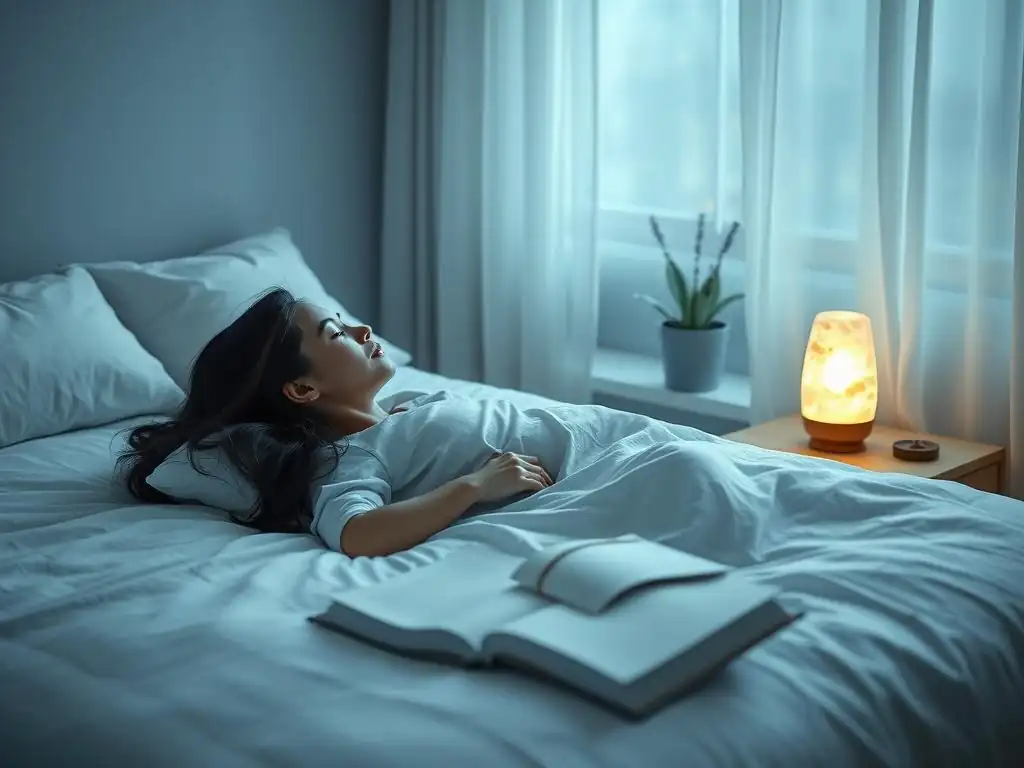
Deep Breathing Exercises for Anxiety and Sleep
Deep breathing is one of the simplest yet most powerful relaxation exercises for anxious sleep. It directly impacts the autonomic nervous system, shifting it from the sympathetic (fight or flight) state to the parasympathetic (rest and digest) state. Focusing on your breath also provides a anchor for your attention, helping to quiet a busy, anxious mind. Practicing deep breathing regularly, not just at bedtime, can build your capacity to calm yourself when anxiety arises.
To begin, find a comfortable position, either sitting or lying down. Place one hand on your chest and the other on your abdomen, just below your rib cage. Close your eyes or soften your gaze. Inhale slowly and deeply through your nose, feeling your abdomen rise as your lungs fill with air. Exhale slowly through your mouth, letting your abdomen fall.
The key is to breathe deeply into your belly, not just your chest. Aim for slow, steady breaths. Start with just a few minutes and gradually increase the duration as you become more comfortable. Consistency in practice enhances the effectiveness of this fundamental relaxation exercise for anxious sleep.
Diaphragmatic Breathing Technique
Diaphragmatic breathing, also known as belly breathing, is a specific type of deep breathing that maximizes the use of the diaphragm, a large muscle located at the base of the lungs. This technique is particularly effective as a relaxation exercise for anxious sleep because it promotes deeper oxygen exchange and has a profound calming effect on the nervous system. Unlike shallow chest breathing, which can perpetuate anxiety, diaphragmatic breathing encourages full expansion of the lungs and slows the heart rate.
To practice diaphragmatic breathing, lie on your back with your knees bent and a pillow under your head and knees, or sit upright in a chair. Place one hand on your upper chest and the other just below your rib cage. Inhale slowly through your nose, allowing your abdomen to push your hand up. Keep your chest hand relatively still.
Exhale slowly through pursed lips (as if blowing out a candle), gently tightening your abdominal muscles to push all the air out. Focus on the sensation of your belly rising and falling. Practice for 5-10 minutes at a time, several times a day, and especially before bed. Regular practice makes this a powerful tool in your repertoire of relaxation exercises for anxious sleep.
4-7-8 Breathing Exercise for Sleep
The 4-7-8 breathing technique, popularized by Dr. Andrew Weil, is a rhythmic breathing pattern designed to act as a natural tranquilizer for the nervous system. It's a specific and effective relaxation exercise for anxious sleep due to its ability to slow the heart rate and calm the mind relatively quickly. The technique involves inhaling for a count of four, holding the breath for a count of seven, and exhaling for a count of eight. The longer exhale helps to expel stale air and promote relaxation.
To perform the 4-7-8 technique, sit or lie down comfortably. Place the tip of your tongue against the ridge of tissue just behind your upper front teeth and keep it there throughout the exercise. Exhale completely through your mouth, making a whoosh sound. Then, close your mouth and inhale quietly through your nose to a mental count of four. Hold your breath for a count of seven.
Exhale completely through your mouth, making a whoosh sound, to a count of eight. This completes one cycle. Repeat for a total of four breaths. As you practice, the counts can become automatic, and you'll find this specific relaxation exercise for anxious sleep increasingly effective.
Progressive Muscle Relaxation (PMR) for Sleep Anxiety
Progressive Muscle Relaxation (PMR) is a technique that involves tensing and then releasing different muscle groups in the body. This systematic process helps you become more aware of physical tension and learn how to release it, which is particularly beneficial as a relaxation exercise for anxious sleep, as anxiety often manifests as physical tightness. By intentionally tensing muscles first, the subsequent relaxation feels more pronounced and noticeable.
PMR can be practiced while lying in bed, making it an ideal transition into sleep. It provides a physical focus that can help distract from anxious thoughts. Many find that by systematically working through their body, they release stored tension they weren't even consciously aware of. This physical release contributes significantly to a feeling of calm and readiness for sleep. Regular practice helps your body learn how to enter a state of deep relaxation more easily whenever you need it, reinforcing its value as a key relaxation exercise for anxious sleep.
How to Practice Progressive Muscle Relaxation
To practice Progressive Muscle Relaxation, lie down comfortably in bed or on a mat. Close your eyes and take a few slow, deep breaths to center yourself. Begin with your feet. Focus on the muscles in your feet and toes. Inhale and gently tense these muscles for about 5-10 seconds. Notice the feeling of tension. Then, exhale and completely release the tension, letting your feet go limp. Notice the difference between tension and relaxation. Rest for 10-20 seconds, focusing on the feeling of relaxation.
Move up your body, tensing and releasing each muscle group: calves, thighs, glutes, abdomen, chest, back, shoulders, arms, hands, neck, jaw, and face. For each group, inhale and tense, hold, then exhale and release. Pay close attention to the sensations in each area as you release the tension. Don't over-tense to the point of pain. The goal is gentle awareness and release. This systematic approach makes PMR a highly structured and effective relaxation exercise for anxious sleep, guiding your body towards a state of rest.
PMR Variations for Specific Anxiety Symptoms
While the standard head-to-toe PMR sequence is effective, variations can be adapted for specific physical manifestations of anxiety that interfere with sleep. If you hold a lot of tension in your jaw or neck due to stress, you can spend extra time focusing on those areas. For instance, gently clench your jaw muscles (without grinding your teeth) for a few seconds, then release completely, letting your jaw hang loose. Repeat this several times. Similarly, for neck tension, gently shrug your shoulders towards your ears, hold, and then slowly release them down.
If you experience restlessness in your legs (sometimes related to anxiety or restless legs syndrome symptoms that worsen with anxiety), focus intently on tensing and releasing the muscles in your thighs and calves. You can also try a "release-only" variation of PMR where you don't tense the muscles first, but simply focus on identifying and releasing tension in each body part. This variation can be less activating if the tensing motion itself feels uncomfortable or stimulating. These adaptations make PMR a versatile relaxation exercise for anxious sleep, allowing you to target your specific tension points.
Guided Meditation for Sleep and Anxiety
Guided meditation involves listening to an instructor or recording that leads you through a meditation practice. This is an excellent relaxation exercise for anxious sleep because the guidance helps keep your mind from wandering into anxious thoughts, providing a focus point and structure. Many guided meditations are specifically designed for sleep, incorporating soothing voices, calming music or nature sounds, and suggestions for relaxation and drifting off.
The benefit of guided meditation is that it requires less effort than trying to quiet your mind on your own. The instructions gently guide your attention, often focusing on breath, body sensations, or peaceful imagery. This practice helps to reduce the cognitive arousal that prevents sleep. Regular engagement with guided meditation can help retrain your brain to become less reactive to anxious thoughts at bedtime, making it a powerful component of relaxation exercises for anxious sleep.
Finding the Right Guided Meditation for You
Choosing the right guided meditation can significantly impact its effectiveness as a relaxation exercise for anxious sleep. There are countless options available through apps, websites, and streaming services. Look for meditations specifically labeled for "sleep" or "anxiety relief." Pay attention to the voice of the narrator; some voices may be more soothing or pleasant to you than others. Experiment with different lengths, from short 5-10 minute sessions to longer 20-30 minute ones.
Consider the style of the meditation as well. Some focus heavily on body scans (similar to PMR but without the tensing), others on breath awareness, and some on visualization or affirmations. Try different types to see what resonates most with you and helps you feel most relaxed. Many resources offer free trials, allowing you to sample various options. Finding a guided meditation that feels comfortable and effective increases the likelihood that you will incorporate this valuable relaxation exercise for anxious sleep into your nightly routine consistently.
Benefits of Guided Meditation for Sleep Quality
Incorporating guided meditation as a regular relaxation exercise for anxious sleep offers numerous benefits beyond just helping you fall asleep faster. Regular practice can reduce overall levels of anxiety and stress experienced throughout the day, which in turn lessens the intensity of bedtime worries. By teaching you to observe thoughts without judgment, meditation reduces the power that anxious thoughts hold over your mind, making them less disruptive at night.
Studies have shown that consistent meditation practice can lead to measurable improvements in sleep quality, including reduced time taken to fall asleep, fewer awakenings during the night, and increased overall sleep time. For instance, a study published in JAMA Internal Medicine found that mindful awareness practices, including meditation, improved sleep quality in older adults with moderate sleep disturbances. This evidence supports guided meditation as a clinically beneficial relaxation exercise for anxious sleep, offering a pathway to more restful and restorative nights.
Visualization Techniques for a Peaceful Sleep
Visualization, or guided imagery, is a relaxation exercise for anxious sleep that involves creating peaceful mental images or scenes to promote relaxation and distract from anxious thoughts. By focusing your mind on a calming internal experience, you shift your attention away from worries and activate areas of the brain associated with relaxation. This technique leverages the power of the mind-body connection; imagining a peaceful scene can actually induce physiological changes associated with calm, such as slower breathing and reduced heart rate.
This technique is particularly helpful for anxious sleepers whose minds race with hypothetical scenarios or worries. Instead of trying to stop thinking, which is often impossible, visualization offers a positive and calming alternative focus. You can create your own mental scenes or follow guided visualization recordings designed specifically for sleep. It's a flexible and adaptable relaxation exercise for anxious sleep that can be tailored to your personal preferences for calming imagery.
Creating a Relaxing Mental Image
To use visualization as a relaxation exercise for anxious sleep, choose a scene that you find genuinely peaceful and calming. This could be a deserted beach with gentle waves, a quiet forest clearing, a cozy cabin by a fire, or any place, real or imagined, where you feel completely safe and relaxed. Once you have your scene, close your eyes and engage all your senses in imagining it.
What do you see? (The colors of the sunset, the texture of sand). What do you hear? (The sound of waves, the rustling of leaves). What do you feel? (The warmth of the sun, a gentle breeze, soft moss underfoot).
What do you smell? (Salty air, pine needles, woodsmoke). The more detailed and immersive you make the scene, the more effective it will be in capturing your attention and promoting relaxation. Hold this image gently in your mind, allowing yourself to sink into the feeling of peace it evokes. Practice this visualization technique as a soothing relaxation exercise for anxious sleep whenever you get into bed.
Using Visualization to Combat Anxious Thoughts
Visualization can be actively used to counter anxious thoughts that arise at bedtime. When a worry pops into your head, acknowledge it briefly without judgment, and then gently redirect your attention back to your peaceful scene. Think of the anxious thought as a cloud floating across the sky of your peaceful image; notice it, but don't engage with it, and let it drift away as you return your focus to the details of your calming scene.
Another technique is to visualize putting your worries into a box, locking it, and setting it aside until morning. Or imagine writing your worries on leaves and watching them float down a stream and out of sight. These techniques use visualization metaphorically to create mental distance from anxiety. By providing a compelling, positive mental alternative and a way to symbolically handle worries, visualization serves as a powerful relaxation exercise for anxious sleep, helping you regain control over your mental landscape at bedtime.
Advanced Relaxation Techniques for Anxious Sleep
Autogenic Training for Sleep Improvement
Autogenic training is a relaxation technique that uses verbal cues or "formulas" to induce a state of deep relaxation. Developed by German psychiatrist Johannes Heinrich Schultz in the early 20th century, it is based on the principle that focusing on specific physical sensations (like warmth, heaviness, and calmness) can trigger a relaxation response. It's considered an advanced relaxation exercise for anxious sleep because it requires consistent practice to master the ability to evoke these sensations on command.
The technique involves repeating specific phrases silently to yourself, focusing on different parts of the body. For example, you might repeat "My right arm is heavy" or "My breathing is calm and regular." Over time, your body learns to respond to these verbal cues, entering a state of deep relaxation. Autogenic training can be particularly effective for anxious sleepers as it provides a structured mental process that can help quiet the mind and reduce the physical symptoms of anxiety that interfere with sleep.
Understanding the Principles of Autogenic Training
The core principle behind autogenic training is the power of suggestion and the mind-body connection. By repeatedly suggesting specific physiological states to yourself – such as heaviness, warmth, and calmness – you can actually induce those states. The training typically progresses through a series of exercises focusing on:
- Heaviness (suggesting muscle relaxation)
- Warmth (suggesting increased blood flow)
- Heartbeat (focusing on a calm, regular rhythm)
- Breathing (focusing on slow, steady breaths)
- Abdominal warmth (suggesting relaxation in the gut)
- Coolness of the forehead (suggesting mental clarity and calm)
Each stage builds upon the previous one. The systematic nature of this relaxation exercise for anxious sleep provides a structured pathway for the mind to follow, preventing the scattergun thinking often associated with bedtime anxiety. Mastering these principles allows individuals to reliably access a deep state of relaxation.
Practicing Autogenic Phrases for Relaxation
To practice autogenic training as a relaxation exercise for anxious sleep, find a quiet place where you won't be disturbed, preferably lying down comfortably. Close your eyes and take a few deep breaths. Begin with the heaviness exercises, repeating phrases silently to yourself:
- "My right arm is heavy." (Repeat 6 times)
- "My left arm is heavy." (Repeat 6 times)
- "Both my arms are heavy." (Repeat 6 times)
- Continue with legs: "My right leg is heavy," "My left leg is heavy," "Both my legs are heavy."
- Then combine: "My arms and legs are heavy."
Move on to warmth:
- "My right arm is warm." (Repeat 6 times)
- "My left arm is warm." (Repeat 6 times)
- "Both my arms are warm." (Repeat 6 times)
- Continue with legs: "My right leg is warm," "My left leg is warm," "Both my legs are warm."
- Then combine: "My arms and legs are warm."
Progress through the other formulas for heartbeat ("My heartbeat is calm and regular"), breathing ("My breathing is calm and regular"), abdominal warmth ("My abdomen is warm"), and forehead coolness ("My forehead is cool"). Conclude each session by repeating "I am completely calm." With consistent practice, these phrases become powerful cues, making autogenic training a highly effective relaxation exercise for anxious sleep.
Mindfulness Meditation for Sleep Anxiety Reduction
Mindfulness meditation is a practice that involves paying attention to the present moment without judgment. For anxious sleepers, this means observing thoughts, feelings, and physical sensations as they arise, without getting carried away by them. Instead of trying to empty the mind, mindfulness teaches you to relate differently to your thoughts – seeing them as transient mental events rather than absolute truths or urgent calls to action. This shift in perspective is incredibly valuable as a relaxation exercise for anxious sleep, helping to detach from the worry cycle.
By cultivating present moment awareness, mindfulness reduces the time spent dwelling on past regrets or future anxieties, which are common culprits behind sleep onset insomnia. It helps to quiet the mental noise and brings a sense of calm acceptance to the experience of being in bed. Regular mindfulness practice, even for just a few minutes a day, can build your capacity to remain calm when faced with bedtime anxiety, making it easier to transition into sleep.
Cultivating Mindfulness for Better Sleep
Cultivating mindfulness for better sleep involves integrating present moment awareness into your daily life, not just at bedtime. Start with formal meditation practice: sit comfortably, close your eyes, and focus on your breath. When your mind wanders (which it will), gently bring your attention back to the breath without self-criticism. Even 5-10 minutes daily can make a difference.
Extend mindfulness into daily activities: eat mindfully, paying attention to tastes and textures; walk mindfully, noticing the sensation of your feet on the ground; listen mindfully to conversations. These practices strengthen your "mindfulness muscle." At bedtime, you can apply this skill by noticing the physical sensations of lying in bed, the sounds in the room, or the feeling of your breath, whenever anxious thoughts arise. Gently redirecting your attention back to these present-moment anchors is a core way mindfulness functions as a relaxation exercise for anxious sleep.
Incorporating Mindfulness into Your Bedtime Routine
Incorporating mindfulness into your bedtime routine can directly combat sleep anxiety. After completing other wind-down activities, dedicate 5-15 minutes to a formal or informal mindfulness practice while in bed. You can do a brief body scan, bringing awareness to sensations in each part of your body without trying to change anything. Simply notice tightness, warmth, coolness, or tingling.
Alternatively, focus on your breath. Lie comfortably and simply observe the natural rhythm of your inhalations and exhalations. Don't try to control your breath, just notice it. When anxious thoughts appear, acknowledge them ("Ah, there's a thought about tomorrow's meeting") and gently return your attention to your breath or body sensations. This non-judgmental observation and redirection is the essence of using mindfulness as a relaxation exercise for anxious sleep. It helps create mental space between you and your worries, making them less intrusive and allowing sleep to come more naturally.
Maintaining a Consistent Sleep Schedule and Healthy Habits
The Importance of a Regular Sleep-Wake Cycle
Maintaining a consistent sleep-wake schedule, even on weekends, is one of the most fundamental strategies for improving sleep quality, particularly for anxious sleepers. Your body has an internal biological clock, known as the circadian rhythm, which regulates sleep and wakefulness. Going to bed and waking up at roughly the same time each day helps to strengthen this rhythm, making it easier to fall asleep when it's time and wake up feeling refreshed.
Irregular sleep patterns can disrupt this natural rhythm, leading to difficulties falling asleep, frequent awakenings, and feeling groggy during the day. For anxious individuals, this inconsistency can add another layer of unpredictability and worry about sleep. Aim for a consistent bedtime and wake-up time that allows for 7-9 hours of sleep. While some flexibility is okay, large variations (more than an hour or two) can throw off your rhythm. A regular schedule supports the effectiveness of relaxation exercises for anxious sleep by aligning your body's natural sleep drive with your attempts to relax and fall asleep.
Diet and Exercise: Impact on Anxiety and Sleep
Lifestyle factors like diet and exercise have a significant impact on both anxiety levels and sleep quality. Regular physical activity is a powerful stress reducer and can improve sleep. Exercise helps to burn off excess energy, reduce muscle tension, and can boost mood by releasing endorphins. Aim for at least 30 minutes of moderate-intensity exercise most days of the week. However, avoid vigorous exercise close to bedtime, as it can be stimulating. Finishing your workout at least 2-3 hours before sleep is generally recommended.
Diet also plays a role. Avoiding heavy meals, excessive sugar, and refined carbohydrates close to bedtime can prevent digestive discomfort and blood sugar fluctuations that might disrupt sleep. While not a magical cure, some nutrients are associated with better mood and sleep, such as complex carbohydrates, lean proteins, and foods rich in magnesium and tryptophan. Ensuring adequate hydration throughout the day is also important, but avoid excessive fluids right before bed to prevent nighttime awakenings. Combining healthy diet and exercise with relaxation exercises for anxious sleep creates a holistic approach to managing both anxiety and sleep issues.
Seeking Professional Help for Persistent Anxiety and Sleep Issues
While relaxation exercises for anxious sleep and lifestyle adjustments can be incredibly helpful, they may not be sufficient for everyone, especially if anxiety or sleep problems are severe or persistent. If you've consistently struggled with sleep anxiety despite trying these techniques, it's important to seek professional help. A doctor can rule out any underlying medical conditions that might be contributing to your sleep problems.
A mental health professional, such as a therapist or counselor, can provide targeted support for anxiety. Cognitive Behavioral Therapy for Insomnia (CBT-I) is a specific type of therapy that is highly effective for chronic insomnia, including that caused by anxiety. CBT-I helps you identify and change negative thoughts and behaviors related to sleep. Other therapeutic approaches, such as standard CBT or exposure therapy, can address the root causes of your anxiety. Combining professional guidance with the consistent practice of relaxation exercises for anxious sleep often yields the best and most sustainable results.
Troubleshooting Relaxation Exercises: Tips and Tricks
What to Do When Relaxation Techniques Don't Work Immediately
It's common for relaxation exercises for anxious sleep not to work perfectly the first time you try them, or even every time you use them. Don't get discouraged. If a technique isn't helping you feel relaxed after 15-20 minutes in bed, it's often more helpful to get out of bed for a short period rather than lying there feeling frustrated. Go to another room and engage in a quiet, non-stimulating activity in dim light, such as reading a physical book or listening to calming music.
Return to bed only when you feel genuinely sleepy. This helps break the negative association between your bed and sleepless anxiety. When you get back into bed, try the same relaxation exercise again, or switch to a different one. Perhaps deep breathing wasn't calming tonight, but a guided meditation might be. Be patient with yourself and the process. Like any skill, relaxation takes practice, and its effectiveness can vary from night to night. Consistency over time is more important than immediate perfection with relaxation exercises for anxious sleep.
Adapting Relaxation Exercises to Your Individual Needs
Not all relaxation exercises for anxious sleep work for everyone, and that's okay. What one person finds calming, another might find frustrating or even stimulating. It's crucial to experiment with different techniques – breathing exercises, PMR, guided meditation, visualization, autogenic training – to discover which ones resonate most with you and your specific type of anxiety and sleep issues.
Consider what aspects of anxiety most interfere with your sleep. If racing thoughts are the main problem, guided meditation or visualization might be particularly helpful for redirecting your mind. If physical tension is prominent, PMR or a body scan meditation could be more effective. You can also combine elements from different techniques. For example, you might start with some deep breathing, then move into a body scan, and finish with a short visualization. Don't be afraid to modify techniques or create your own blend of relaxation exercises for anxious sleep that feels right for you.
Overcoming Common Challenges in Practicing Relaxation
Several common challenges can arise when trying to implement relaxation exercises for anxious sleep. One is impatience; expecting immediate results can lead to frustration. Remember that building the ability to relax takes time and consistent effort. Another challenge is a wandering mind; it's natural for thoughts to intrude. The key is not to fight the thoughts but gently acknowledge them and return your focus to the exercise.
Feeling more anxious when trying to relax can also happen, especially if you're not used to being still with your thoughts or sensations. This is often temporary and can decrease with continued practice. If a particular technique consistently makes you feel worse, try a different one. Finding dedicated time to practice during the day, when you're not feeling pressured to fall asleep, can also make it easier to use the techniques effectively at night. Persistence and self-compassion are key to overcoming these hurdles and making relaxation exercises for anxious sleep a valuable part of your routine.
Frequently Asked Questions
How can relaxation exercises help with anxious sleep?
Relaxation exercises can help by reducing physical and mental tension that often fuels anxiety. They promote a state of calm making it easier to fall and stay asleep.
What are some effective relaxation exercises for anxious sleep?
Several exercises work well, including deep breathing, progressive muscle relaxation, and guided imagery. These techniques help to quiet the mind and ease physical discomfort.
When is the best time to practice relaxation exercises before bed?
Ideally, practice relaxation exercises 30-60 minutes before bedtime to allow your body and mind to transition into a restful state. Consistency is key to effectiveness.
How long does it take to see results from relaxation exercises for anxious sleep?
Some people experience immediate relief, while others may need several weeks of consistent practice. Patience and persistence are important for long-term benefits.
Are there any potential downsides to using relaxation exercises for anxious sleep?
Generally, relaxation exercises are safe. However, some individuals may initially experience increased anxiety or discomfort. Start slowly and consult a professional if needed.
Final Reflection: Finding Stillness in the Storm of Anxiety
The struggle to quiet a racing mind before sleep is a pervasive modern experience, impacting millions and hindering their ability to achieve restorative rest. This pervasive anxiety surrounding sleep is not merely an inconvenience; it's a significant contributor to decreased productivity, impaired mental health, and a diminished quality of life. We've explored various relaxation exercises in this article, aiming to provide practical tools for navigating this common challenge.
The impact of chronic sleeplessness, fueled by anxiety, is far-reaching, affecting not only individual well-being but also societal productivity and overall mental health. The pervasive nature of this issue highlights the urgent need for accessible and effective coping mechanisms. As the renowned psychologist, Abraham Maslow, once stated, What a wonderful life I've had! I only wish I'd realized it sooner.
This quote resonates deeply because many of us only realize the importance of sleep and relaxation when we're already struggling with its absence. The exercises presented here are a starting point, a pathway towards recognizing and prioritizing the vital need for peaceful rest.
You now hold the key to unlocking a more tranquil night's sleep. Don't underestimate the power of these simple yet effective techniques. Begin incorporating one or two exercises into your nightly routine, and observe the subtle shifts in your mental and physical state. Commit to prioritizing your sleep; it's an investment in your overall health and well-being. Remember, finding stillness amidst the storm of anxiety is a journey, not a destination, and every small step towards peaceful slumber is a victory.
Unlock Your Inner Calm: Start Sleeping Soundly Tonight
Thanks for taking the time to explore relaxation techniques for better sleep! We hope you found valuable insights to help quiet your mind and drift off peacefully. Now, let's put those insights into action:
- Prioritize your sleep hygiene routine: Begin implementing one small change tonight, like dimming the lights an hour before bed or enjoying a calming cup of herbal tea.
- Try one of the guided relaxation exercises we discussed – even five minutes can make a difference! Share your experience and any tips you discover with our community in the comments.
- Spread the word: If you found this helpful, share this article with a friend struggling with sleep. Let's help create a more restful world, one sound sleep at a time.
What small step will you take tonight to prioritize your sleep and wake up feeling refreshed?