
Creating a Crisis Kit: Immediate Tools for Support


Welcome to Mind Care Guide, a sanctuary dedicated to your mental well-being.
Feeling overwhelmed? You're not alone. We understand that navigating moments of intense distress can be incredibly challenging. That's why we've created a space to help you build resilience and find immediate support. This article dives deep into building a mental crisis kit—a personalized collection of tools and resources designed to help you navigate those difficult times. Discover how to assemble your own kit and empower yourself to take control when you need it most. Let's begin.
Creating a Crisis Kit: Immediate Tools for Support | Mind Care Guide
- Understanding Mental Health Crises and the Need for a Crisis Kit
- Building Your Personalized Mental Crisis Kit: A Step-by-Step Guide
- Using Your Mental Crisis Kit Effectively During a Crisis
- Maintaining and Updating Your Mental Crisis Kit
- Beyond the Crisis Kit: Long-Term Mental Health Support
- Conclusion: Empowering Yourself with a Mental Crisis Kit
-
Frequently Asked Questions
- What exactly is a mental crisis kit, and why is it beneficial?
- What kind of items should I include in my "Building a mental crisis kit"?
- How often should I review and update my mental crisis kit?
- Where should I store my mental crisis kit for easy access during a crisis?
- Is a mental crisis kit a replacement for professional mental health treatment?
- Final Reflection: The Power of Preparedness in Mental Wellness
- Ready to Build Your Resilience?
Understanding Mental Health Crises and the Need for a Crisis Kit
Recognizing the Signs of a Mental Health Crisis
Recognizing the signs of a mental health crisis in oneself or others is a critical first step toward seeking help and utilizing supportive tools like a crisis kit. These signs can vary widely from person to person but often include a significant and sudden change in behavior, mood, or thinking patterns that interferes with daily life. Common indicators might involve intense feelings of hopelessness or despair, severe anxiety or panic attacks, difficulty controlling thoughts or impulses, withdrawal from social interactions, or an inability to cope with daily problems.
Physically, someone in crisis might experience sleep disturbances, changes in appetite, or increased agitation. Understanding these potential indicators is foundational for effective intervention and underscores the importance of being prepared.
Furthermore, specific signs might point towards immediate risk, such as expressing suicidal ideation, engaging in self-harm behaviors, experiencing delusions or hallucinations, or exhibiting aggressive behavior. It's estimated that a significant portion of individuals experiencing a mental health crisis might not have received a formal diagnosis beforehand, highlighting the need for general awareness and accessible resources.
Paying attention to sudden shifts, especially if they represent a stark contrast to a person's usual state, is crucial. Observing these changes allows for timely action, whether that involves reaching out to a support network, contacting a mental health professional, or accessing immediate coping tools prepared in advance, such as those found when building a mental crisis kit.
Why Building a Mental Crisis Kit is Essential for Mental Well-being
Building a mental crisis kit serves as a tangible and proactive step towards managing moments of intense emotional distress or crisis. It acts as a personal toolkit, pre-filled with resources and techniques specifically chosen to help ground, calm, and support an individual when they feel overwhelmed and unable to think clearly or access their usual coping strategies.
Having a readily available kit reduces the cognitive load during a crisis, eliminating the need to remember or search for help in a state of panic. This preparation can significantly decrease the intensity and duration of a crisis episode, empowering the individual with immediate, accessible support tailored to their specific needs and preferences.
The process of building a mental crisis kit itself can be therapeutic. It involves self-reflection, identifying triggers, acknowledging past coping successes, and planning for future challenges. This act of preparation instills a sense of control and agency over one's mental health journey.
For someone who has experienced past crises, knowing that they have a prepared set of tools can provide immense comfort and confidence, acting as a safety net. It shifts the focus from feeling helpless during a crisis to feeling empowered before one occurs. Therefore, building a mental crisis kit is not just about having tools available; it's a fundamental component of a comprehensive mental well-being strategy, fostering resilience and preparedness.
The Role of a Crisis Kit in Immediate Crisis Intervention
A mental crisis kit plays a vital role in immediate crisis intervention by providing accessible, pre-determined tools and resources that can be deployed at the first sign of escalating distress. In moments of crisis, the ability to think rationally and make decisions is often impaired. The kit bypasses this difficulty by presenting a curated collection of coping mechanisms, contact information, and comforting items that require minimal thought to access and use.
For example, instead of trying to recall breathing exercises or remember a therapist's phone number during a panic attack, these are immediately available within the kit. This instant access to familiar, helpful resources can prevent a crisis from escalating further, potentially reducing the need for higher levels of intervention.
Furthermore, the kit serves as a structured guide during a chaotic experience. It might contain step-by-step instructions for a grounding technique or a list of pre-written positive affirmations. This structure can help orient an individual who feels lost or disconnected during a crisis. Approximately 70% of individuals who use coping strategies during distress report them being helpful to some degree.
By having a kit filled with personally effective strategies, that success rate can be significantly increased. It acts as a bridge between the onset of a crisis and accessing external support, providing crucial support in the critical moments when help is most needed but hardest to seek out. Building a mental crisis kit is, therefore, a powerful act of self-support and a key element in immediate crisis management.
Building Your Personalized Mental Crisis Kit: A Step-by-Step Guide
Step 1: Identifying Your Personal Crisis Triggers
Identifying personal crisis triggers is the foundational step in building a mental crisis kit that is truly effective and tailored to your needs. Triggers are specific situations, events, feelings, or thoughts that can initiate or worsen symptoms of distress, potentially leading to a crisis. These can be external, like certain social interactions, stressful work situations, or specific sounds or smells, or internal, such as particular thought patterns, memories, or intense emotions like shame or fear.
Taking the time to reflect on past experiences of distress or crisis and noting what preceded them is crucial. Keeping a journal or simply listing situations where you felt overwhelmed can help reveal patterns and pinpoint your unique triggers.
Understanding your triggers allows you to proactively include coping mechanisms in your kit that are specifically designed to counteract their effects. For instance, if crowded spaces are a trigger, your kit might include noise-canceling earbuds and a grounding exercise focused on sensory details. If specific negative thought patterns are a trigger, the kit could contain pre-written positive affirmations or cognitive restructuring exercises.
It's estimated that roughly 80% of individuals with anxiety or trauma-related conditions can identify specific triggers for their symptoms. This high rate underscores the predictability of many crises when triggers are known, making trigger identification an indispensable part of building a mental crisis kit that offers targeted support.
Step 2: Assembling Calming and Grounding Techniques
Assembling a variety of calming and grounding techniques is a core component when building a mental crisis kit, as these strategies help anchor you to the present moment and regulate intense emotions. Calming techniques aim to soothe the nervous system and reduce physiological arousal, while grounding techniques focus on reconnecting with your surroundings and reality when feeling disconnected or overwhelmed. Including a mix of these ensures you have options depending on the specific nature of the crisis. For example, one person might find deep breathing calming, while another might prefer focusing on their five senses to ground themselves.
Your kit should contain reminders or instructions for several techniques you've practiced and found effective. This might include written guides for square breathing, a list of things you can see, hear, feel, smell, and taste for a 5-4-3-2-1 grounding exercise, or even a small object to hold and focus on its texture. Having these readily available removes the need to recall them from memory during distress, which can be difficult.
Studies indicate that grounding techniques can significantly reduce dissociation and anxiety symptoms in moments of panic. By including these proven strategies, building a mental crisis kit provides immediate, actionable steps to regain control and stability during a crisis.
Breathing Exercises for Immediate Anxiety Relief
Breathing exercises are powerful, accessible tools for immediate anxiety relief and are essential to include when building a mental crisis kit. They work by activating the body's relaxation response, slowing heart rate, reducing blood pressure, and calming the nervous system.
Simple techniques like deep diaphragmatic breathing (breathing into the belly) or paced breathing (inhaling for a count of four, holding for four, exhaling for four) can quickly interrupt the physiological symptoms of panic and anxiety. Including written instructions or a small card with steps for 2-3 different breathing exercises allows you to easily access and perform them even when feeling highly distressed.
Consider including variations like box breathing (inhale 4, hold 4, exhale 4, hold 4) or 4-7-8 breathing (inhale 4, hold 7, exhale 8), as different techniques resonate with different people. A small, laminated card with simple diagrams or bullet points can make these techniques easy to follow in a moment of need.
Research suggests that practicing deep breathing for just a few minutes can lead to a measurable reduction in stress hormones like cortisol. By making these techniques a prominent part of building a mental crisis kit, you equip yourself with a reliable, drug-free method to manage acute anxiety symptoms effectively.
Mindfulness and Meditation Techniques for Crisis Situations
Incorporating simple mindfulness and meditation techniques into your crisis kit can provide valuable tools for staying present and observing thoughts and feelings without judgment during a crisis. While formal meditation often requires quiet time, crisis-oriented mindfulness focuses on briefly bringing awareness to the current moment through senses, a simple body scan, or observing breath. These techniques help to create a mental space between you and your intense emotions, preventing you from being completely consumed by them. Including short, written prompts or guided scripts for a 2-minute mindfulness exercise can be very helpful.
Examples might include focusing solely on the sensation of your feet on the ground, listening intently to the sounds around you for one minute, or gently observing your breath without trying to change it. These brief practices can interrupt rumination and shift focus away from distressing thoughts. Studies have shown that even short periods of mindfulness practice can increase activity in areas of the brain associated with emotional regulation. By adding these accessible mindfulness prompts, building a mental crisis kit provides options for finding moments of calm and clarity amidst turmoil.
Sensory Tools for Grounding During a Crisis
Sensory tools are highly effective for grounding during a crisis by engaging your five senses to reconnect you with the physical world. When feeling overwhelmed, disconnected, or experiencing symptoms like dissociation, focusing on sensory input can help pull you back into the present moment and reality. These tools are simple, portable items that stimulate sight, sound, smell, taste, or touch. Including a few of these in your kit provides immediate, tangible anchors.
Think about small items like a smooth stone, a textured fabric swatch, or a stress ball for touch; a small bottle of essential oil (like lavender or peppermint) for smell; a strong-flavored mint or piece of sour candy for taste; a picture of a calming scene for sight; or a small list of calming sounds to focus on (like traffic or birds). The act of focusing intently on the sensory details of these items can interrupt a cycle of panic or dissociation.
For instance, describing the texture of the stone in detail engages cognitive processes that compete with crisis thoughts. Including these diverse sensory aids when building a mental crisis kit offers multiple pathways back to the present moment.
Step 3: Including Contact Information for Support
Including essential contact information for support is a non-negotiable step when building a mental crisis kit. During a crisis, memory can be impaired, and the simple act of finding phone numbers can feel overwhelming or impossible. Having a clear, easily accessible list of people and services you can reach out to provides a vital lifeline and reminder that you are not alone and help is available. This list should include various levels of support, from personal contacts to professional services.
Ensure the list is printed clearly on a card or sheet of paper within the kit. It should be updated regularly to ensure accuracy. Knowing exactly who to call or text, without having to think or search, significantly lowers the barrier to seeking help in a moment of intense distress. This component is arguably one of the most critical elements, offering external support when internal resources feel depleted. Building a mental crisis kit that includes this crucial contact information ensures that connection and help are just a phone call away.
Creating a List of Emergency Contacts: Family, Friends, and Professionals
Your list of emergency contacts within the crisis kit should include individuals you trust and who are aware that you might reach out during a difficult time. This could be a supportive family member, a close friend, a therapist, a sponsor if you are in recovery, or any other person who has agreed to be a point of contact during a crisis. List their names and phone numbers clearly. It can also be helpful to include a brief note next to each name, such as "Call this person to talk about feelings" or "This person can help distract me."
Aim for a diverse list of at least 2-3 personal contacts and any relevant professionals. Having designated contacts reduces the guesswork and anxiety of deciding who to bother or who might be available. For instance, if you have a therapist, their office number and maybe an after-hours number (if provided) should be on this list.
Including both personal and professional contacts ensures you have options depending on the nature and severity of the crisis. This simple list is a powerful reminder of your support network when you feel most isolated, making it a fundamental part of building a mental crisis kit.
Suicide Prevention Hotlines and Crisis Text Lines
Immediately accessible information for suicide prevention hotlines and crisis text lines is absolutely essential for any mental crisis kit. These services provide free, confidential support 24/7 from trained crisis counselors. They are invaluable resources when you feel you have nowhere else to turn or when your personal contacts are unavailable. Include the primary national hotline number and any relevant local or specialized hotlines (like Trevor Project for LGBTQ youth, or Veterans Crisis Line).
For example, in the US, the 988 Suicide & Crisis Lifeline is a critical resource. Including this number, along with instructions like "Call or text 988 anytime for free, confidential support," makes it easy to use in a moment of need. Crisis text lines also offer an alternative for those who find it difficult to speak on the phone; include the relevant text number and keyword (e.g., "Text HOME to 741741").
Having these numbers clearly visible and readily available can be life-saving, providing immediate access to professional crisis intervention. This resource is a cornerstone when building a mental crisis kit focused on safety and immediate support.
Local Mental Health Resources and Support Groups
Beyond immediate crisis hotlines, your kit should ideally include information about local mental health resources and support groups for ongoing or less acute distress. This could include contact information for local community mental health centers, information about walk-in crisis services available in your area, or meeting times and locations for relevant support groups (like NAMI, DBSA, or condition-specific groups). While not for immediate crisis intervention in the same way as a hotline, knowing where to seek further help after the immediate crisis subsides is crucial for recovery and prevention.
Include names, phone numbers, addresses (if relevant for walk-in services or meetings), and perhaps brief notes about what each resource offers. For example, "County Mental Health Services - Offers sliding scale therapy" or "Anxiety Support Group - Meets Tuesdays at 7 PM at Community Center." This information helps bridge the gap between surviving a crisis and building long-term resilience. Having this information readily available reduces the inertia that can prevent seeking help once the immediate danger has passed. It's a forward-looking element when building a mental crisis kit, supporting recovery and sustained well-being.
Step 4: Adding Coping Statements and Positive Affirmations
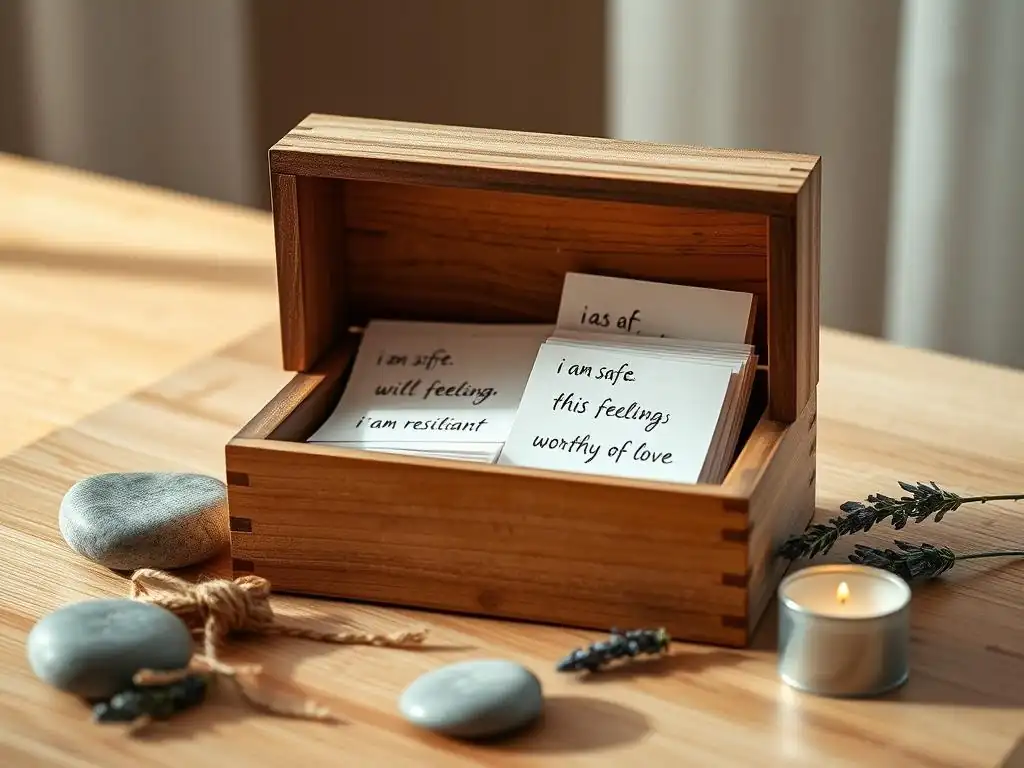
Including a collection of coping statements and positive affirmations in your mental crisis kit provides powerful internal tools to challenge negative thoughts and reinforce self-worth during distress. Coping statements are short, realistic phrases designed to help you manage difficult feelings or situations in the moment, while positive affirmations are statements about your value, strength, or capabilities. These written reminders can counteract the self-critical or hopeless thoughts that often accompany a crisis.
Write these statements on small cards or a dedicated sheet within the kit. Reading them aloud or silently can help disrupt negative thought loops and provide a different perspective. The act of focusing on these positive or realistic phrases shifts attention away from the overwhelming feelings of the crisis. Research suggests that affirmations can help buffer the effects of stress and improve problem-solving abilities. By curating these personal messages of hope and resilience, building a mental crisis kit becomes a tool for actively challenging the internal narrative of despair often present during a crisis.
Developing a List of Positive Self-Talk Phrases
Developing a list of positive self-talk phrases involves identifying statements that resonate with you and help you reframe negative thoughts or simply get through a difficult moment. These are not necessarily affirmations of grand accomplishments but rather realistic, compassionate phrases. Examples might include: "This feeling is temporary," "I can handle this one moment at a time," "I am strong enough to get through this," "It's okay not to be okay right now," or "I am safe in this moment."
Personalize these phrases based on what has helped you in the past or what challenges your specific negative thought patterns. If your inner critic is loud, include phrases emphasizing self-compassion. If you feel overwhelmed by the future, include phrases focusing on the present moment. Keep the list simple and easy to read. Having these pre-written messages of support from yourself allows you to access helpful internal dialogue when generating it spontaneously feels impossible, making this a practical element when building a mental crisis kit.
Identifying Personal Strengths and Resources
Including a list of your personal strengths and resources within the crisis kit serves as a powerful reminder of your capabilities and the support systems available to you. During a crisis, it's easy to feel completely powerless and focus only on perceived failures or weaknesses. A reminder of your resilience, past successes in overcoming challenges, and the positive qualities you possess can help restore a sense of self-efficacy. This list isn't about bragging but about acknowledging your inherent value and capacity for coping.
Think about qualities like resilience, creativity, determination, kindness, or empathy. Also, list external resources beyond the emergency contacts – things that bring you comfort or joy, like a pet, a hobby you love, or places you feel safe. For instance, "I am resilient - I've gotten through tough times before," "I am resourceful," "My dog, [Pet's Name], loves me unconditionally," or "I am creative - I can draw or write." This list acts as an antidote to feelings of hopelessness and worthlessness, providing a much-needed perspective shift when building a mental crisis kit focused on empowering the individual.
Step 5: Assembling Distraction Techniques and Activities
Assembling a variety of distraction techniques and activities is a practical step when building a mental crisis kit, providing temporary but effective relief from overwhelming thoughts and feelings. Distraction doesn't solve the underlying issue, but it can help you ride out an intense wave of emotion or intrusive thoughts until you are calm enough to use other coping strategies or seek help. The key is to include activities that fully engage your attention, even for a short period.
Include items or reminders of activities that you find absorbing or calming. These should be simple, portable, and require minimal effort to start. Having several options allows you to choose what feels most accessible in the moment. For example, one person might find listening to music grounding, while another prefers engaging their hands with a simple craft. By providing these mental breaks, building a mental crisis kit acknowledges the need for temporary respite during intense distress.
Creating a Playlist of Soothing Music
A playlist of soothing music is an excellent addition to your crisis kit, providing an auditory escape and a way to shift your mood. Music has a powerful effect on the brain and can help regulate emotions, reduce stress, and promote relaxation. Create a playlist of songs that you find particularly calming, uplifting, or grounding. Avoid music that might have negative associations or lyrics that could trigger distress.
While you can't include the music files directly in a physical kit, you can include a note reminding yourself of the playlist's name and where to access it (e.g., "My Calm Playlist on Spotify" or "Soothing Tunes on My Phone"). Having this reminder ensures you don't have to think about what to listen to when you're distressed – you just need to find the pre-selected list. Studies show that listening to calming music can lower heart rate and blood pressure, demonstrating its physiological benefits. This simple step makes building a mental crisis kit more comprehensive by including auditory support.
Including Books, Games, or Puzzles for Distraction
Including small, portable books, games, or puzzles provides tangible activities to engage your mind and hands during a crisis. Reading, playing a simple game, or working on a puzzle requires focus, which can effectively pull your attention away from distressing thoughts. Choose items that are not overly complex or frustrating, as the goal is distraction and calm, not a new source of stress.
Examples might include a small paperback book of comforting poetry or short stories, a deck of cards for solitaire, a small Sudoku or crossword puzzle book, or even a simple fidget puzzle. The physical act of engaging with these items provides a concrete activity to focus on. For someone experiencing anxiety, focusing on the words in a book or the patterns in a puzzle can interrupt the cycle of worry. Including these diverse forms of engagement when building a mental crisis kit offers varied ways to find temporary relief through focused activity.
Engaging in Gentle Exercise or Stretches
Reminders or instructions for gentle exercise or stretches can be a valuable inclusion in your crisis kit, offering a physical outlet for pent-up energy and tension. Physical activity, even mild movement, releases endorphins and can help reduce stress hormones. It also provides a way to reconnect with your body when feeling disconnected or overwhelmed. You don't need gym equipment; simple movements can be effective.
Include a card with suggestions for gentle activities, such as: "Go for a short walk (5-10 minutes)," "Do 10 gentle stretches," "Practice mindful walking, focusing on the sensation of your feet," or "Do some gentle yoga poses (list 2-3 simple ones like child's pose or seated stretches)." The act of moving can help shift your mental state and release physical tension often held during stress. Even if you can only manage a few minutes, this can make a difference. Adding these physical reminders when building a mental crisis kit provides options for somatic release and grounding through movement.
Using Your Mental Crisis Kit Effectively During a Crisis
How to Access Your Crisis Kit When Needed
Knowing how to access your mental crisis kit promptly when needed is just as important as its contents. The kit should be stored in a place that is easily accessible during moments of distress, but also somewhere safe and private. Avoid storing it where you might have to search for it or where it could be misplaced. Consider keeping it in a dedicated drawer, a specific shelf, or a small bag that is always kept in the same spot. The goal is to minimize any barriers to reaching it when you are not thinking clearly.
Make sure the kit is clearly labeled, perhaps simply with "My Crisis Kit" or your name. If possible, inform a trusted household member or friend where the kit is located so they can retrieve it for you if you are unable to do so yourself. Having the kit readily available means you can grab it the moment you recognize early signs of escalating distress, potentially preventing a full-blown crisis. Easy access ensures that the effort put into building a mental crisis kit translates into practical help when it's needed most.
Practicing Using Your Kit Regularly for Familiarity
Practicing using the components of your mental crisis kit regularly, even when you are not in a crisis, is crucial for its effectiveness. Just like practicing a fire drill or first aid, familiarity with your crisis kit's contents and how to use them makes them more accessible and effective under pressure. Spend a few minutes each week or month reviewing the items, reading the coping statements, practicing a breathing exercise, or using a sensory tool.
This regular practice helps reinforce the techniques and makes them feel natural and automatic when you are distressed. It also allows you to identify which tools are most helpful for you when you are calm, giving you confidence in their ability to help during a crisis. The more familiar you are with your kit, the less mental effort is required to use it during a difficult moment. This proactive step of practicing ensures that the process of building a mental crisis kit leads to a tool that is truly useful and readily deployed when needed.
Adapting Your Kit to Different Crisis Situations
While your core mental crisis kit should contain general tools for distress, being able to adapt its use to different crisis situations enhances its versatility. Not all crises feel the same; some might involve intense panic, others deep despair, dissociation, or anger. Review the contents of your kit and mentally (or even in writing) note which tools might be most helpful for specific types of distress you commonly experience.
For example, if dissociation is a risk, focus on using the grounding techniques and sensory tools. If panic is the main issue, prioritize the breathing exercises and calming music. If negative self-talk is overwhelming, turn to the coping statements and affirmations. You might even consider having slightly different versions of the kit, or add notes within the main kit indicating "Use these for panic" or "Try these when feeling disconnected." This thoughtful adaptation ensures that your efforts in building a mental crisis kit result in a flexible resource capable of addressing the varied challenges of mental health crises.
Maintaining and Updating Your Mental Crisis Kit

Regularly Reviewing and Refreshing Your Kit's Contents
Regularly reviewing and refreshing the contents of your mental crisis kit is essential to ensure it remains relevant, effective, and ready for use. Needs and preferences change over time, and resources can become outdated. Schedule a time, perhaps every few months or annually, to go through your kit item by item. Check that contact numbers are still correct, that any written materials are still legible, and that sensory items like essential oils haven't expired or lost their potency.
This review process is also an opportunity to reflect on what has worked (or hasn't worked) for you recently. Have you discovered new coping mechanisms that are helpful? Are there items in the kit you never use or find unhelpful? Refreshing the kit means replacing old items and adding new ones based on your current needs. Just as you might update a first-aid kit, keeping your mental crisis kit current ensures it remains a reliable source of support. This ongoing maintenance is a crucial part of the value derived from building a mental crisis kit.
Adding New Coping Mechanisms and Resources as Needed
As you grow and learn new strategies for managing your mental health, it's important to add these new coping mechanisms and resources to your crisis kit. You might learn new techniques in therapy, discover helpful apps, or find comfort in a new activity. Don't be afraid to experiment and incorporate these into your kit. This could involve adding instructions for a new mindfulness exercise, including a reminder about a helpful mental health app, or adding a new item like a specific type of tea or a comforting object.
This continuous improvement keeps the kit dynamic and responsive to your evolving needs. For example, if you start practicing yoga and find certain poses calming, you could add a small card illustrating those poses. If you find a particular podcast episode comforting, add its name to a list of audio resources. Actively incorporating new tools ensures that your mental crisis kit remains a cutting-edge personal resource, reflecting your ongoing journey toward mental wellness. It shows that building a mental crisis kit is not a one-time task but an ongoing process of self-care.
Removing Techniques That Are No Longer Effective
Just as you add new resources, it's equally important to remove techniques or items from your mental crisis kit that are no longer effective or relevant to you. What worked during one phase of your life or for a specific type of crisis might not be helpful now. Holding onto ineffective tools simply adds clutter and can be discouraging in a moment of need. Be honest with yourself during your review process about what truly provides support.
Perhaps a specific breathing exercise no longer feels right, or a particular sensory item doesn't bring the comfort it once did. Maybe a contact person is no longer available or supportive. Removing these allows you to streamline your kit and focus on the tools that genuinely help you.
This critical evaluation ensures that your mental crisis kit is a curated collection of your most effective coping strategies, making it a more efficient and reliable source of support when you are distressed. This refinement is a vital part of maintaining the integrity and utility of your efforts in building a mental crisis kit.
Beyond the Crisis Kit: Long-Term Mental Health Support
Connecting with a Mental Health Professional for Ongoing Care
While a mental crisis kit provides immediate support, connecting with a mental health professional for ongoing care is crucial for long-term well-being and crisis prevention. A therapist, counselor, psychologist, or psychiatrist can help you understand the root causes of your distress, develop more advanced coping strategies, and address underlying conditions that contribute to crises. They can provide personalized treatment plans, including therapy modalities or medication if appropriate.
Regular sessions with a professional offer consistent support, help you process difficult experiences, and build resilience. A therapist can also help you refine your crisis kit and develop a comprehensive safety plan that goes beyond the kit's contents. Studies consistently show that engaging in therapy significantly improves outcomes for various mental health conditions. While building a mental crisis kit is an excellent proactive step, it is most effective when integrated into a broader strategy that includes professional support for sustained recovery and mental health management.
Exploring Therapy Options for Crisis Management
Various therapy options are specifically beneficial for individuals prone to mental health crises. Modalities like Dialectical Behavior Therapy (DBT) are particularly effective, teaching skills in mindfulness, distress tolerance, emotion regulation, and interpersonal effectiveness – skills that directly contribute to preventing and managing crises. Cognitive Behavioral Therapy (CBT) can help identify and change negative thought patterns and behaviors that contribute to distress. Trauma-informed therapies are vital if past trauma is a trigger.
Exploring these options with a mental health professional can equip you with a deeper understanding of your patterns and more robust skills than those contained in a basic crisis kit. Therapy provides a safe space to practice these skills and receive guidance tailored to your specific challenges.
For instance, DBT's distress tolerance skills often include techniques like TIPP (Temperature, Intense exercise, Paced breathing, Paired muscle relaxation), which can be powerful additions to your crisis management repertoire and potentially incorporated into your kit. Engaging in therapy complements the immediate support offered by building a mental crisis kit, addressing the issues that lead to crises in the first place.
Building a Sustainable Mental Wellness Plan
Building a sustainable mental wellness plan is the ultimate goal, extending far beyond immediate crisis management. This plan involves identifying daily practices, routines, and lifestyle choices that support your mental health and reduce the likelihood of experiencing crises. It might include regular exercise, a balanced diet, sufficient sleep, stress management techniques, healthy social connections, engaging in hobbies, and setting healthy boundaries.
Your mental wellness plan acts as a preventative measure, building resilience and stability over time. It acknowledges that mental health requires ongoing effort and attention, not just reactive measures during distress. While building a mental crisis kit is a crucial safety net, a comprehensive wellness plan aims to strengthen the net itself and reduce the frequency with which you need to rely on it. This holistic approach, combining proactive self-care with crisis preparedness, is key to long-term mental well-being.
Conclusion: Empowering Yourself with a Mental Crisis Kit
Taking Proactive Steps for Mental Health Resilience
Taking proactive steps, such as building a mental crisis kit, is a powerful way to build mental health resilience and empower yourself in the face of potential challenges. Resilience isn't about avoiding difficulties but about developing the capacity to bounce back from adversity. Creating a crisis kit is a tangible demonstration of this capacity – it shows foresight, self-awareness, and a commitment to caring for yourself even in your most vulnerable moments. The process of identifying triggers, assembling tools, and planning for difficult times strengthens your ability to cope effectively when distress arises.
This proactive approach shifts the focus from feeling like a passive victim of circumstances to feeling like an active participant in your own well-being. It acknowledges that while crises can feel overwhelming, you possess the ability to prepare for them and mitigate their impact. By investing time and thought into building a mental crisis kit, you are reinforcing the message to yourself that your mental health is a priority and that you are capable of navigating difficult emotions and situations.
The Importance of Self-Care and Prevention
The importance of self-care and prevention cannot be overstated in the context of mental health, and building a mental crisis kit is a significant act of both. Self-care involves intentionally taking steps to maintain or improve your physical, mental, and emotional health. Prevention in mental health focuses on reducing the risk factors for mental health conditions and crises while increasing protective factors. Your crisis kit embodies both by providing tools for immediate self-soothing (self-care) and by being a prepared resource that can prevent a moment of distress from escalating into a full-blown crisis (prevention).
Viewing the crisis kit as part of a larger self-care and prevention strategy helps integrate it into your overall approach to mental well-being. It's not just for emergencies; the practice involved in building and maintaining it, and the knowledge it contains, support daily self-awareness and coping. By prioritizing self-care practices and having preventative tools like a crisis kit readily available, you build a stronger foundation for enduring mental health, better equipped to weather storms when they arise.
Frequently Asked Questions
What exactly is a mental crisis kit, and why is it beneficial?
A mental crisis kit is a collection of personal resources and strategies designed to help you manage intense emotional distress and prevent a crisis from escalating. It's beneficial because it offers immediate support when you need it most.
What kind of items should I include in my "Building a mental crisis kit"?
Your kit should include things that calm and soothe you, such as comfort items, grounding exercises, and emergency contact information. Consider adding coping statements and distractions to help you navigate difficult emotions.
How often should I review and update my mental crisis kit?
It's recommended to review and update your kit regularly, perhaps every 3-6 months, or whenever your needs or coping strategies change. Ensure all contact information is current and the resources are still relevant to your current situation.
Where should I store my mental crisis kit for easy access during a crisis?
Store it in a readily accessible location, such as your bedroom, car, or a digital file on your phone. Making it easily available ensures you can quickly access support when you need it most urgently.
Is a mental crisis kit a replacement for professional mental health treatment?
No, a mental crisis kit is not a replacement for professional help. It's a supplementary tool to manage immediate distress. Always seek professional guidance for ongoing mental health concerns.
Final Reflection: The Power of Preparedness in Mental Wellness
Building a mental crisis kit isn't just about assembling a box of tools; it's about cultivating a proactive approach to mental wellbeing in a world that often feels overwhelming. The resources and strategies discussed in this article are more vital than ever, given the increasing prevalence of mental health challenges and the ever-present uncertainties of life. We must recognize that prioritizing mental health isn't a luxury, but a necessity for navigating the complexities of modern existence.
The impact of normalizing mental health self-care, and the act of creating a personalized crisis kit, is profound. It shifts the narrative from one of helplessness to one of empowerment. The best way to predict the future is to create it.
This quote, often attributed to Abraham Lincoln, perfectly encapsulates the proactive spirit at the heart of building a mental crisis kit. By taking concrete steps to prepare for difficult times, we actively shape our ability to navigate challenges and emerge stronger on the other side. This isn't just about surviving; it's about thriving, even amidst adversity.
You now possess the knowledge and tools to build your own personalized crisis kit. Take the time to reflect on your individual needs and vulnerabilities. What coping mechanisms resonate most with you? Which resources would provide the most comfort and support during a difficult moment? Don't delay; begin building your kit today. This is an investment in your well-being, a testament to your strength, and a powerful act of self-compassion. Your mental health deserves this level of care and attention.
Ready to Build Your Resilience?
Thanks for taking the time to learn about creating a crisis kit! We hope you now feel empowered with practical tools to navigate challenging moments. Ready to put your knowledge into action?
- Assemble your personalized crisis kit today. Start by gathering a few essential items from the list, focusing on what resonates most with you. It doesn't need to be perfect, just started!
- Share this guide with a friend or family member who might also benefit from having a readily available support system. Supporting each other is key!
- Consider journaling about what resources you included and why – reflecting on your choices can be incredibly insightful.
What's one small step you can take right now to build a stronger foundation of self-support?