
The Mindful Pause: A Simple Exercise to Reset Your Stress Response


Welcome to Mind Care Guide.
Feeling overwhelmed? You're not alone. We understand the pressures of daily life can take a toll on your mental well-being. What if there was a simple, accessible tool to quickly regain control and find a moment of peace? Dive into our guide on " Mindful pause stress relief" and discover how a brief, intentional break can dramatically shift your perspective and calm your inner storm. Let's explore together how to reclaim your calm.
The Mindful Pause: A Simple Exercise to Reset Your Stress Response
- Introduction to the Mindful Pause for Stress Relief
- Why Practice the Mindful Pause for Stress Management?
- Step-by-Step Guide: Performing the Mindful Pause Exercise
- Integrating the Mindful Pause into Your Daily Routine for Sustained Stress Relief
- Troubleshooting Common Challenges When Practicing the Mindful Pause
- Advanced Techniques: Enhancing Your Mindful Pause Practice
- The Science Behind the Mindful Pause and Stress Reduction
- Mindful Pause for Specific Stressful Situations
- Conclusion: Embracing the Mindful Pause for a Calmer, More Resilient You
-
Frequently Asked Questions
- What is a mindful pause and how does it relate to stress relief?
- How often should I practice a mindful pause for effective stress relief?
- What are some techniques I can use during a mindful pause?
- Can a mindful pause replace other mental health treatments?
- Where can I find more information and resources about mindful pause stress relief and mental health?
- Final Reflection: The Enduring Power of the Mindful Pause
- Unlock Your Inner Calm: Start Practicing Mindful Pauses Today!
Introduction to the Mindful Pause for Stress Relief
Understanding the Fight-or-Flight Response and Its Impact
When faced with perceived danger, our bodies automatically trigger the fight-or-flight response, a primal survival mechanism. This involves a cascade of physiological changes designed to prepare us to either confront the threat or flee from it. Hormones like adrenaline and cortisol flood the bloodstream, increasing heart rate, blood pressure, and muscle tension. While essential for acute emergencies, this response can be easily activated by modern stressors, like tight deadlines, financial worries, or interpersonal conflicts, leading to chronic stress.
Chronic activation of the fight-or-flight response has significant negative impacts on both physical and mental health. Sustained high levels of cortisol, for instance, have been linked to increased risk of heart disease, digestive problems, sleep disturbances, weight gain, and impaired cognitive function. Mentally, it can manifest as anxiety, irritability, difficulty concentrating, and even depression. Learning to regulate this automatic response is crucial for overall well-being, and techniques like the mindful pause stress relief exercise offer a pathway to achieving this.
Introducing the Mindful Pause: A Quick and Effective Technique
The mindful pause is a brief, intentional exercise designed to interrupt the stress response cycle and bring you back to the present moment. It's not about clearing your mind entirely, but rather about gently shifting your attention from stressful thoughts or external pressures to your internal experience, primarily through focusing on your breath. This simple act of pausing allows the nervous system to downregulate, moving from a state of heightened alert (sympathetic nervous system) towards a state of calm and rest (parasympathetic nervous system).
Unlike longer meditation practices, the mindful pause can be performed in just a few moments, making it highly accessible even in busy or challenging situations. It serves as a mini-reset button for your mind and body, offering immediate mindful pause stress relief. Regularly incorporating these short pauses throughout the day can build your capacity to handle stress more effectively, preventing the accumulation of tension and promoting a greater sense of calm and control in your daily life.
Why Practice the Mindful Pause for Stress Management?
Immediate Stress Reduction Benefits: Lowering Heart Rate and Blood Pressure
One of the most tangible benefits of practicing the mindful pause is its immediate impact on physiological stress markers. By intentionally shifting focus to the breath, you signal to your nervous system that you are not in immediate danger, allowing the release of stress hormones like adrenaline and cortisol to decrease. This often results in a noticeable reduction in heart rate within moments. While individual results vary, studies and anecdotal evidence suggest that even brief periods of mindful breathing can lead to a drop of several beats per minute in a stressed state.
Furthermore, the relaxation induced by the mindful pause can contribute to a temporary lowering of blood pressure. When stress activates the fight-or-flight response, blood vessels constrict, increasing pressure. The conscious effort to breathe slowly and deeply during a mindful pause helps counter this constriction, promoting better circulation and a decrease in pressure. While a single mindful pause won't cure chronic hypertension, consistently using this technique throughout the day provides repeated opportunities for the body to return to a more balanced state, offering significant mindful pause stress relief in the moment.
Long-Term Benefits: Cultivating Resilience and Emotional Regulation
Beyond immediate relief, regular practice of the mindful pause contributes significantly to long-term mental and emotional well-being. By repeatedly choosing to pause and observe your internal state without judgment, you train your brain to become less reactive to stressors. This builds emotional resilience, making you better equipped to navigate challenges without being overwhelmed. You learn to recognize the early signs of stress or emotional reactivity and intervene with a pause before the situation escalates internally.
Over time, incorporating the mindful pause into your routine helps cultivate stronger emotional regulation skills. Instead of being swept away by intense feelings like anger or anxiety, you develop the capacity to create space between the emotion and your reaction. This allows for more thoughtful responses rather than impulsive ones.
Research suggests that consistent mindfulness practice can lead to structural changes in the brain regions associated with emotional processing, such as increased activity in the prefrontal cortex (linked to decision-making and regulation) and decreased activity in the amygdala (the brain's fear center). This neurological shift underscores the profound, lasting mindful pause stress relief possible with dedicated practice.
Mindful Pause vs. Progressive Muscle Relaxation: A Brief Overview
Both the mindful pause and progressive muscle relaxation (PMR) are effective techniques for reducing stress, but they operate differently and offer distinct benefits. Progressive muscle relaxation involves systematically tensing and then releasing different muscle groups in the body to become aware of physical tension and promote deep relaxation. It's a more active physical process, focusing directly on releasing muscular tightness often associated with stress. A typical PMR session might last 15-20 minutes and requires a quiet space where you can comfortably lie down or sit.
The mindful pause, conversely, is less about physical manipulation and more about focused attention and awareness. It primarily uses the breath as an anchor to bring awareness to the present moment and observe internal states (thoughts, feelings, sensations) without judgment. It's much shorter, often taking just 1-3 minutes, and can be done anywhere, anytime – sitting at your desk, standing in line, or even walking.
While PMR is excellent for releasing physical tension, the mindful pause is particularly effective for interrupting mental rumination and emotional reactivity, offering quick mindful pause stress relief on the go. They can be complementary practices, used depending on the specific stressor and available time.
Step-by-Step Guide: Performing the Mindful Pause Exercise
Step 1: Find a Quiet Space and Comfortable Position
To begin the mindful pause, the first step is to create a conducive environment, even if it's just for a minute or two. Ideally, find a place where you won't be immediately interrupted, such as an empty meeting room, a quiet corner of your office, or even just turning away from your computer screen. While sitting is often preferred, you can perform a mindful pause standing or even walking, as long as you feel stable and reasonably comfortable.
Once you've found your spot, adopt a comfortable posture. If sitting, place your feet flat on the floor and rest your hands gently in your lap or on your thighs. If standing, soften your knees slightly and let your arms hang naturally. The key is to feel grounded and relaxed, but also alert. Gently close your eyes if that feels comfortable, or simply soften your gaze, looking downwards without focusing on anything specific. This physical settling helps signal to your body that it's time to pause and shift attention inward, preparing you for mindful pause stress relief.
Step 2: Focus on Your Breath: Anchoring Yourself in the Present
With your body settled, gently bring your attention to your breath. You don't need to change your breathing in any way; just notice it as it is. Feel the natural rise and fall of your chest or abdomen. Pay attention to the sensation of air entering and leaving your nostrils or mouth. Is the breath shallow or deep? Fast or slow? Warm or cool? Simply observe these qualities without trying to alter them.
The breath serves as your anchor to the present moment. Whenever your mind wanders – which it inevitably will – gently guide your attention back to the sensation of breathing. Don't judge yourself for getting distracted; it's a natural part of the process. Each time you notice your mind has strayed and gently bring it back to the breath, you are reinforcing your ability to focus and cultivating mindful pause stress relief by grounding yourself in the here and now, away from stressful thoughts about the past or future.
Step 3: Notice Your Physical Sensations Without Judgment
After focusing on your breath for a few cycles, expand your awareness to include physical sensations throughout your body. Start by noticing any points of contact, like your feet on the floor or your body on the chair. Then, gently scan your body from head to toe, or focus on areas where you typically hold tension, such as your shoulders, neck, or jaw.
As you notice sensations – perhaps tightness, warmth, tingling, or discomfort – simply acknowledge them without trying to change or fix them. Avoid labeling sensations as "good" or "bad." The goal is to observe with curiosity and acceptance. This practice helps you become more aware of how stress manifests physically in your body, providing valuable information and allowing you to release tension that you might not have even realized you were holding, contributing to mindful pause stress relief.
Step 4: Observe Your Thoughts and Emotions Passively
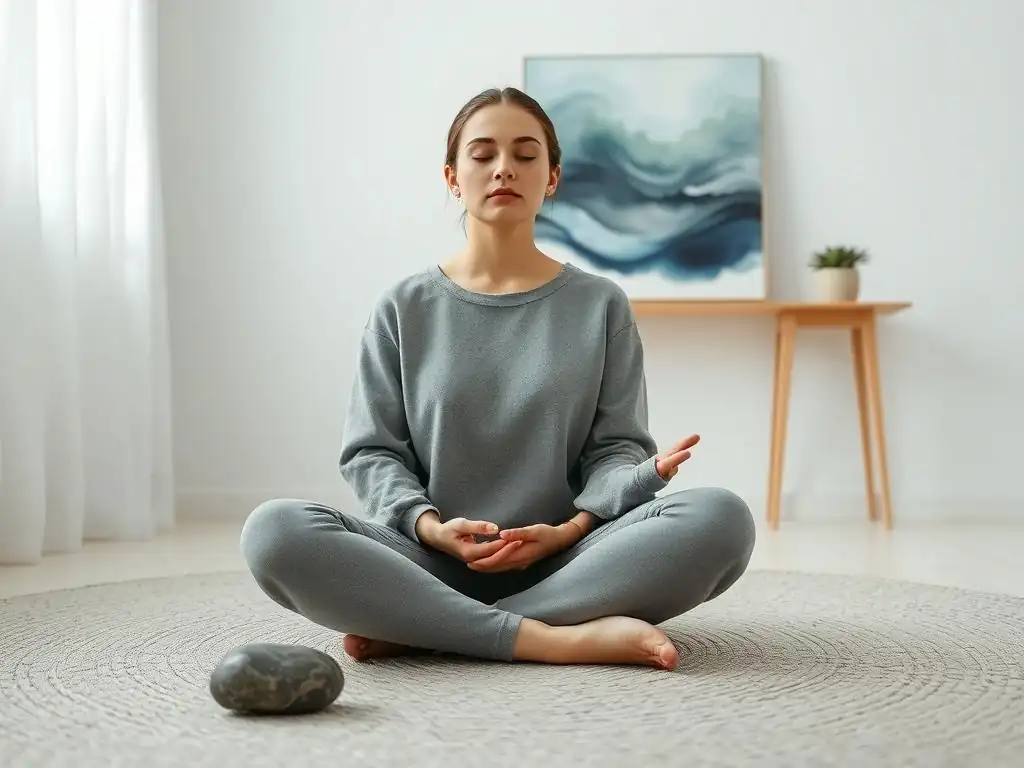
Now, gently turn your awareness to your internal mental and emotional landscape. Notice what thoughts are present in your mind. Are they racing, repetitive, or calm? Are they about work, relationships, or something else? Similarly, observe any emotions that are present – perhaps frustration, anxiety, sadness, or even contentment.
Treat your thoughts and emotions like clouds drifting across the sky. Acknowledge their presence without getting caught up in them or analyzing them. Avoid judging yourself for having certain thoughts or feelings. The intention is simply to witness them from a detached perspective. This passive observation weakens the grip that stressful thoughts and intense emotions can have, creating space for a calmer response and enhancing mindful pause stress relief.
Step 5: Gently Return to Your Breath and Re-Engage
As you conclude the mindful pause, gently bring your attention back to your breath for a few cycles. Feel the physical sensation of breathing once more, re-grounding yourself in the present moment. Take a slightly deeper breath if it feels comfortable, signaling your intention to return to your regular activities.
Before opening your eyes (if they were closed), take a moment to notice how you feel physically and mentally compared to before the pause. Has anything shifted? Then, slowly open your eyes and gently re-engage with your surroundings and your tasks. This transition phase is important; avoid rushing back into activity immediately. The mindful pause is complete, and you carry the benefits of that moment of calm and awareness forward, having actively pursued mindful pause stress relief.
Integrating the Mindful Pause into Your Daily Routine for Sustained Stress Relief
Identifying Trigger Situations: Before Meetings or During Commute
Integrating the mindful pause effectively starts with recognizing when you need it most. Pay attention to the specific situations or times of day that typically trigger stress or anxiety for you. Common triggers include the moments just before a potentially challenging meeting, during your daily commute when traffic is heavy, right after receiving a demanding email, or when transitioning between tasks.
Once you identify these triggers, make a conscious decision to implement a mindful pause before or during them. For example, set a reminder on your phone to take a 2-minute pause five minutes before your standing team meeting. If you find yourself getting frustrated in traffic, commit to taking three mindful breaths at the next red light. Proactively using the mindful pause in these high-stress moments provides immediate mindful pause stress relief and helps prevent the stress response from escalating.
Scheduling Mindful Pause Breaks Throughout the Day
Beyond reacting to triggers, proactively scheduling mindful pauses can build a consistent practice and enhance sustained stress relief. Think of them like mini-meditations scheduled into your day. You might set an alarm to take a 3-minute pause mid-morning, another after lunch, and a third in the late afternoon. Even just two or three scheduled pauses can make a significant difference in your overall stress levels.
Alternatively, you can tie your mindful pauses to existing habits. For instance, commit to taking a mindful pause every time you get up from your desk, before making a phone call, or while waiting for your computer to load. This "habit stacking" makes it easier to remember and implement the practice consistently. The cumulative effect of these regular, short breaks is substantial, fostering a calmer state of mind throughout the day and providing ongoing mindful pause stress relief.
Combining the Mindful Pause with Gratitude Journaling
Amplifying the benefits of the mindful pause for stress relief can be achieved by pairing it with other positive practices, such as gratitude journaling. Immediately following a mindful pause, while you are feeling more grounded and present, take a moment to write down 1-3 things you are grateful for. This doesn't have to be profound; it could be as simple as appreciating a comfortable chair, a ray of sunshine, or a kind word from a colleague.
Combining these two practices creates a powerful synergy. The mindful pause helps quiet the stress response and brings you into a state of calm awareness, making it easier to access feelings of gratitude. Focusing on gratitude actively shifts your mindset towards the positive, further counteracting the negative bias that stress often encourages. This combination not only offers immediate mindful pause stress relief but also cultivates a more optimistic outlook and greater emotional resilience over time.
Troubleshooting Common Challenges When Practicing the Mindful Pause
Difficulty Focusing: Tips for Maintaining Concentration
A common challenge when starting the mindful pause is a wandering mind. It's perfectly normal for thoughts to arise and pull your attention away from your breath or sensations. The key is not to eliminate thoughts, but to gently notice when your mind has wandered and kindly guide your attention back to your chosen anchor (usually the breath). Avoid getting frustrated or judging yourself; acknowledge the distraction and return to the practice.
If persistent distraction is a major hurdle, try focusing on a more specific aspect of the breath, such as the sensation of air at the tip of your nostrils, or counting your breaths (inhale 1, exhale 1, inhale 2, exhale 2, up to 10, then start over). You can also try opening your eyes slightly and focusing your gaze softly on a neutral point. Remember, the practice isn't about achieving a completely empty mind, but about building the muscle of bringing your attention back, which is itself a powerful tool for mindful pause stress relief.
Overwhelmed by Emotions: Strategies for Grounding Yourself
Sometimes, pausing and turning inward can bring intense or difficult emotions to the surface, which can feel overwhelming. If this happens, remember that you are safe in the present moment. Instead of trying to push the emotion away, acknowledge its presence. You can mentally label it, for example, "There is sadness" or "Noticing anxiety." This act of labeling can create a little distance from the feeling.
If the emotion feels too intense, shift your focus entirely to physical sensations that feel neutral or pleasant, such as the contact of your feet on the ground or the feeling of your clothes on your skin. You can also focus intensely on the physical sensation of breathing, perhaps even placing a hand on your abdomen to feel the movement. If necessary, shorten the pause or even stop the exercise and try again later. Remember, the goal is mindful pause stress relief, not distress. It's okay to step back and try a different approach or practice a different day.
Time Constraints: Adapting the Mindful Pause to One-Minute Intervals
One of the greatest strengths of the mindful pause is its adaptability, especially when time is limited. Even 60 seconds can provide significant mindful pause stress relief. If you only have a minute, use it effectively. Close your eyes or soften your gaze, take three deep, conscious breaths, focusing entirely on the sensation of the air moving in and out.
During these three breaths, consciously release any physical tension you notice in your shoulders, jaw, or forehead. On the exhale, imagine stress leaving your body with the breath. After the breaths, quickly scan your body for any lingering tension or notice one thing you are grateful for. Even this brief practice interrupts the stress cycle, clears your head slightly, and provides a moment of grounding. Regularly taking these micro-pauses throughout a busy day can prevent stress from building up, proving that mindful pause stress relief is accessible even in the tightest schedule.
Advanced Techniques: Enhancing Your Mindful Pause Practice
Incorporating Body Scan Meditation into the Mindful Pause
To deepen your mindful pause practice beyond basic breath awareness, consider integrating elements of a body scan meditation. After anchoring yourself with a few breaths, systematically bring your awareness to different parts of your body, starting with your toes and moving up to the crown of your head. Spend a few moments simply noticing the sensations present in each area without judgment.
This expanded awareness helps you become more attuned to how stress is held physically in your body. You might discover tension in areas you weren't previously aware of. By simply observing these sensations with mindful attention, you can often facilitate their release. Incorporating a brief body scan into your mindful pause transforms it from a simple breath exercise into a more comprehensive check-in with your physical self, significantly enhancing mindful pause stress relief by addressing the physical manifestations of tension.
Using Affirmations to Support Stress Reduction During the Pause
Another way to enhance your mindful pause is by gently introducing positive affirmations after you've centered yourself with the breath and body awareness. Affirmations are short, positive statements that you repeat silently to yourself. During a pause focused on stress relief, relevant affirmations might include: "I am calm," "I am present," "I am capable of handling this," or "I release tension with each breath."
Choose an affirmation that resonates with your current needs. Repeat it silently a few times during the latter part of your mindful pause. The combination of a grounded, present state achieved through mindfulness and the positive focus of the affirmation can be very effective in counteracting negative thought patterns associated with stress. This technique adds a layer of positive self-talk to the foundational mindful pause stress relief practice.
Exploring Guided Mindful Pause Meditations
For those who find it challenging to practice independently or who wish for external guidance, exploring guided mindful pause meditations can be highly beneficial. Many apps and online resources offer short, guided practices specifically designed for quick stress relief. These recordings lead you through the steps – focusing on the breath, noticing sensations, observing thoughts – allowing you to relax and follow instructions without having to direct the practice yourself.
Using guided meditations can be particularly helpful when you are feeling highly stressed or distracted. The soothing voice and structured guidance can make it easier to settle the mind and body. Many guided mindful pauses are just 1-5 minutes long, fitting easily into busy schedules. Experiment with different guides and lengths to find what works best for you, further supporting your journey towards consistent mindful pause stress relief.
The Science Behind the Mindful Pause and Stress Reduction
How Mindfulness Impacts the Nervous System
The effectiveness of the mindful pause for stress relief is rooted in its impact on the autonomic nervous system (ANS), which controls involuntary bodily functions like heart rate, breathing, and digestion. The ANS has two main branches: the sympathetic nervous system (responsible for the fight-or-flight response) and the parasympathetic nervous system (responsible for the rest-and-digest response). Stress activates the sympathetic system.
Mindfulness practices, including the mindful pause, help shift the balance towards the parasympathetic nervous system. By consciously focusing on slow, deep breathing and bringing non-judgmental awareness to the present moment, you send signals to your brain that deactivate the stress response. This shift reduces the activity of the sympathetic system and increases the activity of the parasympathetic system, leading to lower heart rate, decreased blood pressure, and a reduction in stress hormones, providing a physiological basis for mindful pause stress relief.
Research Supporting the Effectiveness of Mindfulness for Stress Relief
Numerous studies have demonstrated the efficacy of mindfulness-based interventions in reducing stress and improving overall well-being. Research published in journals like Health Psychology and Psychosomatic Medicine consistently shows that regular mindfulness practice can lead to significant reductions in perceived stress levels, anxiety symptoms, and even biological markers of stress like cortisol.
While specific studies on the "mindful pause" as a distinct technique might be fewer than those on longer programs like MBSR (Mindfulness-Based Stress Reduction), the core principles are the same. Studies on brief mindfulness interventions (lasting only a few minutes) have shown positive effects on mood, attention, and physiological stress responses in laboratory settings. This growing body of evidence supports the idea that even short bursts of mindfulness, like a mindful pause, can be powerful tools for mindful pause stress relief.
Understanding the Role of the Amygdala and Prefrontal Cortex
At a neurological level, mindfulness practice influences key areas of the brain involved in stress response and regulation. The amygdala, often referred to as the brain's "fear center," is highly active when we perceive threats and triggers the fight-or-flight response. Chronic stress can enlarge and make the amygdala more reactive.
Conversely, the prefrontal cortex, located behind the forehead, is involved in higher-level cognitive functions like planning, decision-making, and emotional regulation. Mindfulness practice has been shown to potentially decrease the size and activity of the amygdala while increasing the density and activity of the prefrontal cortex. This means that with practice, the brain becomes less prone to automatic stress reactions and better equipped to regulate emotions and respond thoughtfully to challenges, reinforcing the long-term benefits of mindful pause stress relief.
Mindful Pause for Specific Stressful Situations
Work environments are often significant sources of stress due to deadlines, demanding colleagues, heavy workloads, and performance pressure. Burnout, characterized by emotional exhaustion, cynicism, and reduced effectiveness, is a severe consequence of chronic work stress. The mindful pause offers a practical, in-the-moment tool to manage these daily pressures.
Implementing a mindful pause before a difficult conversation, during a overwhelming task, or even just mid-morning can break the cycle of escalating stress. Taking 1-3 minutes to focus on your breath and body at your desk can help you regain perspective, reduce feelings of being overwhelmed, and improve concentration. Regularly using the mindful pause throughout the workday contributes to sustained mindful pause stress relief, potentially mitigating the cumulative stress that leads to burnout.
Mindful Pause for Managing Anxiety and Panic Attacks
For individuals prone to anxiety or panic attacks, the mindful pause can be a vital grounding technique. Anxiety often involves excessive worry about the future, while panic attacks are sudden surges of intense fear accompanied by physical symptoms like rapid heart rate, shortness of breath, and dizziness. Both pull you away from the present moment into a state of perceived threat.
During moments of rising anxiety or the onset of panic symptoms, a mindful pause can help interrupt the spiraling thoughts and physical sensations. Focusing intensely on the physical reality of the breath – feeling the air enter and leave the body – anchors you in the present and distracts from fearful thoughts. While not a substitute for professional treatment, using the mindful pause provides an accessible tool for immediate mindful pause stress relief and can help manage acute symptoms by bringing you back to the safety of the current moment.
Mindful Pause for Improving Sleep Quality and Reducing Insomnia
Stress and worry are major contributors to sleep problems, including difficulty falling asleep (insomnia) and poor sleep quality. An overactive mind, often fueled by unresolved stress from the day, makes it hard to relax and drift off. The fight-or-flight system keeps the body alert when it should be winding down.
Practicing a mindful pause specifically before bed can help quiet the mind and prepare the body for rest. Instead of rehashing the day's worries or anticipating tomorrow's challenges, take a few minutes to focus on your breath and gently release tension. You can even do a modified body scan in bed. This intentional winding down helps shift your nervous system towards the rest-and-digest state, making it easier to fall asleep and promoting deeper, more restorative sleep. Using the mindful pause for mindful pause stress relief before sleep is a simple yet effective strategy for improving rest.
Conclusion: Embracing the Mindful Pause for a Calmer, More Resilient You
Recap of the Benefits of the Mindful Pause
We've explored how the mindful pause, a simple yet powerful technique, serves as an accessible tool for mindful pause stress relief. This brief exercise, focusing on breath and present moment awareness, offers immediate benefits like reduced heart rate and blood pressure by shifting the nervous system away from the fight-or-flight response.
Beyond the immediate relief, regular practice of the mindful pause cultivates long-term benefits, including increased emotional resilience, improved ability to regulate reactions to stress, and potential positive changes in brain structure associated with stress processing. It's a versatile tool, adaptable to just a minute or two, making it easy to integrate into a busy life and use in various stressful situations, from work pressure to anxiety.
Encouragement to Continue Practicing and Integrating Mindfulness
Embarking on the journey of mindful pause stress relief is a continuous process, not a one-time fix. The true power of the mindful pause lies in its consistent application. It might feel awkward or ineffective at first, and your mind will inevitably wander. This is normal. Each time you gently bring your attention back, you are strengthening your capacity for mindfulness and resilience.
We encourage you to commit to practicing the mindful pause regularly. Start small, perhaps just one minute a day or whenever you encounter a known trigger. As you become more comfortable, you can gradually increase the duration or frequency. Remember, even brief moments of mindful awareness contribute to a calmer mind and a more resilient response to life's challenges.
Next Steps: Resources for Further Exploration of Mindfulness and Stress Reduction
Frequently Asked Questions
What is a mindful pause and how does it relate to stress relief?
A mindful pause is a brief moment taken to intentionally focus on the present moment, interrupting the stress response. It promotes Mindful pause stress relief by shifting your attention away from stressors.
How often should I practice a mindful pause for effective stress relief?
Aim to incorporate mindful pauses throughout your day. Even a few short pauses can significantly reduce your overall stress levels. Consistency is key for achieving Mindful pause stress relief.
What are some techniques I can use during a mindful pause?
Focus on your breath, notice your physical sensations, or simply acknowledge your thoughts and feelings without judgment. These help to calm the nervous system and achieve Mindful pause stress relief.
Can a mindful pause replace other mental health treatments?
No, a mindful pause is a complementary tool, not a replacement. It can be a helpful addition to therapy, medication, or other mental well-being strategies but doesn't replace them.
Where can I find more information and resources about mindful pause stress relief and mental health?
Mind Care Guide offers a comprehensive guide to mental well-being, including information, support, and resources for various mental health challenges, including Mindful pause stress relief.
Final Reflection: The Enduring Power of the Mindful Pause
The simple act of pausing, of consciously choosing presence over reaction, is more relevant today than ever before. In a world saturated with constant stimulation and relentless demands, the mindful pause isn't just a trendy wellness practice; it's a vital tool for navigating the complexities of modern life and safeguarding our mental well-being. The ability to consciously interrupt the stress response cycle is a superpower we all possess, waiting to be unlocked.
The mindful pause, for me, has become a cornerstone of self-care, a quiet rebellion against the tyranny of the urgent. It's a constant reminder that we have agency over our reactions, that we can choose calm amidst chaos. The time to repair the roof is when the sun is shining.
This proverb perfectly encapsulates the proactive nature of the mindful pause; it's about building resilience before the storm hits, not just weathering it when it arrives. The impact of this simple practice ripples outwards, influencing not only our individual well-being but also our relationships and our capacity for empathy and compassion.
Consider the mindful pause not as a destination, but as a lifelong practice. You don't need to dedicate hours; even a few seconds of intentional breathing can shift your perspective. Experiment with incorporating mindful pauses into your daily routine – before responding to an email, before a challenging conversation, or simply when you feel overwhelmed. Embrace the power of this simple yet profound technique, and discover the transformative potential it holds for your life. Let the mindful pause be your anchor in the storm, your sanctuary in the chaos, and your pathway to a more peaceful and fulfilling existence.
Unlock Your Inner Calm: Start Practicing Mindful Pauses Today!
Thanks for taking the time to explore the power of mindful pauses with us! We hope you gained valuable insights into how this simple practice can significantly reduce stress and improve your well-being. Now it's time to put what you've learned into action.
- Prioritize your first mindful pause: Find a quiet space, close your eyes, and dedicate just 5 minutes to focusing on your breath. Notice the sensations without judgment. This is your starting point to a calmer you.
- Share your experience: Tell us (or a friend!) about your first mindful pause. What did you notice? How did it make you feel? Sharing your journey can inspire others.
- Experiment with different techniques: Explore variations like mindful walking or body scans to discover what resonates best with you. The journey to mindfulness is personal and unique.
Ready to experience the transformative power of mindful pauses? What will you notice during your first five-minute practice?