
Anchor Your Mind: Using Daily Objects for Mindfulness

Welcome to Mind Care Guide, a sanctuary for your mental well-being.
Feeling overwhelmed? We understand. Discover simple yet profound ways to cultivate inner peace and manage daily stress. Our latest article, "Anchor Your Mind: Using Daily Objects for Mindfulness," unlocks the secret to grounding yourself in the present moment, even amidst the chaos. Explore how ordinary items can become extraordinary tools for mindfulness and embark on a journey to a calmer, more centered you. Ready to find stillness in the everyday?
Anchor Your Mind: Using Daily Objects for Mindfulness
- Introduction to Mindfulness with Everyday Objects
- Transforming the Ordinary: Mindfulness Techniques with Common Items
- Simple Mindfulness Exercises with Everyday Items
- Cultivating Present Moment Awareness: Practical Applications
- Choosing Your Mindfulness Anchor: Selecting Meaningful Objects
- Overcoming Challenges in Mindfulness Practice
- The Benefits of Practicing Mindfulness with Everyday Objects
- Deepening Your Mindfulness Journey
- Conclusion: Embracing Mindfulness in the Here and Now
-
Frequently Asked Questions
- What is Mindfulness with Everyday Objects and how does it relate to mental well-being?
- Why should I use everyday objects for mindfulness instead of traditional methods like meditation?
- What are some examples of everyday objects I can use for mindfulness practice?
- How long should I practice mindfulness with everyday objects each day to see benefits?
- Where can I find more resources and support if I want to learn more about Mindfulness with Everyday Objects and mental well-being?
- Final Reflection: The Everyday Alchemy of Mindfulness
- Unlock Your Inner Calm: Start Practicing Mindfulness Today!
Introduction to Mindfulness with Everyday Objects
Discovering Mindfulness in the Mundane
Mindfulness is often thought of as something reserved for formal meditation sessions, requiring quiet rooms and dedicated time. However, the essence of mindfulness lies in paying attention to the present moment, non-judgmentally. This practice doesn't need to be separate from your daily life; it can be woven into the fabric of your routine.
Discovering mindfulness in the mundane involves shifting your perspective to find moments of presence and awareness within ordinary activities and interactions. It's about noticing the simple things you encounter every day – the feel of your clothes, the taste of your food, the sound of rain – and using them as anchors to the here and now.
This approach to mindfulness, often referred to as mindfulness with everyday objects, makes the practice accessible and less intimidating. Instead of striving for a blank mind, you engage with the reality of your immediate environment. For instance, simply holding a smooth stone or observing the intricate pattern on a leaf can become a powerful exercise in focused attention.
This isn't about adding another task to your busy schedule but rather about changing how you do the tasks you already perform. By bringing mindful awareness to everyday objects, you transform routine moments into opportunities for grounding and peace, making mindfulness a constant companion rather than an occasional visitor.
Why Use Daily Objects for Mindfulness Practice?
Utilizing daily objects as anchors for mindfulness offers several distinct advantages, making the practice more approachable and sustainable for many people. Firstly, these objects are readily available in your environment, whether you are at home, work, or traveling. This eliminates the need for special equipment or locations, removing common barriers to starting or maintaining a mindfulness practice. A simple pen, a coffee mug, or even a doorknob can serve as a tangible point of focus, making it easier to redirect wandering thoughts and stay present, especially for beginners who may find traditional breath-focused meditation challenging.
Secondly, integrating mindfulness with everyday objects helps bridge the gap between formal practice and daily life. It encourages you to see mindfulness not as a separate activity but as a way of being that can infuse all your experiences. By consciously choosing to engage mindfully with an object you interact with regularly, you build a habit of presence throughout the day.
This consistent, gentle reinforcement can be more effective than infrequent, intense sessions. For example, mindfully washing dishes or folding laundry using the objects involved – the sponge, the water, the fabric – can transform potentially tedious chores into moments of calm awareness, demonstrating that mindfulness is practical and achievable in the midst of everyday demands.
Transforming the Ordinary: Mindfulness Techniques with Common Items
Mindful Observation: Engaging Your Senses with Objects
Mindful observation using everyday objects is a foundational technique that sharpens your sensory awareness and anchors you firmly in the present. Choose an object nearby – perhaps a key, a plant leaf, or a small stone. Hold it in your hand or place it in front of you. Begin by simply looking at it without judgment or analysis.
Notice its shape: is it angular, curved, irregular? Observe its color(s) – are they solid or varied, bright or muted? Pay attention to details you might normally overlook, like tiny imperfections, textures visible to the eye, or how light reflects off its surface. Spend a minute or two just seeing the object as if for the first time.
After visual observation, engage your other senses. If appropriate and safe, touch the object. How does it feel? Is it smooth, rough, cool, warm, hard, soft? Are there different textures on different parts?
If it has a scent (like a piece of fruit or a flower), gently bring it closer and inhale, noticing the fragrance without trying to identify it. If it makes a sound when handled or moved (like keys jingling), listen attentively. This multi-sensory engagement with a simple object deepens your connection to the present moment, drawing your attention away from internal chatter and towards external reality. Practicing this regularly with different objects helps train your mind to notice the richness of sensory experience available to you constantly.
The Power of Touch: Exploring Textures and Sensations
Focusing on the sense of touch is a particularly grounding way to practice mindfulness using daily items. Our tactile sense provides direct, undeniable feedback about the physical world. Select an object known for its distinct texture, such as a piece of wood, a fabric swatch, or even the surface of your desk. Close your eyes if comfortable, or simply soften your gaze.
Slowly run your fingers over the object's surface. Notice the subtle variations in texture – are there bumps, ridges, smooth areas, or rough patches? Is the temperature consistent or does it vary? Pay attention to the pressure of your fingers against the object and the sensations in your fingertips.
This tactile exploration is not about intellectual analysis but purely about experiencing the physical sensations. As thoughts about the past or future arise, gently acknowledge them and guide your attention back to the feeling of the object beneath your touch. You might notice the intricate weave of a fabric, the cool, smooth surface of glass, or the grainy roughness of unpolished wood.
This simple act of focused touch can be incredibly calming and centering, providing an immediate anchor to the present moment. Integrating this into your day – perhaps mindfully holding your coffee mug or feeling the texture of your steering wheel – can inject moments of grounded presence into busy routines.
Mindful Breathing Anchored to an Object
Combining mindful breathing with an object provides a dual anchor for your attention, which can be particularly helpful when the mind is very active. Choose a small, portable object that you can hold, such as a smooth stone, a bead, or even a paperclip. Hold the object gently in your hand. Begin to notice your breath, without trying to change it. Simply observe the natural rhythm of your inhales and exhales.
Now, bring your awareness to the object you are holding. As you inhale, perhaps focus on the feeling of the object in your palm. As you exhale, perhaps focus on the slight shift of weight or pressure.
You can also synchronize the breath with a tactile exploration, for example, slowly running a finger along the edge of the object during the inhale, and back during the exhale. If your mind wanders, which it inevitably will, simply notice that it has wandered and gently guide your attention back to the combination of your breath and the sensation of the object. This technique provides both the internal anchor of the breath and the external anchor of the object, reinforcing your connection to the present moment.
Simple Mindfulness Exercises with Everyday Items
The Mindful Cup of Tea: A Sensory Experience
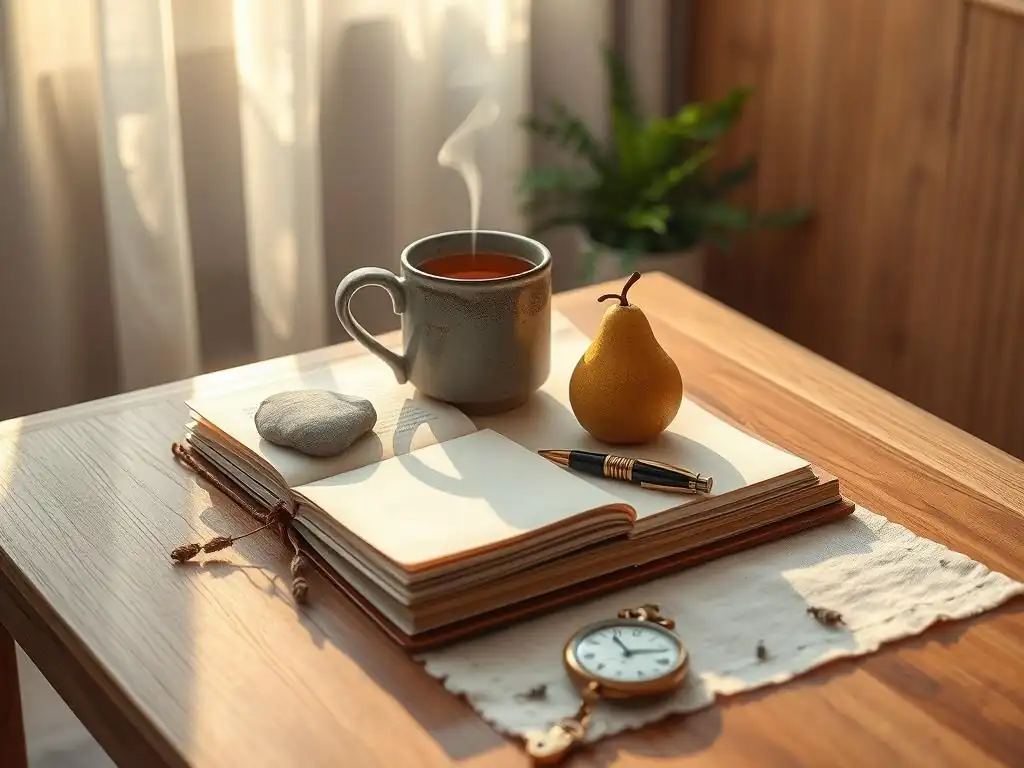
Drinking a cup of tea or coffee is a common daily ritual that can be transformed into a powerful exercise in mindfulness with everyday objects. Instead of mindlessly sipping while multitasking, dedicate a few minutes to fully engaging with the experience. Start by noticing the warmth of the mug in your hands – how does it feel against your skin? Observe the color and steam rising from the liquid. Bring the mug closer and inhale the aroma deeply, noticing the different scents.
As you take your first sip, pay attention to the taste, temperature, and texture of the drink in your mouth. Is it hot, warm, bitter, sweet, smooth? Notice how the liquid feels as you swallow.
Continue sipping slowly, bringing your full attention to each sensory aspect of the experience. When thoughts arise about your to-do list or recent events, gently acknowledge them and return your focus to the warmth of the mug, the aroma, or the taste. This simple practice, taking perhaps just five minutes, can be a refreshing pause in your day, anchoring you in the present moment through the sensory richness of a familiar object and ritual.
Using a Pen for Mindful Writing and Focus
A pen, a ubiquitous everyday object, can serve as a versatile tool for mindfulness practice, particularly for mindful writing or simply as an anchor for focus. Pick up a pen and examine it closely. Notice its weight, texture, color, and design. Feel the smooth or textured surface in your hand. If you are using it for mindful writing, focus your attention entirely on the physical act of writing. Pay attention to the sensation of the pen moving across the paper, the pressure you apply, the sound it makes, and the visual appearance of the ink as it forms words.
Alternatively, you can use a pen simply as an object to focus on during a brief mindfulness break. Hold the pen and observe it as described earlier, or place it on your desk and focus your gaze upon it. If your mind starts to drift, gently bring your attention back to the visual details or the tactile sensation of holding the pen. This simple act of focusing on a single object like a pen can help quiet mental chatter and improve concentration, demonstrating how mindfulness with everyday items can be integrated seamlessly into your work or study routine.
The Mindful Walk: Paying Attention to Your Footwear
Even a simple walk can become a mindfulness exercise by using your footwear as an anchor. Before you begin your walk, take a moment to notice your shoes. How do they feel on your feet? Are they snug, loose, supportive? Pay attention to the texture of the material against your skin or socks. As you start walking, shift your awareness to the sensation of your feet inside your shoes. Notice the feeling of your heel lifting and your toes pushing off with each step.
Pay attention to the contact your shoes make with the ground. Can you feel the texture of the surface through the soles? Is it hard pavement, soft grass, or uneven gravel? Notice the sound your shoes make as they strike the ground.
This practice grounds your awareness in the physical experience of walking, using your footwear as a constant tactile and auditory anchor. Whenever your mind wanders to thoughts about your destination or other concerns, gently redirect your attention back to the sensations in your feet and the interaction between your shoes and the ground. This transforms a routine activity into an opportunity for present moment awareness.
Focusing on the Senses: Object Meditation
Object meditation is a specific form of mindfulness practice that uses an object as the primary focus of attention. Choose any everyday item that is small enough to hold comfortably or place nearby, such as a stone, a flower, a shell, or a piece of fruit. Sit comfortably and hold the object or place it in front of you. Close your eyes for a moment to settle your mind, then open them and bring your full attention to the object.
Systematically engage each sense (that is appropriate for the object). Begin with sight: observe its colors, shapes, textures, and details. Then, if applicable, bring it closer and explore its scent. Gently touch it, noticing its temperature, texture, and weight. If it makes a sound when handled, listen attentively.
You can even explore taste if it's a safe edible object like a piece of fruit, noticing its flavor profile. The goal is not to think about the object but to fully experience it through your senses. As thoughts arise, simply notice them without judgment and gently return your attention to the sensory exploration of the object. This deep sensory engagement is a powerful way to anchor your mind in the present moment.
Cultivating Present Moment Awareness: Practical Applications
Mindfulness at Your Desk: Using Office Supplies
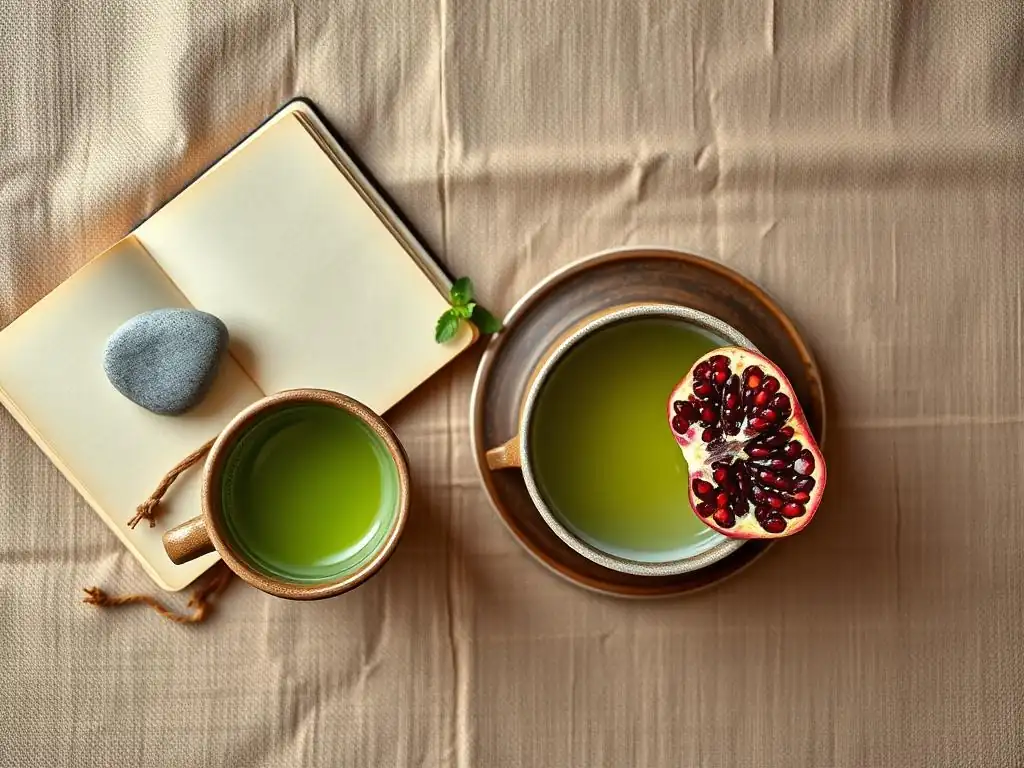
Your workspace is filled with potential anchors for mindfulness with everyday objects. From a pen to a paperweight, a computer mouse to a stapler, these items can help you cultivate present moment awareness during your workday. When you feel stressed or distracted, pick up an object on your desk, like a paperclip or a smooth stone you keep nearby. Hold it and simply notice its physical properties – its shape, temperature, texture, and weight. This brief sensory check-in can interrupt the cycle of anxious thoughts and bring you back to the physical reality of where you are.
Another application is to bring mindfulness to specific tasks involving office supplies. For example, when writing with a pen, pay attention to the feel of the pen in your hand and the movement across the paper. When using your computer mouse, notice the clicking sound and the smooth glide across the mousepad.
Even mundane actions like stapling a document or opening a drawer can become opportunities for mindful awareness if you consciously choose to pay attention to the sensations involved. Integrating these small moments of object-based mindfulness throughout the day can help reduce stress, improve focus, and make your work environment feel less overwhelming.
Mindful Chores: Finding Peace in Routine Tasks
Household chores, often seen as tedious obligations, can be transformed into opportunities for practicing mindfulness using daily items involved in the task. Washing dishes, for instance, engages multiple senses and objects: the warmth and feel of the water, the texture and scent of the soap, the smooth or rough surface of the dishes, and the sound of water running.
Instead of rushing through the task while your mind is elsewhere, focus your full attention on these sensory experiences. Notice the feel of the warm water on your hands, the slipperiness of the soap, the clinking sound of dishes, and the visual satisfaction of seeing them become clean.
Similarly, folding laundry involves tactile sensations of different fabrics, the visual patterns and colors, and the physical movements of sorting and folding. Ironing includes the warmth of the iron, the hiss of steam, the feel of the fabric becoming smooth. By intentionally focusing on the objects and sensations involved in these routine tasks, you anchor your awareness in the present moment. This can turn chores from mindless drudgery into a calming, meditative practice, demonstrating how easily mindfulness can be integrated into the practicalities of daily life.
Object-Based Mindfulness for Stress Reduction
Using everyday objects as anchors is a highly effective technique for stress reduction because it provides a tangible, immediate point of focus that can interrupt the cycle of worrisome thoughts. When you feel stress or anxiety building, selecting an object and engaging your senses with it offers a powerful distraction from internal mental chatter and redirects your attention to the external, physical world.
Holding a smooth stone, for example, and focusing solely on its texture and temperature can be incredibly grounding, pulling you out of the abstract worries in your mind and into the concrete reality of the present moment.
This form of mindfulness with everyday objects acts as a mini-meditation that can be performed anywhere, anytime you feel overwhelmed. A quick mindful check-in with your car keys before driving, focusing on their weight and shape, can reduce driving anxiety. Mindfully holding a comfortable pillow or blanket and noticing its softness can be calming before sleep. The simplicity and accessibility of using ordinary items make this a practical and sustainable stress-reduction tool. By regularly practicing this technique, you train your mind to shift focus away from stressors and towards present sensory experience, building resilience against anxiety.
Choosing Your Mindfulness Anchor: Selecting Meaningful Objects
Identifying Objects That Resonate with You
Choosing the right objects to use for your mindfulness with everyday objects practice can significantly enhance your experience. While any object can technically serve as an anchor, selecting items that hold some personal meaning or appeal can make the practice more engaging and effective. Think about objects you interact with frequently or those that evoke positive feelings or associations for you. This could be a favorite mug, a smooth stone collected from a meaningful place, a piece of jewelry you wear daily, or even a plant on your windowsill.
An object that resonates with you might have a pleasant texture, an interesting shape, a comforting weight, or simply be something you find aesthetically pleasing. The key is that the object should feel accessible and inviting, something you are willing to spend a few moments focusing on. It doesn't need to be fancy or expensive; its value lies in its ability to gently draw your attention and anchor you in the present moment. Experiment with different items in your environment to discover which ones feel most natural and helpful for your practice.
Creating a Personal Mindfulness Kit
Once you've identified a few objects that resonate with you or that you find particularly grounding, you might consider assembling a small, personal mindfulness with everyday items kit. This doesn't need to be elaborate – perhaps a small box, pouch, or even just a designated spot on your desk or nightstand. Include 3-5 small objects that you can easily access when you want to practice. This could be your favorite smooth stone, a calming scented sachet, a beautiful shell, a tactile fidget object, or a meaningful trinket.
Having a dedicated collection of chosen objects makes it easy to initiate a mindfulness practice whenever you feel the need. Seeing the kit can serve as a visual reminder to pause and check in with yourself. You can keep one kit at home and perhaps a smaller version, like a single smooth stone or bead, in your pocket or bag to use while you're out. This personalized kit provides a tangible resource for cultivating presence and calm throughout your day, making object-based mindfulness a more intentional and accessible part of your routine.
Establishing a Routine with Your Chosen Object
Consistency is key to developing any mindfulness practice, and establishing a routine using your chosen mindfulness with everyday objects can help. Decide on specific times or triggers during your day when you will pause for a brief object-based mindfulness exercise. This could be first thing in the morning while holding your coffee mug, during a mid-morning break while holding a desk object, while commuting using a small item in your pocket, or in the evening before bed with an object from your personal kit.
Start small, perhaps committing to just 1-2 minutes of focused attention on an object once or twice a day. Over time, you can gradually increase the duration or frequency as it feels comfortable. Linking the practice to existing habits, like brushing your teeth or waiting for your computer to boot up, can make it easier to remember.
For instance, while waiting for water to boil, mindfully observe the kettle or the bubbling water. Establishing this routine helps solidify the habit of using everyday items as anchors, transforming these brief moments of presence into a consistent practice that supports your overall well-being.
Overcoming Challenges in Mindfulness Practice
Dealing with Distractions During Object-Based Meditation
Distractions are a natural part of any mindfulness practice, and they will certainly arise when practicing mindfulness with everyday objects. Thoughts about the past or future, bodily sensations, or external sounds will inevitably pull your attention away from the chosen object. The key is not to eliminate distractions, but to change your relationship with them. When you notice your mind has wandered – perhaps you've started planning dinner while trying to focus on the texture of a stone – simply acknowledge the thought without judgment.
Gently, but firmly, guide your attention back to the sensory experience of the object you are using as your anchor. There's no need to be frustrated or self-critical; noticing that your mind has wandered is actually a moment of mindfulness itself. Think of your attention as a puppy that keeps running off – you don't scold it, you just gently bring it back to where you want it to be. With consistent practice, you'll become more adept at noticing when your mind drifts and returning your focus to your chosen object, strengthening your ability to stay present despite distractions.
Maintaining Consistency in Your Practice
Maintaining consistency in mindfulness with everyday objects can be challenging amidst a busy life. One common hurdle is simply forgetting to practice. To combat this, try using visual cues, such as placing your chosen mindfulness object somewhere you'll see it regularly – on your desk, next to your coffee maker, or on your nightstand. Setting reminders on your phone or linking the practice to an existing habit, as mentioned earlier, can also be very effective. For example, "Every time I unlock my phone, I will take three mindful breaths while feeling the phone in my hand."
Another challenge is feeling like you don't have enough time or that the practice isn't "working." Remember that even 30 seconds of mindful focus on an object is beneficial. Don't aim for perfection; aim for presence. If you miss a session, don't dwell on it – just return to the practice when you remember.
Be flexible and adapt the practice to your circumstances. A quick mindful moment holding your steering wheel in traffic counts just as much as a dedicated five minutes with a smooth stone. Consistency is built through gentle persistence and self-compassion, not rigid adherence to an ideal.
Adapting Mindfulness Techniques to Your Daily Life
One of the greatest strengths of mindfulness with everyday objects is its inherent adaptability to daily life. The challenge lies in remembering to do it. To make it a natural part of your day, look for "mindfulness moments" that are already built into your routine. Waiting in line, commuting, brushing your teeth, washing your hands – these are all opportunities to use objects around you as anchors for presence. Instead of seeing these as downtime to check your phone or let your mind race, intentionally use them for a brief period of object-based mindfulness.
For example, while washing your hands, focus on the feel of the water, the scent of the soap, and the action of rubbing your hands together. While waiting in line, notice the texture of the item you are holding (like your phone or bag) or the feel of the ground beneath your feet.
This conscious effort to weave mindfulness into existing activities, using the objects present in those moments, makes the practice less of an added burden and more of an integrated way of navigating your day. Start small with one or two moments and gradually expand as you feel more comfortable and remember more often.
The Benefits of Practicing Mindfulness with Everyday Objects
Enhanced Focus and Concentration
Regularly practicing mindfulness with everyday objects can significantly improve your ability to focus and concentrate. When you intentionally direct your attention to the sensory details of an object – its texture, shape, color, weight – you are training your mind to stay present on a single point of focus. This is like doing reps at the mental gym. Each time you notice your mind wandering and gently bring it back to the object, you strengthen the 'muscle' of attention.
This improved ability to focus then translates to other areas of your life. You may find it easier to concentrate on tasks at work or study, to listen attentively during conversations, or to stay focused while reading. For instance, a study published in the Journal of Cognitive Enhancement in 2019 found that even brief mindfulness training (as little as 8 weeks) could lead to measurable improvements in attention and working memory.
While that study didn't focus specifically on objects, the principle of training attention through mindful focus applies directly to using everyday items as anchors. The consistent practice of redirecting a wandering mind to a chosen object builds sustained attention capacity over time.
Reduced Stress and Anxiety
One of the most widely reported benefits of mindfulness is its effectiveness in reducing stress and anxiety, and mindfulness with everyday objects is a highly accessible way to achieve this. When we are stressed or anxious, our minds often race, dwelling on worries about the future or regrets about the past. Focusing on a tangible object in the present moment provides an immediate anchor that pulls us out of this mental turmoil. Engaging the senses with an object – feeling its texture, observing its details – grounds us in the physical reality of the here and now.
This shift in attention interrupts the stress response cycle. Instead of being swept away by anxious thoughts, you are directing your awareness to something concrete and neutral. For example, a 2018 review of mindfulness interventions for anxiety and depression, published in JAMA Internal Medicine, indicated that mindfulness practices can lead to moderate improvements in anxiety symptoms.
While not specific to object-based methods, the core mechanism involves cultivating present moment awareness, which is precisely what using everyday objects facilitates. Taking a few moments to mindfully connect with an object during a stressful situation can lower physiological arousal and bring a sense of calm and perspective.
Increased Self-Awareness and Emotional Regulation
Practicing mindfulness using daily items also contributes to increased self-awareness and improved emotional regulation. By regularly pausing to focus on an external object, you create space between yourself and your thoughts and feelings. This distance allows you to observe your internal state – your emotions, bodily sensations, and thought patterns – without immediately reacting to them. For instance, while mindfully holding a stone, you might notice feelings of irritation or impatience arise. Instead of getting caught up in these emotions, the anchor of the stone reminds you to simply observe them as transient experiences.
This non-judgmental observation of your internal landscape is a key aspect of self-awareness. You begin to recognize your typical emotional responses and thought habits. With this awareness comes the ability to choose how you respond rather than reacting automatically. When you feel a difficult emotion surface, you can use an everyday object as an anchor to stay grounded while you experience the emotion, rather than being overwhelmed by it. Over time, this practice of mindful observation, anchored by physical objects, strengthens your capacity to manage challenging emotions with greater skill and resilience.
Deepening Your Mindfulness Journey
Exploring Advanced Techniques with Objects
Once you are comfortable with basic mindfulness with everyday objects, you can explore more advanced techniques to deepen your practice. This might involve extending the duration of your object meditation sessions, perhaps from 5 minutes to 10 or 15. You could also experiment with using more complex objects that offer a wider range of sensory details to explore, like a piece of intricate jewelry, a textured piece of wood with knots and grain, or a natural object like a pinecone.
Another advanced approach is to use multiple objects in sequence during a single session, transitioning your mindful attention from one item to another. You might spend several minutes with a smooth stone, then move to a fragrant flower, and finally focus on the sound of a chime or bell. This helps train your ability to transition attention mindfully.
You can also integrate movement, such as practicing mindful walking while holding an object and simultaneously paying attention to the sensations in your feet and the object in your hand. These layered techniques build upon the foundational practice, offering new ways to engage with objects and cultivate deeper levels of presence.
Integrating Mindfulness into All Aspects of Your Life
The ultimate goal of practicing mindfulness with everyday objects is to integrate this present moment awareness into all aspects of your life, not just during dedicated practice sessions. This means looking for opportunities to be mindful throughout your day, using whatever objects are present as anchors. It's about bringing the same quality of attention you use when mindfully observing a stone to washing your hands, walking up stairs, waiting in line, or interacting with others.
This integration involves consciously choosing to pay attention during routine activities. For example, when opening a door, notice the feel of the doorknob, the mechanism working, the sound it makes, and the visual transition from one space to another. When eating, focus on the texture, taste, and smell of the food, and the feel of the utensils.
It's about making mindfulness a continuous flow rather than isolated moments. By consistently using the everyday objects around you as reminders and anchors, you train your mind to inhabit the present moment more fully, making mindfulness a way of life rather than just a practice.
Resources for Continued Learning in Mindfulness
For those interested in further exploring mindfulness with everyday objects and other mindfulness techniques, numerous resources are available. Books by renowned mindfulness teachers like Jon Kabat-Zinn, Tara Brach, and Thich Nhat Hanh offer deep insights and practical guidance, often including suggestions for informal, object-based practices. Many websites dedicated to mental well-being and mindfulness provide free articles, guided meditations, and exercises, including specific guides on using everyday items.
Mindfulness apps (though not linked here) often include guided sessions that can be adapted to focus on external objects or sensory experiences. Local community centers, meditation groups, or therapy practices may offer mindfulness workshops or courses where you can learn techniques and connect with others. Exploring different resources can help you find approaches that resonate most with you and provide ongoing support and inspiration for your mindfulness journey. Remember, the path of mindfulness is one of continuous learning and gentle exploration.
Conclusion: Embracing Mindfulness in the Here and Now
Finding Peace and Presence Through Everyday Objects
Embracing mindfulness with everyday objects offers a simple yet profound path to finding peace and presence in the midst of our busy lives. By intentionally bringing our attention to the ordinary items that surround us – the mug in our hand, the feel of the chair beneath us, the pen we use to write – we anchor ourselves firmly in the present moment. This practice doesn't require setting aside large blocks of time or seeking out special environments; it transforms the mundane into opportunities for mindful awareness, making the practice accessible to everyone, everywhere.
Through mindful observation and sensory engagement with daily items, we cultivate focus, reduce stress, and increase our self-awareness. These small acts of presence accumulate over time, gently rewiring our brains to be less reactive and more responsive to life's challenges. The journey of mindfulness using daily items reminds us that the capacity for peace and calm is not found in escaping our reality but in fully inhabiting it, one mindful moment, one everyday object at a time. By choosing to pay attention to the here and now, we discover the richness and stability that lies within the ordinary.
Frequently Asked Questions
What is Mindfulness with Everyday Objects and how does it relate to mental well-being?
Mindfulness with everyday objects is a technique that uses common items to focus your attention and cultivate present moment awareness. It directly benefits mental well-being by reducing stress and promoting a sense of calm.
Why should I use everyday objects for mindfulness instead of traditional methods like meditation?
Using everyday objects makes mindfulness more accessible and integrates it seamlessly into your daily routine. It can be less intimidating than traditional meditation for beginners and easier to fit into a busy schedule.
What are some examples of everyday objects I can use for mindfulness practice?
You can use almost anything! Examples include a cup of tea, a houseplant, a smooth stone, or even your car keys. The point is to fully engage your senses with the object.
How long should I practice mindfulness with everyday objects each day to see benefits?
Even just a few minutes a day can make a difference. Aim for 5-10 minutes initially and gradually increase the duration as you become more comfortable with the practice. Consistency is key.
Where can I find more resources and support if I want to learn more about Mindfulness with Everyday Objects and mental well-being?
Mind Care Guide offers a comprehensive library of information and resources on various mental health challenges, including mindfulness techniques. You can also find support groups and mental health professionals in your local area.
Final Reflection: The Everyday Alchemy of Mindfulness
The simple act of noticing a chipped teacup or the worn texture of a favorite book can be a powerful gateway to presence; it's a revolution in how we experience the mundane. We live in a world saturated with distractions, constantly bombarded by information and demands. This article explored how intentionally engaging with everyday objects can be a surprisingly effective antidote to this pervasive busyness, offering a practical path to cultivate mindfulness in the midst of our chaotic lives.
The shift from seeing objects as mere possessions to recognizing them as portals to mindful awareness has profoundly impacted my own life. I find myself pausing more often, truly seeing the things around me – the subtle imperfections, the comforting familiarity, the quiet beauty. This practice has fostered a deeper appreciation for the present moment, reducing my anxieties and increasing my overall sense of peace. Mindfulness isn't about escaping life, it's about finding freedom within it.
This quote perfectly encapsulates the transformative power of this simple yet profound practice.
Now, I invite you to consider your own surroundings. What objects surround you right now? Take a moment to truly see them, to feel their texture, to notice their details. Let this be your starting point. By cultivating a mindful relationship with the everyday, you can unlock a wellspring of inner peace and presence, transforming the ordinary into the extraordinary. Embrace the opportunity to anchor your mind, one object at a time.
Unlock Your Inner Calm: Start Practicing Mindfulness Today!
Thanks for taking the time to explore the power of everyday mindfulness! We hope you discovered new ways to find peace and presence in your daily life. Ready to integrate these practices into your routine?
- Begin your personal mindfulness journey: Select one object from your home – a favorite mug, a smooth stone, anything that resonates – and dedicate 5 minutes each day to observing it mindfully. Notice its texture, its color, its weight. Let your thoughts simply be, without judgment.
- Share your experience: Tell us about the object you chose and how it felt to focus on it mindfully. We'd love to hear your reflections in the comments below!
- Explore further: Try incorporating mindful moments throughout your day – pausing during your commute to listen to sounds, or taking a few deep breaths before starting a task.
What small change will you make today to anchor your mind in the present moment?