
Mindful Steps Indoors: Your Guide to Walking Meditation Anywhere.

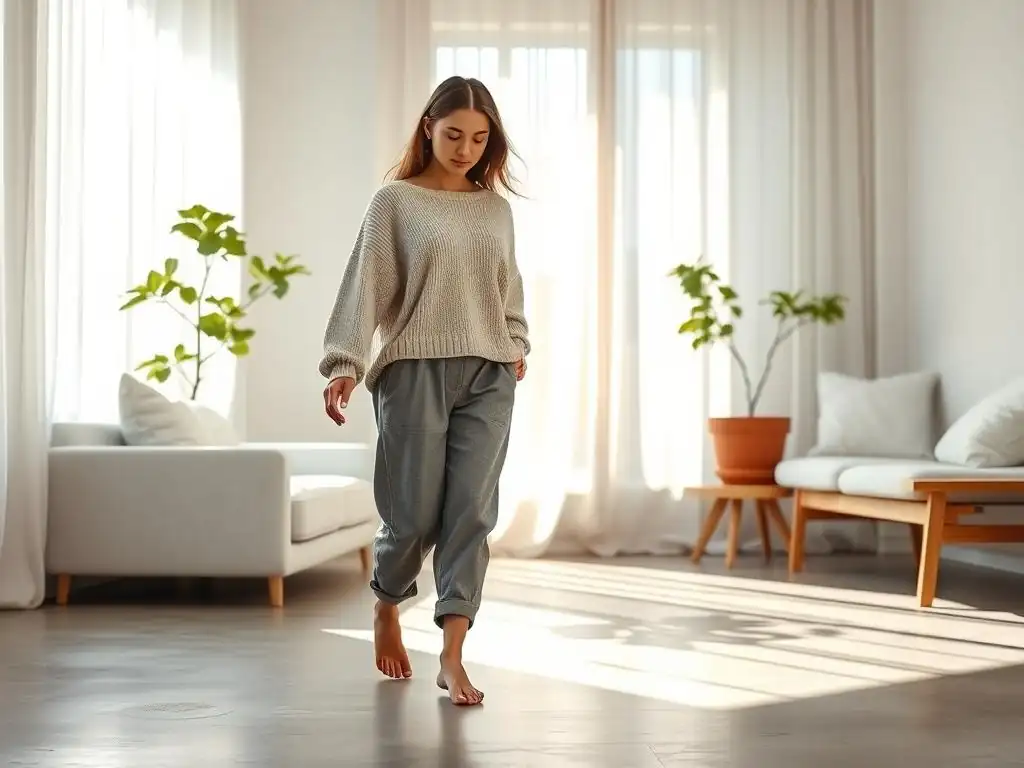
Welcome to Mind Care Guide, a haven dedicated to nurturing your mental well-being.
Feeling overwhelmed by anxiety? Perhaps a change of scenery, or even just a change of pace, is what you need. But what if you can't escape your four walls? Discover how walking meditation for anxiety relief can be practiced anywhere, even indoors. Intrigued? Let's take mindful steps together...
Mindful Steps Indoors: Your Guide to Walking Meditation Anywhere
- Introduction to Indoor Walking Meditation for Anxiety Relief
- Preparing for Your Indoor Walking Meditation Practice
- Step-by-Step Guide to Indoor Walking Meditation
- Techniques to Enhance Your Indoor Walking Meditation
- Adapting Walking Meditation to Different Indoor Spaces
- Troubleshooting Common Challenges in Indoor Walking Meditation
- The Science Behind Walking Meditation and Anxiety
- Integrating Walking Meditation into Your Daily Routine
- Conclusion: Embracing Indoor Walking Meditation for Lasting Anxiety Relief
-
Frequently Asked Questions
- What exactly is walking meditation and how does it differ from regular walking?
- How can walking meditation specifically help with anxiety relief?
- Can I practice walking meditation indoors, even in a small space?
- How long should a walking meditation session be to effectively reduce anxiety?
- What are some common distractions during walking meditation, and how can I overcome them?
- Final Reflection: Cultivating Inner Peace, One Step at a Time
- Unleash Your Inner Peace: Start Walking Meditation Today!
Introduction to Indoor Walking Meditation for Anxiety Relief
Walking meditation is a powerful mindfulness practice that anchors you in the present moment, and it's remarkably effective for finding walking meditation for anxiety relief. Unlike seated meditation, it involves conscious movement, allowing you to cultivate awareness while engaging your body. This dynamic approach can be particularly beneficial for individuals who find it challenging to sit still or who benefit from physical activity to help process nervous energy and quiet a restless mind. It offers a tangible way to step out of overwhelming thoughts and into the immediate reality of your physical experience.
Exploring walking meditation for anxiety relief indoors brings this accessible practice right into your home. It eliminates the need for specific weather conditions or outdoor spaces, making it a reliable tool you can turn to whenever anxiety arises. By focusing on the simple, repetitive motion of walking, combined with an awareness of breath and body, you create an anchor that can pull you away from anxious thought loops. This indoor variation ensures that this calming technique is always within reach, providing a consistent method for managing stress and promoting mental well-being.
Discover the Benefits of Walking Meditation at Home
Practicing walking meditation for anxiety relief within the comfort of your own home offers a unique blend of benefits. Firstly, it provides an immediate sense of security and privacy, which can be crucial when dealing with heightened anxiety. You are in a familiar environment, free from external judgment or unpredictable elements. This allows for a deeper level of vulnerability and self-exploration during the practice, fostering a sense of safety as you navigate internal states. The controlled setting also minimizes distractions, enabling a more focused and potentially more effective meditation session.
Furthermore, regular indoor walking meditation can significantly impact your physiological and psychological state. Studies on mindfulness-based practices, including walking meditation, have shown potential reductions in cortisol levels, often referred to as the stress hormone. For example, research has indicated that consistent mindfulness practice over several weeks can lead to a measurable decrease in reported stress and anxiety symptoms, sometimes showing improvements upwards of 20-30% in standardized anxiety scales in participant groups compared to control groups.
While these figures vary widely based on the study and population, the consistent finding is a positive correlation between mindfulness and reduced stress markers. This suggests that even short, regular indoor walks can contribute to a calmer nervous system and a more resilient mind, helping to ease the grip of anxiety.
Why Choose Indoor Walking Meditation? Accessibility and Convenience
Choosing indoor walking meditation for anxiety relief is largely about its unparalleled accessibility and convenience. In a world where schedules are often packed and outdoor time can be limited by weather, location, or personal circumstances, bringing this practice inside removes significant barriers. You don't need special equipment, a specific outfit, or even much space.
A small room, a hallway, or even a designated corner is sufficient. This ease of access means you can integrate mindful walking into your day whenever you have a few minutes free, whether it's during a work break, while waiting for something to cook, or first thing in the morning.
The convenience factor also extends to the immediacy with which you can deploy this technique when anxiety strikes. When feeling overwhelmed, the thought of going outside or finding a quiet public space might feel daunting. Indoor walking meditation offers an instant refuge. You can literally take the first mindful step within moments of recognizing your anxiety, providing a rapid response mechanism. This inherent convenience makes it a highly sustainable practice, increasing the likelihood that you will stick with it consistently, which is key to reaping the long-term benefits of walking meditation for anxiety relief.
Preparing for Your Indoor Walking Meditation Practice
Preparation is key to making your indoor walking meditation session as effective and calming as possible. While the practice is simple, taking a few preliminary steps can significantly enhance your experience and deepen your focus. This isn't about creating a perfect, sterile environment, but rather about setting conditions that support your intention to be present and mindful as you walk. Think of it as gently clearing the path for your mind to settle and your body to connect with the movement.
The goal of preparation is to minimize potential distractions and maximize your ability to tune into your internal experience. This involves considering both your physical surroundings and your mental state before you begin. A few moments spent preparing can make the difference between a scattered, frustrating session and a grounded, anxiety-reducing experience. It sets a clear intention for the time you are dedicating to yourself and your well-being.
Creating a Dedicated Space for Mindful Walking
Designating a specific area for your indoor walking meditation, even a small one, can help signal to your mind that it's time for practice. This space doesn't need to be large; a clear path of just 10-15 feet can be sufficient for walking back and forth. The key is to choose an area where you can walk without bumping into furniture or other obstacles, allowing you to focus solely on your steps and internal sensations. If possible, select a spot that feels relatively peaceful and free from heavy foot traffic or visual clutter.
Once you've identified your space, consider tidying it slightly before you begin. Removing stray objects or clearing a small area can help create a sense of order and reduce visual distractions. While it's not necessary to turn your home into a Zen garden, a little intentional clearing of the physical space can contribute to clearing mental space. This dedicated, clutter-free zone becomes your sanctuary for walking meditation for anxiety relief.
Setting the Mood: Environment and Focus
The environment you create, even indoors, can significantly impact your walking meditation practice. While natural light is ideal, ensuring the lighting is not too harsh or too dim is important. Soft, indirect light can be calming. Consider the temperature of the room; being too hot or too cold can be a distraction. Adjusting the thermostat or opening a window slightly can make a difference. If noise is an issue, you might consider using earplugs or noise-canceling headphones, though some practitioners prefer to use ambient sounds as part of their awareness practice.
Furthermore, minimizing technological distractions is crucial. Put your phone on silent or airplane mode and place it out of sight. Turn off televisions or other electronic devices that might interrupt your focus. The aim is to create a container of time and space where you can fully immerse yourself in the experience of walking and being present. Setting this intention for a focused, undisturbed period enhances the effectiveness of your walking meditation for anxiety relief.
Essential Tips Before You Start Walking
Before you take your first mindful step, there are a few practical tips that can enhance your indoor walking meditation. Firstly, wear comfortable clothing that doesn't restrict your movement. Bare feet or comfortable socks are often preferred indoors, allowing you to feel the texture of the floor beneath you, adding another layer to your sensory awareness. Ensure you have enough clear space to walk back and forth or in a circle without needing to constantly navigate obstacles.
Take a moment to stand still before you begin walking. Close your eyes or soften your gaze and bring your awareness to your body. Notice your posture, the feeling of your feet on the ground, and your breath. This brief pause serves as a transition from your previous activity into the mindful practice. It helps you arrive fully in the present moment, setting a grounded foundation for your walking meditation for anxiety relief.
- [ ] Choose a clear space.
- [ ] Tidy the chosen area slightly.
- [ ] Adjust lighting and temperature.
- [ ] Minimize electronic distractions.
- [ ] Wear comfortable clothes/socks.
- [ ] Stand still and ground yourself before starting.
Step-by-Step Guide to Indoor Walking Meditation
Engaging in indoor walking meditation involves a simple sequence of steps designed to bring your awareness to the physical act of walking and the sensations within your body and mind. There's no right or wrong way to do it perfectly; the goal is presence, not perfection. Approach each step with curiosity and kindness towards yourself, recognizing that your mind will wander, and that's okay. The practice is in gently guiding it back.
This guide provides a basic structure, but feel free to adapt it to what feels most comfortable and grounding for you. The essence is to slow down, pay attention, and connect with the experience of movement. This deliberate pace and focus are what make it an effective tool for walking meditation for anxiety relief.
Step 1: Finding Your Posture and Grounding Yourself
Begin by standing upright in your chosen space. Allow your body to settle. Feel your feet on the floor – notice the pressure points, the contact with the surface beneath you. Let your weight distribute evenly. Gently align your spine, allowing your shoulders to relax. Your hands can rest naturally at your sides or be clasped comfortably in front or behind you. The key is to find a posture that feels stable yet relaxed, ready for gentle movement.
Take a few moments to simply stand and breathe. Notice the sensation of the breath entering and leaving your body. This initial grounding helps to anchor you in the present moment before you even begin to walk. It creates a foundation of stability from which your walking meditation for anxiety relief will unfold.
Step 2: Setting Your Intention for Anxiety Reduction
Before you start walking, take a moment to set a gentle intention for your practice. This could be as simple as "May this walk bring me a sense of calm" or "I am walking to find ease." You might specifically focus on releasing anxiety or cultivating a feeling of peace. Holding this intention lightly throughout your walk can add a layer of purpose to your mindful steps.
However, it's important not to cling rigidly to the outcome. The intention serves as a guide, not a demand. If anxiety is present during the walk, the intention reminds you that the practice is a tool to work with it, not necessarily to make it disappear instantly. This mindful framing supports the use of walking meditation for anxiety relief by acknowledging the presence of difficult feelings while actively engaging in a calming practice.
Step 3: Focusing on Your Breath and Body Sensations
As you begin to walk very slowly, bring your awareness to your breath. Notice the natural rhythm of your inhale and exhale. You don't need to change your breath; simply observe it. Simultaneously, shift your attention to the sensations in your body as you move. Feel the lifting and placing of each foot. Notice the subtle shifts in weight, the movement in your legs, hips, and torso.
Break down the walking motion into its component parts: lifting the foot, moving it forward, placing it down, shifting weight. Pay attention to the details – the feeling of your heel touching the ground, then the ball of your foot, then your toes. This detailed focus on physical sensation helps to ground you firmly in the present, diverting attention from anxious thoughts. This deep connection to physical reality is a core element of walking meditation for anxiety relief.
Step 4: Walking Slowly and Mindfully
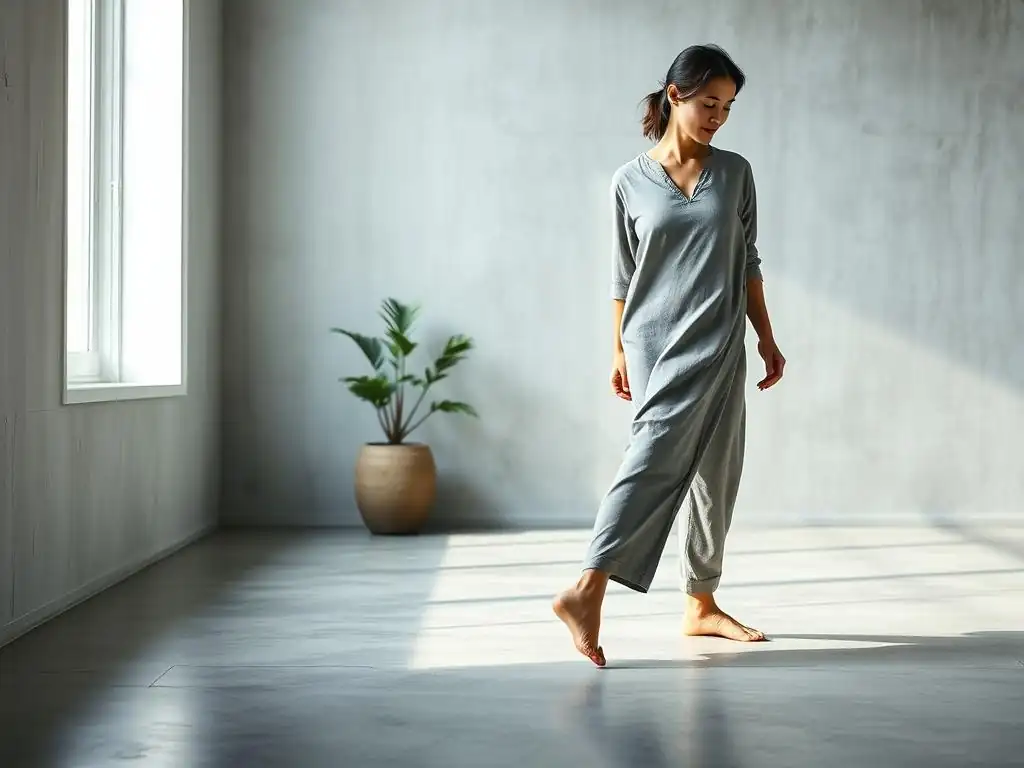
The pace of walking meditation is typically much slower than your usual walk. This deliberate slowness allows you to cultivate heightened awareness of each movement. Take small, measured steps. Coordinate your breath with your steps if that feels natural, perhaps inhaling for a few steps and exhaling for a few. Maintain a soft gaze directed downwards a few feet in front of you, or close your eyes if you feel comfortable and safe doing so in your space.
The slow pace is intentional; it provides ample opportunity to notice sensations and thoughts without feeling rushed. It's not about getting anywhere, but about being fully present while moving. This mindful, unhurried pace is a key mechanism through which walking meditation for anxiety relief works, interrupting the hurried, often frantic energy associated with anxious states.
Step 5: Noticing Thoughts and Emotions Without Judgment
As you walk, thoughts and emotions, including anxiety, will inevitably arise. The practice is not to stop thinking or feeling, but to notice what is present without judgment. When you recognize that your mind has wandered, perhaps into anxious rumination, gently acknowledge the thought or feeling ("Ah, thinking about tomorrow," or "Noticing anxiety"). Then, without self-criticism, gently guide your attention back to the sensations of walking and breathing.
This act of noticing and returning is the core 'work' of mindfulness meditation. Each time you notice your mind has drifted and bring it back, you are strengthening your capacity for present-moment awareness and non-reactivity. This ability to observe anxiety without getting lost in it is profoundly helpful for managing it, making this step vital for using walking meditation for anxiety relief.
#### A Simple Walking Meditation Sequence Checklist:

*   [ ] Stand still and ground yourself.
*   [ ] Set a gentle intention.
*   [ ] Begin walking slowly.
*   [ ] Focus awareness on body sensations (feet, legs, etc.).
*   [ ] Notice the breath.
*   [ ] When mind wanders, gently notice and return focus to walking/breathing.
*   [ ] Continue for your desired duration.
Techniques to Enhance Your Indoor Walking Meditation
Once you are comfortable with the basic steps of indoor walking meditation, you can explore various techniques to deepen your practice or help maintain focus, especially when dealing with persistent anxiety. These methods offer different ways to anchor your attention and can be particularly useful on days when your mind feels more restless or scattered. Experiment with them to see what resonates most with you and supports your goal of finding walking meditation for anxiety relief.
These techniques are not mandatory but serve as helpful tools. They can provide structure and a point of focus when simply observing sensations feels challenging. Remember that the most effective technique is the one that helps you stay present and engaged with the practice in that moment.
The "Counting Steps" Method for Enhanced Focus
For some individuals, particularly those prone to getting lost in thought, counting steps can provide a concrete anchor for attention during walking meditation. This technique is straightforward: simply count each step you take. You might count up to a certain number, like ten or twenty, and then start over from one. Alternatively, you could coordinate counting with your breath, perhaps counting "one" on an inhale step and "two" on an exhale step.
This method gives the mind a specific task to focus on, which can be less abstract than simply observing sensations. It helps to keep your attention tethered to the physical action of walking. If you find your mind wandering while counting, simply notice where it went and gently bring your attention back to the count and the steps. This technique is particularly useful when using walking meditation for anxiety relief as the repetitive counting can have a calming, rhythmic effect.
Incorporating Mantras or Affirmations for Anxiety
Adding a mantra or affirmation to your indoor walking meditation can infuse the practice with a specific intention related to easing anxiety. A mantra is typically a word or phrase repeated silently or softly to oneself. For anxiety relief, this could be a simple phrase like "Peace," "Calm," "I am safe," or "Breathing in ease, breathing out tension." You might coordinate the repetition with your steps or breath, perhaps saying the mantra silently with each inhale or exhale, or with every few steps.
Using affirmations during your walk can also be powerful. These are positive statements about yourself or your state, such as "I am capable of handling this moment," "Anxiety is temporary," or "I am finding calm with each step." Repeating these phrases mindfully can help to counteract negative thought patterns associated with anxiety and reinforce a sense of agency and peace. This conscious layering of positive focus onto the physical act of walking can be a potent form of walking meditation for anxiety relief.
Body Scan Meditation While Walking
Combining a body scan with walking meditation involves systematically bringing your awareness to different parts of your body as you walk. While walking slowly, you might start by focusing intensely on the sensations in your feet for a few steps, then move your attention up to your ankles, then your lower legs, knees, thighs, and so on, gradually moving your awareness up through your entire body.
This technique deepens your connection to the physical experience of walking and helps to release tension that might be held in the body, which is often a physical manifestation of anxiety. By directing your attention sequentially through different body parts, you stay grounded in the present moment and cultivate a deeper sense of embodiment. This integrated approach makes your indoor walk a comprehensive mindful movement practice, enhancing its effectiveness as walking meditation for anxiety relief.
Adapting Walking Meditation to Different Indoor Spaces
One of the greatest strengths of indoor walking meditation is its adaptability. You don't need a large mansion or a dedicated meditation room. With a little creativity, you can practice mindful walking in almost any indoor environment. The key is to work with the space you have and find a path that allows for continuous, mindful movement, however short. This flexibility ensures that walking meditation for anxiety relief remains accessible no matter your living situation.
Adapting to different spaces often involves adjusting your path or the length of your segments. Whether you have a long hallway or just enough room to turn around in a small area, the principles of slow, mindful movement and attention remain the same. The focus is on the internal experience, not the external journey.
Walking Meditation in Small Spaces
If you live in a small apartment or only have access to a limited area, walking back and forth in a short segment is perfectly adequate for walking meditation. A space as small as 5-10 feet long can work. The key is to walk slowly and deliberately from one end to the other, pause briefly, perhaps take a mindful breath, and then turn and walk back. The turns become part of the meditation – notice the sensations of pivoting, the shift in weight.
In a very confined space, you might only take 3-5 steps in one direction before turning. This requires even greater attention to each individual step and the transition between walking and turning. While it might feel different from a longer walk, the core practice of bringing mindful awareness to movement remains effective for walking meditation for anxiety relief, proving that space is less important than presence.
Utilizing Hallways and Corridors for a Longer Practice
Hallways and corridors offer a more extended path for indoor walking meditation, allowing for longer continuous segments of movement. If you have a hallway, clear the path of any obstacles and walk mindfully from one end to the other. The length of a typical home hallway might allow for 10-20 steps or more in one direction before reaching the end.
Walking the length of a hallway and back provides a rhythm that can be very calming. You can focus on the journey from one point to the other, noticing how your experience changes as you move through the space. Utilizing a hallway allows for a more traditional back-and-forth walking meditation experience, offering a consistent environment for cultivating walking meditation for anxiety relief.
Walking Meditation in a Circular Path
If you have a room large enough to walk in a circle, this can provide a different dynamic to the practice. Walking in a circle eliminates the need for frequent turns, allowing for a more continuous forward motion. Choose a path around the perimeter of a room, ensuring there are no obstacles. Walk slowly, following the circular path.
Walking in a circle can feel particularly grounding and contained. It creates a sense of being within a defined space, moving steadily. This method can help maintain focus for longer periods and offers a smooth, uninterrupted flow that some practitioners find deeply calming. Whether walking straight, back and forth, or in a circle, the intention behind the movement is what transforms it into walking meditation for anxiety relief.
Troubleshooting Common Challenges in Indoor Walking Meditation
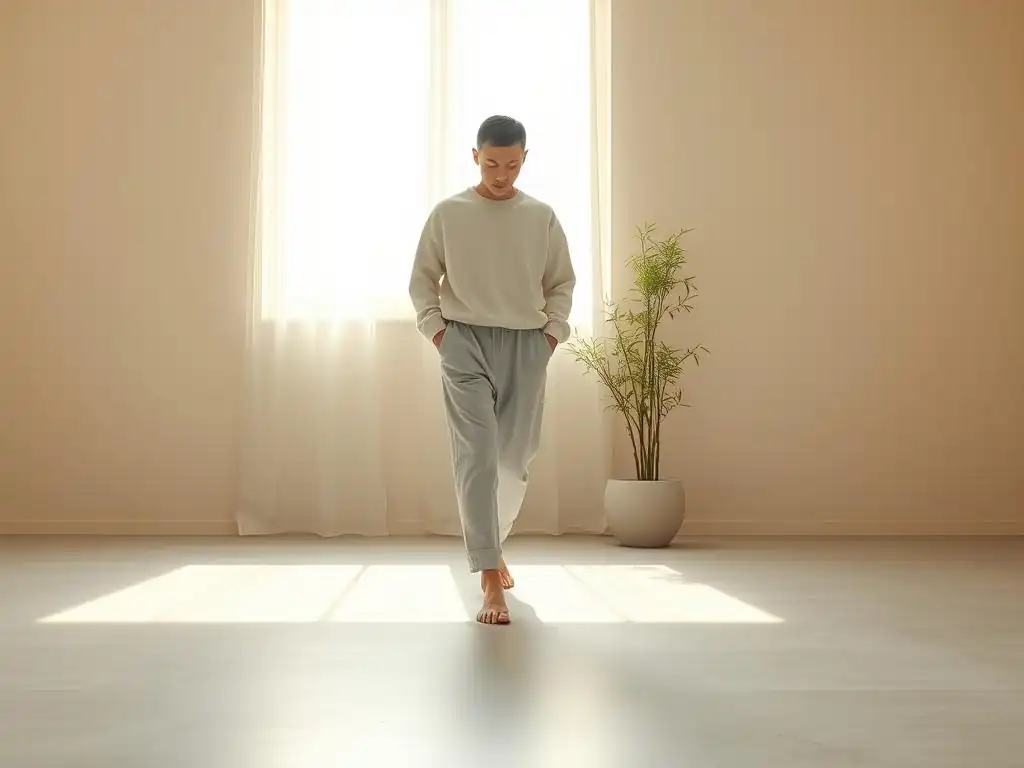
Like any mindfulness practice, indoor walking meditation can present challenges. Your mind might wander constantly, you might feel restless, or maintaining consistency might be difficult. These are normal aspects of the practice and not signs of failure. Approaching these challenges with patience and self-compassion is key. Recognizing common hurdles can help you navigate them more effectively and sustain your practice of walking meditation for anxiety relief.
Understanding that difficulties are part of the process allows you to meet them with awareness rather than frustration. Each challenge overcome strengthens your capacity for mindfulness and resilience.
Dealing with Distractions and Interruptions
Distractions are perhaps the most common challenge in any meditation practice, including walking meditation indoors. These can be external (household noises, other people) or internal (thoughts, emotions, bodily sensations). When you notice a distraction, the practice is simply to acknowledge it without judgment and gently return your attention to your chosen anchor – the feeling of your feet on the ground, your breath, the counting of steps, or your mantra.
Do not get discouraged if your mind wanders repeatedly. This is simply what minds do. Each time you notice the wandering and return to the present moment, you are strengthening the 'muscle' of attention. Think of it not as failing, but as an opportunity to practice patience and persistence. Over time, you may find the periods of focus lengthen naturally, enhancing the effectiveness of your walking meditation for anxiety relief.
Overcoming Boredom and Restlessness
Sometimes, especially during longer sessions or on certain days, you might experience boredom or physical restlessness while walking mindfully. Boredom often arises when the mind craves stimulation or novelty. Restlessness might manifest as an urge to speed up, stop, or fidget. When these feelings arise, try to meet them with curiosity rather than resistance.
Notice the sensation of boredom or restlessness in your body. Where do you feel it? What does it physically feel like? Can you simply observe these feelings without acting on them? Sometimes, acknowledging the boredom or restlessness ("Ah, noticing boredom") can help diffuse its intensity. You might also try gently shifting your focus – perhaps paying closer attention to a different sensation, like the movement in your hips, or incorporating a counting technique for a while. Persisting through moments of boredom or restlessness builds mental fortitude and deepens your walking meditation for anxiety relief.
Maintaining Consistency in Your Practice
Establishing and maintaining a regular indoor walking meditation practice can be challenging amidst busy schedules and competing demands. Life happens, and skipping sessions is easy. Consistency, however, is where the long-term benefits of walking meditation for anxiety relief truly manifest. Aiming for daily practice, even if it's just for 5-10 minutes, is more beneficial than sporadic long sessions.
- Tips for Consistency:
- Schedule your walking meditation like any other important appointment.
- Start small (5-10 minutes) and gradually increase the duration as you feel comfortable.
- Link the practice to an existing habit (e.g., after brushing your teeth, before starting work).
- Be flexible – if you miss a session, don't dwell on it; just start again the next day.
- Keep your designated walking space ready so there's no setup time.
Remember that consistency is about progress, not perfection. Even short, imperfect sessions contribute to building a mindful habit and supporting your mental well-being.
The Science Behind Walking Meditation and Anxiety
The effectiveness of walking meditation for anxiety relief is supported by growing scientific understanding of the mind-body connection and the impact of mindful movement on the nervous system. Research in neuroscience and psychology has shed light on how practices like walking meditation can influence brain function, hormone levels, and overall psychological states, offering a scientific basis for its benefits.
While specific studies focusing only on indoor walking meditation might be limited compared to broader mindfulness or seated meditation research, the principles and observed effects are widely applicable. The combination of gentle physical movement and focused attention appears to create a unique physiological and psychological response that is conducive to reducing stress and anxiety.
How Walking Meditation Reduces Stress Hormones
Mindfulness practices, including walking meditation, have been shown to influence the body's stress response system, particularly the hypothalamic-pituitary-adrenal (HPA) axis. This axis regulates the release of cortisol, the primary stress hormone. Chronic anxiety and stress can lead to elevated cortisol levels, which have negative effects on physical and mental health over time.
Regular engagement in mindful activities like walking meditation is associated with a more balanced HPA axis function. While precise percentage reductions are difficult to state universally, numerous studies have indicated that participants engaging in regular mindfulness or meditation practices often exhibit lower baseline cortisol levels and a reduced cortisol response to stressful situations compared to non-practitioners.
For instance, some studies have reported significant group differences in morning cortisol levels or salivary cortisol reactivity after stress tasks following an 8-week mindfulness intervention. This suggests that mindful walking can help regulate the body's physiological reaction to stress, offering a direct pathway for walking meditation for anxiety relief.
The Connection Between Mindful Movement and Mental Well-being
The combination of physical movement and mindfulness in walking meditation offers synergistic benefits for mental well-being. Physical activity itself is a well-established mood booster and stress reducer; it releases endorphins and can help discharge pent-up energy often associated with anxiety. When movement is combined with mindful awareness, the benefits are amplified.
Mindful movement helps to interrupt the cycle of rumination often present in anxiety. By focusing attention on bodily sensations and the act of walking, you redirect mental energy away from anxious thought loops. This process strengthens neural pathways associated with present-moment awareness and self-regulation.
Research using fMRI scans, for example, has shown that mindfulness practices can lead to changes in brain areas related to emotion regulation and self-awareness, such as the prefrontal cortex and the amygdala (often hyperactive in anxiety). While specific data on walking meditation brain changes is evolving, the general findings from mindful movement research support its positive impact on mental health and its utility as walking meditation for anxiety relief.
Research on Walking Meditation for Anxiety Relief and Mental Health
While extensive research specifically isolating indoor walking meditation might still be emerging, studies on mindful walking and broader mindfulness-based interventions provide strong evidence for its positive effects on anxiety and mental health. For example, a study published in the Journal of Health Psychology found that a 10-minute mindful walk significantly reduced anxiety and increased positive affect compared to a control group.
Another study, though not specific to walking, on a Mindfulness-Based Stress Reduction (MBSR) program (which often includes mindful movement) showed clinically significant reductions in anxiety symptoms in participants with generalized anxiety disorder, with effect sizes indicating moderate to large improvements.
Systematic reviews of mindfulness interventions for anxiety have consistently reported positive outcomes, with effect sizes suggesting that these practices can be as effective as some non-pharmacological treatments for mild to moderate anxiety. These findings, coupled with the known benefits of physical activity, underscore the potential of walking meditation for anxiety relief as an accessible and effective practice for improving mental well-being. The integration of movement and mindfulness provides a holistic approach to calming the mind and body.
Integrating Walking Meditation into Your Daily Routine
Making indoor walking meditation a regular part of your day can significantly enhance its benefits for anxiety relief. Consistency is more important than duration, especially when you are starting out. Finding ways to weave short periods of mindful walking into your existing routine makes the practice sustainable and ensures you have a readily available tool to manage stress and anxiety throughout the day.
Integration doesn't require large blocks of time; even 5-10 minutes can make a difference. The goal is to make mindful movement a natural, accessible part of your daily flow, available whenever you need a moment of calm or a shift in perspective. This regular engagement amplifies the long-term benefits of walking meditation for anxiety relief.
Short Walking Meditation Breaks for Stress Management
One of the easiest ways to integrate indoor walking meditation is by taking short mindful walking breaks throughout your day. Instead of checking your phone or grabbing a snack when you feel stressed or need a mental reset, dedicate 5-10 minutes to mindful walking in your home or office space. This could be a walk down a hallway, a few laps in a room, or simply walking back and forth in a small area.
These short breaks can help interrupt stress cycles, clear your head, and bring you back into the present moment. They provide a quick, effective way to lower anxiety levels and improve focus before returning to your tasks. Making these brief mindful walks a habit can transform moments of stress into opportunities for grounding and calm, leveraging walking meditation for anxiety relief proactively throughout the day.
Combining Walking Meditation with Other Mindfulness Practices
Indoor walking meditation can also be integrated with other mindfulness techniques to create a more comprehensive practice. For example, you might start your day with a 10-minute seated meditation focusing on breath, followed by a 10-minute mindful walk focusing on body sensations. Or, after a session of gentle yoga or stretching, you could transition into a period of mindful walking to integrate the physical sensations you've awakened.
Combining practices can offer varied ways to cultivate mindfulness and address different needs. A seated practice might deepen stillness, while walking meditation adds the element of mindful movement. This integrated approach provides a richer experience of presence and can enhance the overall impact on your mental well-being, bolstering the effects of walking meditation for anxiety relief through diverse mindful engagement.
Creating a Sustainable Walking Meditation Habit
Building a sustainable habit of indoor walking meditation involves finding what works best for you and being compassionate with yourself when challenges arise. Start small, be consistent, and be flexible. If you miss a day, don't see it as a failure; simply commit to practicing the next day. Find a time and place that feels natural and accessible within your daily life.
Think about the benefits you experience from the practice – perhaps a greater sense of calm, reduced anxiety, or improved focus. Focusing on these positive outcomes can be a powerful motivator for maintaining consistency. Over time, as mindful walking becomes a regular part of your routine, you'll build a strong foundation for managing anxiety and cultivating lasting inner peace through walking meditation for anxiety relief.
Conclusion: Embracing Indoor Walking Meditation for Lasting Anxiety Relief
Indoor walking meditation is a simple yet profound practice that offers a powerful and accessible path to walking meditation for anxiety relief. By bringing mindful movement into your home, you create an immediate sanctuary where you can connect with your body, calm your mind, and cultivate presence, regardless of external circumstances. This practice requires no special equipment or location, making it a readily available tool whenever anxiety or stress arises.
From understanding its scientific basis in reducing stress hormones and enhancing brain function to learning practical steps and techniques, you now have a guide to begin or deepen your indoor walking meditation journey. Remember to approach the practice with patience, curiosity, and self-compassion. Embrace the simplicity of putting one foot in front of the other with awareness. As you integrate mindful steps into your daily routine, you build resilience, foster inner calm, and discover a sustainable way to navigate life's challenges, finding profound walking meditation for anxiety relief one step at a time.
Frequently Asked Questions
What exactly is walking meditation and how does it differ from regular walking?
Walking meditation is a form of mindfulness practice where you pay close attention to the sensation of walking. It differs from regular walking by focusing on the present moment rather than the destination. It's about being rather than doing.
How can walking meditation specifically help with anxiety relief?
Walking meditation can help reduce anxiety by grounding you in the present moment and diverting your attention from anxious thoughts. The rhythmic movement and focused awareness promote relaxation and reduce stress hormones.
Can I practice walking meditation indoors, even in a small space?
Yes! The article focuses on indoor walking meditation, proving that you can practice in any space, regardless of size. The key is focusing on the sensations of each step.
How long should a walking meditation session be to effectively reduce anxiety?
Even a short session of 5-10 minutes can be beneficial, but longer sessions of 20-30 minutes are often recommended for deeper relaxation. The length of time spent walking allows you to fully immerse yourself in the practice.
What are some common distractions during walking meditation, and how can I overcome them?
Common distractions include thoughts, external noises, and physical discomfort. Acknowledge the distraction without judgment and gently redirect your focus back to the sensation of walking. Consistent practice will improve your ability to stay present.
Final Reflection: Cultivating Inner Peace, One Step at a Time
The simple act of walking, when infused with mindfulness, becomes a powerful antidote to the anxieties of modern life. In a world constantly demanding our attention, the practice of walking meditation offers a sanctuary of calm, a readily accessible tool for managing stress and finding inner peace, regardless of our surroundings. This is not just a fleeting trend; it's a timeless practice with enduring relevance in our increasingly frenetic world.
The profound impact of mindful walking on my own anxiety levels has been nothing short of transformative. It's a practice that has helped me navigate moments of overwhelming stress and cultivate a greater sense of self-awareness. The ability to find stillness amidst the chaos of daily life is a gift, and one that I believe everyone deserves access to. The mind is everything. What you think you become.
– Buddha. This quote perfectly encapsulates the power of mindful practices like walking meditation to shape our inner world and, consequently, our outer experiences.
Now, I invite you to take this practice and make it your own. Consider incorporating just five minutes of mindful walking into your daily routine. Notice the sensation of your feet on the floor, the rhythm of your breath, and the quiet unfolding of each moment. Allow this simple act to become a daily ritual, a personal sanctuary where you can reconnect with yourself and find solace amidst the storm. The journey to inner peace begins with a single, mindful step.
Unleash Your Inner Peace: Start Walking Meditation Today!
Thanks for taking the time to explore the power of walking meditation! We hope you discovered new ways to find calm and focus, even in the busiest of spaces. Now it's time to put your newfound knowledge into practice.
- Begin your first walking meditation session: Even 5 minutes can make a difference. Find a quiet corner, set a timer, and let your mindful journey begin.
- Share your experience: Let us know in the comments how your first walking meditation went! We love hearing your stories and inspiring others.
- Discover further resources: Explore other articles on our site for even more mindfulness techniques and ways to cultivate inner peace.
Ready to embrace a more mindful you? What small step will you take today to incorporate walking meditation into your daily routine?