
Body Scanning in Vipassana: Unlocking Physical and Mental Awareness


Welcome to Mind Care Guide, your sanctuary for cultivating inner peace and understanding.
Feeling disconnected from your body? Have you ever wondered how deeply intertwined your physical sensations are with your mental well-being? In this article, we delve into the transformative practice of Vipassana body scan meditation, exploring how this ancient technique can unlock profound awareness and foster a deeper connection with yourself. Discover how to quiet the mind and listen to the whispers of your body – a journey that begins right here.
Body Scanning in Vipassana: Unlocking Physical and Mental Awareness
- Introduction to Vipassana Body Scan Meditation
- Preparing for Your Vipassana Body Scan Session
-
The Step-by-Step Guide to Vipassana Body Scan Meditation
- Step 1: Settling In and Connecting with Your Breath
- Step 2: Directing Your Attention to the Body - Initial Sensations
- Step 3: Systematically Scanning the Body - Head to Toe or Toe to Head
- Step 4: Dealing with Distractions and Wandering Thoughts During Body Scan
- Step 5: Expanding Awareness - Integrating the Whole Body
- Benefits of Regular Vipassana Body Scan Practice
- Overcoming Challenges in Vipassana Body Scanning
- Advanced Techniques in Vipassana Body Scan Meditation
- The Science Behind Body Scan Meditation
- Integrating Vipassana Body Scan into Your Daily Life
- Conclusion: Embracing the Power of Body Scanning for Mental Well-being
-
Frequently Asked Questions
- What is Vipassana body scan meditation and how does it relate to mental well-being?
- How does body scanning in Vipassana unlock physical and mental awareness?
- What are the key benefits of practicing Vipassana body scan meditation?
- How often should I practice Vipassana body scan meditation to see noticeable improvements?
- Are there any potential challenges or precautions I should be aware of when starting Vipassana body scan meditation?
- Final Reflection: Embracing the Present Moment Through the Body
- Unlock Your Body's Wisdom: Start Your Journey to Awareness Today!
Introduction to Vipassana Body Scan Meditation
Understanding Vipassana Meditation: A Path to Insight
Vipassana, meaning "to see things as they really are," is one of India's most ancient techniques of meditation. It is a practice of self-observation that aims to purify the mind by dealing with mental defilements through a systematic process of introspective exploration. Unlike some meditation forms that focus on concentration alone, Vipassana emphasizes insight, cultivating a deep understanding of the impermanent nature of reality through direct experience. This path, often taught in structured retreats lasting ten days or longer, involves observing the mind and body without judgment, leading to profound shifts in perspective and emotional reactivity.
The core principle of Vipassana is the observation of physical sensations and mental phenomena with equanimity. This equanimity is not indifference but a balanced acceptance of whatever arises, whether pleasant, unpleasant, or neutral. By observing these experiences without reacting with craving or aversion, practitioners gradually dismantle the habit patterns that lead to suffering. The Vipassana body scan meditation is a foundational technique within this tradition, providing a tangible object of observation – the physical body and its myriad sensations – through which insight can be cultivated.
The Role of Body Awareness in Vipassana Practice
Body awareness is fundamental to the practice of Vipassana meditation. The physical body is seen as a primary field of experience where the interaction between mind and matter is constantly unfolding. Sensations arise and pass away continuously, providing a direct, undeniable demonstration of impermanence (anicca), a core teaching in Vipassana. By focusing attention on these sensations, practitioners ground themselves in the present moment, moving away from conceptual thinking and engaging directly with reality as it is experienced through the body.
Cultivating sensitivity to subtle physical sensations helps practitioners become more aware of their emotional states and thought patterns, as these often manifest as physical feelings. For example, anxiety might be felt as tightness in the chest or stomach, while excitement could manifest as tingling or warmth. By observing these sensations without judgment, one can begin to understand the deep connection between mind and body and how reactions to sensations contribute to suffering. This heightened body awareness, particularly through the Vipassana body scan meditation, builds the foundation for deeper insight into the nature of mind and reality.
What is a Vipassana Body Scan Meditation? Definition and Benefits
A Vipassana body scan meditation is a systematic practice of bringing one's attention to different parts of the body, observing the physical sensations present in each area without judgment or reaction. Typically, this involves moving attention slowly through the body, from the top of the head down to the tips of the toes, or vice versa, pausing to notice whatever arises – pressure, temperature, vibration, pulsing, itching, absence of sensation, etc. The goal is not relaxation (though that is often a byproduct) but cultivating bare attention and equanimity towards physical experience.
The benefits of practicing Vipassana body scan meditation are numerous and well-documented. Regular practice can significantly reduce stress levels, with studies suggesting a decrease in perceived stress scores by around 20-30% over an 8-week period for consistent practitioners. It enhances body awareness, improving proprioception and interoception (the sense of the internal state of the body).
Furthermore, the non-judgmental observation cultivated during the body scan helps improve emotional regulation and self-awareness, allowing individuals to recognize emotional states as they arise and respond with greater wisdom rather than reactivity. It serves as a powerful tool for grounding and centering oneself, integrating mindfulness into physical experience.
Preparing for Your Vipassana Body Scan Session
Creating a Conducive Environment for Body Scan Practice
Finding a quiet and peaceful space is crucial for effective Vipassana body scan meditation. Choose a location where you are unlikely to be interrupted by external noises, people, or electronic devices. This doesn't require a dedicated meditation room; a quiet corner in your home, a peaceful spot in a park, or even a parked car can serve the purpose. The aim is to minimize external distractions so that you can focus your attention inward on the physical sensations of your body.
Ensure the temperature is comfortable and you won't become too hot or cold during the practice. Wear loose, comfortable clothing that doesn't restrict your breathing or circulation. While absolute silence might be ideal, it's more important to find a place where you feel safe and undisturbed. Even a space with some ambient noise can work, as the practice also involves observing all phenomena, including sounds, without getting carried away by them. The primary focus, however, remains on the body sensations, so minimizing significant disturbances is beneficial, particularly for beginners.
Optimal Posture and Positioning for Body Scan Meditation
Choosing a stable and comfortable posture is essential for sustained attention during Vipassana body scan meditation. The most common postures are sitting on a cushion on the floor with crossed legs, sitting on a meditation bench, or sitting on a chair with your feet flat on the floor. The key is to maintain an upright, dignified posture with a straight spine, allowing energy to flow freely and preventing drowsiness, while also being relaxed enough to remain still for the duration of the practice. Avoid slumping or becoming rigid.
Your hands can rest comfortably in your lap, on your knees, or palms down on your thighs. Close your eyes gently or keep them slightly open with a soft gaze directed downward if closing them causes discomfort or drowsiness. The goal of the posture is to create a stable foundation that supports alert relaxation, allowing you to bring effortless attention to the body scan without being overly distracted by physical discomfort. Experiment to find the posture that works best for your body, remembering that comfort is important, but alertness is key.
Cultivating the Right Mindset for Effective Body Scanning
Approaching the Vipassana body scan meditation with the right mindset is as important as the posture and environment. The core attitude is one of gentle curiosity and non-judgmental observation. You are not trying to make sensations happen, nor are you trying to get rid of any sensations, pleasant or unpleasant. Your role is simply that of an impartial observer, noticing whatever arises in your body with acceptance, just as it is, in this moment.
Let go of expectations about what you "should" feel or how the meditation "should" be. Some days you might feel many vivid sensations, while on others, the body might feel dull or numb. Both are valid experiences. The practice is about observing, not evaluating or analyzing. If your mind wanders (which it will! ), gently acknowledge the distraction without self-criticism and kindly bring your attention back to the specific area of the body you were scanning. This attitude of patience, persistence, and equanimity is fundamental to unlocking the deeper benefits of the Vipassana body scan meditation.
The Step-by-Step Guide to Vipassana Body Scan Meditation
Step 1: Settling In and Connecting with Your Breath
Begin by finding your chosen posture and allowing yourself a few moments to settle in. Close your eyes gently or soften your gaze. Take a few conscious breaths, not trying to change the breath in any way, but simply noticing the sensation of air entering and leaving your body. Pay attention to where you feel the breath most prominently – perhaps the rise and fall of the abdomen, the expansion and contraction of the chest, or the feeling of air at the nostrils.
Use the breath as an anchor to bring your awareness into the present moment and into the physical body. Spend a few minutes simply observing the natural rhythm of your breath, allowing your mind to settle. This initial focus on the breath helps to transition from the busyness of daily life to the stillness required for the Vipassana body scan meditation. There's no need to control the breath, just observe its natural flow, noticing the sensations associated with each inhalation and exhalation.
Step 2: Directing Your Attention to the Body - Initial Sensations
Once you feel relatively settled, gently broaden your awareness to encompass the entire physical body as a whole. Without focusing on specific parts yet, just notice the general sense of your body sitting or lying down. Become aware of the points of contact with the surface supporting you – the feeling of your feet on the floor, your legs on the cushion or chair, your hands resting.
Notice any prominent sensations that are immediately apparent throughout the body. This could be areas of tension, warmth, coolness, or pressure. This step is about getting a general 'feel' for the body's state before beginning the systematic scan. It serves as a gentle bridge from focusing solely on the breath to engaging fully with the physical form, preparing the mind for the detailed exploration of the Vipassana body scan.
Step 3: Systematically Scanning the Body - Head to Toe or Toe to Head
Now, begin the systematic scan of the body. You can choose to start at the top of your head and slowly move down to your toes, or start at the toes and move up to the head. Whichever direction you choose, maintain it consistently throughout the practice. Bring your attention to the very top of your head – the scalp, the face, the ears, the neck. Spend a few moments in each area, moving slowly and deliberately.
After focusing on the head and neck, move down to the shoulders, arms, hands, and fingers. Then proceed to the torso – the upper back, chest, abdomen, lower back. Continue down to the pelvis, hips, thighs, knees, shins, calves, ankles, feet, and finally the toes. Move your attention like a spotlight, shining it sequentially on each section of the body, observing whatever sensations are present there.
Scanning with Curiosity and Non-Judgment
As you move your attention through each part of the body during the Vipassana body scan, cultivate an attitude of gentle curiosity. Approach each area as if you are exploring it for the first time, simply noticing what is there without labeling it as "good" or "bad." Avoid analyzing or intellectualizing the sensations; just observe the raw physical feeling. This non-judgmental awareness is crucial in Vipassana practice.
If you encounter areas with strong or unpleasant sensations, resist the urge to tense up or pull away. Simply observe the sensation with the same impartial attention you would give to a neutral or pleasant sensation. Similarly, if you find pleasant sensations, avoid clinging to them. The practice is about seeing sensations as they are – transient phenomena arising and passing away. This equanimous observation is a key aspect of the Vipassana body scan meditation technique.
Noticing Sensations: Pleasant, Unpleasant, and Neutral
During the body scan, you will likely encounter a wide variety of sensations. These can be broadly categorized as pleasant (warmth, tingling, lightness), unpleasant (pain, tension, itching, coldness), or neutral (no discernible sensation, pressure from clothing). The goal is to notice all sensations with equal attention and acceptance. Do not linger on pleasant sensations or rush away from unpleasant ones.
Observe the intensity, location, and quality of each sensation. Does it pulsate, vibrate, feel solid, or diffuse? Does it stay constant or change? By observing these characteristics, you gain insight into the ever-changing nature of physical experience. Sometimes, you may scan an area and feel nothing at all – this absence of sensation is also an observation to be noted. The Vipassana body scan teaches you to be fully present with whatever the body is experiencing in each moment.
Step 4: Dealing with Distractions and Wandering Thoughts During Body Scan
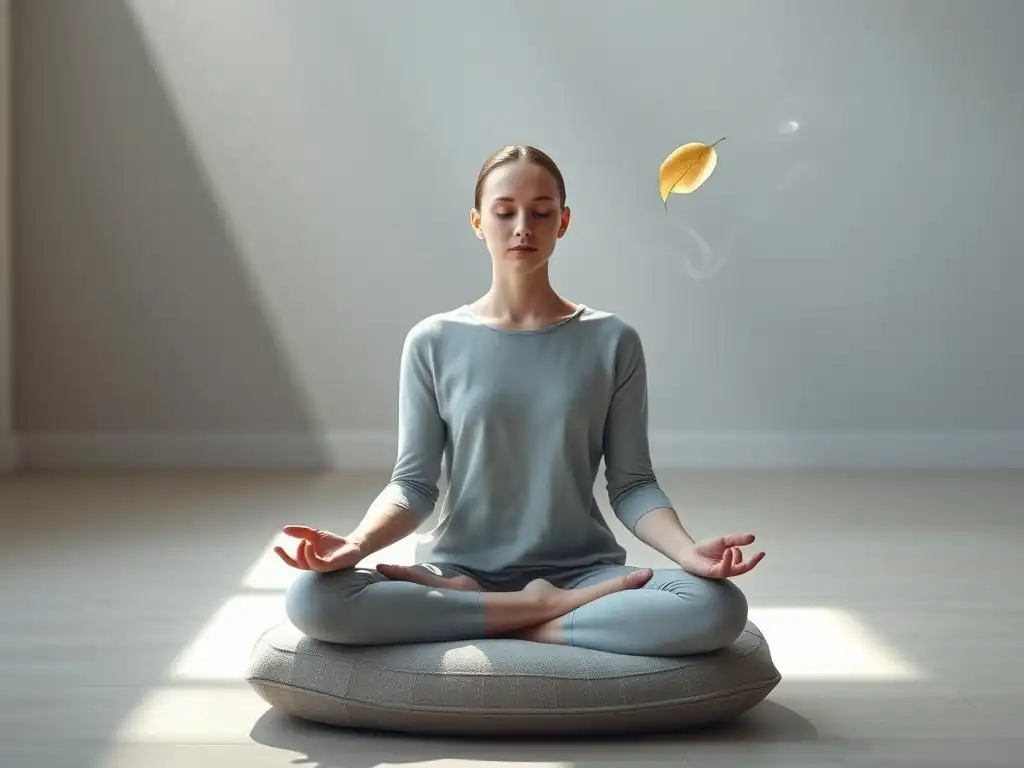
It is completely natural for your mind to wander during the Vipassana body scan meditation. Thoughts will arise, you might get lost in planning, remembering, or worrying, or external sounds might pull your attention away. This is not a failure of the practice; it is simply the nature of the mind. The practice lies in how you respond when you notice your mind has wandered.
Returning Gently to the Present Moment
When you realize your attention is no longer on the part of the body you were scanning, acknowledge the distraction without judgment. Simply notice that the mind has wandered. There's no need to get frustrated or criticize yourself. With kindness and patience, gently guide your attention back to the specific point in the body scan where you left off. This act of noticing the wandering and gently returning is a core exercise in building mindfulness and concentration, reinforcing the purpose of the Vipassana body scan practice.
Step 5: Expanding Awareness - Integrating the Whole Body
After systematically scanning through all the individual parts of the body, take a few moments to expand your awareness to encompass the entire body as a whole. Feel the body sitting or lying down as a single unit. Notice the overall field of sensations present throughout the body simultaneously.
Rest in this awareness of the whole body for a few minutes. Then, gently bring your attention back to the breath for a few final moments before concluding the meditation. This integration phase helps to move beyond the analytical, part-by-part focus and experience the body as a unified field of sensation, deepening the insight cultivated during the Vipassana body scan meditation session.
Benefits of Regular Vipassana Body Scan Practice
Enhanced Body Awareness and Proprioception
Regularly engaging in Vipassana body scan meditation significantly enhances one's awareness of their physical body. This includes improving proprioception, which is the sense of the relative position of one's own parts of the body and strength of effort being employed in movement. By systematically focusing attention on different areas, practitioners become more attuned to subtle physical cues they might otherwise miss in daily life.
Research has shown that mindfulness practices, including body scans, can lead to structural and functional changes in the brain areas associated with body awareness, such as the insula cortex. For example, a study published in NeuroImage found that experienced meditators showed increased gray matter density in the insula compared to non-meditators. This heightened sensitivity allows individuals to notice physical signs of stress, fatigue, or emotional states earlier, enabling a more proactive and mindful response.
Reduced Stress and Anxiety Through Focused Attention
The practice of Vipassana body scan meditation is a powerful tool for stress and anxiety reduction. By directing attention away from worrying thoughts and onto the concrete reality of physical sensations, it interrupts the cycle of rumination that often fuels anxiety. The systematic nature of the scan also helps to anchor the mind in the present moment, reducing the time spent dwelling on past problems or future uncertainties.
Numerous studies support the efficacy of mindfulness-based interventions, often including body scan components, in reducing symptoms of stress and anxiety. A meta-analysis published in JAMA Internal Medicine reviewing over 47 trials found that mindfulness meditation programs resulted in moderate improvements in anxiety and depression symptoms, with effect sizes around 0.3 to 0.4. The Vipassana body scan specifically helps by teaching the skill of observing uncomfortable physical sensations associated with stress (like muscle tension or rapid heartbeat) without reacting with further anxiety, fostering a sense of calm acceptance.
Improved Emotional Regulation and Self-Awareness
Vipassana body scan meditation cultivates improved emotional regulation by teaching individuals to recognize emotions as they manifest physically and observe them without getting overwhelmed. Emotions are often accompanied by distinct bodily sensations, and by becoming familiar with these patterns through the body scan, one can identify emotional states more readily and dispassionately.
This enhanced self-awareness allows for a pause between stimulus and response. Instead of reacting impulsively to anger, fear, or sadness, the practitioner can observe the accompanying physical sensations (e.g., heat in the face, tightness in the chest) with equanimity. Over time, this practice weakens the automatic link between emotion and reactive behavior, enabling a more considered and skillful response. Studies on mindfulness training have demonstrated improvements in emotional regulation, often measured by decreased reactivity in response to emotional stimuli, with some research showing reduced amygdala activation in experienced meditators.
Cultivating Mindfulness in Daily Life Through Body Scan
The skills developed during a formal Vipassana body scan meditation session are highly transferable to daily life. The practice of systematically bringing attention to the body and observing sensations without judgment trains the mind to be present and aware throughout the day. This means noticing the feeling of water while washing hands, the pressure of feet on the ground while walking, or the tension in the shoulders while working at a computer.
By regularly practicing the body scan, the ability to check in with one's physical state becomes more habitual. This enables spontaneous moments of mindfulness, such as noticing signs of fatigue and taking a break, or recognizing physical tension arising from a stressful interaction and consciously relaxing the shoulders. The Vipassana body scan meditation serves as a powerful foundation for living more mindfully, bringing greater awareness and presence to everyday activities and interactions.
Overcoming Challenges in Vipassana Body Scanning
Dealing with Physical Discomfort During Body Scan Meditation
It's common to encounter physical discomfort during prolonged periods of stillness required for Vipassana body scan meditation. This could manifest as aching in the back or knees, tingling in the limbs, or general restlessness. The initial reaction is often aversion and the urge to move or change posture. However, within the Vipassana framework, discomfort is seen as another sensation to be observed with equanimity.
When discomfort arises, try directing your attention directly to the area of sensation. Explore its qualities: Is it sharp, dull, throbbing, burning? Does it stay constant, or does it change in intensity or location? Observe it with curiosity, just as you would any other sensation. If the discomfort becomes truly unbearable or risks injury, it is acceptable to gently adjust your posture mindfully, noticing the sensations of movement, and then returning to the scan. The aim is not to endure pain unnecessarily but to learn to observe it without reacting with aversion when it arises.
Managing Mental Restlessness and Racing Thoughts
One of the most frequent challenges in Vipassana body scan meditation is dealing with a restless mind filled with thoughts, worries, plans, or memories. The mind's tendency to wander is strong, and it can feel frustrating when you're trying to focus on bodily sensations but are constantly pulled away by thinking. It's important to understand that this is a normal part of the process, not a sign of failure.
When you notice your mind has wandered, the practice is simply to acknowledge the thoughts without getting involved in their content. You might mentally note "thinking" and then gently, without self-criticism, redirect your attention back to the part of the body you were scanning. This process of noticing and returning is the core mental training of the Vipassana body scan. The more patiently and consistently you do this, the stronger your ability to focus and remain present will become. It's like training a puppy – you gently guide it back without scolding.
Staying Consistent with Your Body Scan Practice
Maintaining a regular Vipassana body scan meditation practice can be challenging amidst busy daily schedules and fluctuating motivation. Life often presents distractions, and it's easy to let meditation time slip away. Lack of perceived progress or encountering difficult sessions can also lead to discouragement.
To foster consistency, try to establish a regular time and place for your practice, making it a routine. Even short sessions (10-15 minutes) practiced daily are often more beneficial than longer, infrequent ones. Setting a realistic goal, such as practicing the Vipassana body scan 4-5 times per week, can make it feel more achievable. Consider using a guided body scan recording initially, which can help maintain focus and structure. Remember that consistency builds momentum and deepens the benefits over time, even when motivation is low.
Advanced Techniques in Vipassana Body Scan Meditation

Working with Pain and Intense Sensations
For experienced practitioners of Vipassana body scan meditation, the practice can be extended to work directly with intense physical sensations or chronic pain. Instead of avoiding painful areas during the scan, the practitioner can choose to rest their attention on the pain, observing its specific characteristics with heightened focus and equanimity.
The practice involves breaking down the sensation of "pain" into its constituent elements: is it burning, throbbing, pressure, heat, cold, tingling? Does it have a clear boundary, or is it diffuse? Does it remain constant, or does its intensity fluctuate?
By observing pain in this deconstructed, non-conceptual way, practitioners can often diminish their reactive suffering about the pain, even if the sensation itself remains. This technique, deeply rooted in the Vipassana tradition, aims to change one's relationship with pain, fostering acceptance rather than resistance. Case studies in mindfulness literature often highlight individuals with chronic conditions reporting reduced pain related distress after consistent practice, even if pain levels themselves don't always change dramatically.
Exploring Subtle Energy and the Energy Body
As sensitivity develops through consistent Vipassana body scan meditation, practitioners may begin to notice more subtle sensations beyond the obvious pressure, warmth, or itching. These can include feelings of vibration, pulsing, flow, or a general sense of aliveness throughout the body, sometimes referred to as the "energy body."
Within the Vipassana framework, these subtle sensations are also observed with the same non-judgmental awareness as grosser sensations. They are seen as manifestations of the ever-changing nature of reality at a finer level. Focusing on these subtle flows can deepen concentration and provide further insight into impermanence. This stage of the Vipassana body scan practice involves moving beyond just noting physical solidity to perceiving the dynamic, energetic nature of the body's experience.
Integrating Metta (Loving-Kindness) into Body Scan Practice
While Vipassana focuses on insight through bare observation, it is often complemented by Metta (loving-kindness) practice. An advanced technique involves integrating Metta with the Vipassana body scan meditation. This can be done by directing feelings of loving-kindness towards each part of the body as you scan it.
For example, as you bring attention to your hands, you might silently wish: "May these hands be free from suffering. May they be peaceful." Or, as you observe an area of discomfort, you might send kindness to that specific area: "May this pain be met with ease. May this body be well." This integration combines the clarity of observation with the warmth of compassion, softening the practice and cultivating a kinder relationship with one's physical form and the sensations that arise. This blended practice helps balance the equanimity of Vipassana with the positive emotional states cultivated by Metta.
The Science Behind Body Scan Meditation
Neuroscientific Research on Mindfulness and Body Awareness
Neuroscientific research provides compelling evidence for the impact of mindfulness practices like Vipassana body scan meditation on the brain. Studies using fMRI scans show that regular meditation can lead to structural changes, including increased gray matter thickness in areas associated with attention, introspection, and body awareness, such as the prefrontal cortex and the insula.
The insula cortex, in particular, plays a key role in interoception – the sense of the internal state of the body. Experienced meditators often show greater insula activation during body awareness tasks compared to novices. This suggests that the Vipassana body scan trains the brain to become more attuned to internal bodily signals. Research from institutions like Harvard and the University of Wisconsin-Madison has contributed significantly to our understanding of these neural correlates of mindfulness, demonstrating that consistent practice can literally reshape the brain over time, enhancing capacities for focus, emotional regulation, and self-awareness.
The Vagus Nerve and the Relaxation Response
Vipassana body scan meditation can also influence the autonomic nervous system, particularly the vagus nerve. The vagus nerve is a major component of the parasympathetic nervous system, often referred to as the "rest and digest" system. Activation of the vagus nerve promotes relaxation, slows heart rate, lowers blood pressure, and reduces the body's stress response.
Focusing attention on the body and breath, as done in the Vipassana body scan, can stimulate the vagus nerve, helping to shift the body out of a "fight or flight" (sympathetic nervous system) state and into a more relaxed state. Research on heart rate variability (HRV), a measure of the variation in time between heartbeats and an indicator of vagal tone, often shows increased HRV in individuals who regularly practice mindfulness meditation. Higher HRV is associated with better emotional regulation and resilience to stress, suggesting a physiological pathway through which Vipassana body scan meditation promotes well-being.
Body Scan Meditation and Pain Management
The application of body scan meditation in pain management is supported by a growing body of research. While the practice doesn't always eliminate pain itself, it significantly impacts the experience of pain by altering the brain's processing of pain signals and reducing the emotional reactivity associated with discomfort.
Studies have shown that mindfulness-based pain management programs, which frequently incorporate body scanning, can lead to reductions in pain intensity ratings and, more consistently, reductions in pain-related distress and interference with daily activities. For instance, a study published in Pain found that mindfulness training altered brain activity in areas associated with evaluating and responding to pain, leading to a decoupling of the sensory experience of pain from the emotional reaction to it.
By teaching individuals to observe painful sensations as transient physical phenomena rather than catastrophic threats, the Vipassana body scan empowers them to relate to pain with greater acceptance and equanimity.
Integrating Vipassana Body Scan into Your Daily Life
Short Body Scan Practices for Busy Schedules
Finding time for a full Vipassana body scan meditation session can be challenging in a busy life. However, the benefits can still be accessed through shorter, informal practices integrated throughout the day. Even 5-10 minutes of focused body scanning can make a difference in grounding yourself and increasing awareness.
Try setting aside short periods, perhaps upon waking, during a lunch break, or before sleep, for a mini-body scan. Instead of scanning the entire body, you could focus on a specific area prone to tension, like the shoulders, neck, or hands. Alternatively, you could do a rapid scan, quickly moving attention through major body regions (head, torso, arms, legs) in just a few minutes. The key is consistency and making use of the small pockets of time available. Even a brief Vipassana body scan can interrupt stress patterns and bring you back to the present moment.
Using Body Scan to Enhance Other Mindfulness Practices
The sensitivity and awareness cultivated through Vipassana body scan meditation can significantly enhance other mindfulness practices. For example, when practicing walking meditation, the body scan skill allows for a deeper awareness of the physical sensations of walking – the lifting, moving, and placing of the feet, the swing of the arms, the subtle shifts in balance.
In daily activities, the body scan can be used to check in with your physical state before or during tasks, helping you recognize tension or fatigue. For instance, before a challenging meeting, a quick body scan can reveal physical signs of anxiety, allowing you to address them mindfully. When eating, a brief scan can bring awareness to the physical sensations of taste, texture, and fullness. The skills learned in formal Vipassana body scan meditation provide a foundation for bringing embodied awareness to virtually any activity.
Resources for Further Exploration of Vipassana and Body Scanning
For those interested in deepening their understanding and practice of Vipassana body scan meditation, numerous resources are available. Many meditation centers offer courses and retreats in Vipassana, often following the tradition taught by S.N. Goenka, which heavily utilizes body scanning. These retreats provide intensive, structured environments conducive to deep practice.
Additionally, there are many guided Vipassana body scan meditations available online and through meditation apps, ranging in length from short sessions to 45 minutes or longer. Books by teachers in the Vipassana tradition, such as Joseph Goldstein, Sharon Salzberg, or Jack Kornfield, often discuss body scanning as a core mindfulness technique. Exploring these resources can provide further guidance, support, and context for your Vipassana body scan practice, connecting you with a rich tradition of insight meditation.
Conclusion: Embracing the Power of Body Scanning for Mental Well-being
The Vipassana body scan meditation is far more than just a relaxation technique; it is a powerful practice for cultivating deep insight into the nature of reality through direct observation of physical sensations. By systematically bringing non-judgmental attention to the body, practitioners develop enhanced body awareness, reduce stress and anxiety, improve emotional regulation, and lay the groundwork for integrating mindfulness into all aspects of life.
While challenges like discomfort and mind-wandering are natural, they are opportunities for practice and growth. With patience, consistency, and a gentle attitude, the Vipassana body scan meditation can unlock profound physical and mental awareness, leading to greater equanimity, resilience, and overall well-being. Embracing this ancient technique offers a practical and accessible pathway to seeing things as they truly are, right here in the laboratory of your own body.
Frequently Asked Questions
What is Vipassana body scan meditation and how does it relate to mental well-being?
Vipassana body scan meditation is a technique that cultivates moment-to-moment awareness of physical sensations. By focusing on these sensations, it helps to reduce mental chatter and promote a sense of calm, contributing to improved mental well-being.
How does body scanning in Vipassana unlock physical and mental awareness?
The practice involves systematically paying attention to sensations throughout the body. This process helps to increase sensitivity to physical sensations, which in turn enhances your ability to recognize and manage corresponding emotional and mental states.
What are the key benefits of practicing Vipassana body scan meditation?
Key benefits include reduced stress and anxiety, improved self-awareness, and enhanced ability to focus and concentrate. It can also help develop a greater sense of interoception, or awareness of internal bodily states.
How often should I practice Vipassana body scan meditation to see noticeable improvements?
Consistency is key. Aim for at least 10-20 minutes of daily practice to begin noticing improvements. Gradual increases in duration and frequency can further enhance the benefits over time.
Are there any potential challenges or precautions I should be aware of when starting Vipassana body scan meditation?
Some individuals may experience uncomfortable sensations or emotions during the practice. It's essential to approach the practice with patience and self-compassion, and consider seeking guidance from a qualified instructor if needed.
Final Reflection: Embracing the Present Moment Through the Body
The practice of Vipassana body scan meditation, far from being a niche technique, offers a powerful antidote to the frenetic pace of modern life. Its ability to cultivate present moment awareness is more crucial now than ever, in a world saturated with distractions and anxieties. By systematically bringing attention to the sensations within our bodies, we learn to disentangle ourselves from the narratives of the mind and find a grounding stability amidst the chaos.
The profound impact of this practice extends far beyond the meditation cushion. It subtly reshapes our relationship with our physical selves, fostering a deeper appreciation for the intricate workings of our bodies and a gentler approach to self-care. This mindful awareness bleeds into other aspects of life, influencing how we interact with others and navigate challenges. As Thich Nhat Hanh so eloquently stated, Breathing in, I calm body and mind. Breathing out, I smile. Dwelling in the present moment I know this is the only moment.
This simple yet profound sentiment encapsulates the essence of the body scan and its transformative potential.
Now, I invite you to consider how you can integrate this practice into your daily life. Perhaps start with just five minutes each day, focusing on the sensations in your hands or feet. Notice the subtle shifts in energy, the textures, the temperatures. Allow yourself to simply be present with these sensations, without judgment or expectation. This small act of mindful attention can be a powerful catalyst for greater self-awareness, emotional regulation, and a deeper connection to the present moment – a gift you give yourself, every single day.
Unlock Your Body's Wisdom: Start Your Journey to Awareness Today!
Thanks for taking the time to explore the power of body scanning in Vipassana meditation with us! We hope you gained valuable insights into how this practice can transform your physical and mental well-being. Ready to deepen your experience?
- Begin your daily body scan practice today. Even 5 minutes can make a significant difference in your awareness and reduce stress. Start small, and gradually increase the duration as you feel comfortable.
- Share your experience! Let us know in the comments below how your first body scan felt—what sensations did you notice? What surprised you?
- Explore the resources section on our website (MindCareGuide.org) for guided meditations and additional information on mindful living.
Now, tell us: What small step will you take today to cultivate greater body awareness?